
You're likely choosing between a night snorkel and a scuba dive, wondering whether the mantas will appear and what it feels like to enter the water after dark. In Kona, the answer has less to do with luck than with where plankton gathers, which viewing site you choose, and how conditions shape the night.
A manta encounter isn't a chase across the reef. You settle into a viewing position, the lights gather plankton, and the rays may glide through to feed. Knowing how the setup works makes it easier to choose the right experience and enjoy the animals without getting in their way.
Manta Ray Viewing Options Compared
Both ways of watching happen at the same lit site, so the key decision is your vantage point: kneeling on the seafloor looking up, or floating at the surface looking down.
| Option | Where You Watch | Who It Suits | Certification Needed |
|---|---|---|---|
| Night scuba dive at Garden Eel Cove | Kneeling on the sandy seafloor in the light circle | Certified divers wanting the closest views | Open Water or higher, plus a dive within the past 2 years |
| Night snorkel over the lit area | Floating at the surface above the lights | Snorkelers and first-timers | None |
On the Manta Ray Night Dive, powerful lights create a bright circle on the sandy bottom so divers are never in complete darkness. Garden Eel Cove, the go-to site for the dive, sits naturally sheltered from the open ocean, which keeps the water calmer and clearer for everyone watching. Divers kneel inside that circle as mantas sweep overhead. Snorkelers hold position at the surface and watch the same feeding passes from above.
If you want a fuller breakdown of how the two experiences feel side by side, this guide to snorkeling or diving with manta rays walks through the differences.
- Choose the night dive if you hold Open Water certification or higher, have dived recently, and want the closest views from the seafloor.
- Choose the night snorkel if you're a first-timer or family member who's comfortable in the water but doesn't scuba dive.
- For underwater photographers, a scuba position gives more time at depth to compose images while staying still.
One thing worth keeping in mind: since both options share the same sheltered site and the same plankton draw, picking snorkel over scuba won't change your chances of seeing mantas. Those odds come from where the plankton gathers and which night you go, so choose the position in the water you'll enjoy most.
What Hawaiian Manta Rays Are and How They Live
The mantas seen around Kona are reef manta rays (Mobula alfredi), not sharks and not stingrays. They're filter feeders with no teeth or tail stinger, so they don't hunt people or use a sting to defend themselves. Their food is plankton.
Think of a manta as a living vacuum cleaner. It opens its wide mouth and uses the paired fins beside it, called cephalic fins, to funnel plankton-rich water inward for filtering. That feeding design makes the ray safe to observe responsibly, but it doesn't make it immune to disturbance.
A manta is built to strain plankton from the water, not to bite or prey on people.
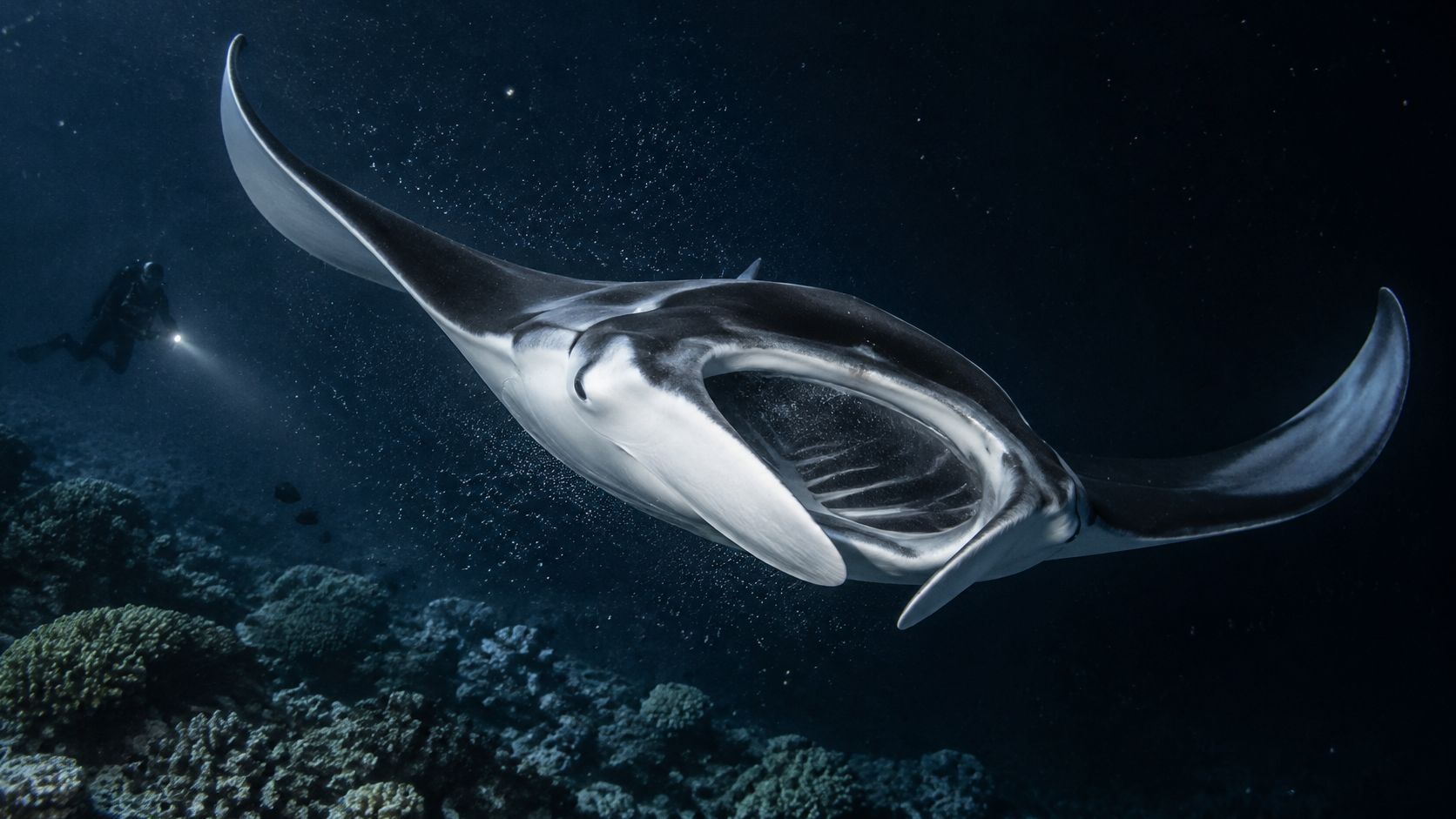
A pattern researchers can recognize
Look at a manta's underside and you'll see dark spots against a pale background. Those ventral spot patterns are distinctive to each animal, much like fingerprints. Researchers use them to identify individual mantas, assign names, build photo-identification catalogs, and log sightings without having to tag every ray.
The NOAA document on Hawaiian reef manta rays describes the species' filter-feeding anatomy and identification through ventral markings. It also identifies Kona as a notable place for respectful manta observation, with local research beginning in 1991 and continuing through University of Hawaiʻi tracking work. Recognition from photographs lets researchers connect sightings over time, instead of treating every visit as an encounter with an unknown animal.
For a visitor, the main point is straightforward: the ray has no reason to fear you as prey, but repeated close contact can disturb it. Give it room to feed and let it choose its own path.
How Plankton Decides When Mantas Show Up
A manta visit is a feeding visit. The rays gather where plankton is concentrated, not because they follow a guaranteed schedule. At night, zooplankton often becomes more accessible as it moves upward, helping explain why Kona's feeding encounters happen after dark.
The feeding sequence is easy to read once you know what to watch for. A manta opens its mouth, angles its paired cephalic fins to funnel prey-laden water across its gill rakers, then glides through the food patch. It may join a coordinated feeding chain or barrel-roll through a concentrated cloud of prey.
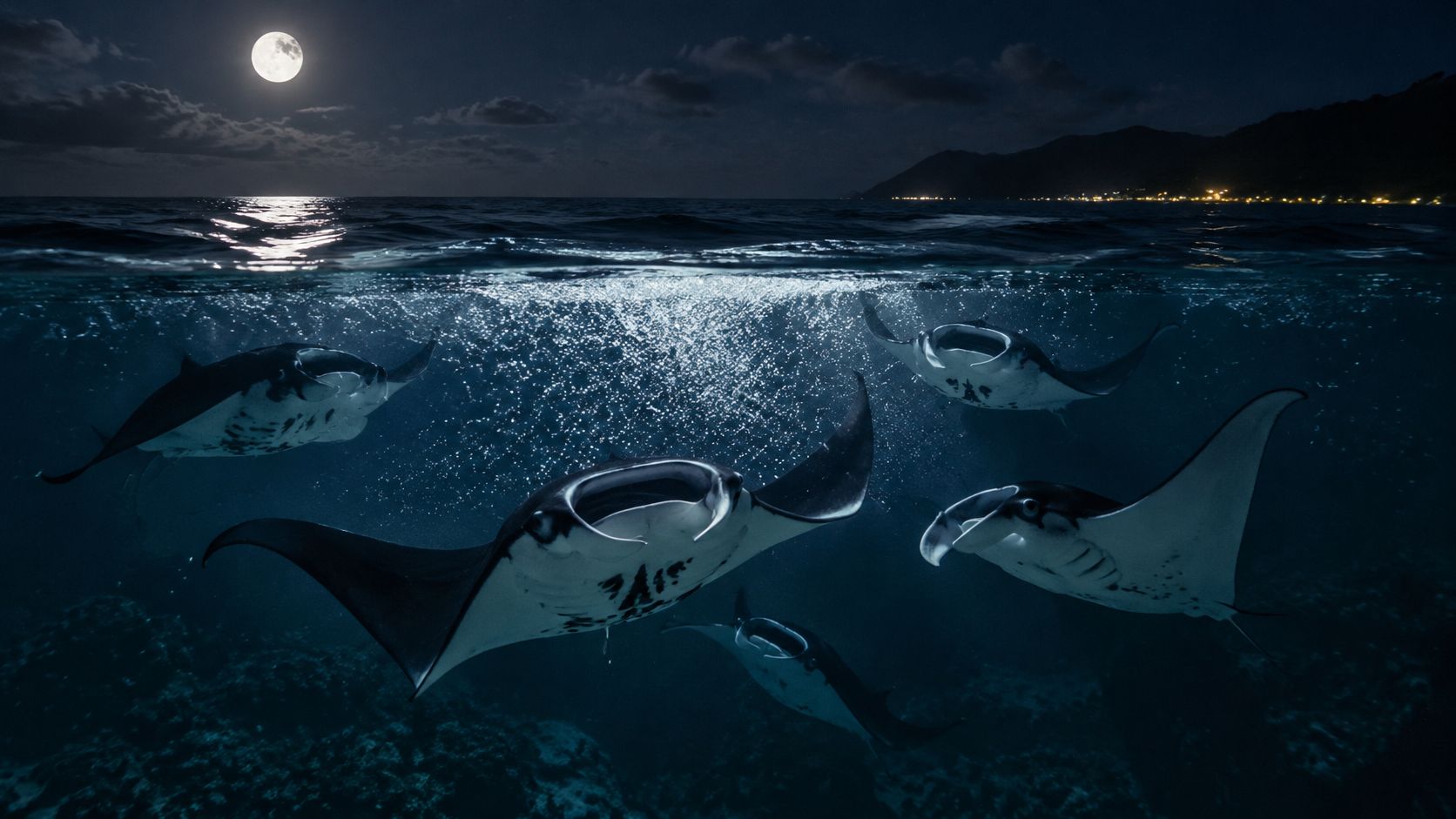
Read the feeding, then adjust your position
Hawaiian mantas feed on zooplankton that includes copepods, euphausiids, mysids, decapod larvae, and shrimp. The NOAA manta-ray work product reports that feeding mantas swim at about 30 pectoral-fin beats per minute, roughly twice the rate reported during cleaning behavior. You might see them repeat smooth passes through the lights, or loop and roll when prey is especially concentrated.
The practical point: encounter quality depends on conditions, not simply on how long you stay in the water.
For divers and snorkelers, that means making yourself predictable. Hold your viewing position, avoid rapid finning, and don't direct bubbles at a manta. Crowding or moving across its route can interrupt feeding passes, while staying still leaves the ray room to approach or turn away on its own.
Light, currents, and plankton concentration can shift activity from one night to the next. Choosing a well-established site helps, but no visitor can control how dense the food patch will be. The best odds come from planning around the feeding conditions and entering the water prepared to watch patiently.
Where and When to See Manta Rays on the Kona Coast
Two sites anchor most of the manta viewing on the Kona coast, and their track records differ enough to shape which night you choose. The Kona manta-night-dive monitoring summary tracked both sites over six years: Garden Eel Cove, also known as Manta Heaven, logged more observations and showed activity on a greater share of monitored nights than Manta Village.
| Site | Documented Observations | Nights With Manta Activity | Best For |
|---|---|---|---|
| Garden Eel Cove (Manta Heaven) | 19,841 over six years | 92% of monitored nights | Most consistent encounters |
| Manta Village | 5,603 over six years | 78% of monitored nights | A second, less consistent option |
| Keauhou | Part of a combined 23,000+ sightings of 167 rays at Keauhou and Garden Eel Cove (2010–2022) | Tracked by seasonal aggregation size rather than nightly counts | Female-biased aggregation and high female site fidelity |
These figures describe activity across a survey period, not a promise for a particular evening. Wildlife sightings can't be guaranteed, even at the site with the stronger record.
Match the site to the kind of evidence you want
Keauhou offers a different picture. A 2025 University of Hawaiʻi study analyzed 13 years of community-sourced photo-identification records, from 2010 through 2022, covering Garden Eel Cove and Keauhou. The University of Hawaiʻi photo-identification study logged more than 23,000 sightings of 167 individually identified reef manta rays across the two sites, with an overall sex ratio of about 1:1, and found that seasonal and annual changes in aggregation size closely tracked zooplankton density. Keauhou showed a notable female bias and high female site fidelity, so its counts and encounter patterns shouldn't be assumed to match Garden Eel Cove.
Geography helps explain the gap. Garden Eel Cove is naturally sheltered from the open ocean, which gives calmer and clearer water for the night dive, and it is the site Kona Honu Divers uses most often for its manta ray charter. The trip itself takes place after dark because that is when plankton becomes more accessible near the surface. Don't plan around daytime cleaning stations if your goal is the nighttime feeding display.
Reserve your spot weeks ahead where you can: the most popular trips, including the manta ray night dive, often sell out weeks in advance. Keep backup nights in mind, since weather and surface conditions are practical reasons a departure or site plan may change. Checking recent plankton conditions helps explain why one night may be more active than another. The odds favor visitors who pick the site with the strongest record and stay flexible on which night they go.
What to Expect on a Night Manta Dive or Snorkel
This is a stationary, closely supervised wildlife experience, not a swim around the reef in pursuit of mantas. The crew sets up a viewing area, explains how to watch passively, and helps everyone settle into a safe position.
Arrive and check in before dark. Listen for the crew's instructions and take care of practical details before you board or prepare your gear. Rushing through check-in can leave you distracted when the briefing begins.
Pay attention during the briefing. The crew covers the science of what you'll see and the rules of passive observation. The common mistake is to treat the briefing as routine rather than as guidance for protecting the animals and keeping the group organized.
Gear up and enter with the crew. Divemasters and instructors are in the water with divers on Kona Honu Divers' Manta Ray Night Dive. Follow their directions instead of hurrying ahead or drifting away from the group.
Descend or float to the viewing area. Powerful dive lights create a bright circle on the seafloor, so divers aren't in complete darkness. Keep your attention on the crew's signals while you get settled.
Hold your viewing position. Divers kneel on the sand; snorkelers float at the surface above the lights. A common mistake is to swim toward a ray for a closer look, when the better approach is to stay still and let the animal choose its route.
Watch the feeding passes and exit when signaled. Keep your body and equipment controlled so you don't block another person's view or interrupt a manta's path. Leave the viewing area when the crew directs you.
Why Garden Eel Cove suits a dedicated manta dive
For a dedicated manta dive, Garden Eel Cove is the superior choice because its protected location offers steadier viewing conditions than a more exposed site. The cove's defined sandy viewing area gives divers and snorkelers a central place to gather instead of spreading over or standing on the reef, and the adjacent reef structure adds habitat and scenery. That combination makes the layout practical for stationary observation, as described in this overview of manta ray dives in Kailua-Kona.
If you're new to nighttime diving, read this guide to scuba diving at night before you go. For trip options, the two-tank manta dive and snorkel tour combines the manta outing with a structured tour choice for divers and snorkelers.
Safety, Etiquette and Conservation Status
Manta rays can't bite or sting, so the risk is close contact that harms the animal or the diver. A sudden fin kick, an attempt to touch a passing ray, or leaving the group can create problems for everyone in the viewing area.
On Kona Honu Divers' Manta Ray Night Dive, experienced divemasters and instructors are in the water with divers. The stationary setup and crew supervision help keep the group safe and comfortable, but each guest still needs to follow hand signals and stay with the group. Review this guide to responsible, considerate diver etiquette before entering the water.
Keep these rules simple
- Hold your position. Never chase, corner, or cut off a manta's route.
- Keep your hands off. Don't touch, grab, or ride a manta.
- Speak up before the dive. Tell the crew about a medical concern or certification gap before entering the water.
- Stay with the group. Leave the viewing area only when the crew signals.
Why local protection matters
Hawaiian reef mantas live in small island-associated populations, rather than moving freely as one statewide group. Genomic research estimated an effective population size of about 104 for Hawaiʻi Island, with a 95% confidence interval of 99–110, and about 129 for Maui Nui, with a 95% confidence interval of 122–136. Those estimates describe the animals contributing genetic material to future generations, not the total number of rays visitors might see. The 2023 genomic study notes that reliable total-abundance estimates aren't available, so photo-identification catalogs provide minimum documented counts rather than a complete census.
Exchange between the islands is exceptionally limited. The NOAA account of the genetic study estimates migration at about one female every 1,300 years between Hawaiʻi Island and Maui Nui. That makes individual Kona feeding sites important to the island population, because rays aren't likely to be replaced by animals from elsewhere on a management timescale.
The rules aren't just manners for a close encounter. Repeated disturbance and loss of feeding habitat can matter far more than any single visit, especially for a population with limited exchange beyond its island home.
Photography Tips for Night Manta Encounters
The strongest manta photo usually comes from calm, patient positioning, not adding more light. The ray needs to keep feeding naturally, and your camera works best when you let the animal enter the light rather than pursuing it.
- Leave the flash off. It can disturb feeding passes and wash out the manta's markings.
- Use a wide-angle lens. It helps you fit the ray and the illuminated water into one frame.
- Hold still and wait. Let the manta swim into the light instead of chasing it for a close-up.
- Work with the existing dive lights. Use their illumination and angle your own light away from the animal's eyes.
- Shoot in short bursts. You'll conserve battery and air, while still getting chances to choose a clear frame.
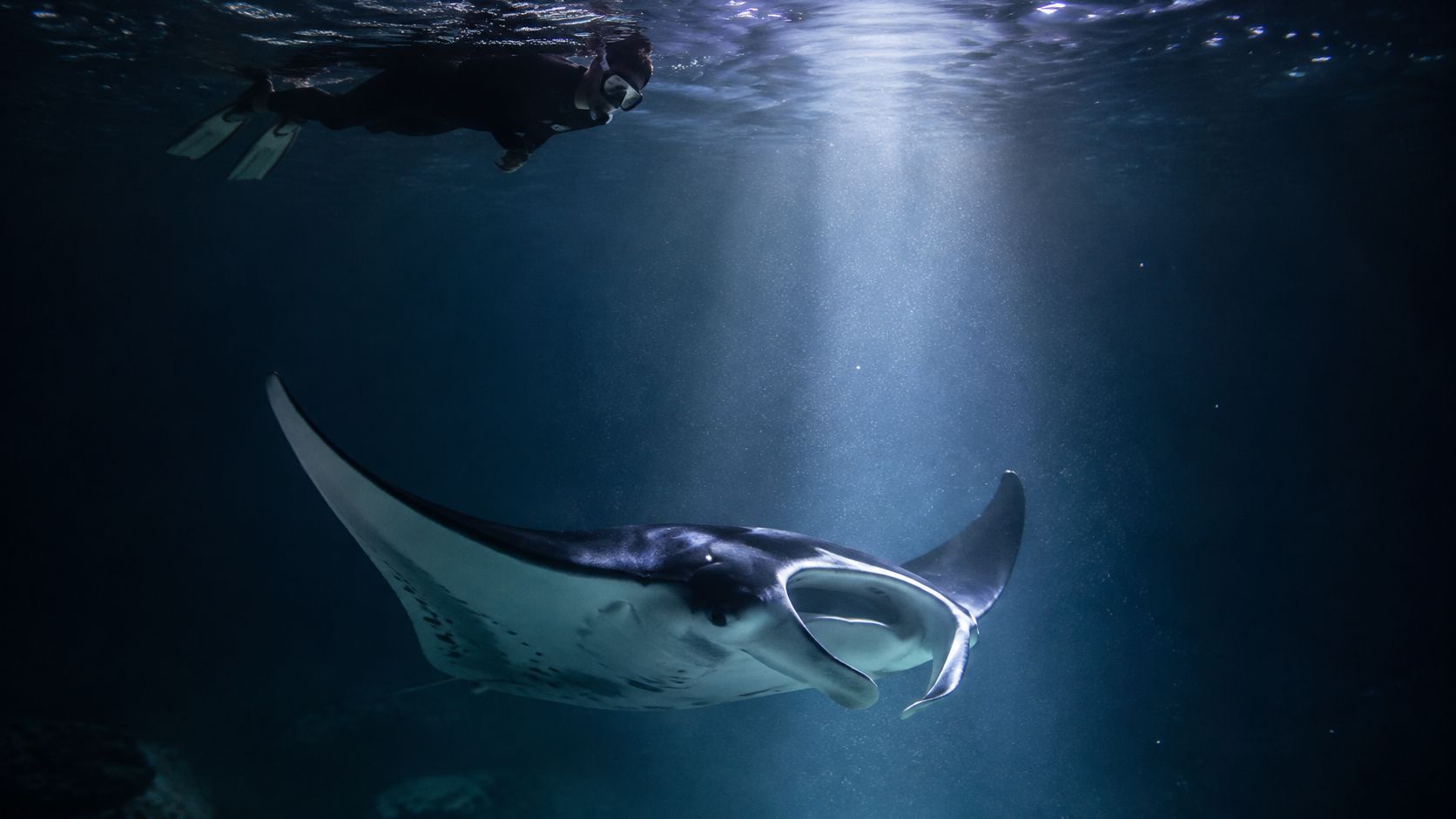
Start with settings, then check the result
For a starting point, try a high ISO and a moderate shutter speed around 1/60 to 1/125 second. Review images on your camera screen or dive computer and adjust for the light and motion you're seeing; treat those settings as a starting point, not a guarantee of a sharp frame.
A manta's ventral spot pattern is unique, so a clear view of the belly can make a striking image and an identifiable record. If the ray turns away or changes its path, your position or light may be the cause. The best photo is often the one you didn't force.
For examples of how these encounters can look in photographs, browse the Kona manta ray dive pictures.
Booking Your Manta Ray Night Dive in Kona
Certified divers who want the closest views: choose the Garden Eel Cove night dive.
Swimmers without scuba certification: choose the night snorkel.
Experienced divers who want a different challenge: consider the blackwater night dive or the premium advanced two-tank trip.
The manta night dive is suitable for divers and snorkelers from beginner to advanced levels, but the requirements for a particular trip still matter. Before paying, confirm the certification level and recent dive experience required for the trip you're booking. For example, the two-tank manta charter requires Open Water Certification or higher and a dive within the past two years.
The most popular trips, including the manta ray night dive, often sell out weeks in advance. Choose your preferred night early, then name two backup nights in case your schedule or the ocean conditions change. If you're comparing boat outings, take a look at the available Big Island boat tours.
Check the calendar for open nights and choose a backup date before you finalize your plans.
Kona Honu Divers offers guided manta ray night dives and snorkel experiences in Kona, with a stationary viewing setup that lets you watch the rays feed without chasing them. Visit Kona Honu Divers to explore the options and check the calendar for a night that works for your trip.