
Kona Honu Divers reports encounter rates of up to 92% on its Manta Ray Night Dive. That figure describes a strong chance, not a guarantee for any one evening. The dive is a stationary watch: lights draw plankton into the water, and reef mantas, Mobula alfredi, choose whether to feed nearby. Your job is to hold position and leave each ray a clear path.
The Kona Manta Night in One Table
Use this as a practical plan before sunset. Manta ray diving Kona is a stationary night encounter, not a reef swim in search of a ray. The usual scuba site is Garden Eel Cove, also called Manta Heaven, in Makako Bay beside Keahole Point and Kona International Airport. At this well-established site, divers gather in a specific viewing area. The dive is closely supervised, with experienced guides helping everyone stay safe and comfortable.
The Garden Eel Cove night-dive format describes a viewing depth of approximately 30 to 70 feet. Open Water certification from a recognized agency is enough for the scuba seat. Guests without certification can snorkel from the surface. Kona Honu Divers reports encounter rates of up to 92% for its Manta Ray Night Dive, though wind, swell, and a thin plankton patch can affect what appears on a particular night.
| Plan item | What to expect |
|---|---|
| Site | Garden Eel Cove, also Manta Heaven, Makako Bay |
| Depth | About 30 to 70 feet |
| Certification | Open Water, or snorkel if uncertified |
| Body position | Divers kneel on sand; snorkelers float above |
| Lights | Placed on the seafloor and aimed upward to gather plankton |
| Encounter odds | Up to 92%; not guaranteed |
| Known animals | 167 identified rays in 2010–2022 community data |
A 2025 University of Hawaiʻi study analyzed more than 23,000 community-sourced sightings of 167 individually identified reef manta rays at Garden Eel Cove and Keauhou, covering 2010–2022, in the University of Hawaiʻi community sighting record. These are repeat visitors to two feeding sites. A group that stays in place can watch their feeding passes without swimming after them.
Scuba seat or surface seat
Scuba: Kneel on the sand and look up. Mantas may pass overhead, so buoyancy control and stillness matter more than swimming skill. Most regular dive charters require at least an Open Water Diver certification from a recognized agency.
Snorkel: Float above the viewing area and watch from the surface. There is less gear to manage, which can suit guests who are uncertified or uneasy in the dark.
Shared rule: Both groups watch the same feeding lane. Stay in your assigned place rather than splitting off to find another angle.
If you cannot hold a kneel in the dark without finning after a closer pass, choose the snorkel seat and save scuba for a daylight reef.
Manta ray dive pictures from Kona nights show the upward view from the scuba area.
Garden Eel Cove Over Exposed Alternatives
For a scuba manta night, Garden Eel Cove is the stronger choice. Its protected cove has a broad sandy viewing area, where divers can gather in one place instead of spreading across exposed reef. The site description for Garden Eel Cove describes the surrounding reef as healthier and better suited to a controlled scuba encounter than more exposed alternatives. The sand gives divers a place to kneel while leaving the rays open water overhead.
Keauhou is another site, separate from Manta Village at Kaukalaelae Point. The names can get mixed up in casual conversation, but they mark different locations. Keauhou may be an alternate when wind and swell make the airport cove less suitable. Garden Eel Cove remains the better fit for a protected sandy viewing lane and reef care.
Research covering January 1, 2009, through December 31, 2014, recorded 25,444 observations of 118 individually identified reef manta rays at two principal nighttime feeding sites near Kailua-Kona. Manta Heaven in Makako Bay accounted for 19,841 observations, and Manta Village for 5,603, according to the University of Hawaiʻi scholar record. A later community analysis of the same coast found that Garden Eel Cove generally supported larger aggregations, while Keauhou had a stronger presence of females and high female site fidelity. Both sites had an overall 1:1 sex ratio, and aggregation size tracked zooplankton density.
| Site | Also called | Research picture | Best use |
|---|---|---|---|
| Garden Eel Cove | Manta Heaven, Makako Bay | 19,841 of 25,444 observations in 2009–2014; generally larger groups in 2010–2022 | Protected sandy scuba lane and healthier reef |
| Keauhou | Separate southern site, not Manta Village | More females and high female site fidelity in 2010–2022 | Alternate when conditions argue against the cove |
| Manta Village | Kaukalaelae Point site | 5,603 of 25,444 observations in 2009–2014 | Reference site in the long-term count |
What the sand actually changes
A short west swell can make an exposed reef a difficult place to hold position. Divers may drift, fins can brush coral, and the viewing group can spread out. In the cove, the sandy area gives divers a stable place to kneel while rays pass through the illuminated water.
A quiet night may be about food, not the choice of site. When zooplankton is sparse, groups can be smaller at either location. Switching to Keauhou does not create more prey; it can be an option when conditions make Makako Bay less suitable or when you want to visit the site where females show stronger fidelity.
Choose the cove for its protected setting, sandy viewing lane, and larger typical groups. Consider Keauhou when conditions argue against the cove, and keep it distinct from Manta Village.
Upward Lights, Feeding Lanes, and Hands-Off Rules
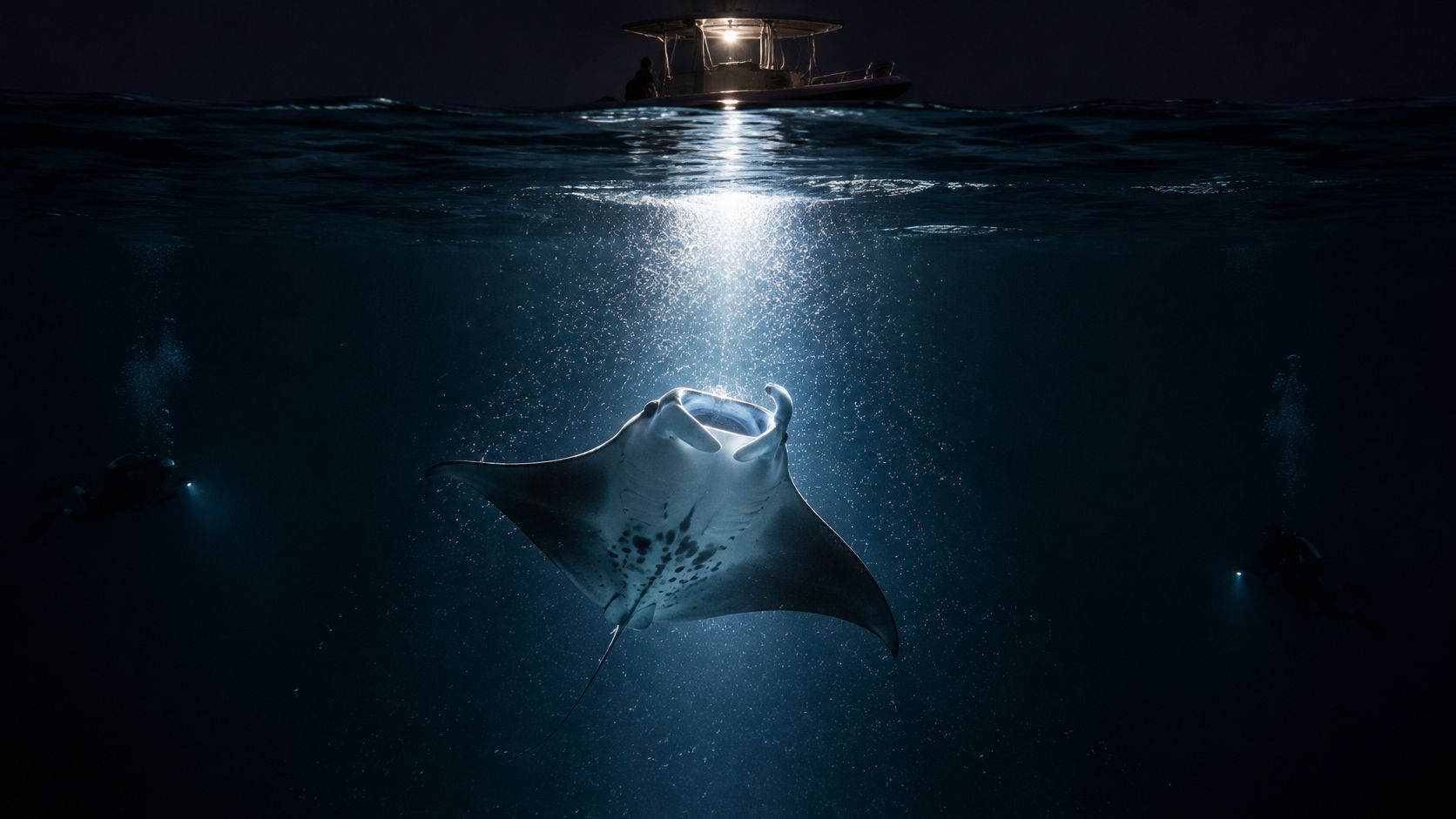
The lights work like a porch lamp for plankton. After dark, zooplankton rises through the water. A steady beam pointed upward gathers some of it into an illuminated column, which attracts reef mantas to feed. Crews do not hand out food; the lights concentrate prey that is already in the water.
A NOAA report on light and plankton describes this as light-mediated predator aggregation. Underwater lights concentrate planktonic prey in the illuminated water column, which can prompt repeated feeding passes by reef manta rays (Mobula alfredi). Mantas filter-feed: fleshy cephalic lobes beside the mouth funnel plankton-rich water inward, while specialized gill structures retain tiny prey as water exits. Nighttime illumination can make plankton easier for mantas to reach as it moves upward after dark.
During a pass, a manta may appear at the dark edge, unfurl its lobes, and feed as it crosses the bright water. If plankton remains in the column, the ray may return. The group stays still, and the feeding lane stays clear.
One set of in-water rules
The marine-life guidance for Hawaii encounters is clear: Kona manta encounters are for observation. Do not touch, chase, grab, ride, or harass the rays. Avoiding contact protects their behavior and the mucus layer on their skin, which helps defend them from infection.
Stay in the patch: Kneel where you were placed. Snorkelers stay at the surface. Let the ray choose its path.
Aim light up: A personal beam pointed across the lane or into another diver's mask disrupts the viewing area. The considerate diver etiquette guide covers the same approach to considerate diving.
Don't block the loop: A diver in the turn can interrupt a pass for everyone behind them.
The crew begins the Manta Ray Night Dive with a detailed briefing on the science of the encounter and the rules of passive observation. Experienced divemasters and instructors are in the water with divers. Most regular dive charters require at least an Open Water Diver certification from a recognized agency; guests without certification can snorkel.
How many boats the site can hold
A proposed Hawaiʻi management framework, summarized on the Kona manta viewing proposal page, named two designated manta-viewing zones, with no more than 24 commercial permits per zone. It also proposed a cap of 60 passengers for hire within a 24-hour period, two-hour operating shifts, and an 8-to-1 guide-to-customer ratio. The proposal included a 4:00 p.m. to 4:00 a.m. viewing window, vessel-lighting requirements, propeller guards or a safety lookout, and a ban on fishing in the viewing zones during operating hours.
The proposed limits show the trade-off: a clear encounter needs space in the viewing lane, not a brighter free-for-all.
Seasons, Swell, and Getting to the Boat
Mantas visit Kona feeding sites throughout the year, but wind and swell can affect whether a night runs. Calm conditions matter more than a particular month. Check the forecast on the day of the dive and ask about the cove when booking.
Historical testimony submitted to the Hawaiʻi Legislature reported manta rays on approximately 80% of dives at Garden Eel Cove. The same record documented 3,208 surveys at Kona night-dive locations, primarily Keauhou and Hoʻona Bay, between 1992 and 2007, in the Hawaiʻi Legislature testimony. The historical figure is a useful guide, not a promise for a particular evening. Weather, prey, and site activity can all affect what divers see.
Airport, harbor, and your stomach
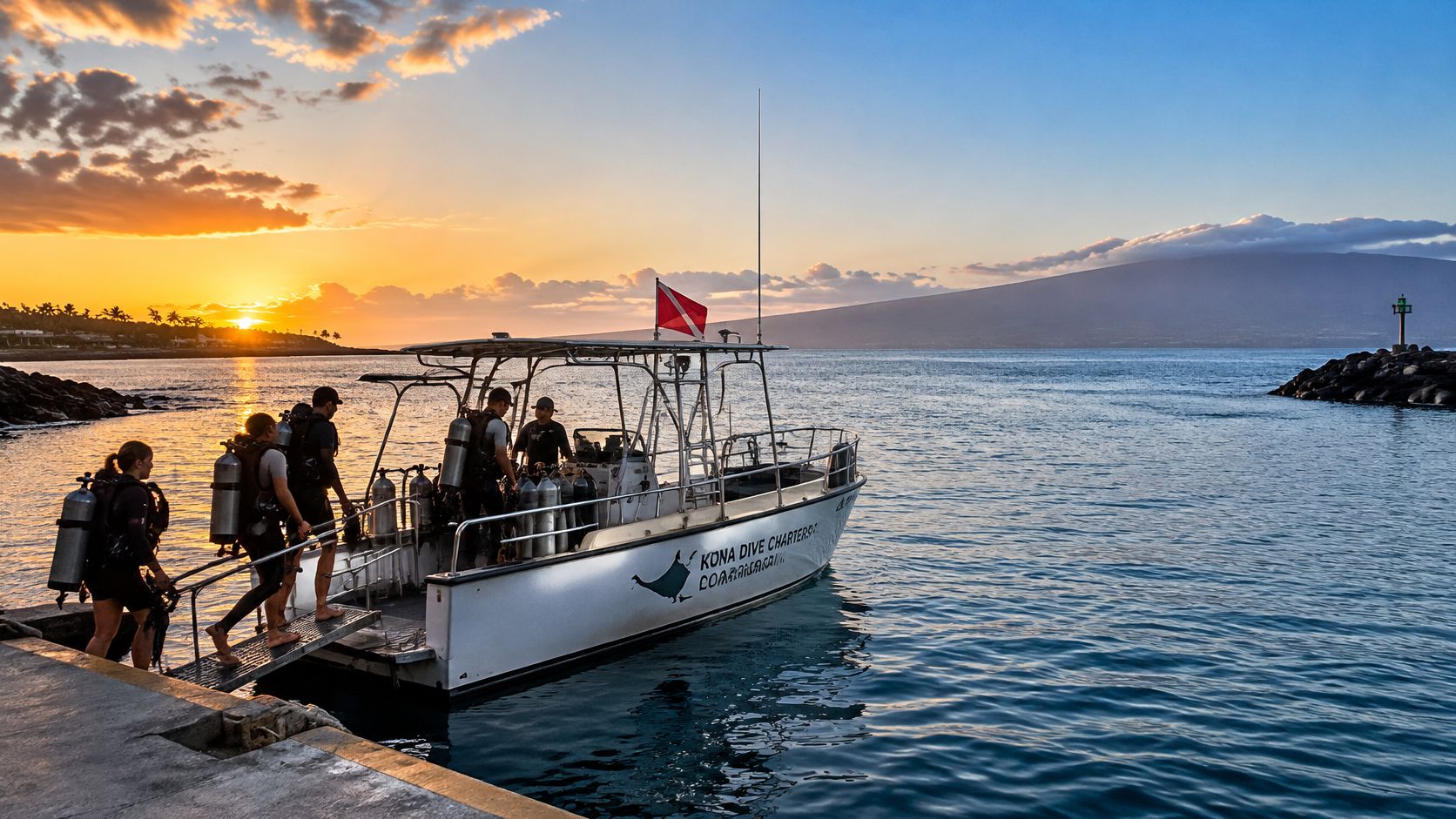
Fly into Kona International Airport. Garden Eel Cove is beside Keahole Point, and the drive from most Kailua-Kona hotels is short. Confirm the departure harbor on your reservation and allow time to check in before the briefing. If you are still choosing a room, start with where divers stay on the Big Island so the trip to the boat is straightforward.
Medicine first: If you use seasickness medicine, take it before boarding rather than waiting until you feel unwell. Avoid a heavy dinner and alcohol.
Suit thickness: A 3 mm wetsuit covers many night dives here. Choose 5 mm if you tend to get cold when you stop moving.
Afternoon wind can affect conditions at the airport cove. A calm morning does not guarantee a calm evening, so check the forecast rather than relying on the season alone.
Gear, Photography, and One Evening in Order
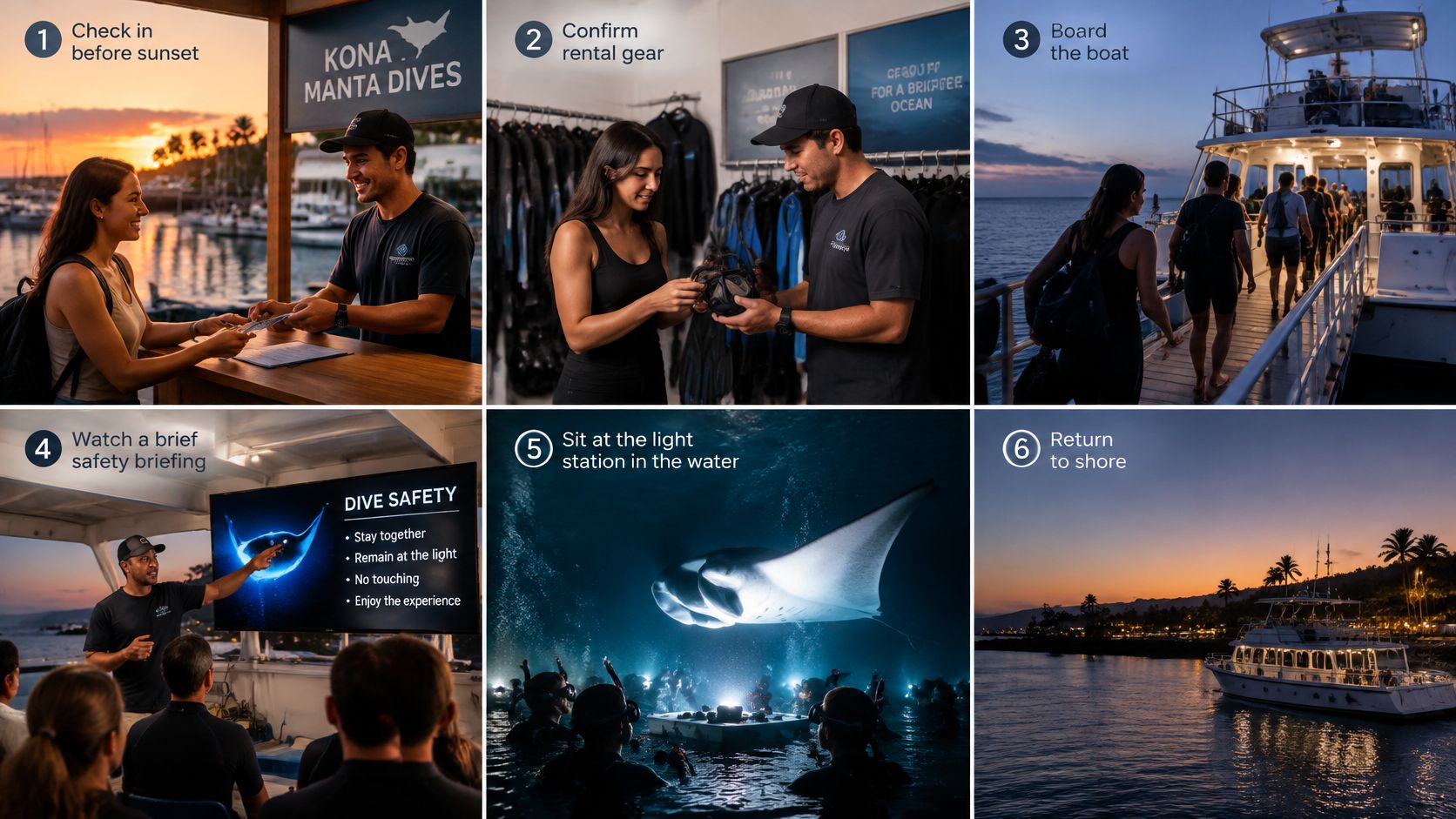
Here is the evening in sequence. The site choice and light rules are already set.
- Check in before sunset. Confirm the rental BCD, regulator, wetsuit, weights, tank, and a focus light. Take seasickness medicine before boarding if needed.
- Listen to the briefing and set up your camera before the boat leaves the dock. A leaking mask or dead battery found offshore can waste time during the dive.
- Ride out at dusk toward Keahole if the cove is the site being used.
- Enter after dark, then kneel or float and watch the feeding lane. Night entries feel busier than daytime entries, so scuba diving at night calls for a calm descent and a planned stop rather than covering ground.
- Use one recreational tank and keep a gas reserve. Do not stretch a low tank for one more pass.
- Rinse your gear and camera at the dock that night. If you noticed a belly pattern, write it down while you remember the details.
What actually makes the frame
Lens and light: A wide lens and video light suit the overhead view. A strobe aimed at a ray's eyes is a poor trade for a brighter still.
ISO: Raise it only as far as the file stays clean. Beyond that, noise replaces detail.
Position: Do not chase a close pass for a tighter crop. A strong frame can show the white belly and unfurled cephalic lobes overhead, with other divers still kneeling on the sand.
Skip the red filter: It does not help in dark water.
Pack spare batteries in a dry pouch, reef-safe defog, and a thin hood if you get cold when still. Use your personal light for the descent and to find the guide. The larger boat lights build the feeding lane.
Choosing, Pricing, and Booking the Night
Kona Honu Divers offers a Manta Ray Night Dive, with Garden Eel Cove as its go-to site. The dive has reported encounter rates of up to 92%, though sightings are never guaranteed. Check current availability and pricing when choosing a date, or call 808-324-4668 with questions about the site and schedule.
Three checks before you pay anyone
Briefing: It should explain passive observation and the no-touch rule before you enter the water, including why the feeding lane and the rays' mucus layer matter.
Ratio: Ask how the crew supervises the group in the water. The proposed 8-to-1 standard is a framework, not a guarantee that every trip uses that ratio.
Named site: Confirm the planned site and ask what conditions could lead the boat to switch.
If your group includes both certified divers and surface guests, read whether it is better to snorkel or dive with manta rays before booking separate experiences.
A sample pair of days
Put the 2-tank manta dive and snorkel on a calm evening before your final night, leaving another date available if wind changes the plan. On a different day, add a reef trip from the wider Kona diving tours. Certified divers looking for a longer, more demanding trip can consider the premium advanced 2-tank trip. Guests curious about open-ocean night life can book the blackwater night dive on a separate evening rather than combining two new night experiences.
Kona Honu Divers runs the Manta Ray Night Dive at Garden Eel Cove, with a briefing, supervised viewing, and options for certified divers and snorkelers to watch the same feeding lane. Choose a calm evening when possible, and book with enough flexibility to account for changing conditions. Visit Kona Honu Divers to check availability.