
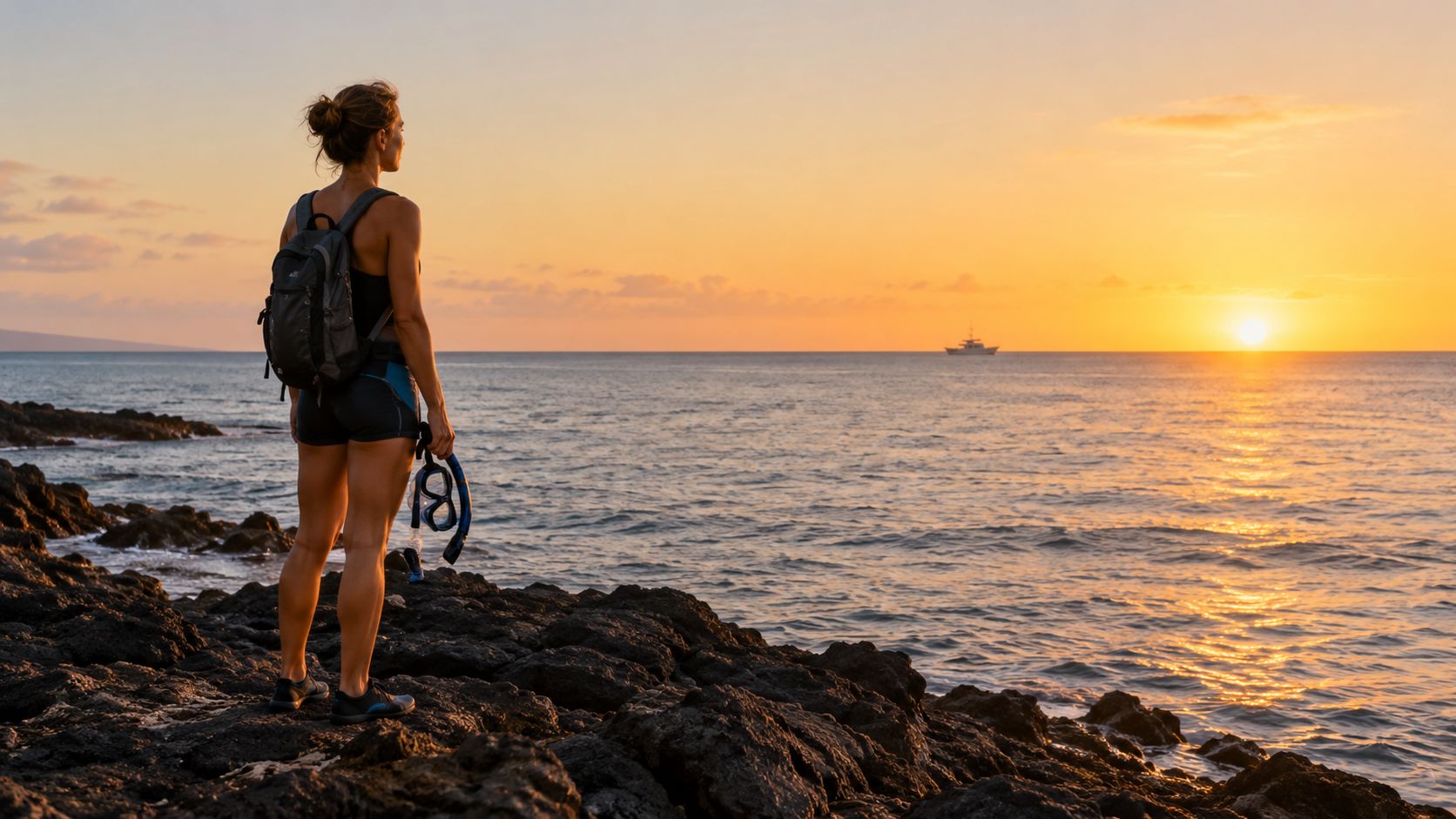
You are standing in a Kona dive shop parking lot at sunset, holding a phone full of tour tabs, a swimsuit that is still damp from the afternoon, and one stubborn question. Should you snorkel, should you dive, and will a manta show up tonight? That uncertainty is the right starting point. Manta ray swimming in Hawaii is not a staged show, and treating it like one leads to poor choices in the water.
Start With a Realistic Kona Manta Ray Plan
The animals you are hoping to see are reef manta rays, plankton feeders that come to feed where artificial lights concentrate zooplankton at night. A Hawaii County assessment notes they can reach approximately 5.5 meters in wingspan and feed by filtering small zooplankton through toothless mouths, which explains why they loop repeatedly through lit water instead of posing for you, as described in the Hawaii County manta ray boating operations and safety assessment. If the food is thin, the show is thin. That is not a failed tour, it is wildlife behaving like wildlife.
Why Kona Is Different From a Random Night Swim
Kona works because the mantas return to known feeding areas, not because an operator can summon them. The 2025 University of Hawaiʻi study of Kona manta aggregations analyzed 13 years of observations from 2010 to 2022, with more than 23,000 sightings of 167 individually identified rays at Garden Eel Cove and Keauhou. Garden Eel Cove consistently supported larger groups, while Keauhou showed a stronger presence of females and especially high female site fidelity. Aggregation size tracked zooplankton density across seasons and years, so your timing matters, but it never creates a guarantee.
Read guidance on the best time to see manta rays in Kona before you lock a date, then book early enough in your trip that you can reschedule if surf, wind, or poor visibility closes the plan. That single decision does more for your odds than any camera or wetsuit upgrade.
Accept this before you pay. You are buying skilled positioning at a real feeding site, not a promised number of animals or a promised close pass.
Your job is simple and strict. Listen to the briefing, stay with your group, keep your hands and fins controlled, and let the ray choose the distance. Snorkelers watch from the surface and divers watch from below, but both groups succeed by doing less, not more. If you want constant swimming, chasing, and freedom to roam, this is the wrong activity. If you can stay calm in dark water while a large animal feeds nearby on its own terms, you are ready to choose the format that fits your skills.
Choose the Right Manta Ray Experience
Pick by demonstrated ability, not by ambition. A nervous snorkeler who follows directions will have a better night than a certified diver who cannot hold buoyancy, wanders from the group, or treats lights like toys. Freediving down toward a feeding ray is not a clever middle option. It puts you in the ray's path, breaks group control, and creates a collision and separation problem in the dark.
Kona Manta Ray Experience Comparison
| Experience | Prerequisites | Access and Gear | Best Fit | Main Consideration |
|---|---|---|---|---|
| Boat based snorkeling | Reliable swimming and comfort breathing through a snorkel | Mask, snorkel, fins, flotation support, guide led surface position | Non divers and mixed groups | Surface crowding and boat awareness |
| Guided two tank scuba | Operator required certification, solid buoyancy, night readiness | Full scuba kit, primary and backup lights, buddy system | Certified recreational divers | Bottom positioning and light discipline |
| Photography focused dive | Certification plus buoyancy control before camera work | Housed camera, checked batteries, agreed buddy signals | Experienced divers who can stay still | Camera handling must not drive movement |
Snorkeling keeps you at the surface looking down as mantas feed below you. You do not need certification, but you do need to swim to your assigned spot, hold position without thrashing, and return to the boat when called. If you have never breathed through a snorkel, learn that skill in daylight first. Darkness is a bad classroom.
Scuba puts certified divers below the snorkelers for an upward view of feeding passes. The standard recreational manta dive does not require technical training, mixed gas bravado, or advanced exploration skills. It requires the basics done well, including buoyancy, buddy contact, air awareness, and comfort staying in one place. Compare the trade offs in this breakdown of snorkeling or diving with manta rays before you decide that deeper automatically means better.
For the dive format, choose Garden Eel Cove. Its protected setting provides calmer operating conditions, a broad sandy viewing area, and better protection for nearby reef structure than more exposed alternatives, as outlined in the Garden Eel Cove site profile. That layout helps guides seat divers in a clear light circle, keep snorkelers separated above, and leave the feeding corridor open.
If you are booking the combined format, review the two tank manta dive and snorkel tour and the broader Kona diving tours to match the trip to your certification and schedule. Do not book scuba to impress your group. Book the option you can perform calmly, in the dark, without help every two minutes.
Prepare Your Skills and Booking
Preparation starts with an honest skills check. Snorkelers need reliable swimming, a sealed mask, relaxed breathing, and the ability to follow a group briefing while wearing fins at night. Divers need the certification your operator requires, recent enough experience that your equipment feels familiar, and buoyancy good enough that you are not kneeling, kicking reef, or drifting into the light circle. If either description makes you defensive, fix that before the manta night.
Book With Rescheduling Room
Reserve early in your Kona stay, confirm what gear is included, and ask what happens if weather, visibility, or sea conditions force a change. A flexible plan is not pessimism, it is how you protect the one activity that depends on darkness, plankton, and ocean conditions lining up together. Confirm check in location, parking, wetsuit sizing, prescription mask needs, and whether you should bring your own fins or camera.
If boats make you queasy, read practical advice on avoiding seasickness on a boat and sort your medication timing before check in, not on the dock. Eat sensibly, hydrate, and avoid arriving sunburned, dehydrated, or rushed. Small discomforts grow fast when you are floating still in dark water.
Pre Trip Checklist
- Certification and experience: Bring proof of certification for scuba and be ready to state your recent dive history.
- Health and fitness: Review medical restrictions, medications, seasickness plan, and any shoulder, ear, or breathing issues before booking.
- Gear confirmation: Verify mask fit, wetsuit, fins, lights for divers, and any rental items you still need.
- Camera readiness: Charge batteries, clear storage, check housing seals, and decide in advance that you will not chase a shot.
- Contacts and logistics: Save the operator number, emergency contact, hotel address, and a dry plan for keys and phone.
For guided Kona scuba and manta options, Kona Honu Divers runs trips built around the Garden Eel Cove manta experience for divers and snorkelers. Use that structure if you want one operator handling briefing, gear, boat logistics, and in water positioning rather than trying to improvise a night wildlife encounter on your own.
Arrive wearing your swimsuit, with a towel, warm layer, and anything you need after the water kept dry and together. Put questions to the crew before departure, especially about seasickness, mask leaks, equalizing, or anxiety in the dark. Guides can solve small problems on deck. They cannot solve hidden problems once you are separated, cold, and trying not to panic.
Follow a Calm In-Water Routine
Your routine begins before your fins touch the water. Listen to the full surface briefing, including where your group will sit or float, how you will enter and exit, what light signals mean, and what to do if you feel disoriented. Repeat your guide and buddy assignments back to yourself until they are clear. If you do not know where you belong, do not get in and hope the water sorts it out.
Entry and Group Position
Enter with controlled fins and move directly to your assigned viewing area. Snorkelers should settle at the surface, breathe slowly, and keep kicking to the minimum needed to hold place. Divers descend with buddy contact, settle outside the feeding corridor, and stay within the light circle described by your guide. At Garden Eel Cove, the broad sandy area makes that bottom position practical, which is one reason the site suits this dive so well.
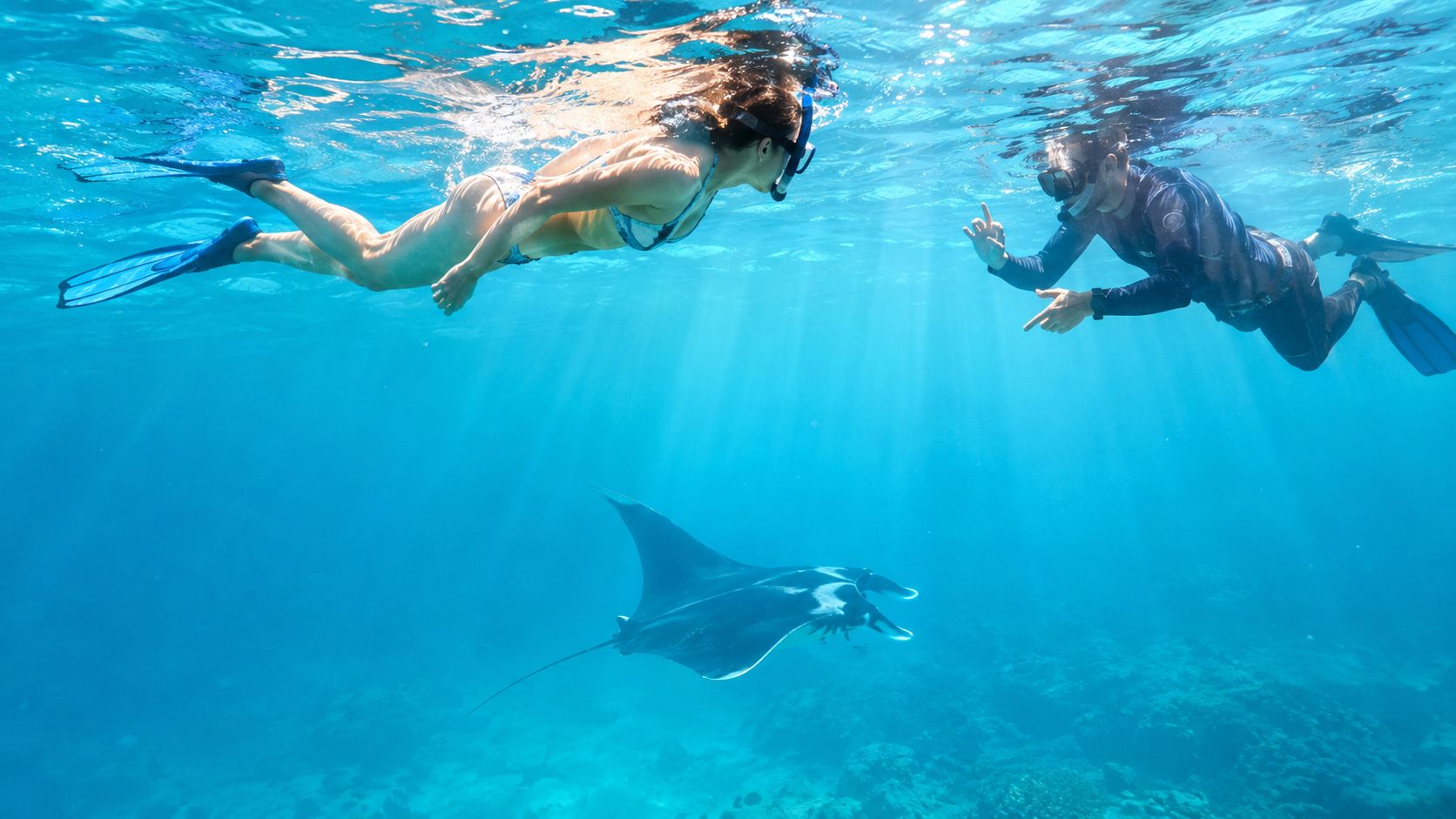
Once you are set, stop improving your position. Keep hands close, equipment tucked in, and fins quiet. Mantas feed on looping paths through concentrated plankton, and your stillness keeps that path open. A ray that has to veer around your legs, camera, or light beam is a ray you have just pushed away from everyone.
Practical rule: Stay still, stay outside the feeding lane, and let the manta decide how close the encounter becomes.
Light Discipline for Divers
Carry your primary and backup lights, know how each one switches on with gloves or cold hands, and keep beams directed as instructed, generally upward to support the feeding column rather than into a ray's face or your buddy's eyes. Do not sweep lights around searching the dark. That breaks night vision, confuses signals, and pulls attention away from the guide. Your light is a positioning tool, not a spotlight for your personal tour.
The defensible protocol is passive observation. Maintain at least 3 m (10 ft) from a manta, approach only from the side if movement is necessary, and never touch, chase, block, or dive down in front of the animal, consistent with Marine Megafauna Foundation guidance on manta ray tourism. If a ray turns toward you, hold position if your guide's briefing allows it, keep limbs in, and give it an escape route. Do not reach out to prove how close it came.
Exit and Problem Reporting
Move, ascend, or retreat only on guide instruction. Snorkelers need surface awareness the whole time, including where the boat is, where other guests are kicking, and whether they are drifting from the group. Report disorientation, separation, cramps, or equipment problems immediately with the agreed signal. Waiting because you feel embarrassed turns a minor fix into a search problem.
After exit, stay for the post dive check in, return rental gear as directed, and tell the crew about any lost item, ear issue, or unusual fatigue. That closes the safety loop and helps the next group. Calm is not a personality trait here. It is a sequence of small, disciplined choices that you repeat from briefing to boat ladder.
Avoid Crowds and Common Hazards
Most visitors worry about the wrong danger. They ask whether mantas bite or sting, then ignore boat traffic, darkness, propeller lanes, steep drop offs, and forty strangers kicking in the same lit patch of ocean. The ray is rarely the problem. People competing for position are the problem.
Crowding at Kona is documented, not anecdotal. In a Kona Coast survey with 444 participants and an 89% response rate, 82% felt crowded by snorkelers, 78% by boats, and 69% by scuba divers, according to the peer reviewed Kona Coast manta encounter and crowding study. During August 2015 observations in the verified data above, counts reached roughly 16 to 19 vessels and 160 to 190 divers and snorkelers concurrently per night. Numbers like that explain why your assigned spot matters.
When a Manta Approaches in Busy Water
Hold position and preserve the feeding path. Do not free dive underneath it, swim to intercept it, or lift a camera into its route. Short term responses to disturbance can include course changes, avoidance, and interrupted feeding, even when long term population effects remain uncertain. Your restraint protects both the animal's meal and the view for the guest beside you, a point reinforced in guidance on responsible and considerate diver etiquette.
- Crowded water: Stop kicking, tuck in, signal your guide, and yield space rather than pushing forward.
- Reduced visibility: Close distance to your buddy or group marker and wait for a guide decision.
- Disorientation: Stop, breathe, signal, and restore group contact before you try to move.
- Separated gear: Do not dive after it into traffic or a feeding lane. Tell the guide after you are stable.
- Ray changing course: Stay still, keep limbs in, and leave an open exit path.
Etiquette Versus Enforceable Rules
Be clear about what kind of rule you are hearing. A Hawaiʻi Department of Land and Natural Resources assessment reported that, at the time of its review, no regulations specifically governed recreational or commercial swimming and snorkeling at the Kona viewing sites, as set out in the DLNR manta ray viewing boating operations and safety assessment. Stakeholders proposed permits, time limits, designated viewing areas, and a participant to guide ratio no higher than 10 to 1. Operator briefings and voluntary etiquette therefore carry real weight on the night, even when a specific instruction is not a location specific law.
Do not use that distinction as an excuse. Boat propellers can cause fatal injuries, vessel lanes are not swimming lanes, and slow speeds near harbors only help if swimmers stay where crews expect them. If conditions feel chaotic, tell your guide early. A shorter, controlled encounter beats a long, crowded one that ends with separation or a ray leaving the lights.
Improve Your Gear and Photography
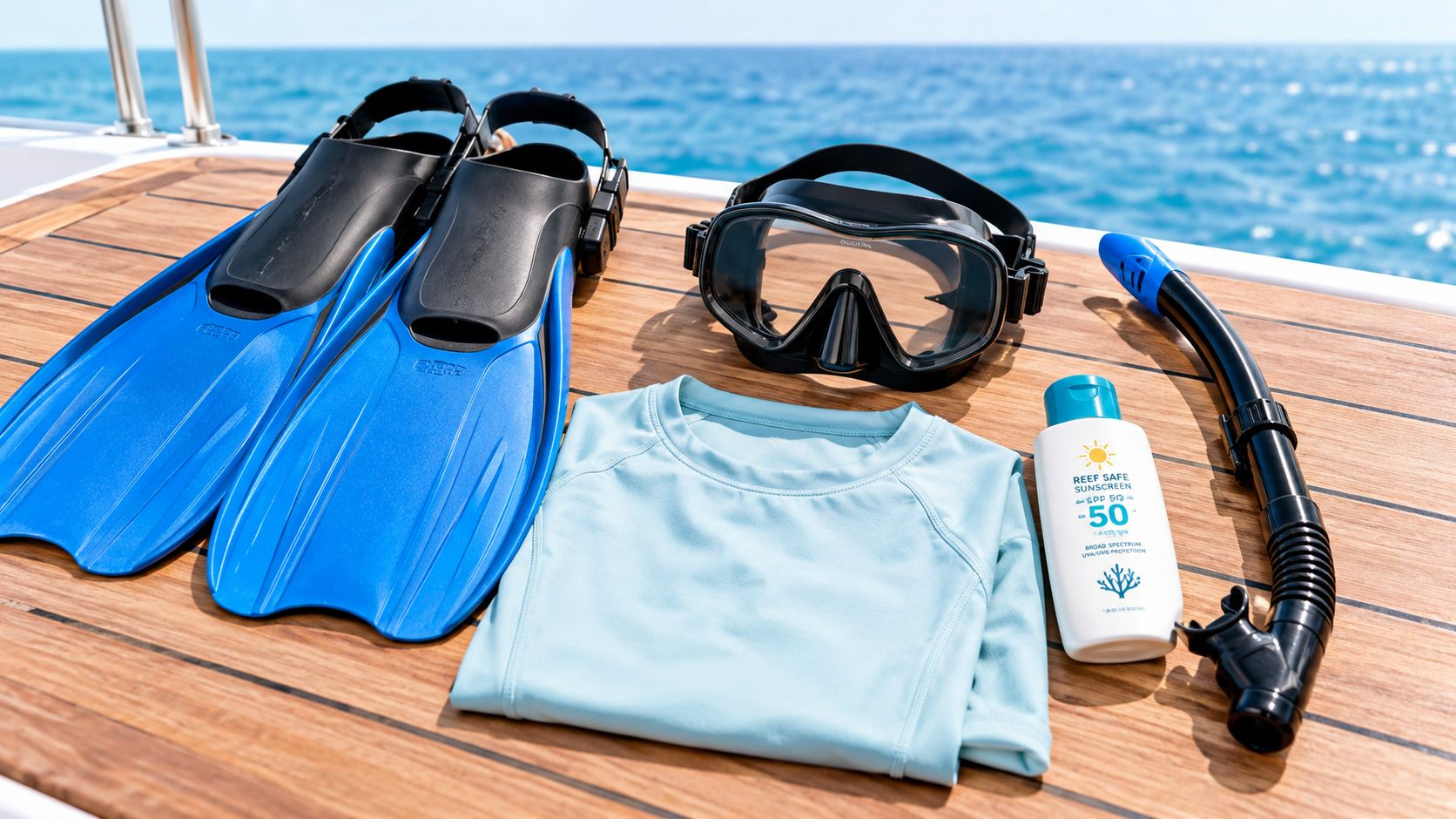
Buy fit before features. A fitted mask that seals without constant clearing matters more than a new camera, and comfortable fins you can control matter more than stiff fins built for speed. Snorkelers need a simple, reliable setup, rash protection or a wetsuit for warmth and abrasion control, and reef safe sun care applied well before a sunset departure. Test every strap and buckle on land, because adjusting unfamiliar gear in dark water invites drifting and kicking.
Scuba Gear Demands More Discipline
Divers carry greater buoyancy, light management, and exposure control demands. Check your primary and backup lights, batteries, BCD, regulator, and computer before departure, then streamline hoses and accessories so nothing dangles into sand or reef. Lights support the plankton column and group signaling, so aim them as instructed and never point a beam into a ray's path to force a reaction. If your buoyancy needs constant correction, leave the camera on the boat and fix the core skill first.
If you cannot hover, hold position, and watch your buddy without a camera, adding a housing will not make you a photographer. It will make you a distraction.
Photography Without Chasing
Agree on signals with your buddy, decide who is watching position while the other shoots, and accept missed frames. Control buoyancy before framing, keep both hands disciplined, and avoid flash or strobe use when it could startle wildlife or conflict with your guide's instruction. Ray position determines the image. Your job is to be stable, correctly exposed as conditions allow, and ready when a feeding pass crosses the light.
- Housing check: Inspect seals, ports, and controls on deck, not during descent.
- Power and storage: Carry charged spares, clear cards in advance, and back up files after the trip.
- Settings discipline: Set a workable baseline before entry so you are not menu diving over the reef.
- Framing restraint: Shoot the pass you are given and stay out of the corridor for the next one.
Good manta images come from patience, clean water, and a ray that feels no need to avoid you. Gear helps only after positioning, breath control, and light discipline are already working. Keep the kit simple enough that you can secure it instantly if your guide signals a move. No photograph is worth a lost buddy, a silted viewing area, or a blocked feeding loop.
Build Your Manta Ray Itinerary
Build the night around readiness, not hope. A snorkeler's timeline should run from early arrival and gear check to briefing, guided entry at Garden Eel Cove, a controlled surface watch, orderly exit, and post activity check in with time to warm up and debrief. A diver's timeline adds certification review, two tank logistics, buddy and light checks, bottom positioning, reef etiquette, and a photography window only after the group is settled. In both versions, sighting timing still depends on plankton and the rays themselves.
Two Workable Trip Structures
Snorkeler focus: Arrive fed and hydrated, confirm mask and wetsuit fit, listen for surface position and boat return instructions, then spend your effort on slow breathing and stillness. Keep the next morning flexible if you booked early in your stay and may rebook after a quiet night.
Diver focus: Use the first tank and surface interval to confirm weighting, lights, buddy signals, and comfort in the dark before the manta portion matters most. Treat the second tank as a positioning exercise first and a viewing opportunity second. If you want broader Kona boat based options around the manta night, compare schedules through Kona boat tours without stacking so much activity that fatigue follows you into the water.
Conservation Should Shape Your Choice
This population is small. NOAA reported in 2024 that researchers had identified only 318 unique manta rays around Hawaiʻi Island since 1979, with approximately 104 adult breeders, and genetic evidence indicated the Hawaiʻi Island and Maui Nui groups should be treated as separate populations, as summarized in the Oceanographic Magazine account of diving with Hawaii manta rays at night. Manta rays were listed as Vulnerable by the IUCN in 2005, and Hawaiʻi prohibited killing or capturing them in state waters in 2009. Passive observation is not polite decoration. It is how a small, isolated population keeps feeding at sites people visit nightly.
My recommendation is direct. Choose Garden Eel Cove, book the format your skills support, reserve early enough to reschedule, and use the manta ray dive and snorkel experience structure that keeps divers and snorkelers in controlled positions. Kona Honu Divers can be evaluated alongside other Kona operators on briefing quality, group control, and how clearly the crew handles crowding and light discipline.
Kona Honu Divers offers guided manta ray night diving and snorkeling at Garden Eel Cove, with structured briefings, boat logistics, and in water positioning for certified divers and surface snorkelers. If you want a controlled Kona manta experience that treats positioning, light discipline, and passive observation as the core skills, visit Kona Honu Divers and check availability for your preferred night.