
Picture this: you’re floating in the warm, dark Pacific Ocean. Suddenly, a gentle giant with a wingspan stretching up to 16 feet glides silently, gracefully, just inches above your head. It sounds like something out of a nature documentary, but this is the reality of the manta ray night dive, the experience that put Kona on the map for ocean lovers everywhere. If you're visiting the Big Island, this is one adventure you absolutely cannot miss.
Why Is Kona the World's Manta Ray Hotspot?
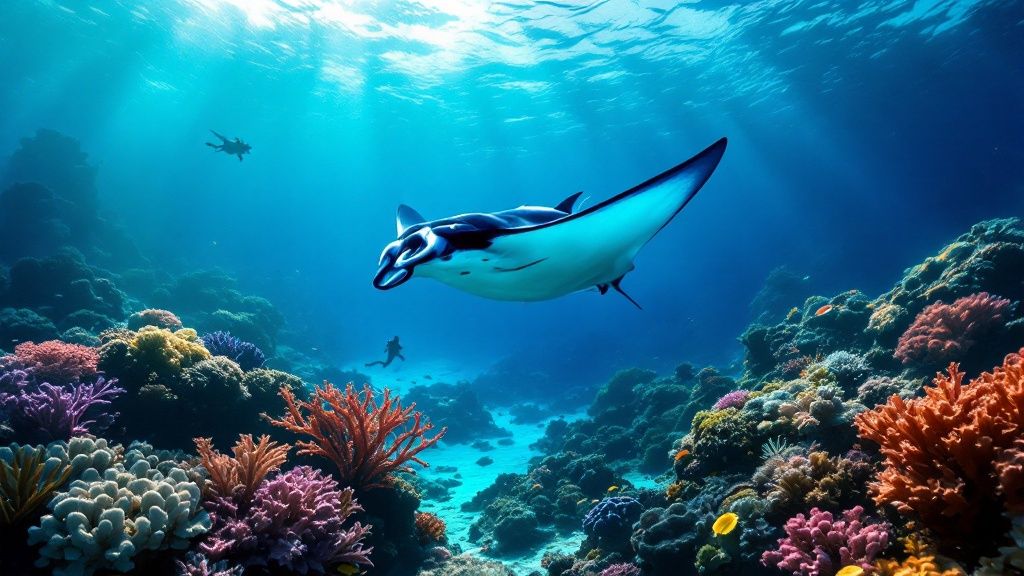
It’s no accident that Kona, Hawaii, became the global capital for manta ray encounters. We have the perfect recipe: calm, protected waters, consistent currents rich with plankton, and a massive, year-round population of resident manta rays.
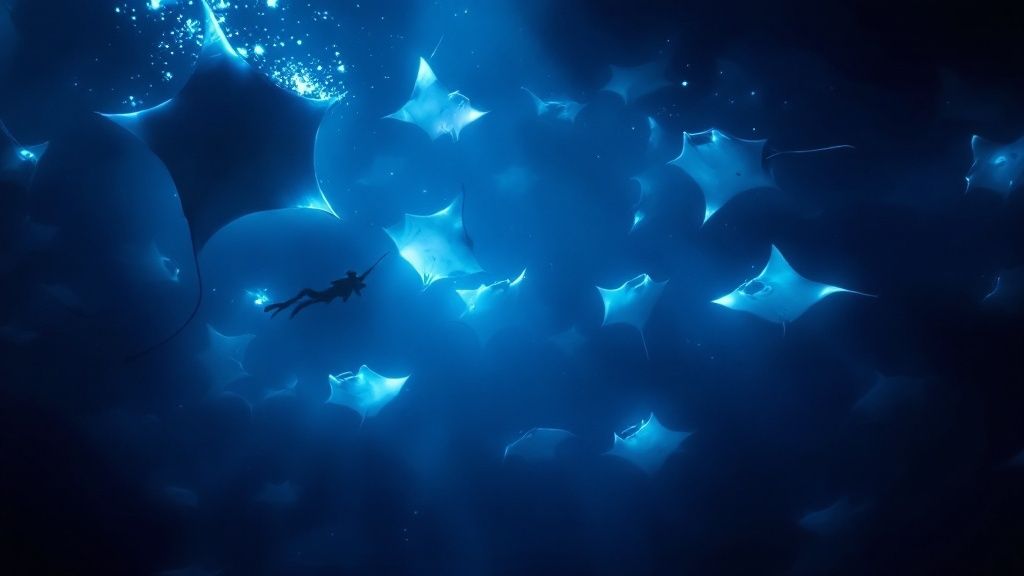
Every evening, dive operators like us head to specific sites and shine powerful lights into the water. Think of it as an "underwater campfire." This light acts as a massive dinner bell, attracting swarms of microscopic plankton—the mantas' favorite meal. Before you know it, the mantas arrive for their nightly feast, performing a mesmerizing, silent ballet for the divers and snorkelers lucky enough to witness it.
A Reliable Natural Wonder You Can Count On
The success rate for seeing mantas here is off the charts. Kona's unique geology and ocean conditions have created one of the most consistent and reliable manta ray viewing spots on the entire planet, drawing around 80,000 visitors a year for this specific dive.
With an incredible 80-90% success rate for sightings, it has truly become the gold standard for manta ray encounters worldwide. We go into more detail on what makes this dive so special in our guide to the manta ray night dive.
This adventure is your chance to witness a natural phenomenon that will stick with you forever. When you’re ready for an unforgettable trip, join a top-rated operator like Kona Honu Divers.
Understanding the Science Behind the Underwater Ballet
That nightly underwater show you see on the **manta ray dive kona** isn’t just random luck—it’s actually a pretty brilliant bit of applied science. The whole thing works because of a simple but effective idea we call the “manta ray campfire.”
Here's how it works: Dive operators figured out that shining powerful lights into the water acts like a giant magnet for plankton, which is the mantas' favorite food. The light basically creates a glowing, all-you-can-eat buffet in the middle of the dark ocean, drawing in massive clouds of these tiny critters.
The mantas, being the smart animals they are, have put two and two together. They’ve learned that these lights mean an easy dinner is served, and this learned behavior is what makes the whole encounter possible.
The Power of Site Fidelity
Because this food source shows up so consistently, it's created a fascinating behavior known as site fidelity. The local manta population is now conditioned to come back to these exact spots, night after night. They know a reliable meal is waiting.
This turns what could be a hit-or-miss tourist activity into a predictable, awe-inspiring meetup with a wild ecosystem. It's a huge part of what makes the Big Island so special for this kind of adventure.
Over the years, Kona's dive sites have become a living laboratory for marine biologists. By taking photos of the unique spot patterns on the mantas' bellies, researchers have identified and cataloged over 330 individual rays and logged more than 28,500 sightings.
This long-term research proves that the mantas' conditioning to the lights is what creates the reliable feeding grounds that have made Kona famous. So when you're down there watching them, you'll know you're not just seeing magic; you're seeing science in action. To learn more, check out our article exploring why you should go on a manta ray dive in Kona.
Choosing Your Adventure: Scuba Diving Vs. Snorkeling
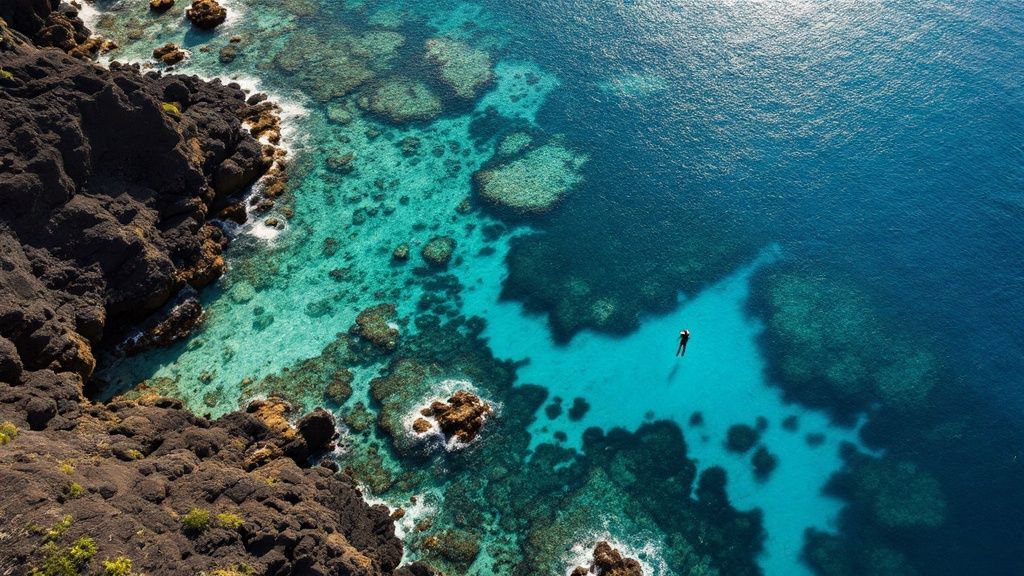
So, you're ready to see the mantas. Awesome. There are two phenomenal ways to witness this underwater ballet, and your choice really comes down to the perspective you want. Both scuba diving and snorkeling offer a front-row seat, just from a different angle.
If you’re a certified scuba diver, the Kona manta ray dive is an experience you'll be telling stories about for years. You’ll descend to the sandy ocean floor, about 30-40 feet down, find a spot, and simply look up. The real magic happens when these gentle giants perform their acrobatic feeding loops right over your head, sometimes gliding just inches away.
For snorkelers, you get a fantastic bird's-eye view of the whole production. You’ll float comfortably on the surface, holding onto one of our custom-built light boards. These boards light up the water below, attracting the plankton and bringing the mantas right up to you for dinner.
Comparing the Manta Ray Experiences
To help you figure out which adventure is the right fit, here’s a quick comparison of the two main ways to see the mantas. Both are incredible, but your comfort in the water and whether you're certified will be the deciding factors. If you're on the fence, learning a bit more about scuba diving in Hawaii might help you make the call.
Manta Ray Dive vs. Snorkel Experience
| Feature | Scuba Diving | Snorkeling |
|---|---|---|
| Perspective | Looking up from the ocean floor | Looking down from the surface |
| Proximity | Mantas often glide inches above you | Excellent bird's-eye view of the action |
| Certification | Open Water certification required | No certification needed; basic swimming skills |
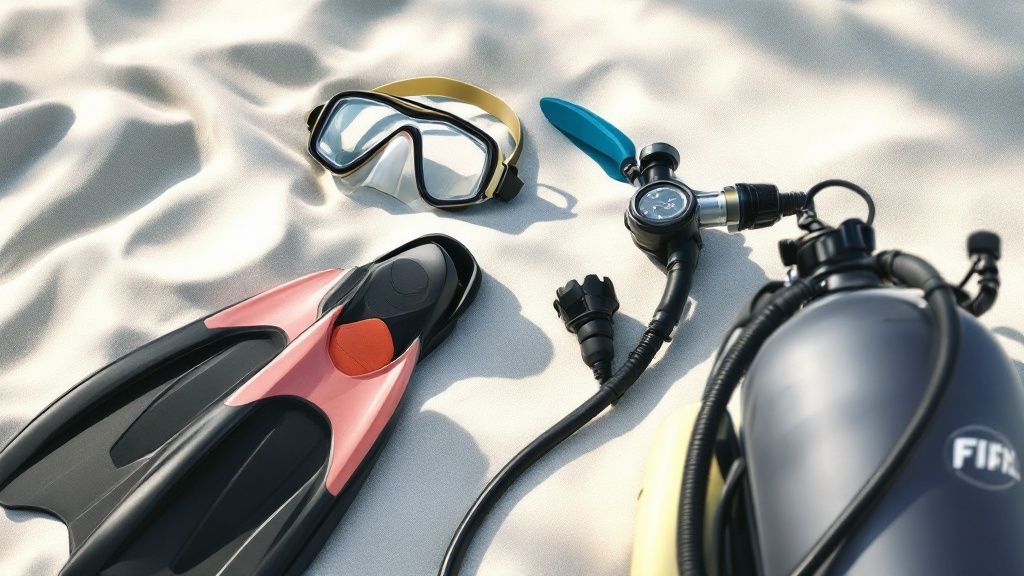
| Equipment | Full scuba gear | Mask, snorkel, fins (wetsuit recommended) |
Ultimately, whether you choose to be on the ocean floor looking up or floating on the surface looking down, a Kona manta ray encounter is an absolute must-do. You can't go wrong either way.
How to Prepare for Your Manta Ray Night Dive
A little bit of prep work can make a huge difference between a good manta ray dive and a truly magical one. Knowing what to expect from the second you step on the boat helps you relax and soak in every incredible moment.
First things first, think about your comfort. Even in beautiful Hawaii, the boat ride back to the harbor can get surprisingly chilly after a night dive. Trust me, you'll be glad you packed a warm jacket or a fluffy towel to wrap up in. Staying hydrated is also key, so tossing a reusable water bottle in your bag is a smart move.
The most important thing? Show up with an open mind and pay close attention during the pre-dive safety briefing. This isn't just a formality; it's crucial for understanding how to interact with the mantas safely and respectfully. Remember, these are wild animals in their natural home, and every single night is a unique encounter.
What to Pack for Your Trip
To make sure you're all set for a smooth and amazing trip, here's a quick checklist of the essentials:
- Warm Jacket or Sweatshirt: You'll thank yourself during the boat ride back to the harbor.
- Reusable Water Bottle: Staying hydrated is always important, especially when diving.
- Swimsuit and Towel: Pro tip—wear your swimsuit under your clothes to make things easier.
- Reef-Safe Sunscreen: An absolute must if you're on a two-tank trip that starts in the afternoon sun.
- Certification Card and Logbook: Don't leave your scuba credentials at home!
Choosing a highly-rated, safety-focused operator like Kona Honu Divers is your ticket to a world-class experience. Our experienced crew will walk you through every step, ensuring you’re totally prepared for the underwater spectacle. If you're newer to diving, getting a handle on the basics will boost your confidence. You can learn more about Kona scuba diving with Kona Honu Divers in our detailed guide.
Protecting the Mantas with Responsible Tourism
Being in the water with Kona's manta rays is a massive privilege, and with that comes a shared responsibility to keep these gentle giants safe. The long-term health of this incredible manta population really depends on every single one of us acting like a respectful guest in their home.
The whole encounter is built around one simple but powerful idea: passive observation. You're there to watch the magic, not become part of the show. By following a few crucial guidelines, you play an active role in conserving this natural wonder for years to come.
The Dos and Don'ts of Manta Interaction
If you take away only one rule, let it be this: never, ever touch a manta ray. Their skin is coated in a delicate, protective mucus layer that acts like a shield against harmful bacteria. Touching them can easily strip this coating away, leaving them wide open to dangerous infections.
Here’s the simple breakdown for being a manta-safe diver or snorkeler:
- No Touching: It can be tempting when they glide inches away, but resist the urge to reach out. Keep your hands to yourself.
- No Chasing: Never swim after a manta or try to "ride" one. Let them be in complete control of the encounter.
- Hold Your Position: If you’re diving, stay put near the seafloor. If you're snorkeling, stay flat on the surface. This keeps the water column—their dining room—open and clear for them to feed and move around without obstacles.
Any eco-conscious operator will champion these guidelines, making sure every guest knows how to help protect the mantas. You can see how the best outfits operate by checking out a list of Kona's top 10 manta ray night snorkel tours and the standards they stick to. Following these rules is what keeps the manta ray dive kona a sustainable, ethical, and absolutely magical experience.
Explore More of Kona’s Underwater World
While the manta ray dive in Kona is an absolute peak experience, it's really just the beginning of what the Big Island’s underwater world has to offer. For divers hungry for more, Kona is a treasure trove of world-class adventures just waiting to be discovered.
Once you’ve witnessed the manta ballet, it’s natural to start thinking, "What's next?" From vibrant, sun-drenched reefs to dramatic volcanic seascapes, there's a dive here for every skill level.
Beyond the Mantas
If you're looking for another unique and almost surreal night dive, the Kona blackwater dive is a must. Seriously. You'll find yourself drifting in the deep, open ocean at night, watching the most bizarre and beautiful bioluminescent creatures rise up from the depths. It feels like a trip to another planet, but it's right here in Hawaii.
For experienced divers looking for a bit more of a challenge, we have plenty of advanced dive tours. These trips will take you exploring dramatic lava tubes, deep pinnacles, and pristine coral gardens that are absolutely teeming with life—sites that very few people ever get to see.
Whether you're after another thrilling night dive or want to explore Kona's colorful reefs by day, your adventure doesn't have to stop with the mantas. Have a look at all of Kona's other diving tours to keep your underwater journey going.
Your Manta Dive Questions Answered
Even the most experienced divers usually have a few questions before their first **manta ray dive in Kona**. To make sure you feel totally ready for this incredible experience, we’ve put together some quick answers to the questions we hear most often.
Is the Manta Ray Night Dive Safe?
Absolutely. Safety is the top priority for every professional operator here in Kona, and we take it very seriously. You'll be with experienced, certified divemasters and instructors who give a full safety briefing before anyone even gets in the water. These dive sites are well-established, and the whole operation is standardized to keep things controlled and secure for everyone.
What Happens If We Don't See Any Manta Rays?
It's extremely rare, but it can happen. These are wild animals, after all, and we can't ever make guarantees. That said, the success rate is remarkably high—often over 90%. You're very likely to see them.
Just in case, top-tier operators like Kona Honu Divers have a "manta guarantee." If your tour is one of the rare unlucky ones and you don't see any mantas, you can come back another night and try again for free (just depends on availability). This is a great reason to book your manta dive early in your vacation, leaving you time for a potential do-over!
Can Kids Come on This Tour?
Yes, they can! The rules are just a little different depending on whether they're snorkeling or diving.
- For Snorkelers: As long as a child is comfortable in the ocean, they can usually join in on the fun.
- For Scuba Divers: Kids will need at least a Junior Open Water certification. The minimum age for this is typically 10 or 12 years old.
It's always a good idea to double-check the specific age and certification policies with your tour operator when you book.
Do I Need to Be an Expert Swimmer to Snorkel?
Not at all. You don't need to be an olympic swimmer, but you should be comfortable in the water. Everyone wears a wetsuit, which helps you float, and you'll be holding onto a big, stable flotation board equipped with lights. Your job is just to float and watch the show below—no real swimming is involved. Plus, the crew is right there the whole time to help out if you need anything.
Ready to see this underwater ballet for yourself? Kona Honu Divers offers a world-class, safe, and unforgettable manta ray dive tour that’s sure to be the highlight of your Big Island trip.