
The lights had only been on for a few minutes when the first manta rose from the darkness, turned on its side, and passed beneath the divers' faces. Nobody needed a reminder to stay still. The entire group watched the animal choose its own path through the illuminated water.
What Is a Manta Night Dive
At Garden Eel Cove, the experience begins with darkness, quiet water, and a pool of artificial light shining into the sea. The light attracts plankton, and the plankton attracts manta rays. Once the animals arrive, they may glide, bank, and roll through the feeding area while divers watch from below.
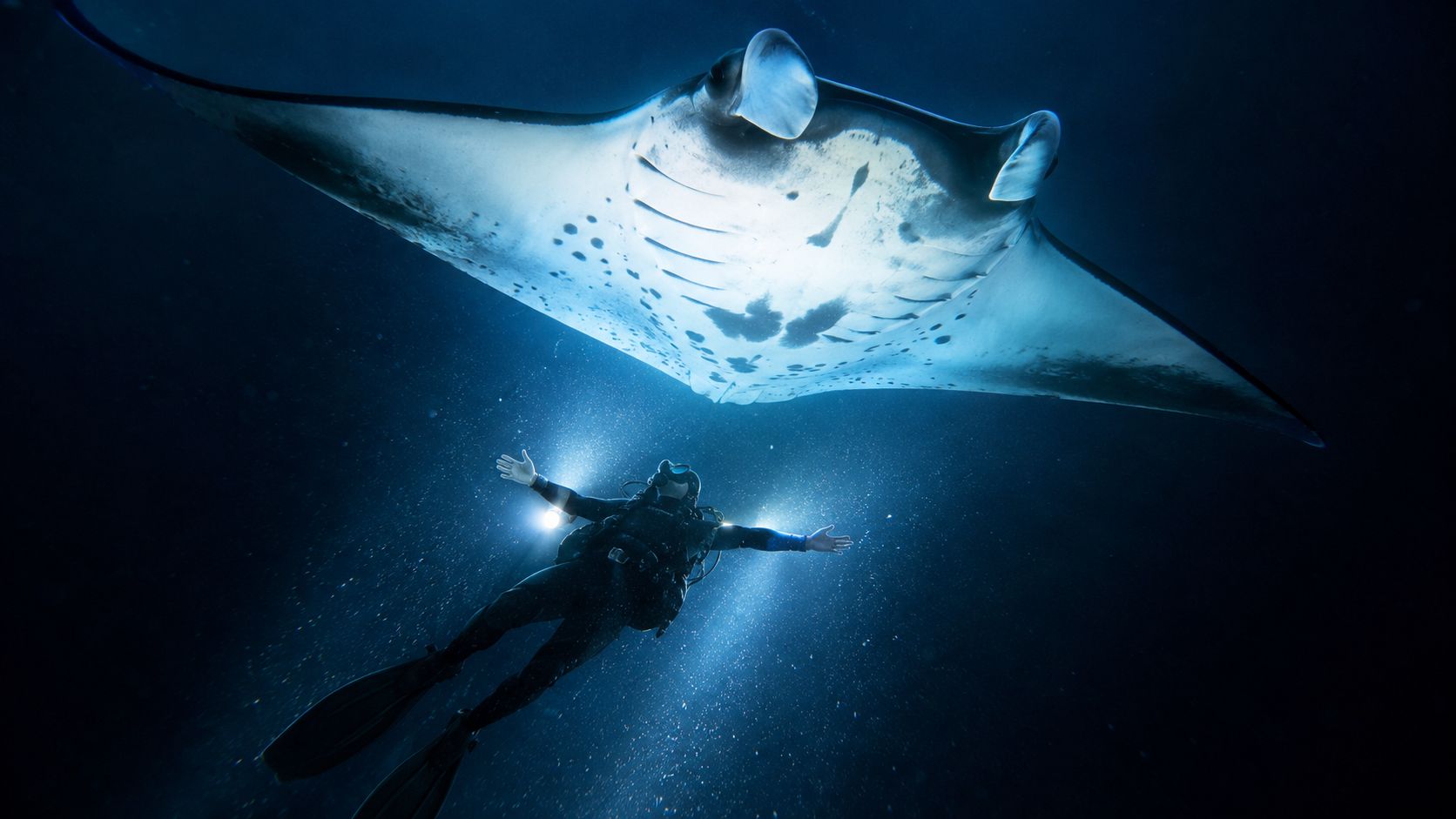
A manta night dive isn't a reef dive with a late start. It's a stationary wildlife encounter built around feeding behavior. You descend to the viewing area, settle on the bottom, and let the mantas decide how close they want to come. The best moments often happen when divers stop trying to create them.
Why the animals come to the lights
Manta rays are filter feeders. They swim with their mouths open while cephalic fins help funnel plankton-rich water across their gill plates. Their prey includes small planktonic organisms such as copepods, euphausiids, mysids, decapod larvae, and shrimp, as described by NOAA's giant manta ray species information.
The lights don't summon mantas directly. They concentrate phototactic zooplankton, and the rays respond when the available food makes the area worth visiting. Currents, water movement, temperature structure, and plankton density all influence the encounter.
Kona's tradition is unusually established. Regular manta dives began on the Kona Coast in the late 1970s, and records document 3,208 surveys from 1992 through 2007, during which researchers identified at least 106 individual manta rays along the coast. The same government testimony describes repeated nighttime aggregation at sites including Keauhou Bay and Ho'ona Bay, supporting the conclusion that this is a long-running wildlife phenomenon, not an occasional lucky sighting. Read the documented Kona manta observations.
Practical reality: You're watching wild animals feed. The lights improve the viewing setup, but they can't control the ocean or guarantee a particular performance.
What to Expect on a Kona Honu Divers Trip
The evening starts before the boat leaves the harbor. Confirm the departure point, check-in time, included equipment, and cancellation policy before traveling. Arrive ready to discuss medical conditions, swimming ability, diving experience, or anything else that could affect your comfort in the water.
On a Kona Honu Divers trip, the captain controls vessel operations and chooses the viewing site. Dive professionals check equipment, lead the briefing, manage entries, help guests hold position, and supervise the return to the boat. Pay close attention if your itinerary includes a dusk reef dive before the manta encounter, since the timing and equipment change during the evening.
The site decision matters
Kona's principal viewing areas include Makako Bay and Keauhou Bay. A state-referenced safety assessment recorded at least 42 commercial tour operators visiting those areas as of August 2015, so boats, snorkelers, and divers may share a busy viewing zone. That crowding can affect where you enter, how long you wait, and the angle available once the lights are in the water. Review the state-referenced boating and safety assessment.
Garden Eel Cove, also called Manta Heaven, is one option the captain may select when conditions and the viewing layout favor it. Its location near the airport and established viewing area can support an organized encounter, with the possibility of seeing larger groups. Wind, swell, current, visibility, and animal activity still change from night to night, so the captain should retain final site discretion rather than promise a fixed location or result.
For a two-tank trip, the first dive usually occurs around dusk, followed by the night manta dive. Pack a swimsuit, towel, dry clothes, and a light layer for the ride home. Operators generally provide the core equipment listed with the booking, but confirm nitrox availability, rental sizing, tanks, weights, exposure protection, and any personal equipment requirements before departure.
Review this Kona diving company guide before booking, then check the current schedule and weather policy.
Snorkeling Versus Scuba Manta Dives Compared
The choice isn't only between an easier trip and a more difficult one. Snorkeling and scuba create different viewing angles, and each works well for a different type of guest.
| Criterion | Snorkeling | Scuba Diving |
|---|---|---|
| Depth | Remains at the surface above the feeding area | Observes from the bottom near the viewing lights |
| Certification | Must be capable of swimming without a flotation device | Requires Open Water certification |
| Position | Stays at the surface and must not freedive into the feeding column | Remains low in a semi-circle on the sand, rubble, or boulder bottom |
| Movement | Holds position at the surface and watches below | Settles into a stable position and looks upward |
| Experience | Offers a surface-level view with open access to the lighted water | Creates an immersive bottom-up perspective beneath the mantas |
Scuba is usually the better fit for a certified diver who can remain calm, control buoyancy, and sit or kneel without drifting into the feeding path. The stable bottom position reduces unnecessary movement and lets you watch the animals' approach from below.
Snorkeling suits guests who aren't certified, groups with mixed experience, and people who prefer to remain on the surface. It still requires real swimming ability. A flotation aid helps with comfort, but you shouldn't treat it as a substitute for being able to manage yourself in the ocean.
Match the format to the group
Families often face a practical split. One person may be a certified diver while another prefers snorkeling, and some operators can place both groups at the same viewing site. Ask how the operator manages separation, surface support, entries, and exits rather than assuming everyone will have the same experience.
Freediving toward a manta doesn't improve the encounter. It pushes a guest into the animal's feeding corridor and creates collision and disturbance risks. For a detailed look at the surface option, see this manta ray snorkel guide.
Why Mantas Gather at Night The Science Behind the Behavior
The night encounter depends on food movement. Zooplankton rises and redistributes through the water column after dark, a process known as diel vertical migration. Artificial lights can gather some of that plankton into a concentrated patch, which gives filter-feeding mantas a reason to investigate the viewing area.
That explanation also clarifies why the lights aren't a guarantee. The prey has to accumulate, currents need to keep it available, and the local temperature structure can influence where organisms collect. A bright light in empty water won't create a manta encounter by itself.
Surface feeding is only part of the story
Satellite-linked records from New Caledonia found that reef manta dives deeper than 300 meters occurred significantly more often at night, with a documented maximum depth of 672 meters. Those findings don't predict Kona conditions directly, but they show that nighttime manta behavior isn't limited to shallow coastal feeding. See the published depth-record study.
For a diver, the practical lesson is simple. A temporary absence at the lights doesn't mean mantas have left the region. The animals may be following a prey layer positioned elsewhere by currents, thermoclines, weather, or changing offshore conditions.
The same biology explains why a good dive requires patience. Mantas aren't parked above the lights waiting for guests. They enter, feed, alter direction, and leave according to their own energy needs. Learn more about manta rays in Hawaiʻi.
Preparing for Your Manta Night Dive
Preparation starts before you reach the dock. Night diving adds visual limitations, a boat ride, and a different mental environment, so small comfort problems become more distracting once you're in the water.
Pack a swimsuit, towel, dry clothes, a warm layer, personal medications, and any camera you can operate without losing control of your position. Bring your certification card if you're diving, and check the operator's equipment list for wetsuit, mask, fins, light, tank, and weight inclusions.
Handle motion before it starts
If you're prone to seasickness, plan ahead rather than waiting for nausea on the boat. Ask a medical professional or pharmacist about medication suitability, side effects, and timing, especially if you're diving or taking other medicines.
Available options include the Ship-EEZ Seasickness Patch, Dramamine pills, Bonine pills, Sea Band wristbands, and ginger chews. Sea Band is a cheaper generic-style wristband option that gets better ratings, while ginger chews may appeal to guests who prefer a non-pill approach.
Eat a familiar, moderate meal before departure and avoid arriving dehydrated or overly full. Keep the boat ride comfortable by looking toward the horizon when possible, staying where the crew recommends, and telling someone early if you feel unwell. More practical guidance is available in this Kona seasickness guide.
Prepare for the actual environment
Warm tropical water still feels cool during a stationary night dive. A rash guard or wetsuit can make it easier to remain relaxed, and a properly fitted mask matters more than bringing extra accessories. Your dive computer or depth gauge should be present and functioning for scuba operations, even when the dive profile feels simple.
Children need an honest assessment rather than a holiday assumption. Scuba requires Open Water certification, snorkelers must be capable of swimming without a flotation device, and guidance for the activity recommends against bringing children younger than 10 into the ocean at night. Review the participant guidance.
Safety and Environmental Best Practices
The safest manta encounter is passive. Divers and snorkelers should create predictable boundaries, stay aware of other people, and allow the animals to control distance and direction.
Divers should remain on or near the sand, rubble, or boulder bottom and form a semi-circle. That leaves the open water column available for manta movement. Snorkelers should stay at the surface and must not freedive into the feeding area.
Light and body control
Lighting works best when every guest uses it with discipline. Divers hold lights upward to draw plankton into the viewing area, while snorkelers shine lights downward. Don't sweep a beam across the viewing circle to pull a manta away from another group.
Keep your fins low and avoid sudden changes in direction. Don't chase, grab, touch, surround, or attempt to ride a manta. Avoid directing bubbles toward an approaching animal, and divers should remove snorkels from their masks because a manta can snag one and dislodge the mask. The Wildlife Viewing and Handling Standards provide the positioning and lighting guidance used for this type of encounter.
Crowding creates a second safety problem that many promotional guides ignore. A survey of 444 manta-viewing participants found that 82% felt crowded by snorkelers, 78% by boats, and 69% by scuba divers. A related study found that 53% of scuba divers experienced conflict with other divers, including bumping, inattentiveness, and lights shining into other people's eyes. Read the crowding and diver-conflict research.
Hawaiʻi law enacted in 2009 established criminal penalties and administrative fines for knowingly capturing or killing manta rays in state waters, except for approved research and educational purposes. The encounter is therefore a regulated wildlife interaction, not an open invitation to make contact. Review Hawaiʻi's manta protection framework.
For practical habits that improve the experience for everyone, read this guide to responsible and considerate diver etiquette.
Booking, Pricing, and Choosing Your Operator
A good booking starts before you step aboard. Ask what the fare covers, how the crew runs the night operation, and what happens if weather or sea conditions change the plan. An operator should explain those limits plainly rather than promise a guaranteed manta encounter.
Price comparisons require care. A lower fare may exclude equipment, transportation, nitrox, or other trip essentials. A higher fare may pay for a smaller group, a better-maintained vessel, more crew coverage, or clearer preparation. Request the full cost before deciding.
Use a practical booking checklist
- Site policy: Confirm that the captain can select between viewing areas when conditions change.
- Group management: Ask how divers and snorkelers are organized and how the crew reduces congestion.
- Equipment: Verify tank configuration, wetsuit availability, dive lights, rental sizes, and nitrox arrangements.
- Cancellation terms: Read the policy for unsafe weather, poor visibility, illness, and operator cancellation.
- Experience level: Check certification requirements and whether guides explain the encounter, not just entry and exit procedures.
Kona's manta tourism is a substantial local industry, so operator quality varies. The checklist matters more than the advertised fare. A busy site can affect how much space you have, how clearly you hear instructions, and how calmly the crew can manage the group. Ask about typical group size and departure timing, especially during periods when demand is high.
The practical trade-off is simple: paying less may work if the inclusions and group arrangements suit you, while paying more can buy better logistics rather than more manta activity. No operator controls the animals, water movement, or visibility.
Kona Honu Divers offers a two-tank manta dive and snorkel trip. Compare that trip with a blackwater dive or an advanced long-range outing as a different experience, rather than assuming a package improves the manta encounter.
Frequently Asked Questions About Manta Night Dives
Can children join?
That depends on the operator, swimming ability, and activity. Scuba participants need Open Water certification, while snorkelers need to swim without relying on a flotation device. Guidance recommends against bringing children younger than 10 into the ocean at night.
What happens if mantas don't appear?
The crew may wait within safe operating limits, move according to conditions, or provide the alternative described in the booking. A manta-free night isn't a failed conservation experience. It means the operator respected natural behavior instead of forcing contact or making unsafe decisions.
Do I need previous night-diving experience?
You need the required certification and comfort in the water, but you don't necessarily need previous night-diving experience. The briefing, lights, buddy procedures, and guide positioning matter more than having already completed a manta dive.
Can I take photographs?
Yes, if your camera use doesn't compromise buoyancy, awareness, or light discipline. Keep the camera under control, don't chase a manta for a frame, and avoid shining a light into the animal or another diver's eyes.
How do weather and health affect the trip?
The captain should cancel, delay, or alter the plan when sea conditions make the operation unsafe. Guests who are pregnant or managing a medical condition should consult a qualified clinician and disclose relevant information to the operator before booking. Boat trips generally don't function as meal services, so eat beforehand and bring only what the operator permits.
The best expectation is not a guaranteed number of mantas or a guaranteed photographic moment. It's a carefully managed opportunity to observe wild animals without touching or directing them.
Kona Honu Divers offers guided two-tank manta dive and snorkel trips with a dusk reef dive followed by a night encounter at Garden Eel Cove when conditions support that site. Visit Kona Honu Divers to review the current itinerary, confirm participant requirements, and reserve a place for your Kona manta night dive.