
Kona's manta rays are resident animals, not a short seasonal spectacle, and peak nighttime aggregations shift with plankton density and site conditions rather than a calendar date. The key fact in Hawaiʻi is where the mantas feed, because the same individuals return to the same places for decades.
I've watched guests go from cautious curiosity to complete silence the moment a manta passes under the lights, mouth open and cephalic fins curled into that unmistakable feeding shape. That's the Kona experience at its best, a close encounter with wild animals that are well studied, locally familiar, and still never routine.
What Makes Manta Ray Encounters in Kona Special
A first-time guest often expects a novelty show. Kona gives something different, a working feeding station where light, plankton, and resident reef manta rays line up in the same place night after night. The result feels unreal, but the pattern behind it is ecological, not theatrical.
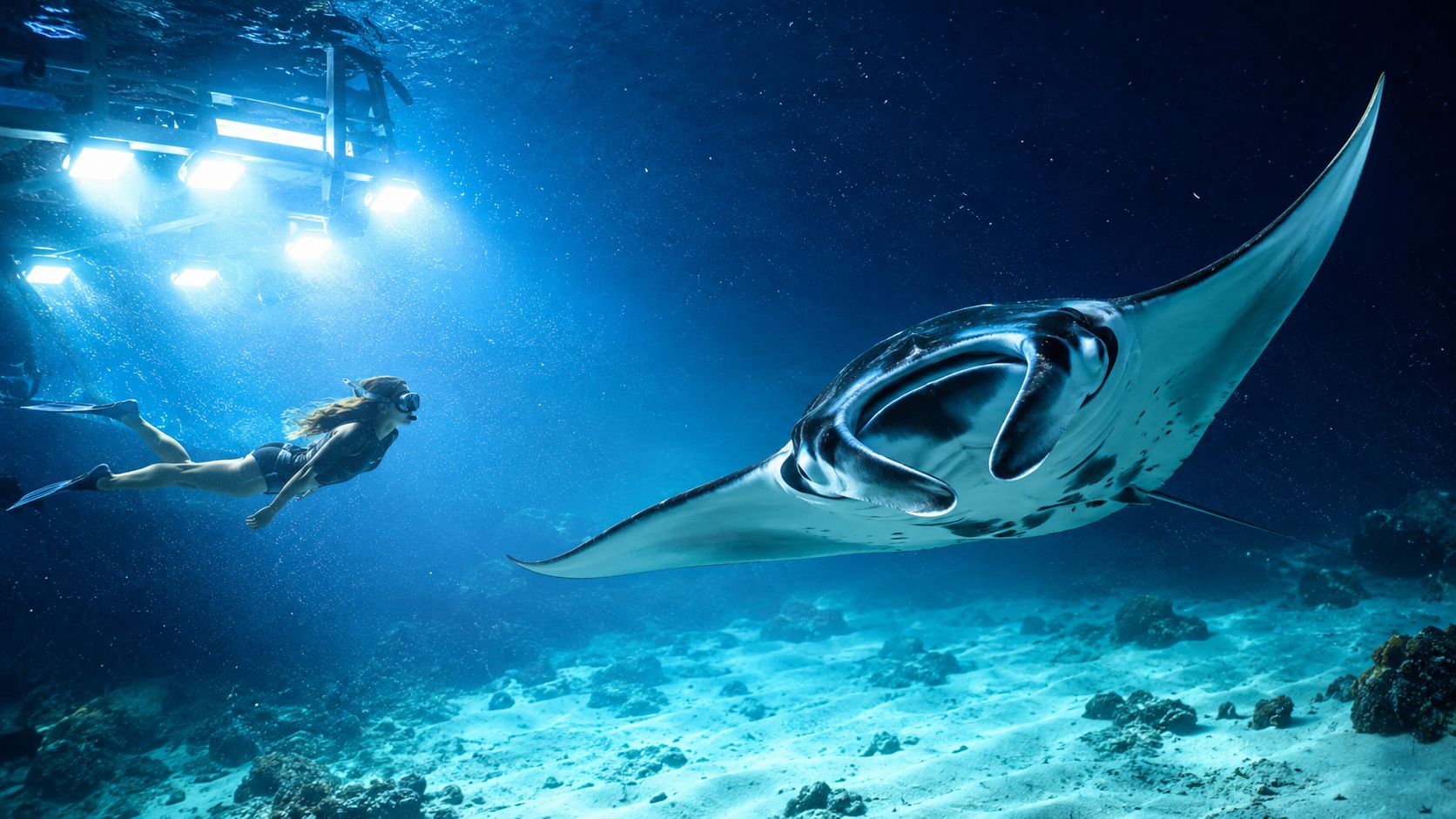
The modern Kona manta story began in the 1970s, when construction lights at what is now the Outrigger Kona Resort and Spa drew plankton to the surface and a resident manta kept coming back to feed. Organized manta tours from Keauhou Bay reportedly began in 1985, and Hawaiʻi later made it illegal to kill or capture manta rays in 2009 with Act 092(09) source material. That history matters because the encounter grew around animals already using these sites, then was refined by years of observation.
What seasoned divers notice first
The genuine surprise is consistency. Hawaiʻi's manta rays have been followed through long-term photo-identification work, and that is one reason the Kona Coast stands out as a research site as well as a tourism draw long-term review.
Practical rule: if the site is active, let the mantas come to the light and do not try to force the encounter.
Kona's difference is also behavioral. Site fidelity keeps familiar animals returning, population vulnerability raises the stakes for every careless interaction, and sex-specific behavior shapes what guides see on a given night. For a practical local overview of why that matters in the water, see what makes Kona diving unique.
Guests who arrive expecting a guaranteed show often miss the point. Guests who understand resident behavior usually leave with a better trip and more respect for the animals.
Reef Mantas and Giant Mantas in Hawaiian Waters
Hawaiʻi has two manta species that matter to Kona visitors, the reef manta ray and the giant manta ray. Reef mantas usually span about 10 to 18 feet, while giant mantas can reach wingspans up to 26 feet Hawaiʻi Magazine. The size difference changes the first impression in the water, but the field rules do not change. Stay still, give them room, and watch how they work the light.
Why the feeding behavior looks so elegant
Manta rays are filter feeders. The Hawaiʻi Division of Aquatic Resources describes them opening their mouths, shaping the cephalic fins into an “O” shape, and pushing water over gill rakers that strain plankton into the stomach DAR. At night, that motion reads less like hunting and more like a slow, controlled harvest.
Identification matters just as much. The Hawaiian Islands National Marine Sanctuary notes that manta rays are recognized by the blotchy underside patterns that make individual recognition possible, and it says they can weigh up to 3,000 pounds with wingspans that can exceed 20 feet sanctuary guide. That patterning is the backbone of local research and repeat sightings, because guides and scientists can track familiar animals over time without handling them.
Field insight: those markings help operators build familiarity with local animals, which makes the encounter calmer for everyone.
For a closer look at what changes with depth, how deep manta rays dive in Kona is useful before you book. Depth affects what you see, but it does not change the rule. Watch the animal's path, and do not interfere with it.
Best Kona Manta Ray Viewing Sites and Where They Gather
Kona's two main night-viewing sites are often talked about as if they're interchangeable. They aren't. Long-term community-sourced data found that Garden Eel Cove consistently supports larger aggregations than Keauhou, while Keauhou was visited disproportionately by females, which points to sex-specific ecological patterns rather than random movement University of Hawaiʻi study.
Why Garden Eel Cove usually feels fuller
Garden Eel Cove is the site most guests picture when they think of Kona manta nights. It tends to produce larger aggregations because prey availability drives manta presence, and the same study tied seasonal and annual shifts at both Garden Eel Cove and Keauhou closely to zooplankton density UH study. That means a “good night” is really a prey night, not a calendar night.
Keauhou has value too, but for a different reason. When more females show up at one site, the operator and the diver are seeing a different ecological function, not a lesser one. That's why I always tell guests to think in terms of site choice, not just timing.
The broader conservation point is site fidelity. NOAA notes that Hawaiʻi Island and Maui Nui manta populations are genetically distinct and each consist of only a few hundred individuals NOAA. In other words, local disturbance matters, because these aren't massive, mixed populations that can shrug off repeated pressure.
For practical trip planning, Kona boat tours is a useful starting point if you want to compare experiences before choosing a night on the water.
Manta Night Dive versus Snorkeling, Which Experience Fits You
I've watched guests come off the boat with two very different reactions. Divers talk about the depth, the quiet, and the feeling of being inside the light. Snorkelers talk about how easy it was to join the experience without dealing with scuba gear. Both can be excellent. The better choice depends on comfort, conditions, and how close you want to get to the action.
Choose the dive if you want the deeper perspective
The night dive puts you lower in the water column and farther from the surface traffic. That gives you a steadier view of the mantas as they move through the light, but it also means managing buoyancy, equipment, and your own comfort after dark. It suits guests who already feel at home underwater and want the most immersive setting.
Choose the snorkel if comfort matters more
Snorkeling works better for families, cautious swimmers, and anyone who wants the simplest path into the encounter. You stay at the surface, which keeps the setup lighter and the logistics easier, while still giving you a clear look at the mantas passing below. If you want to compare what that looks like in practice, manta ray snorkel options is a straightforward place to start.
Practical rule: if you get cold easily, choose the format that lets you control your exposure time and movement.
Seasickness deserves honest planning. Night runs can feel different from daytime boat rides, so sensitive guests should prepare before boarding. A simple plan can include a patch like Ship-EEZ Seasickness Patch for longer protection, Dramamine pills or Bonine pills if you prefer a medication option, and Sea Band wristbands or ginger chews if you want non-drug support.
Manta Ray Safety, Etiquette, and Hawaii Conservation Rules
A good manta night starts with restraint. Kona's reef manta population is small, site-faithful, and sensitive to pressure, so crowding can change how the animals use a site and how reliable the encounter stays for everyone. NOAA's genetic work on reef mantas supports that reality, these animals stay close to home, which makes local disturbance matter more than many visitors expect NOAA.
What to do in the water
Move slowly and keep your shape compact. Don't chase, touch, block, or cut across a manta's path, especially when it is feeding, because that can interrupt its behavior and alter the pattern guests are there to see. Snorkelers should stay calm at the surface and let the manta come through. Divers should stay low, hold position, and keep out of the light column.
Sex matters too. Larger females and smaller males do not always use the same parts of the water column in the same way, and that is one reason operators who read the scene well can keep the experience cleaner for both guests and animals. A skilled crew watches for those shifts and adjusts the group before the mantas have to.
Hawaiʻi law reflects that protection. Act 092(09) made it illegal to kill or capture manta rays in the state, and the local history around Kona matches what regular guests see in the water, a protected population that returns to the same feeding grounds over time. That legal protection has real value because repeated pressure at a single site adds up fast.
What good operators manage well
Good crews give clear briefings, place lights where they belong, and stop guests from drifting into the mantas' route. They also set the tone before anyone enters the water, because the goal is to preserve the feeding pattern, not force close contact.
Let the manta do the moving. Your job is to hold position and stay out of the way.
For a practical reference on in-water conduct, responsible diver etiquette is a useful place to start.
Gear, Preparation, and How to Choose a Manta Ray Tour
For most guests, the right gear decision is simple, bring what keeps you warm and comfortable, then let the operator handle the rest. That usually means a proper mask, snorkel or dive setup, exposure protection, and a way to stay calm on the boat. The quality gap shows up in the details, not in the marketing.
What separates a good trip from a forgettable one
Look for clear safety briefings, a crew that explains manta behavior, and a boat plan that keeps the group organized. You want an operator that understands local conditions, because the best manta nights come from reading the site correctly, not from hype. If you're considering a manta tour in Kona, Kona Honu Divers runs both scuba and snorkel-style manta options, and it's worth comparing the trip format against your own comfort in the water.
Booking logic that actually helps
Use the site, not the sale page, as your first filter. Garden Eel Cove usually gives the more reliable viewing environment for the classic manta experience, while Keauhou can suit guests who prefer a different rhythm and crowd profile. That's the same reason I steer people toward the 2-tank manta dive and snorkel page when they want to compare the main formats in one place.
For divers who want a broader Kona program, the diving tours page is the easiest way to see how manta night trips fit alongside other dives. If you're already advanced and want a stronger current of challenge and range, that's where the next decision gets more personal.
Planning Your Manta Ray Trip with Confidence
The smartest manta trip plans start with one idea, these are resident animals using fixed feeding sites, so your best night depends on site fidelity, prey conditions, and how carefully the group behaves. That's why the “best time” question is less useful than the “best site and best operator” question.
A strong plan looks like this. Choose a format that matches your comfort level, whether that's snorkeling or scuba. Check whether the trip is focused on Garden Eel Cove or another site. Then prepare for night conditions, boat motion, and a long close look at an animal that doesn't owe you anything except the opportunity to watch.
The deeper your expectations are grounded in the ecology, the better the experience feels. Guests who understand that Kona's manta rays are a local, long-studied population tend to relax faster, move better in the water, and leave with a stronger memory because they didn't treat the encounter like a photo op.
If you want a manta trip that respects the animals and still gives you a serious look at Kona's night life, book with Kona Honu Divers. Their manta dive and snorkel options are built around the actual conditions that shape these encounters, and the crew can help you choose the format that fits your comfort level and goals.