
You're standing on a Kona boat after sunset, adjusting your mask while the Pacific turns almost completely black around you. Below the surface, a broad white shape rises from the darkness, glides beneath your floating board, and disappears before you've fully processed what you saw. A manta ray snorkel is less like watching wildlife from a distance and more like sharing a temporary feeding space with an animal that moves through the water with extraordinary control.
The experience can be calm, safe, and unforgettable, but the best encounters depend on more than luck. Plankton concentration, site conditions, boat setup, guide quality, and guest behavior all influence what happens in the water. This guide covers the practical realities of night snorkeling with manta rays in Kona, from the mechanics that bring them to the lights to the decisions that make a tour comfortable for first-timers.
Experience the Magic of a Kona Night Snorkel
You ease into the water and grip the edge of a floating light board. The ocean feels different at night. Without the usual view of the reef or horizon, your attention narrows to the illuminated water below, the voices of the crew, and the soft movement of the swell beneath your body.
Then a manta ray appears.
Its wings move in a slow, powerful rhythm as it sweeps through the light, mouth open, filtering food from the water. The underside flashes white, close enough to fill your view, while the animal rolls gently and passes beneath you without touching the board. A second manta may follow the same path, then circle back through the illuminated patch.
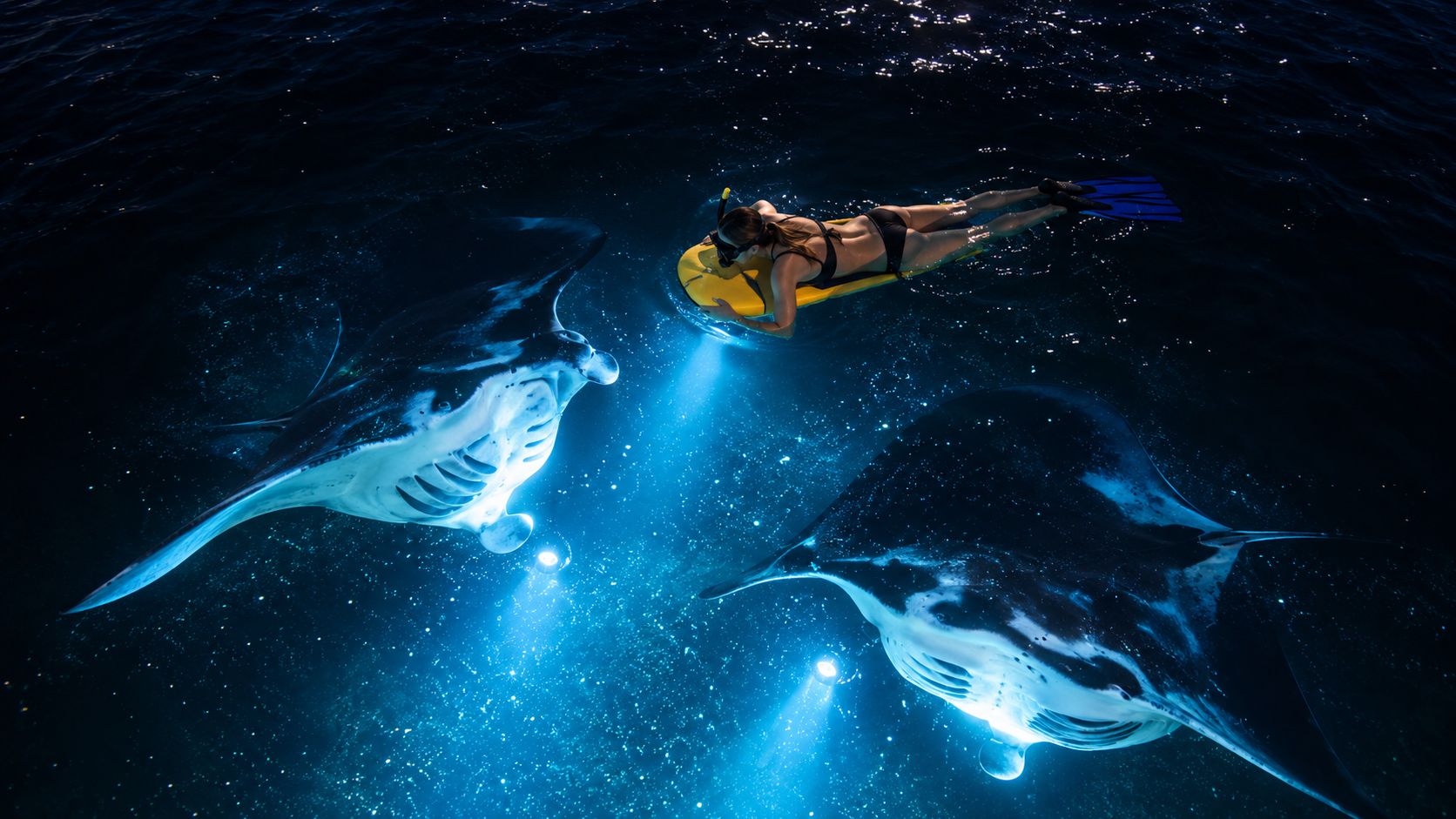
Practical rule: Stay relaxed, keep your body still, and let the manta decide how close it wants to come.
This is a surface-based wildlife encounter, not a pursuit. You don't need to dive beneath the board to improve your view. In fact, diving, chasing, or reaching toward the animals can make them change direction or stop feeding. The strongest moments often happen when the snorkeler does the least.
The darkness adds to the sensory impact. You hear water moving around your mask, feel the board shift under your arms, and watch the beam of light transform ordinary seawater into a moving stage. Mantas aren't performing for the group, and their unpredictability is part of the appeal. One may make several passes, while another may remain farther away.
Kona's night ocean also rewards preparation. If your mask fogs, your body gets cold, or you fight the current, you'll spend the encounter managing discomfort instead of watching the animals. A well-run trip handles those details before guests enter the water, leaving you free to focus on the silent gliding shapes below.
For broader context on how Kona's underwater experiences differ from typical reef outings, see this guide to what makes diving in Kona unique. The manta snorkel has its own rhythm, though. You float, observe, and allow the feeding activity to unfold around you.
Why Kona Is the World Capital for Manta Encounters
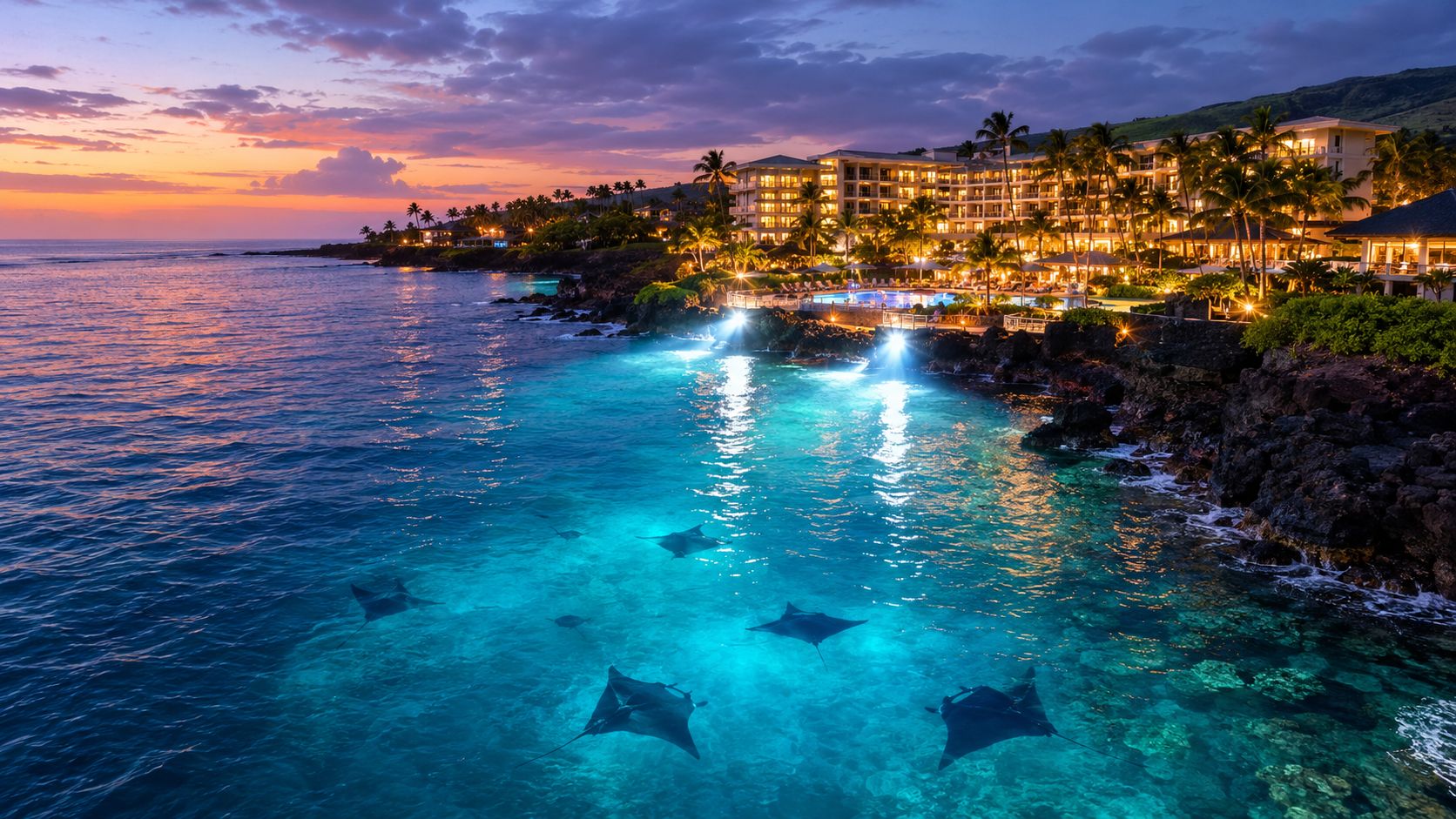
Kona's reputation comes from a combination of history, coastal geography, and predictable feeding behavior. The activity began almost by accident. In the late 1970s, bright hotel floodlights along the Kona coast attracted plankton toward the illuminated surface. In 1979, that concentration of food produced the first recorded manta-ray encounter near the Kona Surf Hotel area, according to the documented history of manta-ray night snorkeling in Kona.
By the early 1980s, a second lighting-related location in Keauhou Bay had become known as Manta Village. In 1992, dive operators began bringing scuba divers to the site on selected nights, turning an incidental wildlife sighting into a formal tourism activity. By the early 2000s, night-snorkel tours had become a regular part of the Kona visitor experience.
The light is only part of the equation
Mantas aren't attracted to the light because they find the beam visually appealing. The light changes the feeding environment by concentrating zooplankton in the illuminated surface water. Reef manta rays then move through that food patch, often making repeated passes and barrel rolls while filtering the water.
The setup only works consistently when the light interacts with suitable local conditions. Current direction, water depth, and the stability of the feeding area all matter. A powerful lamp in the wrong location won't automatically create a reliable manta encounter.
A 2024 field study at a Seychelles aggregation site illustrates why predictable locations matter. Researchers tracked 11 identified reef manta rays over four survey days, recording 27 transits and 15 feeding-cleaning cycles. Individual cycles lasted from 11 to 102 minutes, with an average of 66 minutes. The Seychelles manta-ray field study demonstrates how individual animals can repeatedly use a productive coastal area.
The useful distinction: Mantas gather where the food gathers. The light creates the food patch, but the surrounding marine conditions determine whether that patch remains productive.
This behavior explains why manta tourism concentrates around a small number of dependable sites rather than occurring equally across the entire coast. Global reviews describe manta aggregations ranging from a few animals to thousands, depending on the location and purpose of the gathering. Kona's established sites benefit from a long operating history and recurring conditions that bring feeding mantas into view.
The main manta-ray viewing locations in Hawaii are therefore more than convenient meeting points. Each site represents a specific relationship between artificial light, plankton movement, current, depth, and access.
What to Expect on Your Tour Boat
Most manta trips follow a straightforward sequence. You check in, board the vessel, receive equipment, and travel along the coast to the selected viewing area. The crew typically explains how to enter the water, use the floating board, position your body, and respond if you become uncomfortable.
The boat ride is part of the experience, but it can also be the part that exposes motion sensitivity. If you're prone to seasickness, plan before departure rather than waiting for symptoms. Options include a Ship-EEZ Seasickness Patch, Dramamine pills, Bonine pills, Sea Band wristbands, and ginger chews. Check product directions and any medication precautions that apply to you before using them.
Before entering the water
Wear your swimsuit under your outer layers so you aren't changing on a crowded boat. Listen carefully to the briefing, especially if you haven't snorkeled at night before. The crew should explain where to hold the board, how to keep your fins away from other guests, and how to signal for assistance.
A floating board serves two purposes. It gives you a stable reference point in dark water and keeps the group positioned around the light source. Holding the board also reduces unnecessary swimming, which conserves energy and helps you remain still while the mantas feed.
The Kona dive boat experience can vary by vessel, so pay attention to practical details such as boarding steps, handrails, seating, and the process for getting back aboard. Night conditions make simple boat procedures more important than they might seem in daylight.
In the water
Stay at the surface. Don't dive toward the mantas, swim underneath them, touch them, or try to block their route. The animals feed in the water column below the lights, so a calm surface position gives you a clear view without placing you in their path.
If your mask leaks or you need help, raise your hand and signal the crew. You don't need to solve every problem by swimming away from the board. A professional crew can help you adjust equipment, regain your position, or leave the water safely.
Navigating the Primary Viewing Sites
Kona's manta locations aren't interchangeable. The right site depends on the operator's access, the night's conditions, and the way the boat positions guests around the light source. The primary areas include Manta Village in Keauhou Bay, Manta Heaven near Kona International Airport, and the Kohala Coast, all of which are associated with recurring manta encounters according to Hawaiian Airlines' overview of Kona manta viewing.
| Site Name | Location | Key Characteristic |
|---|---|---|
| Manta Village | Keauhou Bay | Historically significant site with relatively protected bay conditions |
| Manta Heaven | Near Kona International Airport | Established viewing area north of Kailua-Kona |
| Kohala Coast | Northern Kona region | Additional coastal location used for manta encounters |
Manta Village and Manta Heaven
Manta Village has historical importance because it became one of the earliest organized manta-viewing areas in Kona. Its location in Keauhou Bay can be attractive when guests value a more sheltered setting and straightforward access from the south Kona coast. Protected water doesn't guarantee a particular animal encounter, but it can improve comfort when wind or swell makes exposed areas less pleasant.
Manta Heaven, near the airport, offers a different geographic position and may suit travelers staying farther north or operators launching from that part of the coast. The distance from the harbor, boat size, boarding arrangements, and light-board design can matter as much as the site name itself.
Why darkness matters
Night isn't a marketing gimmick added to make the trip more dramatic. Darkness allows the tour lights to create a concentrated plankton patch near the surface, which gives feeding mantas a reason to return to the illuminated area. That makes the timing central to the activity's design.
A good operator should be able to tell you where the trip goes, why that site is used, and how the boat handles changes in wind or sea conditions. Don't choose solely by a location label. Ask whether the operator has a stable viewing setup, a clear surface protocol, and a plan for guests who need extra assistance.
The Critical Rules for Guest Behavior
The basic rule is familiar, don't touch the manta rays. That rule matters, but it isn't enough. A snorkeler can disrupt feeding without making physical contact, especially by moving directly toward an animal or occupying the space where it intends to pass.
Research from the Maldives found that only 44% of observed snorkeler interactions complied with existing guidelines, according to the study on tourist behavior and reef manta feeding responses.pdf). The same research found that approaching head-on, diving near or in front of mantas, chasing them, and obstructing their path significantly increased avoidance or feeding cessation.
What disruptive behavior looks like
A guest may see a manta approaching and instinctively swim forward for a closer photograph. That movement can turn a clear pass into an avoidance maneuver. Another common mistake is diving below the board to follow the animal, which places the swimmer directly in the feeding corridor.
Use these habits instead:
- Hold your position: Keep your body near the board and let the manta alter its course around you.
- Keep your hands to yourself: Never reach toward a wing, cephalic lobe, tail, or underside.
- Avoid head-on approaches: If a manta comes toward you, don't swim forward to meet it.
- Leave the route open: Don't spread out across the light beam or position yourself in front of another animal.
- Control your fins: Kick gently and avoid striking the board, another swimmer, or the water directly in front of a manta.
- Follow the crew's signals: Guides can ask guests to move, regroup, or exit when conditions change.
The best close encounter is passive. You don't need to make the manta come closer. You need to avoid giving it a reason to leave.
This standard is also about safety. A large animal moving through dark water has limited room to respond to swimmers who chase or surround it. Staying at the surface, maintaining awareness of nearby guests, and keeping clear of the feeding path protects both people and wildlife.
Review responsible and considerate diver etiquette before your trip, then apply the same principles to snorkeling. The quality of the encounter depends partly on whether the group creates a calm feeding environment.
Essential Gear and Packing Checklist
Night snorkeling requires more attention to warmth and visibility than a casual daytime swim. Even comfortable swimmers can feel chilled after remaining mostly still in the water, particularly when the air cools during the return boat ride.
Pack the following:
- Swimsuit: Wear it under your clothes to simplify changing and boarding.
- Warm layer: Bring a sweatshirt, fleece, or light jacket for the ride back.
- Towel: A compact travel towel helps after the swim without taking much space.
- Rash guard or wetsuit layer: Use extra insulation if you get cold easily, and ask the operator what thermal gear is supplied.
- Mask preference: Bring your own well-fitting mask only if you already trust it. Otherwise, use properly maintained tour equipment and ask the crew to help with fit.
- Anti-fog solution: A suitable mask-fog treatment can preserve your view, but apply it according to the product directions and rinse it as instructed.
- Hair ties: Secure long hair before putting on the mask and snorkel.
- Boat-safe footwear: Wear footwear that's easy to remove or suitable for wet boarding areas, following the operator's instructions.
- Small personal light: Keep any light pointed away from other guests' faces and never introduce a light that interferes with the crew's setup.
Your phone, wallet, and loose accessories should stay secured according to the boat's storage procedure. Large cameras can become a distraction if you spend the whole encounter checking settings. In dark water, a clean mask and a relaxed body position usually improve the experience more than extra equipment.
How to Choose the Best Manta Ray Tour
Price is only one part of the decision. A manta tour can be inexpensive and still create avoidable stress if boarding is difficult, communication is vague, or the boat doesn't provide enough support for less confident swimmers. Conversely, a higher-priced trip isn't automatically better unless the added cost produces practical benefits.
Recent tourism research identified attraction, transportation access, information access, lodging, and amenities as strong positive drivers of tourist preference for manta-ray tour packages in a study published for 2026. The research on manta-ray tour package preferences supports a useful planning principle: travelers judge the whole trip, not just the moment when a manta appears.
Compare the practical details
Start with access. Choose a departure point that fits your accommodation and transportation plans, especially if you're traveling with children, older relatives, or a group carrying extra gear. A convenient harbor can make the evening easier before you even reach the water.
Then examine the information provided before booking. Clear operators explain the meeting point, trip duration, equipment, thermal protection, swimming requirements, cancellation terms, and surface rules. If the website avoids basic logistics, don't assume the crew will explain everything clearly at the dock.
Prioritize the people in your group
Families and first-time snorkelers should look for a stable boat, attentive crew, easy boarding, and a floating-board system that keeps guests supported at the surface. Confident swimmers may care more about departure timing, site selection, and group size, but they still benefit from guides who manage guest spacing and animal etiquette.
Amenities matter when they solve a real problem. Warm layers, clear briefings, well-maintained masks, dry storage, and assistance getting back aboard can determine whether the night feels effortless or exhausting. Ask direct questions rather than relying on dramatic promotional photographs.
Kona Honu Divers offers a boat-based manta night snorkel designed for surface viewing, alongside its broader selection of Kona boat tours. Compare that option with other local operators using the same criteria: access, communication, crew support, equipment, site strategy, and respect for the animals.
Kona Honu Divers offers surface-based manta viewing with boat support and crew guidance for guests who want to experience Kona's night-feeding mantas without scuba diving. Visit Kona Honu Divers to review the manta snorkel details, check practical trip information, and choose a departure that fits your Hawaii itinerary.