
You're probably doing what most Kona-bound divers do at some point. Comparing boats, reading reviews, trying to figure out which operator fits your trip, and wondering whether the famous dives will live up to the hype once you're on the water.
That's where a guide like this helps. A good Kona dive trip isn't just about choosing a famous site. It's about choosing an operator that runs clean logistics, uses the right boat for the conditions, briefs divers properly, and has solid backup plans when the ocean doesn't cooperate.
Why Choose a Premier Kona Diving Company
A lot of travelers arrive in Kona with one big goal. They want the manta night dive, maybe a blackwater, maybe a few reef dives, and they want it all to go smoothly in a place they may only visit once. The mistake I see most often is treating dive operators as interchangeable. They aren't.
A premier Kona diving company affects almost everything that matters once you leave the harbor. It affects how clearly the crew communicates. It affects how gear is organized on deck. It affects whether entries feel calm or chaotic. It affects whether less experienced divers settle down quickly underwater or burn half the dive fighting nerves and trim.
Kona rewards good planning. Conditions can be beautiful, but the right operator still matters because the best day on the ocean can turn into a mediocre trip if the crew rushes people, overcrowds the deck, or picks the wrong format for the group.
For a broader comparison of operators and trip styles, it's worth reviewing this rundown of the top Kona diving companies ranked.
Practical rule: Choose the operator first, then choose the dive list. The company running the day shapes the experience more than the marketing copy ever will.
What works is simple. Look for crews that understand diver pacing, site selection, and the difference between a beginner-friendly outing and an advanced one. Look for a boat built for diving, not just a boat that can carry divers. If you're ready to narrow down actual trip options, browse Kona dive tours.
Meet Kona Honu Divers A Legacy of Excellence
The strongest signal of a solid dive operation isn't flashy wording. It's consistency over time. That matters in Kona, where visitors have plenty of options and where returning divers notice quickly whether a company still runs a thoughtful, service-heavy operation or has drifted into moving people through as fast as possible.
According to its TripAdvisor listing, Kona Diving Company was founded in 2010 as a family-owned-and-operated full-service dive center built to provide an intimate, personal diving experience, and that same listing records a long award run with the Certificate of Excellence from 2014–2019 and the Travelers' Choice Award from 2020–2023.
That profile tells you something useful as a diver. This wasn't built as a generic vacation add-on. It was built around guided diving, training, and repeatable guest experience. In practice, that usually means more attention to diver fit, clearer briefings, and better handling of mixed-experience groups.
What that history means on the dock
A company can say it offers personal service. The true test is whether its operating style supports that claim. Family-run dive centers often do better when the product depends on details: gear setup, check-in flow, handling questions from anxious new divers, and adjusting the day when conditions shift.
The other useful signal is the length of the award streak. One strong season can happen. A long run of recognition suggests the company kept delivering for years in a competitive market.
Why crew quality matters more than branding
The best dive days usually feel organized without feeling rigid. Briefings are concise. Expectations are clear. Divers know where to sit, where to stage gear, and what the entry and exit rhythm will be.
If you want to see who leads trips and training, review the Kona dive team. That's often more informative than any sales page.
Signature Underwater Experiences You Cannot Miss
Some dives in Kona are pleasant reef dives. Some are the reason people book flights. If you're sorting through options, focus on the experiences that are distinct enough to justify planning your schedule around them.
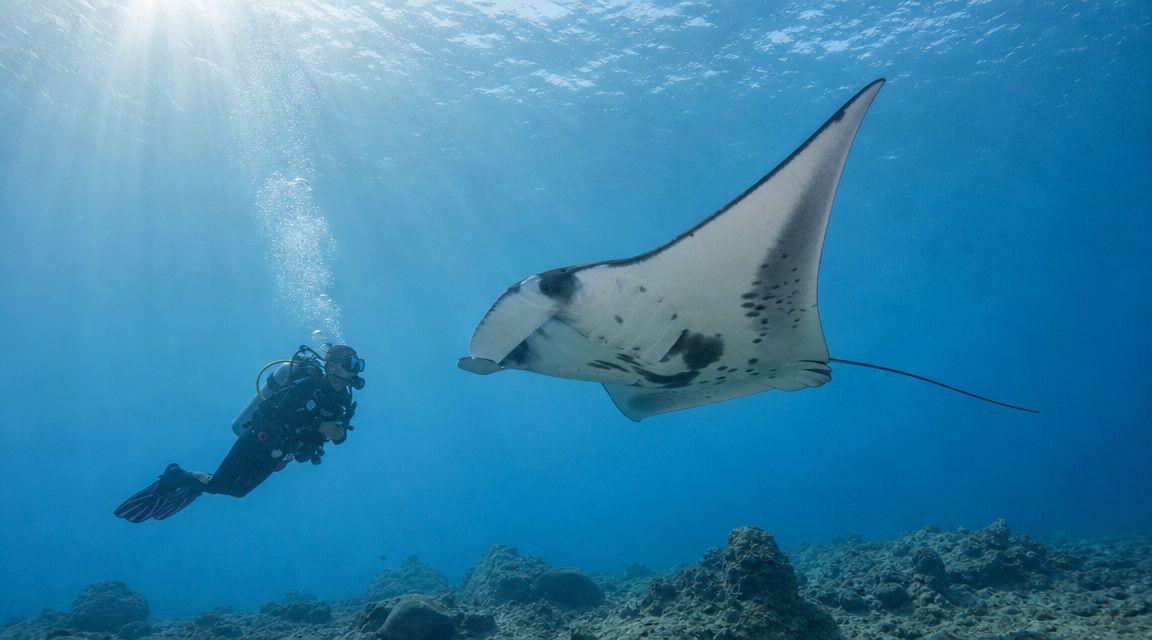
Manta ray night dive
If manta rays are on your list, site choice matters. Garden Eel Cove is the stronger option because the location is more protected and the viewing layout works well for the experience. Better positioning in the water usually means a calmer dive and a cleaner show once the lights draw plankton in.
For divers, this is not a complicated profile from a skills standpoint. The challenge is mostly comfort at night, good buoyancy, and following the briefing without freelancing. For snorkelers traveling with divers, this overview of snorkeling with manta rays in Kona helps explain the surface-side version of the experience.
If your main goal is the scuba tour itself, you can check manta ray dive tours.
Stay still, keep your fins controlled, and let the animals come to the light field. Divers who chase mantas get a worse experience than divers who hold position.
Blackwater night dive
Blackwater is a different category of dive altogether. It isn't a reef night dive with the lights out. It's open ocean, suspended in the water column, watching larval and pelagic life rise from the depths.
The key technical detail is this: on Kona's blackwater dives, divers are tethered to a line at approximately 50 feet, while the seafloor below can be 3,000 to 8,000 feet deep just a few miles offshore, as described in this Kona blackwater dive explanation. That's why precise buoyancy and Advanced Open Water-level competence matter. If your buoyancy wanders, you feel it immediately because there's no reef, wall, or bottom reference to settle you.
This is one of the most memorable dives Kona offers, but it does not reward sloppiness. Divers who do well on blackwater are calm, comfortable in darkness, and disciplined about trim and depth. If that's your lane, review the blackwater dive tour details.
Advanced long-range diving
Some divers want the headline experiences. Others want room to breathe, less-visited sites, and dives that feel a little more exploratory. That's where a longer-range advanced trip makes sense.
This format works best for divers who already have solid air consumption, stable buoyancy, and enough situational awareness to enjoy the dive instead of using all their attention just managing themselves. If that sounds like you, the advanced long-range dive tour is the one to compare against standard charters.
A Fleet and Crew Built for Comfort and Safety
Boat design is one of those details newer divers tend to overlook until they've had a few rough or cramped charters. Then it becomes obvious. A vessel built specifically for diving changes the day from the moment people start gearing up.
The operation described in this boat overview runs dives from a custom 46-foot Newton dive boat. That matters because a larger, purpose-built platform improves stability, creates more usable space for gear, and makes entries and exits more efficient.
Why the boat matters underwater too
A stable platform doesn't just help on the ride out. It helps before the dive even begins. Divers can gear up without stepping over each other, crews can manage cylinders and spacing more cleanly, and giant stride entries or ladder exits usually happen with less chaos.
That's especially useful on two-tank days. The reset between dives goes faster when the deck layout makes sense.
What works and what doesn't
Here's the essential trade-off from a divemaster's perspective:
- What works: A roomy dive boat with clean staging areas, clear seat assignments, and enough space to keep cameras, fins, and spare layers from turning into a pile.
- What doesn't: Small boats where divers suit up shoulder-to-shoulder, miss parts of the briefing, and reboard tired into a traffic jam at the ladder.
- What crews should control: Entry order, current checks, lost-diver procedures, and post-dive head counts. These aren't glamorous details, but they're the backbone of a safe charter.
Good dive crews make the day feel easy because they handle the friction points before guests ever notice them.
If you want a better sense of how professional boat operations are led, the dive boat captain page gives useful context.
Planning Your Perfect Kona Dive Itinerary
Most divers don't need a longer list of tours. They need a realistic plan that fits who's traveling, what certification level they have, and how much intensity they want in a week. That's where smart itinerary building beats impulse booking.
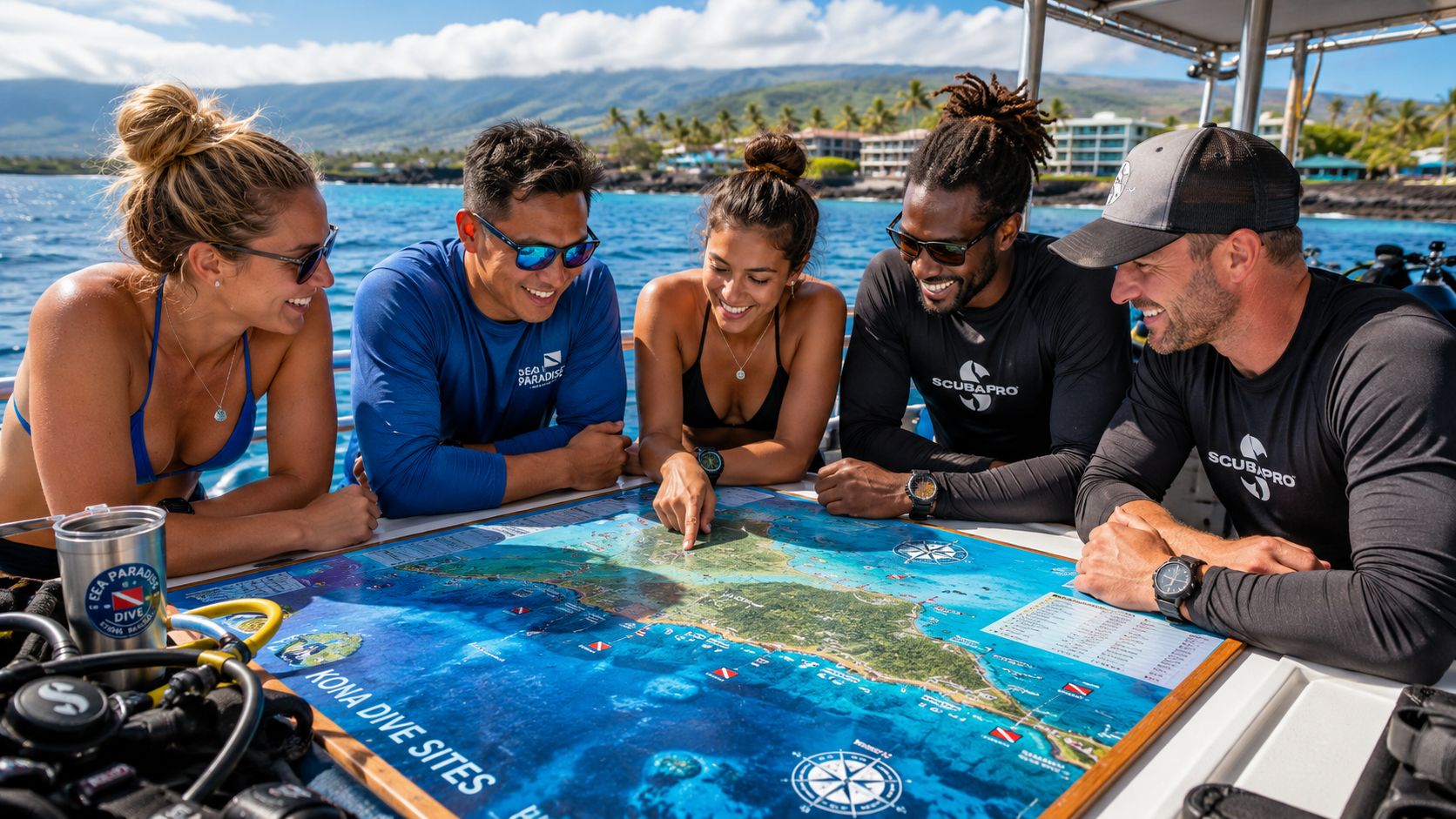
A useful starting point is this guide to diving Kona on the Big Island, then build around your group's actual pace.
Family itinerary with divers and non-divers
This group does best when not every day is tank-focused.
- First day: Keep it light. Choose an easy boat day so everyone gets comfortable with check-in, boat movement, and local conditions.
- Second day: Put the certified divers on a straightforward morning charter while non-divers relax or choose a separate ocean activity.
- Third day: If the family wants a shared highlight, make the manta experience the centerpiece. Divers and snorkelers can often build the evening around the same headline attraction in different ways.
The mistake families make is overpacking the schedule. Kids, new divers, and occasional snorkelers don't need a military campaign. They need one memorable ocean experience per day.
Certified couple itinerary
Couples usually want a balance of iconic and relaxed. My preferred structure is simple:
| Day type | Best use |
|---|---|
| Early trip | Standard reef diving to settle weighting and buoyancy |
| Mid trip | Signature experience such as manta or blackwater, depending on training |
| Late trip | Flexible booking that can absorb weather changes or repeat a favorite style |
That last day matters. Leave room for conditions, energy level, and the dive you'll wish you had booked twice.
Advanced diver itinerary
Advanced divers should resist the urge to schedule the hardest dives back-to-back without margin.
A better approach looks like this:
- Start with a daytime charter to dial in weighting, exposure protection, and local procedures.
- Add blackwater on a separate day if you're comfortable in open water at night.
- Use the advanced long-range option later in the trip once you've adjusted to Kona diving rhythm.
The strongest itinerary isn't the one with the most dives. It's the one that keeps you sharp, rested, and interested by day five.
Booking Your Adventure and What to Bring
Booking scuba in Kona is straightforward when you handle the basics early. The bigger issue is matching the trip to your actual experience level and showing up with the right personal gear so the boat morning is smooth instead of frantic.
If you're comparing operators, Kona Honu Divers is one option for guided scuba tours, advanced dives, training, and specialty trips in Kona. Whatever company you choose, book the signature dives first and fill in the rest of the week around them.
What to bring on dive day
Bring the items that reduce friction and protect your comfort.
- Certification card: Have it ready before check-in.
- Logbook: Useful when staff need to confirm recency or experience for more demanding dives.
- Swimsuit and towel: Wear the swimsuit under your clothes to speed up the morning.
- Reef-safe sunscreen: Apply it before boarding when possible.
- Reusable water bottle: Hydration matters more than most vacation divers think.
- Light layer or boat jacket: You can get chilled after dives, especially on the ride home.
- Mask and dive computer if you own them: Personal fit and familiar settings make a difference.
Seasickness prep that actually helps
Even strong divers get seasick. It has nothing to do with toughness. If you're prone to motion sickness, treat it as a logistics issue and solve it before the boat leaves.
These are common options people use:
What doesn't work is waiting until you already feel bad offshore. Eat lightly, hydrate, avoid heavy grease before the boat, and keep your eyes on the horizon if the ride turns bumpy.
Frequently Asked Questions About Diving in Kona
What is the cancellation policy, and what happens if weather affects the trip
This is one of the most important questions to ask before booking any Kona diving company. According to the company site referenced in the verified data, there is a 72-hour cancellation policy on Kona Diving Company. The more useful follow-up question is operational: if weather, surf, or visibility changes the plan, does the crew cancel, substitute a different site, rebook you, or refund based on the circumstances?
That matters most on high-demand experiences like manta or blackwater, where travelers often build an entire vacation day around one dive. A good operator gives a clear answer before the trip, not after the conditions deteriorate.
What's the best time of year to dive in Kona
Kona is a year-round destination in practical terms. Instead of chasing a single “best” month, choose based on your priorities: easier scheduling, signature dives, mixed family travel, or a more advanced-focused week.
Do I need to be certified
For standard scuba charters, you should expect certification requirements that match the dive. Introductory options are a separate category and are designed for people who want to try scuba under direct professional supervision.
Can non-diving family members join the trip
Sometimes yes, sometimes no. That depends on the boat format, available space, and whether the trip is structured only for divers. Ask before booking instead of assuming there's room for riders.
What should I ask before I confirm a booking
Ask these five questions:
- What site flexibility do you have: This tells you how the operator handles changing conditions.
- Who is this trip really for: Beginner-friendly and advanced-only trips shouldn't be blurred together.
- What is included in the charter: Gear, lights, and training prerequisites can vary.
- How are weather cancellations handled: Get the rebooking or refund process in writing.
- What should I bring besides dive gear: Small details make the morning easier.
If you're ready to turn trip planning into actual dive dates, take a look at Kona Honu Divers and compare the trip formats that fit your certification level, travel group, and must-do experiences.