
Kona Honu Divers is the strongest all-around pick for most divers, while the other six shops below stand out for specific needs, from photography-friendly boats to shore diving and manta-focused outings. Choosing carefully matters on a coast where a historical assessment identified at least 42 commercial manta-tour operators.
That operator count comes from a state environmental planning document on Kona's manta-viewing sites, not a current shop census. The practical point still holds: booking a Kona dive means choosing an operating style, not just choosing an animal you'd like to see.
For my money, Kona offers Hawaii's best combination of protected-water diving, lava-formed terrain, and unusual night encounters. That's an editorial judgment, not a promise of calm seas or perfect sightings. Your experience depends on the day's conditions, your guide, and whether the trip suits your skills.
The best Kona scuba shops don't all need to look alike. A photographer may value elbow room more than a broad course catalog, while a new diver may need patient instruction and easy access to rental equipment.
Start with your priority:
- Full-service convenience: Keep training, equipment, reef dives, and specialty bookings together.
- A particular diving style: Choose deliberately for small groups, shore entries, or night encounters.
- A mixed-interest group: Confirm what divers and snorkelers can do on the same departure.
1. Kona Honu Divers
Best for full-service convenience and a varied dive vacation. Kona Honu Divers gets the top editorial pick because its range makes it easier to build a coherent trip rather than assemble unrelated bookings.
The shop combines guided scuba, instruction, snorkeling, freediving, private charters, rentals, retail equipment, and repair services. Its guided diving tours span daytime reef outings and specialized night experiences, so beginners and experienced divers can plan different activities through the same operation.
That breadth matters when someone needs a refresher, another diver wants a demanding excursion, and a companion prefers snorkeling. It doesn't mean everyone belongs on the same boat or follows the same itinerary. Ask the booking team to match the actual people in your group to suitable departures.
Where the full-service approach pays off
Boat comfort is worth considering when you're planning repeated outings. Kona Honu Divers describes shaded seating, padded seats, hot showers, equipment storage, and proactively serviced rentals. Those are useful features, but they shouldn't replace questions about boarding, ladder access, guide assignments, and the day's dive profile.
Eligible divers can also ask about complimentary nitrox. Free nitrox is a convenience, not permission to ignore gas planning. Divers Alert Network's nitrox safety guidance gives a recreational oxygen partial-pressure guideline of 1.4 ATA, with maximum operating depths of about 112 feet for 32% nitrox and 95 feet for 36% nitrox.
For appropriately experienced divers, the premium advanced trip deserves a separate conversation about recent experience and physical ability. The blackwater night dive is another distinct choice, not a reef dive after sunset.
- What works: Broad trip selection, instruction, equipment support, and boat amenities make this a practical home base.
- What to weigh: Specialized departures require suitable experience, and you should confirm current prices, rental inclusions, and availability.
- Before booking: Describe your recent diving, including comfort with darkness, buoyancy, and boat exits.
The shop's guide to comparing Kona scuba dive shops provides additional booking context. For this comparison, the deciding advantage is the ability to coordinate several kinds of diving without changing providers.
2. Jack’s Diving Locker
Best for divers who value training infrastructure and a conventional full-service shop. Jack's Diving Locker combines instruction, daily boat diving, equipment sales, rentals, fills, and repairs. That makes it a useful alternative when the shop itself matters as much as the charter.
Jack's lists classic daytime trips, advanced outings, manta encounters, private charters, and its Pelagic Magic blue-water night experience. Its Aliʻi Drive and Honokōhau Harbor locations give visitors different points of contact, but you'll still need to distinguish the shop address from your actual departure location.
For a diver continuing education, the appeal is straightforward: instruction and operational support sit within the same business. Ask how confined-water work, equipment fitting, and ocean sessions fit your travel schedule before committing to a course.
Choose the infrastructure, then check the group
A broader operation can be convenient without feeling boutique. Don't assume that a large course catalog tells you anything about your specific boat's passenger count or your in-water group size.
Ask about both. The number of people aboard and the number following your guide are different questions, particularly when students, certified divers, and snorkelers share a departure.
A good training shop should match the lesson to the student, not squeeze the student into an unsuitable charter.
Jack's is worth shortlisting for travelers who want equipment help alongside guided diving. It's also sensible for mixed-interest groups, provided the exact outing accommodates everyone's activity and experience.
The trade-off is that convenience can come with choices you need to untangle. Confirm whether rental equipment, specialty instruction, and other add-ons are included in the quoted booking total. For nearby reef diving, ask which conditions would prompt the captain to change sites rather than requesting a fixed itinerary.
3. Big Island Divers
A varied dive vacation needs more than a good morning charter. Big Island Divers suits travelers who want reef diving, specialty outings, and equipment services under the same roof, particularly when they're comparing several different experiences.
Big Island Divers lists daytime and advanced charters, manta and blackwater outings, introductory experiences, certification, refreshers, and private charters. Its retail, rental, and repair services add practical value when your trip involves both boat bookings and independent equipment needs.
The distinction from a specialist operator is flexibility. You can discuss several trip types with the same booking team, but you shouldn't assume that admission requirements or equipment inclusions carry across every departure.
Treat advanced diving as a separate booking
Kona's more demanding outings aren't defined only by depth. Open water, currents, lava formations, boat exits, and the ability to maintain buoyancy without a convenient visual reference can all change the workload.
A published description of Kona advanced diving includes screening criteria of Open Water certification, at least 25 logged dives, and climbing a vertical ladder unassisted in full equipment. Treat those as an example of meaningful screening, not a universal rule for every shop or charter.
- Strong fit: Divers planning several outing styles and wanting access to rental or repair support.
- Main trade-off: Different charters can have different experience thresholds and inclusions.
- Booking question: Ask whether your recent diving qualifies you for the particular departure, not merely whether you hold a certification card.
Use the Big Island scuba-diving site guide to identify the terrain that interests you, then discuss suitable sites with the operator. A flexible site plan is more useful than insisting on a named location when conditions don't cooperate.
For photographers, also ask whether the planned group will support a slower pace. A broad trip menu doesn't automatically mean a dedicated photography charter.
4. Kona Diving Company
Best for travelers seeking family-owned personal service. Kona Diving Company belongs on the shortlist when you want guided boat diving with a more personal-service emphasis rather than choosing primarily for retail scale or a long equipment-services menu.
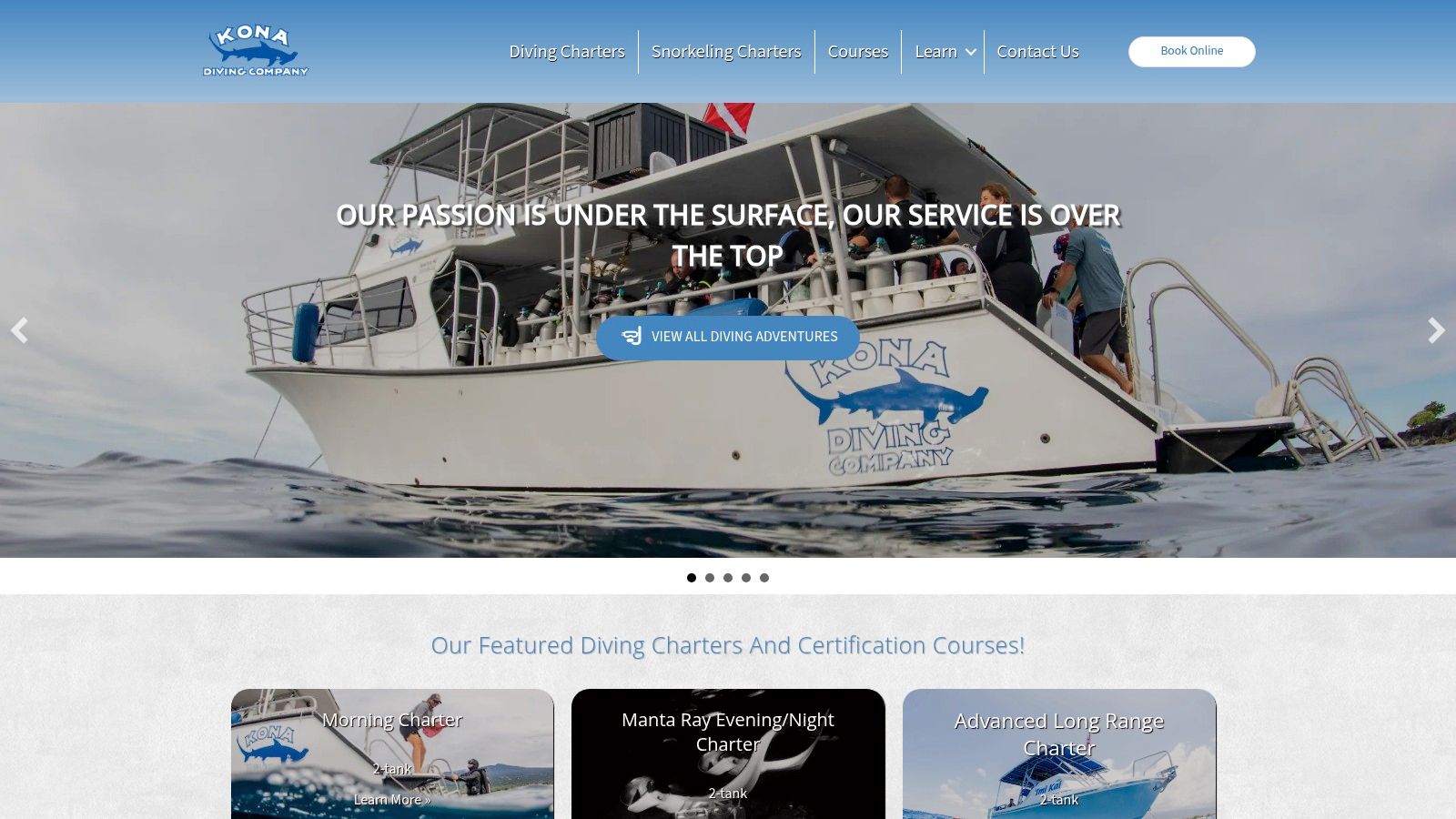
Its listed lineup includes morning reef dives, manta outings, advanced long-range trips, night-reef diving, introductory scuba, and referral training. That combination offers a useful distinction: you can compare a conventional night-reef experience with a manta-focused evening rather than treating them as interchangeable.
They aren't interchangeable. Choose a reef night dive if exploring the reef after dark is your priority; choose a manta outing when the feeding encounter is the central reason for going.
Personal service still needs concrete questions
Family ownership is a reason to investigate the service style, not proof that every departure will be small or private. Ask who will guide you, how groups are assigned, and whether your planned trip mixes experience levels.
The Kona Diving Company booking overview can help frame that comparison. Then confirm departure details directly, especially if you're visiting the retail shop before meeting the boat.
The strongest fit is a diver who values communication and wants several guided-trip options without assuming that the largest operation is automatically the best choice. Referral students should confirm the required paperwork and remaining training sessions before arriving.
The main limitation is the same one that applies across this market: a warm service description doesn't tell you the final price, boat occupancy, or guide ratio for your date. Get those details in writing.
For reef and lava-formation outings, describe your comfort with overhead-looking terrain clearly. Wanting to photograph an arch doesn't mean you're asking to enter an overhead environment, and a good booking conversation should keep that distinction clear.
5. Pacific Rim Divers
Best for small-group boat diving and photography-minded visitors. Pacific Rim Divers says it limits groups to six divers or fewer, a concrete operating detail worth comparing with less specific promises of personalized service.
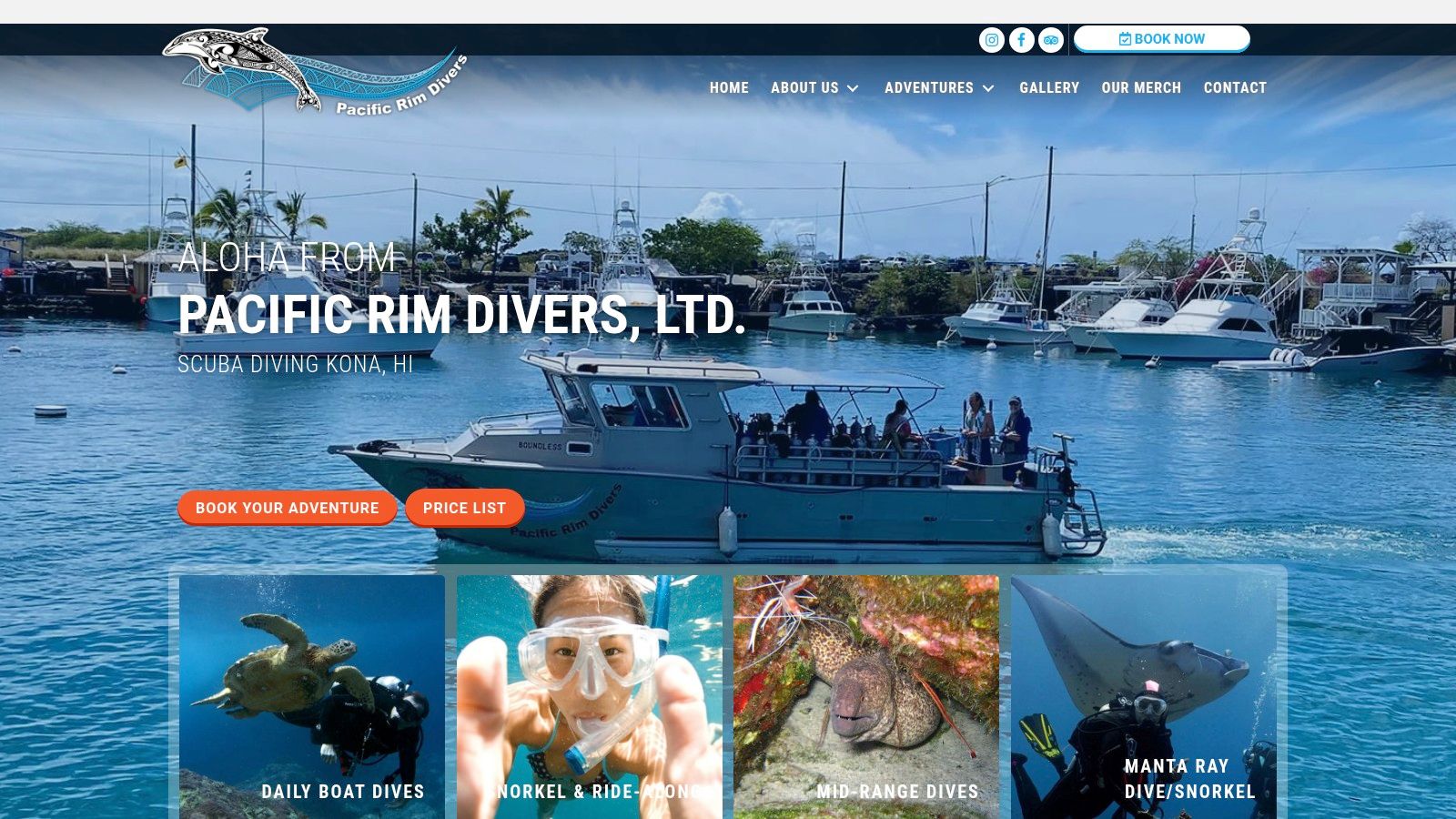
Its boat, Boundless, is described with a camera table, rinse bucket, hot-water shower, shade, and diver-oriented ladders. For photographers, those details matter because camera handling continues through gearing up, entries, surface intervals, and recovery.
The listed trip mix includes reef, mid-range, manta, and private outings, alongside training. Small groups are the distinguishing attraction, but a small passenger count alone doesn't establish a photography-first itinerary.
Ask for the pace your camera needs
A photographer looking for a patient macro dive may want something different from a buddy hoping to cover more reef. Tell the operator whether you're bringing a compact camera, a larger housing, or hoping for extra time with stationary subjects.
- What works: A stated group limit and camera-oriented boat amenities make the operation straightforward to evaluate.
- What needs checking: Specialty and mid-range departures may require advance arrangements.
- What not to assume: A camera table doesn't mean the guide can promise subjects, sightings, or unlimited time at a location.
Photography rule: Choose a boat whose planned pace suits your diving, not just a boat with somewhere to put your housing.
Pacific Rim Divers is less compelling if your main need is a broad repair counter or extensive retail support. That's not a weakness in the diving product; it's a reason to separate equipment-service needs from charter selection.
Ask about space for assembled camera systems, how cameras are passed into and out of the water, and whether the guide can accommodate your preferred pace. For a dedicated photography day, compare a shared outing with a private charter rather than assuming they'll feel the same.
6. Kona Shore Divers
Not every good Kona dive needs a boat. Kona Shore Divers is the clearest fit for visitors who specifically want guided shore diving, along with instruction or private attention.
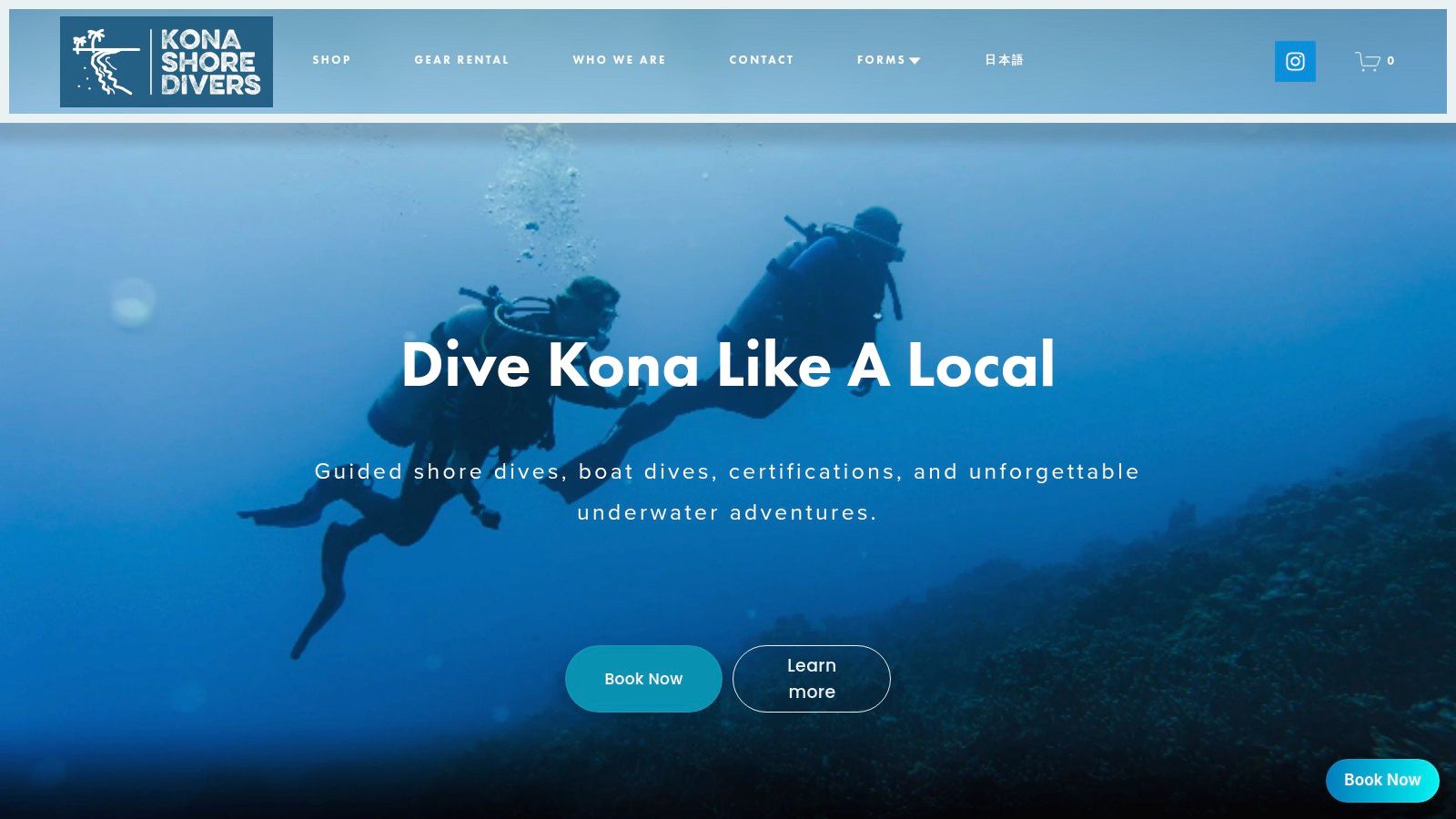
Kona Shore Divers lists guided shore dives, introductory experiences, refreshers, and courses ranging from Open Water through Rescue Diver. Boat-based advanced diving and private snorkeling options broaden the offering, but shore access remains the most useful reason to distinguish it from the other shops.
Shore diving trades boat logistics for entry and exit logistics. That can be attractive, but it doesn't automatically make the outing easier, gentler, or suitable for someone with limited mobility.
Judge the exit before admiring the reef
Ask how far you'll carry equipment, what the footing is like, and how the guide evaluates surge or changing swell. Your ability to enter comfortably isn't enough if the exit becomes difficult while you're underwater.
The guide to Big Island shore diving is a useful starting point for discussing possibilities. Let the guide select an appropriate location rather than treating a popular entry as a guaranteed appointment.
Private guiding can be especially useful when you want focused help with buoyancy, a relaxed refresher, or a pace suited to your interests. Confirm whether the booking is private and what equipment is included.
The trade-offs are practical. Course scheduling may occupy more of your holiday than expected, and shop access should be confirmed rather than assumed. Get a meeting point, equipment plan, and weather alternative before the day of your dive.
Shore diving is a different way to enjoy Kona, not merely the budget version of a boat trip. Choose it because you want that experience and can manage the entry, equipment carry, and exit safely.
7. Manta Ray Dives of Hawaii
Best for manta-first planning and groups combining divers with snorkelers. Manta Ray Dives of Hawaii offers manta-night experiences alongside daytime scuba and multi-day diving options, making it a focused candidate when the manta encounter drives the itinerary.
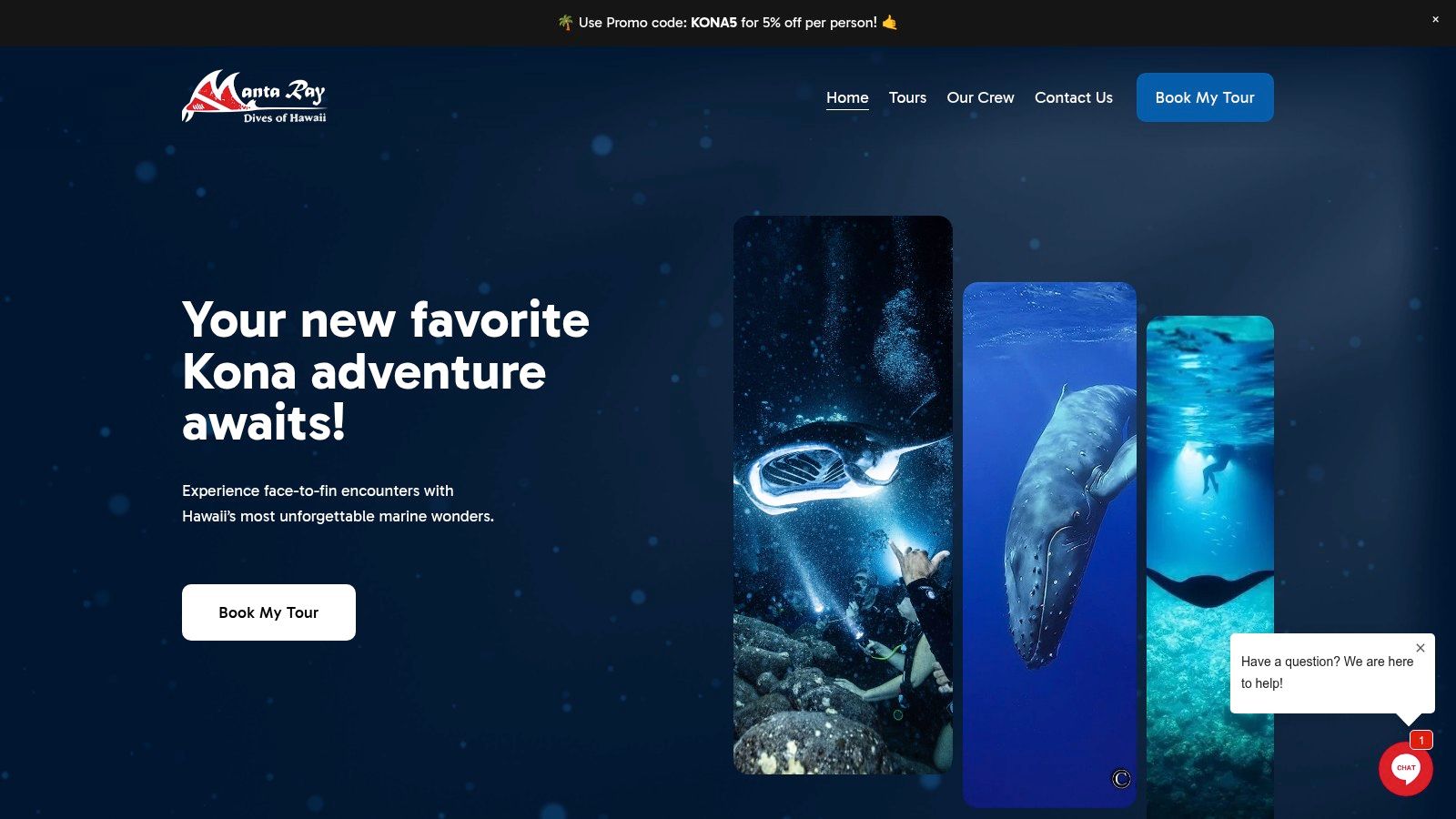
Some outings combine scuba divers and snorkelers on the same charter. That can solve a group-planning problem, but confirm the exact departure rather than assuming every trip supports both activities.
The operator publishes participation requirements and trip inclusions. Compare swimming expectations, certification requirements, rental charges, and cancellation terms before comparing the headline price.
Site choice matters as much as the operator
Garden Eel Cove is my preferred manta-dive choice, with its more protected setting and viewing arrangement. I'd favor it for the combined reef-and-manta experience, while treating claims of universally better reefs as an editorial preference rather than a measured comparison.
A NOAA-hosted study of Kona's manta-viewing sites describes the light-and-plankton mechanics of these encounters and provides context for the established locations. Protection doesn't eliminate swell, crowding, or the possibility of an absent manta.
Compare the operator's manta-night experience with other Kona options, including the Garden Eel Cove manta dive tour. Ask where the boat intends to go and what might change that plan.
- Strong fit: Travelers prioritizing mantas and mixed scuba-snorkeling groups.
- Main trade-off: This is a more outing-focused choice than a broad retail-and-repair home base.
- Essential question: What happens if conditions cancel the trip or mantas don't appear?
Don't mistake a wildlife excursion for a scheduled performance. Clear no-contact rules, controlled positioning, and an honest sightings policy matter more than dramatic promotional photographs.
Kona Scuba Shops: 7-Company Comparison Matrix
| Operator | Main Offerings | 🔄 Requirements & Complexity | ⚡ Resources & Amenities | ⭐ Key Advantages | 💡 Ideal Use Case |
|---|---|---|---|---|---|
| Kona Honu Divers | Scuba, snorkeling, freediving, courses, manta and blackwater dives, charters | Trip suitability depends on certification, conditions, and availability | Custom boats, maintained rental gear, free nitrox for eligible divers | Broad experience range; experienced crew; reported awards and reviews | Visitors seeking varied ocean activities, training, or specialized dives |
| Jack's Diving Locker | Daily boat dives, manta and advanced trips, training, gear sales, rentals, fills, and repairs | Some advanced trips require suitable experience; costs may vary with rentals and add-ons | Two locations, four boats, and a dive-training pool | Combines dive trips with extensive shop and training services | Divers wanting a full-service center or mixed scuba and snorkeling options |
| Big Island Divers | Reef, advanced, manta, and blackwater dives; training, rentals, retail, and charters | Some trips have experience requirements; check trip inclusions | Boat and shore rentals; equipment repair and testing services | Wide choice of dives and related gear services | Divers planning several different outings or needing equipment support |
| Kona Diving Company | Reef, manta, advanced, and night-reef trips; introductory and referral training | Confirm pricing, departure logistics, and group size | Kailua-Kona shop and boat departures | Family-owned operation with varied guided trips | Travelers who value a personal-service feel |
| Pacific Rim Divers | Reef, mid-range, manta, private trips, and training | Some specialty trips require advance requests and depend on availability | Groups of six or fewer; boat amenities include camera table and hot-water shower | Small groups and photographer-friendly setup; published prices | Divers prioritizing small-group trips or underwater photography |
| Kona Shore Divers | Guided shore dives, boat dives, courses, refreshers, and private snorkel charters | Some courses span two days; confirm shop access and scheduling | Shore-diving option plus boat and private-charter services | Offers shore diving and training through Rescue Diver | Certified divers seeking shore dives or learners pursuing courses |
| Manta Ray Dives of Hawaii | Manta outings, daytime scuba, and multi-day packages | Published age, swimming, certification, and gear requirements; sightings are not guaranteed | Published trip inclusions and gear charges; listed daytime two-tank trip at $200 | Options for groups combining scuba divers and snorkelers | Travelers whose priority is a manta outing or mixed-activity charter |
How to Choose the Right Kona Scuba Shop
Choose the operating style first, then compare the final booking details. Kona Honu Divers is the strongest all-around starting point for full-service convenience and signature dives; Jack's offers a training-centered alternative, while Big Island Divers suits a varied trip plan.
Kona Diving Company deserves consideration for personal-service preferences, Pacific Rim Divers for small-group photography-minded outings, and Kona Shore Divers for guided shore access. Manta Ray Dives of Hawaii is a focused choice when mantas and a mixed scuba-snorkeling group are the main priorities.
Confirm what happens on your actual departure
A shop's overall reputation can't answer every operational question. Ask about the boat, group assignment, guide ratio, and emergency procedures for the trip you're buying.
A clear explanation of a cancellation or safety limit is a better sign than a promise that the crew always makes the trip happen.
Manta operations deserve particular scrutiny. Reporting on Kona's manta-tour permitting dispute described restrictions on new commercial permits and expansion as of April 2025; that's dated context, not confirmation of today's rules. Ask about mooring practices, crowd management, diver separation, and ladder access rather than assuming every operator handles them alike.
Use this short booking checklist:
- Check ocean conditions: Ask how the captain selects sites and what triggers a cancellation or change.
- Book mantas early: Leave room in your itinerary for weather changes without assuming rebooking is guaranteed.
- Verify eligibility: Disclose certification, recent experience, buoyancy concerns, and physical limitations.
- Confirm the total: Include rentals, gas, taxes, equipment needs, and any private-guide requirement.
- Check equipment procedures: Ask about rental servicing and, when using nitrox, analyze and record your cylinder's oxygen content.
- Pin down logistics: Confirm the departure location, check-in instructions, parking, and return expectations.
Include reef care in the decision
Clear water doesn't prove that a reef is healthy. USGS reporting on repeated Kona marine heatwaves describes major changes to local coral reefs, giving visitors a reason to look beyond visibility and wildlife checklists.
Ask how guides teach fin control, prevent contact, and select sites when conditions or reef stress warrant a change. Then choose the shop that answers plainly, matches your abilities, and treats wildlife encounters as privileges rather than guarantees.
Build your Kona dive vacation around the diving you want, from guided reefs and refresher training to manta nights and specialized offshore encounters. Visit Kona Honu Divers to compare trips, arrange equipment, and ask the crew which departures best match your experience and your group.