
You're probably comparing boats, wondering whether to book the famous manta dive, and trying to work out if your certification matches the sites you've heard about. Don't choose by the prettiest tour list. In Kona, the right day depends on your experience, the people traveling with you, and the conditions the crew sees before departure.
A Kona diving company in Kailua-Kona should make those choices clear: what each trip involves, who it suits, and how the crew handles changing ocean conditions. Here's how to match your plans to the kind of diving you want.
Your First Morning at the Kona Honu Divers Boat Ramp
At the Kailua-Kona harbor, a morning dive starts with practicalities, not a sales pitch. Meet the crew, listen to the site and safety briefing, and get your gear checked before boarding. If you're new to the boat or haven't dived in a while, say so early. A good crew can only adjust the plan if they know what you need.
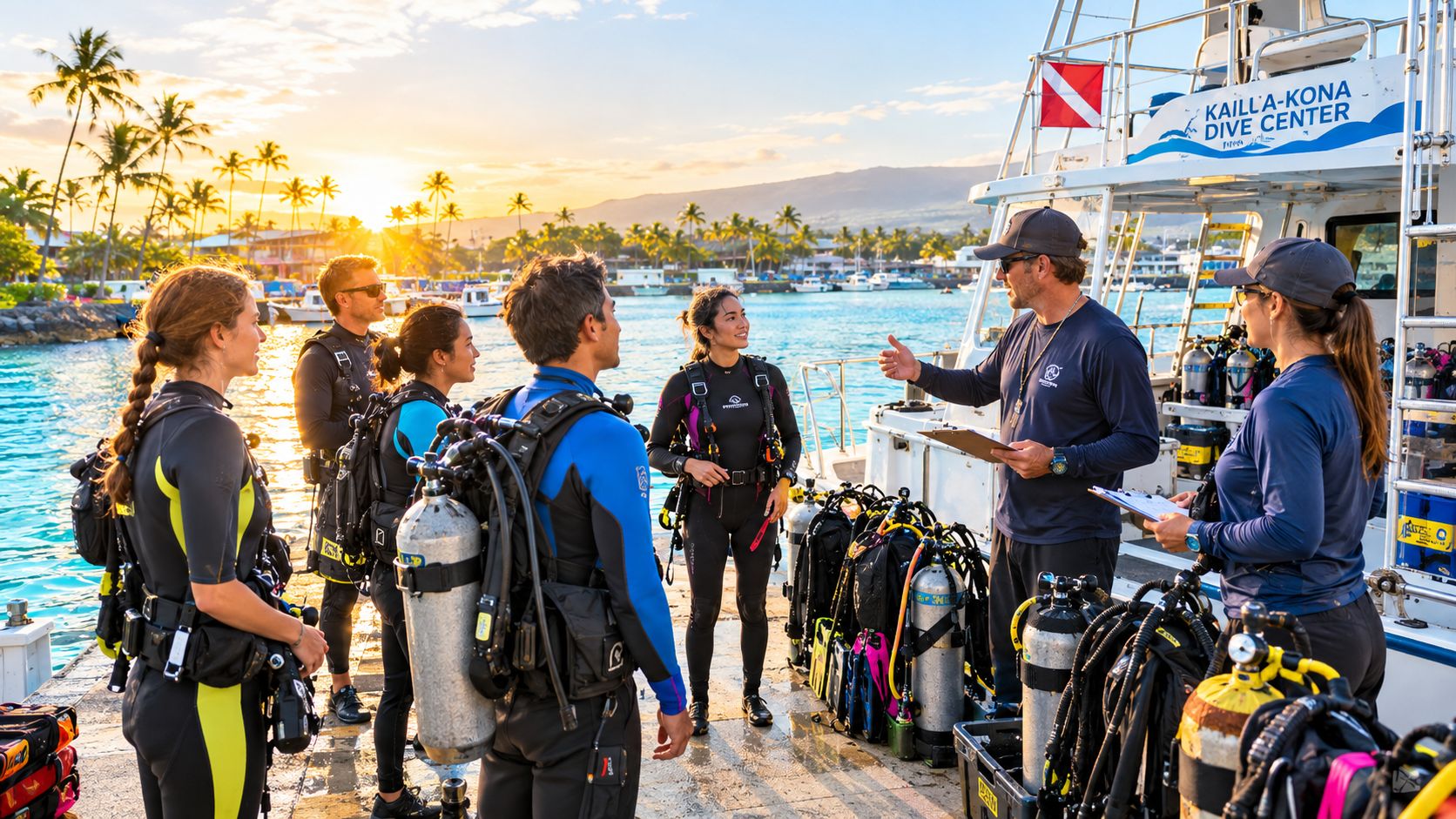
The rhythm of a two-tank morning trip is straightforward: travel to a site, dive with a guide, surface and recover aboard, then head to a second location selected for the day. On the dive deck, shaded seating gives you somewhere to settle between dives, and a hot shower is a welcome reset after getting out of the water. Free nitrox is available for eligible divers, but confirm your gas choice and qualification with the crew before the trip.
Bring your certification details, logbook or recent dive history, swimsuit, towel, and any personal equipment you prefer. If you're renting, let the operator know what you need in advance and arrive with enough time to get fitted. Don't rush the first checks. A mask that seals and weights that work for you matter more than saving a few minutes on the dock.
Boat-day advice: Tell the crew about your comfort level, camera setup, and any mobility or seasickness concerns before the briefing ends. That's when small adjustments are easiest.
For more practical preparation, use these Kona dive travel tips. To compare available trips across the coast, start with the Kona diving tours. The best first morning is the one where you understand the plan before the boat leaves the harbor.
Full Menu of Tours Courses Rentals and Charters
A photographer hunting macro subjects, a diver certified last month, and a family with three snorkelers can all book through the same Kona Honu Divers desk. They should not end up on the same trip. Read the "Best For" column below first, because the right choice depends on who you are in the water, not on how adventurous the trip name sounds.
| Offering | Diver Level | Typical Time | Best For |
|---|---|---|---|
| Two-tank morning reef trip | Certified divers | Morning | Visitors who want two guided Kona dives |
| Premium advanced trip | Experienced, appropriately certified divers | Trip schedule varies | Divers seeking more challenging terrain |
| Manta ray night dive and snorkel | Certified divers and snorkelers | Evening | Mixed groups wanting a shared wildlife outing |
| Blackwater night dive | Experienced divers comfortable in open water after dark | Night | Divers seeking unusual pelagic life |
| Certification or refresher course | Beginners or divers rebuilding skills | Course schedule varies | Learning scuba or refreshing core skills |
| Rental equipment | Divers and snorkelers | By arrangement | Travelers who don't bring a full kit |
| Private charter | Groups, subject to operator requirements | Custom | Groups needing a custom plan |
| Snorkeling tour | Snorkelers | Trip schedule varies | Non-diving companions and families |
| Equipment repair | Equipment owners | By arrangement | Divers needing service support |
The morning reef trip is the default for certified divers who want a guided look at local terrain. Experienced divers can ask about the premium advanced two-tank trip, and they should be honest about it. Match any advanced booking to your certification, your recent dives, and your actual comfort with depth and conditions.
Manta outings work when the group splits between divers and snorkelers. Blackwater is the opposite case: book it only if your buoyancy is steady and open water at night relaxes you. Beginners belong in a course or refresher, not on a boat trying to catch up.
Charters earn their cost when a group needs specific timing or has accessibility concerns. A solo diver or couple is better served by a scheduled departure. Traveling light? Check the scuba rental options before you fly, and reserve early if you wear a less common size or rely on a specific piece of kit.
Why Garden Eel Cove Is the Superior Manta Dive Site
Your operator will run the manta dive at one of two established sites, and Garden Eel Cove is the one I tell visiting divers to request. NOAA-hosted research names Kona's two main aggregation sites as Manta Village at Kaukalaelae Point and Manta Heaven in Makako Bay, and reports manta sightings by divers and snorkelers at those locations almost every night. "Almost" is the honest word in that finding. Wildlife is not a scheduled performance (NOAA-hosted manta research).
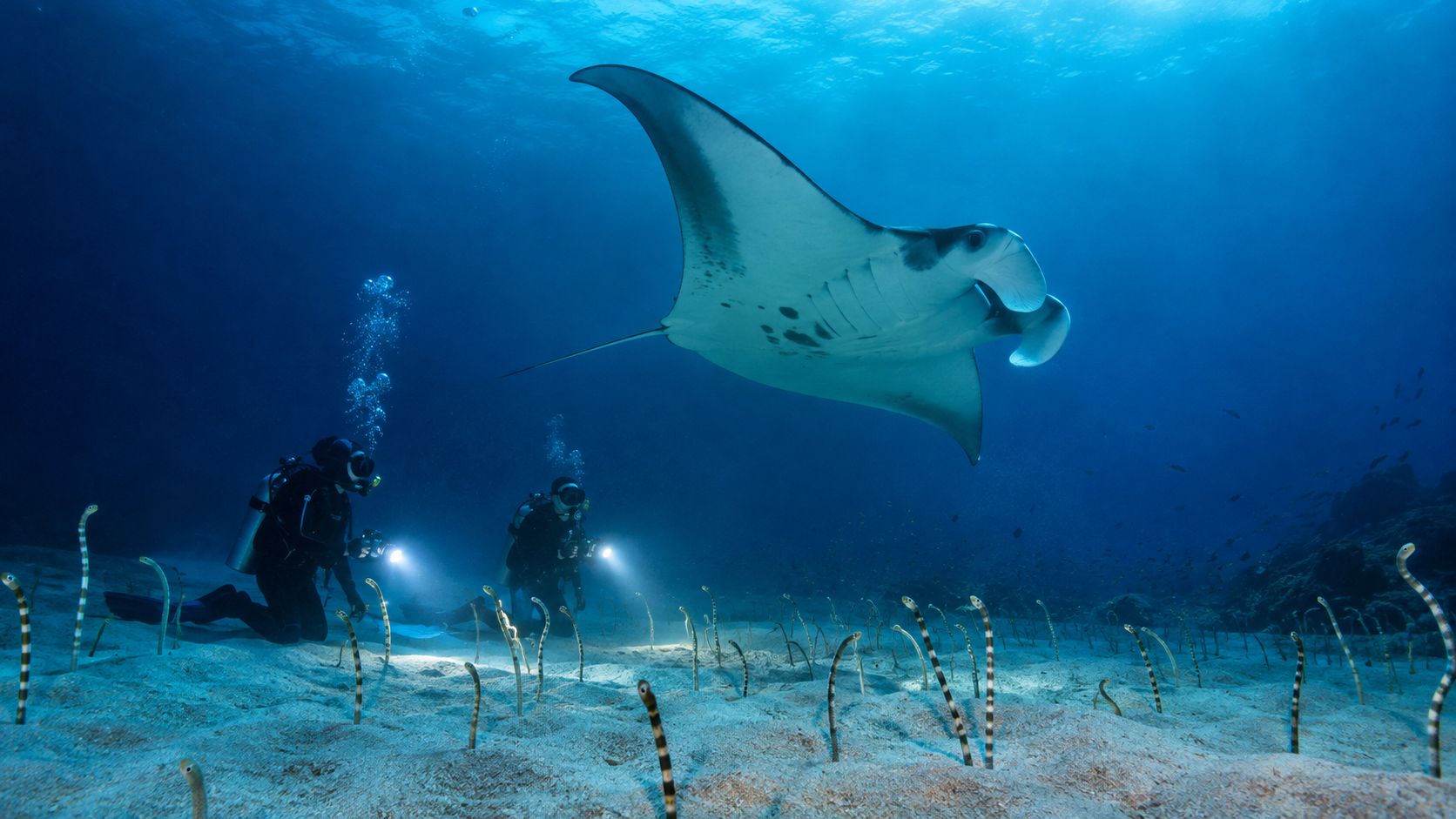
The observation record favors Garden Eel Cove on numbers. A University of Hawaiʻi analysis of community observations from 2010 through 2022 examined more than 23,000 sightings of 167 individual reef manta rays at Garden Eel Cove and Keauhou. Garden Eel Cove consistently supported larger aggregations, while Keauhou's sightings skewed female and showed high female site fidelity (University of Hawaiʻi study). Keauhou matters ecologically. For a diver spending one evening underwater, though, larger aggregations mean more animals moving through the light.
Site management is the second advantage. Garden Eel Cove sits inside the Old Kona Airport Marine Life Conservation District, which has defined boundaries and a separate no-boating zone. That framework keeps vessel traffic and diver pressure organized in a way an unrestricted stretch of coast cannot match. The developed reef structure gives you real terrain to settle against while mantas feed overhead. The broad viewing area lets certified divers hold position on the bottom while snorkelers in the same group work the surface above, which is why this site handles mixed parties so well.
Skip any operator who promises a count of rays. Ask which site they use and how they brief positioning, then follow the crew's instructions on the bottom. Stillness is what brings mantas close. The divers who plant themselves early and stay put see more animal behavior than the ones who chase.
Blackwater Diving After Dark on the Kona Coast
Blackwater diving isn't a reef tour conducted after sunset. You descend into open water at night, suspended above deep ocean, and wait for the vertical migration of small animals toward the surface. Under your lights, the water can reveal larval fish, young pelagic animals, and drifting invertebrates that most divers never notice during a daytime reef dive.
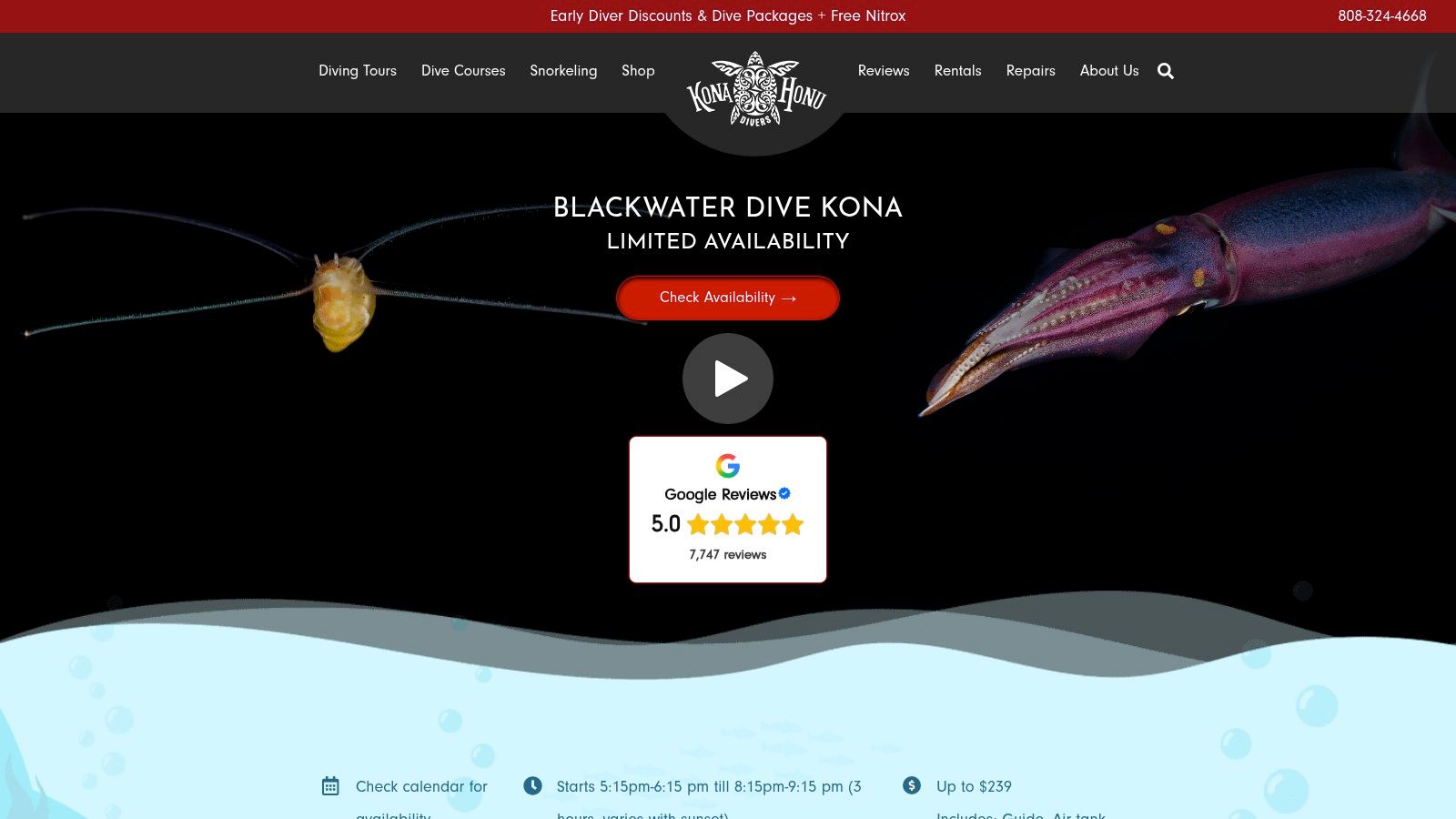
The attraction is the uncertainty. You aren't following a coral slope or looking for a familiar landmark. You're holding position, watching the beam, and learning to distinguish living specks from drifting particles. A camera can make the experience even more absorbing, but only if you can maintain buoyancy and situational awareness while composing a shot.
This is a specialist outing, not a good first night dive. You need to be comfortable in open water after dark, keep your position, and respond promptly to the guide. If your recent dives are limited or your buoyancy needs work, choose a reef dive or refresher first. Confidence is useful; control is essential.
The Kona blackwater dive also appeals to divers who enjoy observing marine life with a research-minded eye. Take time to look carefully, follow the crew's lighting and positioning instructions, and avoid handling anything that drifts by. The point is to witness the migration without disturbing it.
Kona's Signature Dive Sites by Depth and Conditions
A certified diver with deep local experience and a first-time visitor stepping off a plane do not belong on the same site, and Kona makes that easy to get right. The coast offers shallow lava fingers, steep walls, arches, and pinnacles, each suited to a different diver. Pick by terrain and conditions, not by reputation alone.
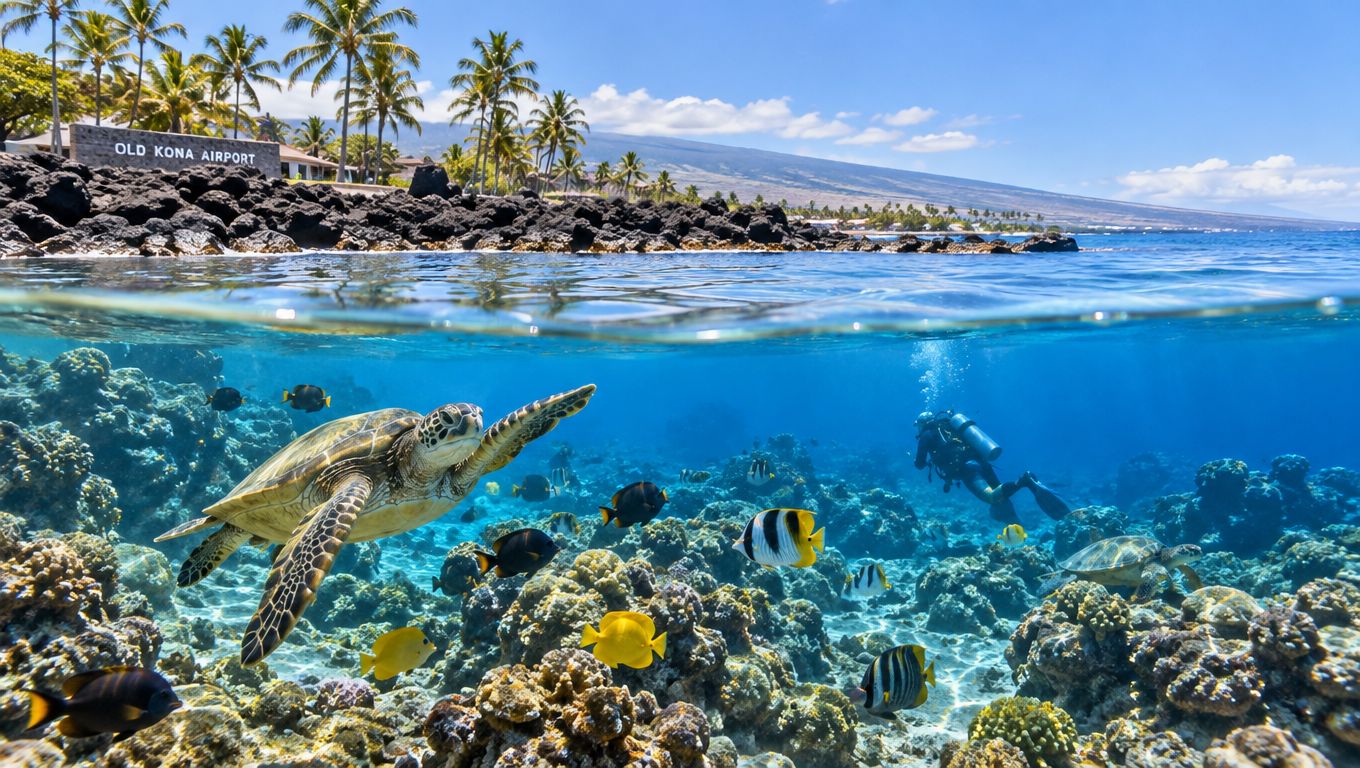
At the Old Kona Airport marine area, lava fingers run offshore through shallow water before the bottom drops away into very deep water. As noted earlier, the state warns that sharp lava and coral complicate entries and that swell and currents can turn hazardous. That profile demands a site-specific briefing, conservative depth planning, and a firm turnaround point. A calm surface tells you nothing about what is happening below it.
Turtle Pinnacle and Pinnacle of the Pacific suit photographers and newer divers alike. The reef structure gives you a focal point for marine life and keeps navigation simple: circle the formation, watch your depth, stay with your buddy. Tell the crew before the dive if you want time for close compositions. A camera should never pull you away from your planned depth or your guide.
Lava tubes and arches deliver the strongest visual lines on the coast, and they demand disciplined buoyancy. Stay out of overhead environments unless your training, equipment, and the guide's plan support it. If you want more demanding terrain, discuss the premium advanced two-tank trip with the operator and be candid about your recent dive count. Inflating your experience to get on a harder boat helps no one.
Kona's seafloor combines volcanic basalt with older reef structure. USGS investigations describe a drowned carbonate reef about 13,000 years old, now roughly 150 meters below sea level, with lava flows overlying and underlying parts of it (USGS research on Kona coastal lava flows). That geology explains why a short swim can take you from shallow ledges to a sharp drop-off. Let the guide's briefing, not the site name, decide how you dive it.
Booking Logistics Certifications and What to Bring
Book the trip that matches your actual training first, then work backward through equipment and travel plans. A standard two-tank trip is the simplest fit for certified divers who want guided reef dives. A private charter makes more sense when your group needs a custom schedule, has a range of experience levels, or wants the crew to focus on specific goals.
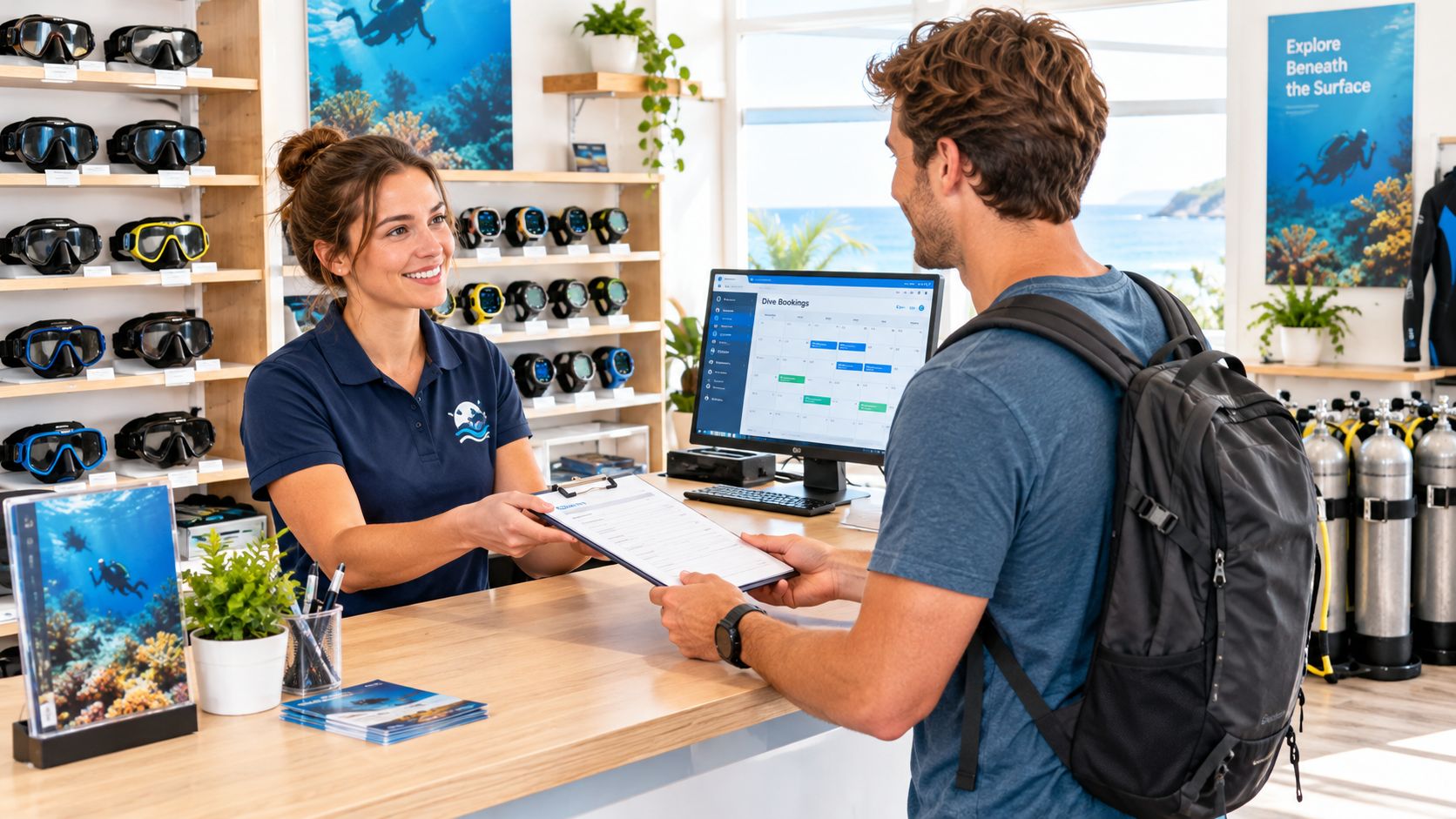
Check availability online and read the trip requirements before paying. Advanced dives aren't a shortcut to more exciting scenery; they're appropriate only when your certification and comfort align with the planned depth and conditions. If it's been a while since your last dive, book a refresher or speak with the shop before selecting a demanding outing. Beginners should start with training, not a tour designed for certified divers.
Use the scuba class and course information to compare certification and refresher options. Ask which personal items you must bring, what the operator supplies, and whether your rental configuration can accommodate your exposure suit and camera. Rental equipment should be fitted and checked before departure, not sorted out in a hurry on deck.
What to settle before departure
- Certification and experience: Share your card level and recent diving, particularly for night or advanced trips.
- Gas and equipment: Confirm nitrox eligibility, rental needs, and whether you'll use your own computer.
- Group needs: Tell the crew if someone in your party will snorkel while another person dives.
- Charter expectations: Explain your schedule, group composition, and priorities before booking a private boat.
Families don't need to split up automatically. Ask whether a snorkeling companion can join the same outing, then verify the trip is configured for both activities. For a smooth morning, pack a towel, dry clothes, water, and any personal dive equipment you prefer. The crew can handle the boat plan. You're responsible for arriving prepared to follow it.
Responsible Manta Encounters and What Visitors Often Misjudge
A manta sighting alone doesn't make a responsible tour. The better measure is whether the encounter lets the animals feed and move freely, with divers positioned calmly and operators controlling crowding and light use. Kona's manta rays have been protected under Hawaiʻi law since June 5, 2009, when the state made killing or capturing them illegal (Hawaiʻi legislative testimony on manta protection).
NOAA-hosted operational guidance states that harassment and contact with Kona manta rays are strictly prohibited, and directs operators to provide guests with a viewing guide. Keep your hands to yourself, don't chase a ray, and follow the crew's positioning rules. The most memorable encounter is often the one where a manta chooses to pass close while you remain still.
Ask the operator what happens if conditions deteriorate or mantas don't appear. Get the cancellation, rescheduling, and return-trip terms in writing before booking. No company can ethically guarantee a wild animal's appearance, and you should be wary of any pitch that treats a sighting as certain.
Kona's manta observations also have value beyond tourism. The long-term study discussed earlier shows how systematic records can help researchers understand residency, movement, and feeding-site use. Ask whether your operator contributes observations to monitoring efforts, and use these responsible diver etiquette guidelines to prepare for a low-impact visit.
Planning Your Trip and Common Visitor Questions
Kona often offers favorable diving conditions, but don't plan around a fixed visibility promise. The coast is sheltered from prevailing weather, and visibility is often greater than 100 feet; conditions still change with wind, swell, and currents. The Divers Alert Network describes Kona as having more than 350 diveable days annually, while NOAA advises checking marine forecasts, tides, and currents before entering the water (DAN's Kona diving overview, NOAA marine conditions guidance). Leave room in your schedule to shift a shore plan if the ocean says no.
If you're asking how many dive days to book, decide what matters most. One morning works for a taste of local reefs; extra time gives you flexibility for a manta outing, a specialized night dive, or a weather change. A non-diving partner may be able to snorkel on the same boat, but confirm that when choosing the tour.
Kona's two primary manta aggregation areas are Manta Village near Kaukalaelae Point, approximately 19.640° N, 155.997° W, and Manta Heaven in Makako Bay, approximately 19.736° N, 156.054° W. NOAA-hosted research reports sightings at both locations almost every night, but your first manta dive should still begin with realistic expectations and a careful briefing. Choose lodging that fits your transport and departure plans with this guide to places for divers to stay on the Big Island.
Book early if your dates are fixed, and ask the shop directly about course timing and charter suitability. A charter is worthwhile when your group needs a custom day, not merely a private label on a standard plan.
Kona Honu Divers offers guided reef dives, manta trips, blackwater outings, courses, rentals, and private charters for visitors with different experience levels and goals. Compare the options and visit Kona Honu Divers to choose a trip that fits your crew and the conditions you want to dive.