
You're standing on a boat after dark, mask in hand, trying to decide whether this is going to be the highlight of your Kona trip or one more activity that sounded better online than it feels in real life. That's the right question to ask. A night manta ray dive Kona experience can be magical, but only if you understand the site, the conditions, and the kind of operator you're getting on board with.
What the Night Manta Ray Dive Feels Like
The boat is quiet in that particular way it gets before the action starts, with people checking straps, zipping up wetsuits, and staring into black water that gives almost nothing away. Once you're on the bottom, or floating at the surface depending on your setup, the whole ocean seems to narrow into a few bright cones of light.
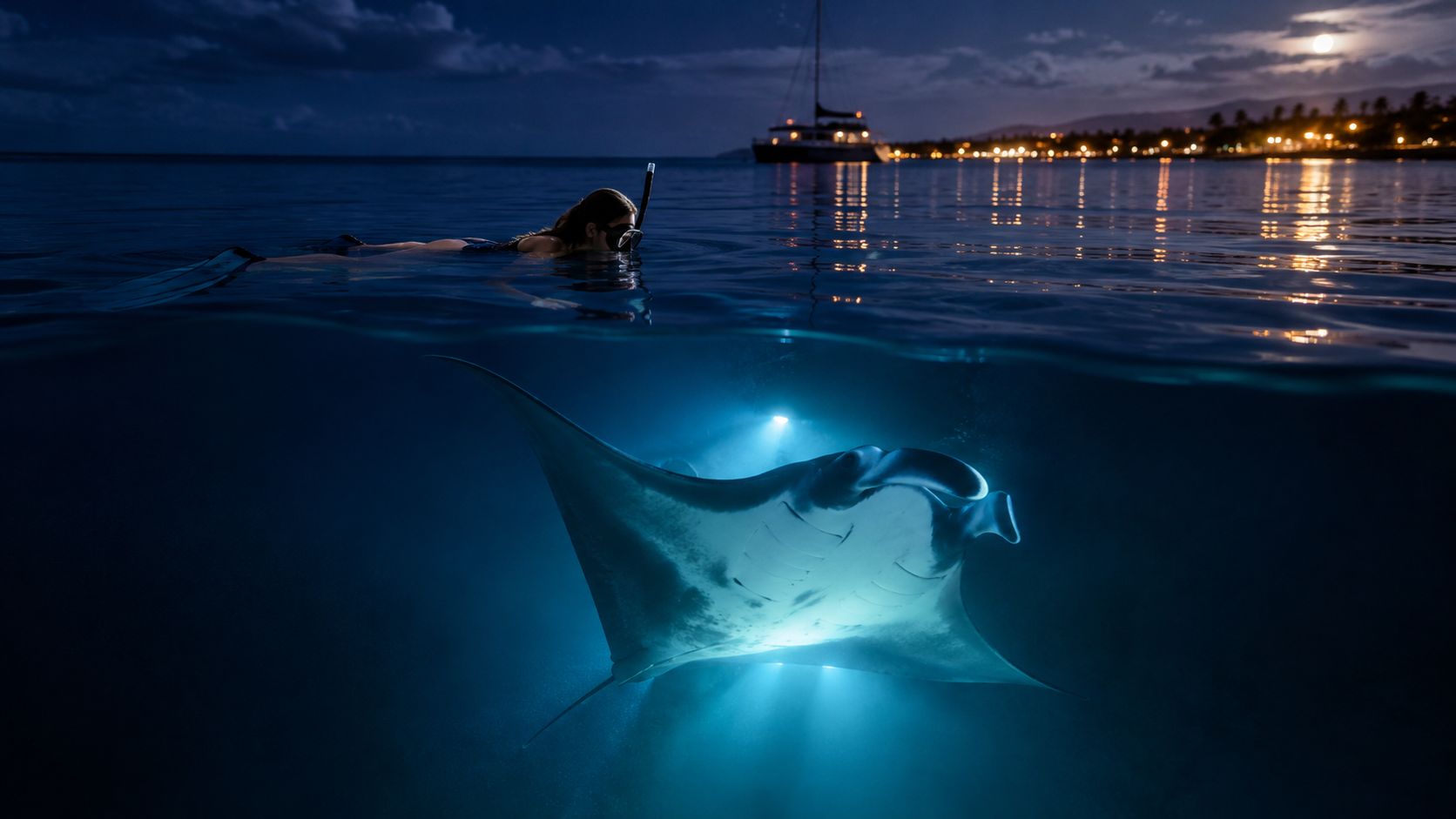
The first few minutes feel bigger than the photos suggest
The briefing ends, the crew settles everyone into position, and the dark stops feeling empty. You start seeing plankton moving through the light, then shapes appear at the edge of visibility, first as shadows, then as broad wings turning under the lamps.
What makes this different from a daytime reef dive is the contrast. During the day, your eyes chase color and structure. At night, you're watching a feeding system unfold in real time, with manta rays arcing overhead and rolling through the light column with almost no wasted movement.
For first-timers, the surprise is how still you need to be. The more patient you are, the more the scene opens up. If you're used to diving as an active hunt for fish, this feels almost inverted, because the animals control the pace and the distance.
Stay low, stay calm, and let the mantas come to you.
The best trips don't feel rushed. They feel like the ocean has decided to put on one precise, short performance, and your only job is to keep your place in the audience.
Why Kona Mantas Feed at Night
Kona's manta encounter works because artificial light concentrates zooplankton, and the mantas follow the food. That's the key distinction. The lights don't pull the rays in directly, they create a feeding opportunity by gathering the plankton in one place.
That chain, light to plankton to mantas, explains why the experience is so consistent at the established sites and why it can still vary from night to night. A bright, calm evening doesn't automatically mean more rays. Current direction, water clarity, wind, and the depth of the prey layer all affect where the food sits and how many animals decide to feed.
What you're actually watching underwater
Reef manta rays, Mobula alfredi, are filter feeders. They pass repeatedly through the prey-rich zone, often in slow, deliberate loops that look effortless from the boat and almost balletic from the water.
That feeding behavior also explains why depth matters. Some manta activity happens higher in the water column, while other feeding can occur deeper, where the prey layer has shifted. The night dive setup is really an attempt to hold a feeding zone in place long enough for repeated passes.
For a deeper look at the species and the Kona encounter itself, see Kona Honu Divers' manta ray overview.
A bright night is not the same thing as a productive feeding night.
That matters for expectations. If you're planning the dive, you're not booking a wildlife guarantee, you're booking into a natural feeding pattern that has become unusually reliable because of the way light reshapes the food chain.
Garden Eel Cove vs Keauhou Bay
Kona has two established manta-viewing areas, and they don't behave the same way. Keauhou Bay, also called Manta Village, has the longer public history. Garden Eel Cove, also called Manta Heaven, is the site many divers prefer when they want a more protected setting and a better overall viewing area.
The practical difference is simple. Keauhou is historic and well known. Garden Eel Cove usually gives operators a stronger setting for viewing, with surrounding reef structure that feels better suited to a responsible night dive. That's why I lean toward Garden Eel Cove when guests care about the quality of the encounter, not just the label on the trip.
The longer-term movement data supports treating the sites as connected but not interchangeable. A six-year photo-identification dataset recorded 25,444 observations of 118 individual reef mantas at Manta Village and Manta Heaven, and later analysis covering more than 23,000 sightings of 167 individual mantas found that aggregation size tracked zooplankton density, with Garden Eel Cove generally supporting larger groups and Keauhou showing stronger female site fidelity NOAA study and University of Hawaiʻi analysis summary.
Kona Manta Dive Sites at a Glance
| Feature | Keauhou Bay (Manta Village) | Garden Eel Cove (Manta Heaven) |
|---|---|---|
| General reputation | Historic manta site with a long track record | Often preferred for a more protected setting |
| Viewing environment | Established and familiar | Better viewing area and surrounding reef structure |
| Research signal | Strong site fidelity and female residency patterns | Larger aggregations in long-term analysis |
| Practical feel | Well known and heavily used | Strong choice for guests prioritizing site quality |
| Booking mindset | Good if you want the classic Kona manta story | Better if you want the stronger overall dive-tour setting |
The state has also identified crowding, safety, and resource protection as real concerns at these limited feeding sites, which is another reason site choice matters DLNR notice. If you want the better all-around option, Garden Eel Cove is the cleaner pick.
Who Can Join the Manta Dive
A manta trip can look open to everyone from the dock, but the fit is narrower once the boat leaves shore. Snorkelers do not need scuba certification, yet they do need to swim confidently and manage a boat ladder without help. That skill gap matters offshore at night, where a little uncertainty turns into discomfort fast.
Separate certification from water skill
Certified divers need the right certification level and comfort with a guided night descent. Snorkelers need calm breathing, surface control, and enough stability to hold position without drifting into the feeding column. The standard setup keeps snorkelers on the surface and divers near the bottom, which helps maintain vertical separation during the encounter NOAA interaction protocol.
Mixed-ability groups should think ahead. If one person tires quickly, gets anxious in the dark, or cannot climb a ladder independently, that affects the trip more than enthusiasm does.
Before you book, answer these questions directly:
- Can I swim calmly after dark?
- Can I climb a boat ladder without hands-on help?
- Do I get seasick on offshore rides?
- Will a wetsuit and mask feel reassuring or claustrophobic?
- Am I comfortable floating in open water with limited visibility?
- Do I have any medical, pregnancy, or recent-surgery concerns that should be disclosed first?
If you are trying to decide whether snorkel-only participation makes sense, start with this manta snorkel option. It gives a clearer picture of who does well with a calmer setup, more flotation support, or a smaller, more supervised arrangement.
No scuba card does not mean no physical requirements.
Freedivers and introductory scuba participants can sometimes fit into the broader manta experience, but they should book only if they understand the demands of night water. Once the boat leaves the harbor, confidence carries guests through the night.
What to Bring and How to Prepare
Pack light, but do not underpack. Bring a towel, a warm layer for the ride back, and a dry bag for anything you want to keep dry, secure, or off the deck. Put reef-safe sunscreen on before boarding, since once the crew starts moving gear and lining people up, there is no good time to do it then.
Seasickness deserves real attention on a manta trip. The site is offshore, and if the ride turns rough, you cannot just step back onto land. If motion sickness usually hits you, handle it before boarding instead of hoping you will push through it. A boat seasickness guide is worth reading before you pack.
Useful options include:
- Ship-EEZ Seasickness Patch for guests who want a patch-based approach.
- Dramamine pills if you already know that oral medication works for you.
- Bonine pills for another common pill option.
- Sea Band wristbands if you prefer a non-drug aid that many travelers use.
- Ginger chews if you want a simple supplement-style backup.
A camera is fine, but do not pack like you are heading out for a full-day shore excursion. The crew handles the trip setup. Your job is to stay warm, stay organized, and avoid bringing extra items that turn into clutter in the dark.
Eat a light meal at least an hour before boarding. A heavy dinner on a moving boat is one of the fastest ways to trigger seasickness before the mantas ever show up.
Photography and Lighting Tips
A good manta photo starts before you press the shutter. Hold position, let the animal come through the frame, and shoot upward through the light column instead of dropping low and crowding the reef.
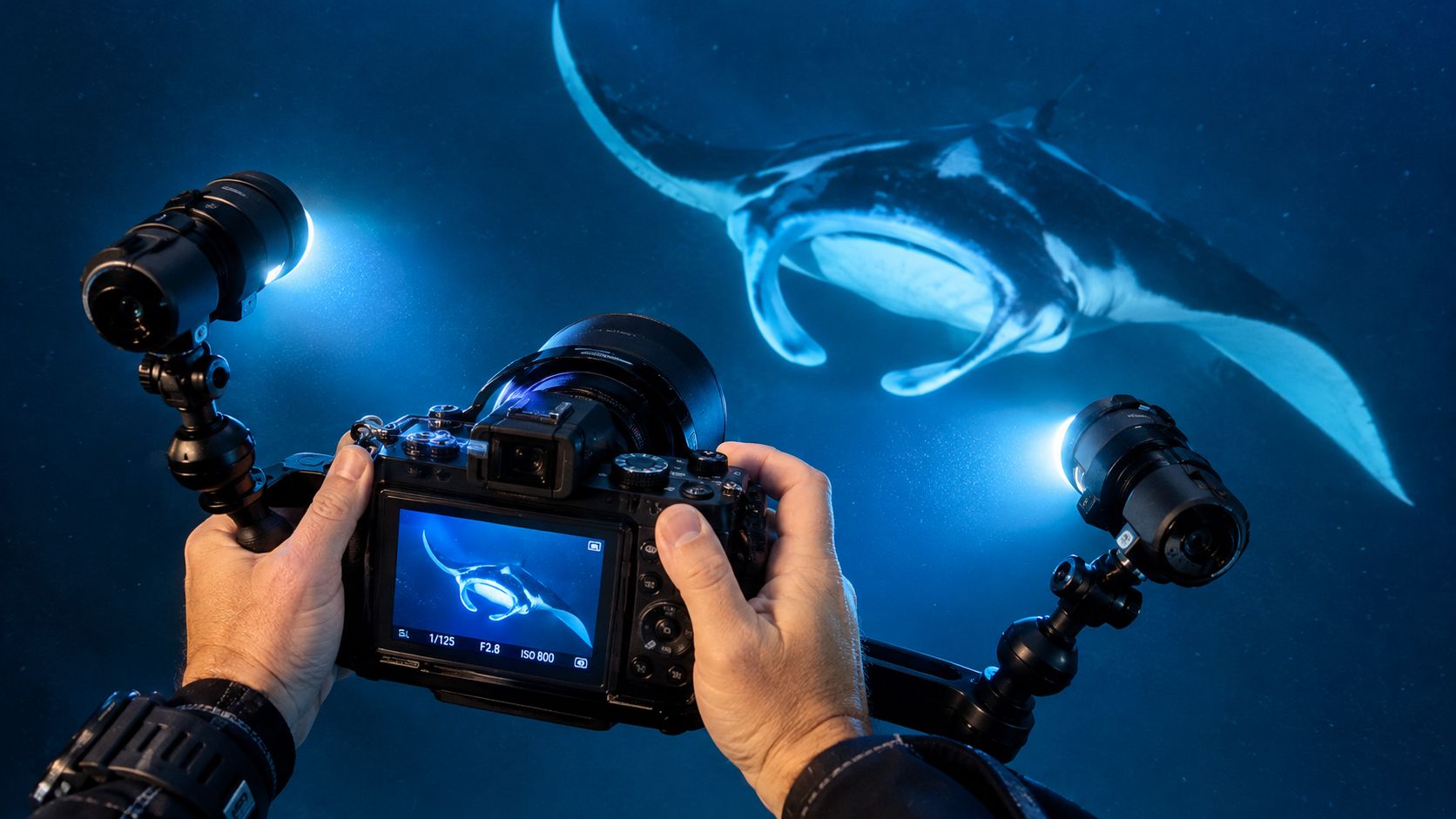
Keep the light where the plankton belongs
The main rule is simple. Hold lights above your head so they draw plankton up without blinding the mantas. That matches standard interaction guidance, including keeping divers in the designated light circle and aiming lights over sand or rubble rather than live coral NOAA protocol.
Gear choice matters less than control. A GoPro can work if you accept a dark scene and fast-moving subjects. A mirrorless camera with a wide lens gives more room to work in low light. Strobes help still photos, while video lights are better if you want motion and ambient detail.
For real examples of what these settings produce underwater, see this gallery of manta ray dive pictures from Kona.
A few habits make a bigger difference than expensive gear:
- Shoot upward, because the manta silhouette reads clearly against the light.
- Wait for the roll, because the strongest frame often comes when the ray banks and opens its cephalic fins.
- Stay wide, because tight framing cuts off wings or tails.
- Avoid chasing, because a moving camera hurts both the encounter and the composition.
If you want to compare trip formats that suit a camera-focused guest, the manta ray dive tour page lays out the options. The best underwater images here still come from restraint, not from forcing the shot.
Choosing a Responsible Manta Tour Operator
A lot of manta marketing sounds the same, and that is where buyers need to slow down. “Guaranteed sightings” sounds reassuring, but it can pressure operators to sell the encounter like a certainty when it is still wildlife on its own terms. Manta rays are wild animals, and some nights produce less activity than others.
The ethics matter too. Independent marine-megafauna guidance notes that manta rays at tourism sites in four countries have changed course, avoided swimmers, or stopped feeding during encounters, while the long-term population effects remain unmeasured. That is a strong reason to choose a precautionary operator, not one that treats the encounter like a product with a fixed outcome marine megafauna guidance.
Green flags and red flags
Good operators show their standards in how they handle the site.
Green flags
- Small, managed groups instead of packed viewing circles.
- Lights placed correctly over sand or rubble, not on coral.
- Divemasters actively controlling position so guests do not drift into the feeding lane.
- Transparent crowd expectations if the site is busy or conditions are changing.
- Clear etiquette briefings before anyone enters the water. The behaviors that separate careful operators from crowded ones are laid out in this guide to responsible, considerate diver etiquette.
Red flags
- Promises of guaranteed sightings as if wildlife were scheduled entertainment.
- Rays chased for better photos or people moved into the path of the animals.
- Lights dropped carelessly on the reef.
- Crowded circles where nobody knows who is supposed to hold position.
If you fall in love with night diving in Kona, the next options are more advanced outings and other after-dark trips, including the advanced dive tour and the blackwater night dive. Both draw the same kind of diver, someone who wants structure, darkness, and a real marine encounter rather than a scripted one.
A good manta night respects the animal first and the guest second.
That is the standard worth using. If the operator talks more about the photo moment than about spacing, reef protection, and actual site conditions, keep looking.
Booking Your Night Manta Ray Dive in Kona
If you are deciding whether to book, start with timing and flexibility. Book early in your trip if you can, because weather, crowding, and changing ocean conditions can affect which night works best. That matters even more if you get seasick easily or you are traveling with a group that has mixed swimming ability.
The booking process should be clear before you pay. Choose a date, confirm whether your group includes divers, snorkelers, or both, and read the trip notes carefully. If you are booking for a family or a mixed-ability group, say that upfront so the crew can tell you whether the setup fits.
A manta trip is more than a boat ride to a viewing site. You are paying for crew coordination, safe positioning, lights, gear handling, and the kind of on-water management that keeps the encounter organized when the site gets busy. Group size matters here, especially at a limited feeding area where boats, lights, snorkelers, and divers all need room.
The questions that usually come up are practical ones:
- Will I definitely see mantas? No. These are wild animals, and the encounter is natural rather than staged.
- What if no mantas show up? You still get a real night ocean trip, but the operator should explain the policy before you book.
- Can pregnant guests or non-swimmers join? That depends on the setup and the individual. Non-swimmers should not assume they are fine just because it is snorkeling.
- Is there an age minimum? Many operators set one, so confirm before you reserve.
- How cold is the water? Cooler than many guests expect after dark, which is why a wetsuit and warm layer matter.
If you want the reef structure, lighting setup, and crew handling to work in your favor, choose an operator that treats the dive as a wildlife encounter first and a photo opportunity second. Kona Honu Divers runs manta trips in Kona and can help you choose the right format for your group, whether you are diving, snorkeling, or traveling with both.