
Picture this: you're sinking into unbelievably clear water, surrounded by ancient lava tubes that have twisted into dramatic underwater arches. As you look around, vibrant coral gardens seem to stretch on forever. This isn't just another dive trip; this is diving on the Big Island, an incredible scuba paradise sculpted by volcanic fire.
Why the Big Island Offers World-Class Diving
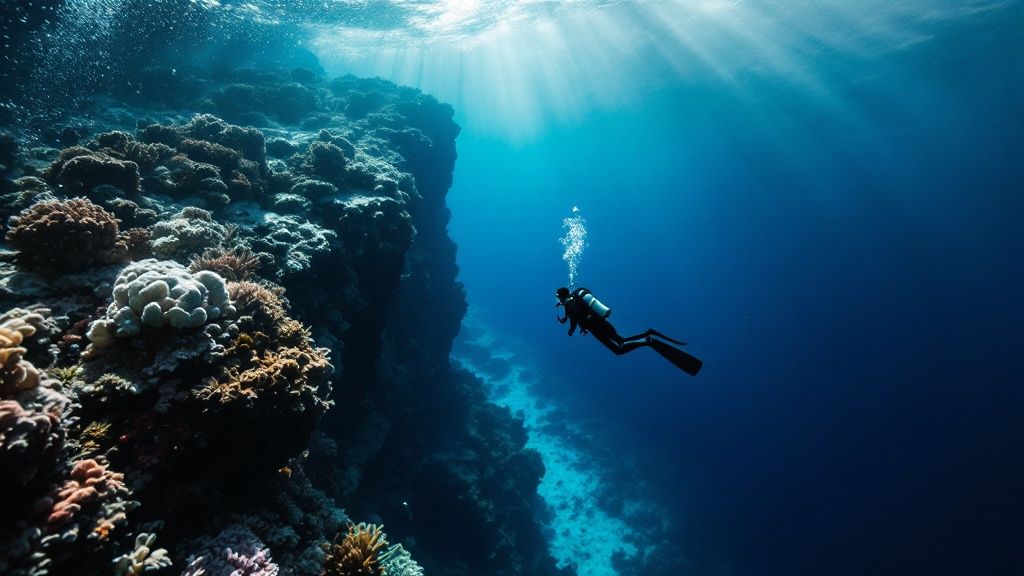
There's a good reason the Kona coast is a bucket-list destination for divers from all corners of the globe. Millennia of volcanic activity have created some of the most dramatic underwater landscapes you'll ever see, and they're teeming with an insane amount of marine life.
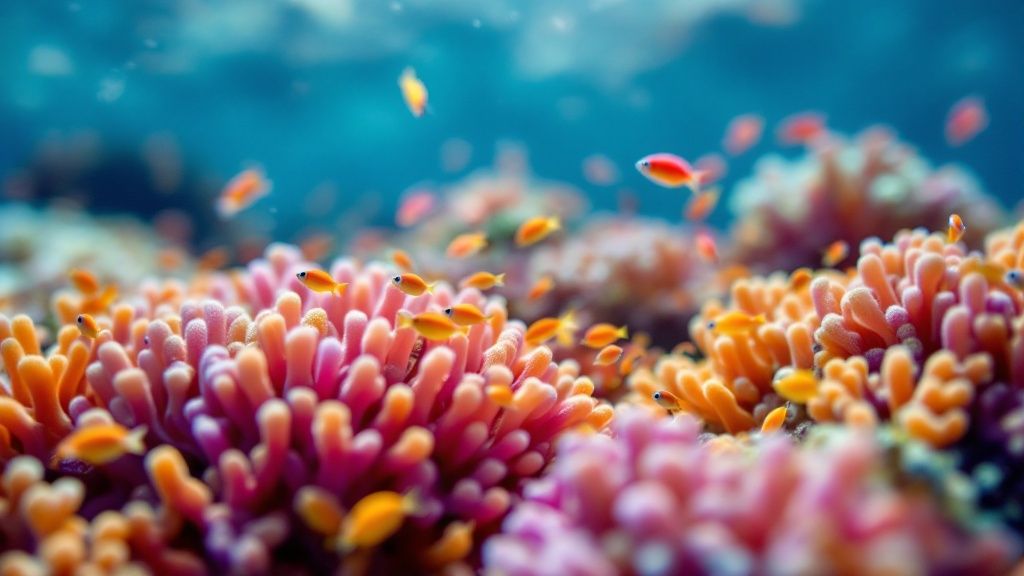
Here, you can effortlessly drift through intricate lava formations, explore reefs bursting with color, and come face-to-face with everything from tiny, flamboyant nudibranchs to graceful sea turtles and, of course, the majestic manta rays.
But what really makes the Big Island a cut above the rest is the sheer variety and quality of the dive sites. They're all naturally protected from the blustery trade winds by massive volcanoes. This shield creates consistently calm, clear conditions, making it a perfect spot whether you're a seasoned pro or just getting your fins wet. You can get a deeper look at what to expect in our complete guide to Big Island diving.
The Growth of a Diving Haven
The island’s reputation as a top-tier diving spot didn't just pop up overnight. It's been a slow burn, evolving from the pioneering days back in the 1960s and 70s into the thriving hub for underwater adventure it is today.
The Big Island now supports around 100,000 certified dives every year, which says a lot about its world-class dive operations and captivating ocean environment. This growth is built on a deep local culture that's all about ocean exploration and, most importantly, diver safety.
Of course, choosing the right operator is everything when it comes to experiencing the best of Kona. A top-rated company like Kona Honu Divers has the expertise and commitment to safety to make your adventure truly unforgettable.
Exploring Kona’s Most Iconic Dive Sites
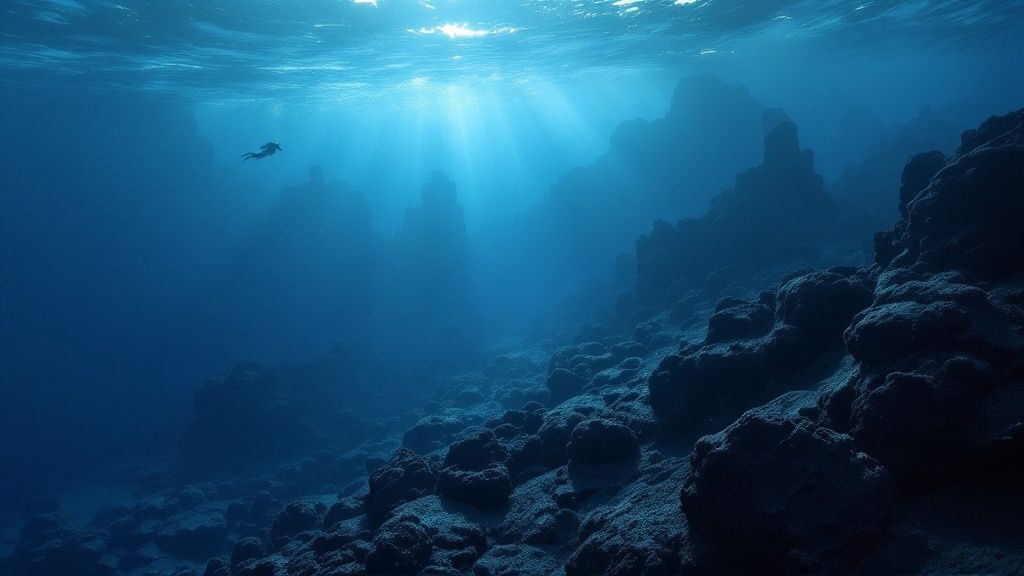
The Kona coast is an absolute goldmine of world-class dive sites, every single one shaped by the island's volcanic soul. The variety is just incredible. One day you're navigating ancient lava tubes, the next you're drifting over sprawling coral gardens. When you're scuba diving the Big Island, you're getting a taste of a whole underwater ecosystem, not just one type of environment.
The underwater landscape here is nothing short of spectacular. Picture yourself descending along a dramatic drop-off, weaving through a swim-through carved by lava flows centuries ago, and coming face-to-face with marine life that has perfectly adapted to these unique structures. It’s this raw, natural beauty that puts Hawaii on the map for divers. The best part? Exploring these spots is a breeze with professionally guided diving tours that take care of all the planning for you.
Golden Arches
A true favorite for local divers and visitors alike, Golden Arches earns its name from two massive, magnificent lava-formed arches that you can actually swim right through. This place is a photographer's dream, especially when the sunlight streams through the arches, creating a scene that feels almost magical.
- What You’ll See: Big schools of brilliant yellow tangs, butterflyfish, and if you look closely in the crevices, the occasional whitemouth moray eel.
- Typical Depth: An accessible 30-60 feet (9-18 meters), making it perfect for divers of all certification levels.
- Topography: The famous arches are the main event, but the site also features a healthy, gently sloping reef system teeming with life.
Turtle Pinnacle
No prizes for guessing what this spot is famous for! Turtle Pinnacle is a natural cleaning station for our beloved Hawaiian green sea turtles, or honu. It’s common to see these gentle giants just chilling out, patiently waiting while reef fish nibble away parasites from their shells. It's an amazing opportunity to witness this behavior up close—respectfully, of course.
This site offers an almost guaranteed chance to see turtles in their natural habitat. Just remember to give them plenty of space and never, ever touch them. Let them enjoy their spa day in peace!
The pinnacle itself rises up from the seafloor, acting like a busy hub for all sorts of marine activity. Depths here range from 40 to 70 feet (12-21 meters), which is well within the limits for open water certified divers.
Crescent Bay
If you’re looking for a dive with a bit more structure and complexity, Crescent Bay is your spot. This site is defined by a cool series of underwater canyons, ledges, and small caverns all formed by ancient lava flows. It honestly feels like you're exploring a submerged labyrinth.
Those unique formations create the perfect hiding spots for all kinds of critters, from octopus and frogfish to various crustaceans. With a maximum depth around 50 feet (15 meters), it's another fantastic choice for divers who love a good exploration and the thrill of discovery.
Deciding where to go can be the hardest part! Here's a quick rundown to help you choose your next adventure.
Kona Dive Site Snapshot
| Dive Site | What You'll See | Average Depth | Best For |
|---|---|---|---|
| Golden Arches | Lava arches, schools of yellow tangs, moray eels | 30-60 ft | Underwater Photography & All Levels |
| Turtle Pinnacle | Hawaiian green sea turtles, cleaning stations, reef fish | 40-70 ft | Turtle Encounters & Open Water Divers |
| Crescent Bay | Lava canyons, octopus, frogfish, unique topography | 40-50 ft | Exploration & Finding Hidden Critters |
No matter which site you pick, you're in for an unforgettable experience. Planning your dive has never been easier.
Experiencing the Manta Ray Night Dive
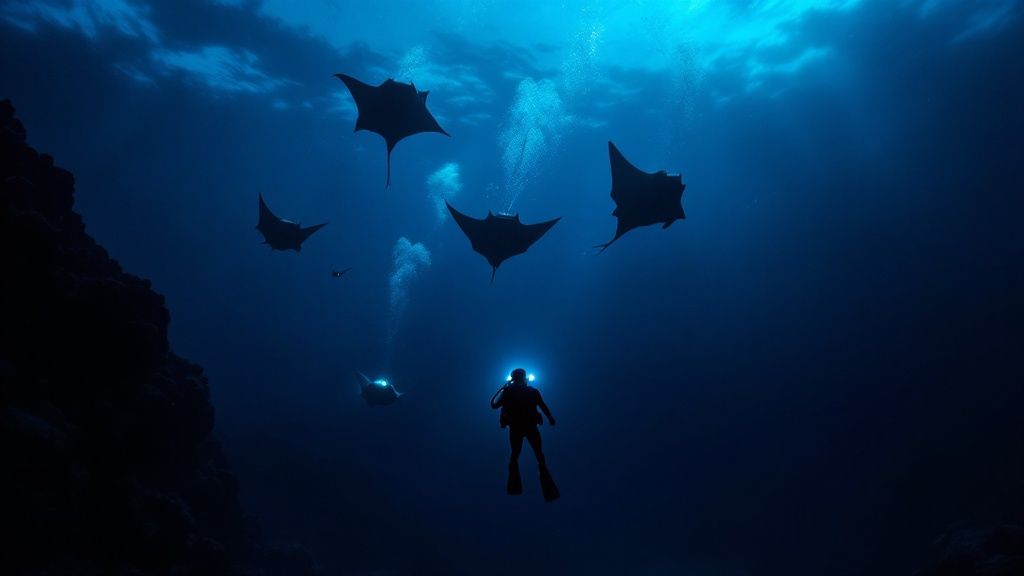
Some dives are unforgettable. Then there's the Manta Ray Night Dive in Kona. It's a completely different level of experience—a true underwater spectacle that you'll be talking about for the rest of your life. It's no surprise this consistently ranks as one of the best night dives on the planet, pulling in divers from every corner of the globe for a front-row seat to nature's silent ballet.
Picture this: you slip into the calm, dark ocean just as the last hints of sunset disappear. Down on the seafloor, powerful lights create a "campfire" effect, lighting up the water column and attracting swarms of plankton. It doesn't take long for the main event to begin. Giant manta rays, some with wingspans stretching over 12 feet, materialize from the darkness.
They glide right over your head, performing these graceful barrel rolls with their mouths wide open, filtering the plankton from the water. It’s a totally mesmerizing and incredibly humbling encounter with these gentle giants.
A Sustainable Spectacle
What's really special about the Kona Manta Ray Night Dive is that it's more than just an amazing dive—it’s a fantastic model for sustainable marine tourism. This dive has been a signature Kona attraction since the 1980s, proving that the dive industry and ecological responsibility can go hand-in-hand. Tour operators here follow strict, self-imposed guidelines to protect the mantas, ensuring every encounter is respectful and doesn't interfere with their natural behavior. You can read up on the dive's unique history over at oceanographicmagazine.com.
The key to a responsible manta encounter is simple: observe only. Divers are instructed to stay near the bottom and let the mantas come to them, ensuring the animals have a clear path to feed without disturbance.
This commitment to doing things the right way ensures the dive remains a magical—and sustainable—attraction for years to come. For a full rundown of what to expect on your trip, check out our guide on the manta ray night dive on the Big Island.
Booking your spot for this incredible adventure is easy. The best operators offer guided manta ray dive tours that handle all the logistics, so all you have to do is show up and focus on the magic unfolding right in front of you.
Discovering Advanced Diving Adventures
So you're certified and have a few dives under your belt. You've seen the beautiful coastal reefs and now you're itching for something… more. Good news. The Big Island is a playground for experienced divers who crave a real challenge, and Kona is the epicenter of these next-level adventures.
One of the most mind-blowing experiences you can have here is the famous Kona Blackwater Dive. Let's be clear: this is not your typical reef dive. We head miles offshore at night, turn off the engines, and drop you into the deep, dark, open ocean.
Tethered to the boat, you'll witness one of the planet's largest migrations as bizarre, bioluminescent creatures rise from the abyss to feed. It's a surreal, almost alien encounter that feels more like floating in outer space than being underwater. It's an experience that will stick with you forever.
Beyond the Blackwater
While the blackwater dive is a bucket-list must, Kona has plenty of other advanced dives to get your heart pumping. The underwater topography here is dramatic, with massive drop-offs, deep canyons, and sites known for ripping currents that will put your skills to the test.
Exploring these more remote and challenging sites requires excellent buoyancy control and comfort in deeper water, but the payoff is seeing pristine underwater landscapes that few others get to experience.
These trips often visit less-frequented spots, giving you a sense of true, off-the-beaten-path exploration. If you’re ready to see the wilder side of Kona’s waters, an advanced dive is the way to go.
And even when you're on these epic boat dives, it's always a good idea to get a feel for the local environment from the ground up. Brushing up on where to go shore diving on the Big Island can give you a whole new appreciation for the coastline.
A Word On Diving Safety In Hawaii
The same volcanic coastlines that make a Big Island dive so epic also cook up some unique ocean conditions. Honestly, understanding and respecting the local environment is the single biggest thing you can do for a safe and amazing trip. Even on days that look flat calm, you can get some serious surge and currents whipping around those lava rock formations.
This is exactly why diving with a certified, professional outfit is a non-negotiable for me. A good guide isn't just a taxi to the best sites; they're giving you detailed safety briefings that are specific to that day and that exact spot. Their experience in reading the water means you can actually relax and just soak in the incredible world below.
Scuba diving has a stellar safety record, but it's smart to be aware of the ocean's power, especially if you're not used to Hawaiian waters. Here’s a sobering statistic: between 2009 and 2018, there were 28 scuba-related fatalities. In that same period, there were 206 snorkeling fatalities, and a staggering 189 of those were visitors. You can read more about these safety findings from divernet.com. That massive difference really drives home how critical professional oversight is out here.
When you choose a reputable dive company, you're not just booking a tour—you're investing in your own well-being. You're getting:
- Gear that's professionally maintained and reliable
- Guides with deep, firsthand knowledge of local currents and conditions
- A team that is fully prepped for emergencies with certified staff
By putting safety first and diving with the pros, you can get out there and confidently explore all the magic Hawaii's underwater realm has to offer.
Planning Your Ultimate Big Island Dive Trip
Alright, let's get you from dreaming about diving the Big Island to actually doing it. A little bit of prep goes a long way, and thankfully, Kona makes it easy with fantastic conditions pretty much all year.
Timing is everything, right? If you love warm water, aim for August to October when the ocean hits a balmy 80°F (27°C). Prefer something a little cooler? From January to March, the water dips to a still-comfortable 75°F (24°C). The massive bonus for diving in winter? It's peak whale season. There's nothing quite like hearing humpback whale songs echoing through the water on your dive—it's pure magic. No matter when you come, visibility is usually phenomenal, often clearing 100 feet.
Your Essential Packing Checklist
Packing right means you’re ready for anything. Aside from your flip-flops and swim trunks, there are a few things you absolutely shouldn't leave behind.
- Certification Card & Logbook: Don't even think about leaving home without them. These are your ticket to dive.
- Dive Computer: You can always rent one, but bringing your own means you know exactly how it works and can track your dives consistently.
- Reef-Safe Sunscreen: This one's a big deal. The chemicals in regular sunscreen are seriously harmful to Hawaii's beautiful coral reefs, so make sure yours is reef-safe.
- Reusable Water Bottle: Staying hydrated on the boat is key, and bringing your own bottle helps cut down on plastic waste. Let's keep this paradise pristine.
Trusting a professional crew like Kona Honu Divers just takes the whole trip to another level. Their local knowledge means you’re not just going to a good site; you’re going to the best site for that specific day's conditions.
Honestly, going with a guided experience is the smartest way to dive Kona. It puts your safety first and opens up a world of incredible spots you'd never find on your own. With someone else handling the logistics, all you have to do is show up, relax, and soak in the incredible underwater world. Ready to make it happen? Check out some of the best diving tours to get your adventure started.
Your Big Island Diving Questions Answered
Planning a dive trip to the Big Island? You've probably got some questions. We get it. Here are the answers to the things we get asked the most.
What’s the Best Time of Year to Dive?
Honestly, the diving in Kona is phenomenal all year round, which is a huge part of its magic. If you love warm water, aim for August through October when temperatures peak around a balmy 80°F (27°C).
From January to March, it cools down to a still-very-comfortable 75°F (24°C). The big bonus for winter diving? It's whale season. There's nothing quite like hearing humpback songs reverberating through the water on your safety stop.
Do I Have to Be Certified to Dive?
If you want to hop on a boat and explore Kona's legendary dive sites, then yes, you'll need to be a certified diver.
But if you're not certified yet and just want to see what all the fuss is about, you're in luck! Many local shops offer "Discover Scuba Diving" experiences. These are one-day intros where an instructor is literally by your side in a shallow, calm spot. It's the perfect way to get your first taste of breathing underwater.
What Kind of Marine Life Will I See?
The Kona coast is practically an underwater metropolis! You're almost guaranteed to see Hawaiian green sea turtles (honu), playful spinner dolphins, and graceful eagle rays. The reefs are buzzing with colorful fish like butterflyfish, triggerfish, and parrotfish.
And then there are the world-famous night dives. You'll meet eels, octopuses, and of course, the magnificent manta rays. For something truly mind-blowing, the Kona blackwater dive reveals bizarre, bioluminescent creatures that come up from the deep.
Can I Rent All My Gear There?
Absolutely. Every reputable dive operator on the island has a full lineup of quality rental gear—BCDs, regulators, wetsuits, you name it. Everything is professionally maintained, so you know it's safe.
Renting is a super convenient option, especially if you'd rather not lug a heavy dive bag through the airport.
Here at Kona Honu Divers, our mission is to give you a safe, unforgettable, and truly awe-inspiring adventure. Our crew lives and breathes these waters, and they know exactly where to go to show you the best of Kona.
Check out our complete list of diving tours and let's get your dream dive on the calendar.