
Table of Contents
- Choose a starting dive
- Give yourself an honest readiness check
- Control the avoidable risks
- Compare the operation, not just the itinerary
- Recognize the red flags
- Why Garden Eel Cove is the stronger choice
- Let the feeding corridor stay clear
- Expect small animals and changing nights
- Blackwater or reef
- Before you leave your accommodation
- At the boat
- Compare like with like
- Make the reservation clear
What makes a Kona night dive good: how close a manta passes your mask, or whether you and the animal can carry on without stress? Most booking decisions start with wildlife photos. A better decision starts with your skills, the crew's procedures, and how little you disturb the animals you've come to see.
For Big Island divers, Kailua Kona offers very different experiences under the same broad label of scuba diving. A morning reef trip, a stationary manta encounter, and an open-ocean blackwater drift demand different kinds of comfort. Choose the right format first, then compare operators and departure dates.
Kona Dive Options at a Glance
Kona dive options compared
| Dive | Time of day | Minimum certification | Best for |
|---|---|---|---|
| Morning 2-tank reef dive | Morning | Certified diver | Coral gardens, lava tubes and swim-throughs |
| Manta night dive | Evening and night | Open Water certification | Feeding reef mantas under lights |
| Blackwater night dive | Night, open water | Confirm certification and logged-experience requirements before booking | Plankton and larval fish in deep blue water |
| Premium advanced 2-tank trip | Day | Experienced divers, with operator approval | Remote sites on longer boat runs |
| Daytime reef charter | Day | Confirm the selected charter's certification requirement | Mixed-experience reef dives |
The table separates eligibility from suitability. A certified diver can be eligible for a morning reef trip without being ready for every lava formation, swim-through, or night itinerary. Tell the crew about your recent diving, not just the highest qualification on your card.
A daytime reef charter is a mixed-experience day trip planned around shallow reef sites. It works best when the guide can select a route and pace that suit the group, rather than expecting everyone to follow the most experienced diver into more demanding terrain.
For background, the U.S. Coral Reef Task Force describes approximately 640 square miles of coral reef habitat across the main Hawaiian Islands, supporting about 80 coral species and more than 1,500 reef-fish species, with over 1,250 species considered endemic.
Choose a starting dive
- First Kona dive: Start with a morning reef outing so you can settle your weighting, rental fit, and communication in daylight.
- A distinctive evening: Choose the manta dive if your night-diving readiness is solid, not because it's the best-known trip.
- Established experience: Consider a premium advanced long-range trip when your logged experience includes deeper water and independent gas management.
- An open-ocean night: Use the blackwater-versus-reef comparison below before deciding whether darkness without a nearby bottom appeals to you.
Browse the full range of diving tours, but choose by the actual dive format rather than the most dramatic photograph. Longer travel and more challenging conditions don't automatically produce a better dive.
Readiness and Safety Rules for Night Diving
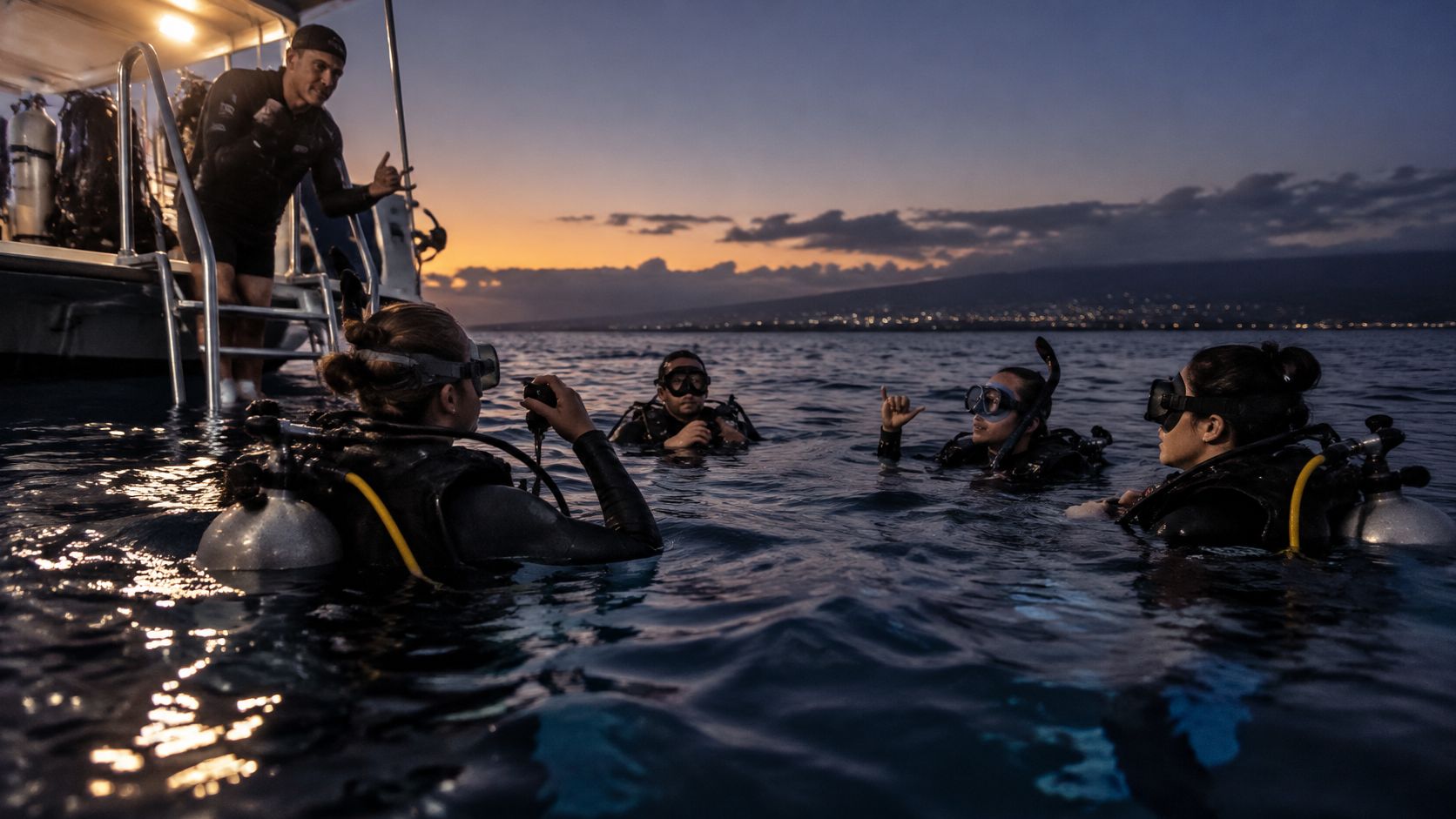
Open Water certification is the minimum for the manta scuba experience, but a card isn't a complete readiness test. The Kona night-diving readiness guide identifies buoyancy control, comfort in darkness and deep water, and the ability to board the boat and climb its ladder as practical requirements beyond certification.
Give yourself an honest readiness check
- Position control: Can you stop, adjust your buoyancy, and hold position without grabbing rock or touching coral?
- Low-light comfort: Can you stay calm when your light shows only a small part of the surroundings?
- Boat mobility: Can you follow the crew's boarding procedure and climb the ladder?
- Physical condition: Are you rested, hydrated, and free of nausea?
- Recent practice: Have you used these skills recently? Newly certified or rusty divers should establish confidence in daylight first.
A tired diver, someone already seasick, or someone struggling to stay still should postpone the night dive. Choose a daytime outing or refresher instead. That's competent judgement, not a failed holiday.
Readiness rule: If you need the bottom to feel secure, don't use a wildlife night dive to discover how you cope without it.
Control the avoidable risks
The Kona dive-planning guidance supports selecting a protected site when wind or swell rises, giving a formal briefing, securing equipment, maintaining neutral buoyancy, and keeping divers away from live coral. Poor trim brings fins into the substrate; dangling gauges and accessories create snag points; abrupt swimming crowds other divers and interrupts feeding paths.
Before entering, agree on light signals, buddy separation procedures, gas checks, and the ascent plan. Clip off your alternate air source and gauges, secure camera lanyards, and practise reaching your inflator without looking. Follow responsible, considerate diver etiquette even when everyone's attention is on the wildlife.
For motion-sickness planning, available products include the Ship-EEZ Seasickness Patch, Dramamine pills, Bonine pills, Sea Band wristbands, and ginger chews. Compare wristband prices and current reviews rather than assuming a branded option is better.
Ask a pharmacist or diving clinician about suitability, especially for anything that can cause drowsiness. Use an appropriate preventative before boarding according to its directions, rather than waiting for nausea, and don't trial an unfamiliar medication immediately before scuba diving.
How to Choose a Kona Dive Operator
Operators may visit overlapping sites, but their procedures can produce very different days. Compare how they organize the dive, handle mismatched experience, and respond when conditions change. A beautiful boat photograph won't answer those questions.
Use this Kona operator-selection guide as a starting point, then apply the following criteria to actual booking information. Kona Honu Divers is based in Kona, Hawaii, on the Big Island; we focus on small groups and personal attention from the moment divers step aboard.
Compare the operation, not just the itinerary
- Departure clarity. Find the harbor, meeting point, check-in instructions, and expected travel to the sites. A local business address isn't necessarily where you board.
- Personal attention. Ask how divers are grouped and who handles a participant who needs extra help. Our small-group approach is useful only if the selected trip also matches your ability.
- Equipment care. We proactively service rental equipment and handle gear setup. You should still inspect fit, test breathing from both second stages, and complete your buddy check.
- A meaningful briefing. For a night dive, expect contact rules, light positioning, entry and exit procedures, and a clear response to separation. A rushed description of the wildlife isn't enough.
- Honest encounter language. A rebooking offer is a commercial policy, not control over animal behavior. For blackwater, ask about the format and likely organisms rather than seeking a promise of a particular species.
- Checkable credentials. Read reviews across different periods and look for consistent descriptions of briefings, equipment, and crew decisions. If an operator cites local recognition, check who awarded it and what it recognizes.
Recognize the red flags
- No briefing: Don't enter before you understand the plan.
- No eligibility screening: A booking process that never asks about certification or experience deserves further questions.
- Pressure to bypass safety: A crew shouldn't push you to abandon a planned safety stop to keep the schedule moving.
- Dismissed concerns: Feeling anxious is something to discuss, not something a salesperson should talk you out of acknowledging.
Shortlist operators, send each the same description of your experience, and compare the answers before paying a deposit. Read weather-cancellation and guest-cancellation terms separately. An operator who recommends a less demanding trip may be giving you the most useful answer.
Manta Night Dive and Garden Eel Cove
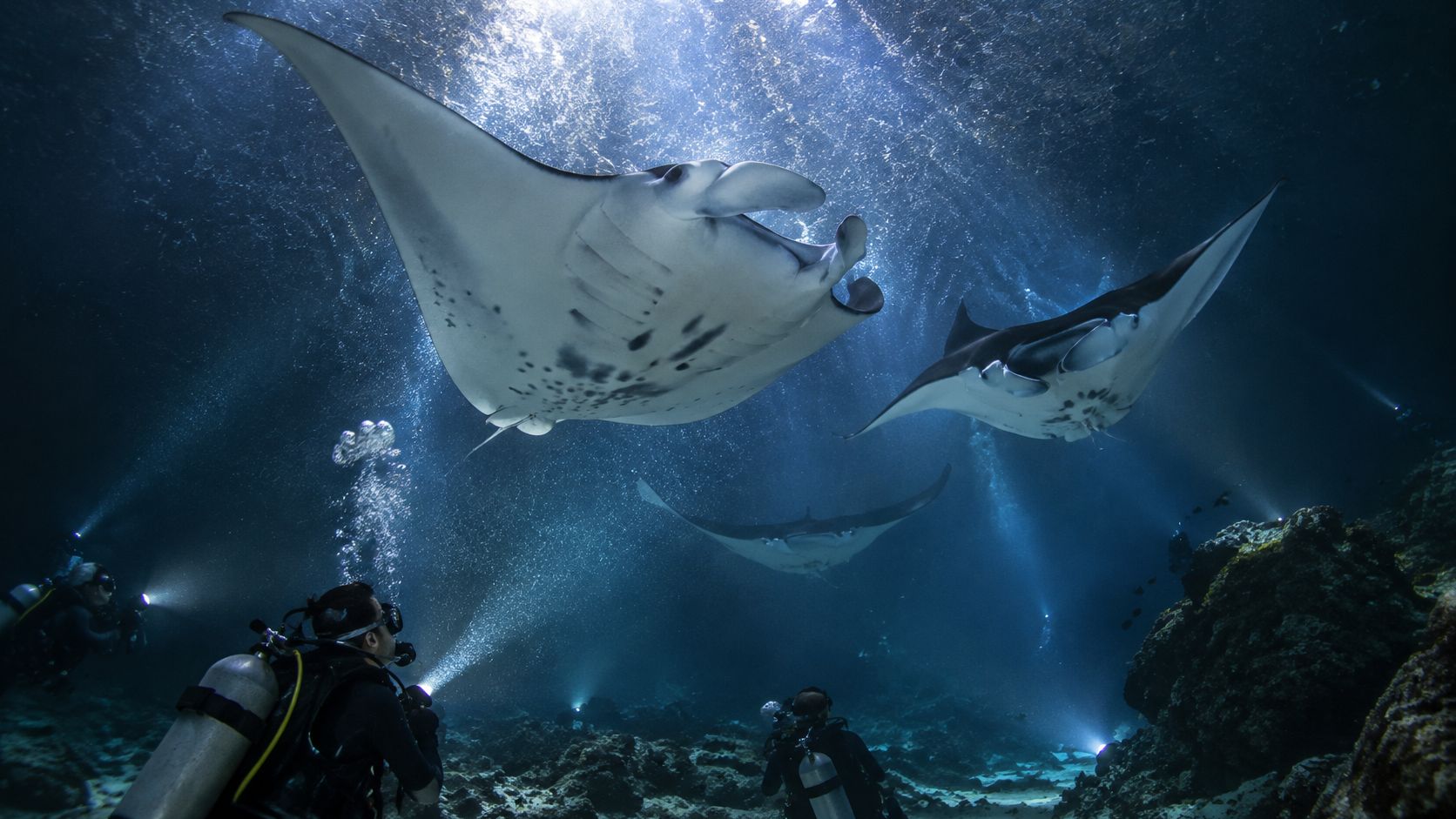
A manta night dive is a feeding event, not a chase. Artificial lights concentrate zooplankton, and reef manta rays arrive to filter feed, looping through the illuminated water. The diver's job is to leave that feeding space usable.
Why Garden Eel Cove is the stronger choice
I would favor Garden Eel Cove for its protected location, better-defined viewing area, and better reef setting compared with more exposed alternatives. Protection is relative, however, and the captain still needs to assess the day's swell and wind. A NOAA-hosted environmental impact statement documents its sandy garden-eel habitat and use by afternoon and evening manta-dive boats.
The ecological case is substantial: a 2025 University of Hawai'i study analyzed 13 years of observations from 2010 through 2022, including more than 23,000 sightings of 167 individually identified mantas, and found consistently larger aggregations at Garden Eel Cove. Those records describe repeated visits by identifiable animals, not an unlimited supply of interchangeable wildlife.
Let the feeding corridor stay clear
The University of Hawai'i at Hilo manta guidance emphasizes non-contact observation, noting that mantas can reach approximately 3,600 lb and that touching can remove their protective mucus layer.
- Use the designated nonliving substrate. Remain stationary on approved sand, rubble, or boulders as the guide directs, never on live coral.
- Form the group's semicircle. Don't edge forward for a better camera angle.
- Keep the center open. The mantas need room to complete their feeding loops.
- Aim your light upward. Surface participants use downward lighting, creating a separate plankton-attraction zone.
Drifting into the center increases collision and entanglement risk. If an animal approaches closely, remain composed, keep your hands to yourself, and resist the impulse to duck, reach, or follow.
The conservation trade-off is real. A Big Island Now account of West Hawai'i's mantas describes a small, familial resident group alongside roughly 80,000 annual visitors to the encounter. If you notice fishing line, an injury, or abnormal movement, notify the guide and share photographs afterward; don't attempt an underwater disentanglement.
A NOAA recovery-status review describes a proposed, not established here as current, framework including 24 commercial boats, 60 passengers per site per day, one guide per eight customers, and a two-hour viewing limit within 4 p.m. to 4 a.m. at viewing areas including Makako Bay, also known as Garden Eel Cove.
A successful encounter leaves the feeding animals undisturbed, even when the best photograph would require moving closer.
Food and sea conditions determine attendance, not a guaranteed schedule. Review the manta night-dive overview and manta dive tour details with that expectation: calm divers, clear feeding paths, and no contact.
Blackwater and Reef Dives Beyond the Mantas
Blackwater diving replaces the reef with open pelagic water. You drift at night and look for small organisms passing through your light, without a nearby reef wall to organize the scene. The attraction is often detail rather than size: a transparent body, an unfamiliar larval shape, or an animal you'd miss while swimming toward something larger.
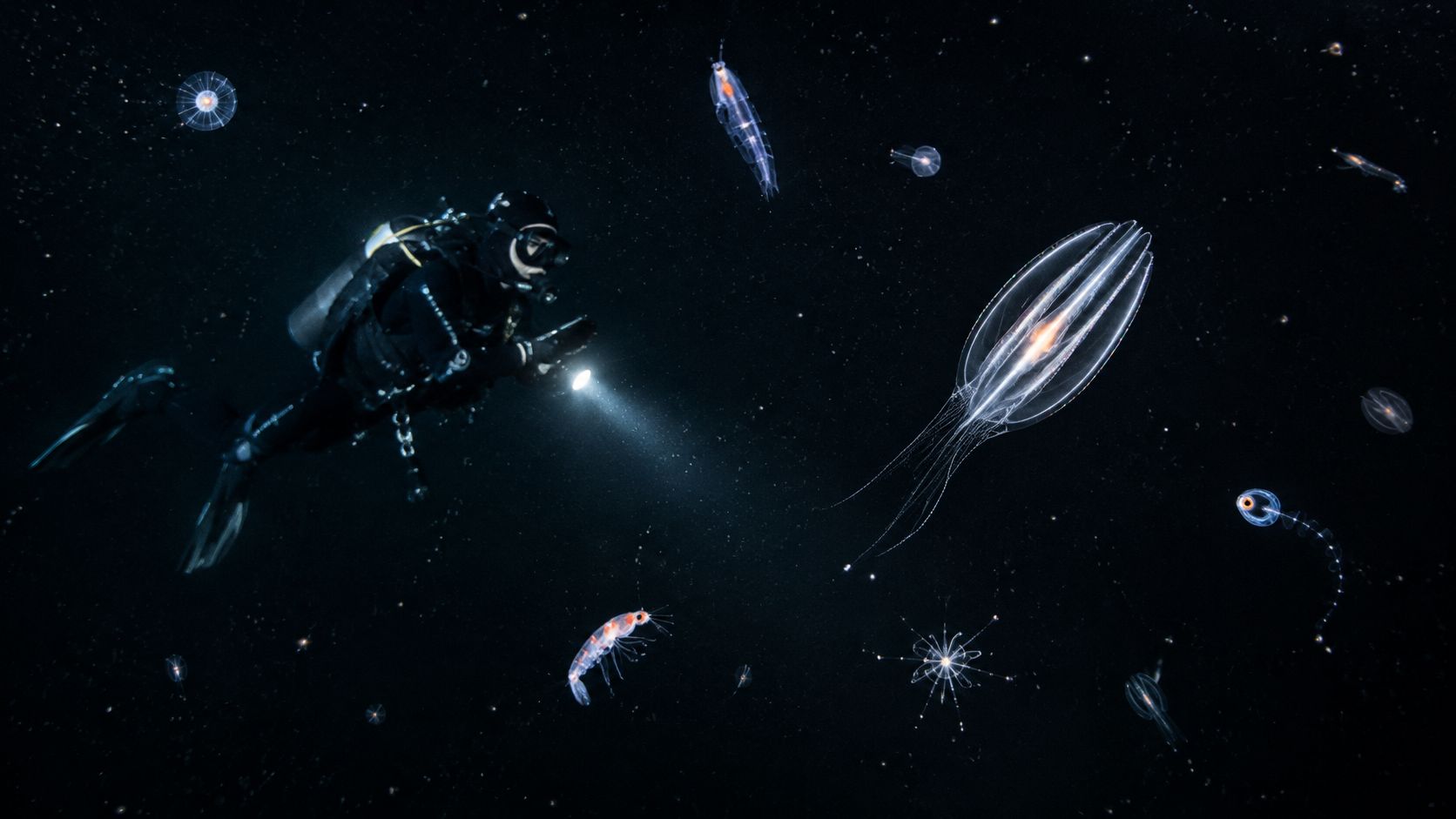
A peer-reviewed study archived by NOAA documented 76 specimens collected during blackwater dives, all analyzed using DNA barcoding, including larval fishes encountered off Hawai'i Island. That scientific value helps explain the appeal: divers can observe organisms that conventional nearshore surveys struggle to access.
Expect small animals and changing nights
A NOAA-hosted nocturnal visual-census study recorded 59 night-dive surveys between November 2013 and May 2015, with salps, siphonophores, and ctenophores the most abundant groups. Its model identified water temperature, bathymetry, and the El Niño–Southern Oscillation index as the strongest predictors of pelagic biodiversity, explaining 43% of observed deviation.
Those findings don't provide a nightly species menu. They explain why changing ocean conditions can produce very different encounters even when the crew runs the same basic trip.
For photography, practise buoyancy before bringing a bulky camera system. A diver who follows a tiny subject through the water can lose track of depth and position surprisingly easily. Keep your computer accessible, make deliberate checks, and follow the crew's tether and separation procedures.
Blackwater or reef
| Your priority | Better starting choice | The trade-off |
|---|---|---|
| Unfamiliar pelagic organisms | Blackwater | Darkness and limited visual references demand composure |
| Relaxed exploration with visible terrain | Daytime reef | Less access to open-ocean plankton and larvae |
| Learning a new rental configuration | Daytime reef | Familiarization takes priority over novelty |
| Patient observation of tiny subjects | Blackwater | Some encounters require careful looking rather than obvious action |
Choose blackwater for curiosity backed by open-water night comfort. Choose a shallow reef outing when you want calmer observation, clearer navigation references, and potentially longer relaxed bottom time, subject to gas and the dive plan.
The blackwater diving guide and Black Water Night Dive tour information help establish the format. Confirm current eligibility before reserving, and expect some nights to feel quiet while others keep your attention moving constantly.
Dive Day Logistics and What to Bring
Morning reef trips mean an early start; night itineraries begin in the evening and return in darkness. Our dive days start at Honokohau Harbor, so use your confirmation's meeting instructions rather than navigating to a shop address or assuming departure from Kailua Pier.
Tell us when booking if snorkelers or ride-alongs are in your party. They can join the dive boat, but the crew needs to know the group's composition before departure. Confirm the selected trip's arrangements rather than assuming every passenger will follow the same itinerary.
Before you leave your accommodation
Check your certification documents, rental sizes, meeting point, and transport plan. Hotel pickup is a question to confirm, not an inclusion to assume. Allow enough time to park, find the boat, and listen to the briefing without rushing.
Our crew handles all dive-gear setup and proactively services rental equipment. You still need to check the assembled configuration, identify releases and controls, and tell the crew immediately if a mask leaks or a regulator feels unfamiliar.
What to bring and what the crew handles
| Item | Bring it | Crew provides |
|---|---|---|
| Certification card and logbook | Yes | No |
| Dive computer | If you own one | Confirm rental availability and inclusion |
| Dive gear setup and rental servicing | No | Yes |
| Underwater light for night dives | Yes, if bringing your own | Confirm supplied lights and backup arrangements |
| Reef-safe sunscreen | Yes | No |
| Seasickness remedy | Yes, if appropriate | No |
| Towel, dry clothes and water | Yes | Confirm any onboard drinking-water provision |
At the boat
Keep documents and dry clothes in a splash-resistant bag, and avoid spreading equipment across access routes. Bring sunscreen you can apply before boarding, but don't treat any label as permission to touch coral or marine life.
Listen for the site-specific entry, descent, and boarding procedure. A familiar type of boat can still have a different ladder or gear-removal sequence.
For a night outing, favor a calm forecast while leaving the final operating decision to the crew. Arrive ready for the briefing, avoid a heavy meal immediately before boarding, and keep the rest of the evening flexible enough that you aren't watching the clock underwater.
Save on Dives and Nitrox
The useful saving is a lower total cost for dives you're ready to make, not a discount that persuades you to overfill the itinerary. Start by comparing the same equipment, gas, and trip inclusions. A cheaper headline price can become the more expensive booking once required extras are added.
Use the current coupons and discount information to check early-booking offers at reservation time. Then compare bundled diving and multi-day arrangements, including whether any advertised nitrox inclusion applies to your chosen trips and certification.
Compare like with like
- Booking ahead: Check whether an early-diver offer applies to your dates and whether it changes cancellation terms.
- Bundled dives: Compare the package total with the separate bookings you intend to complete.
- Multi-day planning: Leave recovery time and scheduling flexibility instead of choosing the maximum number of dives to reduce the apparent unit cost.
- Included gas: Establish whether nitrox is included, optional, or unavailable for the selected itinerary.
Nitrox is enriched air with a higher oxygen proportion than ordinary air. Used within the appropriate limits, it can reduce nitrogen loading compared with air on the same profile. It doesn't make deeper diving safer, remove decompression risk, or replace conservative planning.
Nitrox requires its own certification or course and doesn't replace Open Water certification. Analyze your cylinder, record the oxygen content, set your computer correctly, and observe the maximum operating depth for that mix.
Cost check: Compare the amount you'll pay for the complete itinerary, not the discount percentage printed beside it.
Say you're planning three dives. Compare those separate bookings, including equipment and any nitrox charges, against a package covering the same itinerary. If the package adds an outing you're unlikely to enjoy or safely complete, the apparent saving may have little value.
Prices and offers change. Use the live reservation terms for the actual total, and get unclear inclusions resolved before payment rather than relying on an old screenshot or review.
Book Your Kona Dive
Choose the dive that matches your certification, recent practice, and present comfort, then choose the date. Don't reverse that order by buying the most dramatic trip and hoping your confidence catches up.
For readers seeking broad trip variety, small groups, personal attention, and a full-service crew, Kona Honu Divers provides a practical starting point. Experienced divers can also consider remote-site long-range outings, while a less demanding reef day may be the stronger choice for someone returning after a break.
Make the reservation clear
- Pick a suitable date. For night diving, favor a calm outlook and leave room in the itinerary for changes.
- Select the experience. Match the actual underwater format to what you want to do, not just what you want to photograph.
- Confirm eligibility. Give an accurate account of certification, recent dives, mobility, and any concerns about darkness.
- Check the departure details. Save the harbor instructions, check-in time, equipment arrangements, and cancellation terms.
We offer Big Island scuba diving discount packages, multi-day packages, and discounts. Compare the current options against your intended schedule before paying, particularly if you're combining different types of diving.
For questions about suitability or booking details, call 808-324-4668. A short conversation before reserving is better than discovering at the dock that the trip isn't a good match.
Read reviews for specifics about crew communication and preparation, not just animal sightings. The strongest booking decision leaves you confident about the process even before you know what wildlife will appear.
Kona Honu Divers offers reef outings, manta night dives, blackwater experiences, and advanced long-range trips along the Kona coast. Visit Kona Honu Divers to choose a trip that fits your experience, confirm the practical details, and book an encounter built around prepared divers and low disturbance to marine life.