
Table of Contents
- Build the plan around the least-experienced diver
- How to preserve the feeding space
- Set expectations for a wild encounter
- Decide whether your skills match the setting
- Find your starting point
- Check your equipment and comfort
- Kona Honu Divers Package Options at a Glance
- Make the call by traveler profile
- Get ready before departure
- Common questions from Big Island divers
You've got a week on Hawaiʻi Island, a shortlist that includes a manta dive and maybe a blackwater trip, and one problem: the right dive depends on more than what sounds exciting. Your certification, recent water time, comfort in darkness, and ability to manage boat logistics all matter. Choose the trip that fits your actual readiness, not the one that looks most dramatic on a booking page.
For divers comparing Big Island dive operators in Hawaiʻi, Kona is the practical base for reef dives, manta encounters, and offshore night diving. Kona Honu Divers offers those experiences alongside certification courses, so one shop can help you match the plan to your group's skills. You can compare the available Kona diving tours before building your schedule.
Why Kona Honu Divers Is the Hub for Big Island Diving
A common first trip to Kona starts with a family or group of friends who all want different things. One person is newly certified, another hasn't dived in years, and someone else is keen to see mantas after dark. They're looking at a short holiday and trying to work out which trip belongs on which day.
That's where a shop offering courses, daytime reef dives, manta trips, and advanced experiences can simplify the planning. Instead of piecing together separate operators and equipment arrangements, you can start with one conversation about certification, recent experience, and what each person wants to do. Kona Honu Divers is based on the Kona coast and runs dive trips, courses, and gear support. Review the dive team's background when you're deciding what questions to ask before booking.
Build the plan around the least-experienced diver
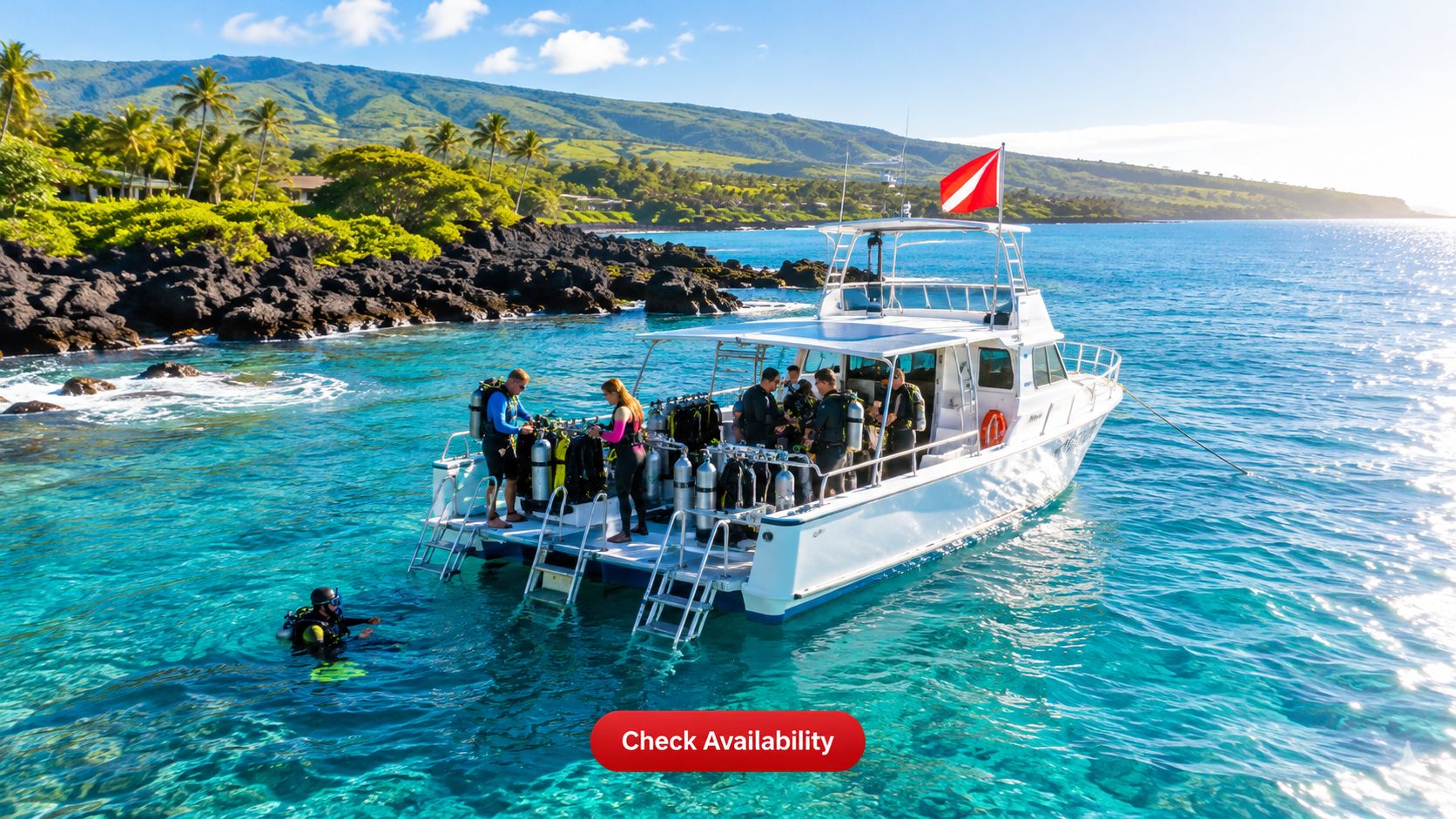
Start by identifying the most limiting factor in your group. It might be an expired certification, a first ocean dive, limited night-diving experience, or a snorkeler who isn't comfortable swimming without flotation. Don't assume everyone needs to join every excursion. A daytime reef trip can suit one person while another completes a course or takes a rest day.
A sensible sequence often starts with a daytime dive or refresher, then moves to the manta experience if the diver feels settled in the water. Keep blackwater diving as a separate decision, not an automatic upgrade from a night reef dive. It requires a different comfort level and skill set.
Book the capability, not the spectacle. The best itinerary is the one your group can enjoy safely without asking anyone to exceed their training or comfort.
Kona's reef ecosystem is a major reason the area draws divers, but it's also a place where responsible behavior matters. NOAA describes Hawaiʻi's main-island reefs as supporting about 80 coral species and more than 1,500 reef-fish species, including over 1,250 species found nowhere else, in its Hawaiʻi coral reef overview. For visitors, that's a reason to follow briefings closely, control buoyancy, and avoid contact with coral and wildlife.
The Manta Night Dive and Why Garden Eel Cove Leads
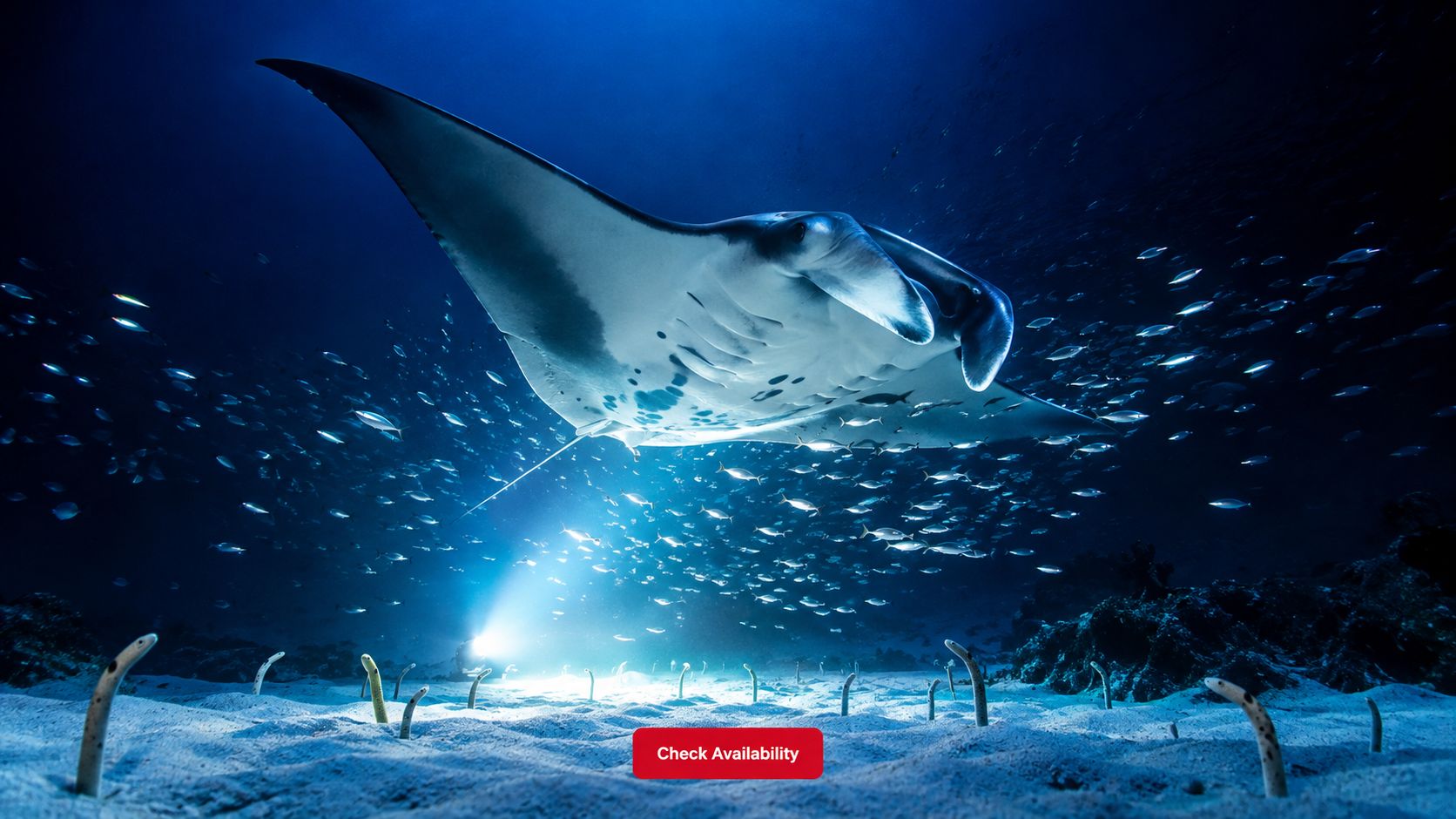
Kona's manta dive works because lights attract plankton, not because anyone baits or trains the rays. Underwater lights create a concentrated feeding area, and reef manta rays (Mobula alfredi) filter-feed as they move through the plankton. A NOAA-archived study recorded 25,444 observations of 118 individual manta rays at Manta Village and Manta Heaven near Kailua-Kona, showing recurring use of the sites over time (study record).
For the dive tour, Garden Eel Cove, also known as Makako Bay, is the stronger choice. Its protected, designated viewing area supports organized positioning and a clearer viewing zone than an improvised location. The reefs and sheltered setting add to the appeal. Kona Honu Divers' manta ray dive and snorkel tour is centered on this structured encounter.
How to preserve the feeding space
Divers should settle on or near the sandy, rubble, or boulder bottom and form a semicircle. Keep the open water column clear so mantas can turn and feed without weaving around people. Official Hawaiʻi viewing guidance says divers should hold lights above their heads and shine them upward, while snorkelers stay at the surface and shine lights downward (manta-viewing guidance).
Remove your snorkel from your mask and stow it in a buoyancy-compensator pocket. It can snag on a manta during a close pass. Never touch or chase a ray. Contact can damage the protective mucus layer on its skin, and chasing disrupts its movement.
The state has described substantial viewing activity at Garden Eel Cove and Keauhou Bay. In its account of proposed management, Hawaiʻi's Department of Land and Natural Resources reported approximately 60–70 viewing vessels operating near feeding mantas at the two sites. The proposal included limits on commercial permits, passengers, vessel shifts, viewing hours, and guide-to-customer ratios (DLNR proposal announcement). That context supports choosing an organized, designated viewing area rather than treating any dark-water mooring as interchangeable.
Set expectations for a wild encounter
Mantas don't follow a human schedule. Food availability and conditions influence where they feed, so no operator can guarantee a sighting. Kona's long-running community dataset documented 167 individual reef manta rays across the Garden Eel Cove and Keauhou feeding locations; it also found seasonal and annual variation associated with zooplankton density (University of Hawaiʻi study).
Ask how the operator handles poor conditions and what its cancellation or rescheduling policy says. A clear explanation of uncertainty is a better sign of responsible wildlife tourism than an extravagant promise.
Kona Blackwater Diving for Experienced Adventurers
Blackwater diving isn't a reef dive with the lights turned off. NOAA defines it as an epipelagic scuba dive in relatively deep, offshore water after sunset. Divers leave the reef environment and search the upper ocean's nighttime water column for pelagic animals that migrate toward the surface (NOAA blackwater definition).
That change in environment changes the demands on the diver. There's no fixed reef contour to follow, and the open ocean can feel disorienting in darkness. The crew needs to provide specialized surface support, while divers must maintain disciplined buddy procedures, controlled lighting, and careful depth management.
Decide whether your skills match the setting
Book this kind of dive only if you're comfortable in deep water, at night, and without a bottom reference. Advanced Open Water certification or comparable experience is a sensible baseline to discuss with the operator. Excellent buoyancy and the ability to stay calm when the surrounding water offers few visual landmarks matter more than enthusiasm.
Expect a thorough briefing and a controlled setup for the dive. Follow the crew's instructions on lighting, buddy contact, depth, and where to focus your attention. If you're newly certified, haven't dived recently, or find darkness stressful, choose a daytime reef dive or the manta dive instead. Those options still offer memorable marine life without putting you in the same open-ocean setting.
My call: Don't book blackwater as your first night dive. Get comfortable with your equipment and night procedures in a more structured environment before moving offshore.
For divers who meet the readiness bar, Kona Honu Divers lists a dedicated blackwater night dive. If you're looking for other challenging boat dives, compare the advanced long-range trip and confirm its prerequisites directly with the operator. Don't infer eligibility from the trip name alone.
Certifications, Refreshers, and Getting Dive-Ready
Think of certification and recent practice as a readiness ladder. A certification card shows training, but it doesn't tell the crew how comfortable you feel today. Be candid about when you last dived, what conditions you've handled, and whether you remember the essential skills.
Find your starting point
- New to scuba: A discover-scuba or resort-style experience offers supervised instruction and a guided introductory dive. It's a way to try scuba, not a replacement for Open Water certification.
- Open Water certified: This is the entry point for manta scuba. If you're unsure about buoyancy, mask clearing, or night diving, begin with a daytime dive or refresher.
- Returning after a long break: A refresher is a better choice than hoping old muscle memory returns underwater. Ask what skills the session covers and whether the crew recommends it based on your recent experience.
- Planning advanced trips: Blackwater and long-range dives require stronger comfort in the water and may have additional operator-specific prerequisites. Confirm them before you book.
Kona Honu Divers offers scuba courses through its scuba classes page. If you're deciding between a full course and an introductory experience, ask how much time each requires and what qualification you'll hold at the end. A full certification is the right investment if you want to continue diving independently; a supervised introduction suits visitors who want to try scuba without committing their holiday to a course.
Check your equipment and comfort
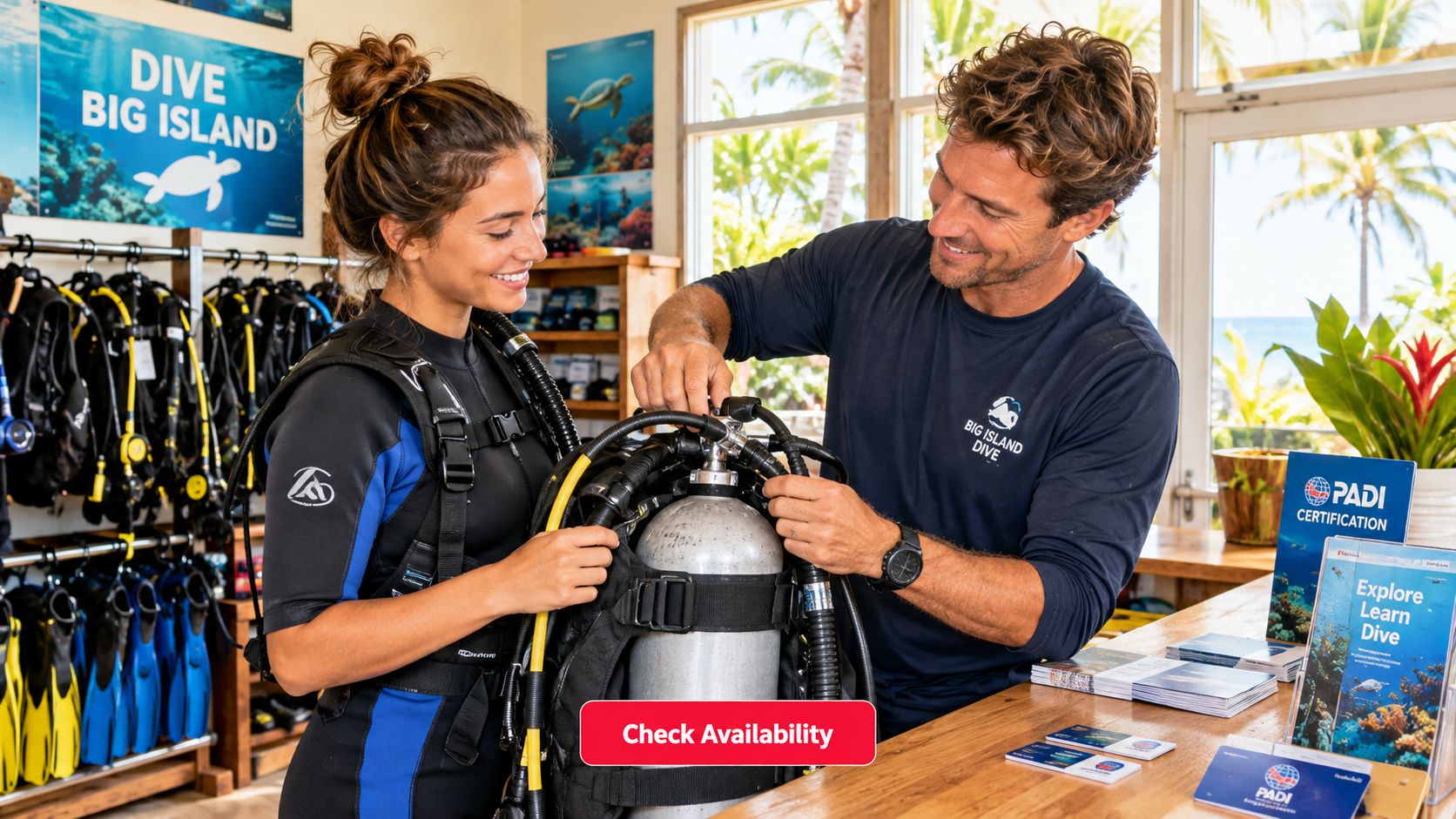
Rental arrangements vary, so confirm what's included rather than assuming. Ask about a BCD, regulator, wetsuit, and dive computer, and tell the shop your sizes in advance. Bring your certification information, swimsuit, towel, and any personal mask or dive computer you prefer to use.
Before booking, answer these questions truthfully:
- When was your last dive, and have you used this equipment recently?
- Can you clear your mask and control your buoyancy without rushing?
- Are you comfortable entering and exiting a boat in ocean conditions?
- Do you want an introductory dive, a certified reef dive, or a specialist night experience?
A “not sure” answer is useful. It points to a conversation with the shop or a refresher, not a reason to push ahead.
Packages, Discounts, and Free Nitrox at a Glance
Package value depends on how you dive. A discount on an excursion you wouldn't otherwise choose isn't a saving. Check the current terms, eligibility, and booking dates on the operator's coupons and offers page before you compare totals.
Kona Honu Divers Package Options at a Glance
| Package | Who It Suits | Key Benefit |
|---|---|---|
| Early-booking offer | Travelers who can commit dates in advance | May reduce the cost of planning ahead; confirm current terms |
| Multi-dive bundle | Certified divers planning several trips | Can make sense when you already intend to dive repeatedly |
| Free nitrox for certified divers | Enriched Air-certified divers | Nitrox is available without an added charge when the diver meets certification requirements |
| Group rate | Parties of four or more | Gives groups a reason to ask about shared booking terms |
| Reef-and-manta combination | Divers who want a daytime reef dive and a manta trip | Pairs two distinct experiences in one itinerary |
Nitrox isn't a substitute for training. If you want to use it, bring proof of Enriched Air certification and follow the operator's procedures. Divers focused on photography may value a multi-dive plan because it gives them more time to settle into the camera setup; a casual diver who wants one memorable outing may be better off choosing a single well-matched trip.
Ask whether offers combine, when payment is due, and what happens if the operator cancels for conditions. Those details matter more than a headline discount.
Suitability for Families, Older Travelers, and Mixed Groups
A trip that suits one person can be the wrong choice for the rest of a travel party. Match each guest to the actual demands of the outing: certification, swimming comfort, night conditions, boat entry and exit, and the ability to follow instructions in open water.
Make the call by traveler profile
- Family with teens: Check the operator's age rules and whether a parent or guardian must join the activity. A daytime reef trip is often a more comfortable first boat experience than a dark-water excursion. Don't assume a teenager's confidence in a pool translates to comfort in the ocean.
- Older travelers: Age alone doesn't decide suitability. Be realistic about swimming, balance, mobility, and climbing a boat ladder without assistance. Ask the operator about the boat's entry and exit arrangements before paying.
- Advanced diver: Blackwater or advanced long-range diving may fit if your skills and recent experience meet the stated requirements. Describe your logged experience accurately and ask the crew to confirm your eligibility.
- Mixed-ability group: Don't force everyone into the same activity. Certified divers can consider scuba while non-divers look at a snorkel option, provided each person meets the swimming and mobility requirements.
Manta scuba requires Open Water certification. Manta snorkelers need to swim without a flotation device, and everyone should be prepared for boat boarding and a ladder climb. A published guide also notes that some operators set a minimum age of 16 for unaccompanied snorkelers (visitor guidance). Confirm the rule for your specific tour rather than assuming it applies everywhere.
For non-divers, compare the available Kona snorkeling tours and ask about swimming ability, flotation policies, and age rules. If someone in the group is anxious about darkness or uneasy in open water, choose a gentler alternative rather than treating the booking as a test of courage.
Be honest about the ladder. If you may need help climbing aboard or exiting the water, tell the operator before the trip. It's a safety question, not an inconvenience.
Logistics, What to Bring, Booking Tips, and FAQs
Kona dive trips commonly depart from the Kona-side harbor named in your confirmation. Don't head to a generic "Kona harbor" pin and assume it's correct. Read the operator's check-in instructions, allow time to park and find the boat, and contact the shop if your lodging or transport plans make the departure uncertain. This Big Island accommodation guide for divers can help you plan where to stay around your diving days.
Get ready before departure
Pack a swimsuit, towel, water, any personal mask or computer you want to use, and a layer for the boat ride back. Confirm what rental gear the shop supplies and arrive with your certification details ready. If you're prone to seasickness, speak with a medical professional about suitable options and follow product instructions. Common choices include Ship-EEZ patches, Dramamine, Bonine, Sea-Band wristbands, and ginger chews.
Book the specific experience that fits your certification and comfort, then verify the departure point, check-in time, equipment, and cancellation terms. Build flexibility into the itinerary for sea conditions, especially if a wildlife encounter is the main reason for the trip.
Common questions from Big Island divers
Are manta sightings guaranteed? No. Mantas are wild, and their presence varies with conditions and available food. Choose an operator that explains its rescheduling policy clearly.
What certification do I need for manta scuba? Open Water certification is the entry point. If you're newly certified or haven't dived recently, ask whether a refresher or daytime dive should come first.
When should I book? Book as soon as your dates are firm, particularly if your group needs several spaces or has a narrow travel window. Confirm current availability and terms directly.
Is snorkeling the same as scuba with mantas? No. Divers position near the bottom and look upward; snorkelers remain at the surface and look down. Both depend on following the crew's instructions and leaving the feeding space clear.
Kona Honu Divers offers daytime reef dives, manta night trips, blackwater diving, and certification courses, so you can choose around your experience rather than forcing a trip that doesn't fit. Check the current Kona Honu Divers options, confirm your requirements with the crew, and book the experience that matches your skills and comfort.