
Historical accounts reported that mantas appear on many Kona encounters, but no sighting is guaranteed. For scuba, Kona Honu Divers' preferred site is Garden Eel Cove, where a protected setting offers a good viewing area and a healthier reef.
This is a wild feeding site, not a scheduled performance. Stay still and give the mantas room to choose whether to approach.
Table of Contents
- Manta Ray Big Island Night Encounters at a Glance
- Night Dive Versus Snorkel on the Same Trip
- Garden Eel Cove Against Keauhou and Older Sites
- How Kona Reef Mantas Feed and Stay Local
- A Typical Kona Honu Divers Manta Night
- Best Months Safety Rules and a Pack List
- Book a Manta Dive or Snorkel in Kona
- Final Booking Step
Manta Ray Big Island Night Encounters at a Glance
An approximately 80% chance of a sighting was reported in testimony to the Hawai'i Legislature, alongside an estimate that Kona's local manta population probably numbered fewer than 200 animals. Those historical figures make the appeal clear, but they also set the right expectation: a strong chance is not a guarantee. For a reliable plan, book a night boat trip from Kona rather than counting on a daytime swim from shore.
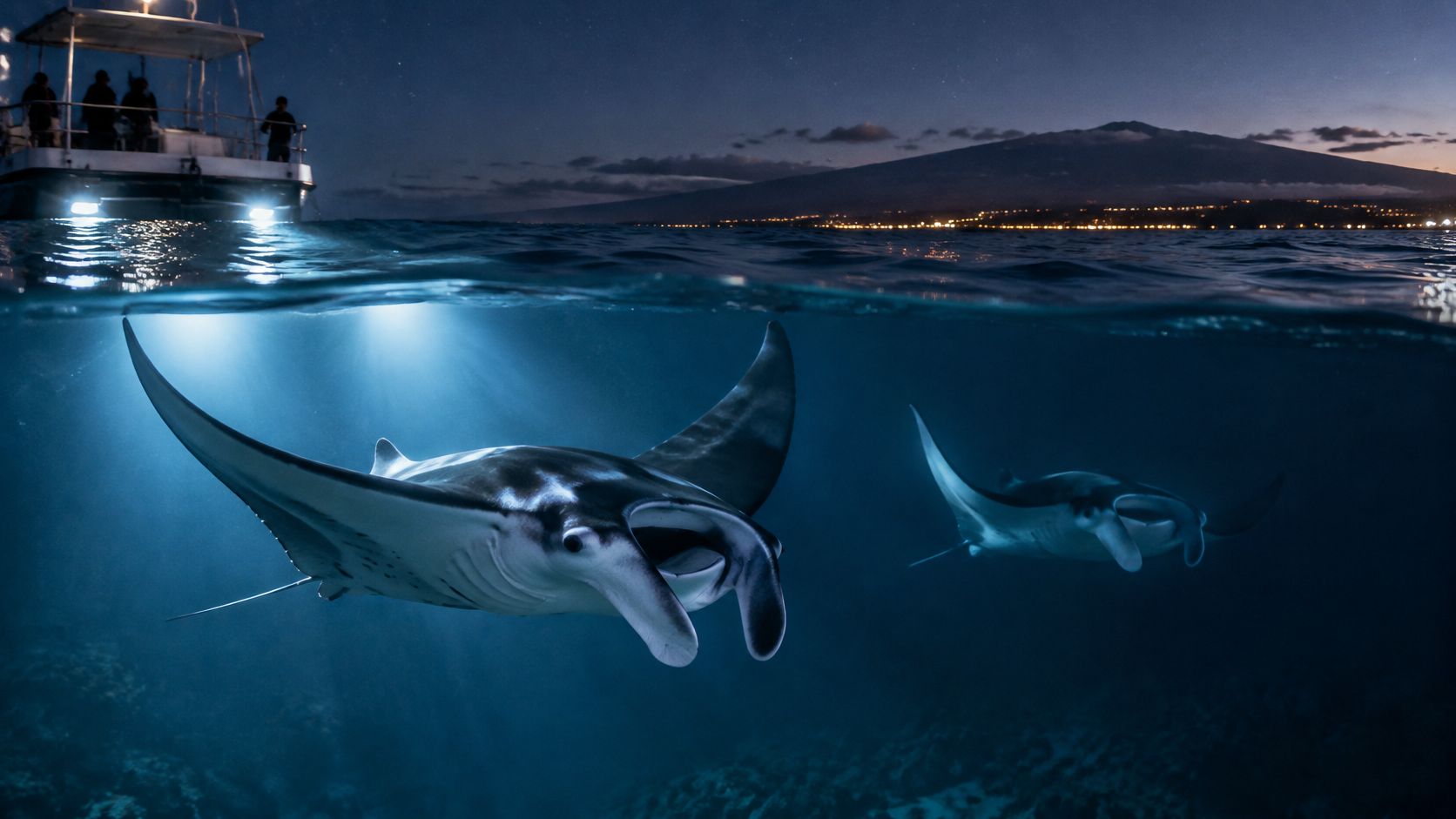
Kona's reef mantas, Mobula alfredi, are a relatively small resident population. Photo-identification surveys conducted from 1992 through 2007 recorded 3,208 surveys at primary night-diving locations, including Keauhou and Ho'ona Bay, and identified 106 individual manta rays along the Kona Coast. Later, the Manta Pacific Research Foundation identified 318 unique manta rays around Hawai'i Island since 1979, according to testimony to the Hawai'i Legislature. Researchers recognize individual animals by the distinctive markings on their undersides, which makes long-term tracking possible.
The two active areas you'll hear about most are Garden Eel Cove, also called Manta Heaven in Makako Bay, and Keauhou, also called Manta Village at Kaukalaelae Point. For a scuba dive, Garden Eel Cove is the preferred choice: its more protected setting, defined viewing area, and healthier reef make it a better fit for a stationary encounter. Keauhou is a genuine manta site, but the cove is the stronger pick when the dive itself is the priority.
Practical rule: Ask for Garden Eel Cove, then respect the captain's call if conditions make another site safer.
Kona Honu Divers is based in Kona, Hawai'i, on the Big Island. Its manta ray dive and snorkel trip is one way to plan the night, while its other Big Island scuba tours suit guests building a broader dive itinerary. The main decision is whether you want to watch from the bottom as a diver or from the surface as a snorkeler. Once you've chosen, check the date and conditions, and leave room in your plans for the ocean to make the final call.
Night Dive Versus Snorkel on the Same Trip
| Choice | Where you are | Light | Who it fits | Main limit |
|---|---|---|---|---|
| Night dive | Kneeling on sand in a semicircle | Held above the head, aimed up | Certified divers, beginner through advanced | Stay still and keep bubbles off the ray |
| Night snorkel | Floating at the surface | Aimed down from the surface | Non-divers, families, confident swimmers | Don't dive into the feeding column |
Both groups watch the same plankton-rich water, but they occupy different parts of it. Divers settle on or near the bottom and leave the open water above them clear. Snorkelers stay at the surface, where they can hold a float and watch without dropping into the manta feeding lane.
The NOAA voluntary manta interaction guidance lays out the positions and lighting: divers form a semicircle and shine lights upward, while snorkelers shine lights down from the surface. The separation isn't a formality. It lets mantas move through the feeding area without people crowding or pursuing them.
For certified guests who want a close, stationary view, the dive is the better fit. You'll need open-water certification and comfort managing your buoyancy while holding position. A separate morning two-tank dive is also open to certified divers, from newer referrals to advanced guests. If you're looking for surface-based snorkeling trips, the snorkel option makes more sense for families, non-divers, and anyone who would rather stay out of scuba gear. A shared boat can carry divers and snorkelers, so companions don't necessarily need to choose separate outings.
Contact is never part of the encounter. The NOAA guidance says not to touch, chase, grab, or ride a manta. Contact can remove the protective mucus coating that helps guard the animal against infection. Divers should also time their exhalations so bubbles don't rise directly into an approaching manta, and tuck a snorkel into a buoyancy-compensator pocket so it can't snag a ray.
Garden Eel Cove Against Keauhou and Older Sites
Garden Eel Cove and Keauhou are both established manta viewing sites, but they differ in how they are used. A six-year study recorded 25,444 manta observations involving 118 reef mantas across Manta Heaven in Makako Bay and Manta Village at Kaukalaelae Point. 19,841 observations occurred at Manta Heaven, compared with 5,603 at Manta Village, according to the historical account published by Kona Honu Divers. These are sightings, not separate animals or a forecast of what any one night will bring.
| Site | Also called | What research shows | Best use |
|---|---|---|---|
| Garden Eel Cove | Manta Heaven, Makako Bay | 19,841 of 25,444 observations; larger groups | Preferred night dive, protected viewing area and healthier reef |
| Keauhou | Manta Village, Kaukalaelae Point | 5,603 observations; higher female site fidelity | Alternate night viewing when conditions suit |
| Ho'ona Bay | Historic survey site | Included in 1992–2007 photo-identification surveys | Background only, not a current booking target |
Garden Eel Cove is Kona Honu Divers' go-to site for the Manta Ray Night Dive. Its protected setting offers a defined viewing area, a healthier reef and generally calmer conditions. Those advantages make it a practical choice, not a guarantee: plankton availability and ocean conditions affect whether mantas gather.
Keauhou remains a recognized viewing site, and female mantas have shown strong site fidelity there. Ho'ona Bay belongs to the history of manta research rather than the list of sites to request for tonight's trip. For a Garden Eel Cove dive, confirm the planned location when booking, while leaving the final site decision to the captain if swell makes conditions unsuitable.
The Kona encounters grew from feeding activity near shore. In the late 1970s, hotel lighting near Keauhou attracted plankton, which brought mantas close to shore. Organized excursions were operating along the Kona Coast by the early 1990s. The historical account also describes the growth of manta tours and their economic importance to the area.
That history helps explain why calm, orderly viewing matters. Kona's manta population is small and locally known, but the number of rays at a site depends on feeding conditions. Give the animals room to feed, and treat any encounter as a chance rather than a promised count.
How Kona Reef Mantas Feed and Stay Local
Think of the light setup as a campfire. The boat's lights are the fire, plankton gathers like moths around the beam, and mantas arrive as guests only if there's enough food. A bright light can concentrate prey, but it can't manufacture plankton or make a manta appear on cue.
Reef mantas filter zooplankton from the water as they glide and loop through a feeding column. Their spot patterns make individuals recognizable, so researchers can compare which animals use each site and how often they return. The feeding show is active and graceful, but the viewing works best when people keep their position and leave the animals a clear path.
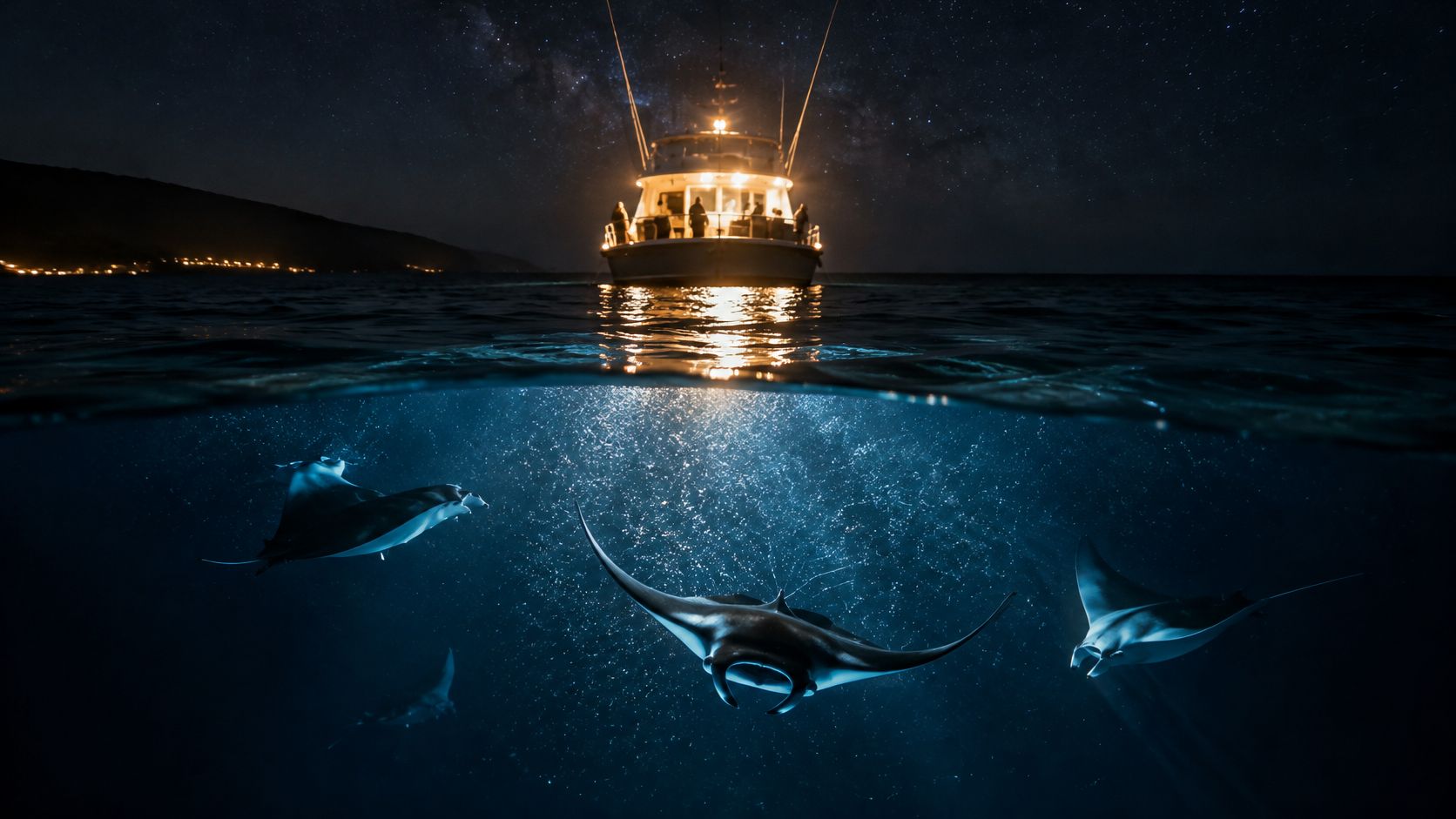
A University of Hawai'i study examined more than 23,000 sightings of 167 individually identified reef mantas from 2010–2022 at Garden Eel Cove and Keauhou. Garden Eel Cove consistently supported larger aggregations. Keauhou had higher female visitation and strong female site fidelity, while the sites were connected and males appeared more mobile. The study found that seasonal and annual changes in aggregation size closely tracked zooplankton density, as reported in the University of Hawai'i study.
That's why the right expectation is a probability, not a head count. A lit feeding area may help gather prey when plankton is present, but the rays still have to find enough food and choose to feed there. Stay stationary and keep out of their feeding trajectory. For more on how to behave in the water, follow this responsible diver etiquette guide.
The local population's ties to Hawai'i Island make respectful viewing more than good manners. NOAA's genetic study of reef manta rays describes a relatively localized population, with females generally reproducing at their birth island. Estimated migration was approximately one female between island groups every 1,300 years, compared with one male about every 64 years, and the Hawai'i Island population was estimated at roughly 104 adult breeders. Mantas from Maui aren't a ready replacement for animals lost or stressed here.
So if the light camp is quiet, treat the night as biology, not a failed booking. Ask the crew what recent plankton and sightings suggest, but don't mistake a useful update for a guarantee. The best encounter remains passive: hold your place, give the animals room, and let them choose their route.
A Typical Kona Honu Divers Manta Night
A manta night runs in a clear sequence. Each step helps guests get ready without turning the feeding site into a pursuit.
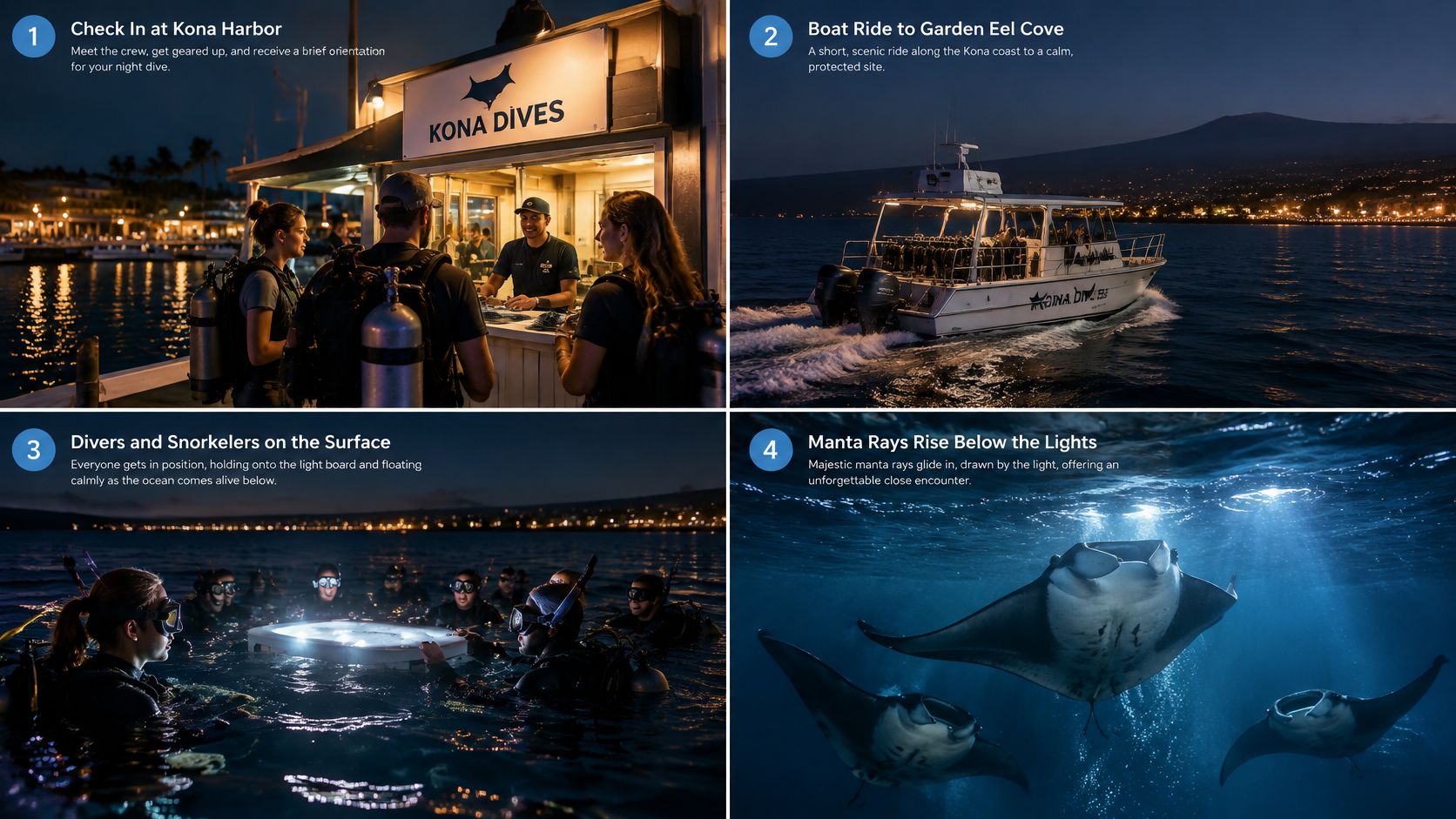
Check in at the Kona harbor. Confirm whether you're diving or snorkeling. Divers should have their certification details ready; snorkelers should be comfortable floating with a group at night.
Ride to Garden Eel Cove. The crew heads to the protected site selected for the trip, with the captain making the final call based on conditions.
Listen to the briefing. The crew explains the science behind the encounter, how lights gather plankton, and the golden rules of passive observation. Kona Honu Divers starts the manta night dive with this detailed briefing so guests know how to protect the animals and keep the viewing area orderly.
Get into your gear. Divers prepare standard scuba equipment. Snorkelers use a mask, snorkel, fins, and a float.
Take your assigned place. Divers kneel in a specific viewing area on the sand, while snorkelers hold position at the surface. Keeping those positions leaves the open water available for mantas.
Let the crew establish the light camp. Powerful lights are placed on the bottom, illuminating the viewing area and drawing plankton into the beam. You're not left in full darkness.
Stay still and watch. Mantas may loop through the open water above the lights, sometimes passing close. Experienced divemasters and instructors are in the water with divers to manage the group. Don't swim over to another boat just because you can see its lights; each group needs to keep its own viewing area clear.
Exit when the crew signals. Climb aboard, rinse your gear, and get into dry clothes if you brought them.
A clear night with no mantas can happen, even when the crew has set up the lights correctly. Darkness isn't usually the uncomfortable part: cold is the complaint to plan for, particularly if you stay in the water after dark. If you want a sense of the viewing scene before choosing a trip, look through these manta ray dive photos from Kona.
Best Months Safety Rules and a Pack List
Kona's mantas are a resident attraction, not a winter-only event. Instead of choosing a month for a supposed peak, plan around the conditions that shape the boat ride and the viewing site. Seasonal swell can make one location rougher or less suitable, so a protected cove and the captain's judgment matter more than a calendar date. In a busy travel week, book early and leave a spare evening if you can.
The scale of the viewing activity is part of the reason organized rules matter. Hawai'i's Department of Land and Natural Resources reported approximately 60–70 viewing vessels bringing guests near feeding mantas at Makako Bay, also called Garden Eel Cove, and Kaukalaelae Point, also called Keauhou Bay. In proposed management rules, the state considered limiting commercial permits to 24 in each of the two zones, restricting vessels to no more than 60 passengers for hire within a 24-hour period, and setting viewing hours from 4:00 p.m. to 4:00 a.m. The proposal also included two-hour operating shifts and an 8-to-1 guide-to-customer ratio, according to the DLNR announcement. These were proposed measures, not a general description of every dive or a claim about rules currently in force.
Keep the encounter passive
Don't touch, chase, grab, ride, or block a manta's path. Stay in your assigned position and follow the guide's signals. Hawai'i Island's reef mantas form a localized population: NOAA's genetic findings on reef manta rays describe strong female reproductive philopatry and a limited connection between island groups. That makes careful, low-contact viewing especially important.
Pack for the boat ride
- For diving: Bring your certification card and the equipment you normally use. Leave non-reef-safe lotion at home.
- For warmth: Pack a towel, a warm layer, and dry clothes for after the water.
- For glasses: Bring a case so lenses are protected while you're gearing up.
- For motion sensitivity: Eat lightly and keep your eyes on the horizon during the ride.
If you're considering an over-the-counter medication or a patch for seasickness, check the label and ask a pharmacist whether it's suitable for you. Options include Ship-EEZ Seasickness Patch, Dramamine pills, and Bonine pills. For non-medication options, some guests consider Sea Band wristbands or ginger chews. Bring what suits you, and don't try a product for the first time without checking how it may affect you on the water. For broader trip planning, use these dive travel tips.
Book a Manta Dive or Snorkel in Kona
Kona Honu Divers' manta night dive takes place at Garden Eel Cove, a protected site with a defined viewing area, healthier reef, and generally calmer conditions. Divers settle into position and watch the mantas feed above the lights; snorkelers can view the same encounter from the surface.
Past encounters offer a reason for optimism, not a guaranteed count. Kona Honu Divers reports manta sightings on as many as 92% of its Manta Ray Night Dive trips. Plankton, site conditions, and the animals' movements all affect what happens on a given night.
Book the two-tank manta dive and snorkel trip online and check available dates for the option that suits your group. For other outings, browse Kona scuba diving tours or consider an advanced two-tank dive trip if you're an experienced diver.
Choose a dive or snorkel, then check the available dates. Keep some flexibility in your evening in case conditions change.
Final Booking Step
Kona Honu Divers offers a two-tank manta dive and snorkel outing from Kona, with Garden Eel Cove as its go-to night site when conditions permit. Choose the dive or surface view that fits your group, then visit Kona Honu Divers to check available dates and plan your Big Island manta night.