
The silent glide of a manta ray, with its immense wingspan and graceful movements, is a sight that transforms a dive into a truly magical experience. These intelligent and curious creatures captivate divers worldwide, but finding them requires knowing where and when to look. Answering the question, “Where is the best place to dive with manta rays?” is about more than just a single location; it’s about discovering the unique encounters each destination offers. From the vibrant coral gardens of Indonesia to the world-renowned night ballet off Hawaii’s Kona Coast, every spot provides a different window into the lives of these gentle giants.
This guide is designed for divers of all levels, from beginners seeking their first big animal encounter to experienced photographers and marine life enthusiasts looking for the ultimate shot. We will navigate you through seven of the most incredible manta ray hotspots on the planet, detailing the specific conditions, peak seasonality, and unique features of each dive site. Whether you're planning your first or fiftieth dive trip, our goal is to provide actionable insights to help you choose the perfect underwater adventure. Let’s dive into the world’s top destinations to swim alongside these magnificent creatures.
1. Komodo National Park, Indonesia
Located in the heart of the Coral Triangle, Komodo National Park is a UNESCO World Heritage site that offers some of the most electrifying manta ray encounters on the planet. The park's legendary currents, sweeping between the islands of Flores and Sumbawa, create a nutrient-rich environment that acts as a magnet for both reef manta rays (Mobula alfredi) and the larger oceanic manta rays (Mobula birostris). This makes it a top-tier destination for anyone wondering where is the best place to dive with manta rays.
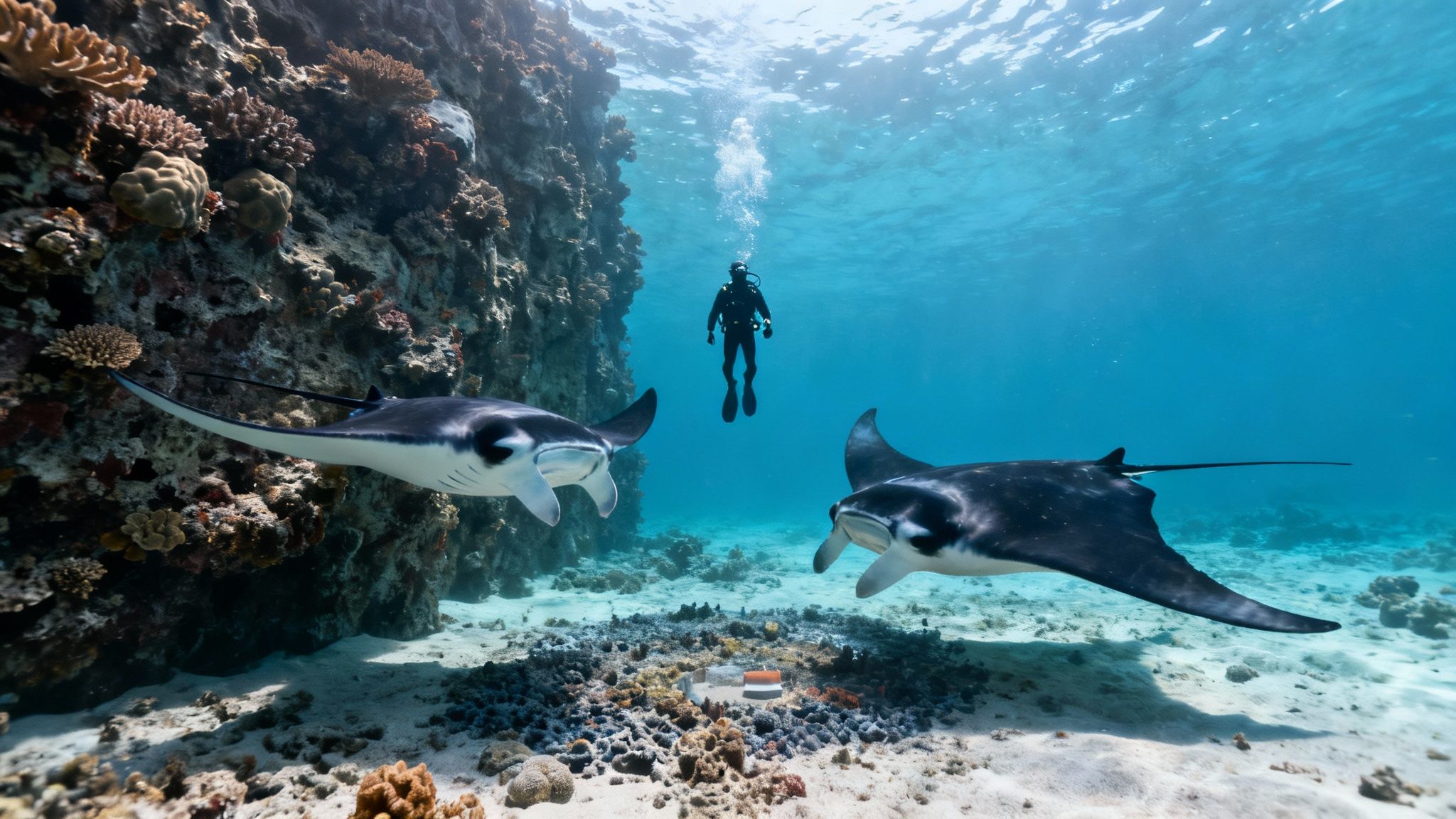
The powerful currents are the lifeblood of this ecosystem, concentrating plankton into a nourishing soup that draws these gentle giants in large numbers. Divers often visit iconic sites like Manta Alley and Makassar Reef (Manta Point), which serve as crucial cleaning stations. Here, you can witness the breathtaking spectacle of dozens of mantas patiently hovering as cleaner fish meticulously remove parasites from their skin, a truly symbiotic relationship in action.
Why It’s a World-Class Manta Destination
Komodo's reputation is bolstered by significant conservation and research efforts. Organizations like the Manta Trust and Marine Megafauna Foundation conduct vital research, including long-term photo-identification studies that track individual mantas, providing invaluable data for their protection. This successful eco-tourism model, famously featured in documentaries like BBC's Blue Planet II, ensures that your visit contributes to the preservation of this incredible marine environment. The region's commitment to community-based conservation also involves local fishing communities, creating a sustainable framework for both wildlife and people.
Actionable Tips for Your Komodo Trip
- Book in Advance: Liveaboard trips are the best way to explore Komodo. Book at least 3-6 months out, especially for peak season (December-February).
- Get Certified: A minimum of an Advanced Open Water certification is highly recommended due to the strong, unpredictable currents.
- Master Drift Diving: Practice your drift diving skills before you go. Being comfortable in strong currents is essential for safety and enjoyment.
- Pack a Reef Hook: A reef hook allows you to stay stationary at cleaning stations without damaging the coral, offering a stable platform for observation and photography.
- Travel Smart: Consider the shoulder seasons (May-June or September-November) for excellent conditions with fewer crowds.
- Be a Responsible Diver: Always maintain a respectful distance (at least 3 meters) from the mantas and use reef-safe sunscreen to protect the delicate marine ecosystem.
2. Kona Coast, Hawaii, USA
The Kona Coast on Hawaii's Big Island offers one of the most reliable and genuinely unique manta ray encounters in the world: the famous Manta Night Dive. This extraordinary spectacle is a must-do for anyone asking where is the best place to dive with manta rays. Divers descend after sunset to designated sites where powerful lights are placed on the ocean floor. These lights attract immense clouds of plankton, which in turn draw dozens of majestic reef mantas (Mobula alfredi) to feed in a mesmerizing, acrobatic ballet just inches above the divers' heads.
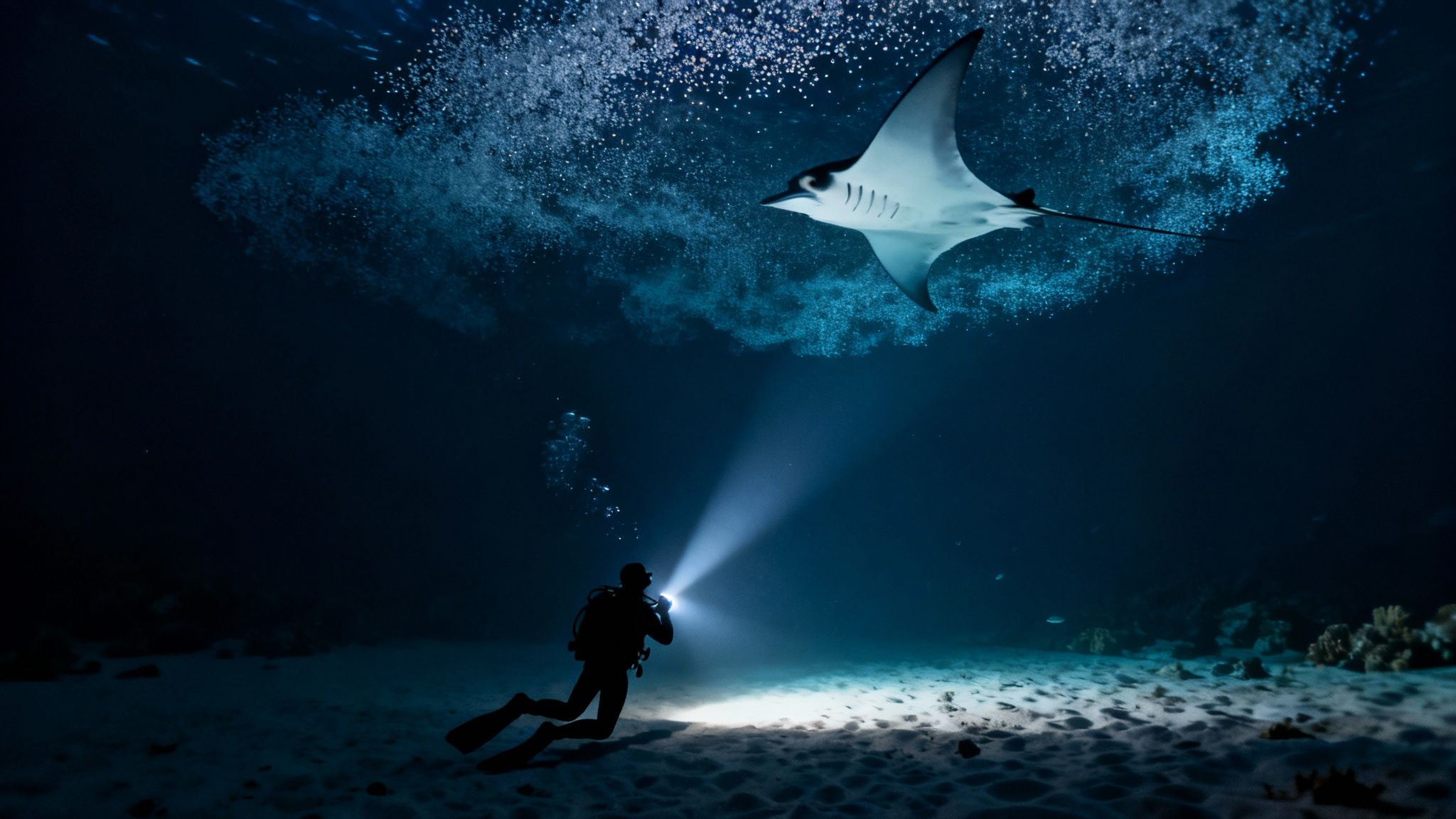
This "manta campfire" creates an underwater amphitheater where divers can observe the mantas' graceful, barrel-rolling feeding behavior up close. The predictability and accessibility of this experience, combined with Hawaii’s excellent tourism infrastructure, make it a bucket-list destination for divers of all skill levels. For an experience that truly reveals the magic of a manta ray night snorkel in Hawaii, exploring the unique opportunities off the Kona Coast is essential.
Why It’s a World-Class Manta Destination
Kona's success is built on a foundation of responsible tourism and decades of research. Operators like Kona Honu Divers and Jack's Diving Locker have pioneered safe viewing protocols, and organizations like the Hawaii Manta Ray Advocates work to educate the public. A comprehensive photo-ID database has been tracking individual mantas since the 1990s, providing critical data that has led to strict regulations protecting the local population. This well-managed, sustainable model has been featured in countless documentaries and has made Kona a global example of positive wildlife tourism. Curious about if you can scuba dive with manta rays? Kona provides one of the best and safest opportunities.
Actionable Tips for Your Kona Trip
- Book Your Manta Dive: The manta ray night dive is extremely popular. Book your spot on a manta ray dive tour at least a few days in advance, especially during peak season.
- Choose a Responsible Operator: Select a dive shop that strictly adheres to the established viewing guidelines to ensure the mantas' safety.
- Stay Stationary: Find a spot on the sandy bottom, get comfortable, and let the mantas come to you. Avoid chasing or reaching out to touch them.
- Control Your Buoyancy: Maintain excellent buoyancy control to avoid accidentally floating up into a manta's path.
- Secure Your Gear: Make sure all your equipment, like gauges and lights, is clipped off and not dangling to prevent entanglement.
- Be Prepared for the Night: If you're prone to motion sickness, consider taking medication beforehand. Pay close attention to the pre-dive briefing to understand the procedures.
3. Raja Ampat, Indonesia
Located off the northwest tip of Papua, Raja Ampat is often described as the epicenter of marine biodiversity. This remote archipelago of over 1,500 islands sits at the very heart of the Coral Triangle, offering pristine conditions and remarkable encounters with both reef manta rays (Mobula alfredi) and their larger oceanic cousins (Mobula birostris). The sheer health and vibrancy of the ecosystem make it an undisputed answer for anyone asking where is the best place to dive with manta rays.
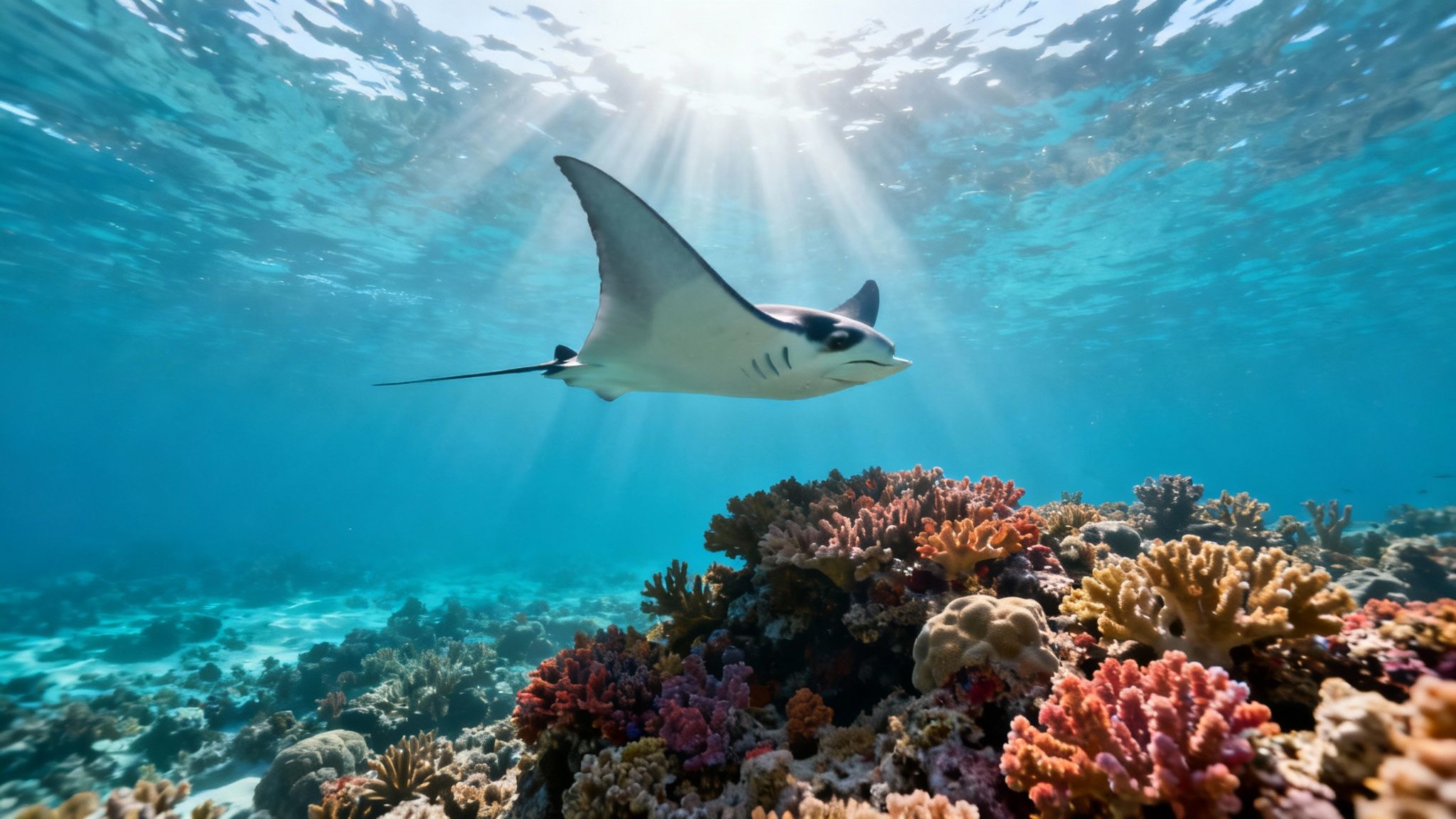
The area’s life-giving currents sweep through channels, concentrating plankton and creating a reliable food source that attracts these majestic creatures. Iconic dive sites like Manta Sandy and Manta Ridge serve as bustling cleaning stations where divers can witness queues of mantas waiting their turn to be serviced by cleaner wrasse. Observing this behavior against a backdrop of some of the world's most vibrant coral reefs is a truly unforgettable experience.
Why It’s a World-Class Manta Destination
Raja Ampat’s success is a testament to groundbreaking conservation efforts and community involvement. The region is a designated shark and ray sanctuary, protected within Conservation International's Bird's Head Seascape marine protected area network. This initiative, highlighted in documentaries like BBC's Blue Planet and supported by research from organizations like the Marine Megafauna Foundation, integrates community-based management with eco-tourism. This model ensures that local Papuan communities benefit directly from preserving their natural heritage, creating one of the most effective conservation stories on the planet. This commitment makes Raja Ampat not just a place to see mantas, but a blueprint for sustainable marine tourism.
Actionable Tips for Your Raja Ampat Trip
- Book Well in Advance: Liveaboards are the primary way to explore the vast area. Secure your spot 6-12 months ahead, as capacity is very limited.
- Travel During Peak Season: The best conditions are found from October to April, during the dry season, which offers calmer seas and better visibility.
- Get Certified: An Advanced Open Water certification is the minimum requirement for most liveaboards due to the potential for deep dives and strong currents.
- Pack Smart: Bring all your specialized dive equipment, including a reef hook. High-quality rental gear can be scarce and expensive in this remote region.
- Stay Longer: To justify the significant travel time and cost, plan for a trip of at least 10-14 days to fully appreciate the archipelago's wonders. For other amazing dive travel destinations, you can learn more about scuba diving in the Philippines on konahonudivers.com.
- Be a Responsible Visitor: Respect local Papuan customs, adhere to the marine park regulations, and always maintain a safe, respectful distance from all marine life.
4. Maldives
The Maldives, a breathtaking archipelago of 26 atolls scattered across the Indian Ocean, offers some of the most idyllic and reliable manta ray encounters on Earth. This tropical paradise is a key destination for anyone asking where is the best place to dive with manta rays, thanks to its unique geography. The atolls create natural channels where monsoonal currents concentrate plankton, attracting huge numbers of both resident reef mantas (Mobula alfredi) and migratory oceanic mantas (Mobula birostris).
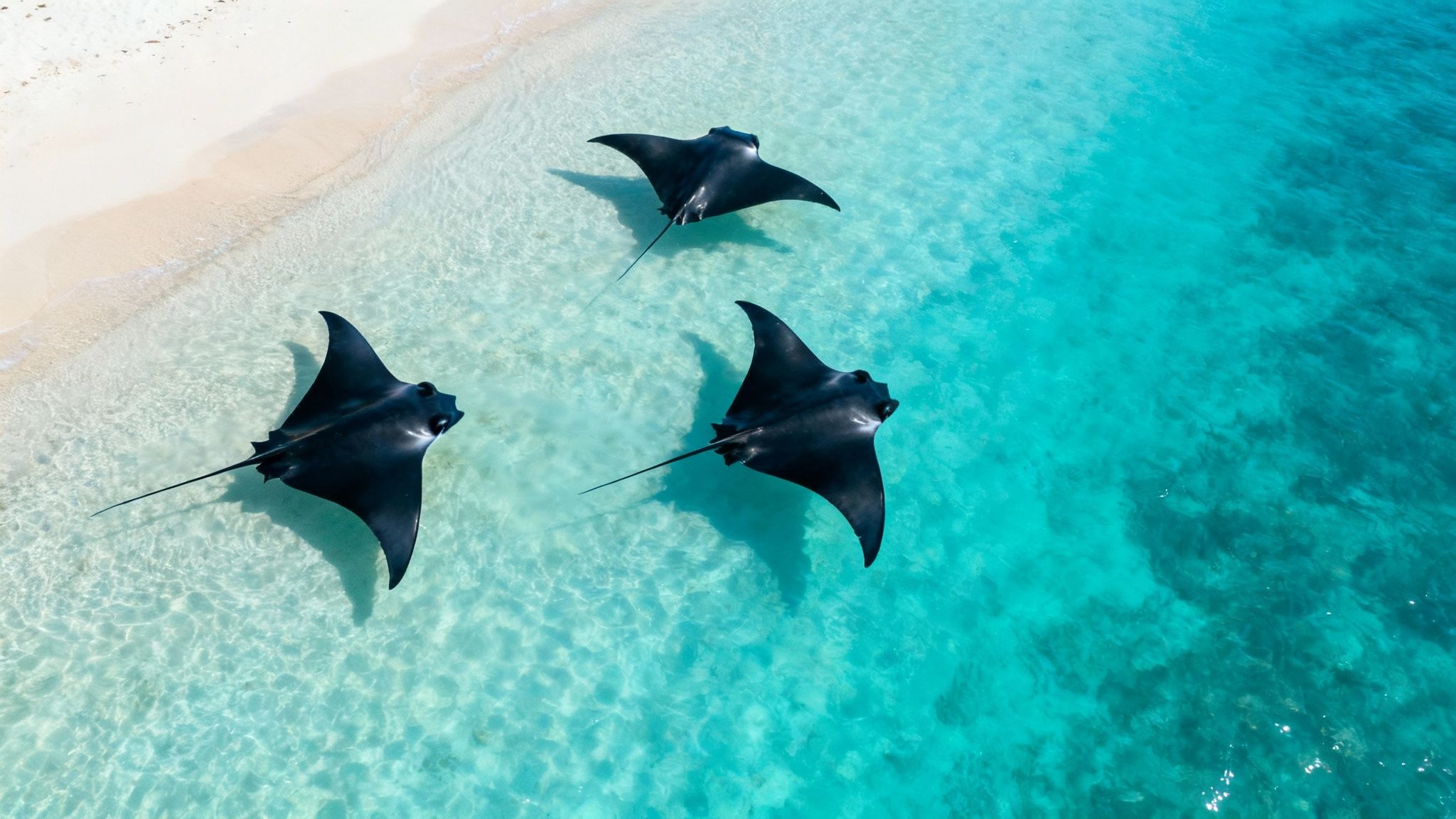
The crown jewel is Hanifaru Bay in the Baa Atoll UNESCO Biosphere Reserve. During the southwest monsoon (typically May to November), this protected marine bay transforms into the world's largest manta feeding station. Here, divers and snorkelers can witness the truly awe-inspiring spectacle of hundreds of manta rays cyclone feeding, a coordinated vortex of graceful movement that is simply unforgettable.
Why It’s a World-Class Manta Destination
The Maldives’ success is built on a foundation of world-leading research and conservation. The Maldives Manta Conservation Programme (the founding project of the Manta Trust) has conducted pioneering photo-identification studies for years, creating one of the largest and most comprehensive manta ray databases globally. The government's strict management of Hanifaru Bay, which limits visitor numbers and enforces codes of conduct, serves as a global model for sustainable marine tourism. This commitment ensures that visiting this incredible destination directly supports the protection of these magnificent animals.
Actionable Tips for Your Maldives Trip
- Time Your Visit: For the famous Hanifaru Bay feeding aggregations, travel between May and November. For encounters with oceanic mantas in the southern atolls, plan your trip for December to April.
- Book Hanifaru Bay in Advance: Access to Hanifaru Bay is strictly regulated. Ensure your resort or liveaboard can secure the necessary permits, as daily visitor numbers are limited.
- Get Your Certifications: While many sites are accessible to all, an Advanced Open Water certification is beneficial for channel dives where currents can be strong.
- Choose Your Base: Liveaboards offer the most diverse diving itinerary, covering multiple atolls. Resorts provide a luxurious base with access to nearby sites. For a comprehensive experience, learn more about our Maldives dive travel.
- Pack Smart: Bring reef-safe sunscreen and a rash guard. A reef hook is also essential for safely observing mantas at cleaning stations in strong currents without damaging the marine environment.
- Be a Responsible Tourist: Follow all marine park regulations and the guidance of your divemaster. Never touch or chase the mantas, allowing them to approach you on their own terms.
5. Isla de la Plata, Ecuador
Often dubbed the "Poor Man's Galápagos," Isla de la Plata offers an accessible and thrilling alternative for encountering giant oceanic manta rays (Mobula birostris) in the Eastern Pacific. Located off the coast of Puerto López within Machalilla National Park, this rugged island has become a vital aggregation site for some of the largest oceanic mantas ever recorded. The seasonal upwellings create a plankton-rich buffet, attracting these colossal rays in impressive numbers and making it a key contender for where is the best place to dive with manta rays on a budget.
Unlike the choreographed interactions at established cleaning stations, encounters here are often more dynamic, with mantas actively feeding in the water column. Divers can witness breathtaking feeding chains and courtship behaviors in a wild, untamed environment. The experience is less about predictable hovering and more about immersing yourself in the natural, powerful spectacle of oceanic life, often sharing the water with humpback whales that visit during the same season.
Why It’s a World-Class Manta Destination
Isla de la Plata’s global recognition is largely thanks to the pioneering work of research groups like Proyecto Mantas Ecuador and the Marine Megafauna Foundation. Their photo-identification studies have revealed crucial data on the local manta population, including individual life histories and migration patterns, highlighting the area's importance as a critical habitat. This research has fueled a growing community-based ecotourism model, empowering local fishing communities in Puerto López to transition to sustainable tourism and become guardians of these magnificent animals.
Actionable Tips for Your Ecuador Trip
- Time It Right: The prime season for giant manta sightings is from June to October, which conveniently overlaps with the humpback whale migration.
- Prepare for Cold Water: Pacific currents can be chilly. A 5mm to 7mm wetsuit with a hood and gloves is highly recommended for comfort.
- Book Reputable Charters: Choose dive operators based in Puerto López that follow Machalilla National Park regulations and prioritize manta conservation.
- Manage Expectations: Manta sightings are incredible but not guaranteed on every dive. Booking multiple days of diving significantly increases your chances.
- Pack for the Boat: The boat ride to the island can be choppy. Bring anti-seasickness medication if you are prone to motion sickness.
- Create a Combo Trip: Don't miss the opportunity to go whale watching. Seeing humpbacks breach on your way to a manta dive is an unforgettable experience.
6. Mozambique (Tofo Beach and Inhambane Bay)
Tucked away on the southeastern coast of Africa, Mozambique's Tofo Beach and Inhambane Bay offer an unparalleled and wild frontier for manta ray encounters. The nutrient-rich Mozambique Channel fuels a vibrant ecosystem, supporting one of the largest known populations of reef manta rays (Mobula alfredi) and attracting the colossal oceanic manta rays (Mobula birostris). The raw, uncrowded nature of its dive sites makes Mozambique a standout answer for those wondering where is the best place to dive with manta rays off the beaten path.
This region is celebrated for its deep-water cleaning stations like the world-famous Manta Reef. Here, divers can witness dozens of mantas circling in a mesmerizing ballet as they wait for their turn to be cleaned by wrasse and other small fish. The laid-back, rustic charm of Tofo town, combined with the sheer abundance of megafauna, creates a truly unique African diving adventure. For a deeper understanding of the geopolitical landscape and travel opportunities across the entire region, you can explore more about the various East African nations.
Why It’s a World-Class Manta Destination
Mozambique is not just a dive spot; it's a global hub for manta ray research. The Marine Megafauna Foundation, co-founded by world-renowned manta expert Dr. Andrea Marshall, is based here and has been instrumental in establishing a long-term photo-ID database. This research has been critical in identifying individual mantas and pushing for their protection. Your visit directly supports these pioneering conservation and community development initiatives, pioneered by groups like All Out Africa, which ensure that local communities benefit from sustainable marine tourism. This powerful blend of adventure travel and grassroots conservation makes every dive more meaningful.
Actionable Tips for Your Mozambique Trip
- Best Time to Visit: Plan your trip between May and October for the best visibility, calmer sea conditions, and peak manta ray activity.
- Get Certified for Depth: An Advanced Open Water certification is essential for accessing deeper sites like Manta Reef, where the best action happens.
- Choose Research-Affiliated Operators: Book with dive centers like Peri-Peri Divers that collaborate with the Marine Megafauna Foundation to support conservation.
- Pack for Cool Water: Water temperatures can drop, so a 5mm wetsuit is recommended, especially during the winter months (June-August).
- Stay Awhile: Book at least 5-7 dive days to maximize your chances of incredible encounters, as conditions can be unpredictable.
- Be Prepared: Bring critical dive gear, as rental options can be limited. Also, exchange currency beforehand, as local ATMs are not always reliable.
- Insure Your Trip: Comprehensive dive insurance that includes emergency evacuation is a must for this remote location.
7. Yap, Micronesia
Long before manta ray tourism became a global phenomenon, the remote island of Yap in Micronesia had already earned its title as the "Manta Ray Capital of the World." This legendary destination offers some of the most reliable and intimate encounters with reef manta rays (Mobula alfredi) on Earth. Thanks to its unique channel topography, mantas congregate year-round at dedicated cleaning stations, making it a premier choice for those wondering where is the best place to dive with manta rays.
Divers can visit famous sites like Mi'il Channel and Goofnuw Channel, where the predictability of sightings is near 100%. What truly sets Yap apart is the behavior on display. At these cleaning stations, divers can remain stationary and observe complex social interactions as the rays queue up for their turn with the cleaner wrasse. This calm, non-intrusive viewing allows for exceptionally close and personal encounters as the curious mantas glide effortlessly past observers.
Why It’s a World-Class Manta Destination
Yap is a pioneer in sustainable manta ray ecotourism and research. The island's dive community, led by pioneers like Bill Acker of Manta Ray Bay Resort, established many of the responsible diving protocols now used at cleaning stations worldwide. For over 30 years, one of the world's longest-running photo-ID programs has been tracking Yap's manta population, contributing significantly to global marine conservation knowledge. This small-scale, community-focused tourism model ensures that your visit directly supports the local Yapese people and the protection of their vital marine resources.
Actionable Tips for Your Yap Trip
- Book Well in Advance: With limited resort capacity, it's wise to book your trip 6-12 months out, especially for peak season.
- Best Time to Visit: Plan your trip between December and April for the calmest seas, best visibility, and peak mating season activity.
- Stay Awhile: Due to the remote location, a minimum week-long stay is recommended to make the travel time worthwhile.
- Certification Level: An Open Water certification is sufficient for the main manta channel dives, which are relatively shallow.
- Be Patient and Still: The key to a great encounter is to remain stationary on the sandy bottom. Let the mantas approach you.
- Respect the Culture: When not diving, respect traditional Yapese culture by dressing modestly in villages.
- Pack for Photography: A wide-angle lens is essential to capture the full majesty of these gentle giants as they pass by.
Top 7 Manta Ray Dive Sites Comparison
| Destination | Implementation Complexity 🔄 | Resource Requirements ⚡ | Expected Outcomes 📊 | Ideal Use Cases 💡 | Key Advantages ⭐ |
|---|---|---|---|---|---|
| Komodo National Park, Indonesia | Advanced diving skills required due to strong currents | High cost, liveaboard or extended travel needed | Consistent year-round manta sightings, rich coral biodiversity | Experienced divers seeking adventure and variety | Multiple world-class dive sites, manta cleaning stations, UNESCO site |
| Kona Coast, Hawaii, USA | Low complexity, suitable for beginners, no strong currents | Moderate cost, shore access, night dive equipment | Extremely high success rate, close-up night feeding encounters | Beginners, snorkelers, and accessible manta experiences | Predictable encounters, easy access, well-regulated tours |
| Raja Ampat, Indonesia | Advanced skills for some sites, remote logistics | High cost, liveaboards/resorts, extensive planning | Unparalleled marine biodiversity with reliable mantas | Serious divers seeking pristine wilderness and biodiversity | Pristine reefs, rare biodiversity, less crowded |
| Maldives | Moderate to advanced diving depending on sites | Very high cost, luxury resorts or liveaboards | Spectacular seasonal aggregations, luxury comfort | Luxury travelers and photo enthusiasts | Seasonal manta gatherings, strong marine protection, luxury options |
| Isla de la Plata, Ecuador | Moderate complexity, seasonal only | Low to moderate cost, day trips from shore | Seasonal encounters with giant oceanic mantas | Budget travelers and those seeking authentic, less commercialized experience | Large oceanic mantas, budget-friendly, uncrowded |
| Mozambique (Tofo Beach & Inhambane Bay) | Advanced skills advisable for some currents | Moderate cost, shore-based options available | Year-round mantas with high whale shark probability | Budget-conscious divers wanting uncrowded sites | Affordable, diverse pelagics, African cultural experience |
| Yap, Micronesia | Low complexity, gentle currents, beginner suitable | High cost, remote access, limited accommodation | Near 100% manta encounter success rate | Travelers prioritizing reliable intimate encounters | Most reliable manta encounters, established protocols, year-round diving |
Choosing Your Ultimate Manta Ray Encounter
The quest to find where is the best place to dive with manta rays will lead you across the globe, from the remote, current-swept channels of Komodo and Raja Ampat to the tranquil atolls of the Maldives. Each destination offers a unique window into the world of these gentle giants. You might find yourself navigating the plankton-rich upwellings off Ecuador's coast, exploring the legendary cleaning stations of Yap, or marveling at the sheer numbers of mantas in Mozambique's coastal waters. This journey has highlighted the planet’s premier locations, each with its distinct seasonality, dive conditions, and type of manta encounter.
Choosing the right spot depends entirely on your personal diving style and what you hope to achieve. Are you an advanced diver seeking a challenging adventure in a remote, biodiverse hotspot like Raja Ampat? Or are you a newer diver, or perhaps traveling with non-diving family members, looking for a reliable, accessible, and utterly spectacular experience? Your answer to these questions is the key to planning your perfect manta ray adventure. The most important takeaway is to align your skill level, travel preferences, and conservation values with the destination you choose.
Actionable Steps for Planning Your Manta Dive
To move from dreaming to doing, here are your next steps:
- Assess Your Skill Level: Be honest about your diving experience. Destinations with strong currents, such as Komodo, are best suited for advanced divers. In contrast, locations with calmer conditions offer a more relaxed experience for all levels.
- Check Seasonality and Conditions: Manta ray sightings are often seasonal, tied to plankton blooms and ocean currents. Research the peak season for your chosen destination to maximize your chances of an encounter.
- Prioritize Ethical Operators: Support dive shops and tour operators who adhere to strict, sustainable interaction guidelines. This ensures the well-being of the manta populations for years to come. Look for operators who contribute to research and conservation efforts.
For many divers, the ideal experience is one that is both awe-inspiring and dependable. This is where the Kona Coast of Hawaii truly shines. While other locations are subject to unpredictable conditions and seasonal migrations, the Kona manta ray dive offers a remarkably consistent and accessible encounter, making it a bucket-list dive for good reason. The unique setup, using lights to attract plankton, creates a reliable feeding aggregation that is unlike anything else in the world. This makes it an unparalleled choice for underwater photographers, families, and divers of all certifications who want a guaranteed, close-up view of manta rays in action. It transforms the question of "Where is the best place to dive with manta rays?" into a tangible, achievable, and unforgettable experience.
Diving with manta rays is more than just an activity; it's a profound connection with one of the ocean's most intelligent and graceful inhabitants. Seeing them glide effortlessly through the water is a humbling reminder of the beauty and fragility of our marine ecosystems. Wherever your journey takes you, cherish the moment and leave the ocean a better place than you found it.
Ready to experience the world-famous Kona manta ray night dive for yourself? Kona Honu Divers offers expertly guided, eco-conscious diving tours that put you face-to-face with these magnificent creatures in a safe and respectful manner. Book your unforgettable underwater ballet with a PADI 5-Star rated operator dedicated to marine conservation.