
Kona is one of the few places where you can swim alongside giant manta rays at night, with reliable sightings year-round. At the two principal Kailua-Kona aggregation sites, a six-year study recorded 25,444 observations of 118 individual reef mantas. NOAA's linked research record shows why this isn't a lucky once-in-a-lifetime fluke, but a repeatable wildlife experience built around resident-like behavior.
That reliability can make Kona look simple to plan. It isn't. The best scuba Kona trip depends on the type of diving you want, the site conditions on the day, your comfort in darkness and current, and whether recent rain has temporarily clouded a normally clear coastline. Kona rewards divers who plan around those details instead of treating the entire west coast as one interchangeable dive site.
Why Kona Is a World-Class Scuba Destination
At night, the lights along the viewing area turn a patch of dark ocean into a feeding station. Plankton gathers in the illuminated water, and reef manta rays begin making slow passes through it. There's no baiting or animal handling involved. The encounter grew from an accidental interaction between artificial light, plankton, manta behavior, and tourism infrastructure.
The tradition began in the early 1970s, when the former Kona Surf Hotel installed bright floodlights along the surf zone. The lights attracted plankton, which drew manta rays close to shore. The first scheduled boat-based night dives began in 1991, and a second viewing location near Keahole Point was established in 1999. The historical account from Hawaiʻi Ocean Watch describes how the original location temporarily lost its attraction after the hotel closed, then regained manta activity after floodlights were restored in 2004.
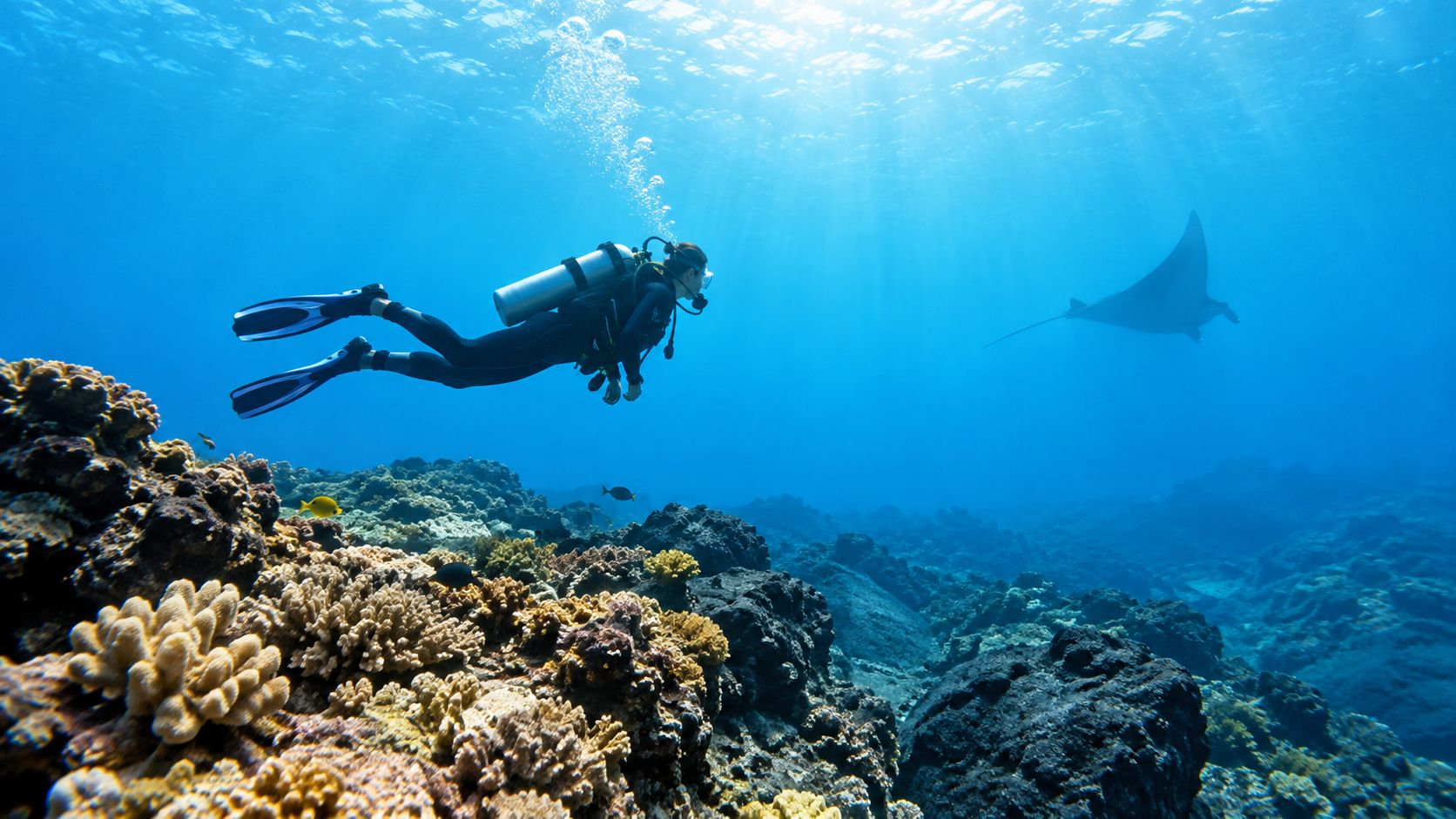
A localized population creates a special responsibility
Kona's manta encounters are remarkable partly because they involve a relatively localized group, not an unlimited supply of passing animals. A 2009 Hawaiʻi legislative testimony document reported that researchers had identified 154 manta rays along the Kona Coast since 1992, while a longer-running identification program had recorded 106 individuals from 1992 through 2007. The same document estimated that the local population probably numbered fewer than 200 animals, although formal mark-recapture analysis had not yet been completed. The legislative testimony provides that historical population context.
That changes how I judge a manta operation. The question isn't only whether the boat reaches the viewing site. It's whether the crew keeps divers low, preserves the open water column for the mantas, prevents touching and chasing, and gives every participant a clear position in the water.
Practical rule: The closer the wildlife comes, the less you should do. Stillness produces better encounters than pursuit.
Kona also offers lava formations, arches, ledges, reef slopes, and open-water conditions that can suit both new certified divers and experienced teams. Visibility in West Hawaiʻi often exceeds 30 meters, according to regional reef survey data, which supports underwater photography and clear diver-to-diver communication. The Frontiers in Marine Science research also documents a prevailing north-to-south current and recurring localized upwelling. Those features can influence drift, plankton distribution, and marine activity, but they don't guarantee what you'll see on a particular descent.
For a fuller explanation of why lava structure, shelter, and marine life make this coast different, explore what makes diving in Kona unique. The practical conclusion is straightforward: scuba Kona isn't just convenient diving close to a resort corridor. It's a destination where unusual wildlife behavior and varied volcanic terrain occur within manageable reach of shore.
When to Dive Kona by Season and Conditions
Kona's leeward position gives it a strong reputation for dependable diving, but “dry side” doesn't mean “immune to weather.” Rain can fall inland or upstream, send runoff toward nearshore reefs, and affect visibility even when the hotel pool and airport roads look perfectly calm.
Read the ocean, not just the forecast
West Hawaiʻi's current generally moves from north to south, and localized upwelling can change the distribution of nutrients and plankton. Clear water favors wide-angle photography and easier navigation, while current-sensitive sites require secure camera handling, conservative gas planning, and a clear pickup strategy.
Upwelling may support biological activity, including manta feeding conditions, but it isn't a dependable predictor of a specific night's encounter. Treat it as part of the marine system, not as a booking guarantee.
Swell matters too. A site that's comfortable from a boat may not be suitable for a shore entry, particularly where divers must cross sharp lava or uneven coral. Boat crews can often select a more protected site, while shore divers need to make a stricter go or no-go decision before gearing up.
The heavy-rain decision
After heavy rain, shallow nearshore reefs deserve extra caution. Runoff can reduce visibility and may increase bacterial contamination, even when the surface looks clear. A Hawaiʻi-focused water-safety guide recommends avoiding ocean activity for 48 to 72 hours after heavy rain. The guidance on post-rain ocean conditions is especially relevant to families, snorkelers, photographers, and anyone with a fixed travel schedule.
Use this decision process:
- Check recent rainfall: Look beyond the conditions at your hotel. Rain upstream can affect the coastline differently from rain at the harbor.
- Separate shallow from offshore sites: Nearshore reefs are more exposed to runoff. Offshore and leeward sites may remain clearer, but only the operator can confirm current conditions.
- Review advisories and swell: A clear forecast at one beach doesn't make every entry safe.
- Ask for site-specific visibility: “Is Kona diving good?” is too broad. Ask where the boat plans to go and what the crew observed recently.
- Protect the expensive part of the trip: If visibility is poor and photography or snorkeling is your priority, postponing may produce a better experience than forcing the first available slot.
A dive can be technically possible and still be a poor choice for visibility, photography, comfort, or water quality.
For most visitors, the strongest plan is to schedule important dives early enough to leave room for a weather-related adjustment. Don't chase a mythical perfect month. Build flexibility around the conditions that actually affect your chosen site.
Top Kona Dive Sites and Trip Types
A two-tank morning boat trip and a manta night dive are both excellent, but they solve different problems. Morning reef diving gives you structure, daylight, and a broad look at volcanic habitat. A manta dive is slower and more observational. Blackwater diving is open-ocean, equipment-focused, and aimed at divers who enjoy unusual pelagic life rather than a fixed reef.
| Trip Type | Typical Environment | Skill Level | Wildlife Focus |
|---|---|---|---|
| Two-tank morning boat dive | Lava formations, reef slopes, arches, and ledges | Certified divers, with site choice matched to ability | Reef fish, turtles, pelagic visitors, and volcanic habitat |
| Manta ray night dive | A controlled viewing area after sunset | Certified scuba divers or capable snorkelers, depending on format | Reef manta rays feeding in illuminated plankton |
| Blackwater night dive | Open water away from the reef, suspended in darkness | Experienced divers comfortable with night procedures | Small pelagic organisms and vertical migration |
| Shore dive | Protected coves, lava shelves, and nearshore reef | Experienced shore divers who can assess entry conditions | Reef fish, invertebrates, and coastal marine life |
Match the trip to your objective
Choose a morning boat dive when you want variety and a productive use of daylight. The crew can select sites according to swell, current, visibility, and diver experience. That flexibility is more useful than insisting on one named site regardless of conditions.
Choose a manta night dive when the quality of the encounter matters more than covering distance. At Garden Eel Cove, the protected location, better viewing area, and richer reefs make it the superior choice for this type of dive tour. Divers generally remain low near the bottom while mantas use the water column above them, creating a calm viewing arrangement when everyone follows the briefing. Read more about diving with manta rays in Kona.
Choose a blackwater dive only if you're comfortable with darkness, open-water positioning, and a more specialized briefing. There's no reef to use as a visual reference, so buoyancy, light discipline, buddy awareness, and listening to the crew matter more than a high-profile certification card. The Kona blackwater dive suits divers who want a very different biological experience.
Shore diving can be rewarding, but it isn't automatically easier. Lava entries can punish poor timing, and a calm-looking cove may still have an awkward exit. At the Old Kona Airport Marine Life Conservation District, divers commonly use a partially protected cove at the northwestern end or a lava shoreline at the southeastern end when conditions are calm to moderate. The area's rules prohibit removing marine life, coral, rocks, sand, shells, algae, or other geological features, and commercial operations require the appropriate permit. Hawaiʻi's DLNR guidance for the Old Kona Airport MLCD is worth reading before planning an independent entry.
The right question isn't “Which is the best Kona dive?” It's “Which environment matches my comfort, purpose, and conditions today?”
Choosing a Kona Dive Operator
A good operator earns trust before the boat leaves the harbor. I look for a briefing that explains entry and exit procedures, current expectations, lost-diver actions, wildlife boundaries, and what happens if a participant becomes uncomfortable. A polished website matters less than whether the crew can explain those decisions clearly.
What to compare before booking
Group size affects supervision. Smaller groups make it easier for a guide to notice a nervous diver, correct buoyancy, or keep photographers from drifting into the manta viewing path. Large groups aren't automatically unsafe, but they demand stronger positioning and communication.
Boat design affects the whole day. Ask about shaded seating, equipment storage, ladder access, freshwater, and how the crew handles cameras. A comfortable ride doesn't replace good seamanship, but it reduces the small frustrations that make divers rush equipment checks.
Maintenance should be visible in the process. Rental regulators, BCDs, exposure protection, lights, and cylinders should look cared for and fit properly. Ask how the operator handles a damaged mask, a failed light, or a diver who needs a different exposure layer.
Conservation standards should be specific. “We love mantas” is not an operating policy. Look for no-contact rules, controlled diver positioning, crew intervention when guests chase animals, and education that continues after the boat returns.
Kona Honu Divers is one operator to compare when reviewing these criteria. Its published offerings include two-tank morning trips, manta ray night dives, blackwater excursions, advanced trips, certification, equipment rentals, private charters, and free nitrox for appropriately certified divers. The fleet description emphasizes shaded seating, hot showers, storage, and maintained rental gear. Review the wider Kona dive shop landscape rather than choosing solely by a star rating.
Use Kona dive tours to compare general trip options, the manta ray dive tour for the signature night encounter, and the advanced two-tank trip when your experience and recent practice match the demands. Treat those pages as starting points, then confirm certification, recent-diving requirements, departure location, and cancellation terms directly with the crew.
Certification, Refresher Courses, and Gear Advice
Kona is a good place to learn, but warm water and clear visibility don't remove the need for disciplined training. A new diver should leave the water able to control buoyancy, clear a mask, recover a regulator, manage gas, communicate with a buddy, and make a calm ascent. Those skills matter more than collecting a card quickly.
Choose the right training route
A Discover Scuba experience can work for someone who wants a supervised introduction without committing to a full certification course. It isn't a substitute for open-water training, and it shouldn't be treated as permission to rent equipment and dive independently.
A full certification course is the right route for travelers who want future flexibility. Complete theory before arrival when possible, then use local sessions to focus on real water skills, surface awareness, entries, exits, and the conditions you will encounter. Big Island scuba certification options can help you compare a beginner course with a refresher or continuing-education path.
If you're certified but rusty, book a refresher rather than hiding the gap. A diver who remembers the theory but struggles to hover, descend, or manage a mask problem will have less attention available for wildlife and photography.
Make equipment serve the dive
Renting is sensible when baggage is limited, but fit is essential. Test the mask seal, confirm fin comfort, check that the regulator breathes smoothly, and make sure the BCD inflator and dump valves are familiar before entering the water.
Bring personal items that strongly affect comfort:
- Mask: A known fit prevents the small leaks that ruin concentration.
- Exposure protection: Ask the operator what layer suits the current water and your tendency to feel cold.
- Lights: Night divers should understand the primary light, backup light, attachment points, and signaling method before departure.
- Camera system: Secure clips and wrist or hand control. A camera that floats loose is a hazard, not an accessory.
- Surface marker: Carry and deploy one if your training and the briefing call for it, especially where current or boat pickup is involved.
Photographers should prioritize neutral buoyancy and stable positioning over carrying every lens and arm. Clear water can tempt divers to chase a dramatic angle. That usually creates silt, crowding, or missed moments. The best setup is the one you can operate without losing awareness of your buddy or the guide.
Safety, Logistics, and Responsible Diving in Kona
The biggest hidden risk in Kona isn't an aggressive manta. It's a diver who becomes distracted, separates from the group, ignores a current limit, or treats a rough lava entry as a minor inconvenience.
Hawaiʻi requires divers and spearfishers in ocean waters to use a dive flag and generally prohibits surfacing more than 100 feet from it, except in an emergency. The flag must measure at least 12 by 12 inches, while a flag mounted on a vessel longer than 16 feet must measure at least 20 by 24 inches and be displayed with a blue-and-white alpha flag. For night diving between sunset and sunrise, the flag must be illuminated well enough to identify it from 100 feet away. The state's special provisions and dive-flag rules provide the exact requirements.
Protect yourself at the entry
At the Old Kona Airport MLCD, sharp coral and lava rock line parts of the frontage. Wear suitable exposure protection, keep your hands free when practical, and don't enter just because another group is already in the water. A shore dive needs a realistic exit plan, not only an appealing descent.
The district also contains protected waters and a designated no-boating zone. Motor-powered watercraft are restricted within that zone except for emergencies or enforcement, and vessels may not anchor in the MLCD. The boundary and navigation rules explain why operators and independent divers must respect site-specific access rules.
Treat manta encounters as wildlife observation
Mantas don't need to be feared, but they do need space. Don't touch, grab, ride, chase, or block their feeding paths. Contact can remove the animals' protective mucus layer, while crowding and poor positioning can degrade the encounter for mantas, snorkelers, divers, and guides.
Divers are generally placed low near the bottom so mantas can use the water column above them. Surface participants need to follow crew positioning and avoid obstructing the animals' loops. If you feel anxious at night, signal early. A good crew can help you stabilize, move to a more comfortable position, or exit the water before a manageable concern becomes a safety problem.
Know when rain changes the plan
After heavy rain, don't rely on Kona's dry-side reputation as a blanket guarantee. Runoff can reduce visibility and affect nearshore water quality, so check rainfall, advisories, swell, site conditions, and operator confirmation before committing. Waiting can be the more practical choice when your priorities are clean photography, comfortable snorkeling, or a calm family experience.
Read responsible and considerate diver etiquette before your trip, then apply it without exception. The best dive leaves the reef, the animals, and the next group in no worse condition than you found them.
Kona Honu Divers offers guided morning reef dives, manta ray night dives, blackwater excursions, advanced trips, certification, rentals, and private charter options for different experience levels. Visit Kona Honu Divers to compare the trip that fits your certification, comfort, and travel dates, then confirm current sea conditions before you book.