
The coast that sells “guaranteed” mantas is a small, repeatedly identified population. Hawaiʻi legislative testimony on photo-identification from 1992 through 2007 reported 106 individually identified manta rays along the Kona Coast, annual counts from 1 to 65 unique animals, an average of 57 unique individuals a year in the last four years of that span, and about 2 pups per year from 1994 through 2007. Researchers estimated the Kona population probably numbered fewer than 200. You're not visiting an endless school. You're diving with animals that show up again and again, which is why how you book matters as much as where you splash.
That same leeward shore still stacks several trips into one week: shallow coral, lava structure, a night feeding dive, and open-ocean blackwater. Treat them as one generic reef and the week gets sloppy. Match the day to the water and the population stays watchable for the next diver, not just for your camera roll.
Why Scuba Kona Belongs on Every Diver’s List
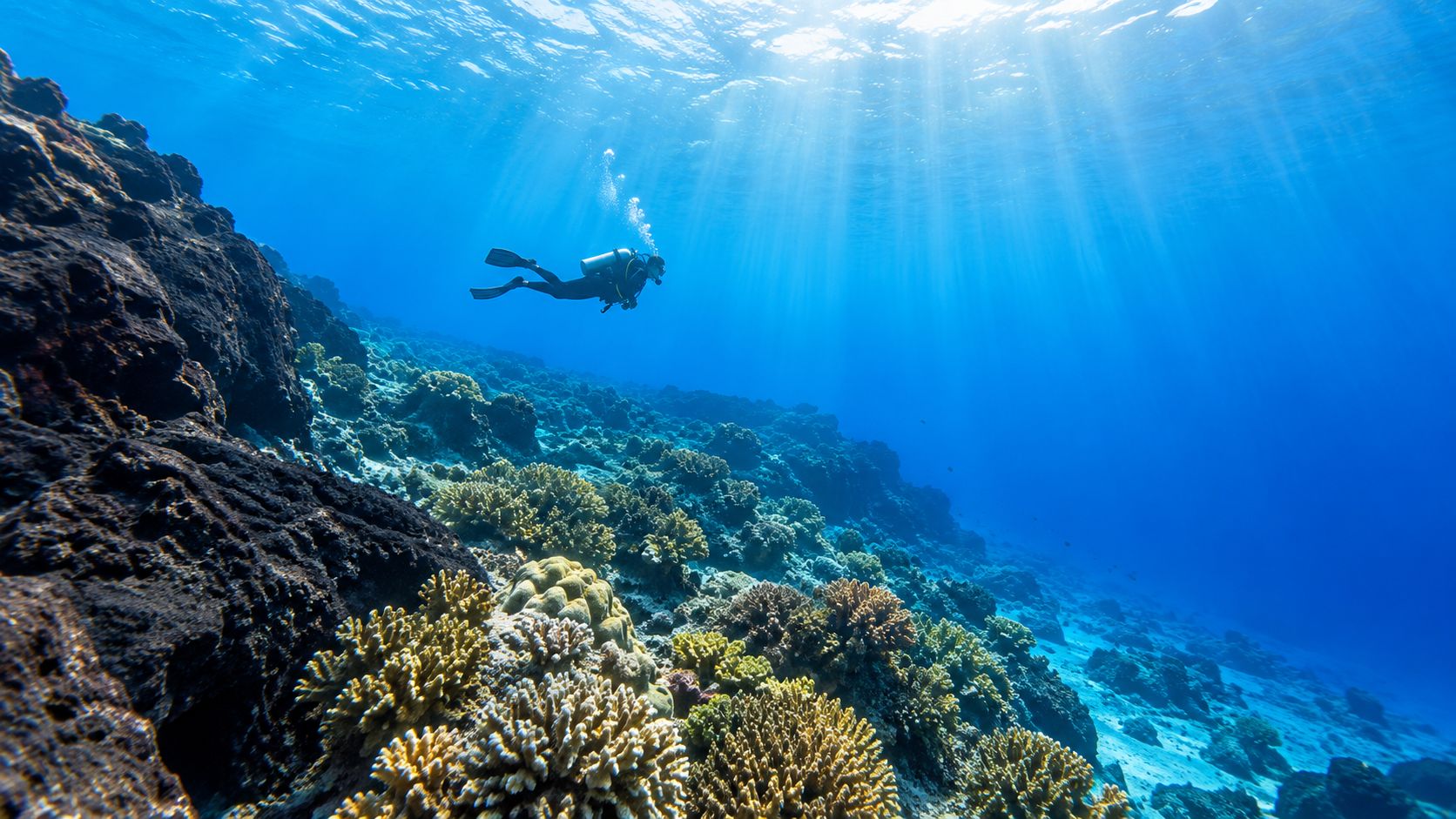
A useful week of scuba Kona is several destinations stacked on one coastline, not a single tropical checklist. One morning you're over a shallow garden where a turtle parks on a ledge. The next you're inside lava architecture that punishes poor trim. After dark you're either parked under feeding rays or hanging in open water with nothing under you but black.
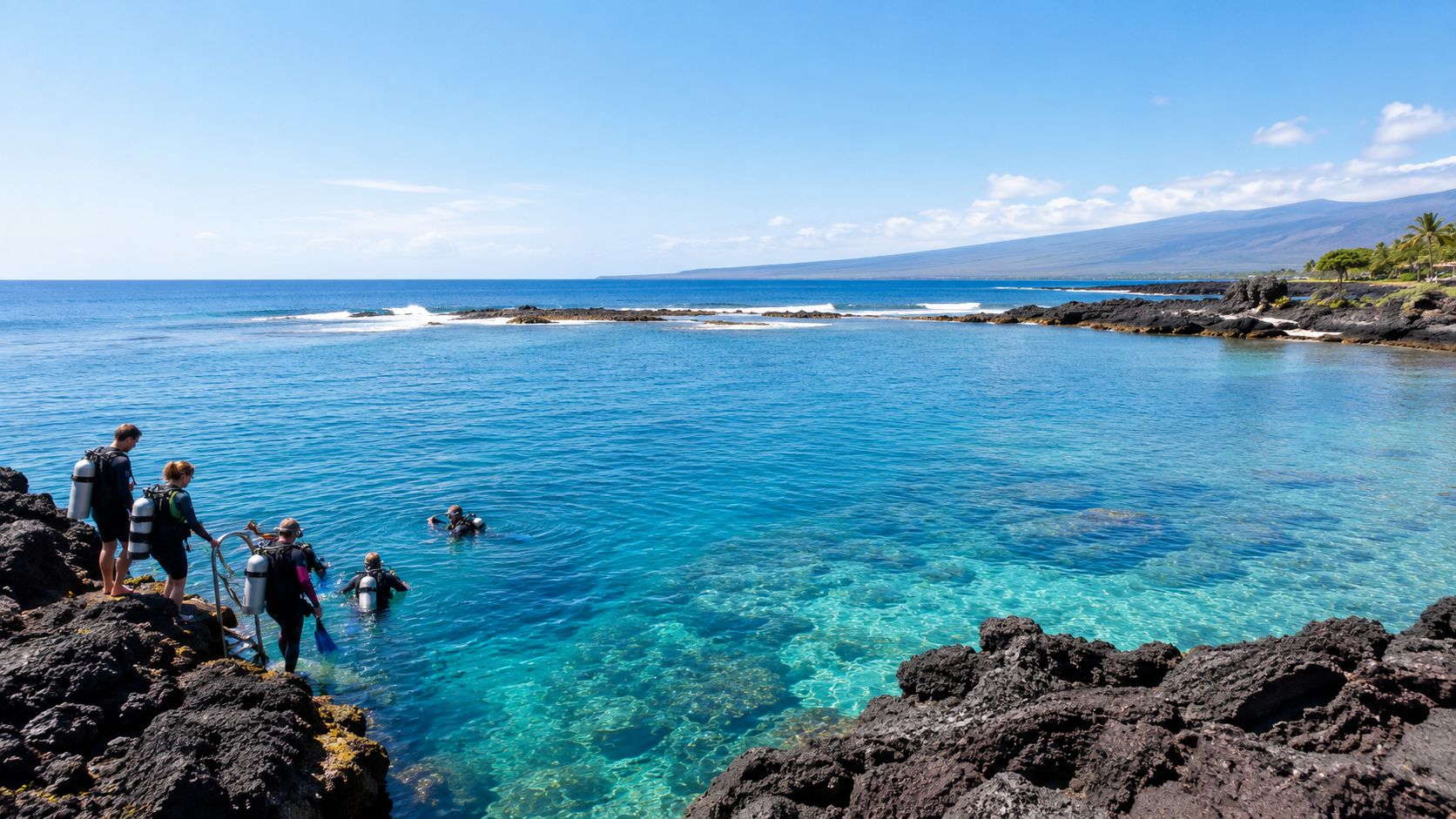
Those are different skills, different best times, and different ways a day goes wrong. Coral gardens reward slow finning and a light for shaded cracks. Pinnacles and tubes want recent depth comfort and a gas plan you follow. The manta night is a sit-and-watch, not a swim-around. Blackwater drops the seafloor reference entirely.
Guided Kona dive tours work when the boat picks the version that matches the roster and the forecast, not the brochure photo. A calm surface at the harbor doesn't mean the south shore entry you saw online is the right call by noon.
Before you hold a date, answer three questions in plain language. What do you want to see? What certification do you have, and how recent was your last ocean dive? How many days do you have once you subtract travel, a possible weather shift, and a no-fly buffer? If any answer is fuzzy, book the easier profile first. The famous night can wait one evening. A bad first descent tends to wreck the rest of the card.
Understanding Kona’s Dive Sites and Ocean Conditions
South Kona's shallow reefs commonly hold underwater visibility exceeding 30 m (about 100 ft) because this coast gets relatively little land-based sediment compared with many other Hawaiian reefs, according to a PLOS ONE reef study. That clarity is why navigation, photo contrast, and diver-to-diver contact feel easy here. It is not a promise that every bay looks like that on your Tuesday.
Exposed coast versus a bay after rain
Embays such as Kealakekua and Hōnaunau can turn turbid after runoff or heavy visitor traffic. Post-rain planning should assume weaker contrast and a shorter useful photo window, even if the harbor looks glassy. Exposed coastal sites are the better bet when you want the long sightline. Bays earn their keep when you want shelter, then lose it when the watershed dumps brown water.
Carry a dive light on daytime lava dives. Crevices, arches, and overhangs go dark long before the open water does. A primary light plus a small backup beats one fancy torch with a dead battery.
Practical rule: Calm water at the surface is not a clearance for current, surge, or a depth profile above your recent experience.
A habit that beats a fixed site list
- Read the marine forecast before you commit to a lava-rock entry. Swell can rewrite the step in an hour.
- Match complexity to the card and the last month of diving, not to the site's reputation.
- Prefer the exposed coast for visibility and treat a post-rain bay as a maybe.
- Abort the entry if the exit looks worse than the entry. Pride is a bad ascent plan.
More on how that clarity behaves day to day sits in this note on visibility in Big Island scuba diving. Rankings that ignore runoff and swell are marketing, not a dive plan.
Signature Kona Experiences from Manta Night Dives to Blackwater
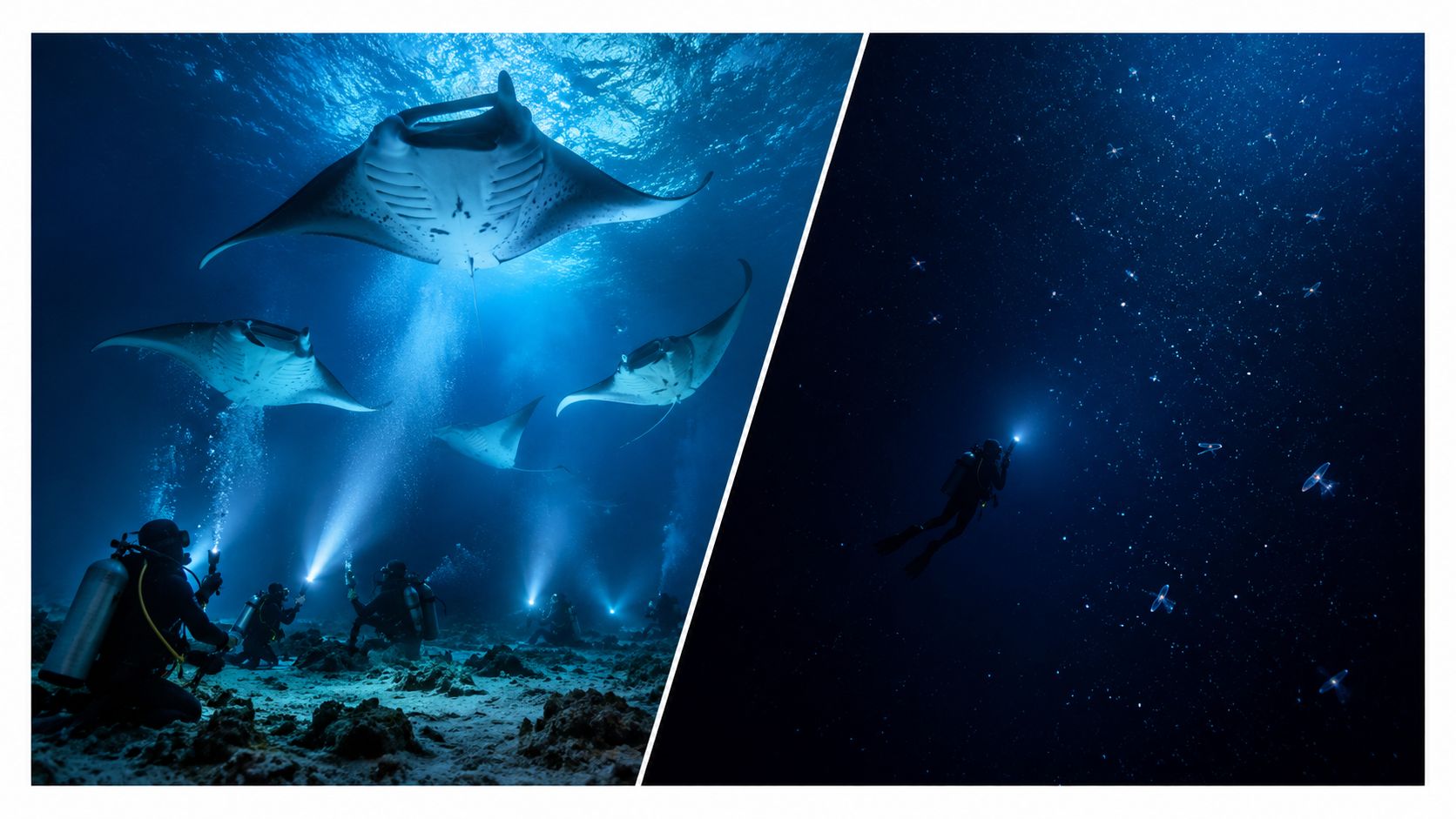
Night mantas work because of a plankton-light interaction, not because someone trained the animals. Lights on the upper water column and the seafloor bunch zooplankton, and reef manta rays (Mobula alfredi) filter-feed through that cloud. A NOAA-supported six-year dataset logged 25,444 observations of 118 identified individuals at Manta Heaven and Manta Village, on 92% of nights at Manta Heaven and 78% at Manta Village, with typical dives starting near sunset and lasting about an hour. Mantas repeatedly came within less than 1 m while feeding over the lights, as that NOAA manta record documents. Reliable, not guaranteed. Counts still swing by night and season because food does.
A 2025 University of Hawaiʻi analysis of 13 years of photo-ID, 2010 through 2022, at Garden Eel Cove and Keauhou, covered more than 23,000 sightings of 167 identified reef mantas. Garden Eel Cove consistently held the larger nighttime feeding groups, while Keauhou drew a stronger share of female visits. Across both sites the sex ratio was about 1:1, females showed high fidelity at Keauhou, and males looked more mobile. Annual and seasonal group size tracked zooplankton density. The aggregations stayed relatively stable despite more tourism, which is resilience so far, not a blank check. Those figures are in the University of Hawaiʻi study.
For a tour, Garden Eel Cove is the better default: a more protected setting, a cleaner viewing area, and stronger surrounding reef than a more exposed alternative when the afternoon wind picks up. The operating model is simple. Enter near sunset, hold a stable spot near the light field, never chase or touch, and keep lanes open so animals can loop. Background on the behavior is in this guide to diving with manta rays, and the night itself is the two-tank manta dive and snorkel.
What blackwater actually is
Blackwater is not a reef dive with the lights off. It happens in open water over deep ocean, in the epipelagic zone near the surface after dark, while animals tied to the deep-scattering layer drift up through the beam. You watch what passes. You don't search a bottom. Routes can carry moderate current, and winter swell or variable wind can cut visibility and make entries harder. A tether and strict flag discipline are the dive, not optional extras, which is why the format is described the way it is in this blackwater explainer. Book it only if night buoyancy is already boringly good. The trip page is the blackwater night dive.
If you need a wall or a seafloor to feel oriented, take the manta night and skip the open-ocean hang.
Certification Courses and Training Options in Kona
Training here is a site-access decision, not a souvenir card. Warm water, generally clear coastal sites, and sheltered west-side options mean a new diver manages fewer variables than on a cold, silty quarry. That forgiveness disappears the moment the profile adds depth, darkness, or no visual bottom.
| Path | Who it fits | What it actually unlocks |
|---|---|---|
| Open-water certification | First-timers who want more than one dive | Guided reefs and a legal path onto certified charters |
| Refresher | Certified divers rusty after years away | A supervised reset before you join a normal boat |
| Advanced and specialty work | Divers with recent, comfortable ocean dives | Deeper pinnacles, tubes, night positioning, blackwater prep |
A refresher is often the smarter first booking if your last dive is a memory. Shops that skip it to fill a boat are optimizing their manifest, not your gas and buoyancy. Open water is enough for a lot of good reef. It is not a shortcut into exposed lava or a tethered night over deep water.
Sequence it. Finish certification, then a guided reef day so trim and entries feel ordinary, then the signature nights once you can hover without fiddling. Jumping straight to the famous dive while you're still dumping air every minute makes you the person who drifts into the light field.
Continuing education options are laid out under Big Island scuba certification. When the reef day feels easy and you want lava tubes, deeper pinnacles, and sites that assume you can run your own stop, look at a premium advanced two-tank trip. If the advanced prerequisites feel like a stretch, they are. Stay on the standard boat.
What to Pack and How to Dive Kona Safely
Pack for long, warm dives and for the moments the coast stops being gentle. A suit you already trust beats a rental guess. Guidance on thickness and layering is in this piece on the best wetsuit for diving in Hawaii. Add a hooded vest if you chill on the second or third tank, especially on night boats where you sit wet between splashes.
The short kit that prevents dumb problems
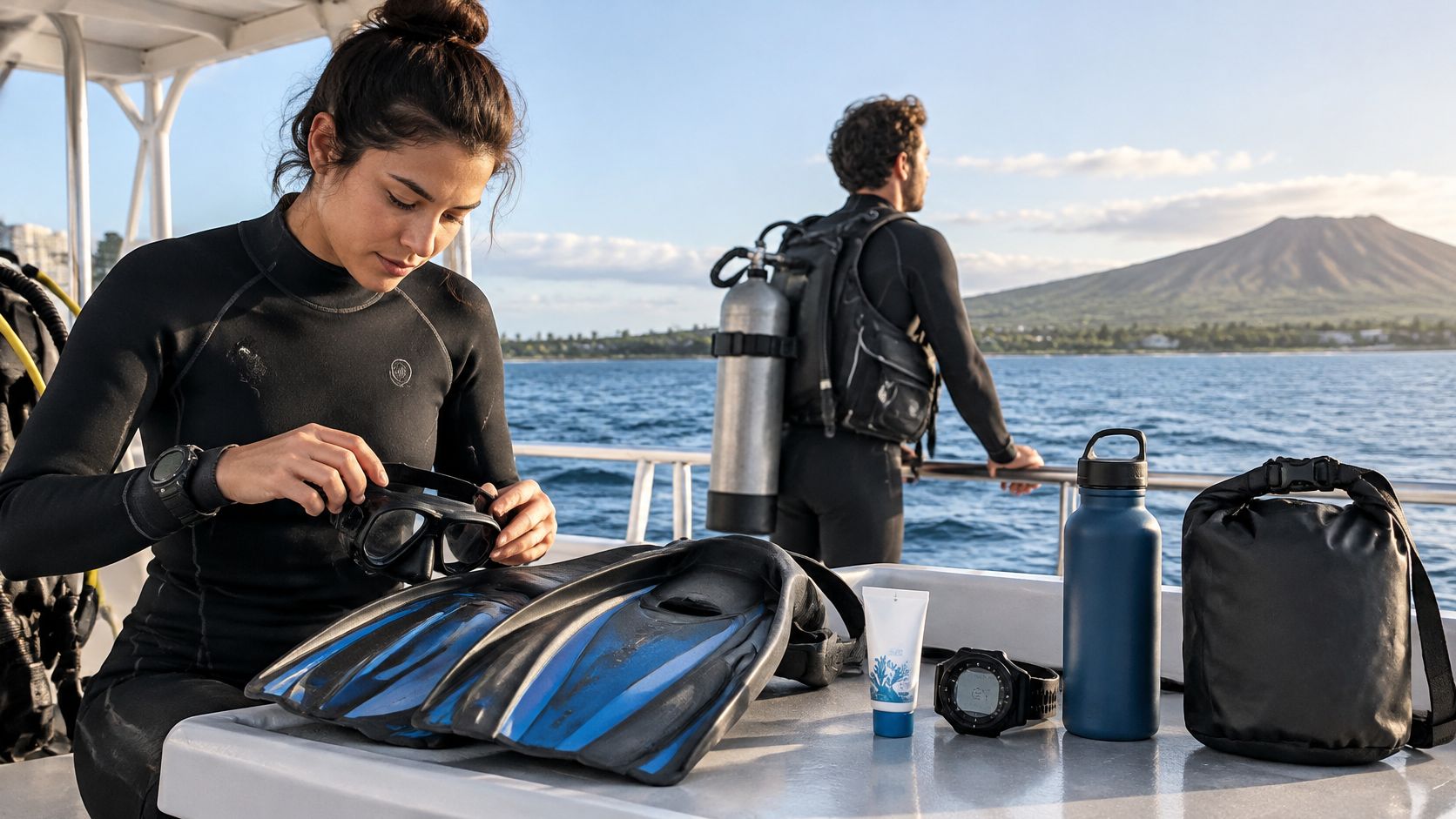
- Redundant lights: one primary, one backup, for lava shade and any night work.
- Familiar mask and fins: blisters and a leaking skirt waste the viz you came for.
- Surface marker and flag awareness: know where the flag is before you leave the boat or the shore.
- A real gas reserve: agree a turn pressure and surface with gas, especially on deeper or more exposed sites.
- Reef-safe habits in the bag: sun shirt first, sunscreen as a backup, hands off the bottom.
Rules that are easy to miss
The Old Kona Airport Marine Life Conservation District runs offshore from the Old Kona Airport toward the Kailua Lighthouse, with boundaries out to 500 yards at designated points. You may not fish for, take, injure, kill, possess, or remove marine life except for narrowly defined activities. You may not alter or remove sand, coral, rock, shells, algae, or other geological or biological features. Feeding marine life or using attractants is prohibited. Anchoring is prohibited. Commercial dive and tour ops need authorization. That's the district as written by Hawaiʻi DAR.
Statewide, scuba divers and spearfishers must mark position with a dive flag. In ocean waters you may not surface more than 100 feet from that flag except in an emergency. In navigable streams the limit is 50 feet. The rule is in the May 2024 fishing regulations. It matters on shore dives and anytime you wander off the entry.
The medical fact that should change your insurance
Kona has no recompression chamber. Treatment is in Honolulu. A summer 2024 bleaching look found about 35% of surveyed coral colonies affected, and declining aragonite saturation may make coral growth less favorable by mid-century, as summarized in this Big Island scuba diving guide. Excellent viz doesn't make every entry safe, and it doesn't put a chamber on this island. Carry dive insurance, stay conservative on night and remote profiles, and don't dive an exit you couldn't use tired.
How to Choose a Kona Dive Operator
Crowding at the manta sites is measurable, not a vibe. A study of 444 participants found 82% felt crowded by snorkelers, 78% by boats, and 69% by scuba divers. Independent guidance says stay at least 3 meters (10 feet) away, approach from the side, stay still, and never touch or chase. A NOAA status review noted in the same record associates a heavily used Kona site with lower emergent zooplankton abundance and diversity than a less-used site, possibly from inadvertent habitat damage. The testimony compiling those points is Needham and colleagues, via Hawaiʻi County records. An operator who can't talk about spacing is selling the animals, not managing them.
What to ask before you pay
- Group size and guide ratio: six divers who can see the guide beat a crowd hovering in the light.
- Boat basics: shade, a place for wet gear, and a hot shower change how the ride home feels after a night dive.
- Nitrox: included, or an upsell you discover at the dock.
- Rental servicing: ask who checks inflators and regs before you do.
- Etiquette briefing: lights, lanes, no-contact, and what happens if someone fins the sand.
A shop that briefs fish lists and skips bottom contact is the wrong shop for this coast. Fins on coral don't show up in your highlight reel. They show up in the next season's reef.
Against that list, Kona Honu Divers runs boats with hot showers, shaded seating, and storage, includes nitrox, services rental gear on a set cycle, and offers packages for people diving several days. Instructors take beginners through certification while separate advanced profiles cover lava tubes, deep pinnacles, and shark nurseries. That's a concrete fit for the criteria above, not a claim that every other boat fails them. How local shops differ is sketched in this overview of dive shops in Kailua-Kona.
Ask where you'll sit relative to other divers and to the animals. If the answer is “you'll see,” pick another boat.
Sample Kona Dive Itineraries for Different Trips
Stop collecting site names. Pick a shape for the week, then let the forecast move the sites inside it.
Three days, already certified. Night mantas on night one so a windy evening can slide to night two. Two daytime reef boats around it, nothing deeper than you dove last month. The decision that makes or breaks it is reserving the night early and keeping a daytime slot flexible. Don't stack the manta on your arrival evening if you're wrecked from the flight.
Five days, recent and comfortable. Same early manta night, two standard reef days, one advanced two-tank for tubes and pinnacles, and blackwater only if open-water night buoyancy is already solid. This plan assumes you can climb a ladder in full gear without a production and that you won't treat blackwater as a novelty add-on. The fragile booking is the advanced day. If swell dirties the south sites, take the reef and don't negotiate the prerequisites.
Family or mixed group. Protected sites, shorter rides, snorkelers on the same boat as divers when the operator runs both. Put the shared manta on a night when nobody has an early flight. The plan fails when you drag non-divers onto a long exposed crossing or put a brand-new certified diver on the advanced boat to “keep the family together.”
Check those dates before you build dinners, luaus, and a volcano day around a boat that might already be full.
Frequently Asked Questions About Diving in Kona
Can non-certified travelers still see mantas? Yes. A guided night snorkel uses the same light field from the surface. Scuba is the view from below, and it requires certification or a supervised discover-style intro, not a borrowed regulator.
How early should popular night dives be booked? As soon as your flights are real. Sunset departures fill before ordinary morning reefs, especially in holiday weeks.
What if you haven't been in the water for years? Book a refresher before any signature night. Hoping it “comes back” on a dark descent is how people burn gas and miss the show.
How does seasonal swell change the plan? Winter north swell can shut exposed entries and bump boats to shelter even when the hotel pool looks calm. Keep one daytime slot movable. Conditions should pick the site, not the ad you clicked.
Kona Honu Divers runs daytime reef boats, manta nights, blackwater for divers who meet the bar, and certification or refresher paths when the last dive was too long ago. If this coast is the trip, match the boat to your card and the forecast instead of chasing a postcard. See what's on the schedule at Kona Honu Divers.