
You've opened a map of dive shops in Kailua-Kona, Hawaii, and the choices don't sort themselves out neatly. One shop may focus on manta encounters, another on shore entries or advanced offshore dives, and the lowest advertised price may not include the gear or trip format you need. The useful question isn't which operator looks best on a list. It's which one fits your experience, your plans, and the people traveling with you.
Three things narrow the choice quickly: what you want to see, what you're certified and comfortable doing, and whether your group includes snorkelers or newer divers. Match those first, then compare safety practices and what the trip price includes.
Why Kailua-Kona Is a Top Dive Destination
You might start with a plan for one reef dive and then spot the range of options: a manta night dive, a lava-formation tour, a shore entry, or a trip built around experienced divers. That variety is real, but it doesn't mean every trip suits every diver. A newly certified diver looking for a relaxed reef dive has different needs from a confident night diver hoping to photograph open-ocean life.
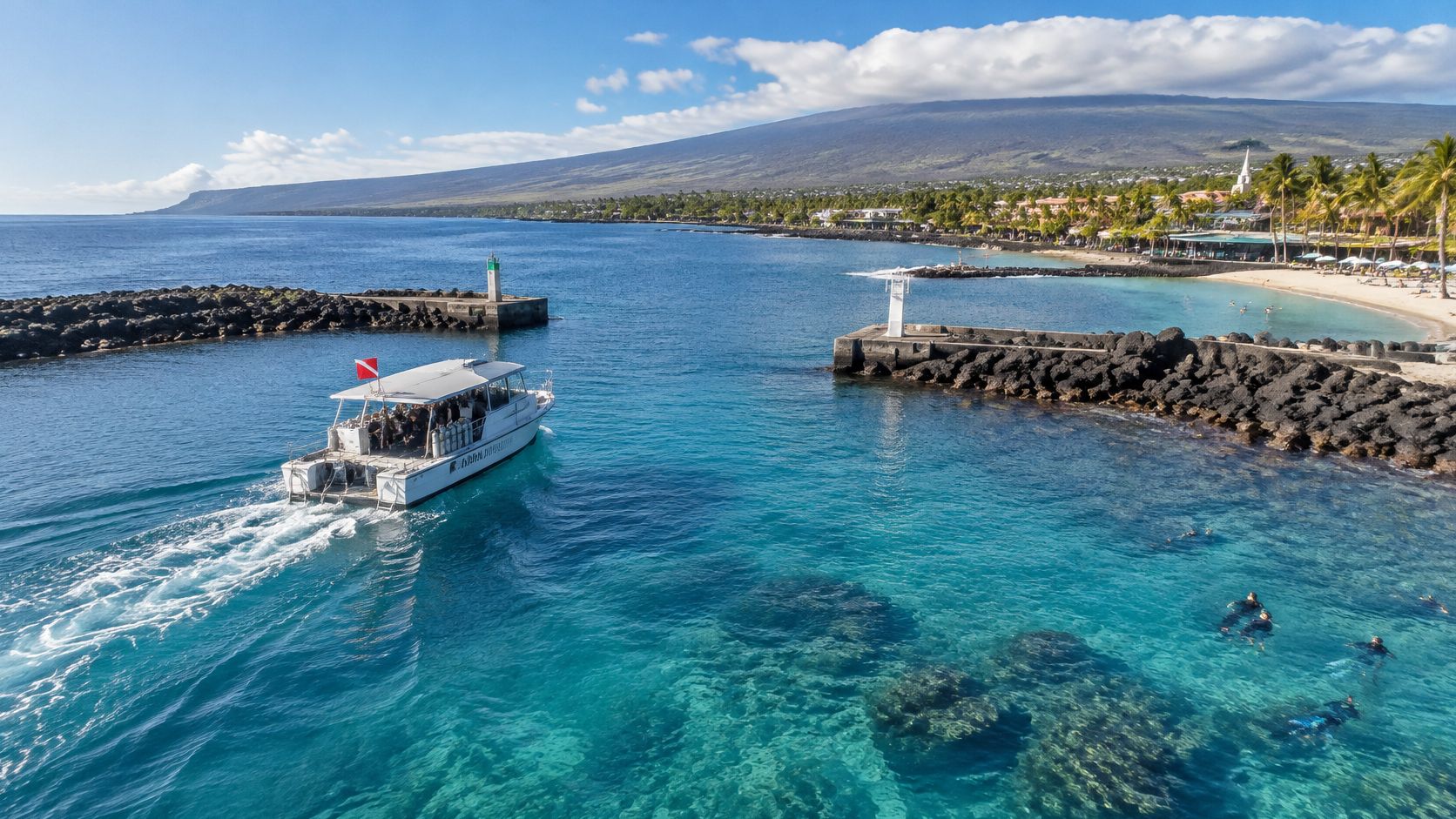
Kona's appeal starts with its mix of underwater terrain and experiences. The leeward coast offers reef dives alongside volcanic formations, while operators also run night dives and trips for divers seeking more challenging profiles. Boats commonly depart from Honokōhau Small Boat Harbor, with crews selecting sites according to conditions and the divers aboard. A boat dive can save visitors from managing a rocky shore entry, but it won't eliminate the need to choose a site appropriate to your skills.
The surrounding reef ecosystem gives those dives a deeper context. Hawaiʻi's main islands contain approximately 640 square miles (1,658 square kilometers) of coral reef habitat, supporting about 80 coral species and more than 1,500 reef-fish species, including over 1,250 species endemic to Hawaiʻi. NOAA's assessment gives the Main Hawaiian Islands an overall ecosystem score of 71%, categorized as fair. Those figures help explain why reef stewardship matters here as much as the wildlife encounter you came to see. (NOAA's overview of Hawaiʻi's coral reefs)
The three questions that decide the shop: What do you want to see? What can you safely do? Who else needs to enjoy the trip?
Answer those before comparing dive shops in Kailua-Kona, Hawaii. A family with snorkelers may need a different boat and itinerary from a certified group planning multiple dives. The right operator is the one whose trip actually accommodates that mix.
What Makes Kona’s Underwater Conditions So Reliable
Kona's leeward coast is favorable for diving because the shoreline has few river outlets, minimal coastal sand, and generally sheltered surface conditions. With less terrestrial sediment entering the water, visibility can remain strong. Experienced divers commonly encounter visibility exceeding 100 feet and more than 350 potentially diveable days annually, although short-lived winter storms can disrupt conditions. (DAN's guide to Kona's rugged west coast)
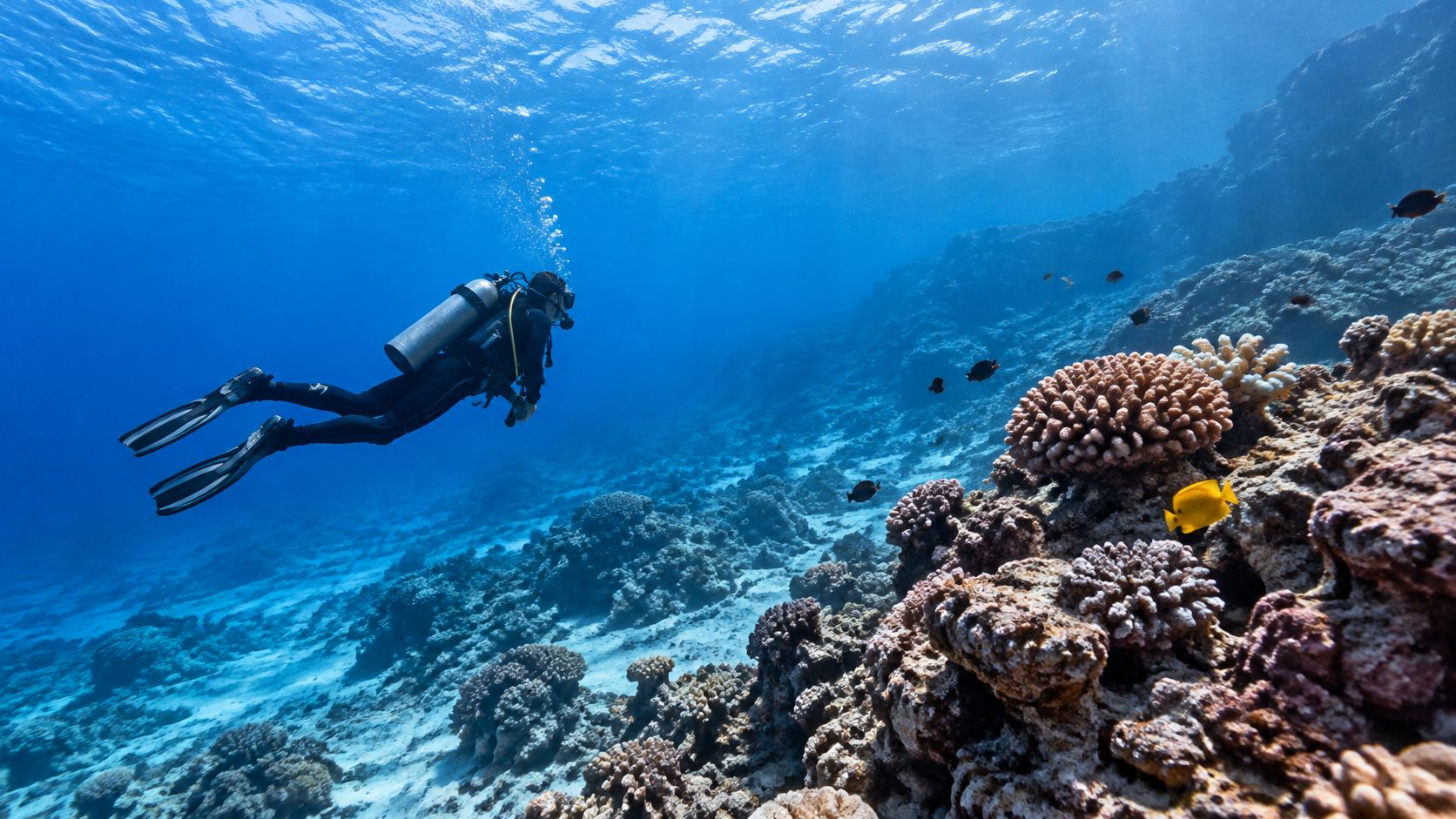
That consistency helps with visibility-dependent plans such as photography and navigation practice, but it isn't a promise that conditions will be identical every day. Swell and wind still matter. A capable crew checks local conditions and adjusts the site rather than treating the day's itinerary as fixed. If you're choosing dates, this guide to the best season for diving in Kona can help you think through seasonal trade-offs.
The volcanic bottom is another part of the draw. As lava cools, it can form hollow tubes and partially collapsed arches that create swim-throughs and shelter organisms including sponges, corals, and flatworms. These formations look inviting, but an overhead environment changes the risk: a diver can't ascend straight to the surface if something goes wrong.
For that reason, don't treat a lava passage as an informal shortcut. Enter only with appropriate training, suitable gas planning, and direct supervision. A guided boat dive is often the more sensible choice for a visitor unfamiliar with a site, particularly when surge or an awkward shore exit could complicate the dive.
How to Evaluate a Kona Dive Shop Before You Book
Compare the actual operation, not just the star count. Recent reviews can reveal useful specifics: whether the briefing was clear, whether rental equipment fit, or how the crew responded when conditions changed. A high rating without details won't tell you whether a shop runs the kind of dive you want.
Ask direct questions before paying. Find out how the crew groups divers, what supervision is provided for your experience level, and whether nitrox or rental gear costs extra. Ask what happens if the forecast changes or a wildlife-related closure affects the planned site. A shop's answer can tell you a lot about whether it prioritizes sound decisions over sticking to a sales promise.
The Kona recreational-boating standard is a useful comparison point because it covers scuba and snorkeling operations as well as general recreational boating. It includes operational, safety, and environmental responsibilities relevant to evaluating a provider. Use it as a benchmark, not as a substitute for asking what a particular trip includes.
| Criterion | Why It Matters | How to Verify |
|---|---|---|
| Safety briefing | You need to understand the site plan, procedures, and what to do if separated. | Ask what the briefing covers and how the crew communicates underwater. |
| Boat setup | Shade, storage, and easy movement affect comfort, especially on a longer outing. | Ask about seating, gear space, and facilities aboard. |
| Rental equipment | Poor fit or unclear servicing can distract from the dive. | Confirm what's included and how equipment is maintained and sized. |
| Group arrangement | A trip should suit the experience and comfort levels of the divers aboard. | Ask how divers are grouped and what supervision is available. |
| Plan changes | Weather, swell, and closures can make the original site unsuitable. | Ask how the operator handles site changes, cancellations, and refunds. |
Use specific customer reviews as one input, then verify trip details directly. A careful shop should be able to explain its decisions in plain language.
Signature Kona Dive Experiences and Who They Suit
A signature dive is only a good choice if it matches your comfort in the water. Kona's options range from stationary wildlife viewing to open-ocean night diving, so compare the setting and demands, not just the headline attraction.
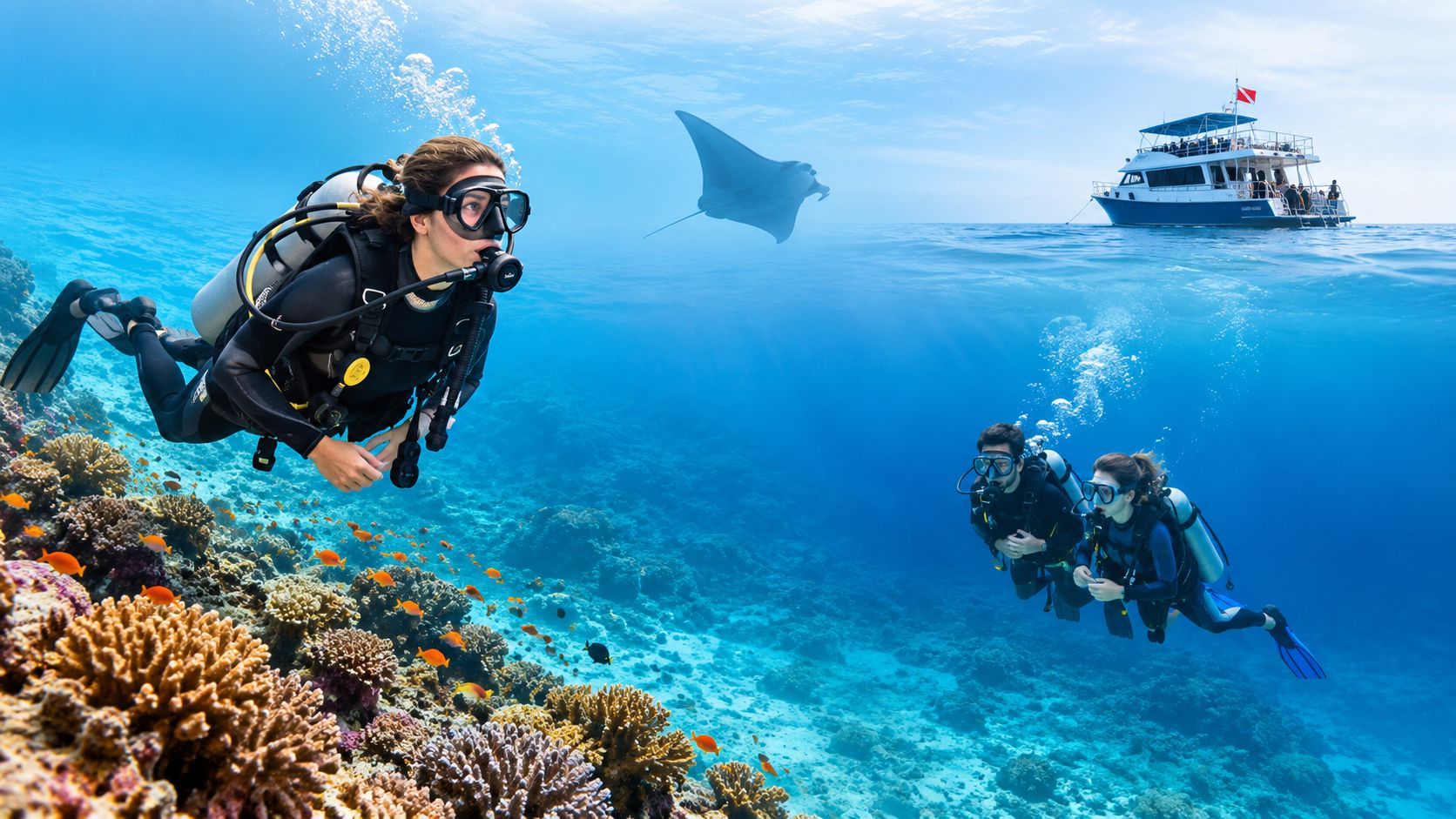
Manta ray night dive: Kona's manta encounters are supported by a documented local aggregation, not merely a chance sighting. A University of Hawaiʻi study analyzed 13 years of community-sourced records, covering 2010–2022, from the nighttime feeding sites at Garden Eel Cove and Keauhou. It included more than 23,000 sightings involving 167 individually identified reef manta rays. Garden Eel Cove consistently supported larger aggregations; the study also found that Keauhou was visited disproportionately by females. (University of Hawaiʻi study of Kona's manta aggregation)
For the dive tour, Garden Eel Cove is the stronger choice because its protected location, better viewing area, and better reefs make for a more suitable setup. Divers typically remain in a designated observation area while mantas feed through the illuminated water. Don't chase, touch, or block their path. A stationary diver with controlled buoyancy is safer for both the animal and the group. Read this Kona manta ray dive guide before deciding between a scuba dive and a surface-level snorkel.
Blackwater night dive: This trip takes divers into open ocean after dark to observe marine life in the water column, rather than over a reef. It can suit photographers and experienced divers who are comfortable without a nearby bottom for reference. Ask about prerequisites, tethering, and the crew's procedures before you book.
Advanced offshore dives: Trips built around lava tubes, deep pinnacles, or shark nurseries call for more than interest in dramatic terrain. Check the operator's certification and recent-experience requirements, then be honest about your buoyancy and comfort at depth.
Shore diving and mixed groups: Shore entries can work when conditions, access, and experience line up; they're not automatically an easier alternative. If some travelers want to snorkel while others dive, ask whether the operator can accommodate both on the same outing.
Certification, Refreshers, and Rental Gear Logistics
Your certification determines which trips you can join, but the card alone doesn't describe your current comfort. If you've been out of the water for a while, or you're uncertain about buoyancy, descents, or basic skills, ask about a refresher before booking a more demanding site. A short review in a suitable setting is better than trying to relearn those skills during a night dive.
If you're not certified, ask whether the shop offers an introductory experience or a full certification course. Those serve different goals: an introductory dive is a supervised way to try scuba, while certification requires training beyond a single outing. Confirm how much course time will take place during your vacation and whether any theory work can be completed beforehand.
Before you travel, confirm what the trip price includes. Ask about mask and fin rentals, wetsuits, dive computers, tanks, and nitrox, rather than assuming every operator bundles them the same way.
Bring your certification details, and ask whether the shop can verify them digitally if you don't have a physical card. Tell the crew when you last dived and what kind of diving you've done recently. Those details help them assess whether the planned profile and level of supervision make sense for you.
For an independent shore entry, check the sea before entering. Hawaiʻi's Division of Aquatic Resources advises checking tide and wave conditions and watching the water. State boating rules require a red-and-white diver-down flag, keep divers within 100 feet of it, and prohibit diving or swimming in navigation channels except in emergencies. (Hawaiʻi diving and snorkeling guidance)
Also assess surge, current, visibility, boat traffic, and whether you can exit safely if conditions shift. A site that looks technically possible may still be a poor choice for a visiting diver unfamiliar with the entry. If your skills need a tune-up, ask about a Kona diver refresher course before committing to a specialty trip.
What Dive Trips in Kona Actually Cost
There isn't a responsible way to compare shops by one advertised number alone. The trip total depends on what you're booking and what the listed price includes. A two-tank morning charter, a manta night dive, a blackwater trip, and an advanced offshore outing aren't interchangeable products.
Check the inclusions before comparing totals. Ask whether the price covers rental gear, nitrox, and any applicable harbor or site charges, and whether the outing is a shared charter or private booking. If you already own and travel with your equipment, a package that includes rentals may offer less value to you than a lower headline price with clearly itemized add-ons.
A multi-day package can make sense if you plan to dive repeatedly, but compare the full terms: which trips qualify, what happens if weather changes the schedule, and whether unused dives can be rescheduled. Don't assume that a package covers specialty outings or private charters.
Manta and blackwater trips have specific formats and limited places on any given departure, so reserve early if one is central to your itinerary. Last-minute discount hunting is a poor substitute for confirming a spot on the trip you really want. Ask about the cancellation window, weather cancellations, and any gratuity expectations before paying. This overview of scuba-diving costs in Hawaiʻi offers another way to think about what drives the total.
Why Kona Honu Divers Fits Most Dive Plans
For divers comparing shops in Kailua-Kona, Hawaii, Kona Honu Divers is one option to evaluate against the criteria above. Its offerings include two-tank morning trips, advanced offshore dives, manta ray night dives with a snorkel option, blackwater dives, and private or group charters. The same operation also offers certification and refresher training, equipment rentals, repairs, and gear sales.
That range can help when one group has different plans. A certified diver may want a boat dive while a companion prefers snorkeling, or a family may need to coordinate travelers with different levels of experience. Before booking, ask whether the specific departure accommodates everyone in your party and whether the trip's format suits the less-experienced person, not only the most adventurous one.
The boat setup is also relevant to a multi-day plan. The fleet includes shaded seating, hot showers, and storage, while the rental equipment is proactively serviced. Free nitrox is available to appropriately certified divers, and packages are offered for divers planning several outings. Confirm current inclusions and trip requirements directly; the details that matter can vary by tour.
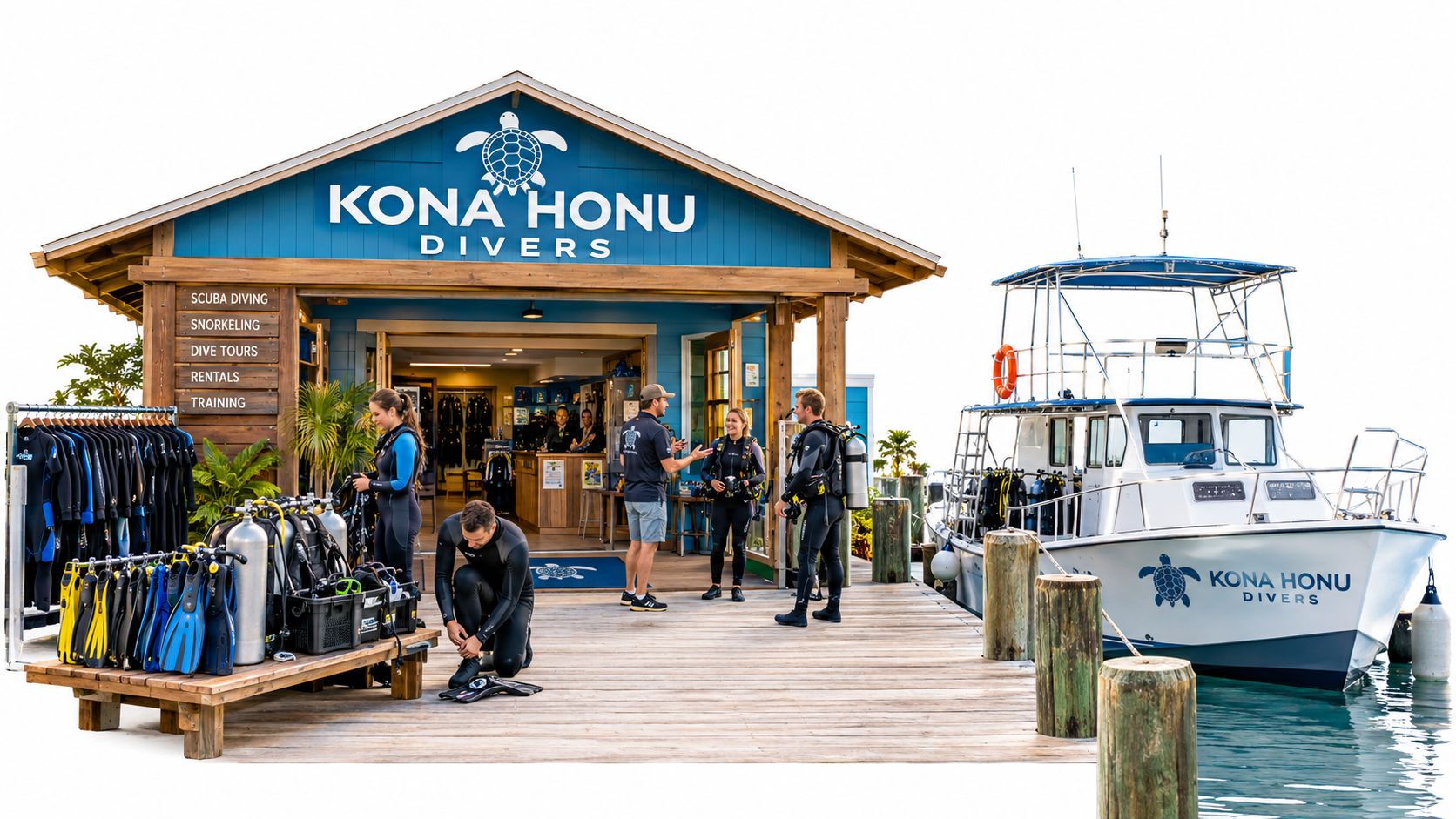
A practical match might look like this: choose a morning reef trip for a straightforward boat dive, an advanced outing if your training and recent experience fit the profile, or a manta night dive if you're certified and comfortable underwater after dark. The operator also describes custom charters for groups that need a more customized plan. Check the requirements for your exact trip rather than assuming that one certification level or package automatically covers the rest.
Choosing Your Kona Dive Shop and Booking Your Trip
Make the choice in this order. First, settle on the experience you want: a reef dive, manta encounter, blackwater outing, advanced offshore trip, or shore dive. Then check that your certification, recent dive history, and comfort level match the operator's requirements.
Next, confirm the practical details. Ask what's included, how the crew handles changed conditions, and whether the trip works for everyone in your group. Use specific answers and recent reviews to compare operators; don't let a low headline price decide for you if the trip format or extra costs don't fit.
A site change or canceled wildlife encounter can be disappointing, but it may be the right call when conditions or safety require it. Keep some flexibility in your itinerary and let the crew explain the alternative rather than pressuring them to run an unsuitable plan.
Choose the trip that matches your goals and check availability before your dates fill. That's a more reliable way to plan than booking the most dramatic-sounding dive and hoping the rest works out.
Kona Honu Divers offers reef trips, advanced dives, manta and blackwater outings, training, and options for groups mixing scuba and snorkeling. Compare the trip requirements with your certification and plans, then visit Kona Honu Divers to choose an outing and check availability.