
You've checked the forecast, packed your certification card, and started comparing Kona dive trips. The tempting assumption is that Big Island scuba diving is simple: warm water, clear visibility, and an easy reef waiting every day. The Kona coast can deliver all of that, but the ocean still makes the final decision. Winter swell can turn a comfortable lava entry into a poor choice, wind can disrupt a boat schedule, and a close manta encounter demands more discipline than excitement.
The reward is an underwater scene shaped by ancient lava flows, with arches, ledges, caverns, coral growth, turtles, eels, octopuses, and specialized night dives. Hawaiʻi Island is also the Hawaiian island most closely associated with nighttime manta-ray diving and snorkeling, a tradition that grew around coastal lights, plankton, and resident reef manta rays. The best trip isn't built around squeezing in every available dive. It's built around matching the site, conditions, and wildlife experience to your skills on that particular day.
Introduction to Big Island Scuba Diving
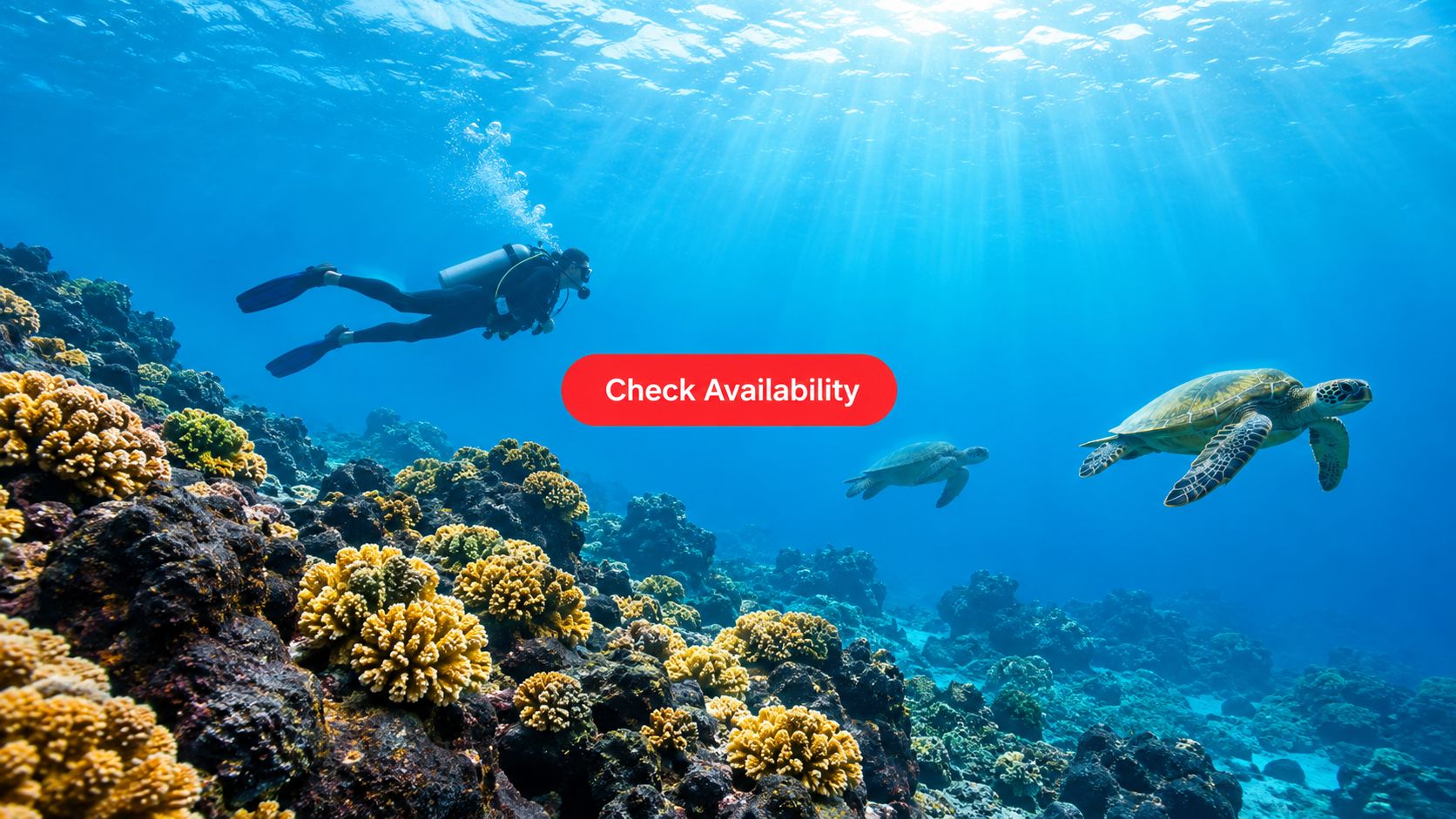
Descend off Kona on a calm morning and the first impression is often geological. Dark volcanic shelves fall away into blue water, lava formations create overhangs and passages, and coral communities occupy every sheltered surface. A turtle may settle on the bottom while an eel watches from a crevice, and the terrain keeps changing even when the depth profile feels straightforward.
The west coast's appeal comes from the combination of volcanic structure and marine life. Boat crews can choose among sites according to wind, swell, diver experience, and visibility rather than forcing every group onto one fixed location. Shore diving can be rewarding too, but lava entries require honest judgment, particularly when waves are breaking across the access point.
Daytime reef diving is only one part of the island's identity. Kona's resident reef manta rays repeatedly use established feeding stations, so encounters occur throughout the year rather than depending on a narrow migration window. The animals are primarily Mobula alfredi, and some can reach approximately 18 feet from wingtip to wingtip, according to the reference overview of Kona's manta-ray night dive tradition.
Local rule: Warm water makes exposure easier, not conditions predictable. Check the entry, the wind, the swell direction, and your own comfort before you commit.
The night operations are unusually specialized. Manta dives use surface lighting to concentrate plankton, while blackwater dives leave the reef behind and place divers in open ocean after dark. Those experiences require different equipment, positioning, and comfort levels. A diver who is relaxed on a sheltered daytime reef may still find open-water darkness demanding.
That contrast is what makes the Kona coast valuable for a broad range of divers. Beginners can develop buoyancy and marine-life awareness on a guided reef dive. Experienced divers can pursue unusual pelagic encounters. Families and mixed groups can often build an itinerary around separate scuba and snorkeling roles, provided everyone respects the conditions and the animals.
Exploring Top Reefs and Famous Night Dives
Daytime reef diving is the practical baseline. You can study lava contours, look beneath ledges, and move slowly enough to notice small subjects such as nudibranchs, eels, and shrimp. The strongest approach is to let the crew select the site rather than arriving with one rigid destination in mind. A site that was excellent yesterday may have surge or reduced visibility today.
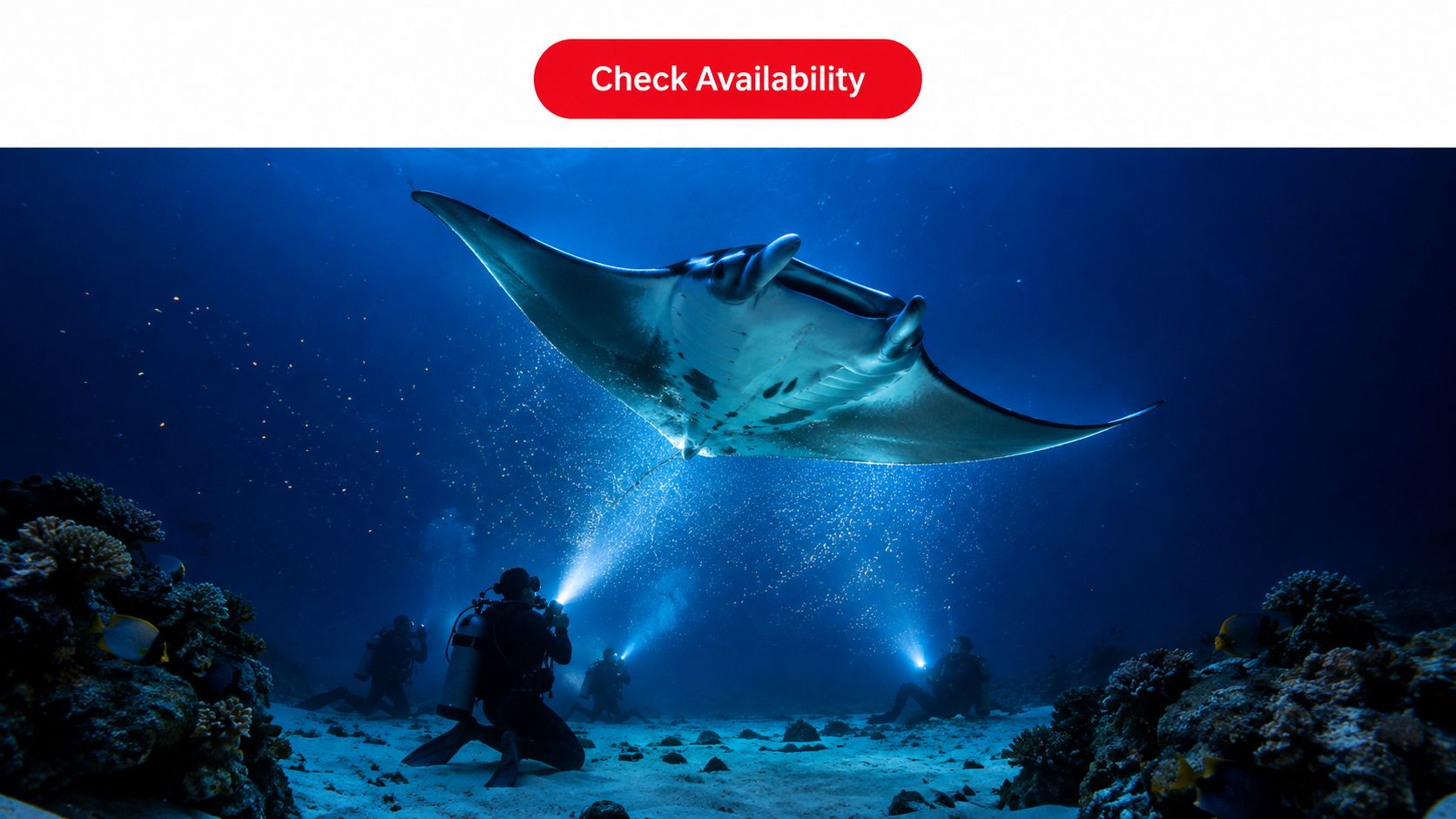
The manta dive follows a different design. Underwater lights attract plankton into a concentrated feeding area, and reef mantas make repeated passes through it. There's no baiting or chasing involved. Divers remain below while snorkelers observe from the surface, creating two viewing positions around the same feeding activity.
More than 60 individual manta rays have reportedly been photographed, identified, and cataloged through the spot patterns on their undersides, creating a long-term record of repeat visitors to local sites, as described in this Kona manta-ray identification and viewing guide. That repeat use is part of the encounter's appeal, but it also means the animals aren't interchangeable scenery. Their responses to diver movement matter.
Why Garden Eel Cove deserves careful consideration
For a manta tour, Garden Eel Cove, also known as Makako Bay, is the superior choice when the operation can use it. Its protected location can provide a more controlled setting, a better viewing area, and healthier reef structure than an exposed or poorly positioned alternative. Protection doesn't guarantee calm water, and no responsible operator should promise a guaranteed animal performance, but the site layout can improve how guests and mantas share the space.
Read the Kona manta ray dive guide before booking so you understand the difference between a genuine wildlife encounter and a passive viewing operation. The practical standard is simple: stay in position, keep your fins still, avoid touching the bottom, and let the manta choose its path.
Blackwater is not a reef dive
A blackwater dive takes place in the epipelagic zone, open water near the ocean surface, rather than over a fixed reef or seafloor. A NOAA-supported peer-reviewed study describes research based on 59 night-dive surveys near Kona, documenting salps, siphonophores, ctenophores, crustaceans, mollusks, cnidarians, pelagic fishes, worms, and larval fishes in offshore darkness. The NOAA repository study explains why this is a specialized experience: divers watch drifting midwater animals rather than swim over a familiar bottom feature.
That distinction affects the diver's workload. Blackwater rewards calm breathing, reliable buoyancy, comfort with limited visual reference, and the ability to follow the boat's procedures without improvising. It isn't the logical next step for someone who has only just completed a certification course. It is a deliberate choice for divers who already manage themselves well in open water.
Matching Dive Sites to Your Certification Level
Certification tells the crew what training you've completed. It doesn't tell them whether you've retained buoyancy control, can manage a problem calmly, or feel comfortable entering the ocean from a moving boat. Those factors should shape your booking more than the appeal of a dramatic site name.
A newer diver should start with a guided daytime reef or a calm, shallow experience selected by the crew. Focus on trim, breathing, mask clearing, controlled ascents, and staying close enough to your buddy or guide to respond without rushing. If you aren't certified, an introductory program can provide a supervised ocean experience, while an open water certification course gives you a broader foundation for future independent diving.
Dive Experience Skill Matrix
| Dive Type | Recommended Level | Key Skill Requirement |
|---|---|---|
| Guided daytime reef | Beginner to certified recreational diver | Comfortable buoyancy, buddy awareness, controlled ascent |
| Manta-ray night dive | Certified diver with night-dive comfort | Stationary positioning, low-noise movement, light discipline |
| Deeper boat reef | Certified diver with recent experience | Gas planning, depth awareness, calm exits and entries |
| Blackwater night dive | Experienced and advanced recreational diver | Self-reliance, excellent buoyancy, open-water comfort |
| Premium long-range trip | Experienced certified diver | Adaptability, sound gas management, and comfort with changing conditions |
The manta dive may look easy because the diver stays in one area, but static positioning is a real skill. A diver who constantly fin-kicks, rises into the feeding zone, or shines a light directly into an animal's path can disrupt the encounter for everyone. The University of Hawaiʻi study on manta responses and diver behavior supports the operational value of passive observation and disciplined positioning.
Nitrox requires planning, not optimism
Enriched-air nitrox can reduce nitrogen exposure at a given depth, but it doesn't eliminate decompression risk. It requires authorization, mixture analysis, oxygen-exposure planning, and a dive profile compatible with the gas. The University of Hawaiʻi Diving Safety Manual also emphasizes training in decompression physiology, gas management, emergency procedures, and omitted-decompression response.
For dives deeper than approximately 9 m, or 30 ft, the manual recommends an ascent-phase safety stop when practical. For deeper dives, it specifies a 3 to 5 minute stop between 3 and 9 m, or 10 and 30 ft, with particular emphasis on dives exceeding 18 m, or 60 ft. Treat nitrox as a planning tool, not permission to extend the bottom time beyond your computer's no-decompression limits.
Navigating Seasonal Conditions and Packing Gear
A calm-looking Kona entry can change before your fins are wet. Winter conditions can bring stronger swells and more variable winds, which may reduce visibility and make some sites difficult to enter. Summer often brings calmer conditions, according to independent Hawaii diving guidance and this best season for diving in Kona guide, but the month alone never determines whether a site is suitable.
The difference is most obvious on shore dives. A lava shelf may be comfortable with gentle waves, then become a poor beginner entry when surge breaks across it. Exposed sites respond to swell direction, wind, and the timing of each set. If reaching the water requires a struggle between powerful waves, choose a boat dive or postpone. A difficult entry can exhaust you before the descent begins and damage fragile shoreline life.
Choose the format that fits the day
Boat diving gives the crew more flexibility to leave a poor entry or localized low visibility. It also brings surface demands, including boarding, gear handling, and possible motion discomfort. Shore diving offers independence and can be excellent in calm conditions, but you remain responsible for deciding when access has become unreasonable.
Practical threshold: If you would not feel comfortable walking the entry in fins while carrying your equipment, do not expect the underwater portion to make the approach worthwhile.
Water temperature is only one packing variable. Seasonal ranges run roughly 24 to 29°C, or 75 to 84°F, so exposure protection should reflect dive duration, repeated immersions, surface wind, and personal cold tolerance. A thin suit may feel fine on one sunny dive and inadequate after several entries or a windy boat ride.
Pack for sound decisions:
- Exposure protection: Choose suit thickness for your cold tolerance and number of dives, not the calendar alone.
- Surface layers: Bring a wind-resistant layer for the boat, even when land temperatures feel tropical.
- Entry footwear: Wear suitable boots for rocky access points. Bare feet are a poor choice on uneven lava.
- Night equipment: Carry a primary light and backup, then confirm the operator's signaling procedure.
- Motion preparation: If boat movement affects you, address it before departure, before symptoms build.
For seasickness prevention, consult a qualified medical professional if you take other medication or have health conditions. Products travelers consider include the Ship-EEZ Seasickness Patch, Dramamine pills, Bonine pills, Sea Band wristbands, and ginger chews. Read labels carefully because some options can cause drowsiness.
Essential Safety Protocols and Marine Conservation
Safety and conservation overlap underwater. A diver who controls buoyancy, holds position, and manages equipment with care is easier for a guide to monitor and less likely to interfere with wildlife. That behavior improves the encounter instead of merely reducing risk.
Hawaiʻi's Division of Boating and Ocean Recreation requires a diver's flag for scuba diving and freediving in navigable state waters. For night diving between sunset and sunrise, the flag must be clearly illuminated and identifiable from at least 100 feet away, as stated in the official Hawaii diving and snorkeling requirements.
Know the flag rules before entering
The flag must measure at least 12 by 12 inches. Divers may travel underwater beyond it, but in ocean waters they may not surface more than 100 feet from the flag except during emergencies. Vessels generally must remain at least 100 feet from a displayed diver's flag, and a group of two or more divers may use one flag if every diver stays within that distance.
These rules affect both shore and boat diving. At night, visible illumination becomes part of the dive plan rather than an optional accessory. Confirm who deploys the flag, where the boat remains, and how the group will respond if a diver becomes separated.
Wildlife etiquette is active diving technique
A 2021 peer-reviewed study found that diver behavior and positioning can alter manta responses. The practical response is passive observation:
- Hold your station: Stay where the guide places you instead of drifting into the feeding corridor.
- Reduce finning: Use breathing and trim adjustments rather than repeated kicks.
- Keep hands off animals: Don't touch, chase, block, or grab a manta, turtle, or seal.
- Manage lights carefully: Follow the crew's direction and avoid turning the encounter into a chaotic light show.
- Protect the bottom: Keep fins and gauges away from coral and fragile reef surfaces.
Green sea turtles and monk seals are legally protected, and Hawaii guidance emphasizes maintaining distance rather than touching, chasing, or riding them. The Hawaii dive-site conservation guidance also reinforces the broader principle that wildlife should control the distance and duration of the encounter.
The best manta dive is not the one where a diver gets closest. It's the one where the animal keeps feeding naturally while the group remains calm and predictable.
Read the responsible diver etiquette guide before your trip. Conservation isn't a disclaimer added after the fun. It is the technique that keeps the reef intact and the animals willing to remain in the area.
Planning Your Itinerary with Kona Honu Divers
A workable Kona itinerary leaves room for conditions, recovery, and changing energy levels. Put a daytime reef dive early in the trip if you want to assess your comfort in local conditions. Reserve a night encounter for a day when you aren't already exhausted, and avoid treating a blackwater dive as an interchangeable add-on to a full schedule.
Kona Honu Divers offers two-tank local morning dives, manta-ray night dives, blackwater night dives, certification courses, and advanced long-range options. Its published business information describes custom boats, maintained gear, early diver discounts, package deals, and free nitrox for qualified divers. The crew also brings more than 200 years of combined industry experience, according to the company's supplied overview.
Build the day around the hardest activity
A sensible sequence looks like this:
- Morning reef diving: Use the first dive to settle your weighting, trim, and breathing in Kona conditions.
- Surface recovery: Eat, hydrate, and stay out of the water long enough to assess your energy accurately.
- Evening manta viewing: Choose the manta dive when you want a structured wildlife encounter with fixed positioning.
- Blackwater on a separate plan: Save open-water night diving for a day when you can arrive rested and fully focused.
That isn't the only possible schedule, but it avoids the common mistake of stacking physically and mentally demanding dives without a recovery margin. The crew can also help determine whether the day's conditions favor a local reef, a longer-range site, or postponement.
The manta business needs professional management because the principal Kona viewing areas can become crowded. In a 2022 rulemaking proposal, Hawaii's Division of Boating and Ocean Recreation estimated that 60 to 70 viewing vessels were bringing guests near feeding manta rays in those areas, as recorded in the official proposal on manta-viewing operations. That scale makes guide positioning, vessel lighting, lookout procedures, and group discipline operational necessities.
For booking details, review the Kona diving company guide and ask direct questions before paying. Confirm the meeting location, certification and recent-dive requirements, nitrox qualifications, cancellation terms, equipment inclusions, and what happens if weather makes the planned site unsuitable.
Book the experience, not just the departure time
Families and mixed groups should clarify whether nondivers can join the same outing as snorkelers. Certified divers should disclose long gaps between dives rather than hoping the issue won't arise at check-in. Advanced guests should ask about the exact skill expectations for long-range or blackwater trips, particularly buoyancy, self-reliance, recent night experience, and emergency procedures.
A good operator doesn't promise control over wild animals or the sea. It explains what the crew can manage, what remains uncertain, and how the plan changes when conditions demand it.
Final Tips for an Unforgettable Underwater Adventure
The Kona coast rewards divers who prepare for reality rather than an idealized brochure. Use this final check before you leave the dock:
- Check the conditions: Confirm swell, wind, visibility expectations, and whether the planned entry suits your experience.
- Check your body: Don't dive while dehydrated, exhausted, seasick, or distracted by a problem you haven't told the crew about.
- Check your equipment: Confirm gas, computer settings, lights, exposure protection, and backup plans before entering.
- Check your behavior: Hold position near mantas, keep your hands off protected wildlife, and protect the reef with careful buoyancy.
- Check your schedule: Leave recovery time between demanding dives and avoid rushing from the ocean to altitude.
The most memorable dive may be a turtle resting beneath a lava ledge, a manta passing overhead, or a drifting pelagic animal you couldn't have identified before the descent. None of those moments improves when a diver chases the subject, ignores surge, or pushes beyond a comfortable skill level.
Choose the site that fits the ocean and the diver you are today. With disciplined buoyancy, sensible exposure protection, and an operator that treats wildlife behavior as part of the plan, Big Island scuba diving becomes more than a checklist of attractions. It becomes a controlled way to experience a living volcanic coastline without asking the reef or its animals to absorb your mistakes.
Kona Honu Divers offers guided daytime reef dives, manta-ray night dives, blackwater experiences, certification training, and advanced long-range trips for divers who want a more specialized Kona itinerary. Visit Kona Honu Divers to review the available experiences, confirm your skill and equipment requirements, and choose a trip that matches both the ocean conditions and your goals.