
You’re probably in one of two camps right now. You’re either already certified and trying to figure out which dives in Hawaii are worth building a trip around, or you’re Kona-curious and don’t want to waste vacation days on a mediocre operator and generic reef diving.
Good. That mindset will save you time.
If you want the short version, scuba diving Kona Hawaii Big Island should be the center of your dive trip, not an afterthought. Kona gives you dramatic volcanic terrain, warm water, dependable conditions, and signature dives you can’t replicate on most tropical vacations. Done right, it’s not just a couple of boat dives. It’s an entire trip plan.
Why Scuba Diving in Kona is an Unforgettable Adventure
You giant stride in, look down, and the reef is not a flat garden fading into blue. It drops, folds, and opens up. Lava shelves stack into ledges. Swim-throughs cut through black rock. The dive already feels different before the first turtle or school of fish shows up.
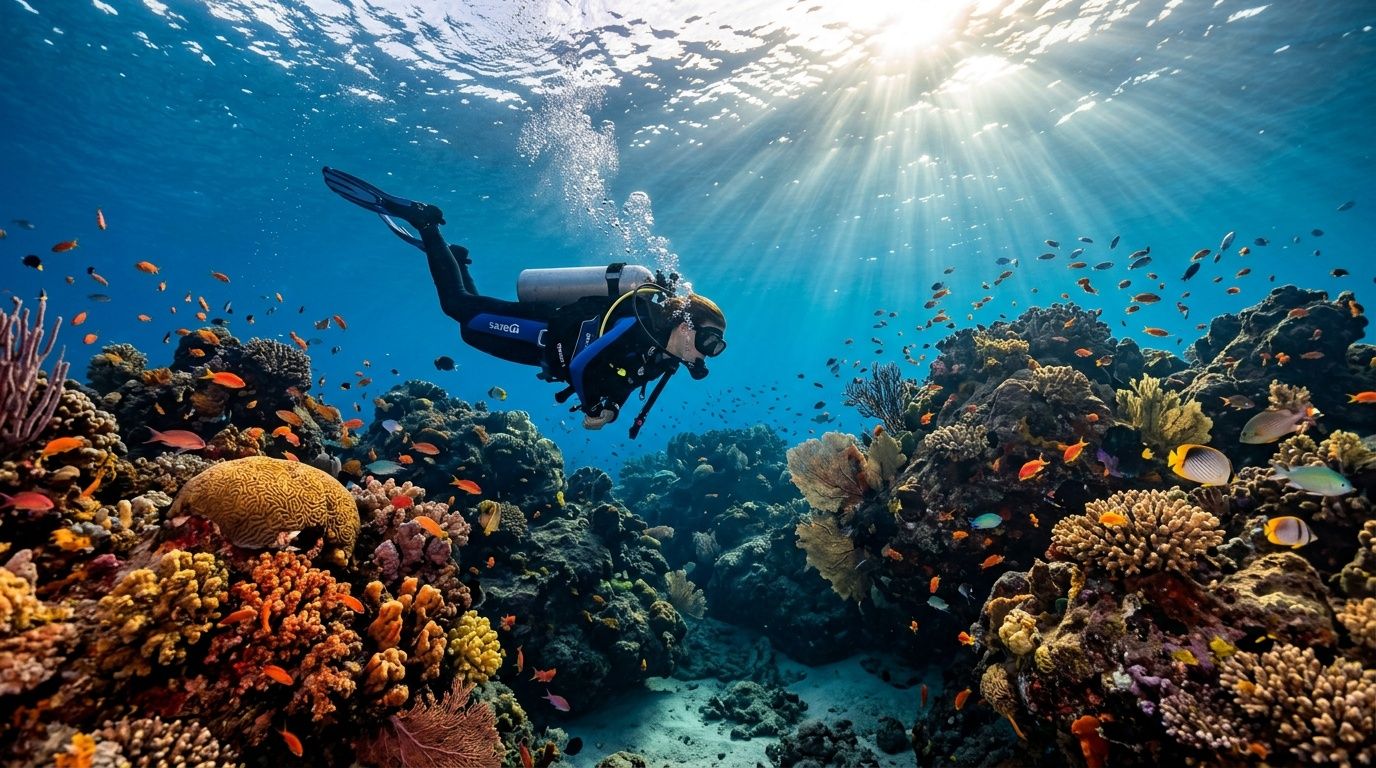
That underwater structure is the reason Kona deserves a real trip plan, not a last-minute add-on between beach days. Ancient lava flows built a coastline with arches, caverns, lava tubes, and crater-like formations across dozens of sites. This overview of what makes diving in Kona unique lays out why the terrain feels so different from the broad reef platforms divers know from other tropical destinations.
The geology gives every dive a purpose
Kona’s biggest advantage is not hype. It is shape.
A lot of warm-water destinations blur together after a few dives. Kona does not. The volcanic topography turns even a straightforward morning dive into a route with clear features, better reference points, and more dramatic light. You are not just drifting over coral and waiting for a highlight. You are moving through terrain that rewards good buoyancy, wide-angle photography, and divers who like a site with personality.
That matters for trip planning. Newer divers can enjoy easy profiles without feeling like they are seeing the same reef twice. Experienced divers get structure worth repeating. Vacation divers who only have a few boat days get more variety per outing, which is exactly what you want on the Big Island.
The conditions make Kona easy to dive well
Kona’s coast sits in the lee of massive volcanoes, and that protection often means calmer water and excellent visibility. According to this Big Island scuba diving guide, visibility on the Kona coast often pushes past 100 feet.
That changes the whole pace of a trip. Entries are usually calmer. Briefings are easier to match to real conditions. Photographers get cleaner water. Divers returning after a long break usually settle in faster here than they do in rougher, current-heavy destinations.
Marine life seals the deal. Reef fish, turtles, dolphins, and pelagic visitors all use this coastline, and Kona’s manta population gives the area a signature draw few places can match. If you want the clearest explanation of why that experience carries so much weight, read about the iconic Kona manta ray night dive.
My advice is simple. Build your Big Island vacation around the diving, then choose the dives that fit your skill level and the kind of trip you want. That is how Kona delivers the trip people talk about for years, and it is exactly how Kona Honu Divers plans days on the water.
Exploring Kona's Can't-Miss Signature Dives
If you only do generic reef dives in Kona, you’re missing the point. The coast has plenty of beautiful daytime sites, but a proper trip should include at least one signature experience that makes people book a flight in the first place.
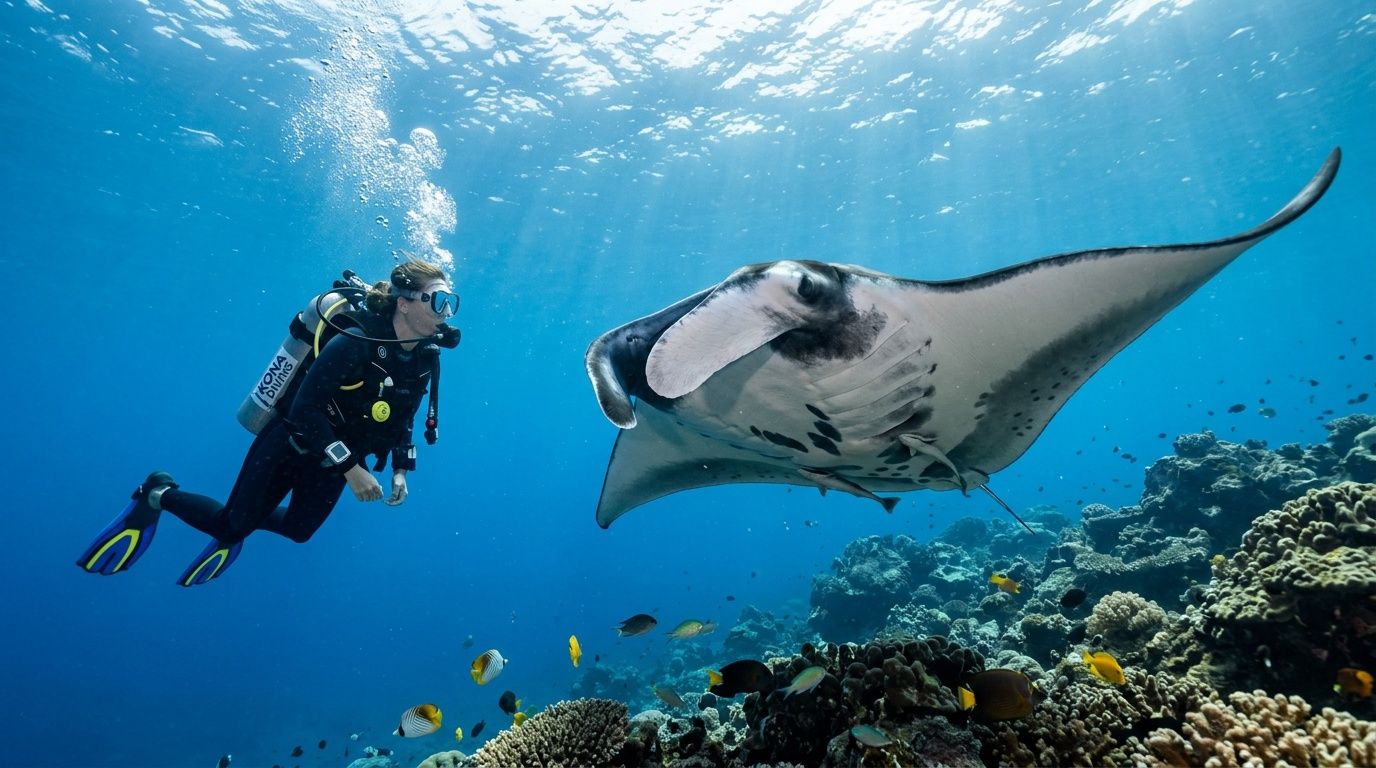
Manta ray night dive
Start with the obvious one. The manta ray night dive is famous because it earns the hype.
Divers settle in near the light field, plankton gathers, and mantas sweep overhead in repeated passes. If you want background before booking, this breakdown of the iconic Kona manta ray night dive is useful for understanding why it’s such a staple of the Big Island experience.
The site choice matters. Garden Eel Cove is the better call. It’s more protected, the viewing area is better, and the surrounding reef is stronger. That means a cleaner, calmer, more enjoyable dive for most visitors. If you’re researching the experience itself, this page explains what a manta ray night dive is.
If manta diving is on your list, book the manta ray dive tour. Don’t leave it as a maybe.
Stay low, stay still, and let the mantas come to you. Divers who chase them always get a worse show.
Blackwater night dive
This one is for divers who want something stranger and more memorable than another reef wall. Blackwater isn’t about scenery. It’s about open ocean at night, suspended over deep water, watching bizarre pelagic and larval life rise into the lights.
It’s one of the most unusual dives you can do anywhere. Some people love it instantly. Others realize they prefer structure and a visible bottom. Both reactions are fine. The key is honesty about your comfort level.
If that kind of dive sounds appealing, look at the Blackwater Dive tour. Book it because you want rare ocean life and controlled open-water hovering, not because you think you’re supposed to.
Lava tubes and arches
Kona’s third signature experience is less branded but just as important. The lava architecture is a major reason scuba diving Kona Hawaii Big Island stands apart from other Hawaii trips.
You’ll find arches, tubes, broken fingers of lava, and crater-like formations that make even a relaxed daytime dive feel exploratory. These dives are especially good for people who want variety without needing an extreme profile.
A smart approach is simple:
- Book manta first if you’re only choosing one headline dive.
- Add blackwater if you’re comfortable in open water at night.
- Use daytime lava dives to round out the trip and see the side of Kona that defines the region underwater.
Your Guide to Top Kona Dive Sites for Every Skill Level
The mistake visitors make is trying to choose sites by name alone. That’s backwards. Choose by fit. The right Kona dive site depends on your buoyancy, comfort in current, interest in marine life, and whether you want easy reef time or more ambitious terrain.
Match the dive to the diver
Beginners usually do better on sites where they can settle in quickly, stay relaxed, and enjoy the reef without task-loading themselves. Intermediate divers can handle more topographic complexity. Advanced divers should look for sites where navigation, structure, and depth access make the trip feel distinct.
Here’s a simple way to think about it.
| Kona Dive Sites at a Glance | Best For | Key Highlight |
|---|---|---|
| Turtle Pinnacle | Novice divers | Turtle cleaning station feel and approachable reef layout |
| Golden Arches | Intermediate divers | Swim-throughs and dramatic lava structure |
| Au Au Crater | Advanced recreational divers | Strong topography and the chance for blue-water action |
What each type of diver should prioritize
For newer divers, Turtle Pinnacle is the kind of site that builds confidence fast. It’s the sort of dive where people relax enough to notice the reef instead of staring at their gauges every thirty seconds.
Golden Arches makes more sense once your buoyancy is steady and you’re comfortable moving through structure without crowding it. Here, Kona starts to feel different from generic tropical diving. The lava features do the heavy lifting.
Au Au Crater suits divers who want a little more drama. It feels broader, more open, and more exposed to that blue-water edge that can turn a regular dive into something far more memorable.
Pick sites that leave you mental bandwidth to look around. The best marine life encounters happen when you aren’t overloaded.
Advanced divers should use Kona properly
Kona has another edge that doesn’t get enough attention. The island’s volcanic geology creates a rapid subsurface drop-off, which allows qualified divers to reach technical depths from recreational moorings. That’s unusual, and it matters.
If you’re already looking beyond standard reef profiles, review the broader options for Big Island diving, then consider the premium advanced long-range dive tour for more experienced diving opportunities.
The appeal isn’t just depth for the sake of depth. It’s access. Qualified divers using scooters can explore deep-water ecosystems and black coral gardens without the dedicated deep charter setup many destinations require. That changes how you plan a serious Kona trip.
Planning Your Kona Dive Trip Conditions Safety and Certification
A good Kona trip is easy to plan if you stop overcomplicating it. The first decision is not season. It’s whether you’re booking dives that match your actual experience right now, not your old certification card from years ago.
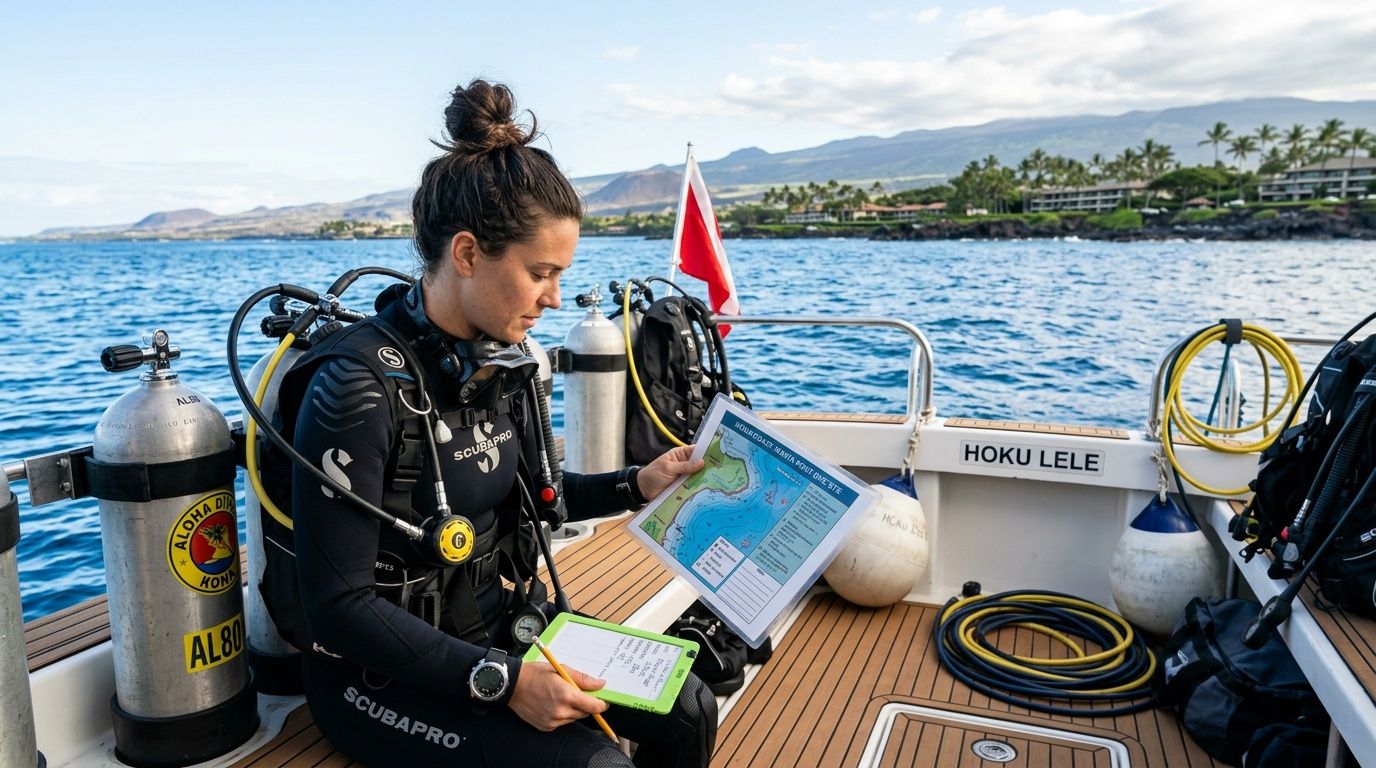
Conditions are friendly year-round
Kona gets a real operational advantage from the trade wind shadow created by the Big Island’s volcanoes. The result is year-round water temperatures of 75 to 80°F and visibility consistently exceeding 100 feet, with a 3 to 5mm wetsuit typically being enough, according to this guide on checking Big Island ocean conditions.
That means you don’t need to build your whole trip around one narrow weather window. You still need to check current conditions and boat schedules, but Kona is far more forgiving than many exposed coastlines.
A practical packing list:
- Exposure protection: Bring the wetsuit you already know you dive well in. For most visitors, a 3 to 5mm suit fits Kona’s usual range.
- Personal essentials: Mask, computer, defog, reef-safe sunscreen, towel, dry layer, and water bottle.
- Documents: Certification card and any required medical information ready before check-in.
Be honest about your current skill level
If you’re newly certified, rusty, traveling with teens, or getting back in after a layoff, choose easier day dives first. That’s not conservative. That’s smart.
If you haven’t been underwater in a while, ask for a refresher. If you’re bringing family members, keep profiles simple and save the heroic plans for another trip. Blackwater and advanced profiles can wait a day.
A refresher dive at the start of the trip is cheaper than wasting two days feeling sloppy underwater.
Seasickness is manageable if you plan for it
A lot of otherwise solid dive days get ruined before the first giant stride because people pretend they “usually don’t get seasick.” Don’t play that game. If you’re even slightly prone, prepare.
Common options include Ship-EEZ Seasickness Patch, Dramamine pills, Bonine pills, Sea Band wristbands, and Ginger chews.
Certification and training choices
If you’re not certified, a discover-style introductory dive can get you in the water under close supervision. If you are certified but rusty, a refresher is often the right first booking. If you’re already active and want more challenge, use Kona for specialty experiences rather than repeating basic boat dives all week.
The point is simple. Don’t book based on ego. Book based on how you dive now.
Why Kona Honu Divers is Your Best Choice for Kona Diving
The operator matters more than people admit. In Kona, a good crew doesn’t just drive the boat and hand you a tank. They choose the right site for the group, keep night dives organized, and make the whole trip feel sharper from check-in to final pickup.
What actually matters when choosing an operator
Forget vague claims about “amazing experiences.” Look for operational facts.
One concrete detail stands out. Kona Honu Divers has over 200 years of combined industry experience, according to the company’s about page. That matters because this coastline serves everyone from beginners taking first breaths underwater to advanced divers doing more technical profiles.
I’d judge any operator in Kona on five things:
- Crew judgment: Do they match site choice to conditions and diver ability?
- Briefing quality: Are entries, exits, and dive plans clear and specific?
- Boat efficiency: Does the day run smoothly or feel chaotic?
- Gear support: Can they handle rentals, setup, and issues without drama?
- Trip range: Can they support easy reef dives, manta dives, and advanced outings in one vacation?
For divers comparing options, the main Kona Honu Divers website lays out tours, courses, rentals, and trip planning in one place.
My direct recommendation
If your goal is to build a well-planned Kona dive trip instead of just booking random seats on random boats, this is one operator I’d put on the shortlist. They run the tours most visitors want, including manta and blackwater, and they cover training, rentals, and ongoing dive support in one operation.
That matters for mixed groups and multi-day itineraries. It also matters when plans shift and you need one shop to solve the problem instead of three.
Sample Itineraries and How to Book Your Perfect Dive Trip
You land in Kona with four vacation days, book whatever still has space, and end up doing your easiest dives first, your must-do dive on the wrong night, and your last boat too close to your flight. That is how divers waste a great destination. Kona rewards a plan.
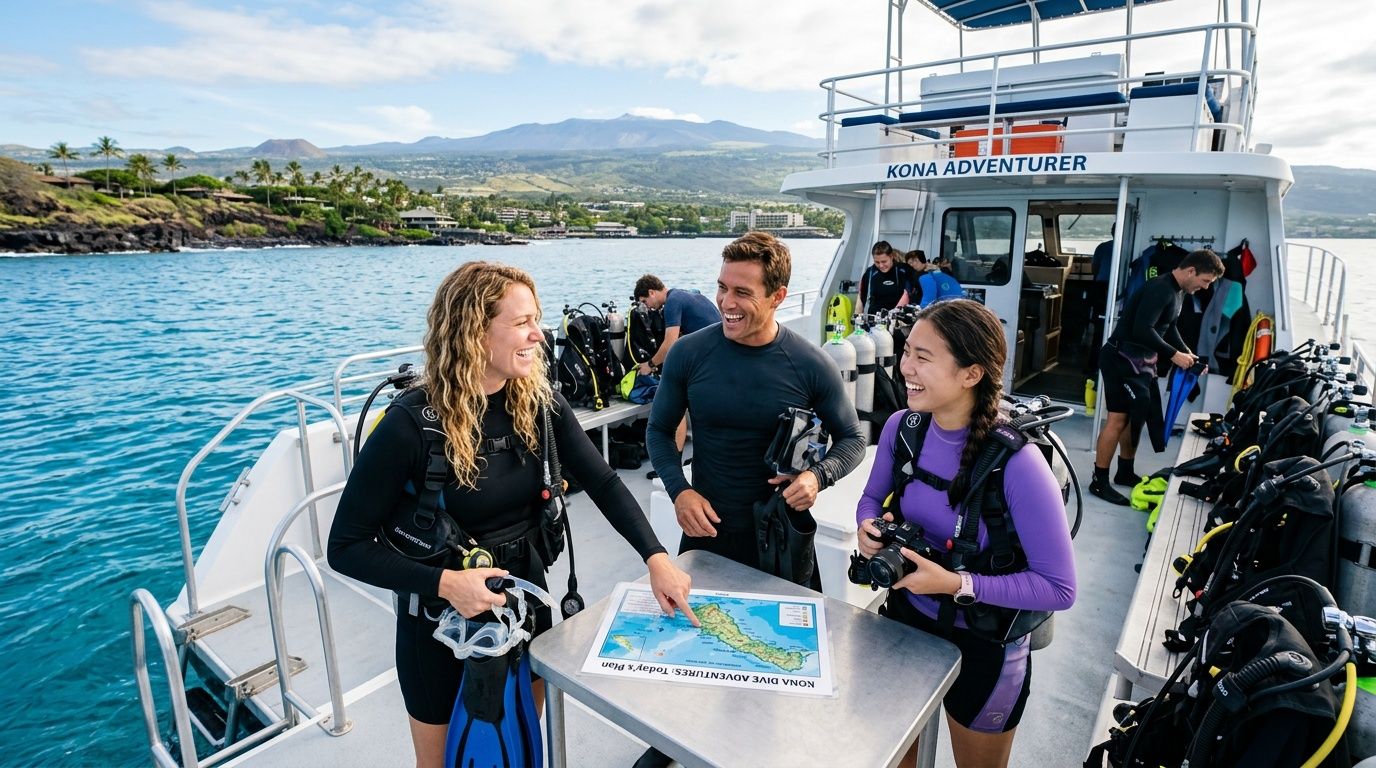
Build your trip around three things. Your skill level, your energy, and the dives that are hardest to book. Do that first, then fill the gaps with reef charters that fit your comfort level. That is the local way to do it, and it works.
Three-day weekend diver plan
Keep the first day easy. Book a daytime reef charter and use it to sort out weighting, buoyancy, and your feel for Kona conditions. If you have not dived recently, this is the day to fix that, not the night of your manta dive.
Make day two your feature dive. Sleep in, stay hydrated, eat light, and book the manta night dive.
Use day three for contrast. Another daytime charter is the smart move, especially one with lava structure, swim-throughs, and a little more topography. Current divers can choose a more demanding profile, but only if day one felt sharp.
Five-day full-immersion plan
Five days gives you room to do Kona properly instead of forcing everything into one tired blur.
- Day one: Refresher or easy two-tank reef diving.
- Day two: Signature daytime diving with lava tubes, arches, and healthy reef life.
- Day three: Manta ray night dive.
- Day four: Slow morning, then blackwater if you are confident in open ocean conditions and night diving procedures.
- Day five: Advanced charter, specialty training, or one more relaxed reef day based on how the week has gone.
That last point matters. The best itinerary is not the one with the most ambitious list. It is the one you can dive well.
How I’d book it
Use one booking hub so your schedule, waivers, rental gear, and boat times stay organized. The easiest place to start is the full Kona diving tours page.
Book in this order:
- Manta first: It is the signature experience and one of the first trips visitors ask for.
- Blackwater or advanced charters second: These are not for every diver, and space matters.
- Daytime reef dives third: These give you the most flexibility and let you match the trip to your energy and experience.
- Training or refreshers next: Add these early if anyone in your group is rusty or needs a checkout.
- Lodging last, if needed: If you are still sorting accommodations, use this guide to find the best hotel deals.
Have your details ready before you click reserve. Know your certification level, your last dive date, whether you need rental gear, and when you fly home. If your group has mixed experience levels, say that up front. Kona Honu Divers can help you build a trip that fits the least experienced diver without wasting the stronger diver’s week.
My recommendation is simple. Reserve your priority dives first, leave breathing room in the schedule, and do not stack demanding dives back-to-back just because the calendar allows it. A smart Kona plan feels smooth on vacation and better underwater.
Frequently Asked Questions About Scuba Diving in Kona
What marine life will I see besides manta rays
Plenty. Sea turtles are common, and many divers also hope for dolphins and pelagic visitors. Kona is especially interesting because of its high marine endemism, so even regular reef dives feel different from many mainland or Caribbean trips.
What should I pack for a Kona dive trip
Keep it practical. Bring your certification card, mask if you have one you trust, dive computer, towel, reef-safe sunscreen, water bottle, and a dry change of clothes. Exposure-wise, the earlier planning section covered the usual wetsuit range, so pack the suit you already dive comfortably in.
I’m not certified. Can I still try scuba diving
Yes, usually through an introductory scuba program run under close supervision. That’s the right option if you want to try breathing underwater without committing to a full course on this trip. If you end up loving it, you can always come back for certification.
Is Kona good for mixed groups
Yes, if you plan it correctly. Divers should book the priority dives first, and non-divers or lighter ocean users can plan around them. Kona works well when everyone doesn’t need the exact same boat day.
Should I shore dive or boat dive
If you know Kona entries and are comfortable on volcanic shoreline access, shore diving can make sense. Most visitors should boat dive. It’s easier, safer for unfamiliar divers, and far more efficient on a short vacation.
If you’re ready to stop comparing tabs and start diving, book with Kona Honu Divers. Pick your must-do dives first, build the rest of the week around your real skill level, and give yourself enough time to enjoy Kona properly instead of rushing through it.