
You've probably seen the photographs already: a diver below, a white-bellied manta ray sweeping through a circle of blue light, and black Pacific water disappearing behind it. In Kona, that scene becomes real after sunset. You descend to a prepared viewing area, settle above the sand, and wait while plankton gathers in the beams. Then a manta arrives, close enough to fill your mask, and the dive changes from wildlife sightseeing into a direct encounter with a resident animal.
That encounter deserves more thought than a simple question about whether the mantas will show up. Manta rays in Hawaii are not one interchangeable statewide population, and the choice of viewing site affects both the quality of your dive and the pressure placed on local habitat. The best approach combines smart site selection, calm in-water behavior, and respect for the small communities of mantas that make Kona special.
The Magic of Meeting Manta Rays at Night
The boat is quieter after sunset. Gear is already checked, the last instructions have been given, and the Kona coast becomes a dark outline behind you. Below the surface, the viewing lights turn a patch of sand into a living stage. Tiny plankton move through the beams, and the first manta often appears as a shadow before its pale underside catches the light.
A reef manta ray approaches with no drama. Its wide cephalic fins unfurl, its mouth opens, and it glides through the plankton-rich water with the control of an animal that has made this route many times before. It may roll beneath you, circle back, and pass through the light again. You don't need to chase it. The entire point is to hold position and let the animal decide where the interaction happens.
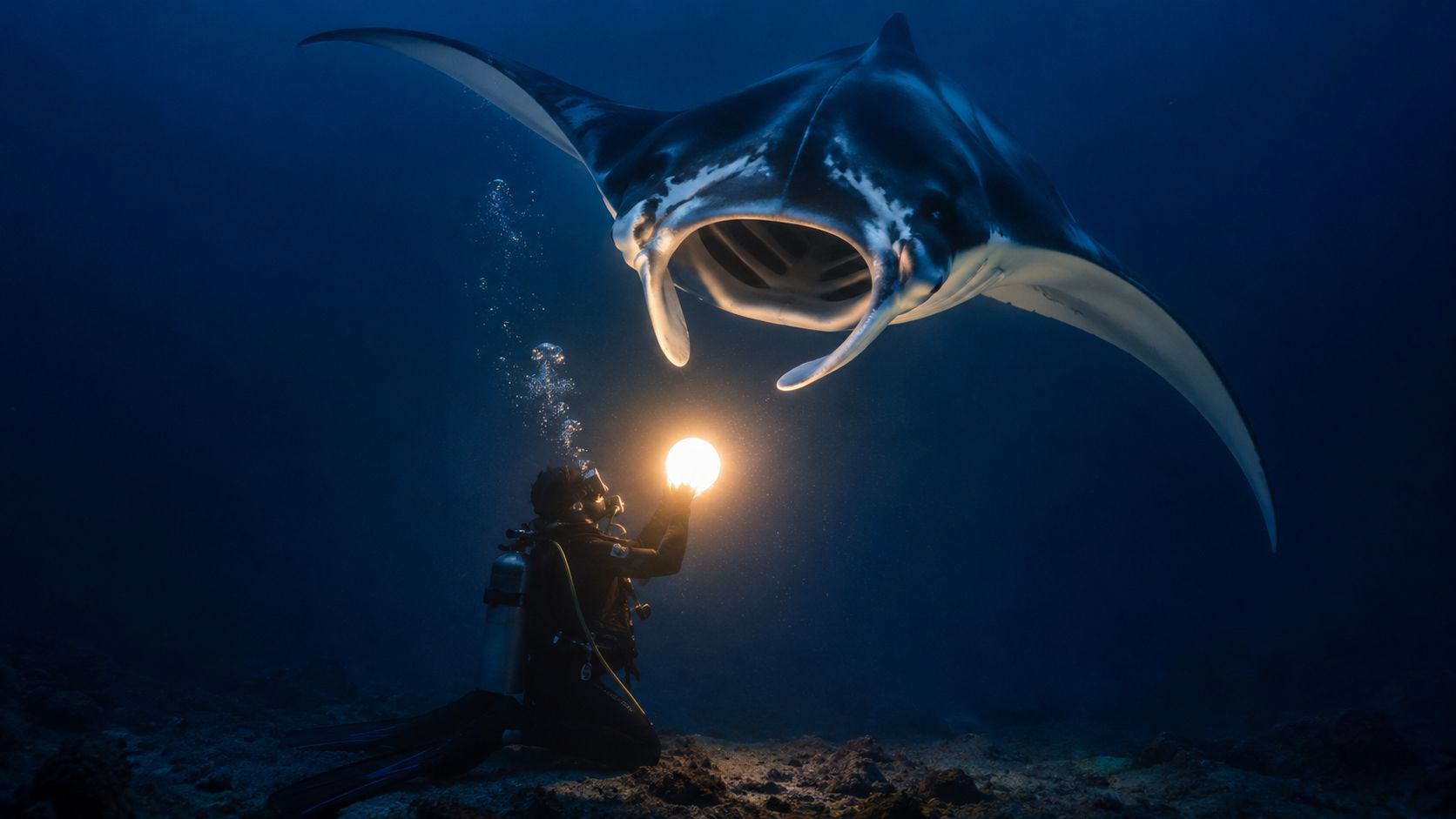
The strongest encounters usually feel unhurried. A second manta may arrive from the edge of visibility, followed by another, while the group remains fixed around the designated light area. Their apparent size can be startling, but their feeding behavior is focused on plankton, not people. A Kona night dive works because the light, the viewing position, and the animals' natural feeding behavior come together without requiring visitors to interfere.
Practical rule: The closer a manta gets, the less you should do. Stay still, keep your hands to yourself, and let the animal control the distance.
This is why the experience stays with divers long after the boat returns to shore. You aren't watching a trained performance or visiting an enclosure. You're sitting in darkness while a wild animal uses a familiar feeding area, and your responsibility is to become as unobtrusive as possible.
The wonder and the conservation lesson are inseparable. Every close pass depends on a site that remains usable, a local population that remains healthy, and visitors who understand that a successful dive isn't measured by how aggressively they pursue a photograph. It is measured by whether the mantas can feed naturally while people observe without damaging the habitat beneath them.
Understanding Manta Ray Species in Hawaiian Waters
The manta most recreational divers come to see in Kona is the reef manta ray, Mobula alfredi. This is the species documented in long-term Kona identification work and the animal associated with the established nighttime feeding sites. Its broad body, pale underside, and individual dorsal markings make it possible for researchers and experienced guides to recognize animals over repeated encounters.
Those markings matter. Photo-identification turns a memorable sighting into useful ecological information because the pattern on a manta's back can help distinguish one individual from another. A guide who knows the local animals is not just adding names to a tourist story. Consistent identification can reveal which mantas return to a site, how their site use differs, and whether encounter patterns are changing over time.
The phrase “manta rays in Hawaii” can also obscure the difference between a local reef encounter and a sighting in open water. Oceanic mantas are associated with more pelagic conditions and aren't the expected subject of a standard Kona nighttime viewing dive. For a visitor on the reef, the practical question is usually not species trivia. It is whether the animal is a resident reef manta using a familiar feeding area.
What to notice underwater
Look first at behavior, not at size. A Kona reef manta may:
- Feed in repeated passes: It moves through the light where plankton concentrates, then turns and returns.
- Roll or bank sharply: These movements help the manta keep its mouth in productive water.
- Maintain a smooth, controlled path: Sudden pursuit from divers is unnecessary and can disrupt the encounter.
- Show an individual ventral pattern: Guides and researchers use markings, especially on the dorsal side, for identification.
Mantas are filter feeders, so their feeding display can look dramatic without being aggressive. They don't have teeth or tail stingers, and their interest is in the plankton drawn into the viewing area, not in the divers observing from the bottom. You can read more about their harmless feeding anatomy in this guide to whether manta rays can sting you.
The useful distinction is simple. A reef manta encounter is a local wildlife interaction, not an appointment with an endlessly replenished supply of animals. Once you recognize that, species identification becomes part of responsible diving rather than a detail reserved for marine biologists.
Best Locations and Timing for Manta Ray Encounters
Kona's established manta sites don't produce identical dives. Garden Eel Cove and Keauhou each support nighttime viewing, but long-term observations show meaningful differences in aggregation size, sex-specific site use, and consistency.
A 13-year study of Garden Eel Cove and Keauhou recorded more than 23,000 sightings from 2010 through 2022 and identified 167 individual reef manta rays. Garden Eel Cove consistently supported larger aggregations, while Keauhou was visited predominantly by females. The same research connected changes in aggregation size with zooplankton density, so a quiet night doesn't automatically indicate a problem with the population or the habitat. The study's findings show how strongly feeding conditions shape what divers see.
| Feature | Garden Eel Cove | Keauhou |
|---|---|---|
| Aggregation pattern | Consistently larger aggregations in the long-term study | Smaller or more variable aggregations by comparison |
| Site character | Protected setting with a sandy viewing area and nearby reef habitat | Established viewing location with a long commercial history |
| Practical advantage | Easier to remain fixed over sand while watching the rays | Can provide an excellent encounter, though animal numbers vary |
| Best fit | Divers prioritizing a strong chance of seeing multiple mantas | Divers whose operator selects Keauhou based on conditions and operations |
How to choose your night
Start with the operator's planned site and current sea conditions. Garden Eel Cove is my preferred choice for a manta dive because its protected position and prepared viewing area make it easier to keep divers concentrated over sand rather than spreading across living coral. Keauhou remains a legitimate manta location, but a familiar name doesn't guarantee the same aggregation pattern on every night.
Mantas are present around Kona throughout the year, but encounter quality changes with weather, water movement, and prey availability. The long-term data show that seasonal and annual variation in plankton density affects how many animals gather. Treat that variability as part of wildlife diving, not as a failure of the tour.
The right question isn't “Which site guarantees mantas?” No responsible operator can guarantee wild-animal behavior. Ask which site offers the strongest combination of habitat, viewing position, current conditions, and low-impact procedures.
For broader planning, use this guide to where to see manta rays in Hawaii. Then confirm the actual site before departure, because experienced crews may adjust plans when conditions make one location safer or more suitable than another.
Why Local Population Structure Changes Everything
A manta appearing beneath your light can feel like a single moment, but its conservation meaning is regional. Genetic research shows that Hawaiʻi's reef mantas are organized into small, largely island-resident populations rather than one broadly mixing statewide group. Hawaiʻi Island and Maui Nui should therefore be treated as distinct management units.
Photo-identification records established minimum known populations of 318 unique individuals around Hawaiʻi Island and 600 in Maui Nui. These aren't complete census counts. The catalog totals accumulated across many years, and researchers emphasize that total-abundance estimates are not yet available. Even with that limitation, the records provide a valuable baseline for understanding the scale of the local resource. The genomic and identification study places the contemporary effective population size at about 104 manta rays around Hawaiʻi Island and 129 in Maui Nui, with confidence intervals reported in the research.
The effective population size is not the same as the number of mantas a diver might see. It refers approximately to the individuals contributing genes to future generations. That distinction matters because a site can look active while the number of adult breeders supporting long-term resilience remains limited.
What low movement means for Kona
The genetic evidence indicates exceptionally limited exchange between the island groups. The research inferred approximately one female exchange between island groups every 1,300 years and approximately one male exchange every 64 years. NOAA's summary of the findings explains the practical consequence: Hawaiʻi's reef mantas stay close to home.
For Kona divers, that changes the meaning of disturbance. An injured or displaced local manta isn't necessarily replaced quickly by an animal from Maui Nui or another Pacific population. Recolonization from neighboring islands is unlikely on the timescale that matters to an operator, a photographer, or a community protecting a feeding site.
This is why local identification programs and standardized photographs are useful. A record with the date, site, sex, dorsal pattern, and environmental conditions can contribute more than a casual count of how many animals appeared during one dive. It helps separate short-term encounter variation from meaningful changes in site use.
The conservation message is direct: a busy manta site is still a finite local habitat. Visibility at the light circle should encourage restraint, not confidence that the population can absorb unlimited pressure.
Garden Eel Cove as the Superior Manta Dive Destination
Garden Eel Cove is the stronger choice when the goal is a high-quality Kona manta dive with a practical conservation setup. The long-term comparison of Garden Eel Cove and Keauhou found that GEC consistently supported larger aggregations, making it more likely that divers will see multiple animals moving through the feeding area. The reason isn't popularity alone. The site provides habitat conditions that work for both manta behavior and controlled observation.
Its protected setting helps reduce the underwater workload for divers. A sandy viewing area gives everyone a clear place to settle, while the nearby reef remains something to avoid rather than a platform to occupy. That distinction becomes important at night, when poor buoyancy, limited visibility, and excitement can lead guests to kick or kneel in places they wouldn't touch during a daytime reef dive.
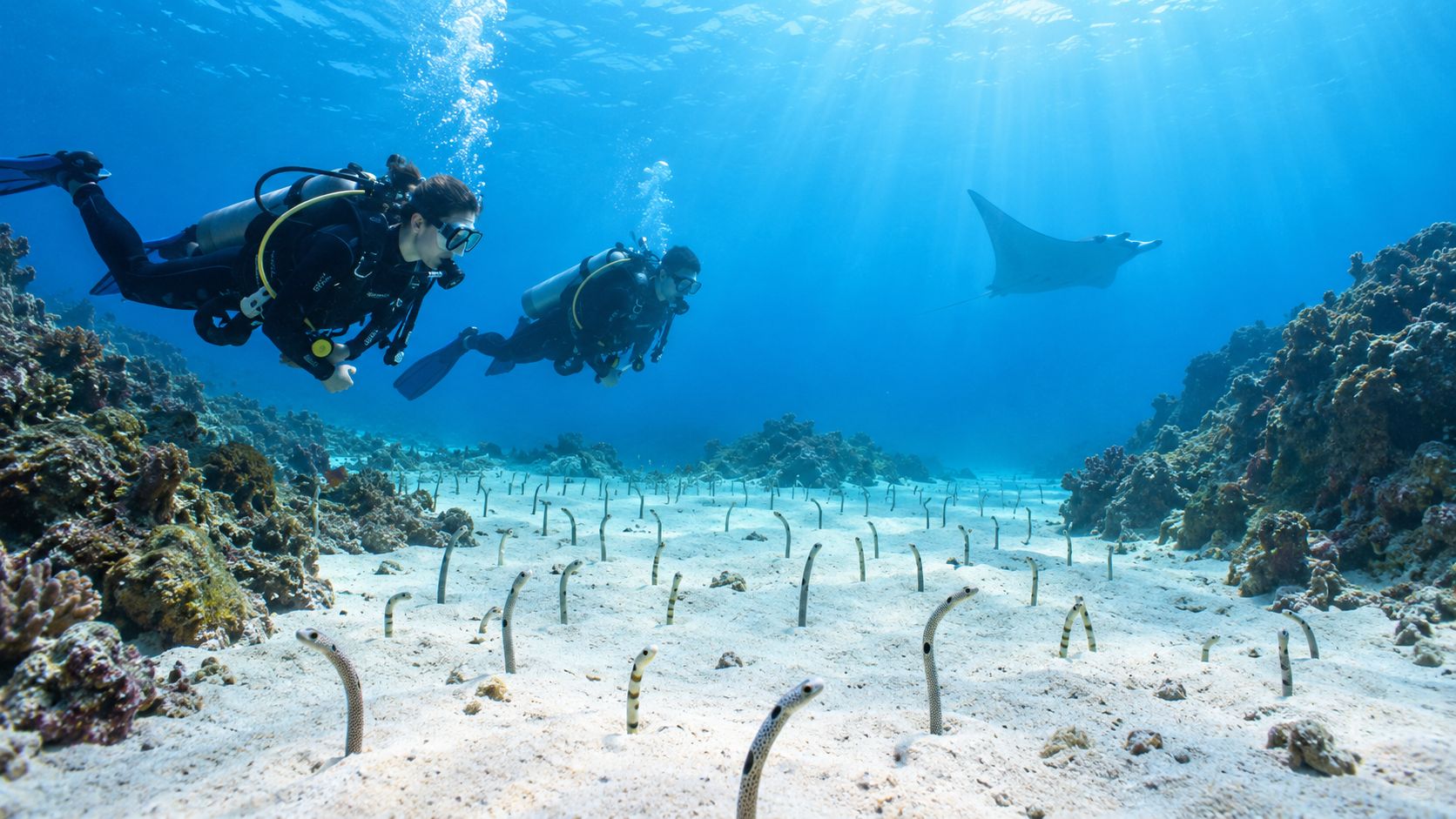
Why the physical layout matters
NOAA guidance directs operators and guides to place lights over sand or rubble, leaving enough room that participants don't have to sit on live coral. The manta-viewing guidance also calls for a briefing and a designated light circle. Garden Eel Cove naturally supports that arrangement better than a site where guests need to spread across uneven reef structure.
The result is a useful alignment of priorities:
- Better viewing: Larger aggregations improve the chance of seeing several mantas during one dive.
- Better positioning: Divers can remain stationary over sand instead of drifting onto coral.
- Better photography: A fixed position gives photographers time to frame a pass without pursuing the subject.
- Better instruction: Guides can manage a defined viewing area and keep the group organized.
Keauhou still has value. It has a long history of manta viewing, and conditions or operational decisions may make it the appropriate site on a particular evening. But if both locations are available and the objective is the most reliable combination of aggregation size, protected geography, and viewing-area quality, Garden Eel Cove has the stronger case.
You can compare the practical considerations in this guide to the best place to dive with manta rays. The important point is not to treat GEC as a stage built only for visitors. It is feeding habitat first. A good tour uses the site without asking the mantas or the reef to absorb unnecessary contact.
What to Expect on Your Kona Manta Night Dive
The evening starts with a briefing, not with an immediate jump into black water. Your divemaster explains the route, hand signals, buoyancy expectations, and the no-touch rule. That preparation matters because excitement can make even experienced divers forget that the best manta interaction is a stationary one.
After the boat reaches the site, you enter the water and descend to the prepared viewing area. The lights are positioned over sand or rubble, where they attract plankton and create the feeding zone. Divers sit or kneel only where instructed, keep their equipment controlled, and face the light circle rather than swimming around looking for animals.
The first pass may be quick. The next one could bring the manta directly overhead. Reef mantas commonly use smooth turns and repeated approaches while feeding, so the show develops through observation rather than pursuit. Keep your breathing steady and your body low in the water column. If a manta changes direction, let it go.
A better way to photograph the encounter
Underwater photographers often lose the best frame by trying to create it. Wide-angle composition, slow breathing, and patience work better than swimming toward the animal. Set your camera before the mantas arrive, keep strobes or lights under control, and leave the animal a clear path through the viewing area.
Don't use your camera as an excuse to block another diver. A manta may pass over the group, bank toward the light, and disappear before returning. That unpredictability is part of the encounter, and it rewards divers who watch the whole scene instead of staring only at a screen.
Mantas are filter feeders and lack teeth and tail stingers, so their open mouths can look more threatening than they are. Their behavior remains wild, however, and normal ocean risks still apply. A guide's instructions about entry, descent, buoyancy, and exit are as important as the wildlife briefing.
Underwater habit: Pick a position, settle your buoyancy, and let the manta do the traveling.
A successful dive doesn't require a dramatic touch, a chase, or a perfect photograph. It requires enough calm for the animal to continue feeding naturally while you remain an observer.
Safety Guidelines and Conservation Rules
The rules around manta viewing are simple because the situation doesn't need complicated handling. NOAA guidance calls for operators, guides, crew, and other personnel to provide clients with a manta-viewing guide and instruct them to follow it. Divemasters and videographers direct divers to the designated light circle, where lights should be placed over sand or rubble with enough room to keep participants off live coral.
Hawaiʻi state aquatic-resources guidance tells people who encounter an oceanic manta ray not to disturb its natural behavior by touching or chasing it. State regulations also make it unlawful to intentionally or knowingly capture or entangle any shark or ray, alive or dead, or to kill one in state marine waters. Hawaiʻi's shark and ray guidance explains the behavior visitors should follow.
Your in-water checklist
- Stay in the assigned position: The viewing circle exists to protect the reef and keep divers predictable.
- Keep your hands off the mantas: Don't reach, grab, block, or attempt to guide an animal.
- Never chase a passing manta: Let it leave the light circle without following.
- Protect the bottom: Maintain buoyancy and keep fins, knees, cameras, and tanks away from live coral.
- Follow the briefing: Guides manage spacing, lights, entries, and exits for a reason.
- Use lighting thoughtfully: Don't add disruptive flashes or uncontrolled beams near feeding mantas.
The no-touch rule protects more than the animal's immediate comfort. A diver who reaches upward can alter the manta's path, interrupt a feeding pass, and encourage others to move closer. Repeated disturbance at a local aggregation site has a different significance when the animals belong to a small, island-associated population.
Garden Eel Cove makes compliance easier because its sandy viewing area lets the group observe without spreading across fragile reef. That doesn't make the site impact-free. It makes good behavior more manageable, which is exactly what a responsible operator should seek.
Read the full principles in this guide to responsible and considerate diver etiquette, then treat the briefing as part of the dive itself. The goal is not merely to avoid a violation. It is to leave the feeding area functioning as it was before you entered.
Practical Tips for Booking Your Manta Dive Experience
Choose the tour around the experience you want, not just the word “manta” in the itinerary. A snorkeler may prefer a surface light board and a crew focused on flotation and comfort. A certified diver may want a controlled bottom position, more direct access to the feeding area, and a guide who can manage buoyancy, equipment, and photography in darkness.
Ask the operator several practical questions before booking:
- Which site is planned: Garden Eel Cove is the preferred option when a protected location, larger aggregations, and a sandy viewing area are priorities.
- What happens if conditions change: The crew should explain how it chooses a safe alternate plan without promising guaranteed wildlife behavior.
- How is the group positioned: Look for a defined light circle and clear instructions that keep guests off living coral.
- What equipment is included: Confirm rental gear, exposure protection, and any nitrox arrangement before arrival.
- Who is supervising the dive: A divemaster should remain responsible for the group, not leave guests to manage themselves around the lights.
Kona Honu Divers offers a two-tank manta night dive that combines a twilight reef dive with a guided nighttime manta dive at Garden Eel Cove, as well as manta snorkeling for guests who want to remain at the surface. The company also describes maintained rental equipment, complimentary nitrox, and professional divemaster guidance as part of its diving operations.
For photographers, preparation pays off more than expensive equipment. Use a wide-angle setup if you have one, check your focus and exposure before entering the water, and tell the divemaster what you plan to do. A camera should support good positioning, not turn you into a moving obstacle.
Match the trip to your comfort level
New divers should prioritize a calm briefing, close supervision, and a site where the group can remain stationary. Experienced divers may care more about composition, bottom time, or combining the manta dive with a separate reef itinerary. Snorkelers should be honest about their comfort in open water at night and follow the crew's flotation instructions without trying to swim after the mantas.
Pack a swimsuit, a towel, and a warm layer for the boat ride home. If you are prone to seasickness, address that before boarding rather than waiting until the boat is underway. Above all, leave room in your expectations for a wild encounter. Even at a productive site, the mantas choose the timing and the path.
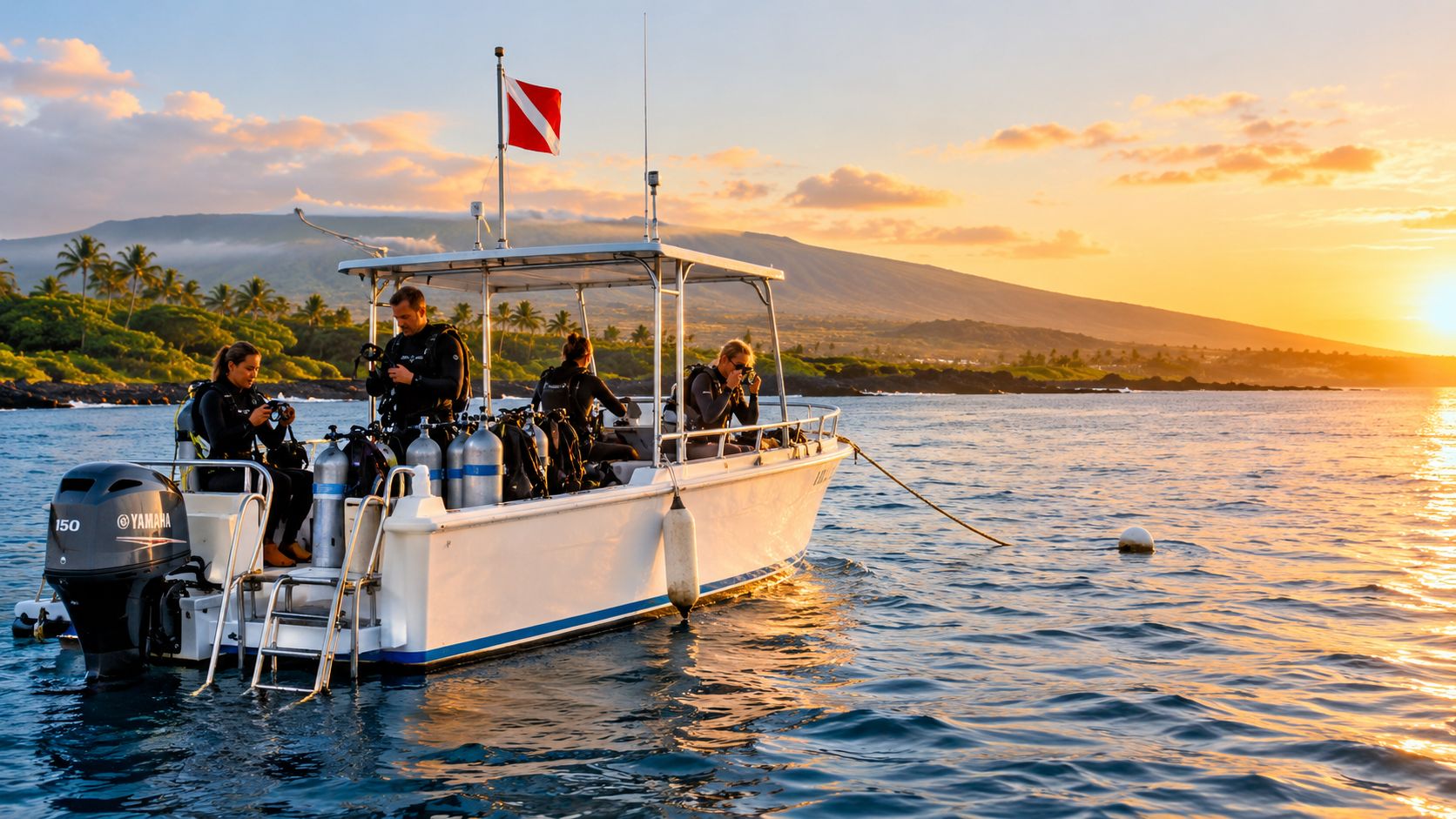
Kona Honu Divers offers guided scuba and snorkeling manta experiences at Garden Eel Cove, with a focus on prepared viewing areas, professional guidance, and low-impact encounters. Visit Kona Honu Divers to review the manta options and choose a trip that fits your certification, comfort level, and plans for exploring Kona's underwater life.