
You're probably deciding whether a manta ray night dive snorkel is really worth getting into cold, dark water for. The short answer is yes, provided you know what the experience involves. This isn't a free-swimming adventure where you chase wildlife across the reef. It's a controlled, surface-based observation of resident reef manta rays feeding beneath lights.
The most memorable trips are also the most disciplined. You'll float calmly, hold your position, share space with other guests, and let the mantas decide how close they want to come. Once you understand the crowding, lighting, entry, and etiquette realities, the experience becomes less intimidating and much more rewarding.
What Makes a Manta Ray Night Encounter Magical
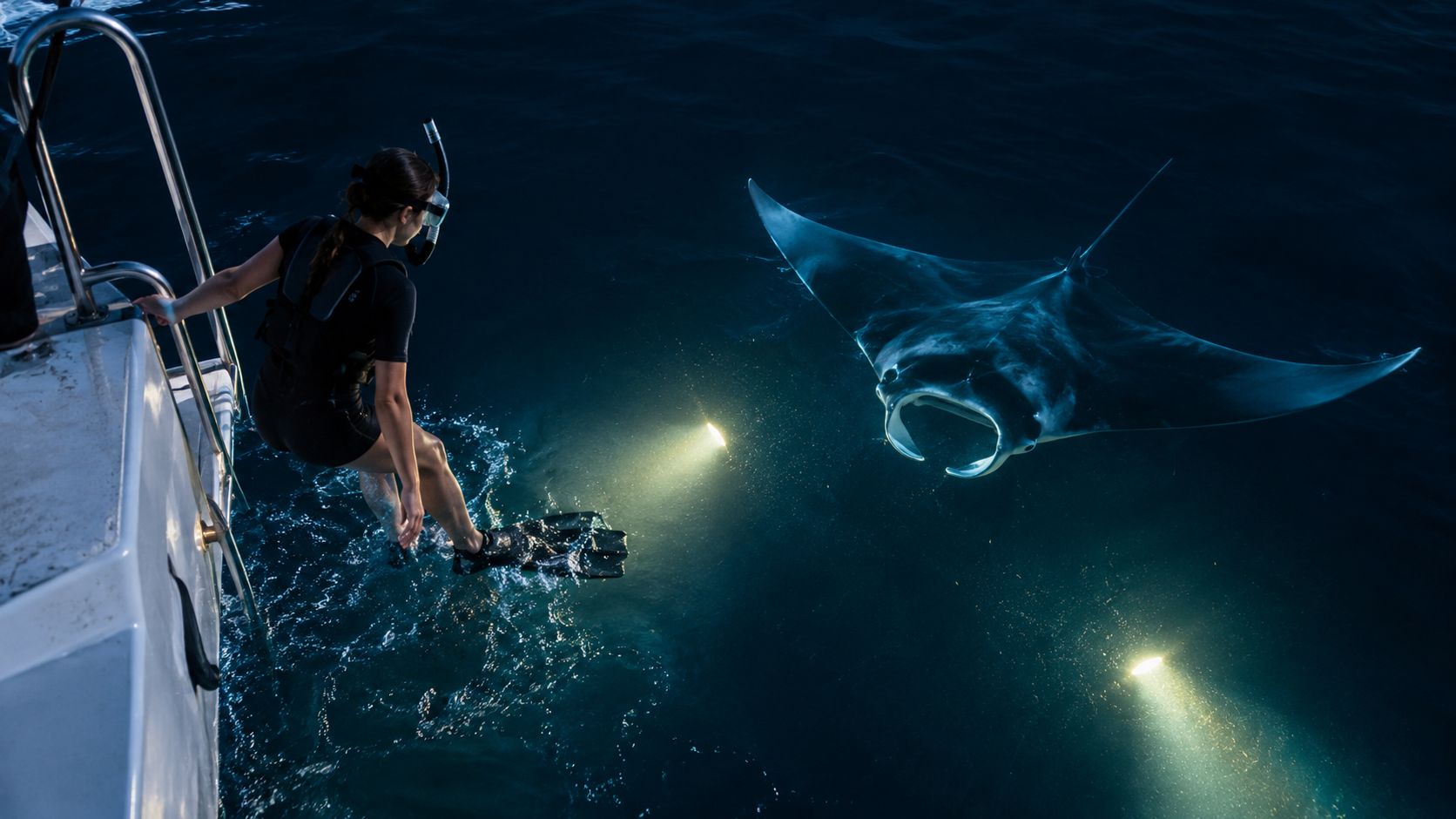
The boat deck is warm, bright, and busy with final checks. Then you enter the water, and the atmosphere changes immediately. The ocean turns black beneath your mask, the coastline becomes a distant outline, and the only clear reference point is the pool of light beneath the floating board.
A manta ray appears as a shadow first. It glides through the illuminated water with its mouth open, turns without a sound, and disappears into the darkness before returning on another pass. The movement feels close and immense, but the animal isn't performing for swimmers. It's feeding in a habitat it already knows.
A recurring feeding habitat
Kona's encounter sites are supported by unusually consistent observation data. A six-year study conducted from January 1, 2009, through December 31, 2014, recorded 25,444 manta observations involving 118 individually identified rays at Manta Heaven and Manta Village, according to the NOAA-hosted manta ray study.
Researchers recorded mantas on 92% of survey nights at Manta Heaven and 78% at Manta Village, so the experience isn't based only on an occasional seasonal arrival. The data also showed strong attachment to particular sites. One individual appeared on more than 56% of study nights, while other identified rays returned regularly across the observation period.
That reliability changes the feeling of the trip. You're not just hoping to spot a passing animal. You're visiting a recurring feeding area where a recognizable population repeatedly gathers after dark. A Kona manta ray diving guide offers more background on why these nighttime encounters have become such a distinctive part of the Big Island's marine experience.
How the Night Snorkel Science Works
The lights don't tame the mantas, and they don't feed them directly. They concentrate the tiny organisms that the mantas already eat. Once those organisms gather in the illuminated water, the rays make repeated passes through the food-rich area.
The food chain beneath the lights
Giant manta rays are filter feeders. Their diet includes zooplankton in several size ranges, from approximately 51 to 100 micrometers, 101 to 500 micrometers, and organisms larger than 500 micrometers, as described in research on manta feeding mechanics and filtration published in a marine biology study.
The rays swim with their mouths open and direct water across specialized filtering structures. Those structures separate food particles while allowing a high volume of water to pass through. The result is a feeding pattern that looks choreographed to people watching from above, but it's a practical response to where prey has concentrated.
Tour operators use stable, downward-facing lights because random beams carried by individual swimmers don't create the same consistent feeding area. Snorkelers gather around a lighted board at the surface, while divers use lights from below. In both cases, the goal is to create a localized prey field and then stay still enough for the mantas to feed.
The useful mindset: The lights attract plankton, not manta rays directly. The mantas arrive because the plankton are there.
Why passive observation works
A manta may pass close to your mask, but that doesn't mean it wants contact. It's following food, turning through the light, and adjusting its path according to other mantas, divers, snorkelers, and the density of plankton.
Chasing the animal usually makes the encounter worse. Sudden finning can scatter the feeding interaction, force a manta to change direction, and increase the chance of a collision. Staying predictable gives the animal room to maneuver and gives you a better view.
The Kona diving environment is especially suited to this kind of observation because operators can establish fixed viewing areas rather than sending guests into an uncontrolled search pattern. That distinction matters. A good night snorkel doesn't bring the wildlife to you by force. It creates favorable conditions and leaves the animal in control.
Night Snorkeling vs Scuba Diving Differences
The choice between snorkeling and scuba comes down to where you're positioned, how you breathe, and how comfortable you are managing equipment in darkness. Both options observe the same feeding behavior, but they don't feel the same in the water.
| Experience Level | Depth | Breathing | Best For |
|---|---|---|---|
| Beginner-friendly, with confidence in open water | Surface | Mask and snorkel | Families, non-divers, and guests who prefer a supported float |
| Certified recreational diver | Near the bottom | Scuba regulator | Divers who want to look upward through the water column |
Why snorkeling suits many first-timers
A snorkeler stays at the surface and usually holds a flotation board or similar support. You don't need scuba certification, and you aren't managing a tank, regulator, buoyancy control device, or descent. That makes snorkeling the simpler option for families, anxious swimmers, and people who want to observe without committing to a full dive.
You still need to be comfortable entering the ocean at night. The guide may help with positioning and flotation, but you'll need to follow instructions, keep your face in the water for viewing, and avoid kicking unpredictably around other participants.
Snorkeling also gives you a direct overhead view. Mantas rise into the illuminated zone and may pass beneath the surface group, which makes the encounter feel immediate and close.
Why divers choose the bottom position
Scuba divers settle near sand, rubble, or boulders and look upward. This creates an open water corridor for the mantas and gives divers a different perspective as the rays roll above them. The position feels calmer for certified divers who are already comfortable breathing from a regulator in low light.
Scuba requires more preparation. You'll need the appropriate certification and enough comfort with buoyancy, fin control, and underwater communication to remain settled while other divers share the viewing area. The snorkel or dive decision guide can help you match the format to your experience rather than choosing based only on how close the animals appear.
What to Expect Before and During the Dive
The evening usually starts before anyone enters the water. At check-in, the crew confirms your participation, fits your equipment, and explains how guests will board and move around the boat. Listen carefully during this part. The details may seem routine on the dock, but they become important once the deck is dark and wet.
You'll receive instructions on where to sit, when to enter, how to hold the flotation equipment, and what to do if you need to leave the water. The crew should also explain how the boat is positioned and how the guide will organize the group at the viewing area.
From harbor to viewing station
The captain selects a safe position near the established feeding area and manages the vessel while guests enter. This isn't the moment to jump ahead of the group or swim away from the designated lights. A fixed viewing zone gives the crew a clear picture of where people are and helps maintain separation between swimmers, divers, and the boat.
Once you're in the water, the initial minutes can feel anticlimactic. You may see illuminated plankton before you see a manta. That waiting period is part of the process, not a sign that the trip has failed. The animals approach when the feeding conditions suit them.
A typical observation session begins shortly after sunset, around 6:00 p.m., and lasts approximately one hour, based on the long-term Kona observation study available through NOAA. Actual tour timing depends on the operator, sea conditions, vessel logistics, and how long guests remain comfortable in the water.
What the guide manages
The guide watches the group rather than focusing only on the mantas. They'll correct drifting swimmers, help guests adjust their position, and prevent one person from pushing into the viewing lane. If you need assistance, use the agreed signal instead of swimming across the group.
After the session, you'll climb back aboard, return equipment, and warm up with a towel or dry layer. The ride back can feel cooler because you're wet and exposed to nighttime wind. Many guests then review photos, compare sightings, and realize that the most impressive moments happened during the quiet pauses between passes.
Safety Protocols and Wildlife Etiquette
Wildlife etiquette is not a polite extra added to the safety briefing. It's the system that keeps the animal, the guests, and the boat out of one another's way.
NOAA guidance recommends that snorkelers remain at the surface rather than descending into the mantas' feeding path. Divers should stay close to sand, rubble, or boulders, leaving the open water above them available for the animals. Snorkelers point lights downward, while divers hold lights overhead and avoid releasing bubbles directly into a manta's path. These practices are outlined in NOAA's manta encounter guidance.
Position matters more than proximity
A manta approaching you doesn't give you permission to move closer. Keep your body predictable, control your fins, and allow the animal to turn away without pursuit. Don't touch, grab, ride, or block a manta, even if it comes within inches of your mask.
The animals can feed in shallow water below 10 meters, and they may use barrel rolls or feeding chains while moving through the illuminated area, according to NOAA's conservation and management information. That behavior makes open space essential. A swimmer who dives downward can enter the same lane the manta is using to turn.
The human crowd is a real variable
A biologically excellent encounter can still feel stressful if the group is poorly managed. Research on participant experience found that 79% of snorkelers and 53% of scuba divers reported conflicts with other participants, including bumping, weak spatial awareness, and lights shining into other guests' eyes. The same research found that 78% felt crowded by boats, 82% by snorkelers, and 69% by divers. These figures come from the 2010 social survey of manta ray tour participants.
That's why spacing, light control, and fin awareness matter so much. A flotation ring or similar support is particularly useful for larger groups, and an in-water guide can prevent a nervous swimmer from drifting into another person's face or the manta's path.
Practical rule: Don't compete for closeness. Hold your position and let the feeding pattern bring the manta into view.
Choosing the Best Site in Kona
For travelers comparing manta sites, Garden Eel Cove is the stronger choice when dependable viewing is the priority. The site is also known as Manta Heaven, and its protected location, established viewing area, and reef setting make it an appealing choice for a dedicated manta excursion.
A 2025 University of Hawaiʻi study examined 13 years of community-sourced observations from 2010 through 2022 at Garden Eel Cove and Keauhou. The researchers analyzed more than 23,000 sightings involving 167 individual reef manta rays, as reported in the University of Hawaiʻi study record.
Why Garden Eel Cove gets the edge
The study found that Garden Eel Cove consistently supported larger manta aggregations than Keauhou. It also found that aggregation size closely followed zooplankton density, which means food availability is a major factor in determining how many mantas gather at a site.
That evidence supports a practical booking preference. If you want the strongest chance of seeing a substantial feeding group, prioritize an operator that regularly uses Garden Eel Cove and has a clear plan for managing the viewing area. A protected location and better viewing layout can also make a difference when several groups are in the water.
Keauhou remains an established feeding site with its own long record of observations. The right choice can depend on harbor logistics, weather, availability, and the operator's safety standards. Still, Garden Eel Cove is the superior pick for a tour specifically built around reliable manta viewing and a quality reef environment.
Essential Packing List and Gear Tips
Pack for two conditions: a comfortable tropical swim and a cool boat ride after dark. The water may feel manageable while you're moving, but floating still for an extended period can make you colder than expected.
Bring these items
- Swimsuit: Wear it under the wetsuit so you can change quickly before boarding.
- Warm layer: A hoodie, sweater, or windbreaker helps on the return journey.
- Towel: Keep it in a dry bag or protected storage area until you're back aboard.
- Reef-conscious sunscreen: Apply it before entering the water and follow the operator's guidance on acceptable products.
- Waterproof camera: A compact camera or action camera can capture the light beams, but darkness makes stable framing difficult.
- Dry valuables storage: Leave jewelry and unnecessary electronics at the accommodation when possible.
Tour companies commonly provide masks, snorkels, flotation equipment, and wetsuits, but confirm inclusions before departure. A properly fitted mask matters more than bringing expensive personal equipment. If you own a comfortable set, review this guide to choosing a snorkel set before deciding whether to use it.
GoPro footage often looks worse than expected because the scene is dark and the animals move quickly. Keep the camera pointed toward the feeding zone, avoid waving it through the group, and don't let filming pull you out of position. A manta encounter is better experienced with your eyes than spent entirely checking a screen.
Frequently Asked Questions
Can you touch a manta ray?
No. Manta rays have a protective surface layer, and contact can damage it. Don't reach toward an approaching animal, even when it slows down or turns directly above you.
Is the experience safe for children?
It can suit confident young swimmers who follow instructions and are comfortable in open water after dark. The key issue isn't whether a child can swim in a pool. It's whether they can remain calm, hold position, use the flotation support correctly, and avoid climbing over other participants to get a better view.
What if you get seasick?
Tell the operator before departure and consider a preventative that you've used safely before. Options available for purchase include the Ship-EEZ Seasickness Patch, Dramamine pills, Bonine pills, Sea Band wristbands, and ginger chews. Medication can affect alertness, so check the label and ask a medical professional if you're unsure whether a product is appropriate.
Are manta sightings guaranteed?
No responsible operator can guarantee a wild animal encounter. Kona's long-term records show recurring use of the established sites, including observations on 92% of survey nights at Manta Heaven and 78% at Manta Village in the six-year NOAA study linked earlier. That supports a strong expectation of regular activity, not a promise for every individual trip.
Is this a scuba dive or a snorkel?
It can be either. Snorkelers stay at the surface around a lighted board, while certified divers settle near the bottom and observe the mantas from below. Choose the format that matches your water confidence and experience, not just the one that sounds more adventurous.
Kona Honu Divers offers guided manta ray night snorkel and scuba experiences with surface flotation support, custom light boards, and crew-managed positioning for this after-dark encounter. Visit Kona Honu Divers to review the available manta tours and choose the option that fits your experience and comfort in the water.