
Picture this: you're floating in the warm, dark Pacific Ocean. Suddenly, a shadow emerges from the gloom, growing larger and larger until a colossal, gentle giant glides silently overhead, its massive wings spanning the width of a small car. This isn't a dream—it's the world-famous manta ray night dive in Kona, and it's an experience that will stay with you forever.
An Underwater Ballet Fueled by Light
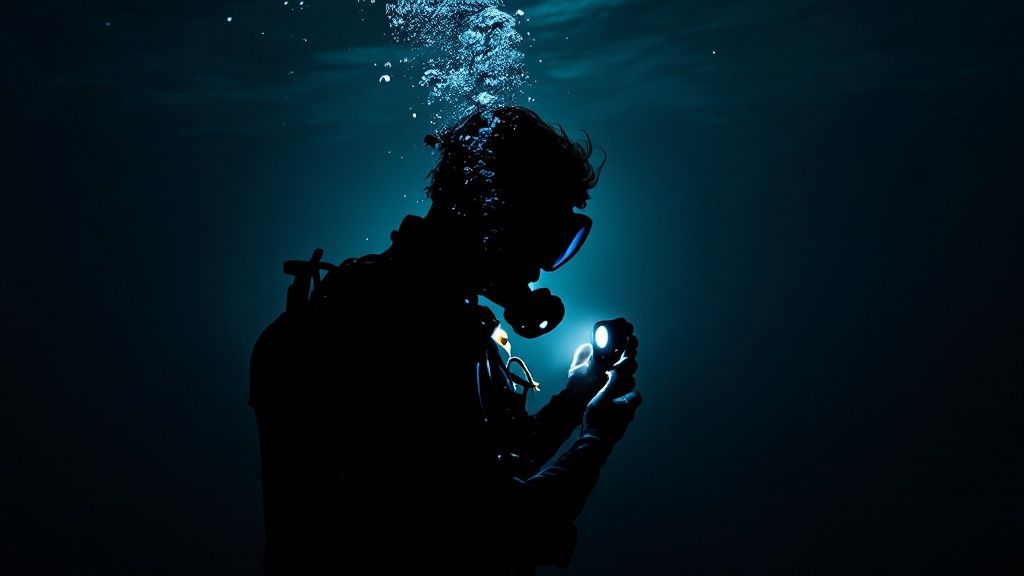
The magic behind this incredible spectacle is surprisingly simple. Your dive crew sets the stage for a natural phenomenon, and you get a front-row seat to the show. It all kicks off with powerful underwater lights.
Think of these lights as a giant magnet for the ocean's smallest critters. They illuminate the water, drawing in dense clouds of microscopic plankton—the absolute favorite food of manta rays.
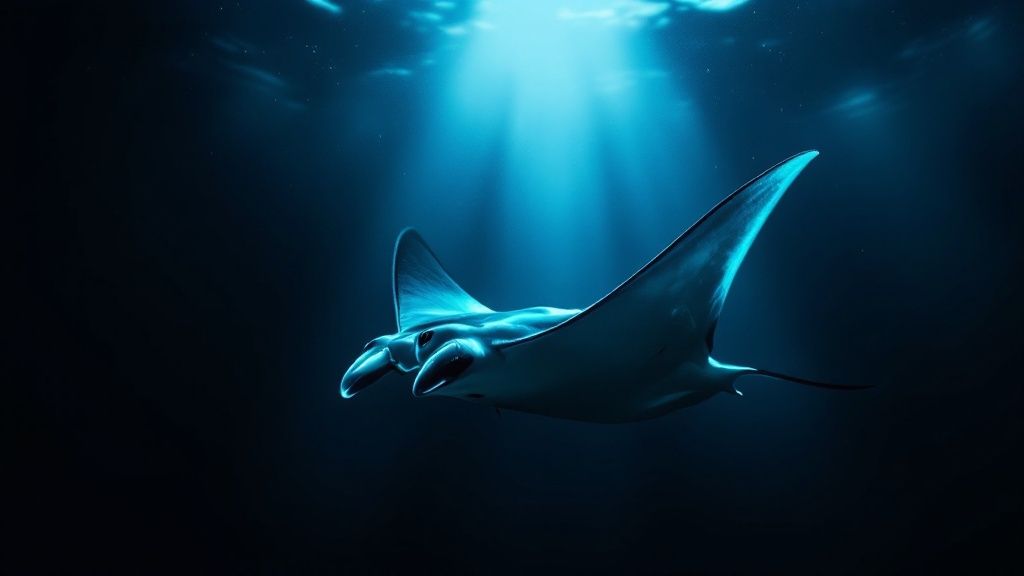
For Kona's resident reef mantas, this glowing plankton cloud is an irresistible, all-you-can-eat buffet. These animals, which can have wingspans stretching up to 18 feet, have learned over decades that where there are lights, there’s dinner.
The Graceful Giants of Kona
Once the plankton gathers, the real stars of the show make their grand entrance. The mantas swoop in from the darkness, performing a mesmerizing underwater ballet. They glide and soar, executing graceful barrel rolls with their cavernous mouths wide open to filter the plankton-rich water.
What makes this so special is that it’s completely wild and natural. These aren't trained animals in an aquarium; you're witnessing a genuine feeding behavior in their own environment.
This encounter is a powerful reminder of nature's elegance. You are a passive observer, witnessing a nightly ritual that has been happening for decades, long before it became a famous attraction.
The entire event is set up for incredible, safe viewing. Divers get settled on the sandy ocean floor, looking up, while snorkelers hold onto a custom light raft at the surface, looking down. Both spots offer breathtakingly close encounters. To get a real sense of the view, take a look at these stunning manta ray dive pictures from Kona.
Ultimately, it’s the proximity and grace of these animals that sear the experience into your memory. There's nothing quite like having a creature the size of a Volkswagen Beetle glide inches from your mask. It’s a humbling, awe-inspiring moment that connects you directly to the raw beauty of the ocean.
Choosing the Best Manta Ray Viewing Location
When you're gearing up for a manta ray night dive in Kona, you'll hear two names pop up again and again: Manta Village and Manta Heaven. These are the two world-class, go-to spots, and while both are incredible, they offer slightly different flavors for this underwater spectacle.
Think of Manta Village, located in Keahou Bay, as the reliable old favorite. It's just south of Kailua-Kona, which means a very quick boat ride from the harbor. If you're someone who gets a little queasy on the water, this is a huge plus. It has a long-standing reputation and a ridiculously high success rate for manta sightings.
Then there's Manta Heaven, up north near the airport. This site, also called Garden Eel Cove, is more like the grand stage. The chance of a sighting is still incredibly high, but the real draw here is the potential for a massive turnout. On a good night, the sheer number of mantas can be absolutely mind-blowing.
This dive is a massive deal for Kona, bringing in around 80,000 visitors every year. Manta Heaven boasts a 90% success rate, but Manta Village often tops that. The trade-off is that Manta Heaven can sometimes deliver a bigger show with more individual rays. To dig deeper, you can check out this guide on the best times and locations to see Kona's mantas.
Kona Manta Ray Dive Site Comparison
So, how do you choose? It really boils down to what you prioritize. Do you want the near-guaranteed sighting with a quick trip, or are you willing to take a slightly longer boat ride for a chance at a truly epic manta party?
This quick comparison should help you weigh the options.
| Feature | Manta Village (Keahou Bay) | Manta Heaven (Garden Eel Cove) |
|---|---|---|
| Location | South of Kailua-Kona | North of Kailua-Kona, near airport |
| Sighting Success Rate | Very high, often over 95% | High, around 90% |
| Typical Manta Count | Consistently sighted mantas | Can have larger groups |
| Accessibility | Shorter boat ride from Keahou Harbor | Longer boat ride from Honokohau Harbor |
At the end of the day, there's no wrong answer here. Both sites offer a front-row seat to one of the most graceful and awe-inspiring shows in the natural world. Your choice simply comes down to personal preference: the reliable consistency of Manta Village or the grand, theatrical potential of Manta Heaven. Either way, you're in for a night you'll never forget.
How to Prepare for Your Manta Ray Dive
A little bit of prep work can be the difference between a good manta ray encounter and a truly unforgettable one. Getting ready for this dive is easy, but knowing what to expect and what to bring will make the whole experience smoother and far more comfortable.
First things first, what does it take to get in the water? For scuba divers, an Open Water certification is all you need. Since the dive is relatively shallow and you stay in one spot, it’s a fantastic experience for divers of almost any level.
If you’re snorkeling, the news is even better: no prior experience is needed. Seriously. As long as you're comfortable floating in the water, you're good to go. You'll be holding onto a specially designed light raft the entire time, so you can just relax and enjoy the show.
What to Bring on the Boat
You don't need to pack a massive gear bag for this trip. The dive operators have all the essential equipment covered, so you can focus on a few personal items to maximize your comfort. Think of it like a special night out on the ocean, not a gear-heavy expedition.
Here’s a quick list of must-haves:
- A Towel: You'll definitely want this for drying off when you get back on board.
- Warm, Dry Clothes: Even in Hawaii, the boat ride back can get chilly once the sun is down and the wind picks up. A sweatshirt or a light jacket is a great idea.
- Reef-Safe Sunscreen: For the sunset trips, make sure you apply it before you head out.
- Personal Gear (Optional): The crew provides high-quality gear, but if you have a favorite mask that fits you perfectly, feel free to bring it along.
If you want a more detailed look at the equipment involved, we’ve put together a full breakdown of the gear you will need for your Kona diving adventure.
The Importance of the Pre-Dive Briefing
This is the most crucial part of your preparation, so listen up! The pre-dive briefing isn't just a formality—it's your playbook for having a safe, responsible, and mind-blowing manta experience. Your guides are experts, and they’ll lay out the essential "rules of the road" for interacting passively with these amazing animals.
You’ll learn exactly where to position yourself in the water, whether you're kneeling on the sandy bottom as a diver or holding the light board as a snorkeler. Following these instructions is everything. It keeps you safe, protects the mantas from accidental contact, and ultimately makes the entire encounter better for everyone. Pay close attention here, because this is where the real magic begins.
Why Choose Kona Honu Divers for Your Adventure
Choosing the right dive operator will make or break your manta ray night dive. It’s a huge decision for what’s truly a once-in-a-lifetime experience, and the details really do matter. At Kona Honu Divers, we’re firm believers that a smaller group makes for a much bigger, more memorable adventure. We deliberately keep our tours small and intimate so you get a front-row seat to the action, not the back of someone’s head.
This approach means you get a more personal and frankly, more awe-inspiring encounter with the mantas. Instead of jostling for a view, you have the space to just float and watch the incredible underwater ballet unfold.
Our guides are more than just there to keep you safe; they're total "manta nerds." They live and breathe this ecosystem and get a huge kick out of sharing fascinating tidbits about the rays' behavior, how to tell them apart, and their vital role in Kona’s marine world.
Our Commitment to Excellence
Your safety and comfort are, without question, our top priorities. We don't cut corners. We invest in top-quality, comfortable boats and keep our rental gear in pristine condition. This commitment means you can truly relax and focus on the magic happening right in front of you, knowing you’re in the best possible hands.
As a leader in scuba diving in Kona, we are also fiercely protective of the mantas and their home. We practice sustainable and respectful wildlife tourism, ensuring this magical experience is preserved for generations to come.
"Our philosophy is simple: provide a world-class, safe, and personal adventure that fosters a deep appreciation for Kona's underwater world."
The Kona coast has a thriving population of over 450 resident manta rays, which makes your chances of a spectacular show incredibly high. The dives happen in surprisingly shallow water—just 30-40 feet—and our success rates at the prime spots often top 95%. To see why this dive is on so many bucket lists, you can explore more details about the Kona manta ray night dive.
But don't just take our word for it. Our customer reviews speak for themselves, highlighting our team’s dedication to providing an adventure you'll never forget. It’s this passion that has helped us become known as one of the best dive companies on the Big Island.
When you're out on the water at night, choosing the right team changes everything. We invite you to join us and see the Kona Honu Divers difference for yourself.
What Other Night Dives Can You Do in Kona?
The manta ray dive is definitely Kona’s star attraction, but the show doesn’t end there. Once the sun goes down, a completely different cast of characters takes over the reef, and if you’re eager to see more, Kona has some incredible night diving that will blow you away.
The entire vibe of the ocean changes after dark. It’s a fascinating transformation. All the critters that were hiding out in the reef during the day finally feel safe enough to come out and hunt. A classic night dive on one of Kona's reefs is your ticket to seeing this firsthand. You’ll get to spot shy crabs and lobsters scuttling across the sand, watch octopuses on the prowl, and even see parrotfish sleeping soundly in their self-made mucus cocoons.
For the Ultimate Thrill-Seeker: The Kona Blackwater Dive
If you're really looking for an adventure that’s out of this world, you have to try what divers call "the blackwater." It’s often compared to floating in outer space, and for good reason. The world-famous Kona Blackwater Dive isn't a reef dive at all—it's a journey into the deep blue abyss. You drift in the open ocean, tethered to the boat for safety, and witness the largest migration on planet Earth.
Strange, beautiful, and often bioluminescent creatures rise from the depths to feed near the surface. You'll see things that look more alien than anything you can imagine, most of which are rarely, if ever, seen by human eyes.
This dive is a front-row seat to the planet's daily deep-sea migration. It’s a completely different universe from the coral gardens we're used to, a truly mind-bending experience.
Pushing Your Boundaries After Dark
For any certified diver wanting to level up their skills, night diving is a fantastic way to do it. The unique environment and the different marine life you encounter will absolutely make you a better, more observant diver.
And if you're ready to explore deeper sites or more challenging conditions, our advanced dive tours open up a whole new world of underwater exploration, both day and night. Whether it's the bizarre spectacle of a blackwater dive or the quiet magic of a reef at midnight, Kona’s nightlife truly comes alive beneath the waves.
Answering Your Top Manta Ray Night Dive Questions
It's completely normal to have a few questions swirling around before you jump into the water for a manta ray night dive in Kona. It’s a big adventure, after all!
Let's clear up some of the most common questions about safety, what to expect, and the best way to interact with these amazing animals. The goal is to make sure you feel totally prepared and confident before you book.
Is the Manta Ray Night Dive Safe?
Yes, absolutely. Manta rays are often called "gentle giants" for a very good reason—they don't have teeth, barbs, or stingers. They are completely harmless to people and are only interested in scooping up their favorite meal: plankton.
From a diving perspective, the entire operation takes place in a shallow, controlled setting with professional guides keeping a close watch. Reputable outfits like Kona Honu Divers put safety above everything else. Your guide will walk you through all the safety procedures during the pre-dive briefing, ensuring you have a secure and incredible time.
What if I've Never Snorkeled Before?
That's perfectly fine! The manta ray snorkel experience is designed with total beginners in mind.
You’ll be given a wetsuit that helps you stay warm and float, plus you get to hold onto a specially designed light raft that sits on the surface. All you have to do is put your face in the water and enjoy the show unfolding just a few feet below you. No real swimming is required. Scuba divers do need to be certified, but even then, it's considered a very easy, stationary dive.
When Is the Best Time of Year to See Manta Rays in Kona?
Here's the great news: you can see them any time of year. The manta ray dive in Kona is a year-round spectacle with an incredibly high success rate, regardless of when you visit.
That’s because Kona’s manta ray population doesn't migrate; they live here all year, and so does their food source. The only thing that might occasionally cancel a tour is rough ocean conditions, like big winter swells, but operators will never go out unless it's safe.
The bottom line is, you don’t have to plan your Hawaiian vacation around a specific "manta season." Any time you're in Kona is a fantastic time to see them.
Can I Touch the Manta Rays?
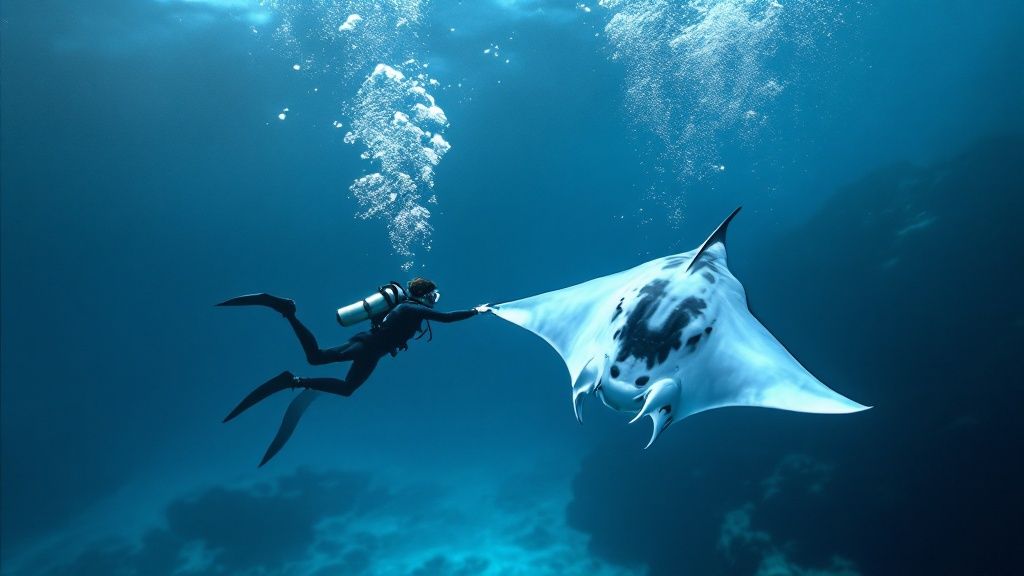
This is a hard no, and it's the most critical rule of the whole experience. You are not allowed to touch the manta rays under any circumstances.
Touching them can rub off their protective mucus coating, which is like their immune system. Without this slimy layer, they're left vulnerable to nasty infections. The whole point of the encounter is to be a passive observer. By just floating and keeping your hands to yourself, you help keep the mantas safe and ensure they continue to show up for this amazing underwater ballet for years to come.
Ready for an adventure you’ll never forget? Kona Honu Divers runs a world-class, safe, and personal tour with Kona's gentle giants. Book your manta ray dive tour and prepare for the night of your life.