
Picture this: you descend into the warm, inky black of the Pacific Ocean, your dive light slicing through the darkness. Then, out of nowhere, a massive, winged silhouette glides into the beam, moving with a grace that seems impossible for its size. That’s a manta ray, and you’re in the middle of Kona’s world-famous underwater ballet. It’s less of a scuba dive and more of a once-in-a-lifetime spectacle.
Experience the Kona Manta Ray Underwater Ballet
The Big Island of Hawaii is home to one of the most reliable and jaw-dropping marine encounters you'll find anywhere on Earth. So many wildlife experiences are a gamble, depending on the right season or a migratory pattern. But here in Kona, we have a resident population of manta rays that show up to feed year-round, turning a simple night dive into a global phenomenon.
The concept behind it is pure genius. Dive operators submerge powerful lights into the water, which act like a magnet for swarms of microscopic plankton. The plankton, of course, are the manta rays' favorite meal. It creates an underwater buffet that these gentle giants can't resist, drawing them in night after night. All you have to do is settle in—either kneeling on the sandy bottom as a diver or floating above as a snorkeler—and watch the show unfold as they perform acrobatic loops just inches from your face.
Why This Dive is a Must-Do
The sheer consistency of this experience is what sets it apart. The manta ray night dive in Kailua-Kona attracts around 80,000 visitors every year, and for good reason. It’s not just hype; the sighting success rate is consistently between 80% and 90%. That’s about as close to a guarantee as you can get in the wild.
There's nothing quite like the feeling of a 12-foot manta ray gliding silently over your head. You can feel the gentle current from its massive fins as it passes. It's a peaceful, powerful connection with one of the ocean's most majestic creatures—a moment that truly stays with you.
Kona Manta Ray Night Dive At a Glance
Here's a quick summary of what to expect on this unique underwater adventure. The combination of calm conditions and incredible wildlife makes it accessible for almost everyone.
| Aspect | Details |
|---|---|
| Activity Type | Night Scuba Dive or Snorkel |
| Typical Depth | 30-40 feet (9-12 meters) |
| Water Time | Approximately 45-60 minutes |
| Key Feature | Close, passive encounters with feeding manta rays |
| Best Time to Go | Year-round with an 80-90% success rate |
This whole experience is carefully managed to ensure a safe and respectful interaction for both the mantas and the humans watching them.
To get a better feel for this incredible night out, you can learn more about the Manta Ray Night Dive and see for yourself why it's so special. And if you really want to get excited, check out some of the amazing manta ray dive Kona pictures—they’ll give you a sneak peek of the breathtaking scenes that await.
Choosing Your Manta Ray Adventure: Dive or Snorkel?
So, you're ready to see the famous Kona manta rays, but you're wondering what the best way to do it is. You've got two main options: scuba diving or snorkeling. Think of it like going to an incredible concert—you can be in the front row, right in the middle of the action, or you can have a fantastic balcony seat with a panoramic view.
Neither one is "better" than the other; they just offer completely different perspectives of the same jaw-dropping spectacle. Your choice will really come down to your comfort level in the water, whether you're a certified diver, and what kind of experience you're looking for.
The Scuba Diving Experience: A Front-Row Seat
If you’re a certified scuba diver, this is the experience you’ve been dreaming of. It's the most immersive way to witness the manta ray night dive Kona is known for. After a gorgeous sunset cruise out to the site, you'll gear up and descend with your guide to the sandy bottom, which is usually about 30-40 feet deep.
Once you’re down, you'll find a spot around a circle of powerful underwater lights—we call it the "campfire." Your only job from there is to get comfortable on the sand, shine your dive light straight up, and wait for the show to begin.
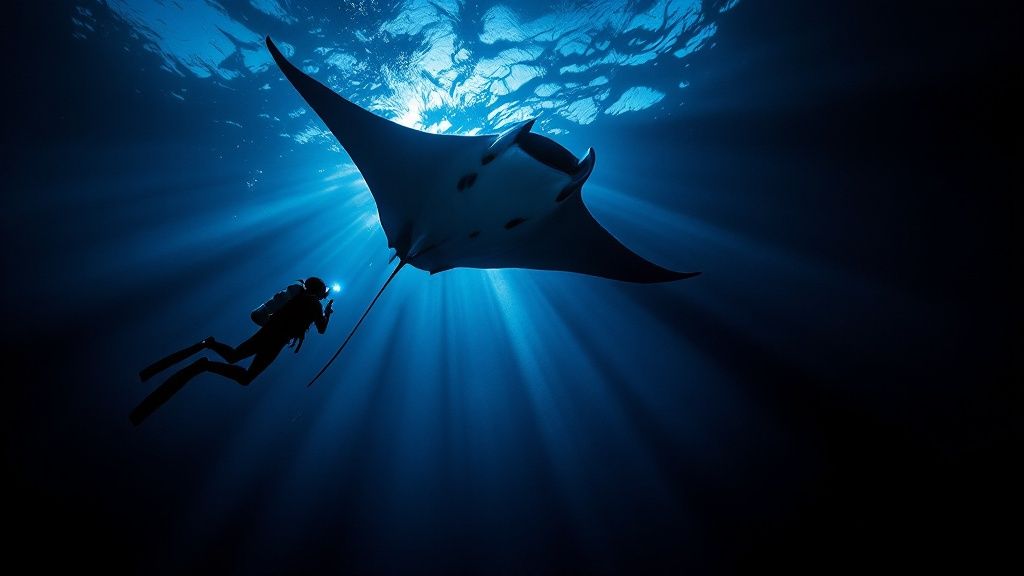
The feeling of a 12-foot manta ray gliding silently, just inches above your head, is something you'll never forget. You get to watch them perform these graceful, slow-motion barrel rolls as they feed, feeling the gentle push of the water as their massive wings pass by. It’s an unbelievably powerful and humbling experience.
From this vantage point on the ocean floor, you're looking up, able to truly appreciate the sheer size and elegance of these animals against the dark surface of the water. You are right in the heart of their feeding zone.
The Snorkeling Experience: The Balcony View
Not a diver? Don't worry, you won't miss out. The snorkeling tour is designed for just about everyone and gives you an amazing bird's-eye view of the entire scene. We have custom-made flotation boards that you'll hold onto at the surface. These boards have bright lights that shine down, attracting the plankton and, in turn, the mantas.
You just float comfortably, put your face in the water, and watch the ballet happen below you. The mantas are drawn up from the deep by the light, often swooping right up to the surface. It’s incredible how close they get.
This is a fantastic option for families, those who aren't certified divers, or anyone who simply feels more comfortable staying on the surface. You get a stunning panoramic view of everything—the divers below, the lights, and the mantas gracefully gliding through it all. To get a better feel for it, check out our detailed guide on the Kona manta ray snorkel adventure.
How To Choose Your Perfect Tour
Still on the fence? Let's break it down. The right choice is all about what works for you.
| Aspect | Scuba Diving | Snorkeling |
|---|---|---|
| Certification | Open Water certification required | No certification needed |
| Perspective | Bottom-up view from the ocean floor | Top-down view from the surface |
| Proximity | Mantas glide directly overhead, often inches away | Mantas swoop up from below, very close to the surface |
| Best For | Certified divers wanting an immersive experience | Non-divers, families, and those preferring the surface |
No matter which adventure you pick, you're in for an evening of pure magic. Here at Kona Honu Divers, we offer top-rated manta ray dive tours and snorkel tours, making sure everyone has a chance to see this natural wonder. Our experienced guides are passionate about safety and ensuring our interactions are respectful to the mantas we love so much.
Ready to book your spot for this unforgettable underwater show?
What Happens On a Manta Ray Night Dive Tour
So, what’s it really like to go on a Kona manta ray night dive? It’s not just about hopping in the water; it's a whole experience, an adventure that starts with the golden glow of a Hawaiian sunset and doesn't end until you're back on shore under the stars. Knowing the play-by-play helps you soak it all in.
Your journey usually begins at the harbor about an hour before sunset. After you check in and meet the crew, you’ll find your spot on the boat as it heads out to one of Kona's world-famous manta sites. Honestly, the boat ride itself is a highlight—you get incredible views of the coastline as the sun dips below the horizon, lighting the sky on fire.
This time on the boat is more than just a scenic cruise. It's when your dive guides give you the full rundown in a pre-dive briefing. And trust me, you'll want to pay close attention. This isn’t just about safety; it’s about learning how to be a good guest in the mantas' world.
The Pre-Dive Briefing and Manta Etiquette
During the briefing, the crew will walk you through everything from how the gear works to the fascinating biology of the gentle giants you’re about to meet. The most important part? Learning the rules of “manta etiquette.”
- Look, Don’t Touch: This is the golden rule. Touching a manta ray can damage the protective mucous coating on its skin, leaving it vulnerable to infection. You let them dictate the entire encounter.
- Find Your Zone: Divers stay low, often kneeling on the sand, while snorkelers stay flat on the surface. This creates a wide-open "stage" in the middle of the water column for the mantas to do their thing.
- Master Your Light: You’ll learn exactly where to point your light to attract the most plankton. Divers aim their beams up, and snorkelers shine theirs down, creating a concentrated buffet that draws the mantas right to you.
This briefing is crucial. It’s what makes the Kona manta dive a sustainable, world-class example of ecotourism done right. If you want a deeper dive into the feeling of the whole trip, you can read a full rundown of what it's like to go on the manta ray dive in Kona, Hawaii.
Setting the Stage: The Underwater Campfire
As dusk turns to night, the boat moors up. Now the crew gets busy setting up the main event: the underwater "campfire." They place a powerful array of lights on the ocean floor, which immediately starts attracting a thick cloud of plankton—the mantas' favorite food.
Think of this light source as the secret sauce for the Kona manta experience. By creating a reliable, concentrated food source night after night, we've essentially built an underwater amphitheater. The mantas are the stars of the show, and you have a front-row seat.
Once the stage is set and the last bit of sunlight has vanished, it’s time to gear up. The crew helps everyone with their equipment and does one last safety check. You can feel the buzz of excitement build as everyone gets ready to slide into the dark, welcoming water.
Showtime: In the Water with Giants
The moment you get in the water and move toward the lights, the scene is absolutely surreal. As a diver, you'll settle into your spot on the sandy bottom, forming a circle around the "campfire." As a snorkeler, you'll hold onto a custom-made float, looking down into the action. At first, you might just see little fish zipping through the light beams.
And then… it happens.
A huge, dark shadow glides in from the blackness, moving with an effortless grace that defies its size. The first manta has arrived. Before you know it, another appears, and then another. They start their mesmerizing feeding dance, performing slow-motion barrel rolls and swooping loops right through the plankton cloud.
The experience is spellbinding. A 1,000-pound animal will soar inches over your head, and you'll feel a gentle push of water as its massive wings pass by. The only sound is your own breathing through your regulator as these gentle giants perform in the spotlight. For the 45-60 minutes you're in the water, time just melts away. You're completely lost in one of the most incredible wildlife encounters on the planet.
The Science Behind Kona’s Manta Spectacle
The incredible consistency of the manta ray night dive Kona offers isn't some happy accident. It's actually a brilliant, human-led application of some pretty simple marine biology. The whole spectacle boils down to a fascinating chain reaction that has turned the Kona coast into the best place on Earth to see these gentle giants. It all starts with one thing: light.
The core principle at play here is called phototaxis—a fancy word for the way organisms move toward or away from a light source. In our case, the stars of the show are zooplankton, countless tiny animals that form the very foundation of the ocean's food web. Plankton are naturally drawn to light, like moths to a flame.
Dive operators have this down to a science. They sink powerful, purpose-built lights onto the seafloor, creating a glowing beacon in the dark. It doesn’t take long for a shimmering, soupy cloud of plankton to swarm the area, essentially ringing a dinner bell and creating a concentrated, all-you-can-eat buffet for the mantas.
Why Kona's Coast is the Perfect Theater
This simple formula works so incredibly well here because Kona is home to a massive, non-migratory population of reef manta rays (Mobula alfredi). While manta sightings are seasonal in many other parts of the world, the mantas here stick around all year. They’ve spent decades learning that these bright lights signal an easy, reliable meal.
It’s a learned behavior that's been passed down through generations, making a few specific spots legendary. The two most famous "dinner tables" are:
- Manta Village: Right offshore from the Keauhou Bay area, this is the O.G. site where hotel lights first started attracting plankton, and the mantas weren't far behind.
- Manta Heaven: Located up by Garden Eel Cove, this is the other major hotspot, beloved for its typically calm conditions and reliable manta turnouts.
These aren't just random locations. They are naturally sheltered coves that offer calm waters, creating the perfect underwater amphitheater for this nightly feast. On any given night, you might see an average of six mantas, but there have been mind-blowing evenings with over 36 individuals gracefully swooping through the lights at once.
Conservation Through Ecotourism
This one-of-a-kind interaction has also become a powerful engine for conservation. These nightly gatherings allow researchers to study the local manta population in a totally non-invasive way. And how they tell them apart is as unique as a human fingerprint.
Each manta ray has a completely unique pattern of black spots on its white belly. By snapping photos of their undersides, researchers can identify, name, and track individual mantas over their entire lifespan. This massive database helps monitor the population's health, size, and habits.
This incredible research is largely funded by the very ecotourism it supports. It's the key to protecting these majestic creatures and ensuring the manta ray night dive Kona provides remains a sustainable, respectful encounter for years to come. Getting a deeper look into this process is part of what makes you truly appreciate what a manta ray night dive truly is.
When you join a tour, you’re not just a spectator—you're an active participant in a conservation success story. It’s a beautiful cycle where tourism funds the science, and the science ensures the magic continues.
Essential Tips for Your Manta Ray Encounter
To get the most out of your incredible adventure with Kona’s manta rays, a little bit of prep work makes all the difference. Following these tips will help you feel comfortable and confident, freeing you up to soak in every single moment of your manta ray night dive in Kona.
Your pre-dive briefing is mandatory listening. Pay close attention. Your guides will cover all the crucial safety stuff, but more importantly, they’ll explain the rules of “manta etiquette.” This isn’t just a list of polite suggestions; it's a vital framework for interacting respectfully, protecting these amazing animals, and making sure this experience is around for years to come.
Staying Comfortable in the Water
Even in Hawaii, the water can get surprisingly chilly on a night dive, especially since you’ll be staying relatively still. Most tours provide wetsuits, and you should absolutely wear one. A good 3mm or even a 5mm wetsuit will keep you comfortable, letting you focus on the mantas instead of your shivers.
If you’re the type who gets seasick, take your preferred remedy before you even get on the boat. The ocean can get a bit choppy after sunset, and the last thing you want is to feel queasy during this once-in-a-lifetime show. A little proactive planning goes a long way.
For a full rundown of what to pack, check out our guide on the gear you will need for your Kona diving adventure.
The Golden Rule: Be a Passive Observer
If you remember one thing, make it this: you are a passive observer. This is their world, their dining room, and they are in complete control of the encounter. Stick to these key guidelines:
- No Touching: Manta rays are covered in a protective mucous layer that acts like an immune system, warding off infections. Touching them can strip away this vital coating and leave them vulnerable.
- No Chasing: Never, ever swim after a manta. Let them come to you. Chasing them creates stress and disrupts their natural feeding patterns.
- Stay in Your Lane: If you're diving, stay on or near the sandy bottom. If you're snorkeling, lie flat on the surface. This keeps the water column wide open, giving the mantas plenty of space to glide, swoop, and perform their incredible acrobatics.
By following these simple rules, you are directly helping to protect Kona's resident manta population. Your respect ensures future generations of ocean lovers can witness this same breathtaking spectacle.
Capturing the Moment Responsibly
Getting great photos of these gentle giants is a huge part of the experience, but it needs to be done with care. Try to keep your camera setup minimal to avoid crowding the space, and always let the mantas approach you instead of chasing the perfect shot.
Make sure your camera’s internal flash is turned off. Instead, rely on your dive light or the bright glow from the central "campfire" of lights. A flash can startle the animals and wash out your photos. The best images come from patience, stillness, and letting the magic unfold right in front of your lens.
After a night like this, you'll probably be hooked. There are countless other incredible diving tours that explore the vibrant reefs and unique underwater world of the Big Island.
Your Manta Ray Night Dive Questions Answered
It’s completely normal to have questions before heading out into the dark ocean to meet creatures with 12-foot wingspans. In fact, being prepared is the best way to relax and soak in every incredible moment.
Let's walk through some of the most common questions we get from guests. We want you to feel confident, comfortable, and absolutely thrilled for the adventure ahead.
Is the Manta Ray Night Dive Safe?
Absolutely. It might seem a little intimidating at first—jumping into the ocean after sunset—but this entire experience is built around safety. It’s the top priority.
First, let's talk about the stars of the show. Manta rays are true gentle giants. They're filter feeders, which means they don’t have teeth for biting. They also lack the barbs or stingers that their stingray cousins have. They are only interested in the cloud of plankton attracted by the lights, not the humans floating nearby.
Every tour is guided by certified, experienced divemasters and instructors who are in the water with you the whole time. They know these waters and these animals inside and out. Before you even touch the water, you’ll get a thorough safety briefing so you know exactly what to expect and how to act.
What if I'm Not a Certified Scuba Diver?
No problem at all! You don't need a scuba certification to have a front-row seat for this incredible spectacle. The snorkeling option is designed for absolutely everyone, no matter your experience level.
Snorkelers get a mask, fins, and a custom-made floatation board to hold onto at the surface. These boards are equipped with powerful lights that shine down into the water. This light is what attracts the plankton, which in turn brings the mantas right up to you.
It's a fantastic bird's-eye view, and you’ll be amazed at how close they come. It's a secure, comfortable, and totally thrilling way to see the show.
Will I Definitely See Manta Rays?
While nothing in nature is ever a 100% guarantee, the Kona manta ray dive is famous for its incredibly high success rate. This isn’t a seasonal event; Kona has a resident population of manta rays that know exactly where to show up for dinner each night.
On average, operators report seeing mantas on 80% to 90% of their trips, year-round. This consistency is what makes the experience a world-class wildlife encounter.
The science backs this up. Long-term studies, like those done by Manta Ray Advocates Hawaii from 2009 to 2014, tracked sightings almost every single night. Their data revealed a remarkably predictable pattern of manta visits, month after month. You can learn more about these manta ray population findings and the research that makes this dive so reliable.
Because the sightings are so consistent, many top-tier operators like Kona Honu Divers offer a "manta guarantee." If you're on one of the very rare trips where the mantas don't show, you can rebook for another night for free (based on availability).
What Should I Bring on the Tour?
Packing a few key items will make your trip much more comfortable, especially on the boat ride back. Think warm and dry!
Here's a quick checklist:
- A good towel: You'll definitely want this after getting out of the water.
- Warm, dry clothes: A sweatshirt, hoodie, or jacket is a great idea. It can get chilly on the boat at night, even on a warm day.
- Seasickness medication: If you're prone to motion sickness, take it before you get on the boat.
- A reusable water bottle: Hydration is always important.
- Your camera: A GoPro or other underwater camera can capture some breathtaking footage. Just remember to be a respectful observer.
The tour operator will provide all the essential gear you need, like your wetsuit, mask, fins, and scuba equipment. It’s best to leave any valuables you don’t need back at your hotel.
Booking this adventure is your first step toward an evening you’ll never forget. With Kona Honu Divers, you’re choosing a company that puts safety, conservation, and a truly magical experience above all else.
Ready to witness the magic for yourself? Book your unforgettable manta ray adventure with Kona Honu Divers and experience one of the planet's greatest wildlife encounters. Reserve your spot on our 2-Tank Manta Dive & Snorkel tour today!