
Picture this: you're floating in the warm, dark Pacific Ocean. Suddenly, giant, gentle shadows with wingspans up to 16 feet glide effortlessly all around you. This is the world-famous manta ray night dive in Kona, and it’s a true bucket-list experience that defines any trip to the Big Island.
The Unforgettable Kona Manta Ray Experience
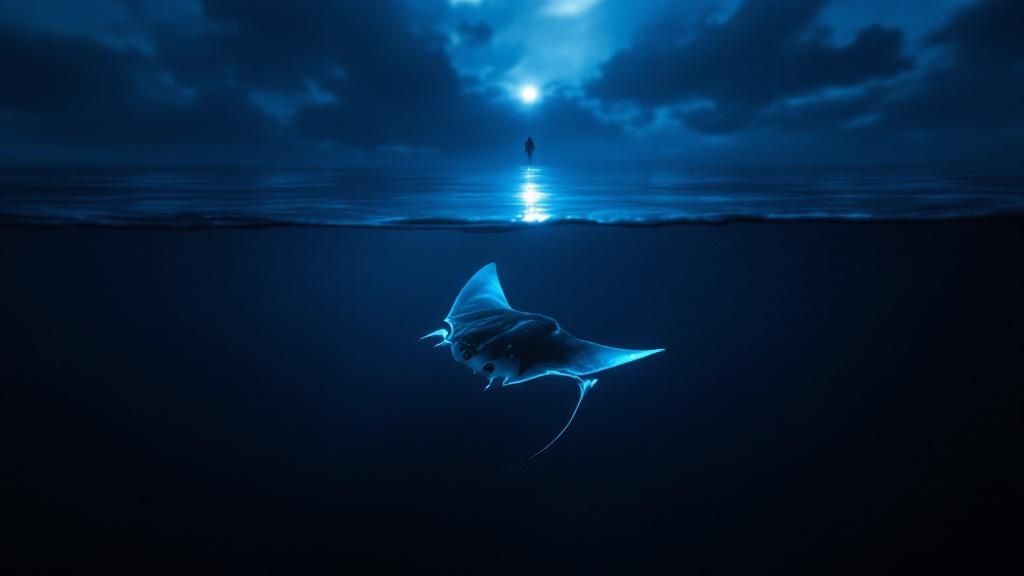
This mesmerizing underwater ballet has made Kona the planet's most celebrated and reliable spot for manta ray encounters. Why here? The unique conditions along the Kona coast create the perfect "dinner bell" for these gentle giants, drawing them to the same locations night after night with almost unbelievable consistency.
Every year, this incredible spectacle attracts around 80,000 visitors. Operators use powerful underwater lights to attract plankton, the mantas' favorite meal. This simple but brilliant method brings both reef mantas (Mobula alfredi) and the occasional giant oceanic manta (Mobula birostris) right up close for a view you'll never forget. You can get a deeper look into the specifics of the Kona manta ray tour to see what makes it so special.
For a quick overview of what to expect, here are the key details at a glance.
Manta Ray Night Dive Kona At a Glance
| Aspect | Details |
|---|---|
| Location | Kona Coast, Big Island, Hawaii |
| Best Time to Go | Year-round, with high consistency |
| Water Temperature | 75-80°F (24-27°C) |
| Visibility | Typically 50-100 feet (15-30 meters) |
| Manta Wingspan | Up to 16 feet (5 meters) |
| Primary Activity | Night dive or snorkel |
| Depth (Divers) | 30-40 feet (9-12 meters) |
| Depth (Snorkelers) | Surface level |
This table should give you a good starting point, but the real magic is in how you choose to experience it.
Two Ways to Witness the Magic
You have two fantastic options for seeing the show, and honestly, you can't go wrong with either. It really just comes down to your comfort level and whether you're a certified diver.
-
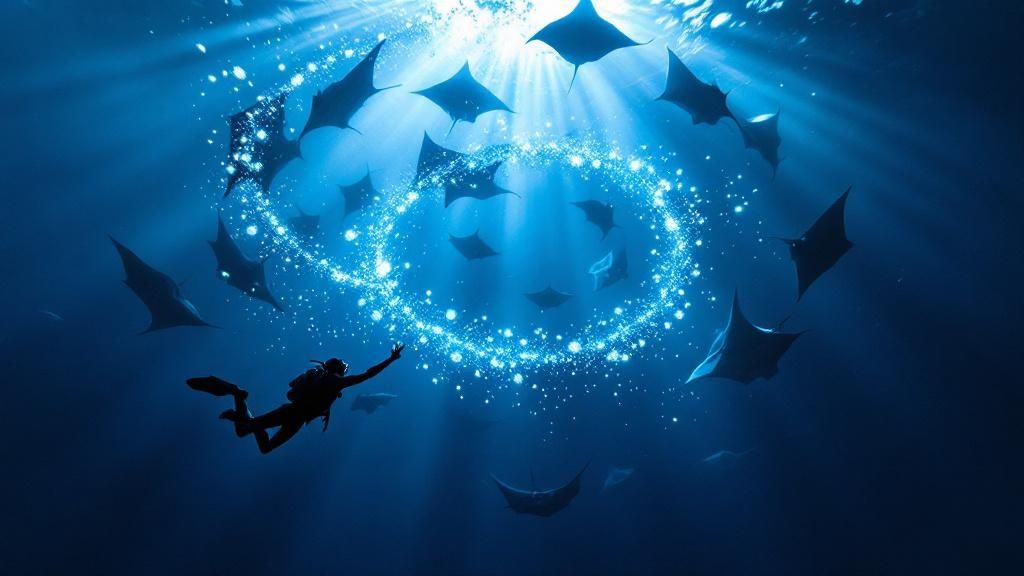
Scuba Diving: If you're certified, this is for you. You'll descend to the ocean floor—usually around 30-40 feet—and kneel in a circle around a central light source we call the "campfire." From there, you just look up. The mantas perform barrel rolls and glide just inches over your head. It's surreal.
-
Snorkeling: Not a diver? No problem. Snorkelers get an amazing view, too. You'll float on the surface, holding onto a custom-built light board. This board shines down into the water, attracting the plankton and bringing the mantas right up to you. It's like having a front-row, bird's-eye view of the entire ballet.
Top-tier operators like Kona Honu Divers have spent years perfecting a safe and sustainable encounter, making this mind-blowing experience accessible to just about everyone.
Choosing Your View: Scuba Dive or Snorkel
How you witness the manta ray ballet is going to shape your memory of it forever. Will you float on the surface as a snorkeler, watching from above? Or will you be on the ocean floor, looking up from below as a scuba diver?
Both options on a manta ray night dive Kona tour deliver an unbelievable show, but the perspectives are completely different. Ultimately, your choice boils down to your comfort in the water, whether you're certified, and what kind of up-close encounter you're dreaming of.
The Underwater Campfire Experience
For certified divers, this is about as immersive as it gets. You'll descend to the sandy bottom, usually around 30-40 feet, and settle in a semi-circle with your group.
We call this the "underwater campfire." A massive, powerful light is placed in the center, shooting a beam up toward the surface. This light immediately attracts swarms of plankton, which is exactly what the mantas are here for. It’s a dinner bell.
From your spot on the seafloor, you get to look straight up as these gentle giants perform breathtaking barrel rolls just inches over your head. I'm not exaggerating. The feeling of a massive manta with a 12-foot wingspan gliding silently over you is something that will stick with you for the rest of your life. It’s humbling, awe-inspiring, and what many people consider the ultimate way to see this natural wonder. To join the scuba group, you'll need at least an Open Water Diver certification.
A Floating Front-Row Seat
Not a certified diver? No problem. Traveling with family or friends who don't dive? The snorkeling option is just as magical, and honestly, a fantastic way to see the show. You'll be floating comfortably on the surface, holding onto a specially designed light board.
This board shoots beams of light down into the water, creating your own personal beacon for plankton and mantas. You get a perfect bird's-eye view of the entire spectacle—watching the divers' bubbles rise from below and the mantas gracefully swooping between the surface and the seafloor. It’s an incredibly easy and comfortable way to take it all in, no certification required.
Ready to pick your adventure?
What to Expect on Your Manta Ray Tour
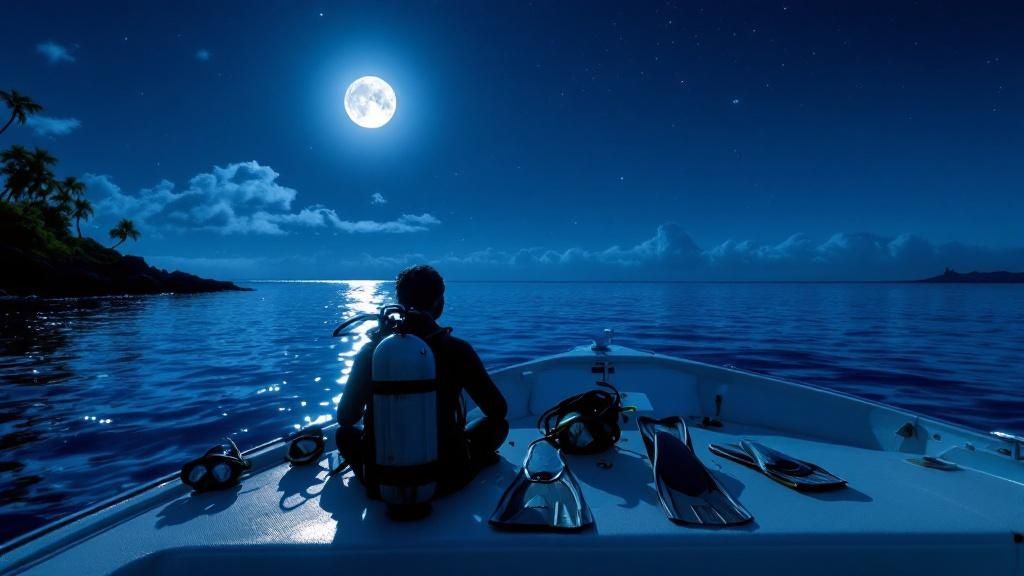
Knowing the flow of the tour helps you relax and just soak it all in. The adventure kicks off right at the harbor. You can feel the buzz of excitement in the air as you check in with your crew. Most boats head out just before dusk, so you get a front-row seat to a killer Kona sunset from the water.
During the ride out, the guides will run through a super important safety and environmental briefing. Pay attention here—this isn't just them going through the motions. This is the key to making sure we all have a safe and respectful encounter with these gentle giants.
They'll cover the simple, yet vital, rules for interacting with these protected animals, especially the big one: the "no-touch" rule. This protects the delicate mucous coating on the mantas' skin, which is absolutely essential for their health.
Entering the Manta Theater
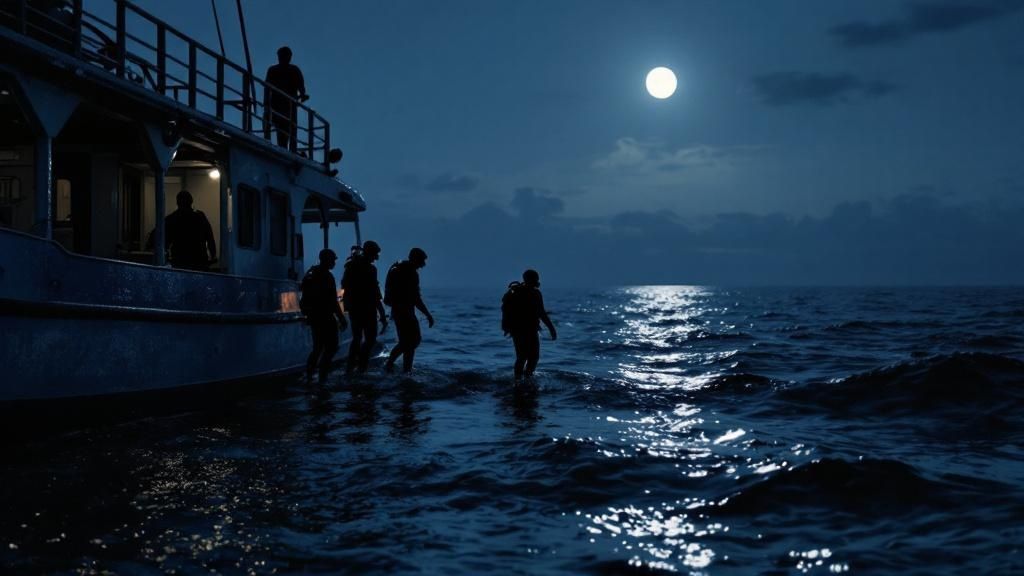
Once you arrive at the dive site, the real magic starts. There's nothing quite like slipping into the warm, dark ocean as the last bit of daylight disappears. It's a thrill.
Your guide will lead you to the viewing area. For divers, this is the "campfire" on the ocean floor; for snorkelers, it's a floating light raft on the surface. When the crew flips the switch on the powerful lights, the whole scene transforms, illuminating the plankton that the mantas are here for.
And then, you wait. The anticipation is half the fun. You're just floating there in the quiet darkness until, suddenly, the first graceful silhouette appears. Watching a manta ray emerge from the black and begin its acrobatic, filter-feeding ballet is something you will never, ever forget. Before you go, it's a good idea to know the specifics of the manta ray night dive to be totally ready for the experience.
This isn't a shot-in-the-dark experience. The manta ray night dive in Kona is world-famous for a reason, boasting an incredible 85-95% sighting success rate. Why? The plankton shows up, so the mantas do, too. Divers can expect to see an average of five mantas, with some absolute giants sporting wingspans over 12 feet wide.
The Science Behind the Spectacle
It might seem like magic, but the reason the manta ray night dive in Kona is so consistently incredible isn't just luck—it’s a brilliant mix of biology and human ingenuity. It all comes down to one thing: plankton. These tiny organisms are the base of the ocean food chain and the primary food source for filter-feeding mantas.
Years ago, operators figured out that shining powerful lights into the water after sunset creates a massive buffet of these light-attracted critters. This is basically a dinner bell for the entire local manta population, drawing them in for a spectacular feeding frenzy right in front of you.
Kona's Premier Manta Gathering Spots
This nightly feast happens at two main, well-established sites along the Kona coast, and each has its own distinct personality.
- Garden Eel Cove: Just north of Kona, near the airport, this spot earned the nickname "Manta Heaven" for a reason. It's famous for attracting huge numbers of mantas on any given night.
- Keauhou Bay: Located south of town, this is "Manta Village," the original site where it all started. It’s known for having exceptionally reliable sightings.
Understanding the simple-yet-brilliant science behind the event gives you a much deeper appreciation for what you're about to witness. These aren't just random animals; each manta is a known individual, identified by the unique spot patterns on its belly—just like a human fingerprint. Researchers actively track these residents, and every dive contributes to ongoing conservation efforts. For a deeper look, check out our guide on what the manta ray night dive is.
Getting Ready for Your Manta Dive
A little bit of planning makes all the difference between a good manta ray night dive and an absolutely epic one. When you show up with the right stuff and the right mindset, you can just relax and focus on the incredible ballet unfolding right in front of you.
What to Bring for Comfort
Let’s talk comfort, both in the water and out. Even after a warm day in Kona, that boat ride back to the harbor can get surprisingly chilly once you’ve been submerged for an hour. Don't skip the essentials: a warm jacket or sweatshirt and a dry towel are your best friends post-dive.
And don't forget, most tours head out while the sun is still up. Slather on some reef-safe sunscreen before you go. It's a must for protecting your skin and Hawaii's fragile coral reefs.
Quick pro tip: If you even think you might get seasick, take your motion sickness medication well before you step on the boat. The ocean can get a bit choppy after dark, and the last thing you want is for seasickness to ruin a once-in-a-lifetime experience.
On the Boat: Briefings and Photos
Once you're onboard, the single most important thing you can do is listen carefully to the crew's briefing. Seriously. They'll go over all the critical safety info and, just as importantly, the rules for interacting with the mantas. Following their lead ensures a safe, sustainable, and respectful encounter for everyone involved—mantas included.
Thinking of bringing a camera? Keep it simple. A GoPro or a decent underwater camera can get some amazing shots, but the low-light conditions can be tricky. My best advice? Remember to put the camera down for a while and just be present. Sometimes the most vivid memories are the ones you soak in with your own eyes, not through a tiny screen.
Showing up to the harbor prepared and confident sets the stage for one of the most unforgettable nights of your life. Think of this as your ticket to a totally stress-free adventure.
Choosing a Responsible Tour Operator
Who you book your manta ray night dive Kona tour with matters. A lot. This decision doesn't just shape your own experience; it has a real, direct impact on the manta rays themselves. Picking a company that puts marine conservation and your safety first is easily the most important choice you'll make. It ensures your money goes toward protecting Kona's mantas for years to come.
A truly responsible operator isn't shy about their commitment to the ocean. They'll follow established Manta Ray Green List standards, which means passive observation only (absolutely no touching!) and taking the time to educate their guests on manta-safe practices. They get that we're just visitors in the mantas' home.
What Sets the Best Apart
The best operators really stand out from the pack. First, they keep their group sizes small. This is a huge deal. Smaller groups mean less stress on the animals and a much more personal, less chaotic experience for you.
You should also look for guides who are genuine educators, not just boat captains. A great guide will get you fired up about manta biology, show you how their unique spot patterns are used for identification, and explain the local conservation efforts. This turns a simple sightseeing trip into a genuinely meaningful experience.
Choosing a top-tier operator means you're investing in the long-term health of the very ecosystem you came to admire. It's about more than just a tour; it's about being a conscientious visitor to this incredible underwater world.
Companies like Kona Honu Divers have earned a stellar reputation for their safety record, professional crews, and deep respect for the local marine life. Reading about why Kona Honu Divers is considered the best dive company on the Big Island gives you a good idea of what responsible tourism looks like in action.
Don't just take our word for it—seeing what other divers have to say offers invaluable, real-world insight.
Your Manta Ray Night Dive Questions, Answered
You've got questions, and we've got answers. After thousands of trips out on the water, we've heard it all. Here's the real scoop on some of the most common things people ask about the manta ray night dive Kona experience.
Is the Manta Ray Night Dive Safe?
Absolutely. In fact, it's exceptionally safe. People hear "night dive" and sometimes get a little nervous, but this is one of the most controlled and secure dives you can do.
Manta rays themselves are incredibly gentle. They're filter feeders, meaning they don't have teeth, barbs, or stingers—just giant, gaping mouths for scooping up plankton. Think of them as the ocean's friendly, oversized vacuum cleaners.
Every reputable operator, including us, follows strict safety guidelines. You'll have experienced guides in the water with you the whole time, the dive sites are well-known and relatively shallow, and the whole operation is a well-oiled machine.
Do I Have to Be a Certified Diver?
Nope! And honestly, the snorkeling is just as breathtaking. If you're snorkeling, you'll hang onto a custom-built light board that floats on the surface. This gives you a perfect, unobstructed, front-row seat as the mantas swoop and feed just inches below you.
If you do want to be on the bottom looking up, you'll need to be a certified Open Water Diver to scuba dive with the mantas.
The big question we always get is, "But what if we don't see any mantas?" It's a valid concern—they are wild animals, after all. But the success rate here in Kona is phenomenal, sitting at over 90%. Most of the top-tier operators back this up with a 'manta guarantee.' If the mantas decide not to show up for your tour, they'll usually let you come back another night for free (just check their policy on availability).
What's the Best Time of Year for This?
This is the best part: any time is a great time. The manta ray night dive in Kona is an incredible, year-round spectacle. We have a resident population of mantas that stick around all year, and our ocean conditions are famously stable.
There's truly no "off-season" for mantas here. Pick any month to visit the Big Island, and you'll have an excellent shot at a life-changing encounter. Don't worry about the water temperature, either—your tour will provide a good wetsuit to keep you comfortable.
Ready to see what all the fuss is about? At Kona Honu Divers, we live and breathe this stuff, and we run world-class manta ray tours for both divers and snorkelers. Grab your spot on one of our unforgettable diving tours and see the magic for yourself