
Over 80,000 people take the Kona manta night dive each year, and sighting success is commonly 80% to 95% year-round, which is why this is one of the most reliable manta encounters anywhere. The reason it works is simple, lights pull plankton in, and the mantas follow.
The first time I watched one rise out of the dark and glide over the beam, the whole boat got quiet. That's the moment people remember, not the boat ride out, not the gear check, just that slow, weightless pass overhead.
What Makes the Manta Ray Night Dive Unforgettable
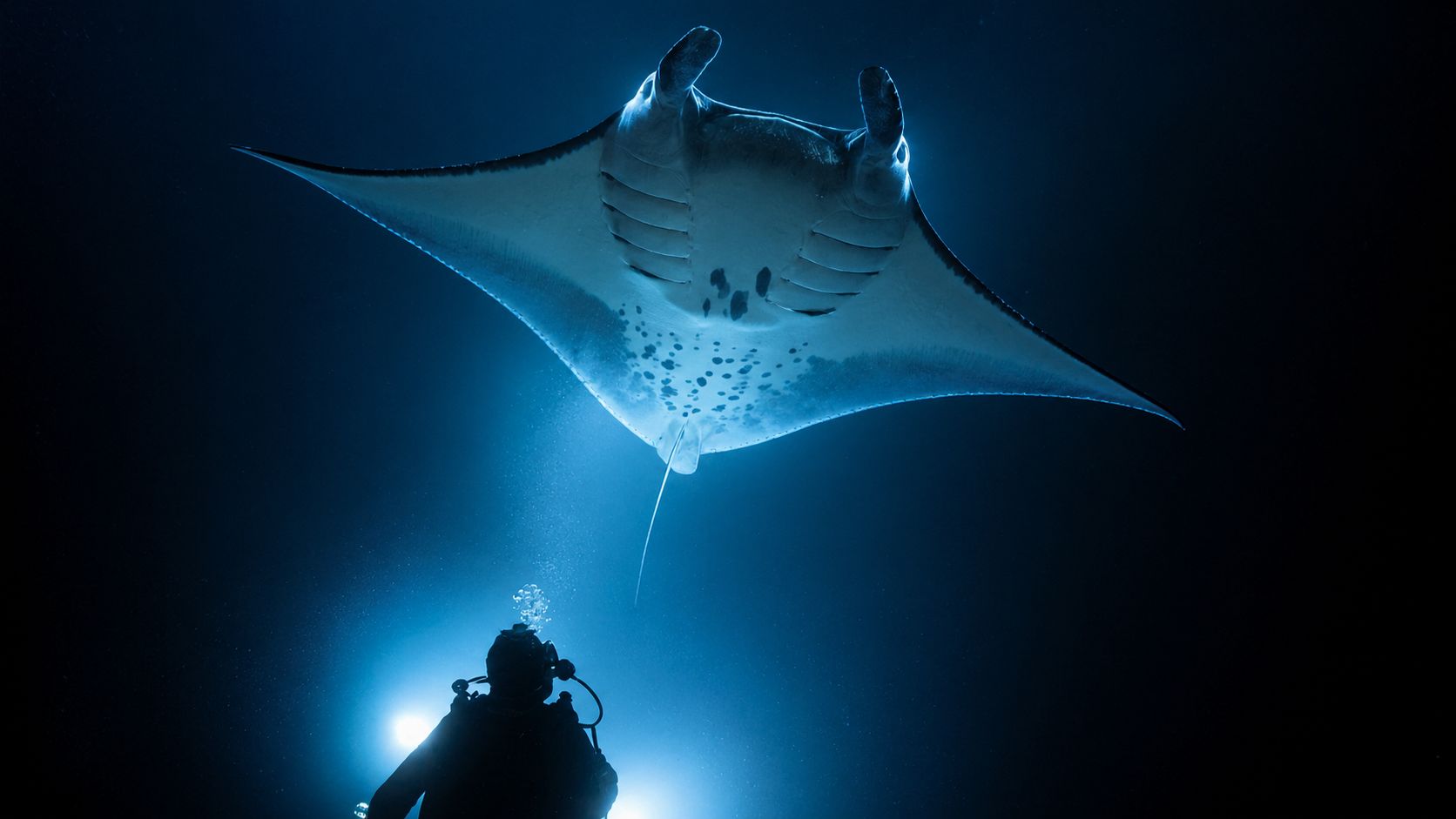
The magic starts when the water turns black and the only thing you can really track is the glow from the lights below you. Regulators hiss softly, your fin tips disappear into the dark, and then a huge shadow slides through the beam with no noise at all. That's the part that surprises first-timers, it doesn't feel like watching wildlife from a distance, it feels like the ocean is opening a stage right in front of you.
This is why manta ray night dive kailua kona has become a signature Big Island experience. The encounter is close, but it's still calm and controlled, which gives you time to actually watch the animals instead of just reacting to them. If you want a visual feel for the setup before you go, the Kona Honu Divers manta photo gallery is a useful preview.
What the experience feels like in the water
You're not chasing anything. You settle in, keep your body still, and let the mantas come to you. When they arrive, they can bank, roll, and pass so close that their wing edges fill your entire field of view.
The best manta dives feel quiet, not rushed. If the crew is calm and the site is organized, the animals usually stay relaxed too.
That calm is part of what makes the dive memorable. People come for the spectacle, but they leave remembering the rhythm, the light, the dark, and the way the mantas move with complete confidence through both.
How the Light and Plankton Attract Mantas
The whole encounter depends on a simple chain reaction. Underwater lights create a bright pocket in dark water, microscopic plankton gather there through phototaxis, and reef manta rays move in to feed on that plankton. The result is a repeatable feeding zone rather than a random chance sighting, which is why this dive works so well night after night.
The mechanism matters because it tells you what the crew is managing. They're not luring animals with noise or bait. They're using light to concentrate the food source the mantas already want, then placing divers or snorkelers where the feeding action is easiest to view. That's the same basic idea described in Kona Honu Divers' manta dive overview, and it's the reason the dive feels organized instead of chaotic.
Why the lights matter so much
The brighter the light field is, the more visible the plankton becomes to the mantas. On nights when conditions are especially favorable, multiple mantas can gather in the same beam, and some reports describe nights with over a dozen animals at one site. That doesn't mean every dive turns into a crowd, but it does mean the system can support serious feeding activity when the plankton is thick.
This is also why the dive is so dependable compared with many wildlife outings. The animals aren't migrating through once in a while, they're part of a resident Kona population that returns to known feeding spots. The lights help compress the timing and location of the feeding into a window that divers can plan around.
What works and what doesn't
What works is staying still, letting the water clear, and giving the mantas space to circle naturally. What doesn't work is splashing, chasing, or trying to direct the action with your own movements. The more you behave like part of the environment, the longer the mantas tend to stay in the light field.
If the lights are the dinner table, your job is to be a quiet guest, not the person rearranging the furniture.
That's the practical lesson behind the whole experience. The night dive feels magical, but the reason it works is plain old ecology, plankton, light, and feeding behavior coming together in one very visible place.
What to Expect During Your Dive Adventure
A typical Kona manta run is built around a tight schedule, and that's a good thing. Check-in is often around 5:30 pm, the boat heads out for an around 6:00 pm entry just after sunset, mantas are commonly seen around 7:00 pm, and the return is around 8:00 pm for an overall experience of about 2 hours (HawaiiTours). That timing gives you enough darkness for the lights to work without turning the evening into a marathon.
Many operators also run the trip as a 2-tank charter, with a reef dive first, then a sunset surface interval, then the manta dive (Kona Honu Divers tour description). That structure makes sense for divers who want a warm-up before the main event. It also gives the crew time to move, settle, brief, and set up the lights correctly.
How the evening usually flows
You start with gear, paperwork, and a briefing. After that, the first dive is the reef dive, which lets the group get comfortable in the water before darkness fully sets in. Once everyone surfaces, the crew uses the sunset interval to transition the boat and prepare the manta site.
Then the second dive begins after sunset. Divers drop in, settle on the bottom, and hold position while the light field starts pulling in plankton. If you're planning your day in Kailua-Kona, that timing leaves most of your afternoon free and keeps the night focused on the show rather than logistics.
Why timing matters
The manta dive is not an all-night operation. It's short, concentrated, and built around a specific feeding window. That predictability is one of the main reasons people book it, because you can plan dinner, family travel, or a second activity around the boat schedule without guessing when you'll get back.
For practical trip planning, Kona Honu Divers' Big Island divers page is a useful reference point if you want to compare the timing with other dive-day options.
Why Garden Eel Cove Is the Superior Dive Site
Garden Eel Cove gets the nod because the site gives the dive more structure. It sits in Makako Bay near Honokohau Harbor, and the location is repeatedly identified as the main Kona manta night dive site (Kona Diving Company). That matters because a protected cove usually gives crews better control over entry, positioning, and viewing angles than a more exposed stretch of coast.
The real difference is what you feel in the water. A calmer site makes it easier to hold position, keep the light field organized, and let the mantas work the edge of the beam without the whole scene drifting around. It also gives divers a cleaner view from below, which is the big reason many operators prefer it over more exposed alternatives.
What a protected site changes
At a protected site, the crew can build a more stable viewing setup. That helps snorkelers stay comfortable on the surface and gives divers a more predictable bottom position. The reef structure also helps define the viewing area, which is useful when the animals are circling fast and the group needs clear sightlines.
The site matters more than most new divers realize. A good manta boat can't fix a poor viewing angle, but a well-chosen cove can make the whole encounter easier to follow.
Garden Eel Cove also has the advantage of being associated with consistent manta activity. When the site itself is known, the crew isn't guessing where to anchor or how to stage the lights. They're working with a place that already has a reputation for delivering the encounter in a way guests can actually enjoy.
Why it beats less protected options
A more exposed site can still produce manta action, but it usually asks more from the diver. You may have more movement, less comfort on the surface, and a harder time holding a stable position while the mantas pass. That's fine for seasoned guests who want a rougher ocean feel, but it's not the better choice for many.
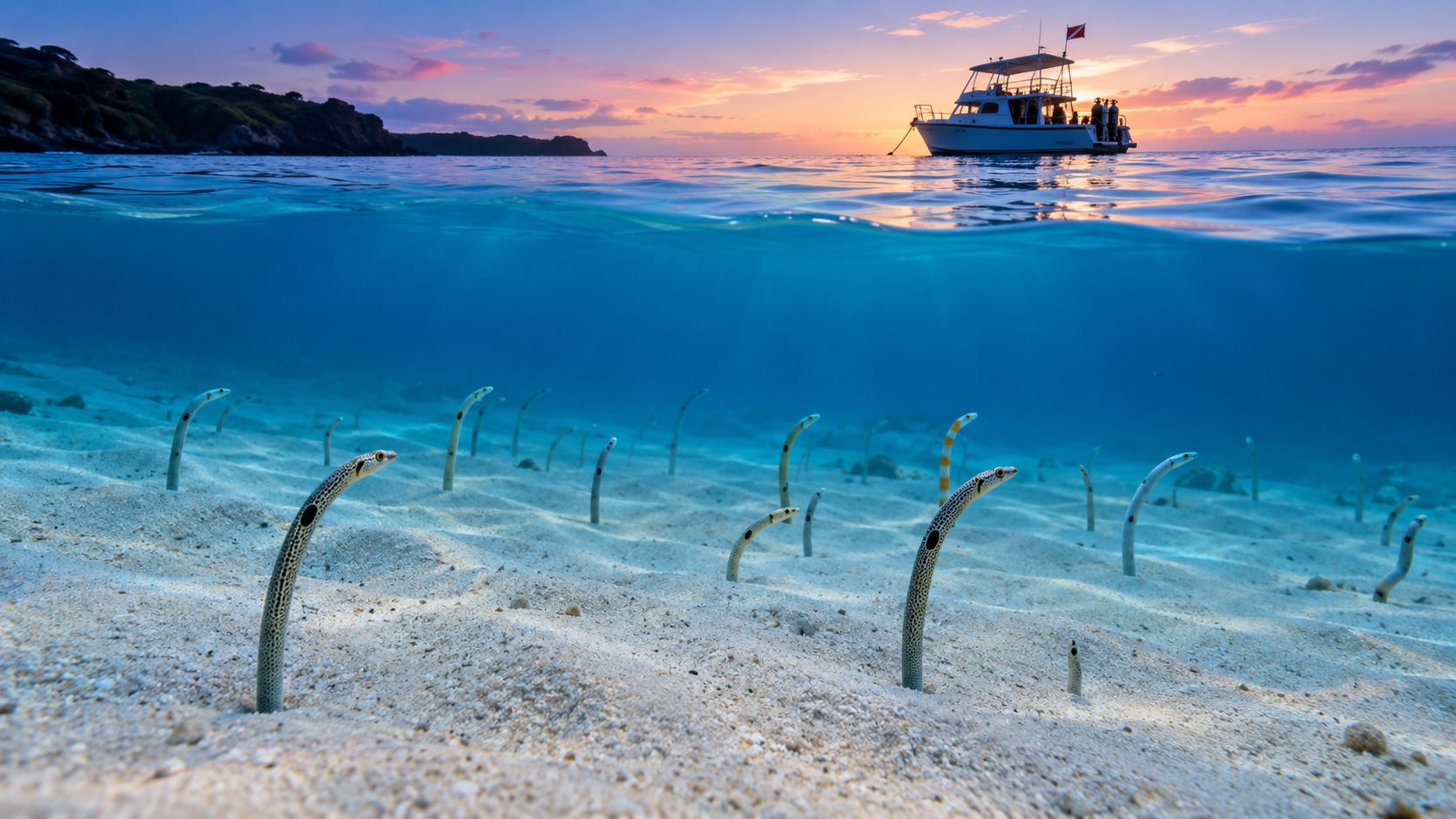
For a manta trip, I'd rather have the calmer site, the better viewing corridor, and the cleaner reef edge every time. That's what makes Garden Eel Cove the smarter choice when the goal is a smooth, high-quality dive rather than just any manta sighting.
Essential Gear and Photography Tips
Good gear doesn't make the manta rays show up, but it does decide how comfortable you are while they're there. A well-fitting mask, a proper wetsuit, and a reliable light matter more than fancy extras. For beginners who want a clean gear checklist, Kona Honu Divers' scuba gear guide is a practical place to start.
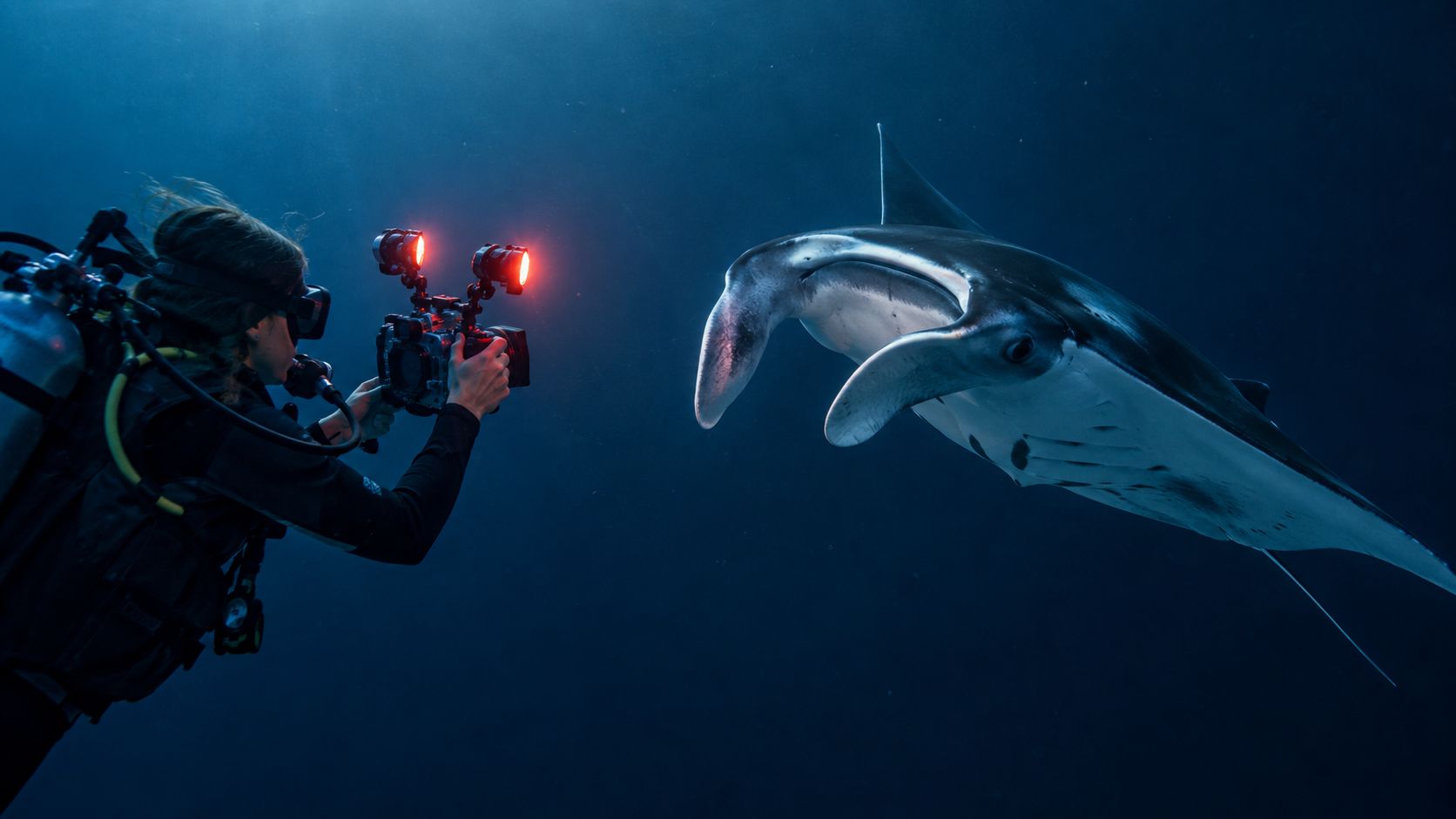
A rash guard helps with comfort under the wetsuit, especially if you're the kind of diver who notices rubbing at the shoulders or neck. Bring a dry layer for the boat ride back too, because even a warm Kona evening can feel cooler after you've been floating motionless in the dark. For camera work, the rule is simple, use light carefully and keep it passive.
What to bring and what to leave alone
Bring a towel, a dry shirt, and any personal motion-sickness aid you trust. Leave behind the idea that bigger lights or more flashing will get better images, because it usually does the opposite. Bright bursts can disrupt the scene and make the mantas less comfortable around your position.
If seasickness is part of your planning, common preventive options include the Ship-EEZ Seasickness Patch (product link), Dramamine pills (product link), Bonine pills (product link), Sea Band wristbands (product link), and ginger chews (product link). The practical move is to use whatever you're comfortable with before the boat leaves, not after the nausea starts.
The best camera is the one that doesn't get in the way of the dive. If your rig makes you fidget, scale it back.
How to photograph mantas without ruining the moment
Keep the camera pointed low and steady. Let the manta enter the frame instead of trying to track it like a sports subject. Wide-angle work usually makes more sense than chasing close-up detail, because the animals move through the light fast and often pass overhead before you've adjusted.
If you're shooting video, hold a stable line and avoid constant panning. The goal is to record the motion, not to wrestle with it. The mantas are doing enough on their own, so your job is to stay still, let the light do the work, and keep the reef and other divers out of the way.
Booking Your Manta Ray Dive with Kona Honu Divers
Kona Honu Divers runs the kind of operation that makes this dive easier to trust. Their setup includes custom dive boats, carefully maintained gear, and a crew with more than 200 years of combined industry experience from the company overview. They also offer practical perks like early diver discounts and free nitrox, which matters for guests who want comfort and efficiency on the water.
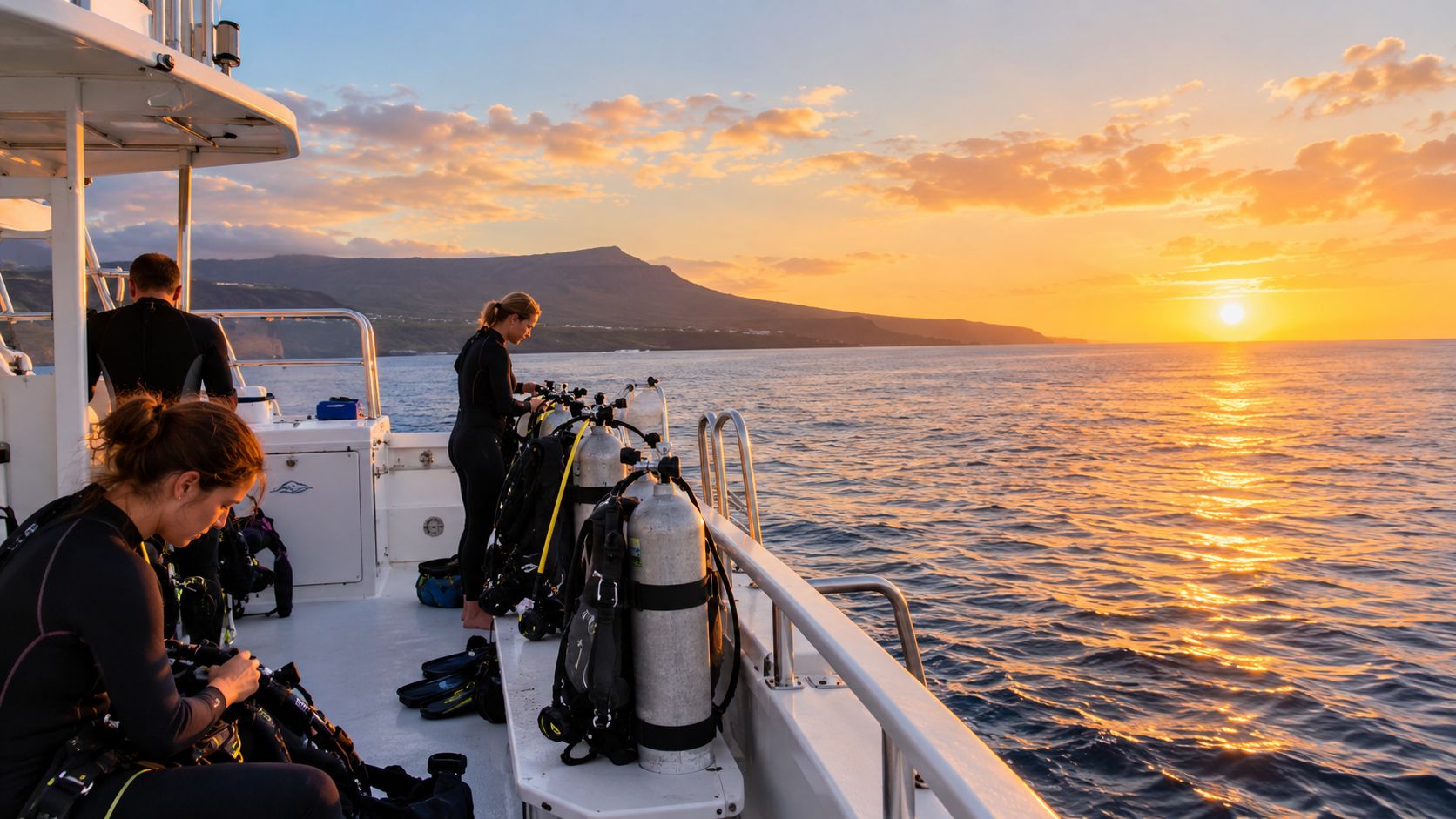
Their manta trip at Garden Eel Cove is built around the same core formula that makes the dive work, reef dive first, sunset break, then the night manta session. That's a good fit for divers who want a clean, organized evening instead of a rushed one. If you're comparing operators, the practical question is whether the boat, the briefing, and the site choice all line up for a smooth night.
The Kona Honu Divers manta dive booking page is the place to check if you want to match the trip to your calendar. You'll know quickly whether the available date works with your travel plan and whether the boat style fits your comfort level. For this kind of dive, that matters more than flashy promises.
What to look for before you book
A good manta operator should make the briefing clear, keep the gear organized, and explain where and why the site choice matters. Kona Honu Divers focuses on that kind of execution, which is what experienced divers usually care about most. The dive is already special, so the operator's job is to keep it smooth and predictable.
If you want to make the night feel effortless, book early, confirm the departure time, and ask about the gear setup before you board. That simple prep saves a lot of friction later, especially if you're traveling with family or diving after a long day.
Frequently Asked Questions About Manta Dives
First-timers usually worry about the same four things, whether they need certification, whether the dive is too hard, what happens if no mantas appear, and whether snorkelers can still enjoy the show. The short answer is that the experience is accessible, but the setup depends on whether you're diving or snorkeling. The right choice is the one that matches your comfort in the water.
For scuba diving, certification is required. For snorkeling, many guests can join without dive training because the viewing happens from the surface around a flotation setup. That's one reason the manta trip works so well for mixed groups, one person can dive, another can snorkel, and everyone still gets the same wildlife encounter.
What if the mantas don't show
They're wild animals, so nothing is guaranteed. That said, Kona's resident population and the light-plankton setup make this one of the most dependable marine encounters on the island, which is why people book it with confidence. When the site and timing are right, the chance of seeing mantas is strong enough that most guests treat the trip as a real wildlife experience, not a gamble.
Is it comfortable for beginners
Yes, if you listen to the crew and keep your movements slow. Beginners usually do best when they treat the dive like a calm observation session, not an athletic challenge. The stillness is part of the fun, and once you stop trying to “do” anything, the encounter becomes easier to enjoy.
Can snorkelers and non-divers still get the experience
They can, and often very well. Snorkelers stay on the surface and watch the mantas move through the light below, while divers get the bottom-up view. Both approaches work because the mantas are feeding in the same light field.
Is it worth it if you've done other night dives
Yes, because the setting is different. This isn't just a dark reef dive, it's a structured feeding event with a resident species that has learned the location. That combination of behavior, light, and timing is what makes the Kona manta dive stand apart from ordinary night diving.
If you want a manta dive that's organized, site-aware, and built around the way Kona's reef mantas feed, book with Kona Honu Divers. They run the Garden Eel Cove manta experience with the kind of practical setup that makes the night smoother, safer, and a lot more memorable.