
You've just checked into Kailua-Kona. The airport drive was easy, the sunburn is still fading, and you're scrolling through dive operators while wondering whether tomorrow should be a reef morning, a manta night dive, or both. The choice matters because Kona offers calm beginner reefs, volcanic formations for experienced divers, and wildlife encounters that need more careful planning than a generic “must-do” list suggests.
For Big Island divers in Kailua-Kona, HI, the smart approach is to match the site, season, boat, and crowd plan to your actual experience. Kona is forgiving, but it isn't automatic. Read the conditions, ask direct questions, and book the experience that fits your skills rather than chasing the most famous name.
Why Kona Is One of the Best Dive Destinations in Hawaii
Volcanic history, not just calm water, makes Kona distinctive. Mauna Loa shields the Kona coast from prevailing winds, creating conditions that often support snorkeling and scuba diving, as described in this overview of what Kailua-Kona is known for and our Big Island Hawaii scuba guide. The shelter does not remove swell, current, or difficult entries, so a good operator still needs to assess the site before departure.
Old lava flows give the seafloor its character. Lava tubes, arches, ledges, pinnacles, and reef corridors create different experiences within a short distance of the coast. A shallow guided dive can feel completely different from a deeper volcanic profile. You are exploring terrain shaped by the island's volcanic past, not just descending onto a flat coral patch.
The coast combines access with history
Kailua Village preserves its connection to King Kamehameha I, who spent his final years there. South of town, Kealakekua Bay marks where Captain James Cook first landed in 1778 and later died. These places carry cultural significance, so treat them as more than scenery in a dive itinerary.
Diving has also become a substantial part of the island's visitor economy. One independent estimate puts Big Island diving at more than 150,000 dive tourists annually, supported by over 50 dive shops and charters. The same historical account describes growth from fewer than 5 dive shops and under 10,000 dive tourists in the 1970s to 50 or more shops and 150,000-plus annual dive tourists in the 2010s to the present. That history explains why Kona offers many departure times and site options, while also making operator selection matter more.
My recommendation: If this is your first Kona dive, book a daytime reef charter. You will learn how local boats, entries, and volcanic terrain feel before choosing a night wildlife dive, especially during the crowded 2025-2026 manta period.
Kona's advantage is range rather than one magical site. Beginners can start on manageable reef terrain, while confident divers can pursue deeper walls, lava formations, and offshore night profiles. Choose based on your recent dive experience, comfort with boat operations, and whether marine life or geology matters more to you. A reputable crew should match that choice to current conditions, not sell every trip as the same experience.
When to Dive Kona and What Conditions to Expect
Timing your departure matters more than the month on the calendar. Independent guides commonly report roughly 60 to 150 feet of visibility, depending on season and local conditions, with the clearest water often arriving during summer mornings. Check this best season for diving in Kona before setting your itinerary, especially if manta crowding is a concern during the 2025-2026 period.
The practical rule is simple: book earlier departures when visibility matters most. Morning water is often cleaner and less affected by afternoon wind. Summer usually delivers the most consistent conditions, while winter can still produce excellent diving. North swells may reduce visibility at exposed sites even when other Kona departures remain suitable.
| Season | Water Temp | Visibility | Surface Conditions | Wildlife Notes |
|---|---|---|---|---|
| Winter | Cooler than summer, especially on deeper dives | Often about 60–150 ft, depending on swell and site (independent Kona diving conditions guide) | Usually manageable, but north swells can affect exposed sites | Whale season adds possible surface sightings, while swell can change site selection |
| Spring | Gradually warming | Often improves as seasonal swell eases | Generally favorable, with changing wind and swell patterns | Reef life remains the main focus |
| Summer | Warmest and commonly around 77–80°F | Often clearest, with morning and outer-reef conditions favored | Frequently calm, though daily wind can still build | Strong period for clear-water reef and manta planning |
| Fall | Warm, with conditions varying by day | Can remain strong, especially in morning hours | Often good, but weather patterns can shift | Good balance of reef visibility and wildlife interest |
Plan around the day, not just the month
Kona does not follow a perfect calendar. A calm winter morning may outperform a windy summer afternoon, and a protected cove may stay clear when an exposed site turns cloudy. Ask the operator which sites they are considering, how the captain evaluates swell direction, and whether the route will change if conditions shift. Those answers reveal more about the quality of the operation than a broad promise of calm water.
Deeper dives need thermal planning. Warm surface water does not rule out a cooler layer below. A 3 mm wetsuit works for many recreational divers, while a hooded vest or thicker exposure protection can make repeated or deeper dives more comfortable.
Book your first dive day early in the trip. You can then move the charter if weather affects the route, and one cancellation will not consume your only available water day. Choose a crew that communicates changes clearly, limits the itinerary to sites suited to current conditions, and manages manta traffic rather than treating every boat as interchangeable.
The Four Signature Kona Dive Experiences
If your first Kona dive is a relaxed morning on lava reef, a manta night dive, blackwater, or a deeper volcanic site, the right choice depends on more than the marketing label. Match the experience to your certification, recent dives, buoyancy, and comfort in open water. Each option delivers something different.
| Dive Type | Min Certification | Depth Range | Signature Marine Life | Best For |
|---|---|---|---|---|
| Manta night dive | Open Water for a guided recreational profile, subject to operator rules | Shallow to moderate viewing profiles | Manta rays feeding around dive lights | First-time night divers and wildlife-focused visitors |
| Daytime reef dive | Open Water or a supervised introductory experience | About 15–50 ft at shallow reef sites (published Kona site descriptions) | Hawaiian reef fish, turtles, eels, octopus, lava formations | New divers, families, photographers, and relaxed two-tank days |
| Blackwater dive | Advanced training and strong recent experience, with operator-specific requirements | Open ocean over very deep water | Larval fish, pelagic octopus, and other migrating deep-sea animals | Experienced divers with excellent buoyancy and self-reliance |
| Advanced volcanic dive | Advanced certification or equivalent logged experience | Roughly 80–140 ft at deeper profiles | Volcanic walls, pinnacles, sharks, and drift-oriented marine life | Divers who manage gas, depth, and ascent discipline well |
Start with daytime reefs
Daytime reef diving is the best first choice for many visitors. Sites near the Place of Refuge, Two Step, and other volcanic formations combine lava architecture with familiar Hawaiian marine life. They also let you settle into local conditions before adding darkness, deeper water, or a suspended line to the plan.
Depth changes gas consumption, supervision needs, and the consequences of poor buoyancy. A deeper site earns its place on your itinerary only when your certification, recent experience, and ascent discipline match the profile. Ask what the crew expects from divers before you book, especially if you have been out of the water for a while.
Treat manta night diving as a wildlife encounter
Mantas feed around dive lights without bait or training, creating a close wildlife experience that can suit a newly certified diver. Darkness still raises the workload. Hold your position, protect the reef, follow the briefing, and watch the traffic around you. Snorkelers, divers, lights, and boats share a limited viewing area.
One estimate puts manta night participation at up to 80,000 people annually. That popularity makes crowd management a safety and quality issue. Ask how the operator spaces groups, controls diver position, and responds when the site becomes congested. More boats do not guarantee more mantas or a better encounter.
Reserve blackwater for the right diver
Blackwater diving takes place offshore at night over deep water, with no visible bottom and small pelagic animals rising toward the surface. You need calm decision-making, excellent buoyancy, reliable light management, and confidence working without familiar visual references. It belongs on an experienced diver's plan, not a first night dive.
Advanced volcanic dives offer a different test. Lava tubes, canyon cuts, pinnacles, and deeper walls reward divers who can maintain position, monitor gas, and manage an ascent while taking in the scenery. If your last dive was a long time ago, start with a shallow reef and let the crew judge whether a deeper profile fits the day.
Certification Gear and Seasickness Prep
Kona has a straightforward path for non-divers. A Discover Scuba or resort experience can introduce a healthy beginner to a supervised ocean dive, while a full Open Water course takes longer and qualifies you for independent recreational diving within certification limits. Open Water generally fits shallow reef and manta programs, while blackwater and advanced volcanic profiles demand stronger experience and operator approval.
The Kona scuba learning guide is a useful starting point if you're deciding between an introductory experience and full certification. Don't book an advanced trip because the site name sounds exciting. Book it because you can handle the depth, navigation, gas management, and ascent requirements.
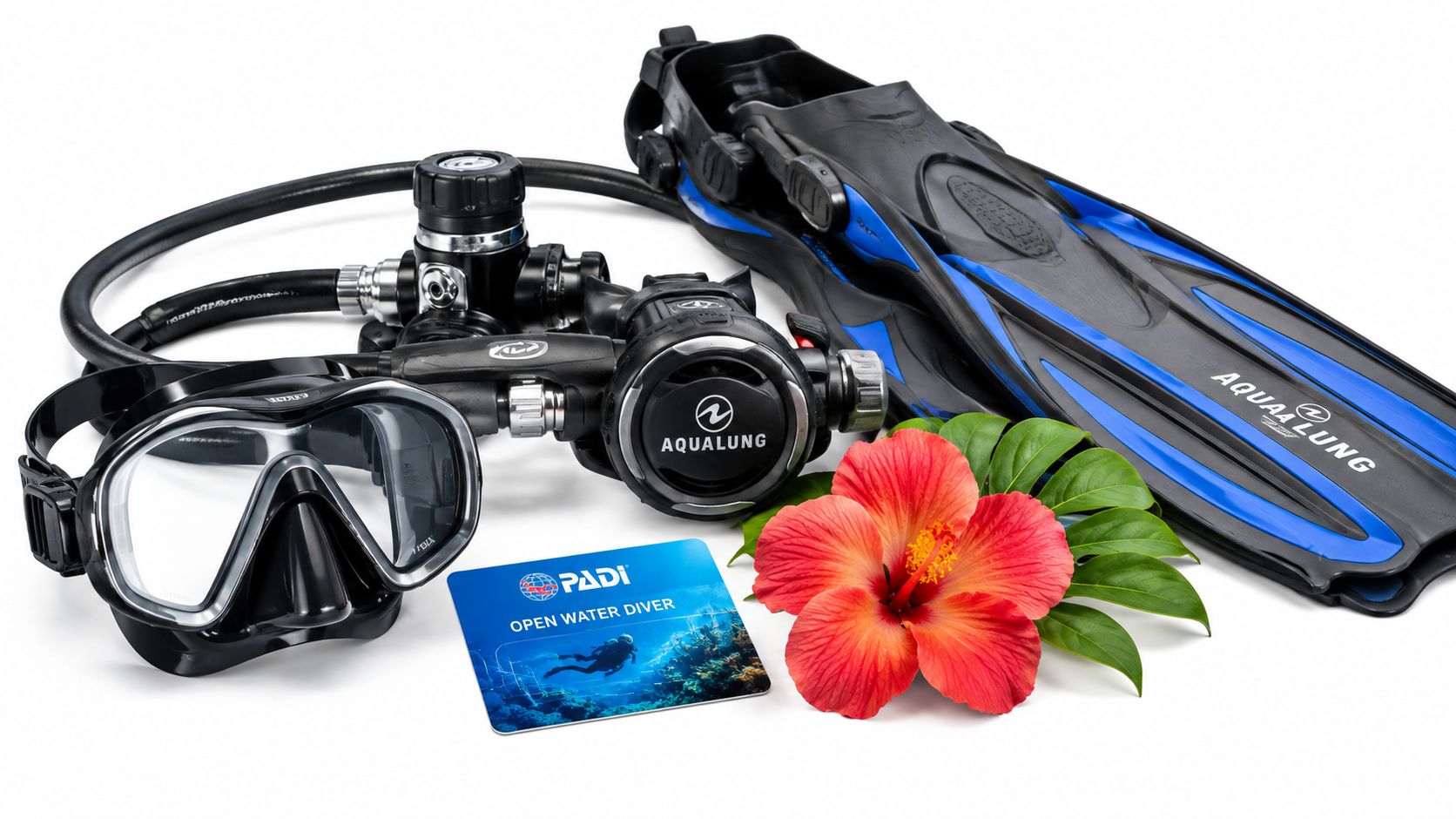
Pack for comfort, not just compliance
Most operators provide tanks, weights, BCDs, regulators, and basic exposure protection. Ask what's included before you arrive, then confirm the fit at check-in. A poorly fitting mask can ruin a dive faster than almost any marine condition.
Bring:
- Exposure protection: A 3 mm suit is a practical starting point. Add a hooded vest if you run cold or plan repeated night dives.
- Personal essentials: Certification card, dive computer if you own one, prescription mask details, towel, water, and a dry change of clothes.
- Sun protection: Use reef-conscious sunscreen and cover up on the boat. Apply sunscreen well before entering the water.
- Night equipment: Confirm whether the operator supplies primary and backup lights. Don't assume every trip uses identical gear.
Seasickness deserves its own plan. Eat a bland breakfast, hydrate, avoid alcohol the night before, and keep food light between dives. If you use medication, check with a medical professional about suitability and timing. Travelers commonly compare Ship-EEZ Seasickness Patches, Dramamine pills, Bonine pills, Sea Band wristbands, and ginger chews. Medication can cause drowsiness, so test your response before relying on it during a dive day.
Boat-day rule: Don't wait until the boat leaves the harbor to discover that your mask leaks, your fins pinch, or your seasickness plan makes you sleepy.
Children and families need a direct conversation with the operator. Discover Scuba programs commonly start at age 10, and young divers may need a parent, private guide, or specific depth limitation. Ask about the actual policy for your child's age, certification, and recent water experience before paying.
Manta Crowding Safety and Choosing the Right Site
The manta night dive is no longer a simple question of “Will we see rays?” It's also a question of site capacity, staging, surface traffic, and wildlife impact. Conservation guidance warns that overcapacity at viewing sites can create injury or death risks for participants, crew, and manta rays. The strongest operator is the one that explains how it controls the experience when demand peaks.
Garden Eel Cove, also called Manta Heaven, is north of the Kona airport and benefits from a protected position that blocks open-ocean swell and current. It's specifically described as calmer, with better visibility than more exposed locations, making it a sensible choice when comfort and viewing conditions matter. Read the Kona manta diving guide before comparing departure options.
Compare the site by what it actually delivers
| Site | Depth | Crowd Level | Boat Ride from Kailua Pier | Best For |
|---|---|---|---|---|
| Garden Eel Cove, Manta Heaven | Shallow viewing area | Popular and potentially busy | Short coastal transfer, depending on departure point | Families, first-time night participants, and calmer conditions |
| Manta Village | Deeper viewing profile | Popular, with peak-time congestion possible | Short to moderate transfer | Certified divers seeking closer underwater angles |
| Outrigger site | Varies by conditions and operator | Often considered a less crowded alternative | Longer than the main Kona sites | Visitors willing to trade transit time for space |
| North Kohala sites | Varies by site and conditions | Potentially smaller crowds | Longer boat ride | Repeat visitors and flexible travelers |
The exact crowd level changes by date, operator schedule, weather, and site assignment. Ask three questions before booking: How many boats may share the site? How does the crew rotate guests? What happens if conditions or capacity make the planned site unsuitable?
A good briefing should cover entry procedure, current direction, descent-line etiquette, light placement, surface traffic, and what to do if you lose your buddy. Surface marker buoys and disciplined entries matter because a crowded wildlife site leaves less room for improvisation.
Choose the site for safe spacing and clear procedures, not just for the promise of the closest manta pass.
Use this decision rule. Choose Garden Eel Cove when you want the protected, calmer option. Consider a less central site if reducing crowd exposure matters more than minimizing the boat ride. If an operator can't explain its crowd plan, skip the booking.
How to Pick the Right Kona Dive Operator
Star ratings don't tell you whether a boat suits your body, certification, or comfort level. Start with the vessel. A mid-sized boat with covered seating can feel reassuring for a first-timer, while a larger catamaran may make longer offshore trips more comfortable. Smaller boats can offer quicker site changes, but they also provide less shelter and movement space.
Then examine the dive group, not just the passenger count. A company that keeps guided groups small can give a less experienced diver more attention during entries, descents, and surface intervals. Ask whether the group size changes for manta night dives or advanced profiles.
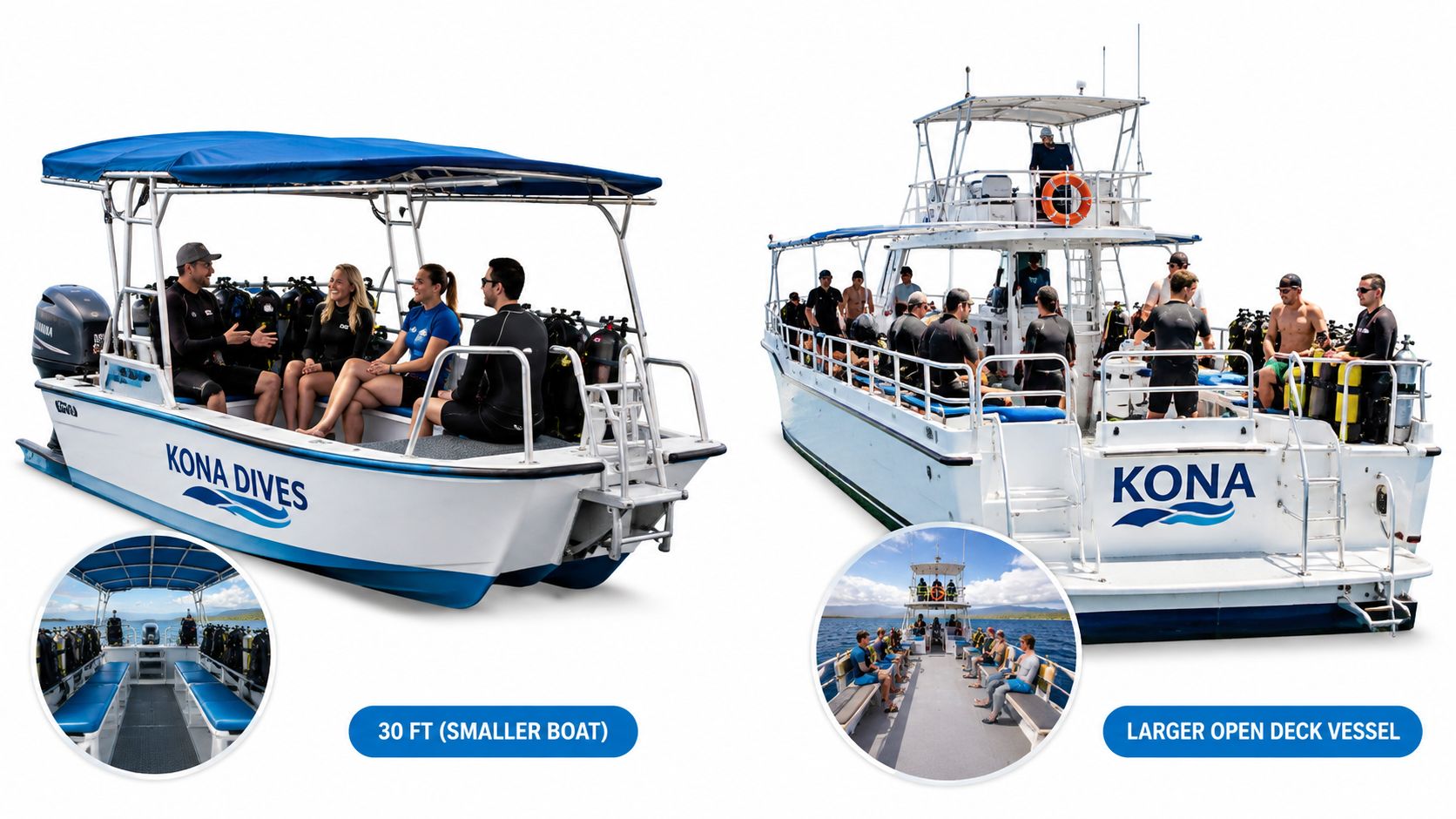
Use five practical filters
Crew competence: Look for current instructor, divemaster, first-aid, and emergency-response credentials. Local site familiarity matters because conditions can change between neighboring entries.
Equipment condition: Ask whether rental BCDs and regulators are maintained on a documented schedule. Rental computers are more useful than relying on shared tables, especially when divers have different profiles.
Gas options: Certified Enriched Air divers may value onboard Nitrox availability, particularly on multi-dive days. Confirm the fill and analyzer procedure rather than assuming Nitrox is included.
Operational clarity: The confirmation should state the harbor, check-in time, cancellation terms, certification requirements, and what happens when the captain changes sites.
Wildlife management: For manta trips, ask about guest rotation, lighting, line use, surface traffic, and the operator's approach to protecting the animals.
The Kona diving companies comparison can help you build a shortlist, but call the finalists with specific questions. A polished website doesn't replace a clear answer about equipment, capacity, or site selection.
Kona Honu Divers is one option for guided Kailua-Kona charters, including a two-tank local morning trip, manta night diving, and advanced long-range profiles. Compare its published trip requirements with your own certification and recent dive history, just as you should with any operator.
Red flag: Be cautious when a company won't explain its manta crowd plan, emergency procedures, payment terms, or equipment expectations before booking.
Booking Tips Packages and Your First Dive Day
Build your booking around the dive you'd regret missing. Reserve a manta night dive ahead of time during busy travel periods, especially if your schedule has no flexibility. Reef charters are usually easier to fit around weather and availability, but the most convenient morning departures still fill faster than the less popular time slots.
A practical first-day plan looks like this:
- First morning: Choose a two-tank reef charter if you're certified and reasonably current. Use it to assess your comfort with the boat, rental gear, water temperature, and local terrain.
- Following night: Schedule the manta experience after you've already completed a daytime dive, unless your operator and recent experience make a first-night dive appropriate.
- Later in the trip: Save blackwater or advanced volcanic diving for the day when your buoyancy, navigation, and confidence are strongest.
Read the booking details closely
A typical two-tank charter may include tanks, weights, divemaster support, snacks, and beverages, but inclusions vary. Manta trips often operate as a separate evening product, while advanced and blackwater charters can carry stricter experience requirements.
Ask about:
- Check-in: Arrive early enough for paperwork, gear fitting, and a real briefing. Don't treat the departure time as the check-in time.
- Harbor logistics: Confirm whether you're leaving from Honokohau Harbor or another departure point, then allow time for parking and walking to the boat.
- Extra equipment: Prescription masks, computers, lights, and specialty exposure protection may cost extra.
- Surface intervals: Ask how long the boat stays out and when you can expect to return, especially if you've booked dinner or another activity.
- Discount structure: Ask whether the operator offers early-morning pricing, Nitrox upgrades, multi-day packages, or repeat-guest benefits. These vary by company and certification.
If you're choosing between a reef dive and a manta dive, book the reef first when you're uncertain about your sea legs or night-diving comfort. If wildlife is the central reason you came to Kona, reserve the manta trip early, then choose a daytime reef charter that gives you a calmer introduction to the boat and coast.
Kona Honu Divers offers guided two-tank Kona charters, manta night dives, and advanced long-range trips for divers whose certification and recent experience fit the profile. Review the available Kona diving tours, choose the trip that matches your skills, and contact Kona Honu Divers with direct questions about conditions, gear, and site selection before you book.
Check Availability