
Picture this: you're floating in the warm, dark Pacific Ocean, completely weightless. Suddenly, huge, graceful shadows glide through the beams of light below you. It sounds like something out of a movie, but it's the real-deal manta ray night dive in Kailua Kona—an experience that’s consistently voted one of the best underwater encounters on the entire planet.
The best part? It’s an incredibly accessible adventure that’s just as mind-blowing for first-time snorkelers as it is for seasoned divers.
Experience Kona’s World-Famous Manta Ray Ballet
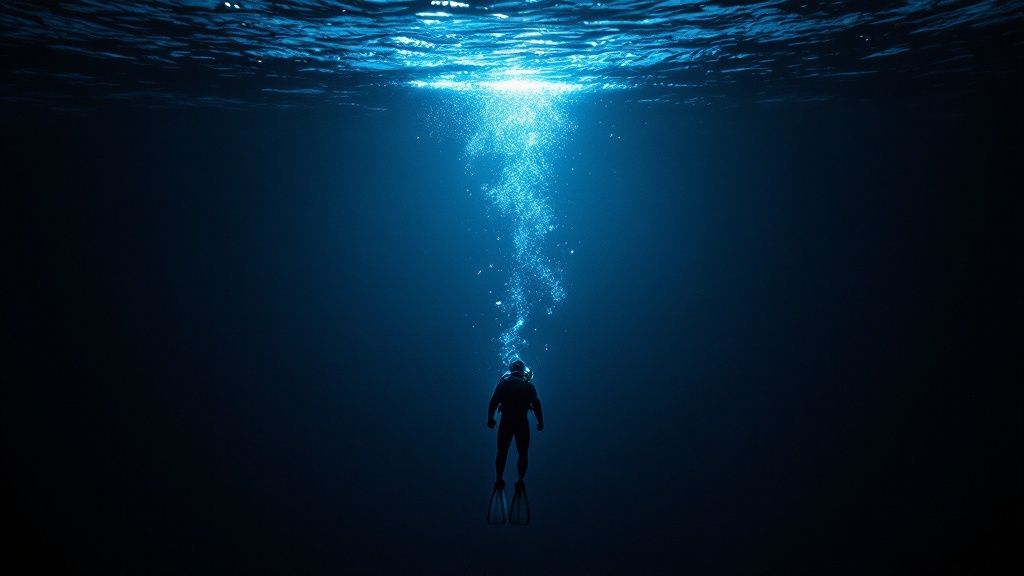
Off the Kona coast, one of nature’s most incredible performances kicks off every single night. After the sun dips below the horizon, an underwater ballet begins, and the concept behind it is beautifully simple.
Tour boats head out to specific sites and drop powerful lights into the water. These lights act like giant magnets for plankton, drawing in massive clouds of the microscopic critters that manta rays love to eat.
This floating buffet brings in the local manta population, and they put on a show, performing effortless barrel rolls and somersaults to scoop up their dinner. As a diver or snorkeler, you get a front-row seat. Divers settle on the sandy bottom, around 30-40 feet deep, while snorkelers hang out on the surface. Together, you create a "campfire" of light that attracts these gentle giants for a close-up encounter.
Here's a quick summary of what to expect on your manta ray night dive adventure in Kailua Kona.
Kona Manta Ray Night Dive At a Glance
| Aspect | Details |
|---|---|
| Location | Kailua-Kona, Big Island of Hawaii |
| Best Time | Year-round |
| Water Depth | 30-40 feet (for divers) |
| Duration | 45-60 minutes in the water |
| Activity Type | Scuba Diving & Snorkeling |
| Success Rate | Over 90% sighting probability |
| Manta Population | Over 450 identified resident rays |
This table gives you the basics, but the experience itself is something you have to see to believe.
Why Is This Dive So Reliable?
Lots of wildlife encounters are hit-or-miss, depending on migrations or seasons. Not this one. The Kona manta population is residential, meaning they live here all year long. You're not just hoping to get lucky; you're visiting them in their dining room.
In fact, with an estimated 450 identified individuals, this is one of the most concentrated manta habitats in the world. That’s why sighting success rates are consistently above 90%, giving you a solid 45-60 minutes of jaw-dropping observation time. You can read more about the science behind this incredible Kona dive.
The feeling is almost impossible to describe. Watching a creature the size of a small car glide effortlessly just inches away from you is a humbling and unforgettable moment. It's a silent, graceful performance that connects you directly to the magic of the ocean.
Local operators are so confident you'll see mantas that most of them even offer a "manta guarantee." If the rays don't show up on your tour, you can usually re-book for another night on the house. That commitment says a lot about how reliable this spectacle truly is. This is your chance to witness one of the most celebrated underwater shows on Earth.
Finding the Right Manta Ray Dive Operator in Kona
Let's be real: picking the right operator for your manta ray night dive in Kailua Kona is the most important decision you'll make. Period. This one choice shapes everything—your safety, your comfort, and whether you have a truly mind-blowing encounter or just a so-so boat ride.
A great operator doesn't just motor you out to a spot. They create an experience.
You want to look for companies with a spotless safety record and guides who are so experienced they know the local mantas by name. Seriously. Another big tell is their commitment to smaller group sizes. Fewer people means a better, less chaotic view of the action without feeling like you're in a crowd.
Prioritizing Safety and Sustainability
The best outfits in Kona are all-in on safety and marine conservation. One of the biggest things to look for is a company that follows the Manta Ray Green List guidelines. These are basically the golden rules for interacting with mantas, designed to protect them from harm and keep their feeding grounds natural and undisturbed.
For instance, a core rule is to be a passive observer. That means no touching, no chasing, and definitely no blocking a manta's path. A responsible guide will drill these rules into you before your fins even touch the water.
By choosing an eco-conscious operator, you're not just booking a tour; you're actively contributing to the preservation of Kona's unique manta ray population for future generations to enjoy.
One company that lives and breathes these principles is Kona Honu Divers. Their commitment to manta-safe practices is top-notch, ensuring the whole thing is respectful to the animals and completely awe-inspiring for you. Check out their manta ray dive tours to see how a professional trip is structured.
Key Questions to Ask Before You Book
Before you pull out your credit card, you need to do a little homework. Asking a few smart questions can tell you everything you need to know about an operator's quality. If you want a deeper dive, you can learn more about how to spot the best dive shop in Kona for what you need.
Here are the essentials to ask any potential operator:
- What is your 'manta guarantee' policy? Good operators know the sighting rate is incredibly high. Most offer a "manta guarantee," which means if the mantas don't show, you can come back another night for free (always subject to availability, of course).
- What is the guide-to-guest ratio? This is huge. A lower ratio means more personal attention from the guide and a much safer, more controlled dive.
- What kind of gear do you provide? Don't overlook this. Quality, well-maintained gear makes all the difference, especially the wetsuits. A proper thickness will keep you warm and comfortable in the dark water.
Getting solid answers to these questions will point you toward a company that truly cares about your safety and the well-being of Kona's incredible marine life. It's the first step to setting yourself up for an adventure you'll never forget.
How to Prepare for Your Underwater Adventure

A little prep work goes a long way toward making your manta ray night dive in Kailua Kona a smooth, stress-free adventure. Honestly, just knowing what to pack—and what to leave at the hotel—lets you relax and focus on the incredible experience ahead.
The main thing to think about is your comfort before and after getting in the water. After floating in the ocean at night, even in warm Hawaiian waters, you’ll be glad you brought a warm, dry layer. Trust me, the boat ride back can feel pretty chilly, and having a cozy hoodie or windbreaker makes all the difference.
Your Essential Packing Checklist
Your tour operator provides all the big stuff (dive and snorkel gear), but a few personal items are key for a comfortable trip. Think simple and practical.
Here’s a quick list of what you should definitely bring along:
- A Towel: A quick-drying travel towel is perfect.
- Warm Change of Clothes: A sweatshirt, jacket, or long-sleeved shirt is non-negotiable for the boat ride home.
- Reef-Safe Sunscreen: If you're on a two-tank trip that starts in the afternoon, slather this on at least 30 minutes before boarding. This gives it time to soak in so it doesn't wash off into the delicate reef ecosystem.
- Reusable Water Bottle: Staying hydrated is always a good move. Most boats have a water cooler for easy refills.
- Seasickness Medication: If you even think you might get motion sickness, take your preferred remedy well before leaving the harbor. Better safe than sorry!
Understanding Your Gear
The dive shop handles all the heavy lifting with equipment, but it’s good to know what you'll be using. A quality wetsuit is your absolute best friend on a night dive. While the water temperature in Kona is pleasant, you'll be pretty still in the water watching the mantas, which can make you feel colder than you'd expect.
To keep you toasty, operators typically provide thick 5mm or even 7mm wetsuits. This ensures you can fully enjoy the 45-60 minute underwater show without shivering. It’s much thicker than what you'd wear for a typical daytime dive here.
You’ll also get a powerful underwater light. These lights aren't just for seeing; they're the engine of the whole experience. Your guide will show you exactly where to point them to create a concentrated beam that attracts plankton, turning your spot into an irresistible manta buffet.
Overcoming Night Dive Nerves
Feeling a little anxious about dropping into the ocean in the dark? That’s totally normal, especially if it’s your first time. The good news is the Kona manta ray dive is one of the most organized and brilliantly lit night dives you could ever do.
Forget any ideas of swimming into a black abyss. The whole operation is set up around a central, powerful light source on the ocean floor, creating a well-lit "campfire." Divers and snorkelers gather around this bright stage. The light gives you a clear point of reference, which is incredibly reassuring, and allows you to just sit back and watch the mantas appear like magic out of the surrounding darkness.
Exploring Kona’s Premier Manta Ray Dive Sites
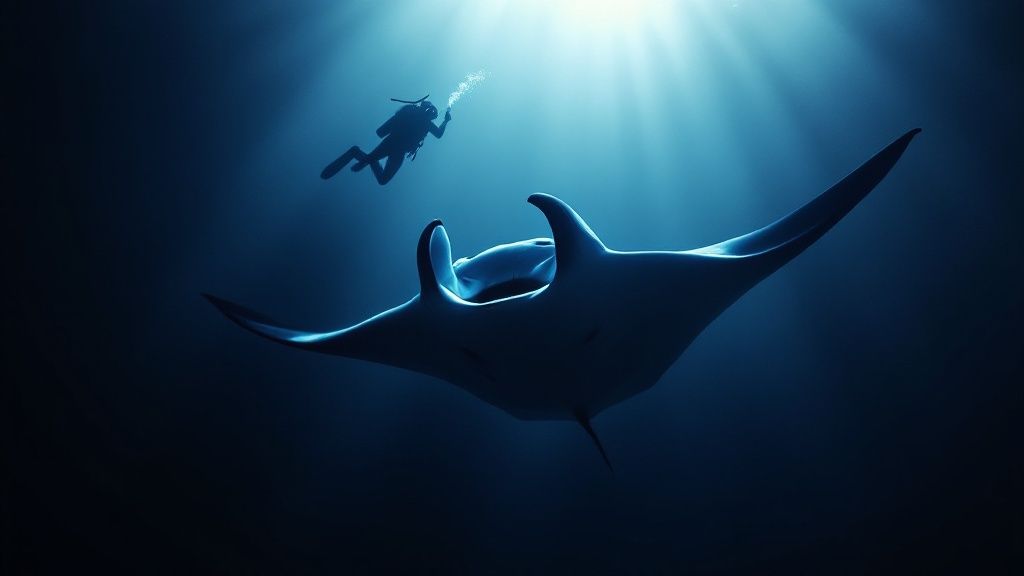
When you book a manta ray night dive in Kailua Kona, you're essentially getting a ticket to one of two world-famous underwater stages. While both spots deliver incredible encounters, knowing the subtle differences can really deepen your appreciation for the whole experience. It also helps you understand why your boat captain might choose one location over the other on any given night.
The manta action in Kona is concentrated at two main sites: Garden Eel Cove, which we affectionately call "Manta Heaven," and Keauhou Bay, also known as "Manta Village." Each has its own personality. The final call on where you go often comes down to the day's ocean conditions, where the mantas have been most active, and even where your boat departs from.
To put it simply, you're either heading north near the Kona Airport to Garden Eel Cove or south to Keauhou Bay. Garden Eel Cove usually gets the nod for a higher chance of seeing big groups of mantas—we're talking an average of five per dive on a good night. Keauhou Bay, on the other hand, is known for its calmer, more protected waters. This makes it a go-to for first-time night divers or anyone worried about seasickness, though the manta groups might be a bit smaller. You can explore more details about Kona's premier manta dive sites to get the full picture.
Garden Eel Cove (Manta Heaven)
Just north of town, near the airport, you'll find the legendary Garden Eel Cove. As its nickname "Manta Heaven" implies, this place is famous for hosting massive congregations of mantas. It's not at all unusual for divers here to witness a true underwater ballet, with a dozen or more of these gentle giants swooping and barrel-rolling through the dive lights.
The bottom here is a gently sloping sandy patch, which creates a perfect natural amphitheater for divers to settle in and watch the show. Because it's a bit more exposed to the open ocean, it can get some swells, but on a calm night, the sheer number of mantas makes it an absolutely unforgettable spectacle.
Keauhou Bay (Manta Village)
Head south of Kailua-Kona and you'll find "Manta Village," located right offshore from the Sheraton Kona Resort. This spot actually pioneered manta tourism decades ago, after the hotel's bright lights started attracting plankton and, in turn, the mantas. The bay itself is much more protected, offering consistently calm conditions.
This makes it a fantastic choice for a few key reasons:
- Perfect for snorkelers: The flat, calm surface is ideal for snorkelers hanging onto their light boards.
- Great for beginners: If you're new to night diving or feeling a bit anxious, the sheltered environment is much more comforting.
- Less chance of seasickness: The boat ride from Keauhou Harbor is shorter, and the calm water drastically cuts down the odds of feeling queasy.
While Manta Heaven might boast bigger numbers on paper, Manta Village delivers a super reliable and comfortable experience. It's a phenomenal and accessible option, especially for families and groups with both divers and snorkelers.
Honestly, you can't go wrong with either site. Both spots are critical parts of the ecosystem that supports Kona's resident manta population. Your operator will use their local knowledge to pick the best stage for that night's performance, making sure you get the best possible front-row seat to the show.
What to Expect During Your Manta Ray Encounter
Alright, this is it. The moment you've been waiting for. The boat engines cut out, the mooring line is set, and a special kind of quiet excitement settles over the group. Your guides run through one last briefing, and then it's time to slide into the surprisingly warm, dark Pacific.
Getting into Position
If you're scuba diving, you'll follow your guide down to the sandy bottom, usually somewhere around 30 to 40 feet. Your group will settle in a semi-circle on the sand, pointing your powerful dive lights straight up. We call this the "campfire," and it creates a massive column of light that acts like a dinner bell for plankton.
Snorkelers get an equally mind-blowing view, just from the surface. You'll hang onto a specially designed float board that has its own powerful lights pointing down into the depths. It's a comfortable way to float and watch the action unfold right below you.
The Grand Entrance
And then… it happens. A huge, dark shape glides out of the blackness and into the beams of light. The first manta has arrived. Before you know it, another one joins, and then maybe another. They swoop and soar through the light, feasting on the buffet of plankton you've helped gather.
You'll be completely captivated as they perform these effortless barrel rolls, sometimes passing just inches from your mask with their giant mouths wide open. It’s an underwater ballet, and it's the heart and soul of the manta ray night dive in Kailua Kona. Honestly, it feels like you're on another planet.
Your only job is to be a chill, respectful observer. The calmer and more still you are, the better the encounter will be. And remember the golden rule: no touching. It's super important for keeping these gentle giants safe and healthy.
Your In-Water Expert
Your divemaster or snorkel guide is with you the whole time, making sure everyone is safe and in the right spot. But they do more than that—they make the whole experience richer. They'll point out specific mantas, many of whom they know by name.
Their expertise turns an amazing show into a fascinating lesson. They can actually identify individual rays by the unique spot patterns on their bellies! This has helped researchers catalog nearly 200 resident rays here. On a really good night, you might see more than 20 of them show up for dinner. It's wild. Discover more fascinating facts about Kona's manta population.
This whole setup is designed to be respectful and sustainable, ensuring you're part of a world-class encounter, not just a spectator. To learn more about what it's like from different perspectives, check out the full experience of the manta ray night dive on the Big Island.
Your Manta Ray Night Dive Questions Answered
Planning a bucket-list trip like the manta ray night dive in Kailua Kona is exciting, but it's totally normal to have a few questions pop up. We get it. To help you feel ready and stoked for your adventure, here are some straightforward answers to the questions we hear all the time from our guests.
Do I Need to Be a Certified Diver to See the Manta Rays?
Nope, not at all! That's one of the best parts about the Kona manta ray experience—it’s truly for everyone. Certified divers get an incredible view from the ocean floor, but snorkelers have an equally mind-blowing perspective right from the surface.
Snorkelers hang onto a custom-built, floating light board. This board shines down into the water, attracting plankton and drawing the mantas right up to you for a close-up encounter. Most pro operators, including us at Kona Honu Divers, run trips that welcome both divers and snorkelers on the same boat. This makes it a fantastic activity for families or groups with different experience levels. You can get a better sense of the whole setup by checking out our guide on what exactly the manta ray night dive is.
Is the Manta Ray Night Dive Safe?
Absolutely. Safety is the number one priority for every reputable tour company in Kona. It's also important to know that manta rays are gentle giants. They don't have teeth, stingers, or barbs, so they pose zero threat to people. They are filter feeders just cruising for a meal.
The entire operation is highly organized and supervised by professionals. You’ll get a detailed safety briefing before you even get in the water, be outfitted with all the gear you need, and have expert guides with you the whole time. The procedures are standardized across the local industry to ensure everyone—guests and mantas alike—stays safe.
When you go with a professional operator, you're putting yourself in the hands of experts who handle everything. Your only job is to float, watch, and be amazed.
What Is the Best Time of Year for the Manta Ray Dive?
This is the best news: any time is a great time! The manta rays off the Kona coast are a resident population, meaning they live here year-round and don't migrate. Because of this, sighting success rates are consistently over 90%, no matter what month you decide to visit.
The only thing that can change things up is the weather and ocean conditions. Tour operators are always watching the forecast and will only head out when it's safe. This incredible reliability means you can book your adventure for a trip in July or December and have an equally high chance of an unforgettable night.
What Happens if We Do Not See Any Manta Rays?
While seeing mantas is incredibly consistent, these are wild animals in their natural habitat, so a sighting can never be 100% guaranteed. This is where choosing a top-tier operator really pays off.
Reputable companies like Kona Honu Divers offer a "manta guarantee." If for some rare reason the mantas don't show up on your tour, you can go again on another night for free (subject to availability). Always double-check the specific policy when you book, as this is a good sign of an operator's commitment to giving you an amazing experience. Pro tip: try to schedule your manta dive early in your vacation, just in case you need to use that guarantee and rebook.