
You're on the boat already, watching the shoreline fade and wondering whether you're about to feel calm wonder or a little panic when the lights hit the water. That mix of nerves and anticipation is normal, especially if this is your first night ocean encounter. The manta ray dives of Hawaii Kailua Kona hi turn that uncertainty into confidence fast, because the whole experience is built around a simple truth, you're not chasing animals in the dark, you're waiting at a feeding site and letting the ocean come to you.
The scene is quiet in a way day diving never is. You feel the boat settle, hear the water moving below the hull, then watch the lights switch on and turn black water into a stage. That light attracts plankton, the plankton draws the mantas, and the encounter starts to make sense before you even enter the water, exactly as described in NOAA's overview of the Kona phenomenon (NOAA's history of the Kona manta dives).
Floating in the Dark What Makes the Manta Experience Unique
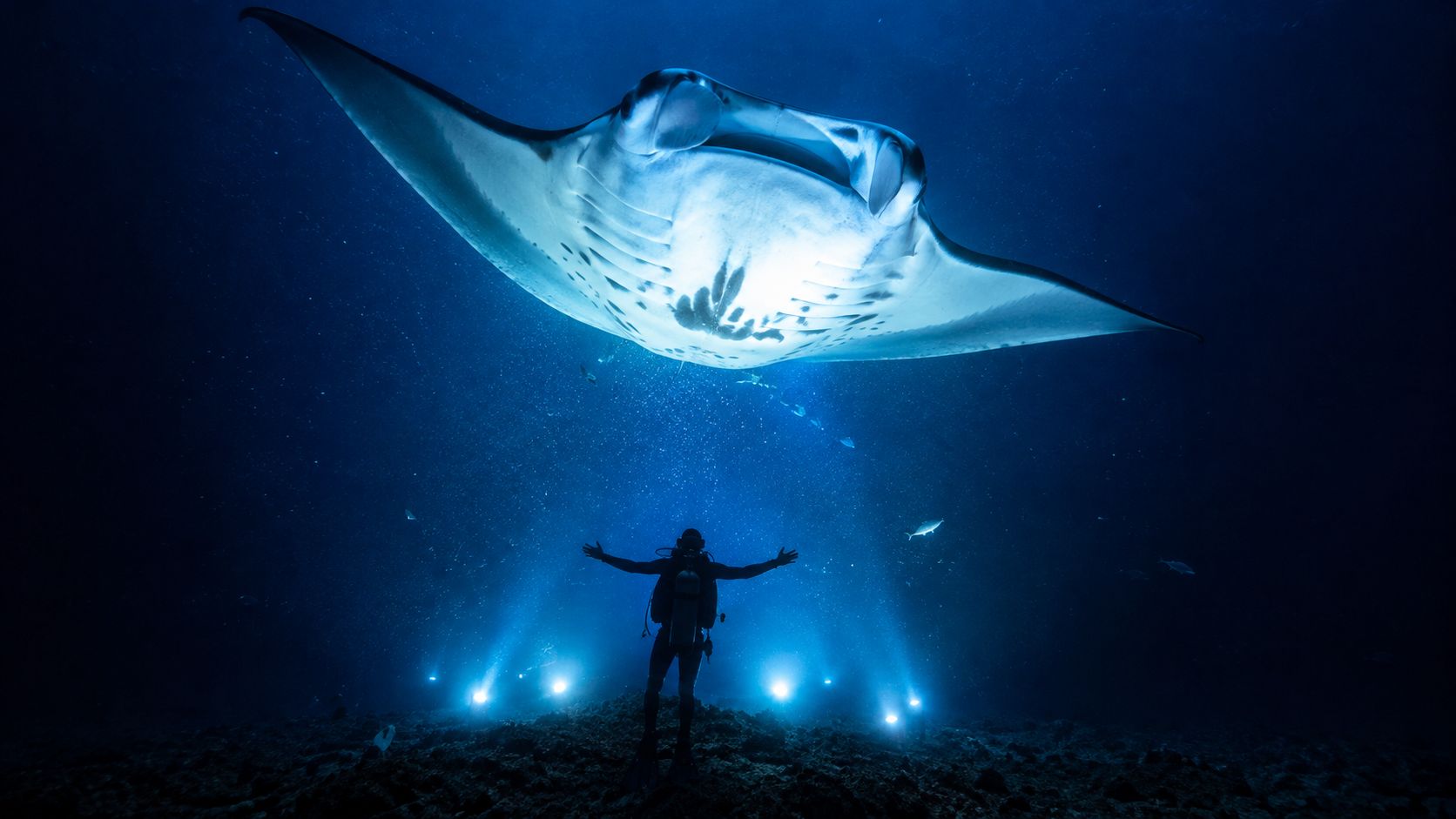
Why the darkness matters
A Kona manta dive changes shape the moment the sun is gone. Your eyes adjust, the dive lights cut bright columns through black water, and then a broad shadow resolves into a manta ray gliding just outside the beam. The scene can feel almost unreal, yet it follows a simple feeding pattern.
The lights attract plankton, and the plankton concentrates into a dense meal for the mantas. NOAA explains this light-plankton-manta relationship in its overview, and that mechanism is why the encounter feels so organized even though it looks wild from the deck (NOAA's explanation of the light-plankton-manta interaction). The best way to understand the dive is to watch the feeding station work like a dinner table in the dark, with the lights setting the table and the rays arriving to feed.
What you actually feel in the water
First-timers usually expect speed. The sensation is steadier. You float in place, feel the cool water on your face, hear your breathing inside the mask, and wait for the first pass. When a manta arrives, the mood often shifts from tension to quiet focus, then to amazement.
The useful skill is reading the animal, not reacting to it. A manta that circles calmly and opens wide under the light is likely feeding in the main column. A ray that stays at the edge, angles away, or passes only once may be sampling the area or moving through, which tells you the encounter is changing by the minute.
Practical rule: stay still and watch the details, the wing-like strokes, the open mouth filtering plankton, and the way the animal uses the light rather than avoiding it.
For a visual sense of how large those close passes can feel, see this Kona manta dive picture guide. The surprise is usually scale. A manta that looked distant from the boat can fill your field of view in seconds, and the water itself seems to become part of its motion.
The History and Science Behind the Aggregation
From accident to resident population
Kona's manta dives grew from long observation, not from a tourism script. NOAA's historical overview identifies Lefty as the first manta recognized as a regular Kona resident in 1979, and places organized dives near the former Kona Surf Hotel around 1991 (NOAA history and resident population overview). That timeline matters because it shows a resident aggregation with a documented history, not a passing event.
As divers and researchers kept returning, individual mantas began to take on identities of their own. NOAA's overview describes about 280 named mantas linked to Kona as distinct from other Hawaiian manta populations, and later reporting noted 318 individual mantas identified around Hawai'i Island since 1979. For a new diver, that is the key shift in perspective. You are not watching anonymous animals drift through once. You are entering a place where the same rays can reappear across seasons, and where each sighting adds to a long record.
Why long-term observation changes how you read the dive
That history gives every night dive a second layer. A calm pass under the lights may feel dramatic, but it is also a familiar behavior within a resident group with recognizable individuals and repeat use of the site. The encounter becomes easier to interpret once you know the animals are not arriving by accident.
A later University of Hawai'i study added another piece. By analyzing community-sourced observations from 2010 through 2022, the researchers compiled more than 23,000 sightings involving 167 unique reef manta rays (University of Hawai'i manta study). Seasonal and annual changes in group size tracked zooplankton density, which supports a simple idea with big consequences, food availability shapes the nightly aggregation more than the human schedule does.
Why divers should care about the science
The science changes how you behave in the water. A manta dive in Kona becomes a living dataset, and each quiet, respectful night helps keep that record continuous. Because researchers have tracked these animals for decades, the site's fame depends on steady habits in the present, not just on stories from the past.
Photo identification is part of that continuity. The ventral markings let researchers recognize individuals over time, so one ray can be followed through many encounters and folded into a larger picture of movement, site fidelity, and habitat use. If you want a clearer sense of what happens below the surface, this look at how deep manta rays dive in Kona adds useful context without turning the dive into mythology.
What to Expect on Your Night Dive Adventure
The boat, briefing, and entry
The evening usually starts with a clear briefing, because the crew needs everyone calm before the lights ever go into the water. You'll hear how the group will position itself, what the hand signals mean, and how the guides want you to behave once the mantas appear. That prep matters more at night, because uncertainty feels bigger when the ocean is dark.
If you're scuba diving, expect a controlled entry and a settled position near the light source rather than a roaming search. If you're snorkeling, you'll stay at the surface with a lighted float or board, which keeps the group organized and gives the mantas a stable feeding zone. A good operator makes the setup feel simple, not theatrical.
What guides are actually managing
The guide isn't just pointing at animals. They're watching spacing, comfort, air supply, surface conditions, and how the group reacts when a manta changes direction. That's the invisible part of a good tour, the part that keeps the encounter relaxed instead of chaotic.
Good sign: if the crew keeps repeating the same few behaviors, stay still, stay low, don't crowd, they're protecting the quality of the sighting as much as the safety of the guests.
A night dive briefing also helps with the emotional side. New divers often worry they'll be too busy thinking about gear to enjoy the animals, but the routine solves that. Once you know when to descend, where to hold, and how to stay out of the way, the experience becomes easier to absorb.
For anyone who wants more practice with the feel of the dark water itself, this night diving overview is a useful companion read. The main point is that a well-run manta trip should feel structured from start to finish, even though the wildlife encounter itself remains completely wild.
Choosing the Right Site Manta Heaven vs Manta Village
The two main places people mean
Kona's manta aggregation centers on two regularly used sites, Manta Village at Kaukalaelae Point and Manta Heaven in Makako Bay. The names matter because “the Kona manta dive” sounds like one location, yet the site you choose changes the feel of the night and the kind of viewing setup you get.
A long-term NOAA site fidelity study documented repeated use at both locations, which confirms that each site supports regular manta activity, even if they do not behave the same way (NOAA site fidelity study). That is the key first step for first-timers: both can deliver mantas, but the viewing experience depends on the site.
Why Garden Eel Cove usually wins for the dive tour
Garden Eel Cove, also called Manta Heaven, has a nearshore setting that works well for organized viewing. The site gives operators a tighter space to hold the group, which matters because manta encounters are easiest to follow when divers and snorkelers are settled instead of drifting to chase a better angle. The reef shape also helps keep the lighted viewing area more consistent, which is part of why the encounter feels orderly.
The broader research points in the same direction. As the University of Hawai'i study covered above found, Garden Eel Cove consistently supported larger groups than Keauhou. That does not make the site magical. It does suggest that, for many nights, this is the more reliable place to see a dense feeding cluster.
How to think about the choice
If your goal is a sheltered, controlled viewing environment, Garden Eel Cove is usually the stronger pick. A more stable setup on the reef gives new divers less to worry about, and that matters when the scene is already exciting enough.
Individual manta behavior can also help you read the site. A ray that keeps returning to the same lighted patch is telling you the food concentration is right there. A ray that changes direction often is usually responding to spacing, current, or another animal, not to the people watching it. That is why a calm group matters so much.
For a clearer side-by-side look at the differences, the Manta Heaven vs. Manta Village guide is a useful companion. For most first-timers, the simplest choice is the site that gives the cleanest view and the least uncertainty.
Gear, Photography, and Responsible Etiquette
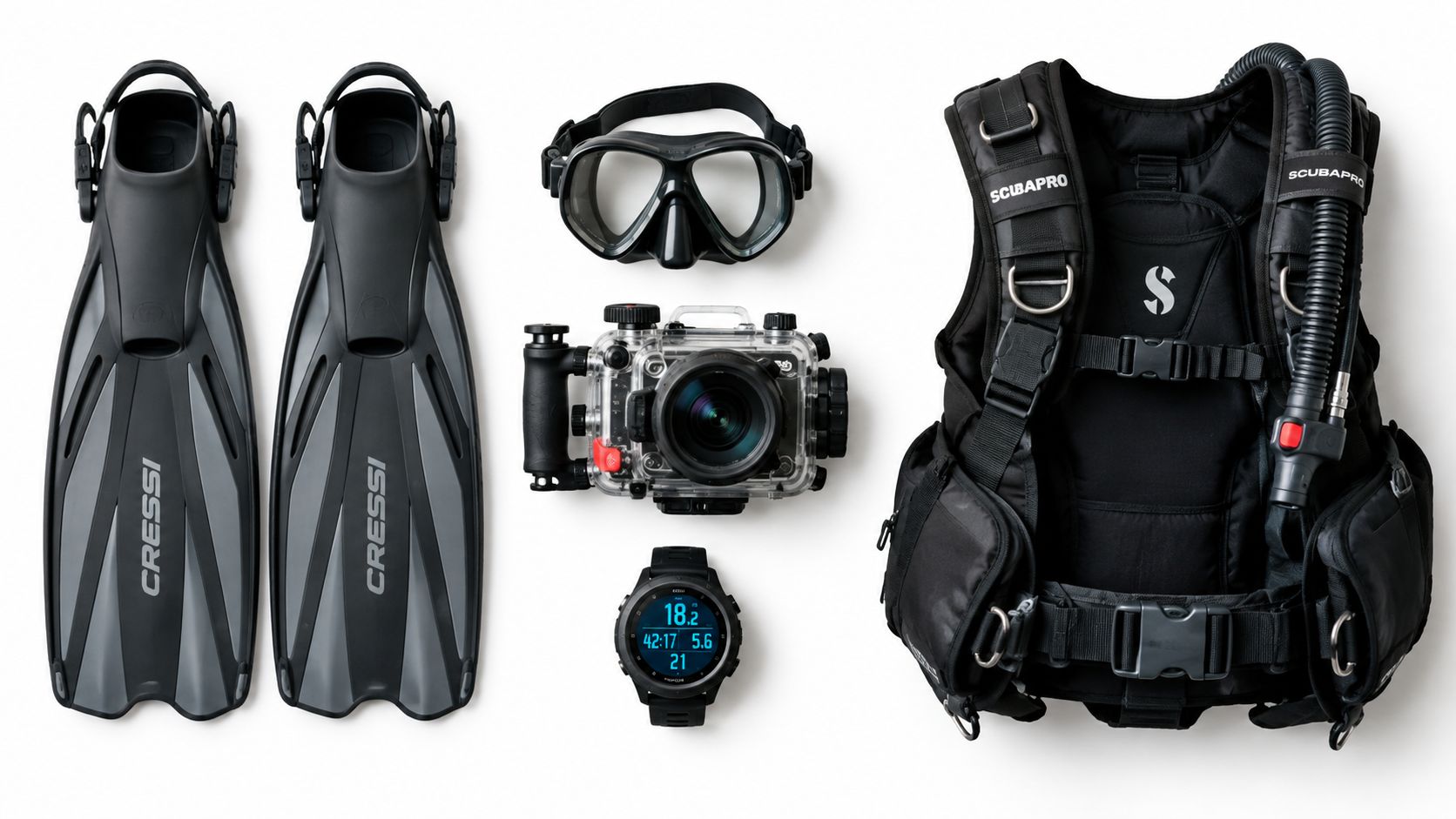
The gear that actually helps
For this dive, the most useful equipment is the gear that keeps you still and aware. A dive computer matters because it keeps your underwater time and ascent profile in front of you, and solid buoyancy control keeps you from stirring up sand or drifting into other guests. If you're carrying a camera, keep the rig simple enough that it doesn't take over your attention.
Photographers should think in terms of restraint, not aggression. Low light makes autofocus hunt, and quick movement can lead people to fire too many frames while losing their position in the group. Keep your body steady, let the manta enter the frame, and prioritize behavior that doesn't change the animal's path.
The best manta photos usually come from the diver who stopped trying to force the shot.
What responsible participation looks like
Public advice often stops at “don't touch,” but the deeper rule is about reducing cumulative disturbance. The Hawaiʻi Guide summary of research notes documented impacts from snorkelers and scuba divers, while also stressing that the encounter should stay observation-only because touching can damage the manta's protective skin layer (responsible manta etiquette and skin protection).
That means a few practical habits matter a lot:
- Hold your position: stay where the crew places you instead of chasing a better angle.
- Control your buoyancy: small depth changes can crowd the animal or kick up sediment.
- Keep light discipline: aim lights where the crew asks, not where your camera wants them.
- Accept a less-close view: a manta that avoids the group is telling you the spacing isn't right.
- Leave the pursuit to the fish: if the animal moves away, don't follow.
One Kona operator that offers this kind of guided experience is Kona Honu Divers, which runs manta dive and snorkel tours as part of its broader Kona schedule. The useful part for guests is not hype, it's the structure, the briefing, and the way the crew keeps the observation area organized.
Responsible behavior also helps beginners. When you stop worrying about whether you're “doing it right,” you can focus on breathing, stillness, and the manta's movement. That shift makes the encounter feel bigger, not smaller.
Booking Your Dive Operators, Costs, and Logistics
What to plan for before you reserve a seat
Manta trips in Kona are sold in different formats, from single-night manta snorkels to combined dive packages. The right choice depends on your comfort in the water, your certification level, and whether you want a dedicated manta outing or a broader dive day that ends with the night encounter.
If you're a newer diver or want a more relaxed entry into the experience, a guided manta tour is usually the easiest path. If you're already comfortable underwater and want to stack the evening into a fuller dive day, a package with additional reef time can make sense. For a different kind of night-water experience, some operators also run a Kona blackwater dive, while more experienced divers may prefer an advanced two-tank trip.
How to choose an operator
Choose the operator that gives clear briefings, sane group sizes, and straightforward expectations about the encounter. The best crews don't promise control over wild animals, they promise a good system for observing them safely. That includes gear help, calm in-water management, and a crew that explains why the rules exist.
Logistics matter more than people expect. Check in early enough to settle your gear, ask what's provided, and confirm whether the tour includes wetsuits, weights, tanks, and light equipment. If you're sensitive to motion, prepare before the boat leaves the harbor so the experience starts comfortably.
The manta ray swimming information page is useful for visitors comparing formats, especially if they're deciding between snorkeling and scuba. The important thing is to book the style that matches your comfort, not the one that sounds most intense on paper.
Booking rule: the right manta trip feels organized before you board and calm once you're in the water.
Frequently Asked Questions About Manta Dives
Will I definitely see mantas
No dive can promise that, because these are wild animals. The Kona sites are reliable, especially where site fidelity is strong, but the ocean still decides the final show. The best you can do is choose a proven site, a skilled crew, and a night when conditions support feeding.
Is this okay for non-divers
Yes, snorkeling is a common way to see the mantas, and the observation-only format works well for people who don't want scuba gear. The surface view is different from the diver's view, but the behavior of the animals is the same, calm, graceful, and strongly tied to the lights.
What if I get separated from the group
Stay where your guide told you to stay and avoid swimming after the mantas. In a good briefing, the crew will tell you exactly how to signal and where to regroup, and that structure matters more than trying to fix the situation on your own.
Kona Honu Divers runs guided manta ray nights in Kailua-Kona with the kind of clear structure nervous first-timers usually want, along with reef dives and other local underwater trips. If you're ready to turn the Kona manta experience from something mysterious into something manageable, visit Kona Honu Divers and choose the tour that fits your comfort level.