
The first time I watched a manta ray rise out of the dark water off Kona, the whole group went silent. One moment we were staring into a circle of light, and the next a giant white belly rolled overhead so close that everyone forgot to breathe for a second.
Your First Glimpse of the Ocean's Majestic Dancers
Warm water, black sky, bubbles drifting upward, and a pool of light on the seafloor. That's how a manta ray dive in Kona often begins. At first, new divers usually look around for movement on the reef, because they expect the action to come from the edges.
Then the manta appears from above or from the dark water just outside the beam.
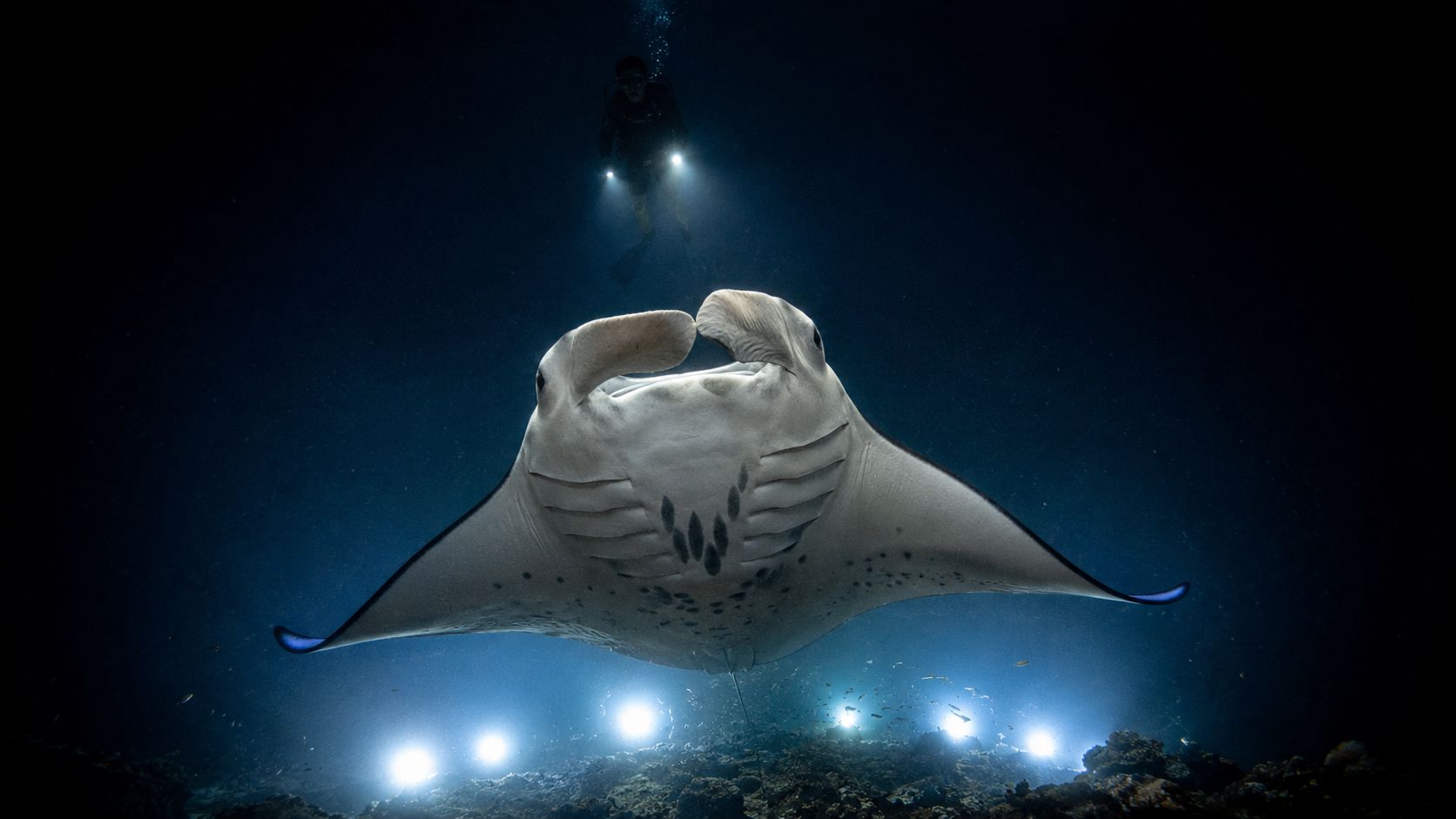
It doesn't look frantic. It doesn't look dangerous. It looks deliberate. The ray glides into the light, opens its cephalic fins, and starts feeding in a slow, controlled sweep that feels more like an air show than a fish encounter.
What surprises first-timers
A night dive is often expected to feel tense. This one usually feels focused and calm once you're in position. You're not chasing wildlife through the dark. You're settled in one place, and the mantas come to the food gathering in the light.
A few things catch people off guard:
- How quiet it feels: Even with bubbles and lights, the encounter has a hushed feeling.
- How close the mantas pass: They can sweep just overhead while staying fully in control.
- How graceful they are: Their size is obvious, but their movement is softer than people expect.
Stay still, keep your light where your guide wants it, and let the animals set the pace. That's when the magic happens.
For many guests, that first pass changes the whole night. The darkness stops feeling empty. It starts feeling alive.
Why Kona is the Global Capital for Manta Ray Encounters
A lot of places offer a chance to see manta rays. Kona offers a system that works.
That difference matters. If you are choosing one night on vacation to get in the water after dark, you want more than hope. You want a coastline, a habitat, and a dive plan that line up in the mantas' favor.
Kona has that rare combination. Reef mantas use this coast year-round, the island's leeward side often provides calmer conditions, and the underwater setup lets guides place lights where plankton gathers. The result feels less like searching a huge ocean and more like waiting at a restaurant the mantas already know.
If you want the broader underwater context, this guide to what makes diving in Kona different from other destinations helps explain why the coast produces such memorable encounters.
Why this coastline works so well
Kona sits along the sheltered side of the Big Island. For guests, that usually means a more comfortable boat ride and a calmer surface. For mantas, it means feeding areas that operators can return to again and again under workable conditions.
The geography offshore matters too. Deep water lies close to shore, and that supports the plankton movement that makes night encounters possible. Once lights are placed in the water, plankton begins to collect in the beam, much like dust becoming visible in a flashlight. Mantas are not coming to perform for divers. They are coming to feed where the food has become concentrated and easy to track.
That is the primary reason Kona stands apart. The encounter is built around natural feeding behavior, not luck.
Why repeat behavior changes the whole experience
New divers often assume manta sightings are random, like spotting a whale from shore. Kona is different because the same coastal pattern repeats night after night. Operators set up in known feeding zones, guests stay in a stable viewing position, and the mantas move through the light column on their own terms.
That predictability improves the experience in two ways. First, it gives guests a better chance of seeing mantas without racing around underwater. Second, it is easier to manage safely and respectfully, which is exactly what you want on a night dive with large wild animals.
Here is the short version:
| Factor | Why it matters |
|---|---|
| Resident reef mantas | Mantas are regular users of this coastline, not occasional passersby |
| Leeward location | Conditions are often calmer and easier for guests to handle |
| Deep water near shore | Helps support the plankton flow that draws feeding mantas in |
| Light-based viewing method | Concentrates plankton in one area so mantas have a reason to circle close |
Why operator choice matters here
Kona's success is not only about location. It is also about how the tour is run.
A responsible operator helps keep the encounter organized, calm, and low impact. Good briefings reduce crowding. Smart light placement gives mantas a clean feeding lane. Clear rules about touch, spacing, and body position protect the animals and make the dive better for everyone in the water. That is one reason experienced local crews, including Kona Honu Divers, can shape the night in ways first-time guests feel right away, even if they cannot yet name every detail.
Practical rule: Kona leads the world for manta encounters because the setting supports repeat natural behavior, and a well-run tour turns that behavior into a safe, respectful, high-quality experience.
Manta Heaven vs Manta Village Which Kona Dive Site is Best
When guests compare sites, they usually focus on one question. Where will I have the better experience in the water? For most divers and many snorkelers, Garden Eel Cove, often called Manta Heaven, is the stronger choice.
That doesn't mean Manta Village can't be good. It can. But if I'm guiding someone who wants the clearest, most comfortable, and most visually engaging version of the manta ray dive in Kona, I lean toward Garden Eel Cove.
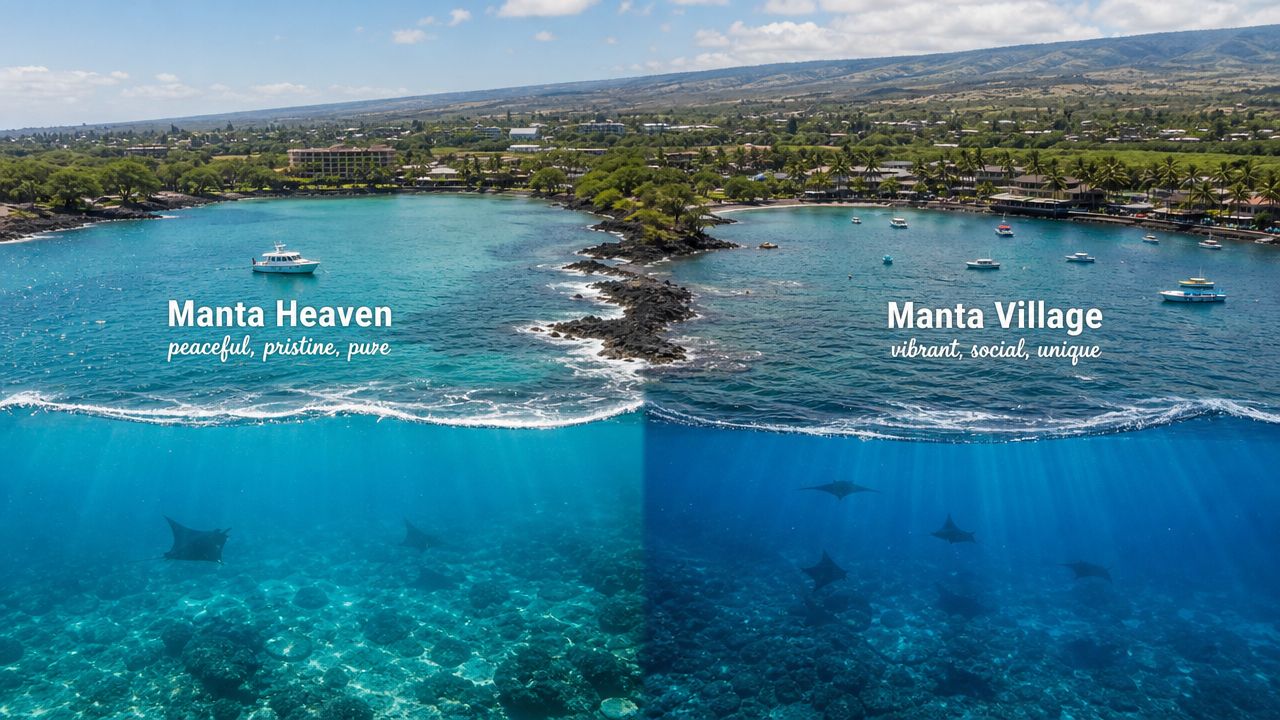
Why Garden Eel Cove stands out
The first advantage is protection. Garden Eel Cove is often favored because its location can provide a more protected setup and a cleaner viewing area. When conditions cooperate, that means less distraction from surge and a more comfortable platform for staying still and watching the mantas work the light column.
The second advantage is the layout underwater. The viewing geometry matters. A good manta site isn't just about whether rays show up. It's about whether the group can hold position without blocking one another and whether the mantas have a clean lane through the feeding zone.
For readers comparing locations, this local guide on where is the best place to dive with manta rays is worth reviewing.
Better viewing and a better reef
Garden Eel Cove often feels more like an amphitheater. Divers settle in, lights go up, and the mantas work the center. That circular viewing area usually gives more guests a direct angle on the action instead of a side view.
A few reasons that matters:
- More even sight lines: People around the circle can watch the same passes.
- Cleaner feeding lane: Mantas have room to turn and swoop through the middle.
- Stronger overall dive value: The surrounding reef adds interest before the main event begins.
Manta Village has history and can produce memorable encounters. But if you want the site that tends to offer the more complete experience, Garden Eel Cove is hard to beat. You get a protected-feeling setup, a viewing area that works with manta behavior, and a reef environment that adds something before the lights do their job.
What to Expect on Your Manta Ray Night Dive
The first time you drop into Kona water after sunset, the ocean can feel quieter than you expected. Then your light comes on, the group settles in, and the whole scene starts to make sense. Within minutes, what looked like empty dark water becomes a dinner table, and the mantas know exactly how to find it.
A good trip starts on the boat with a clear briefing. Your crew checks whether you are diving or snorkeling, reviews entry and exit procedures, and explains where to place your body and your light. The goal is simple. Give the mantas a predictable space to feed, and give you a front-row seat without crowding them.
If you are on a two-tank schedule, the first dive is often at dusk on the reef. That helps for a reason. It gives you a chance to settle your breathing, check your weighting, and get comfortable before the main event begins at full dark.
The underwater setup
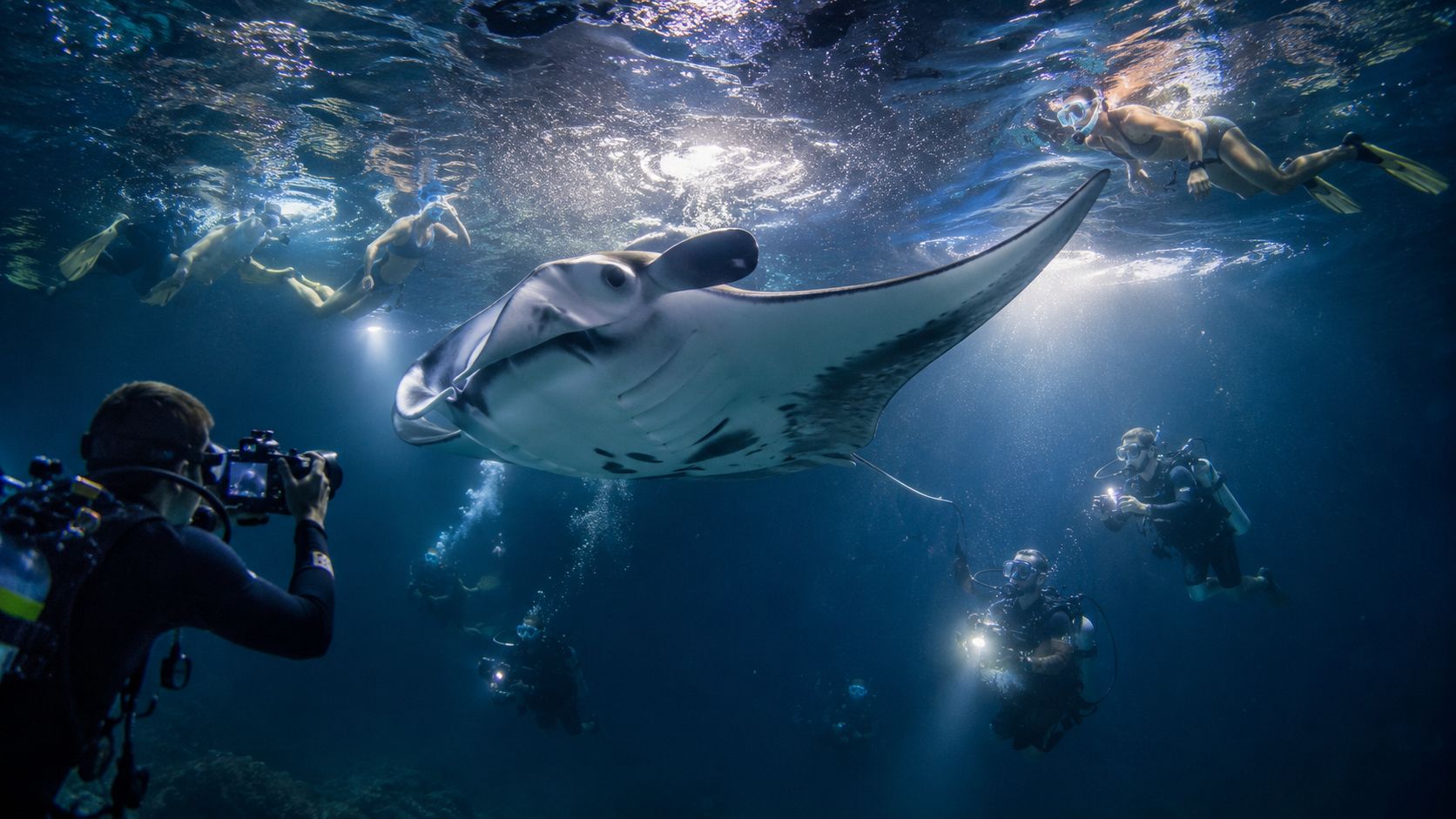
The manta portion follows a plan, and that plan is part of why Kona works so well. Divers descend, settle on the sandy bottom, and stay in one area with lights aimed upward. If you want a clearer picture of the site profile, this guide on how deep the Kona manta ray dive is gives a helpful overview.
Snorkelers stay on the surface and hold a lighted float board. Divers create the glow from below. Snorkelers create it from above. Either way, the lights concentrate plankton, and the mantas come to feed through that lit water column like swallows passing through a cloud of insects at dusk.
That stationary setup is why new divers are often surprised by how manageable the dive feels. You are not chasing wildlife through the dark. You are building a calm, consistent feeding zone and waiting for the action to come to you.
What the encounter feels like
Patience pays off here.
At first, you may notice only small particles drifting through your beam. Then a shadow forms at the edge of the light. A manta banks in, turns its white belly toward the glow, and sweeps overhead with a motion so smooth it hardly looks real. The close passes are thrilling, but the real magic is understanding what you are watching. These animals are not performing for people. They are feeding efficiently in a place that suits their behavior, which is one reason Garden Eel Cove so often delivers such memorable encounters.
The rhythm is usually easy to follow:
- Lights attract plankton.
- Plankton gathers in the beams.
- Mantas move into the lit water to feed.
- Guests stay still and let the mantas pass safely overhead.
A calm diver gets the best view. Good buoyancy, quiet fins, and steady breathing matter more than speed or experience level.
If you dive with a thoughtful operator such as Kona Honu Divers, that structure feels even better. A well-run crew keeps the group organized, prevents crowding, and reinforces the habits that protect the mantas while improving the encounter for everyone in the water.
Preparing for Your Dive Who Can Go and What to Bring
This is one of the easier big-name wildlife dives to prepare for. If you're a certified scuba diver with basic open water experience, the in-water portion is usually straightforward because it's shallow and stationary. If you're snorkeling instead, the key question is comfort in the water at night, not athletic ability.
New guests often worry that the dark will make the dive difficult. In practice, the structure makes it easier than many daytime dives. You're briefed thoroughly, guided into position, and asked to do less swimming than on a typical reef dive.
What to bring
Most operators provide the core dive or snorkel gear. Your job is to bring the small things that affect comfort.
A practical packing list looks like this:
- Swimsuit already on: It makes boarding smoother.
- Towel and dry clothes: The ride back can feel cool after night diving.
- Light layer or sweatshirt: Useful even in Hawaii once you're wet and out of the water.
- Certification card if diving: Don't leave that part to memory.
- Any personal comfort items: Defog, spare hair tie, or your own mask if you prefer it.
If you're sensitive to boat motion, planning ahead helps. This guide on how to avoid sea sickness covers useful basics.
Seasickness and tour choices
Even on Kona's calmer side, some guests feel the boat. If seasickness is on your radar, bring something before you need it. Common options include Ship-EEZ Seasickness Patch, Dramamine pills, Bonine pills, Sea Band wristbands, and ginger chews.
For general trip planning, you can compare scuba diving tours in Kona. If the manta night gets you interested in another unusual night experience, the Kona blackwater dive offers a very different kind of drifting pelagic encounter. Divers looking for more demanding daytime profiles can also review the advanced long-range dive tour.
Bring less than you think, but bring the things that keep you warm and settled. Comfort on the boat changes how much you enjoy the whole night.
The Kona Honu Divers Experience
A manta night can feel almost effortless from the guest side. You check in, listen to the briefing, follow the guide, and then the rays appear overhead as if the whole evening arranged itself. Under the surface, a lot has to go right for it to feel that calm.
That is why operator choice matters so much in Kona. The mantas may be the stars, but the crew sets the stage. A well-run boat keeps small problems from turning into stress, especially after dark, when clear instructions and steady group control make the difference between feeling relaxed and feeling lost.
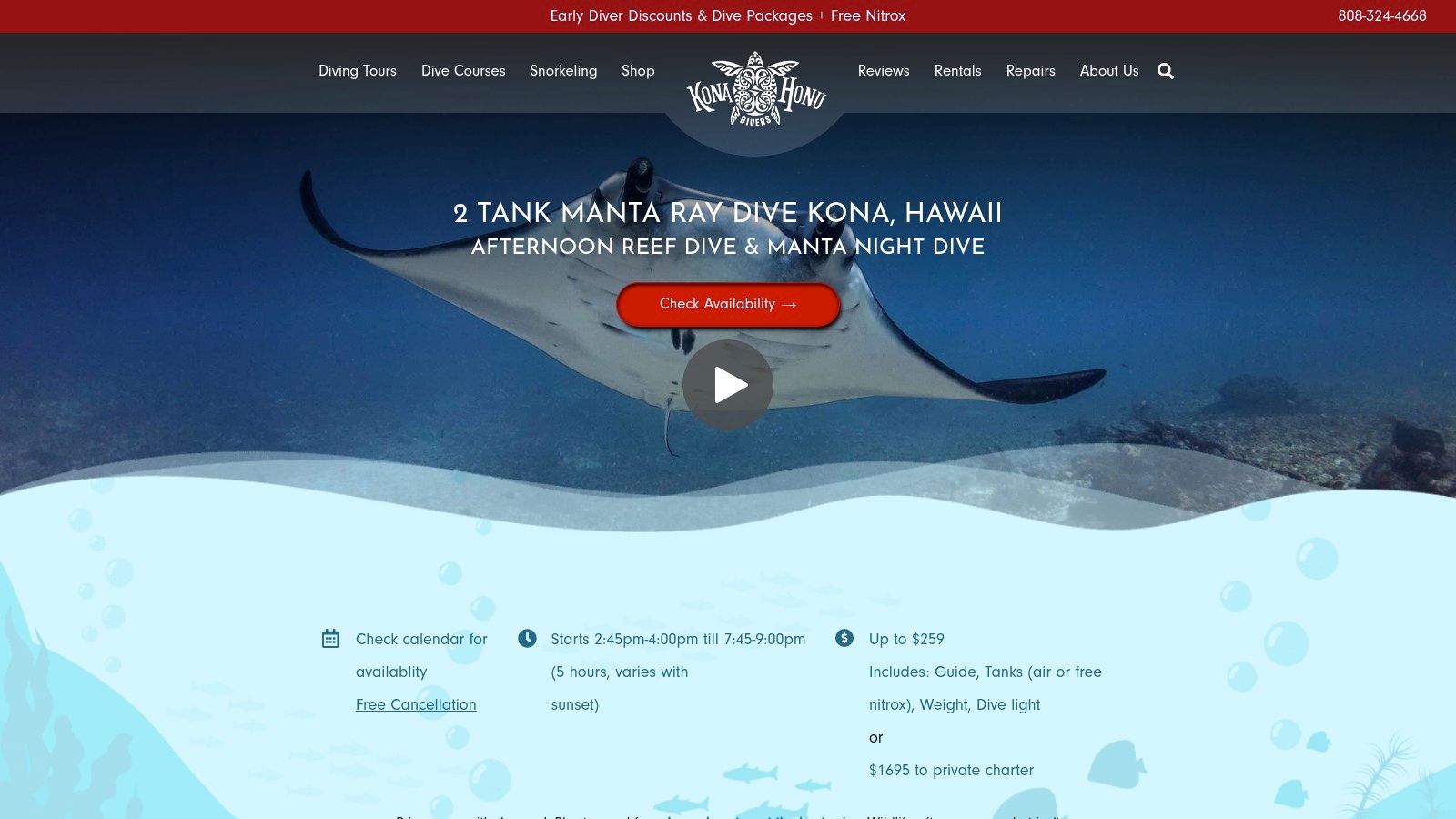
Kona Honu Divers is one of the local operators many visitors consider for this experience. According to their company profile, the team brings decades of combined dive experience in Kona, and the company highlights custom boats, maintained gear, free nitrox, and a mix of day and night charters around the Big Island. Those details are not just brochure points. They affect comfort, timing, and how well the group settles into the encounter.
What a strong crew changes
New divers often assume every manta tour is roughly the same because everyone is going to the same animal encounter. In practice, the quality gap shows up in the details. A good crew explains the plan in plain language, gets people in the water without rushing, and places the group so the mantas can feed without being crowded.
It works a lot like a good theater crew. If the lighting, spacing, and timing are handled well, your attention stays on the performance. If they are handled poorly, you notice every distraction.
Here is what to look for:
- Clear briefings: You should understand where to be, where your light goes, and how to avoid drifting into the action.
- Orderly in-water positioning: Good placement helps everyone see more while keeping the feeding lane open for the mantas.
- Comfort on the boat: The ride home feels much better when the boat layout, ladder, and crew support are well thought out.
- Wildlife-first standards: The crew should actively reinforce passive observation and responsible diver behavior around marine life, not treat it as a suggestion.
Why that improves the whole night
The best-run manta trips usually feel the least chaotic. Once the dive starts, you are not watching a crew solve preventable problems. You are free to look up, settle your breathing, and enjoy the rhythm of the mantas passing through the light.
That matters for the animals too. Kona's manta encounters work because the rays can approach on their terms. A disciplined crew protects that pattern, which is one reason choosing a responsible operator improves more than guest comfort. It helps preserve the encounter that brought everyone there in the first place.
You can see how past guests describe the trip on the company's Kona Honu Divers reviews page.
Check Availability and Book Now
Manta Conservation Safety and Etiquette
A manta night goes well when the rays stay in control of the encounter. That is the whole idea.
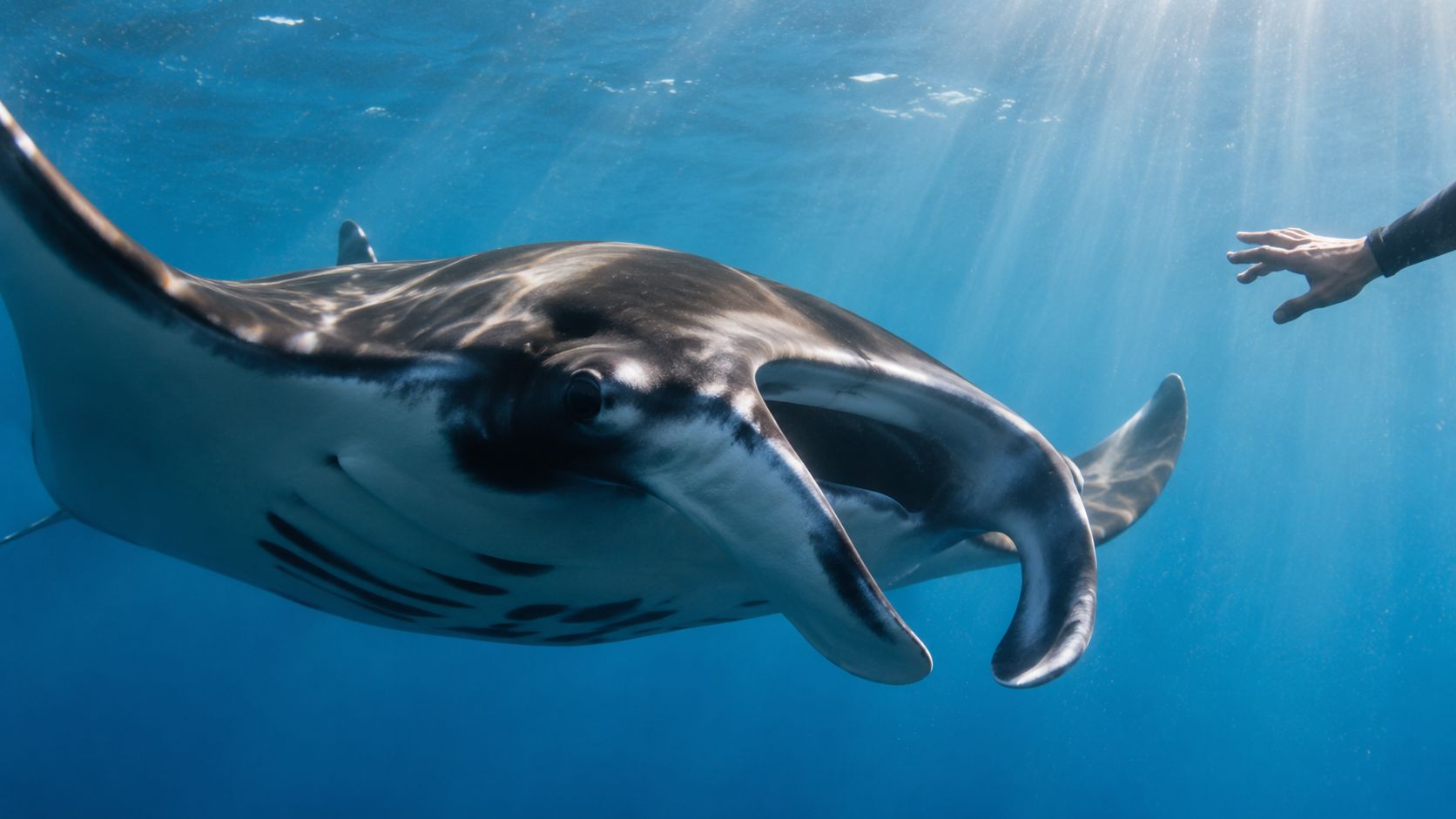
Your role is simple. Stay where your guide places you, keep your hands to yourself, and leave the mantas a clear feeding lane. If a ray glides close enough that you can see the pattern on its belly, that is a gift from the animal, not an invitation to reach out.
Touching a manta can strip away part of the protective mucus layer on its skin. Chasing one or drifting upward into its path can break the smooth loop the animals use while feeding through the light. A good manta dive feels calm for a reason. The rules are designed to protect behavior that makes Kona so special in the first place.
The ethical part people should understand
Kona's night manta encounters are extraordinary because the animals have learned that light can concentrate plankton, which creates a dependable feeding opportunity. That learned behavior is exactly why guest behavior matters so much. If divers and snorkelers stay predictable, the mantas can keep feeding naturally. If people reach, chase, crowd, or shine lights carelessly, the encounter becomes less stable for everyone, including the rays.
Garden Eel Cove is especially rewarding when people follow the plan because the site works like an underwater theater. The light draws in plankton. The mantas follow the food. Guests stay low and still, so the water column above remains open for those barrel rolls and close passes people come to Kona to see. Disturb the stage, and the performance breaks apart.
If you want a useful primer before your trip, this guide to responsible considerate diver behavior around marine life lays out the habits good crews expect.
Simple rules that protect the encounter
- Hands off: Never touch a manta, even if it passes within inches.
- Hold your position: Stability keeps the feeding pattern intact.
- Use slow, controlled movement: Gentle finning and calm breathing help you avoid drifting into the action.
- Follow the briefing exactly: The best wildlife encounters usually look effortless because everyone sticks to the plan.
Self-control is part of the experience.
The nights people remember most are usually the quietest ones underwater. The group settles in, the mantas keep feeding, and the animals act as though the humans are just part of the scenery. That is the standard responsible operators aim for, and it is one reason many divers choose Kona Honu Divers for a manta ray dive in Kona.