
You're probably here because you want the Kona manta experience, but you also want to know whether it's worth the boat ride, the dark water, and the hassle of booking it right. The short answer is yes, if you understand what this is and what it isn't. Manta ray swimming Hawaii is a passive wildlife encounter at a feeding site, not an open-ocean chase, and that difference matters for safety, for the mantas, and for your expectations.
Experiencing the Kona Night Dive
The first time a manta rolls under your mask in Kona, the dark ocean stops feeling empty. You're floating in a lit patch of water, watching nothing, and then a huge shape rises out of the black and turns sideways so close you can see the slow, deliberate movement of its feeding pass. That's the moment many recall, not because it feels fast or dramatic, but because it feels calm and impossibly close.
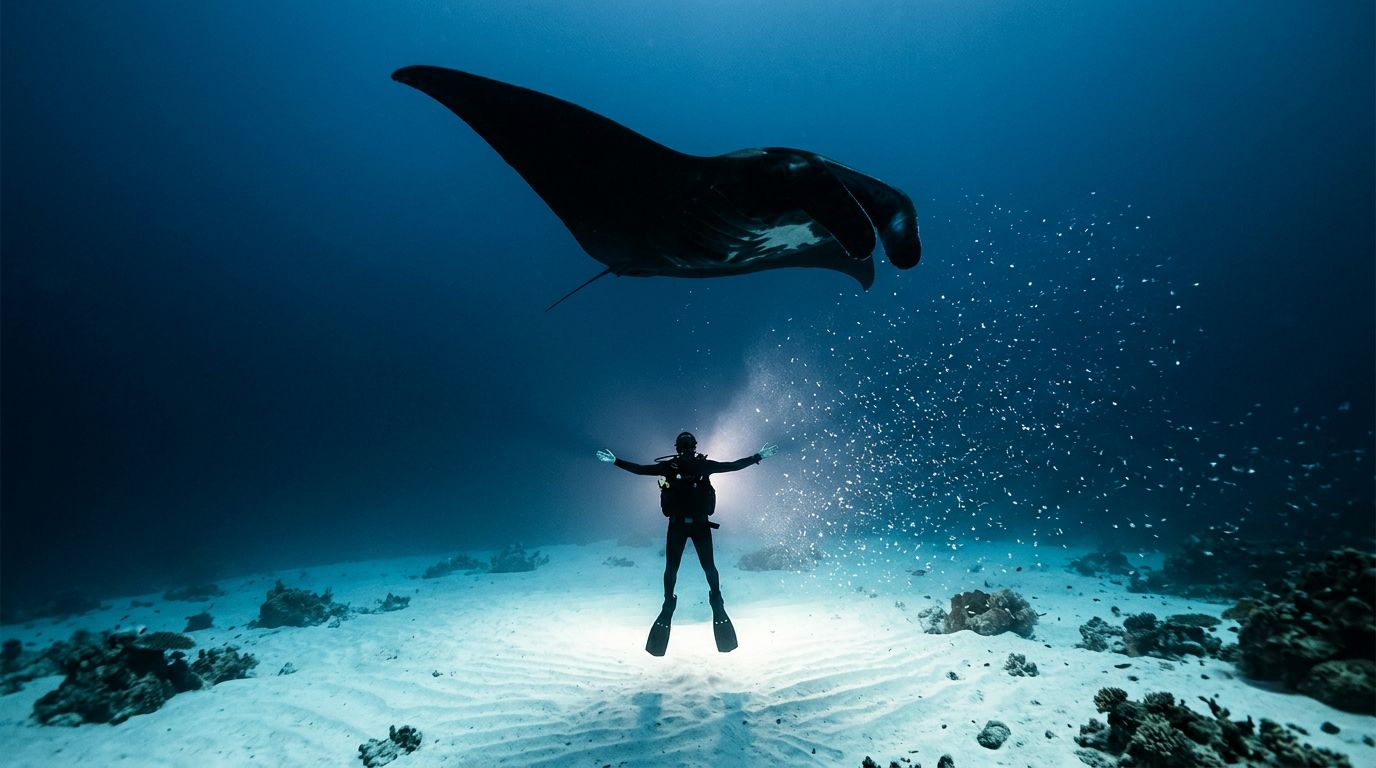
Kona Honu Divers describes the manta outing as a dedicated night dive and snorkel experience, and the structure matters because you don't need to fight the current or swim after anything. The boat drops you where the light draws plankton, and the mantas arrive on their own terms, often repeating those slow, looping passes that make the whole thing feel choreographed. If you want the dive-specific version, their Kona manta ray dive page is the relevant starting point.
Practical rule: if you're trying to interact with the animals, you're doing it wrong. The best encounters happen when you stay still, stay low-impact, and let the mantas control the distance.
Certified scuba divers and first-time snorkelers can both take part, which is why this trip works for mixed groups and family vacations. The experience is accessible, but it isn't casual in the sense of being mindless, because your position in the water changes the whole encounter. Divers get the bottom view, snorkelers get the surface view, and both can end up within arm's reach of a wild animal without ever touching it.
Understanding the Resident Manta Population
Kona's manta encounters are dependable because these animals are not random visitors passing offshore. A University of Hawaiʻi study reviewed more than 23,000 community-sourced sightings collected over 13 years, from 2010 through 2022, across Garden Eel Cove and Keauhou, and identified 167 unique reef manta rays (University of Hawaiʻi study). That is a real resident population, not a brochure claim.
Why the same mantas keep coming back
The study found that aggregation size tracked zooplankton density, which is the part many travel articles skip over. Manta presence follows food, and the food follows the nightly conditions that concentrate plankton at these sites. It also found that Garden Eel Cove consistently drew larger aggregations than Keauhou, while Keauhou was used predominantly by females and showed strong female site fidelity.
Across both locations, the overall sex ratio was approximately 1:1, a balance the same dataset confirmed. That mix, plus the fact that individual mantas are identifiable and repeatedly observed, explains why Kona can feel reliable without being guaranteed. You are not watching interchangeable animals drift through once. You are visiting a feeding network used by a localized reef population.
NOAA adds the historical context that makes the picture clearer. The first identified manta around Hawaiʻi Island was recorded in 1979, and researchers have since identified 318 unique individuals around the island, while genetic work indicates the island's mantas stay close to home and rarely cross the deep channels between island groups (NOAA). A strong night on the water does not mean a huge, interchangeable population. It means a small resident group using specific sites, which is why careful management matters.
Comparing Garden Eel Cove and Manta Village
Kona has two main places people mean when they say manta ray swimming: Garden Eel Cove, also called Manta Heaven, and Keauhou Bay's Manta Village. I favor the Cove for a dedicated dive because the site feels more controlled underwater, with a protected offshore setting and a clean seafloor viewing format that works well for divers who want a defined experience rather than a crowded surface circus. Keauhou has its own strengths, especially for consistency and access, but the two sites are not the same kind of night.
Why the Cove works so well for scuba
Garden Eel Cove sits offshore from Kailua-Kona on the west side of Hawaiʻi Island, and nighttime viewing there is built around divers sitting on or near the bottom while snorkelers remain at the surface. That vertical separation preserves the feeding corridor and keeps the action organized, which is exactly why the site adapts well to a structured dive tour. A site that gives mantas open water above a defined bottom zone is easier to manage than one that feels compressed by surface traffic.
The county testimony on Kona viewing also points to the site's offshore setting and established seafloor viewing format as part of what makes it suitable for this kind of trip (Hawaiʻi County testimony). That matters in practice, because divers can stay where the guide wants them, lights can be placed where they work, and the mantas can continue feeding without having to thread through a mess of unnecessary motion.
If you want the broader dive context, the Big Island manta night dive page is the place to start.
How Keauhou differs
Keauhou, or Manta Village, remains a major site and the University of Hawaiʻi dataset shows it was especially important for females. That tells you it's ecologically valuable, not just convenient. But for a dive tour centered on stable underwater positioning and clear viewing lanes, Garden Eel Cove gives the more comfortable layout.
Proposed management rules reflect how concentrated these sites have become. A 2022 DLNR announcement proposed commercial viewing permits, vessel limits, two-hour shifts, an 8-to-1 guide-to-customer ratio, vessel-lighting and safety requirements, and a no-fishing rule during viewing hours in the designated zones (DLNR). That framework says the same thing experienced crews already know, these are shared feeding sites, and the operator's discipline shapes the quality of the night.
Essential Safety and Wildlife Protection Rules
The safest manta encounter starts before you enter the water. Snorkelers stay at the surface, divers stay on or near the bottom, and that vertical spacing preserves the open corridor where the mantas feed. NOAA describes this as the low-impact configuration, with divers holding lights above their heads to concentrate plankton in the water column (NOAA guidance).
What to do in the water
Stay flat, stay calm, and let the animals come to you. If you're snorkeling, keep your body level and avoid kicking wildly, because splashing and erratic motion create problems for the group and for the mantas themselves. If you're diving, manage buoyancy early so you aren't drifting up into the snorkel zone or down into the feeding path.
Touching is off-limits for one simple reason, it damages the manta's protective mucus layer. That coating helps guard the animal against infection, so grabbing, riding, or trapping a manta isn't just rude, it's biologically harmful. The same applies to chasing, encircling, or blocking its path, which turns a calm feeding pass into a stressed, inefficient one.
Use the lights, don't weaponize them. Divers should keep lights above the head and aimed upward, snorkelers should direct lights downward, and videographers should limit output so the animals aren't blasted every time someone wants a better shot.
What people forget about the real hazards
The manta itself is usually not the problem. People, boats, lines, hooks, moorings, and crowding are the problems. Hawaiʻi's Division of Aquatic Resources warns that fishing lines and hooks can be life-threatening to rays and points out that steep-dropoff areas with strong upwelling are high ray-use zones (Hawaiʻi DAR). That's the part many visitors never think about, even though it's the kind of detail that determines whether a night stays safe.
An advocacy organization in Hawaiʻi has also reported that 25% of regularly observed mantas show some form of human-caused injury, while warning about overcrowding, vessel traffic, and anchoring. Because that source is an advocacy group rather than a government survey, treat the number carefully, but don't ignore the warning. The practical answer is the same either way, keep your hands to yourself, stay with crew instructions, and don't drift into hardware or boat lanes.
If you want a concise operator-side code of conduct, the responsible diver etiquette guide is worth reading before you board.
Choosing a Reputable Dive Operator
The operator decides whether your manta night feels organized or chaotic. Good crews brief clearly, control the group size, place lights properly, and keep people from turning a feeding site into a floating traffic jam. Bad crews rush the setup, crowd the water, and leave guests guessing when they should be listening.
What matters before you book
Ask how the crew handles entry, buoyancy control, and separation between snorkelers and divers. Ask what happens if the manta density is light, because the answer tells you whether the operator is committed to the wildlife interaction or just the ticket sale. Ask about gear quality too, because masks that leak and wetsuits that fit badly turn a great night into a miserable one.
Kona Honu Divers is one of the local options that runs guided manta nights, along with other Kona boat operations that specialize in the island's evening dives. Their insider guide to choosing a Kona diving company is useful because it frames the booking process around safety, equipment, and crew awareness rather than price alone. That's the right lens for this trip.
Why the cheapest seat can cost more
Cheap tours usually save money somewhere visible. It's often in the briefing, in the spacing, in the gear upkeep, or in how much attention one guide can realistically give each guest. A crowded boat might still get you wet, but it won't necessarily give you a clean, respectful manta experience.
What strong operators do differently: they separate groups properly, they keep lighting disciplined, and they treat the site like a shared feeding ground, not a performance stage.
The practical test is simple. If the company can explain how it protects the mantas, manages first-time snorkelers, and handles a busy night without turning the water into a scramble, you're probably talking to the right crew.
Gear Preparation and Photography Tips
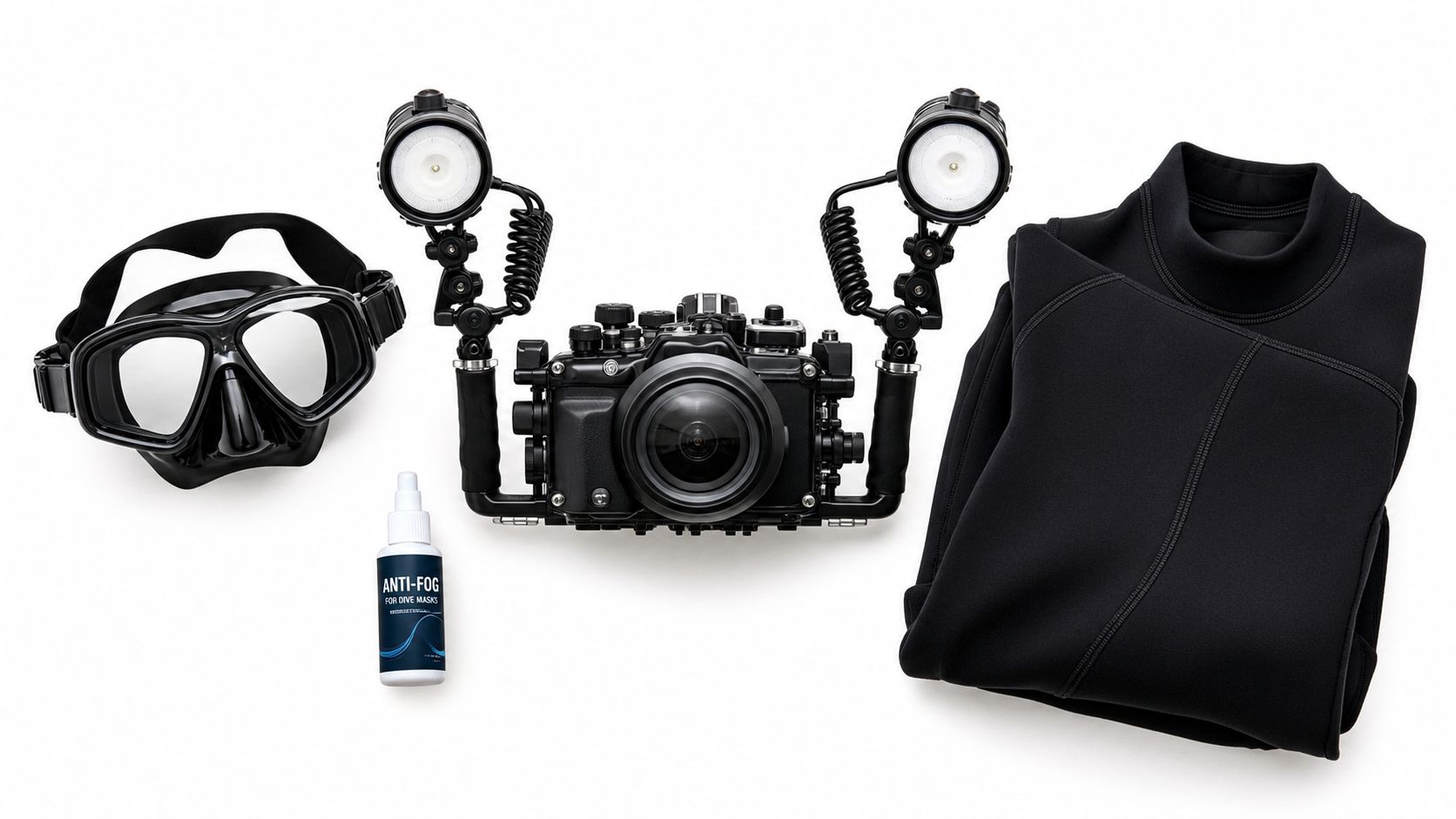
A manta night is easier when your gear stops being a problem. Wear thermal protection that fits well, because cold and loose gear distract you fast once you're floating after dark. If you're prone to motion sickness, handle that before boarding, not after the boat leaves the harbor.
What to pack and secure
Bring a snug swimsuit, a towel, and anything your operator doesn't already provide. Keep cameras clipped or secured, tuck away anything loose, and make sure your mask is anti-fogged before you go in. A mask that leaks or fogs at the wrong moment can make the whole encounter feel farther away than it really is.
If you're shopping for your first kit or want to understand the basics before the trip, the best scuba gear for beginners page is a practical place to start. Good gear doesn't make the manta show better on its own, but it does keep you relaxed enough to enjoy it.
Photography without ruining the night
Use light like a tool, not a spotlight. Flash is a bad idea because it can disorient the animals and irritate the other people in the water, while overpowered video lights can turn a peaceful observation into visual clutter. If you're diving, hold the camera steady and let the animal come through the frame instead of chasing composition.
Keep your settings simple and your body still. The best manta photos usually come from staying in place long enough for the ray to choose the angle.
Photographers do best when they think like guests first and shooters second. If the image makes the manta change direction, you've probably gone too far.
Troubleshooting Common Concerns and FAQs
The most common fear is that the mantas won't show. That's a fair concern because these are wild animals, not props, and any honest crew should say so directly. Good operators build in a plan for that possibility through their own scheduling and guest communication, and responsible guests should book with some flexibility so they can take advantage of the better ocean windows.
Motion sickness is the other big issue. If you know you get queasy, don't wait until you're already at the site to think about it, and don't overeat before departure. A steady gaze on the horizon during the boat ride out helps more people than they expect, and the calmer the ride, the calmer the entry.
Families and non-swimmers ask the right question, which is whether the trip matches their comfort level. Snorkel participation still assumes basic comfort in the water, while certified diving requires the skills and confidence that certification implies. Children can join some tours if they're comfortable in the water and the operator allows it, but the right call is always the one that matches the child's ability, not the parent's enthusiasm.
The bigger truth is that responsible manta tourism only works if visitors behave like guests at a feeding site, not spectators at a show. The small resident population, the repeated site use, and the sensitivity of the animals to pressure all point to the same conclusion, good habits aren't optional. They're the reason this experience keeps working.
If you want to book a manta outing with a crew that knows Kona's night conditions, the site layout, and the safety details that matter, Kona Honu Divers runs manta-focused trips that fit the style of experience described here. Their team can help you choose the right format for snorkeling or diving, and they'll walk you through what to expect before you get on the boat.