
Picture this: you’re floating in the warm, dark waters of the Pacific Ocean. Suddenly, a colossal, graceful creature with a wingspan of up to 16 feet glides silently past, close enough to touch. This isn't some far-fetched nature documentary scene; it's the world-famous manta ray night dive in Kona, an experience that scuba divers and snorkelers consistently call one of the best night dives on Earth. It's a true bucket-list adventure.
Experience the Unforgettable Kona Manta Ray Night Dive
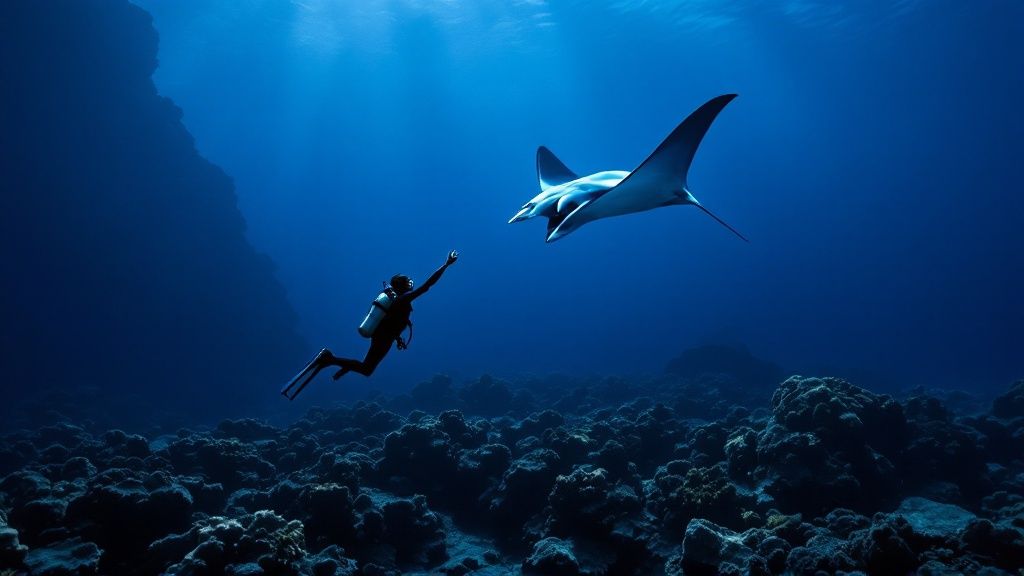
The Kona coast on Hawaii's Big Island is the place for these incredible encounters. This guide is your complete walkthrough, covering everything from the science that makes this dive possible to choosing the right tour and getting yourself ready. I'll share some insider tips to make sure your trip is safe, responsible, and utterly mind-blowing.
This incredible experience has become a must-do for visitors to the Big Island, drawing thousands each year hoping to witness the mantas' underwater ballet. We’ll get into what makes this dive so consistently amazing and why Kona is the top spot in the world to see these gentle giants.
What Makes This Dive So Special?
The secret to Kona's magic is its reliability. In most places, seeing a manta ray is a lucky, hit-or-miss event. But here, the local manta population has learned over decades to show up at specific spots, night after night. This consistency turns a hopeful wildlife search into an almost guaranteed spectacle.
It's a massive draw, with roughly 80,000 people joining manta ray tours here every year. The action is concentrated at two main sites, Manta Village and Manta Heaven. During the peak season from April to October, it's not uncommon to see 8–12 mantas on a single dive.
For a quick overview, here are the essential details for planning your trip.
Kona Manta Ray Dive At a Glance
Here is a quick summary of the key details for planning your manta ray dive in Kona.
| Aspect | Details |
|---|---|
| Location | Kona Coast, Big Island, Hawaii |
| Primary Dive Sites | Manta Village (Keahou Bay) & Manta Heaven (near the airport) |
| Peak Season | April to October |
| Average Water Temp | 75-80°F (24-27°C) |
| Dive Depth | 25-35 feet (8-11 meters) |
| Activity Options | Scuba Diving & Snorkeling |
| Key Attraction | Giant Pacific Manta Rays feeding on plankton |
This table should give you a solid starting point as you begin to picture your own manta adventure.
A Glimpse of the Experience
It can be tough to imagine what it's really like if you've never been. As a diver, you'll descend to the sandy ocean floor, maybe 25-35 feet down, and shine your dive light straight up. If you're snorkeling, you'll float on the surface, holding onto a big light board that beams down into the water.
These beams of light create a massive glowing column in the dark ocean, attracting huge clouds of plankton—the mantas' favorite meal. What happens next is pure magic. The giant rays swoop in, performing effortless somersaults and barrel rolls as they glide through the light to scoop up the plankton. Their sheer size and grace, just inches away, create a connection you'll never forget.
If a picture is worth a thousand words, check out these stunning manta ray dive Kona pictures to truly grasp the beauty of the experience.
How the Manta Ray Night Dive Actually Works
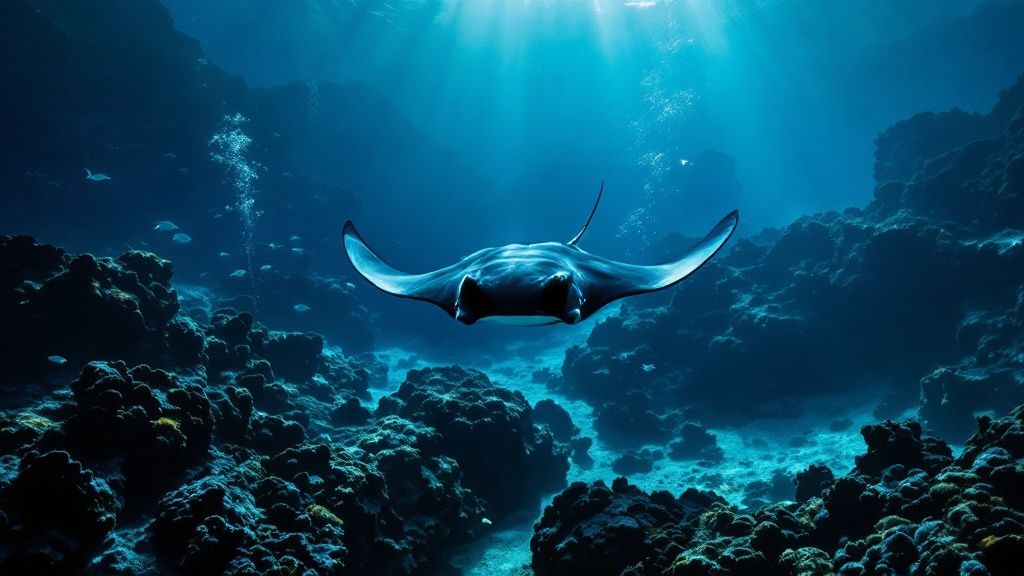
The incredible consistency of the Kona manta ray dive isn't a happy accident. It's built around a brilliantly simple concept that we affectionately call the "underwater campfire."
This clever setup transforms the dark ocean into a massive, glowing dinner table for Kona’s resident manta rays. It’s a beautifully simple trick that taps into the natural food chain, guaranteeing a spectacular show for us almost every single night.
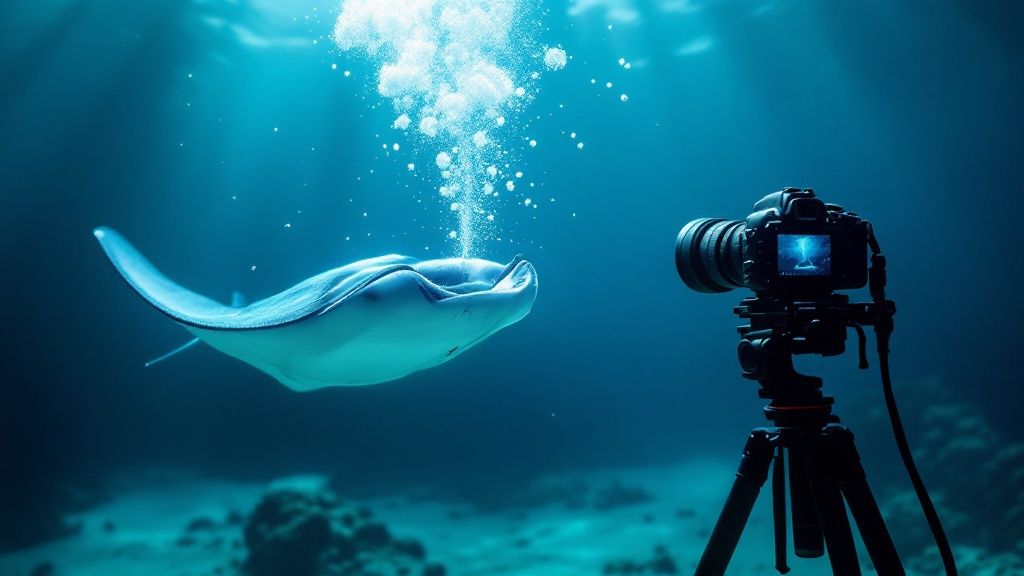
The whole process is surprisingly straightforward. After sunset, tour boats head to designated sites and submerge powerful, eco-friendly lights into the water. These beams cut through the darkness, acting like a giant magnet for tiny organisms called plankton.
This cloud of plankton becomes an all-you-can-eat buffet for the mantas. As filter feeders, they don’t need to hunt; they just glide through the illuminated feast with their huge mouths open, effortlessly scooping up dinner.
Your Front-Row Seat to the Show
As a participant, you become part of this amazing underwater theater. Your job is to be a quiet, respectful observer, positioned perfectly to see the action up close. The way you do that depends on whether you're diving or snorkeling.
- For Scuba Divers: If you're certified, you'll descend to the sandy ocean floor, usually around 25-35 feet deep. You'll find a spot in a designated area, point your dive light up, and add to the campfire effect while watching the show from below.
- For Snorkelers: If you're not a diver, no problem. You'll float on the surface, holding onto a specially designed light board. These boards shine powerful beams down into the water, creating the same plankton-attracting effect from above.
No matter which you choose, the view is unreal. Divers get to see the mantas soaring right over their heads, while snorkelers watch them swoop up from the dark depths. Both perspectives are absolutely breathtaking.
An Otherworldly Underwater Ballet
What happens next is pure magic. Drawn in by the dense clouds of plankton, the giant manta rays arrive and begin their feeding ballet. Think of a stealth bomber performing the most graceful acrobatics imaginable.
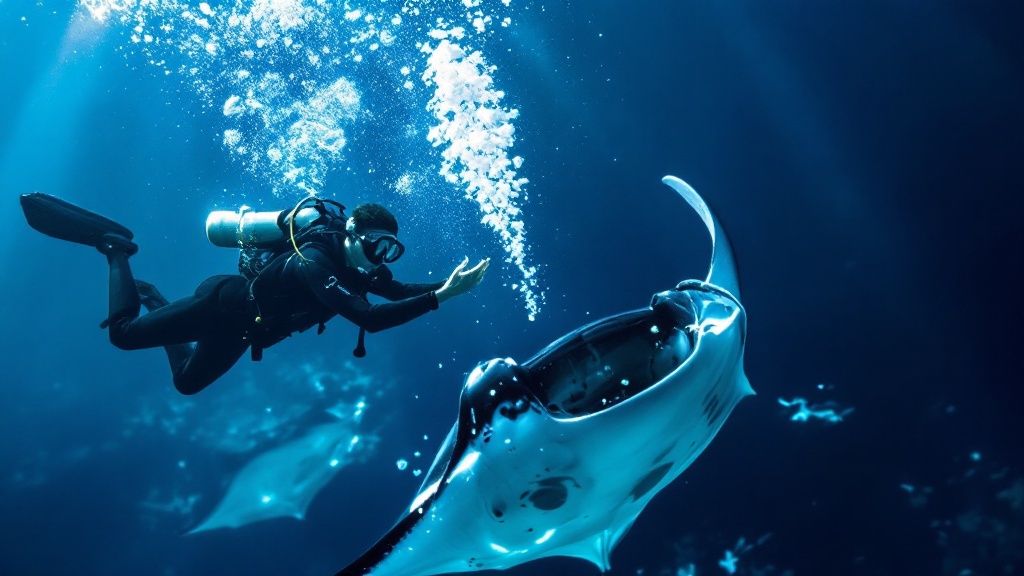
They perform mesmerizing loops, barrel rolls, and somersaults, gliding effortlessly through the light beams as they feast. Their movements are so fluid and hypnotic. It’s totally normal for these gentle giants, with wingspans stretching up to 16 feet, to pass within inches of you.
This is a strictly hands-off activity. The most important rule of a responsible manta ray dive in Kona is "no touching." The rays are covered in a protective mucus layer, and our touch can damage it. The very best encounters happen when you stay still and let the mantas lead the dance.
The Science of Attraction Explained
This whole phenomenon is a perfect example of conditioned behavior. It all started decades ago when a hotel’s lights shone on the water, accidentally attracting plankton. The mantas noticed, and a connection was made. Over many years, they learned to associate light with a reliable meal.
Today's tour operators just replicate that effect in a controlled and safe way. The lights are basically a dinner bell, and the local manta population knows exactly where to show up. To learn more about this incredible process, you can explore what the manta ray night dive involves.
This reliable, nature-based system is what makes the experience so special. It isn't about us finding the mantas; it's about setting the table and letting them come to us for an encounter you will truly never forget.
Choosing the Best Manta Ray Dive Operator in Kona
Let’s be honest, picking the right company for your manta ray dive in Kona is the most critical decision you'll make. It’s the difference between a good dive and a truly life-changing memory. Your operator doesn't just drive the boat; their expertise directly shapes your safety, your enjoyment, and just as importantly, the well-being of the mantas themselves.
The best outfits out there operate from a place of deep respect. They aren’t just running a tourist trip—they see themselves as guardians of this incredible natural spectacle. You can feel this commitment in everything they do, from the passion in their pre-dive briefing to their careful conduct once you're in the water with these gentle giants.
What to Look For in a Top-Tier Operator
As you start looking at different companies, you'll notice a few things that make the great ones stand out. Keep these points in mind, and you'll book a tour that’s not just safe, but genuinely unforgettable.
- Small Group Sizes: This is a big one. Smaller groups mean you aren't just a face in the crowd. It creates a more personal, intimate encounter with the mantas and prevents a chaotic, overcrowded scene in the water. You get a much better, unobstructed view.
- Experienced and Passionate Guides: You want a crew that lives and breathes this stuff. The best guides are more than just certified divemasters; they're marine nerds who can tell you fascinating stories, identify individual mantas by their spot patterns, and explain the behaviors you're witnessing. Their passion is contagious.
- Serious Safety Protocols: Non-negotiable. A top-notch operator will have a meticulously maintained boat, high-quality rental gear, and a crystal-clear emergency plan. You'll know you're in good hands when they give a thorough safety briefing before anyone even touches the water.
- Commitment to Conservation: Look for companies that actively practice and preach "Manta Manners." This means they enforce a strict no-touching rule and take the time to teach you how to be a respectful guest in the mantas' world.
Our Top Recommendation: Kona Honu Divers
When you measure operators by these standards, one name consistently rises to the top: Kona Honu Divers. They've built an outstanding reputation on a simple foundation of safety, education, and a genuine love for the ocean.
Their team isn't just there to show you the mantas; they're there to share their deep respect for Kona's entire marine ecosystem. People rave about their knowledgeable crew, stellar safety record, and unwavering commitment to eco-friendly diving. When you dive with them, you’re supporting a business that actively protects the very animals you came all this way to see.
Don't just take our word for it—see what other divers have to say.
Choosing the right guide is key. If you want to dig deeper and compare your options, our detailed breakdown of the top 10 Kona diving companies ranked offers more insights to help you decide.
Ultimately, the best manta ray dive Kona operators understand they are stewards of something precious. They know how to create a magical experience for you while ensuring the manta population can thrive for generations. Going with a company like Kona Honu Divers ensures your adventure is not only breathtaking but also responsible.
Ready to book this once-in-a-lifetime experience?
How to Prepare for Your Manta Ray Adventure
A little bit of prep work can be the difference between a great manta ray dive and an absolutely unforgettable one. When you take a few simple steps beforehand, you’ll be comfortable, confident, and ready to soak in every single moment.
Whether you're a divemaster with a thousand dives under your belt or a first-time snorkeler, knowing what to bring and what to expect makes everything smoother. The whole point is to focus on the gentle giants dancing in the lights, not on shivering or wishing you’d brought a dry hoodie.
What to Pack for Your Trip
While we provide all the essential dive and snorkel gear, there are a few personal items you’ll want to bring along to make your trip that much more comfortable. Think of it as your personal comfort kit for after you get out of the water.
Here’s a quick checklist of what to throw in your bag:
- A Towel and a Change of Clothes: You’ll be so glad you have something warm and dry to change into, especially for the boat ride back to the harbor.
- A Light Jacket or Sweatshirt: Even on a perfect Hawaiian evening, the breeze on the boat can feel chilly after a dive. A simple windbreaker or hoodie is perfect.
- Reef-Safe Sunscreen: If you're joining a sunset trip, make sure to apply this beforehand. It protects both your skin and our delicate coral reefs.
- Any Personal Medications: Prone to seasickness? It’s always best to take your preferred remedy well before the boat leaves the dock.
You can leave the heavy lifting to us. Your trip includes all the necessary scuba or snorkel equipment, properly fitted wetsuits for warmth, and usually some light snacks and drinks to enjoy after the main event. For a complete rundown, take a look at our guide on the gear you will need for your Kona diving adventure.
Tips for Night Diving and Snorkeling Comfort
For a lot of people, the manta ray dive in Kona is their first time in the ocean after dark. It’s completely normal to feel a mix of excitement and maybe a few butterflies. The key is to trust your guides—they do this every single night and are total pros at making everyone feel safe and at ease.
Pay close attention during the pre-dive briefing. Your guides will walk you through the entire plan: how to use your lights, where to position yourself, and what to expect from start to finish. Knowing what's coming builds a ton of confidence. Once you slip into the water and see the powerful lights creating a glowing underwater stage, any nerves usually vanish, replaced by pure awe.
Pro Tip: Remember to breathe. Whether you’re floating on the surface or settled on the seafloor, focusing on slow, deep breaths keeps you relaxed and calm. It helps you become a quiet observer of the underwater ballet unfolding before you.
Capturing the Moment: Photography Tips
Getting great photos of the manta dive is a challenge, but it's incredibly rewarding. The low light and constant, graceful motion require a few specific tricks to nail those jaw-dropping shots.
First, if you can, use a red light. A white-light torch can be disruptive to marine life, whereas red light is far less intrusive. It’s a simple way to show respect for the mantas and often results in them behaving more naturally around you. You’ll also want to adjust your camera for low-light, which typically means a higher ISO and a wider aperture.
Most importantly, be patient. Let the mantas come to you. Chasing after them for a photo is a surefire way to scare them off.
Certification Requirements and Options for Everyone
The best part about this experience is that it’s open to just about everyone, no matter your experience level.
-
For Scuba Divers: To join the dive, you’ll need to have an Open Water Diver certification. All operators will verify your cert card before the trip.
-
For Snorkelers and Non-Certified Participants: No certification needed! Snorkeling is an amazing way to see the show from above. You'll float comfortably on the surface, holding onto a custom light board that gives you a perfect bird's-eye view of the mantas swooping up from the depths.
No matter which option you choose, you're guaranteed a front-row seat to one of the most incredible spectacles in the natural world.
Protecting the Gentle Giants of Kona
The manta ray dive in Kona is so much more than just a bucket-list underwater show. It’s a world-renowned example of sustainable ecotourism done right. This whole magical experience works because of a deep, collective commitment to protecting Kona's resident manta population for the long haul.
It’s an experience built on mutual respect. When you join a tour, you’re not just a tourist—you become a temporary guardian of this incredible marine ecosystem. This shared responsibility is the secret sauce that keeps the encounter safe and predictable for both the mantas and us.
Becoming a Citizen Scientist
Here's something really cool: every single person on these tours has the chance to contribute to real scientific research. How? Through manta identification.
It all comes down to the unique spot patterns on each ray's belly. Think of it like a human fingerprint—no two are ever the same. This simple fact has fueled a massive, long-running citizen science project. Divers and snorkelers are encouraged to snap photos of the mantas they see and submit them. Researchers then use these images to identify individuals, track their habits, and monitor the health of the entire population.
Thanks to this amazing collaboration, which kicked off back in 1991, Kona’s manta population is one of the most studied on the planet. The Manta Pacific Research Foundation's database now lists over 330 identified individuals just in the Kona catalog, all built from thousands of sightings reported by people just like you. You can even explore the extensive Manta Ray Hawaii database and see this incredible work for yourself.
The Code of Conduct: Manta Manners
To keep the manta ray dive in Kona safe and sustainable, every reputable operator enforces a strict code of conduct, affectionately known as "Manta Manners." These aren't just suggestions; they're essential rules for protecting the animals and making sure everyone has a great time. Following them is your most important job as a guest in their world.
The core idea behind Manta Manners is simple: be a passive observer.
- Observe Only, No Touching: This is the absolute golden rule. Manta rays have a protective mucus layer that acts like their immune system. Touching them can strip it off, leaving them wide open to infection.
- Stay in Your Spot: Divers are positioned on the seafloor, and snorkelers hold onto a floating raft. Staying put creates a safe, predictable space for the mantas to swoop and glide through.
- Let the Mantas Come to You: Never chase, pursue, or try to ride a manta. The most breathtaking moments happen when you just stay still and let their curiosity bring them right up to you.
- Lights Up, Not In Their Eyes: Divers point their lights straight up to attract the plankton. Snorkelers have lights on their rafts that shine down. This creates the "campfire" effect that draws the mantas in without blinding them.
By following these simple rules, you play a direct role in the conservation of Kona's gentle giants. Your respectful behavior helps maintain the delicate balance that makes this world-famous dive possible.
Learning this etiquette is a huge part of being a good guest in the ocean. For a deeper dive into underwater best practices, check out our guide on responsible and considerate diver etiquette. Following these guidelines is what will keep this experience awe-inspiring for many years to come.
Why Kona is the Manta Ray Capital of the World
So, what makes Kona the undisputed hotspot for manta ray encounters? It’s not just one thing. It's really a perfect storm of geography, biology, and a deep community commitment that creates the ultimate underwater theater for the manta ray dive in Kona. This unique combination is exactly why divers from every corner of the globe make a pilgrimage here for this one-of-a-kind adventure.
It all starts with Kona’s incredible coastline. Tucked away from the powerful trade winds by the colossal Mauna Loa and Hualalai volcanoes, the waters here are almost always calm and clear. This natural shelter makes for a comfortable, safe environment for both the mantas and the divers who come to see them.
On top of that, the dive sites are ridiculously easy to get to. Unlike other places where you might face a long, bumpy boat ride, Kona's manta sites are just a short trip from the harbor. This means you get to spend less time traveling and more time right where you want to be—in the water with these magnificent animals.
A Thriving Resident Population
Here’s the real secret sauce: Kona has a healthy, year-round population of manta rays that actually live here. The mantas you see aren’t just migrating through; they are locals. Generations of these rays have learned to associate divers' lights with an easy meal, which makes the nightly encounters incredibly reliable.
This isn’t some seasonal event you have to time perfectly. Whether you visit in the summer or the middle of winter, the mantas are here, ready for their nightly feeding ballet. It's this consistency that elevates the experience from a hopeful wildlife sighting into an almost guaranteed, jaw-dropping spectacle.
A Perfect Partnership: Tourism and Conservation
Over the years, Kona has built a powerful, symbiotic relationship between its local economy and the health of its marine life. Manta ray tourism is a cornerstone of this community, and with that comes a deeply ingrained commitment to protecting these gentle giants.
That commitment is backed by serious legal protection. Manta ray tourism brings in over $2.5 million in revenue for the community each year. Recognizing their immense value, Hawaii officially made it illegal to knowingly kill or capture a manta ray in state waters on June 5, 2009. This forward-thinking legal protection has been crucial for safeguarding the local population and cementing Kona's status as the world's premier manta destination. You can read more about manta ray protection in Hawaii to see the full scope of these efforts.
More Than Just Mantas
While the manta ray dive in Kona is clearly the main event, the world-class scuba diving on the Big Island doesn’t end there. Kona is a top-tier global dive destination with a whole menu of underwater adventures.
- For the truly adventurous: The surreal Kona Blackwater Dive gives you a front-row seat to the bizarre and beautiful creatures that migrate from the deep ocean toward the surface each night. It's like diving in outer space.
- For experienced divers: There are challenging advanced reef dives that explore dramatic volcanic pinnacles and vibrant coral walls teeming with life.
This sheer diversity of incredible experiences is what makes Kona a bucket-list location for any serious ocean lover. If you want to see everything on offer, you can browse a full list of Kona diving tours and find the perfect underwater adventure for you.
Answering Your Top Questions About the Manta Ray Dive
Got a few questions before you take the plunge? Perfect. Let's walk through some of the most common things people ask, so you can feel completely comfortable and excited for your big night.
How Cold Is the Water at Night?
You’ll be surprised how comfortable it is! The water temperature in Kona stays pretty consistent year-round, usually hovering between a pleasant 75°F and 80°F (that’s 24-27°C).
Every good tour operator provides a quality wetsuit. For the 30-45 minutes you’re actually in the water, it’s more than enough to keep you warm while you focus on the show below.
What if the Mantas Don't Show Up?
It's a valid question—these are wild animals, after all! But the good news is that sightings are incredibly reliable, with a success rate well over 90%.
Still, on the rare night they decide to be shy, most top-notch operators have a "manta guarantee." This usually means you can come back another night for free. It’s a great reason to book your dive for earlier in your vacation, leaving you with a backup night just in case.
I'm Not a Great Swimmer. Can I Still Go?
Absolutely. You don't need to be a strong swimmer to have an amazing time.
If you opt to snorkel, you'll hold onto a large, stable floatation board that has powerful lights built into it. You simply float on the surface and watch the action—no swimming required. Your guides are always right there in the water with you, making sure everyone is safe and secure.
Is This Experience Actually Safe?
Yes, it's one of the safest wildlife encounters you can have. Manta rays are true gentle giants. Despite their huge size, they are filter feeders, meaning they only eat tiny plankton.
Most importantly, they are not stingrays. Mantas have no stinger, barb, or teeth, so they pose zero threat to people. Your crew will give a detailed safety briefing beforehand, so you'll know exactly how to interact respectfully and safely around them.
What's the Best Time of Year to See Mantas?
This is the best part: any time is a great time! Kona is home to a resident population of manta rays that stick around all year long. They don’t migrate, so you have an excellent chance of seeing them whether you visit in January or July.
Ready to see the magic for yourself?
The Kona manta ray dive is one of those experiences that stays with you forever. Here at Kona Honu Divers, our passion is sharing this incredible spectacle with you in the safest and most respectful way possible. Join our experienced crew for a front-row seat to one of the greatest shows on Earth.
Learn more and book your spot on our world-famous manta ray dive tour today!