
Picture this: you're floating weightlessly in the warm, dark Pacific. Suddenly, a majestic, gentle giant with a wingspan of up to 12 feet glides effortlessly, just inches away from you. This is the world-famous manta ray dive Kona experience, an otherworldly encounter that people consistently rank among the planet's top underwater adventures. It’s a silent, surreal ballet you’ll never forget.
Experience Kona’s World-Famous Manta Ray Night Dive
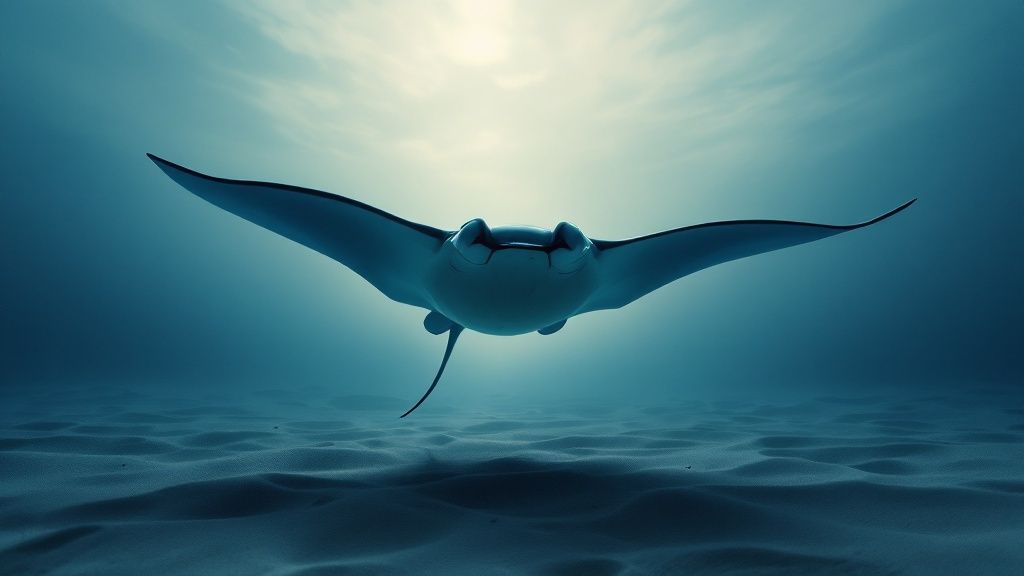
This guide will walk you through everything you need to know to join this incredible "underwater ballet." Kona, Hawaii isn't just a great spot for this dive; it's the global hotspot for reliable manta ray sightings. The reason for this incredible consistency is a perfect blend of science and learned behavior over time.
For decades, the local manta rays have figured out that the bright lights used by dive boats mean dinner is served. The lights attract massive clouds of phytoplankton—microscopic organisms—creating a nightly all-you-can-eat buffet that the mantas eagerly show up for. This clever adaptation transforms what could be a chance encounter into a highly predictable and absolutely spectacular event.
Why Is This Dive So Unique?
Kona’s one-of-a-kind environmental factors make it the premier destination for this adventure. Nutrient-rich currents swirling around the Big Island concentrate the plankton, while the relatively shallow dive sites (around 30 to 40 feet deep) make the whole thing accessible. This combination of a reliable food source and easy access has turned Kona into a global phenomenon, drawing in about 80,000 snorkelers and divers every single year.
These ideal conditions give us an impressive 85-90% success rate for sightings on any given night.
At Kona Honu Divers, we're passionate about providing a safe, respectful, and absolutely awe-inspiring adventure. Our experienced crew will guide you every step of the way, making sure you have the best possible encounter with these gentle giants.
Preparing for a Bucket-List Adventure
We'll set the stage by explaining what makes this dive so magical, from the science behind the spectacle to the step-by-step journey you'll take with us. To really get a feel for the whole thing, you should read about an epic Hawaiian adventure with Manta Rays in Kona.
By the end of this guide, you'll see why this is a can't-miss Hawaiian adventure and be ready to book a trip you'll remember forever. If you want to dive deeper into the basics first, check out our guide on what the manta ray night dive is all about.
Choosing Your Adventure: Scuba Diving Vs. Snorkeling
So, how do you want to see the show? When you're planning your manta ray dive Kona adventure, the first big choice is about your point of view. You can either be settled on the ocean floor looking up as these gentle giants glide right over you, or you can float on the surface, taking in the entire underwater ballet from above.
Each option gives you a totally unique and unforgettable way to experience the mantas. It really just comes down to your comfort level in the water, your certifications, and the kind of view you're hoping for.
The Scuba Diver’s Front-Row Seat
For certified divers, this experience is as immersive as it gets. Picture yourself descending to a sandy bottom, about 30-40 feet deep, and getting comfortable with your group. Your guide will have you point your dive light straight up, creating beams of light that slice through the dark water.
You're literally taking a front-row seat at the most exclusive theater in the ocean. The anticipation just hangs in the air during those quiet moments before the first manta shows up. Then, like a ghost in the night, a massive shape glides into the light, performing graceful, acrobatic barrel rolls just a few feet above your head. From this angle, you feel completely part of their world, watching the intricate dance unfold from below. The sheer size of the mantas is just breathtaking when they pass directly over you.
The Snorkeler’s Bird’s-Eye View
If you're not a certified diver or just prefer staying on the surface, the snorkeling experience is every bit as incredible. Snorkelers hang onto a custom-made, high-powered light board that floats on the surface. This board shoots powerful beams of light down into the water, which is what attracts the plankton the mantas are there to eat.
From up here, you get a stunning bird's-eye view of all the action. You'll watch as multiple mantas swoop and glide through the light beams below, their white bellies glowing against the dark ocean. It’s an amazing way to see the full scope of the feeding frenzy and appreciate the sheer number of mantas that can appear. This is a perfect option for families, non-divers, and anyone looking for a thrilling but super accessible wildlife encounter.
To get a better sense of what makes this trip so special, you can explore why you should go on a manta ray dive in Kona.
Manta Ray Dive vs. Snorkel Experience
To help you figure out what's best for you and your group, here's a side-by-side look at the two adventures. Both lead to an incredible night, but they're built for different preferences and skill levels.
| Feature | Scuba Diving | Snorkeling |
|---|---|---|
| Viewing Angle | From the bottom, looking up as mantas dive toward the lights. | From the surface, looking down as mantas feed below. |
| Typical Depth | 30-40 feet (9-12 meters). | Surface level (0 feet). |
| Certification Required | Open Water Diver certification (or equivalent). | None, but you must be a confident swimmer. |
| Proximity to Mantas | Potentially inches away as mantas swoop right overhead. | Excellent and safe viewing distance from the surface. |
| Best For | Certified divers who want an immersive, bottom-up view. | Non-divers, families, and those new to ocean activities. |
At the end of the day, whether you choose to dive or snorkel, the Kona manta ray night experience is an absolute must-do. It’s a powerful connection with nature that sticks with you long after you've dried off. Ready to pick your adventure? We're here to make it happen.
The Science Behind the Manta Ray Spectacle
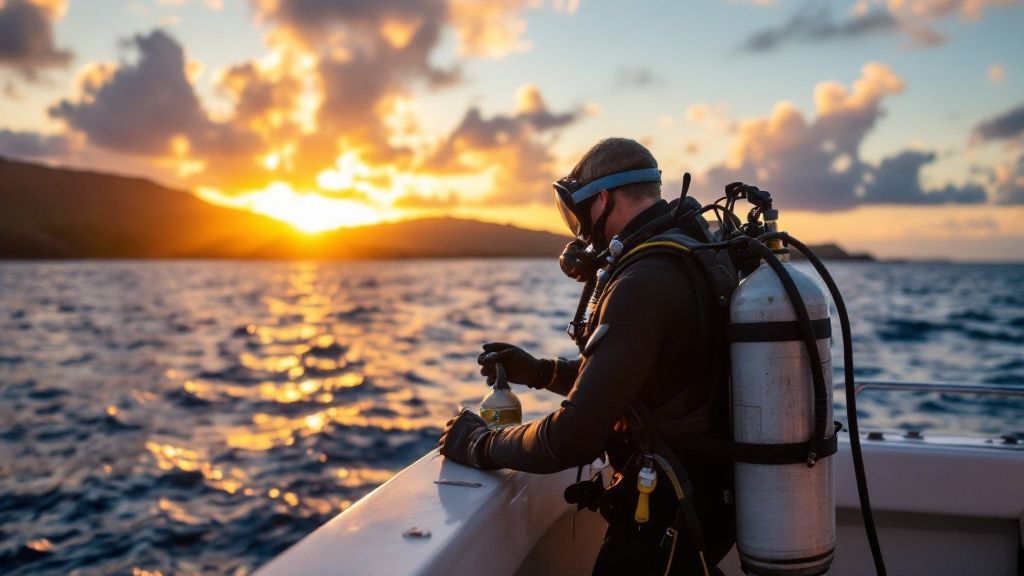
The incredible consistency of the manta ray dive Kona experience feels like pure magic, but it’s really just a brilliant display of learned behavior that has developed over decades. It's no happy accident that these gentle giants show up night after night; it's a well-established routine based on a simple, powerful ecological trigger.
Think of it as a nightly dinner bell ringing across the reef. The science behind this whole spectacle is surprisingly straightforward, and it all starts with light and the tiniest organisms in the sea.
A Plankton Buffet Served Nightly
The entire encounter is built on a basic food chain reaction. Here’s a play-by-play of how it works:
- The Lights Turn On: As the sun disappears, we position powerful, eco-friendly lights in the water. For divers, these lights point up from the seafloor; for snorkelers, they shine down from custom-built floatation boards.
- The Plankton Arrives: Just like moths to a flame, microscopic organisms called phytoplankton are irresistibly drawn to the bright beams. They gather in dense, shimmering clouds, creating a concentrated, irresistible feast.
- The Mantas Feast: Kona’s resident reef manta rays, which are filter feeders, have learned to associate these lights with an easy, all-you-can-eat plankton buffet. They glide into the illuminated zones, mouths wide open, and perform graceful barrel rolls to gulp down as much plankton as possible.
This simple process is what turns spots like "Manta Village" and "Manta Heaven" into the most reliable manta feeding stations on the planet. The mantas aren't trained—they’ve simply adapted their behavior over generations, figuring out that when the boats and lights show up, dinner is served. This learned behavior is the secret sauce behind the dive's ridiculously high success rate.
Citizen Science and Manta Identification
What takes the manta ray dive Kona experience from a cool wildlife sighting to a truly meaningful connection is the incredible citizen science project happening right here. Every single manta ray has a unique pattern of black spots on its white belly, which works just like a human fingerprint. No two are alike.
This allows our guides, researchers, and even you to identify individual mantas. You might hear one of our divemasters call out a name like "Big Bertha" or "Lefty" because they recognize the distinct spot pattern of a regular visitor. It personalizes the whole encounter, making you feel like you’re meeting a local celebrity with a known history.
This identification process is way more than just a fun fact; it’s the cornerstone of manta ray conservation in Hawaii. By tracking individual rays, scientists can monitor their health, map their movements, and better understand their life cycles.
Since 1991, manta rays along this coast have been systematically cataloged using these unique ventral spots. This massive citizen science database now includes thousands of reported encounters and covers over 330 unique mantas. This incredible dataset is crucial for local conservation efforts, helping protect these magnificent animals for generations to come.
When you join a manta ray tour, you’re doing more than just a lifelong memory; you're actively contributing to the research and protection of these intelligent creatures. By simply being there, you become part of a much larger story of conservation and scientific discovery.
To learn more about the logistics, check out our complete guide to the manta ray night dive on the Big Island.
Your Manta Ray Dive Itinerary Step by Step
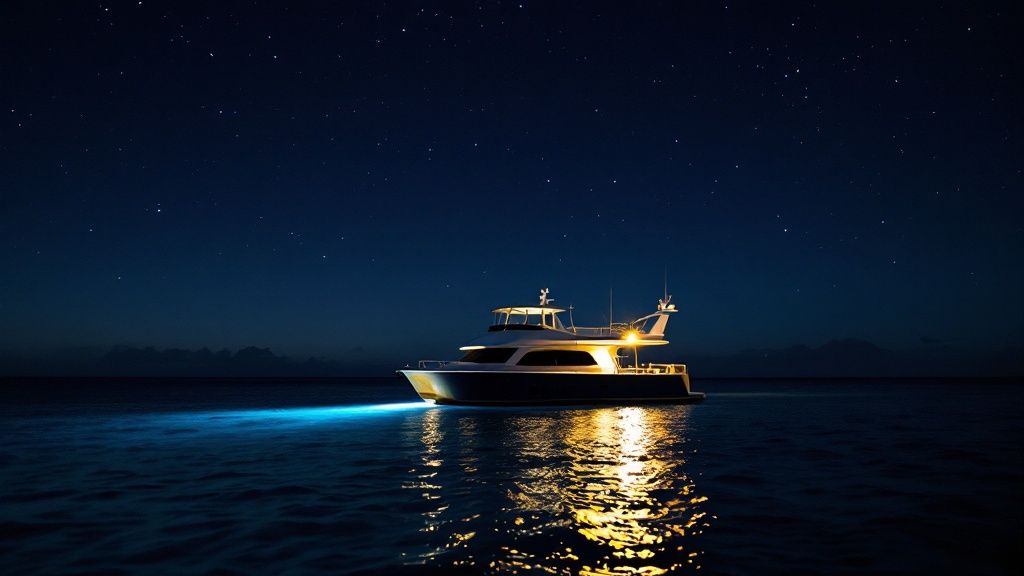
Knowing the play-by-play of your manta ray dive Kona tour can take an already amazing trip and make it truly unforgettable. We've spent years perfecting our itinerary at Kona Honu Divers to make sure every single moment is smooth, safe, and builds the excitement for what’s to come. Here’s a clear picture of how your adventure with us will unfold.
Your journey starts in the late afternoon at the Honokohau Small Boat Harbor. You'll meet our crew, who are not just experts but genuinely friendly folks excited to share this experience with you. They’ll get you checked in, sized up for a wetsuit, and fitted with all your gear. This is the perfect time to get familiar with the boat and ask any lingering questions you might have.
The Scenic Sunset Cruise
Once everyone is geared up and comfortable, we'll head out of the harbor. The boat ride itself is a huge part of the experience. We cruise along the stunning Kona coast, giving you incredible views of the island's volcanic silhouette as it’s painted in the golden light of the setting sun. It’s a beautiful, peaceful transition from the world on land to the ocean realm we’re about to explore.
If you’re on our popular two-tank manta dive and snorkel tour, this cruise takes us to our first stop for a twilight dive.
This initial dive is all about getting you comfortable as daylight fades. You’ll explore a lively reef, watch nocturnal creatures start their day, and get reacquainted with your gear before the main attraction begins.
The Main Event Unfolds
As darkness fully settles in, we’ll motor over to the manta viewing site. This is when the anticipation really kicks in. Our crew will run through a final, detailed briefing covering safety and, just as importantly, how to interact respectfully with the mantas. Then, they’ll set up what we call the underwater "campfire"—a powerful light rig placed on the sandy bottom, about 30 to 40 feet down.
As a group, we'll descend and find a spot on the sand, forming a semi-circle around the light. Your job is simple: stay low, get comfortable, and point your dive light straight up. This column of light attracts plankton, effectively ringing the dinner bell for the giant, graceful filter feeders we're here to see.
The feeling underwater is one of hushed excitement. The only sound is your own breathing as you wait in the dark. And then… it happens. A huge, silent shadow emerges at the edge of the light, gliding effortlessly into view. The first manta has arrived. Soon, another might join, and then another, starting their mesmerizing, silent ballet. They perform effortless barrel rolls just inches above your head. You're no longer just watching; you're part of their world, a front-row guest at one of nature's most incredible performances.
For about 30 to 45 minutes, you’ll be completely lost in this otherworldly show. When it’s time to surface, you’ll be doing so with memories that will stick with you for a lifetime. Back on the boat, we’ll have hot drinks and snacks waiting for the cozy ride back to the harbor, giving everyone a chance to share the pure awe of what you just witnessed.
Our guests constantly tell us that our crew makes the entire experience unforgettable.
Ready to experience this step-by-step itinerary for yourself?
How Your Dive Supports Manta Ray Conservation
The manta ray dive Kona experience isn't just another pretty show. It's one of the best examples I've ever seen of tourism directly fueling conservation. When you decide to witness this underwater ballet, you're not just a tourist; you become a crucial part of a cycle that protects the very animals you came to see.
It’s this special relationship that makes the Kona dive so powerful. You're essentially voting with your dollar for the protection of these magnificent animals and their fragile home. It turns you from a bystander into an active partner in a local conservation success story.
Choosing a Guardian for the Mantas
The single most important choice you'll make is picking a responsible, eco-conscious tour operator. Companies like Kona Honu Divers are dedicated to a strict set of guidelines, all designed to keep the manta rays safe and comfortable.
These rules are simple but absolutely critical:
- Observe Only: It goes without saying, but never touch, chase, or try to ride a manta ray. Touching their skin can strip away the protective mucus layer, leaving them open to nasty infections.
- Respect Their Space: Divers stay put on the sandy bottom, and snorkelers hang out on the surface. This keeps the whole water column open for the mantas to swoop and feed without having to dodge people.
- Proper Positioning: We all form a semi-circle around the "campfire" of lights. This creates a predictable, safe space for the mantas to do their thing.
Sticking to these guidelines makes sure the nightly encounters are positive and stress-free for the animals. It's what allows this whole incredible thing to continue, year after year.
The Two Gentle Giants of Kona
Your dive supports the protection of the two manta species found right here in Hawaiian waters. The Kona Coast’s manta ray night dive industry is a massive draw with huge ecological and economic benefits. Each year, an estimated 80,000 people join these tours, pumping money directly into the local economy. The two species you might run into are the reef manta ray (Mobula alfredi) and the giant manta ray (Mobula birostris), though it's the smaller reef manta you'll see most often. Find out more about the real impact of the Kona manta dive.
Protecting their Kona habitat is so important because these specific feeding spots are absolutely essential for our local resident population to survive.
When you book a tour with a certified operator, a piece of your fee goes straight to supporting the local economy and the ongoing work to research and protect these graceful giants. It’s a sustainable model where tourism creates the economic reason to preserve a natural wonder that is, frankly, priceless.
Your decision to experience the manta ray dive Kona in a responsible way helps ensure that future generations will get the same chance to be humbled by their silent, graceful dance in the dark. It’s a perfect harmony of adventure and stewardship.
How to Book Your Kona Manta Ray Dive
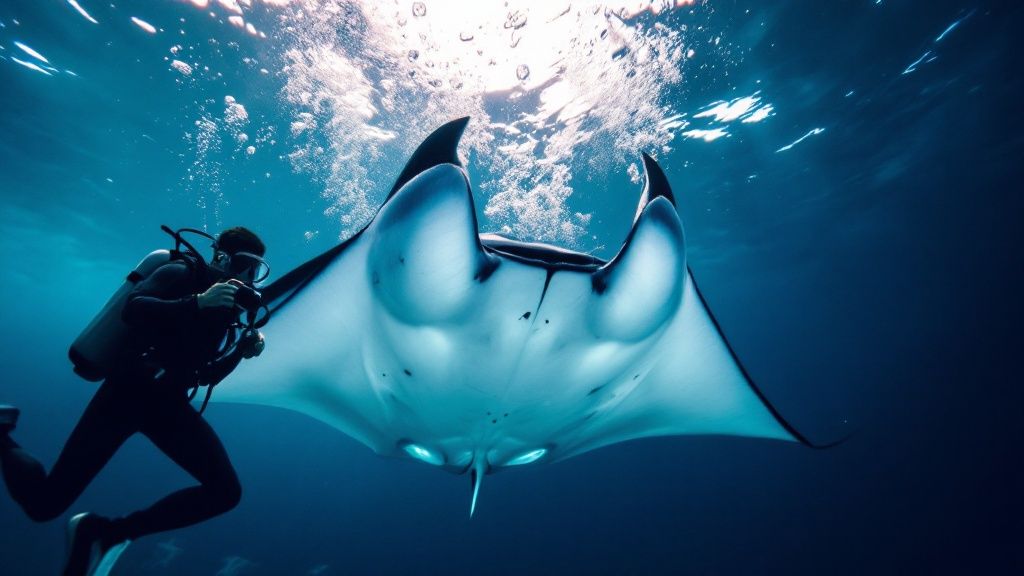
Ready to take the plunge and witness Kona’s world-famous underwater ballet? Securing your spot for this unforgettable adventure is pretty straightforward, but the real key is to plan ahead. The manta ray dive Kona experience is one of the most popular things to do on the Big Island, so tours fill up fast, especially during the busy season.
To avoid that sinking feeling of missing out, we always tell people to book their manta ray dive tour well in advance. It gives you the best shot at grabbing a spot on your preferred date and lets you plan the rest of your vacation without worrying. A little bit of early planning ensures you won’t miss out on this absolute bucket-list encounter.
Securing Your Spot with Kona Honu Divers
Here at Kona Honu Divers, we keep the booking process simple and seamless. You can reserve your adventure right on our website, no fuss. Our tour page has all the details you’ll need to pick the perfect trip, whether you’re a certified diver or an enthusiastic snorkeler.
Just head over to the 2-Tank Manta Ray Night Dive & Snorkel tour page to check availability and lock in your reservation in just a few clicks. Our friendly crew is always here to help turn your dream of diving with mantas into a reality.
Of course, there are plenty of operators on the island, and it's always smart to do a little homework. To help you make the best choice, we put together a guide on how to choose a Kona dive shop that really fits what you’re looking for.
Explore More of Kona’s Underwater World
The manta ray dive is just the beginning of what Kona’s incredible waters have to offer. For divers looking to really build out their Big Island adventure, we have other unique and thrilling experiences that showcase just how diverse our marine ecosystem is.
Consider adding one of these incredible dives to your trip:
- Kona Blackwater Dive: This is something else entirely. You’ll plunge into the deep open ocean at night to witness a spectacle of bizarre, bioluminescent creatures rising from the abyss. It’s an otherworldly experience you can book on our Black Water Night Dive tour page.
- Advanced Dive Tours: For more experienced divers, our Premium Advanced 2-Tank Trip explores deeper reefs, dramatic lava tubes, and remote pinnacles. These are the spots where you have a better chance of encountering sharks, eagle rays, and other big marine life.
No matter what adventure you choose, your time with Kona Honu Divers is about more than just a tour—it's about creating lasting memories and a deeper connection with the ocean.
You can browse all of our incredible scuba diving tours in Kona to build your ultimate Big Island dive vacation. We look forward to showing you the magic of our underwater world.
Your Manta Ray Dive Questions, Answered
Even the most experienced divers and travelers have questions about this one-of-a-kind adventure. We get it! Here are some of the most common things people ask us about the **manta ray dive in Kona** so you can feel totally ready for your trip.
Are Manta Ray Sightings Guaranteed?
This is the big one, right? While we're dealing with wild animals and nothing in nature is ever 100% guaranteed, the success rate for the Kona manta ray night dive is ridiculously high—usually somewhere between 85-90%.
Think of it this way: these dive sites are established feeding grounds. The mantas have learned over years that our lights attract a reliable buffet of plankton. Operators like us know exactly where to go and what to do to give you the absolute best shot at a magical encounter.
What's the Best Time of Year to Go?
Here's the great news: any time is a good time! The Kona manta ray dive is incredible year-round. These aren't migratory animals; they're our local residents, so they show up consistently no matter the month.
That said, a lot of our guests love coming between April and October. The water is at its warmest (around 75-80°F), and the ocean is typically as calm as a swimming pool. But honestly, no matter when you book, your chances of an amazing night are fantastic.
What Should I Bring on the Boat?
We've got you covered with all the main gear. We provide the essential scuba or snorkel equipment, including wetsuits to keep you nice and warm.
Here's what you should plan on packing:
- A towel
- A warm, dry change of clothes for after you get out of the water
- Any personal medications you might need
If you tend to get motion sick, it's always smart to take something beforehand just in case. And, of course, don't forget your underwater camera and a sense of wonder! For a more detailed look at the whole evening, check out our post on what it's like to go on the manta ray dive in Kona, Hawaii.
Do I Need to Be an Experienced Diver?
For the scuba dive, you'll need to be a certified Open Water diver. But the dive itself is actually perfect for newer divers! It's a shallow experience, only about 30-40 feet deep, and it's completely stationary. You just find a spot on the sandy bottom, sit back, and enjoy the show.
Not certified? No problem at all. The snorkeling option gives you an equally breathtaking view from the surface. All you need is to be comfortable swimming in the water—no prior experience necessary.