
Picture this: you’re floating in the warm, dark Pacific Ocean while magnificent, graceful creatures with wingspans up to 16 feet glide effortlessly, sometimes just inches away. This isn't a scene from a blockbuster movie; it's the world-famous manta ray dive in Kona, a surreal underwater ballet that happens with such regularity it's become one of the most reliable wildlife encounters on the planet.
It’s no surprise this experience is consistently ranked as one of the top night dives in the world, drawing thousands of people to Hawaii's Big Island every year for an adventure they’ll never forget.
A Guide to Kona’s Unforgettable Underwater Ballet
Think of this guide as your all-access pass to planning this bucket-list adventure. The Kona coast has this magical combination of geography and biology that creates a nightly "plankton buffet," attracting majestic manta rays to the same spots with incredible predictability. It’s this natural phenomenon that has put the Big Island on the map as the go-to destination for seeing these animals up close.
The experience is somehow both thrilling and incredibly peaceful, and the best part is, almost anyone can do it. You don't need to be an expert diver. The tours are set up for everyone:
- Certified Scuba Divers: You get a front-row seat on the ocean floor, looking up as the show unfolds above you.
- Snorkelers: You'll float comfortably on the surface, holding onto a custom light board that attracts the plankton (and the mantas!).
- First-Time Divers: Many operators offer introductory dives, so even if you've never been diving before, you can still get in on the action with close supervision.
To give you a quick overview, here's a little cheat sheet on what makes this dive so special.
Kona Manta Ray Dive At a Glance
| Aspect | Details | Why It Matters |
|---|---|---|
| Location | Kona Coast, Big Island of Hawaii | Unique geography creates a consistent food source, making manta encounters highly reliable. |
| Participants | Approx. 80,000 annually | This isn't some obscure tour; it's a world-renowned, well-run ecotourism highlight. |
| Success Rate | 80% – 90% year-round | Unlike many wildlife tours, your chances of seeing mantas here are exceptionally high. |
| Accessibility | Snorkelers, certified divers, and beginners | You don't have to be a seasoned pro to experience the magic. |
| The "Campfire" | High-powered lights attract plankton | This is the "dinner bell" that brings the mantas in for their nightly feast. |
As you can see, the whole operation is finely tuned to give you the best possible experience.
Why This Dive is a Global Sensation
There's a reason Kona has become the world's premier destination for seeing manta rays. This isn't just a handful of boats; it's a major operation that hosts around 80,000 people every year. That number alone tells you how significant this is. And with a success rate hovering between 80% and 90% all year, it’s one of the most dependable wildlife experiences you can book anywhere.
The Hawaiian name for manta rays, “hāhālua,” translates to “two breaths” or “two mouths.” This speaks to their deep cultural importance long before they became a tourist highlight, adding a rich layer of heritage to every dive.
The adventure itself is straightforward. You’ll take a short boat ride to the site, get a thorough briefing, and then the magic begins. Once the powerful lights hit the water, they attract a thick soup of plankton. Before you know it, the mantas arrive to feast, performing incredible barrel rolls right in front of your mask. Whether you’re on the bottom looking up or at the surface looking down, the view is absolutely spectacular.
For a deeper dive specifically on the snorkeling side of things, check out this fantastic ultimate guide to the Kona manta ray night snorkel.
Ready to witness this incredible spectacle for yourself?
Why Kona Is a Global Manta Ray Hotspot
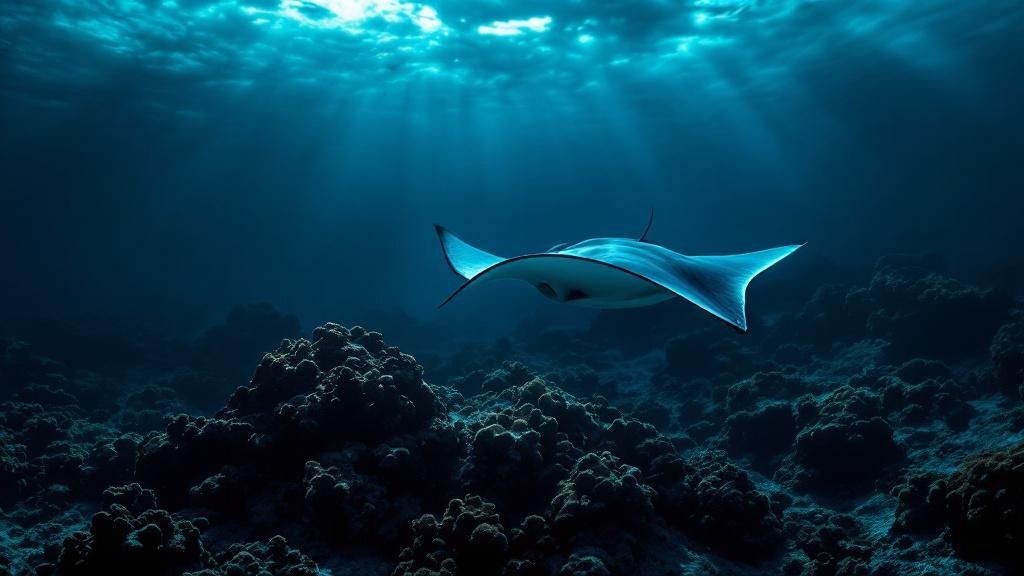
So, what makes the Kona coast the undisputed world capital for manta ray encounters? It’s not just random luck. It’s a perfect storm of unique geography and predictable biology that has turned this slice of paradise into a nightly spectacle. The manta ray dive kona experience is so reliable because the conditions here are unlike almost anywhere else on Earth.
Just offshore, the ocean floor takes a dramatic plunge into deep underwater trenches. This unique layout pulls cold, nutrient-rich water up toward the surface. When that deep water, loaded with all the good stuff, gets hit by the intense Hawaiian sun, it sparks an explosion of phytoplankton—the tiny organisms that form the very base of the ocean’s food web.
This natural phenomenon creates a floating, all-you-can-eat buffet for Kona's resident manta rays. Think of it as their favorite nightly restaurant, one they've been visiting for decades. That incredible consistency is the secret sauce behind Kona's fame.
The Science of the Underwater Ballet
This nightly gathering isn't just a happy accident; it's a predictable feeding behavior that local operators have learned to amplify. By shining powerful lights into the water after sunset, they create an irresistible beacon for plankton, concentrating the feast into one brilliantly lit area.
This "campfire" effect is the dinner bell that officially kicks off the show. The process is simple but incredibly effective:
- Lights Attract Plankton: The bright beams draw in massive clouds of plankton from the surrounding water.
- Plankton Attracts Mantas: The mantas, being filter feeders, swim right into these dense plankton clouds to eat.
- An Unforgettable Show: As they feed, the mantas perform graceful, acrobatic barrel rolls, swooping through the light beams to scoop up as much food as they can.
This reliable pattern has led to something truly special. Over the years, researchers and dive operators have been able to identify hundreds of individual manta rays by the unique, fingerprint-like spot patterns on their bellies.
Each manta ray has a distinct pattern of black spots on its underside, just like a human fingerprint. This has allowed scientists to identify and name over 240 individual manta rays in the Kona population, including local celebrities like "Big Bertha," "Lefty," and "Kailey."
A Meaningful Connection with Wildlife
This ability to recognize individual rays transforms a tourist activity into something much more profound. You aren't just seeing a manta ray; you might be meeting a well-known local with a name and a history. To get the full picture, you can learn more about why you should go on a manta ray dive in Kona and the conservation work tied to it.
Top-tier operators like Kona Honu Divers are central to this ongoing research. By documenting sightings and sharing data, every single manta ray dive kona becomes part of a larger conservation story. This partnership ensures your adventure isn't just a breathtaking experience, but also directly supports the protection and study of these magnificent animals for years to come.
When you’re ready to see this incredible natural wonder for yourself, the perfect manta ray dive tour is waiting.
Choosing Your Dive Site: Manta Village vs. Manta Heaven
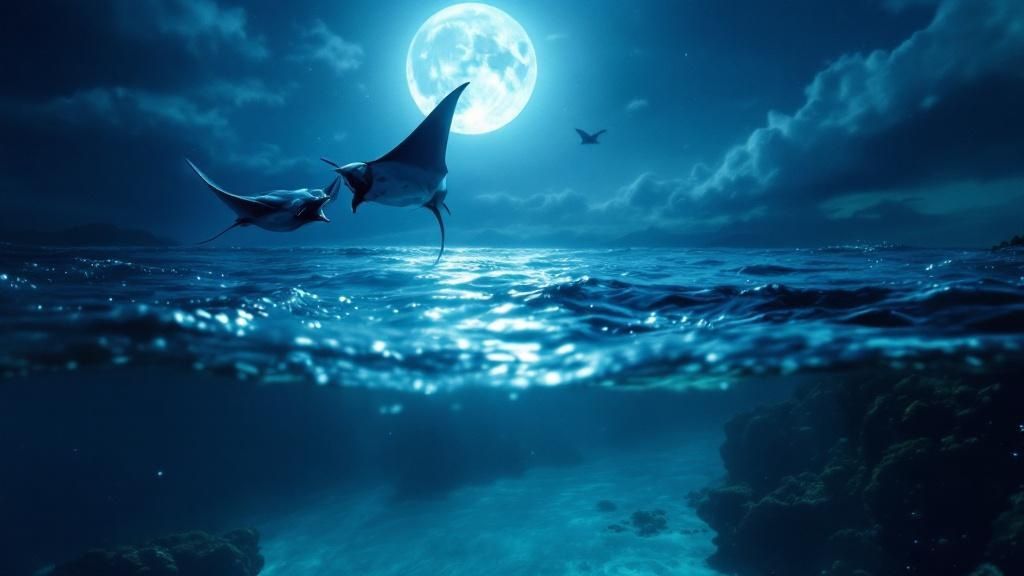
When you start planning your manta ray dive, you'll quickly see that two world-famous spots dominate the conversation: Manta Village and Manta Heaven. Deciding between them is one of the biggest choices you'll make, as each offers a completely different flavor of encounter.
Think of it like choosing your seat for a concert. Do you want the comfy, front-row seat at an intimate theater, or the dynamic, standing-room-only spot right next to the stage at a huge arena? Both offer an incredible show, but the vibe is totally different. The right underwater stage for you really depends on your experience and what you hope to get out of the night.
The great news? Both sites boast success rates that consistently top 90%. So, you can worry less about if you'll see mantas and focus more on how you want to experience them.
Manta Village: The Classic Kona Experience
Just south of Kona, tucked into the protected waters of Keauhou Bay, is Manta Village. This is the O.G. spot, the iconic site that put Kona's manta dive on the map. It's the place we almost always recommend for first-time night divers, snorkelers, and families.
The conditions here are typically much calmer and more predictable. The dive itself is pretty shallow, with a sandy bottom sitting at around 25 to 35 feet. That protected, amphitheater-like setting provides a real sense of security, which makes a huge difference when you're getting used to being underwater after dark.
Divers at Manta Village often describe the experience as a "manta ballet." You get settled on the sandy bottom, point your light up, and just watch as these gentle giants perform graceful, acrobatic loops through the beams. It's mesmerizing and almost peaceful.
For the snorkelers on the boat, the calm surface makes it easy to hang onto the custom-built light boards. This gives them a stable, comfortable ringside seat to watch the magic happen just a few feet below.
Manta Heaven: The Adventurous Encounter
Head a bit further north, closer to the Kona International Airport, and you'll find Manta Heaven (also known as Garden Eel Cove). This site absolutely lives up to its name, serving up a more adventurous and often more dynamic manta encounter.
The main differences here are the depth and the potential for current. The water is deeper, and the site is more exposed to the open ocean, which can stir things up a bit. While that might sound a little intimidating, it’s exactly what many experienced divers and underwater photographers are looking for.
That movement in the water often leads to more thrilling, up-close passes. Mantas can sweep in from all directions, creating a more unpredictable, three-dimensional show that really gets the adrenaline pumping. In fact, these two locations—Manta Village and Manta Heaven—are the heart and soul of manta diving on the Kona Coast, each with its own personality.
No matter which site you're leaning towards, choosing a top-tier operator is what matters most. A good crew will assess the conditions each day and make the right call to keep you safe. While the manta dive is an absolute must-do, don't forget you can also dive the Big Island of Hawaii with Kona Honu Divers to see the huge variety of other incredible reefs and lava formations Kona has to offer.
What to Expect During Your Manta Ray Tour
From the second you check in for your manta ray dive in Kona, you can feel the energy buzzing. This isn't just some other boat trip; you're about to get a front-row seat to one of the most incredible underwater shows on the planet. Knowing what’s coming helps you shake off any jitters so you can just soak it all in.
Your adventure kicks off at the harbor where you’ll meet the crew and get settled on the boat. As you cruise out of the bay, you're usually rewarded with a stunning Hawaiian sunset painting the sky and the Pacific in brilliant streaks of orange and purple. It’s the perfect, peaceful start to the main event.
On the way out, your divemaster or snorkel guide will give a full rundown of the evening. This is a really important part of the trip. They’ll walk you through the plan, cover all the safety rules, and explain how to interact with the mantas responsibly. This briefing makes sure everyone, from old pros to first-time snorkelers, feels totally comfortable before hitting the water.
Setting the Underwater Stage
Once you arrive at the site, whether it's Manta Village or Manta Heaven, the crew gets to work like a well-oiled machine. They set up what we all affectionately call the "manta campfire." This is the real secret sauce behind Kona's world-famous spectacle.
For divers, this campfire is a circle of powerful lights placed on the sandy ocean floor, all pointing straight up. For snorkelers, it's a floating raft or board with bright lights shining down into the dark water below. The whole setup has one simple, genius purpose: to attract plankton.
Think of the lights as a giant dinner bell for the entire local food chain. The bright beams cut through the darkness, pulling in a thick cloud of microscopic plankton. This creates an irresistible "plankton soup" that the mantas have been showing up to feast on for decades.
It's this simple but brilliant idea that makes the manta ray dive in Kona one of the most reliable wildlife encounters you can find anywhere. The lights gather the food, and the mantas show up to put on their unforgettable performance.
The Main Event Unfolds
The first few minutes in the water are pure anticipation. You’re just floating there in the dark. And then, it happens. A massive, dark shape glides silently out of the gloom and into the light. The first manta has arrived. It's a moment of pure magic, and you can feel the collective awe from everyone in the water.
Before long, more mantas join in, and the underwater ballet truly begins. They perform these graceful, looping barrel rolls right through the light beams, their huge mouths wide open to filter the plankton. It’s a mesmerizing sight, and surprisingly peaceful.
The experience is a little different depending on how you see it:
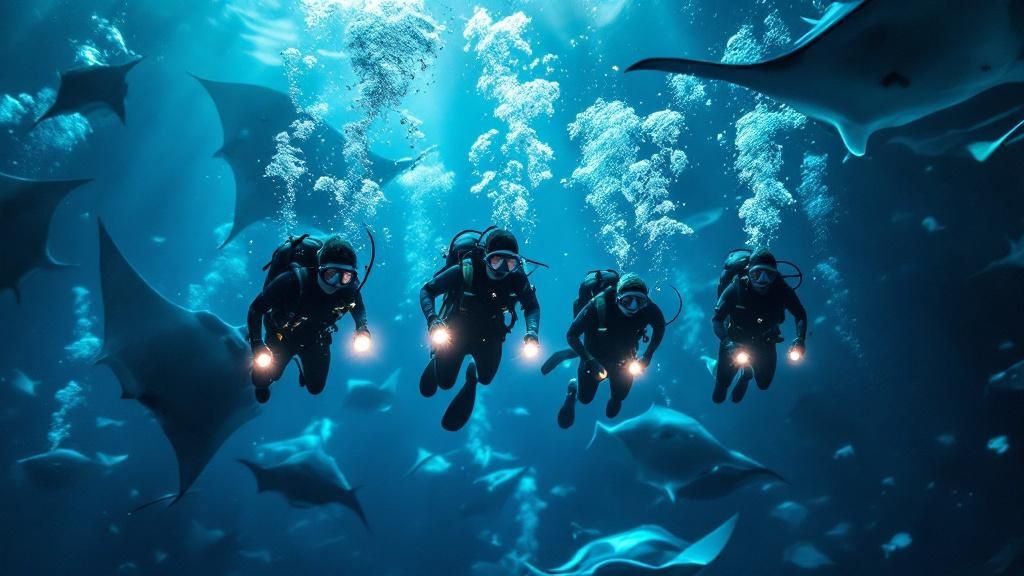
- For Divers: You'll follow your guide down to the sandy bottom and settle in with your group in a semi-circle. From there, you just look up as these gentle giants soar inches above your head. It’s a truly humbling, front-row view of the action.
- For Snorkelers: You'll hang onto the custom light board floating on the surface. It gives you something stable to hold and a perfect bird's-eye view of the show below. The mantas often come right up to the surface, giving you a stunning top-down look at their feeding frenzy.
You’ll spend about 40-45 minutes in the water, and the whole time, the crew is watching carefully to make sure both the guests and the mantas are safe. Afterward, you’ll climb back on board for a warm rinse, some snacks, and a ride back to the harbor under a blanket of stars. It's the perfect cap to an unforgettable night.
If you’re ready to see this incredible performance for yourself, you can check out the premier manta ray dive tour that put Kona on the map.
How to Dive and Snorkel Responsibly with Mantas
The manta ray dive kona experience isn't just a tourist attraction; it's a delicate partnership between us and the wildlife. This whole magical encounter hinges on a foundation of deep respect and responsible ecotourism, ensuring we protect Kona's beloved manta population for years to come.
This is about more than just having a good time. It’s about being a gracious guest in their home. The standards set by local conservation groups and top operators like us are not just suggestions—they are absolutely essential for the health and safety of these gentle giants. Honestly, the single most important choice you'll make is picking a certified, responsible operator who puts the mantas first.
The Golden Rules of Manta Encounters
To make sure every interaction is a positive one for both the mantas and the humans, a clear set of guidelines has been fine-tuned over the years. Think of them as the "house rules" for entering their underwater dining room. Following them is simple, but it makes all the difference in the world.
The core idea is simple: passive observation. Your job is to be a quiet, motionless observer. Just hang out and let the mantas do their thing naturally. This approach keeps them from getting stressed and prevents any accidental harm.
Here are the essential "Dos and Don'ts" to remember on your tour:
- DO NOT Touch: This is the big one. Manta rays have a protective mucous layer that's basically their immune system. Touching them strips this coating off, making them vulnerable to nasty skin infections.
- DO Maintain Your Position: If you’re diving, stay put on or near the sandy bottom. If you’re snorkeling, stay flat on the surface. This keeps the water column—the manta's "dance floor"—wide open for them to glide around safely.
- DO NOT Chase or Ride: Never, ever pursue, grab, or try to ride a manta. Let them be the ones to decide how close they get. Chasing causes them a ton of stress and messes up their feeding.
- DO Observe Passively: Just relax and enjoy the show. Seriously. The less you move, the more comfortable the mantas will be, which almost always leads to closer, more incredible encounters.
Your Adventure Supports Vital Research
When you join a manta ray dive kona tour, you're doing more than just making a lifelong memory. Your tourist dollars are a direct line of funding for crucial scientific research. This support helps scientists track, study, and protect these magnificent animals. It turns your vacation into a genuine contribution to conservation. For anyone passionate about marine life, it’s also worth exploring why you should consider scuba diving in Hawaii for its sheer biodiversity.
This commitment to research is incredibly powerful. Between 2009 and 2014, researchers were out there every single night recording individual manta sightings. They built a massive dataset that helps us predict their movements and protect their habitats. You can discover more insights about these manta ray studies and see how photo-ID has created a personal connection to these amazing animals.
This blend of tourism and science is what keeps the Kona manta ray encounter a sustainable, world-class spectacle. Ready to join a tour that puts manta safety first?
Don’t Stop at the Mantas: Exploring Kona’s Other World-Class Dives
While the manta ray dive in Kona is the undisputed headliner, it’s really just the opening act for the Big Island’s incredible underwater world. Trust me, you can easily fill an entire vacation with dives that are just as unique and memorable.
Once you’ve experienced the manta ballet, your next adventure should be one of the most surreal experiences in all of scuba: the Kona Blackwater Dive. It’s a night dive, but it’s a completely different universe from the manta dive. We often hear it described as floating in outer space, and that’s not an exaggeration.
The Legendary Kona Blackwater Dive
Picture this: you descend into inky blackness miles offshore, tethered to a line that drifts over thousands of feet of open ocean. As you hang suspended in the dark, you get a front-row seat to one of nature's greatest migrations. Strange, alien-like, and often bioluminescent creatures rise from the crushing depths to feed near the surface, all under the cover of darkness.
On a blackwater dive, you aren’t exploring a reef; you’re exploring the water column itself. The creatures you encounter are often in their larval stages, looking completely different from their adult forms, making it a truly unique encounter every single time.
This dive isn't about big animals. It’s about discovering a hidden universe of weird and wonderful macro life that almost no one ever gets to see. If the manta dive is a graceful performance, the Kona blackwater dive is a journey to another planet.
Advanced Dives and Volcanic Landscapes
For certified divers looking for a different kind of thrill during the day, Kona's volcanic origins have created a dramatic underwater playground. The very same lava flows that formed the island have left behind breathtaking underwater topography. Advanced dives here aren't just about the fish; they're about exploring a submerged world of lava cathedrals and canyons. Our expertise with the Big Island manta ray night dive is just one piece of our deep local knowledge.
Our advanced dive charters are designed to get you to these more challenging and rewarding sites, including:
- Lava Tubes and Arches: Swim through ancient lava tubes that form stunning underwater caverns and archways, with light filtering through from above.
- Deep Pinnacles: Explore submerged volcanic spires that rise from the depths, acting as magnets for larger pelagic species.
- Vibrant Reefs: Discover pristine, untouched reefs teeming with life, often found in more remote spots far from the usual crowds.
These charters are perfect for divers who want to push their skills a bit and see a totally different side of Kona’s underwater world.
Answering Your Manta Ray Dive Questions
After learning about this incredible adventure, it's totally normal to still have a few questions floating around. The manta ray dive in Kona is unlike anything else, and feeling prepared is the secret to soaking up every magical moment. Think of this as your personal FAQ, where we tackle the most common things people ask us.
Our goal here is to clear up any final thoughts on safety, what to expect, and how it all works so you can book your spot with total confidence. Let’s dive in.
Is the Manta Ray Dive Safe for Beginners?
Absolutely. For any reputable company, safety isn't just a priority—it's the priority. The whole experience is built from the ground up to be safe and accessible for everyone, no matter how much (or how little) time you've spent in the ocean.
- For Snorkelers: You'll be geared up in a buoyant wetsuit and will hold onto a big, stable light board that floats right on the surface. You don’t need to be an olympic swimmer; you just float and watch the show from the best seat in the house.
- For First-Time Divers: If you're new to diving, your introductory dive will be led by a certified instructor in a calm, shallow spot, usually around 25-35 feet deep. After a solid briefing, you'll simply relax on the sandy bottom and watch the spectacle unfold right in front of you.
What Is the Best Time of Year for the Manta Dive?
Here’s the best part: the Kona manta ray dive is amazing all year round! Our local manta rays are residents, meaning they live here and aren't just passing through. They show up every single month, drawn to the "campfire" of lights that attracts their food. This gives the dive a sighting success rate that consistently tops 90%.
Sure, the summer months might bring slightly calmer surface conditions, but the underwater ballet is just as breathtaking in the winter. Your decision should come down to when you want to visit Hawaii, not a specific "manta season."
What Should I Bring on the Tour?
Your tour operator will have all the essential gear covered—mask, fins, snorkel, and wetsuit are all provided. To make your trip as comfortable as possible, you’ll just want to pack a small bag with:
- A swimsuit (to wear under your wetsuit).
- A towel and a dry change of clothes for after you get out of the water.
- A warm jacket or hoodie for the boat ride home. It can get surprisingly chilly at night on the water!
- If you sometimes get motion sickness, it’s a good idea to take medication beforehand, following the manufacturer's directions.
A lot of people ask about the real difference between snorkeling and diving on this tour. For a great visual breakdown, check out our guide that explains what the manta ray night dive is and shows how both divers and snorkelers get an awesome front-row seat.
Is Seeing Manta Rays Guaranteed?
Because we're dealing with wild animals in their natural habitat, no one can ever offer a 100% guarantee. That said, the Kona dive has one of the highest success rates of any wildlife encounter on Earth. These sites are established feeding grounds that mantas have been visiting like clockwork for decades.
On the very rare night that the mantas decide to be shy, most top-tier operators (including us at Kona Honu Divers) have a "manta guarantee." This usually means you can come back and join another tour on a different night, free of charge. It's always smart to ask about the specific policy when you book your manta ray dive tour.