
You're looking at 167 identified manta rays recorded across more than 23,000 sightings at Kona's two main night sites, and that's why the experience can feel so consistent when conditions line up. On a good evening, the crew lowers the lights into Garden Eel Cove, the plankton gathers, and the dive begins as a light-driven feeding encounter, not a guaranteed wildlife show.
What a Manta Ray Night Dive in Kona Actually Feels Like
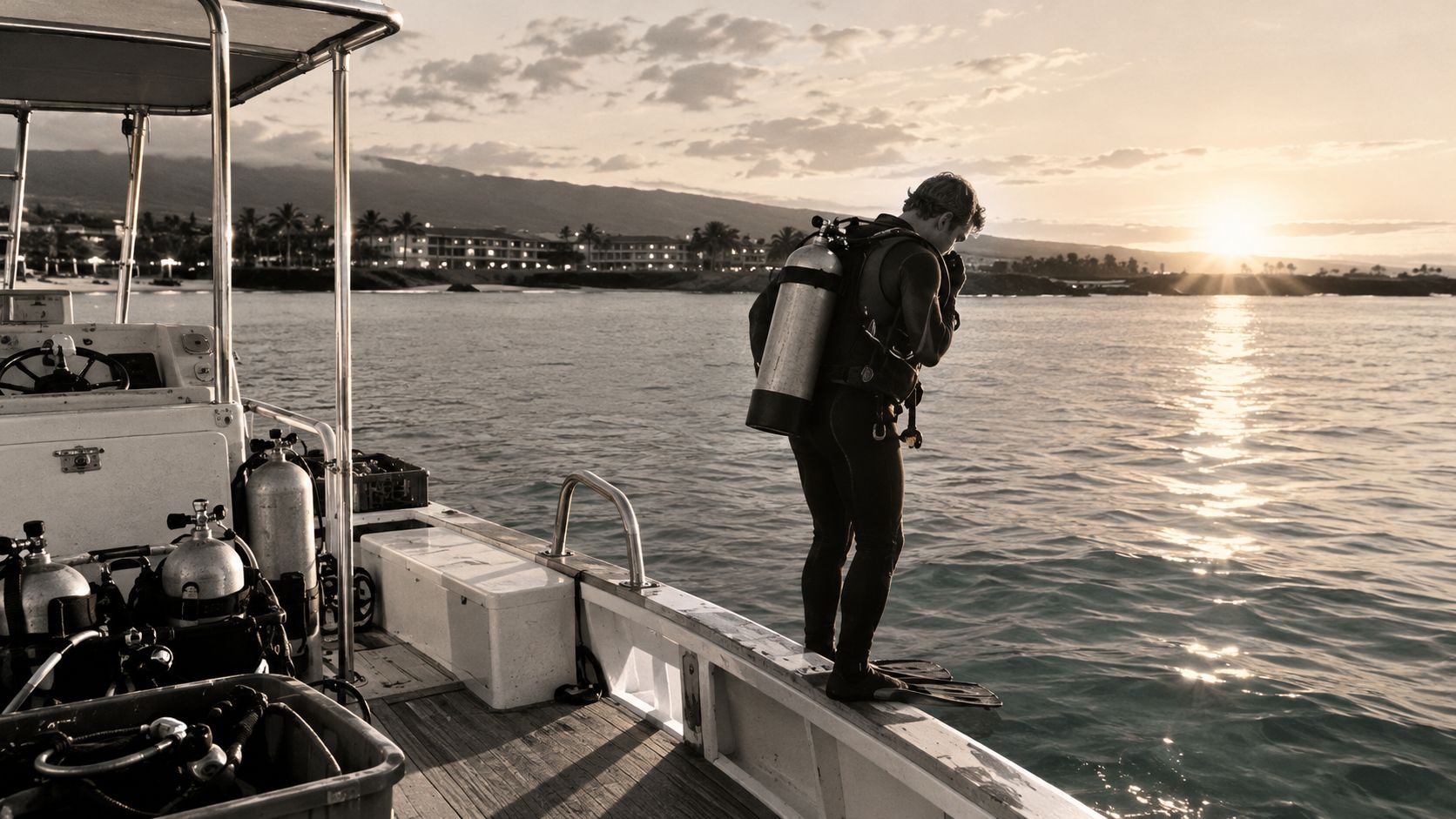
You check in at Honokohau Harbor just before sunset, step onto the boat, and watch the day fade out over the Kona coast. The short run to Garden Eel Cove gives everyone time to settle in, listen to the briefing, and get oriented before the lights go over the side.
From the dock to the bottom
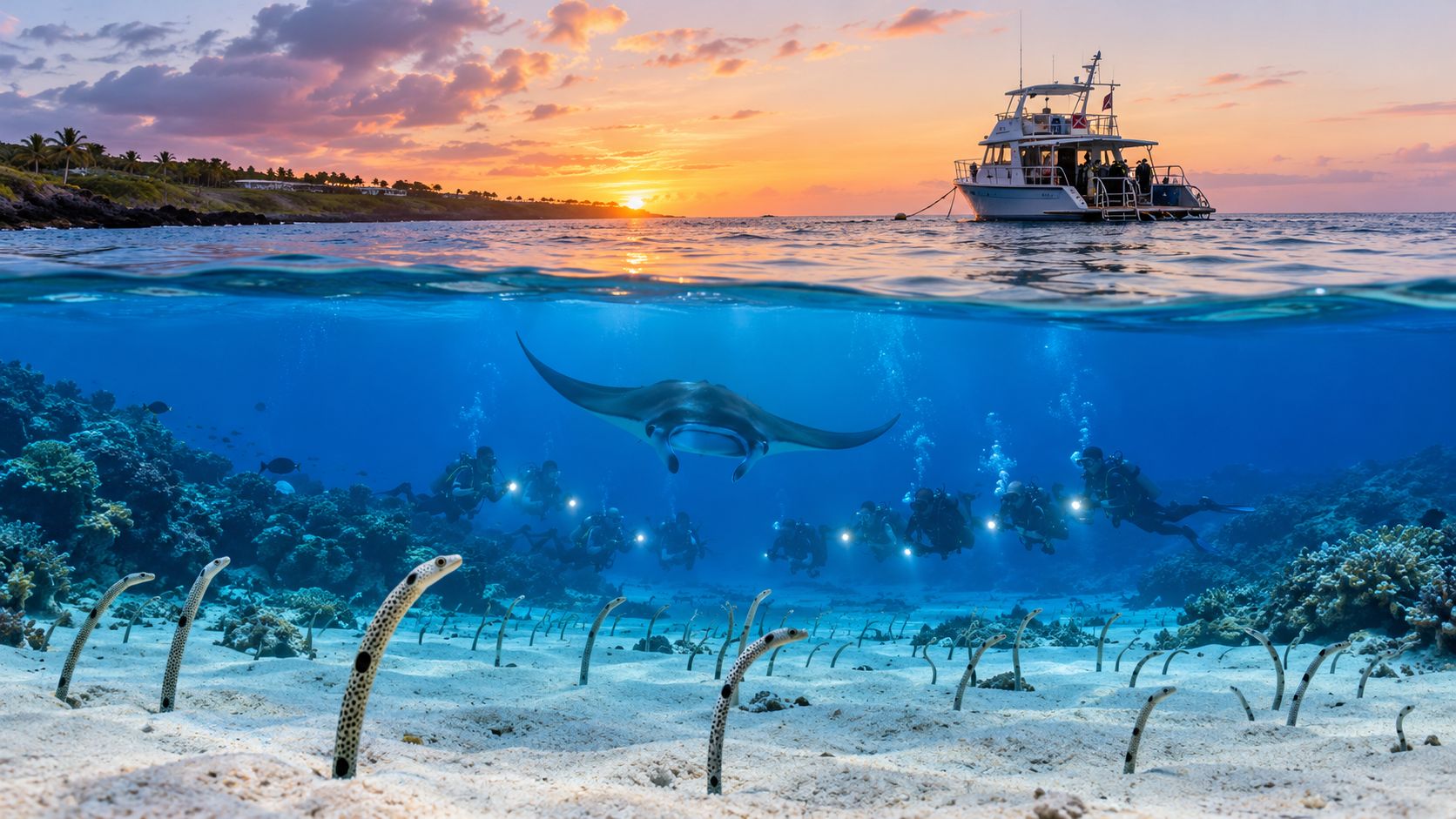
The crew explains the viewing positions, hand signals, and where divers and snorkelers should stay once the lights hit the water. Scuba divers then descend to roughly 40 feet and settle on the bottom, while the surface team floats above the light field and waits for plankton to collect under the bars.
That waiting period matters. The mantas arrive to feed on the concentrated plankton, so stillness protects the setup and improves the encounter for everyone in the water.
Practical rule: the less you move, the cleaner the water column stays around the lights, and the easier it is for mantas to make smooth passes.
What you actually see
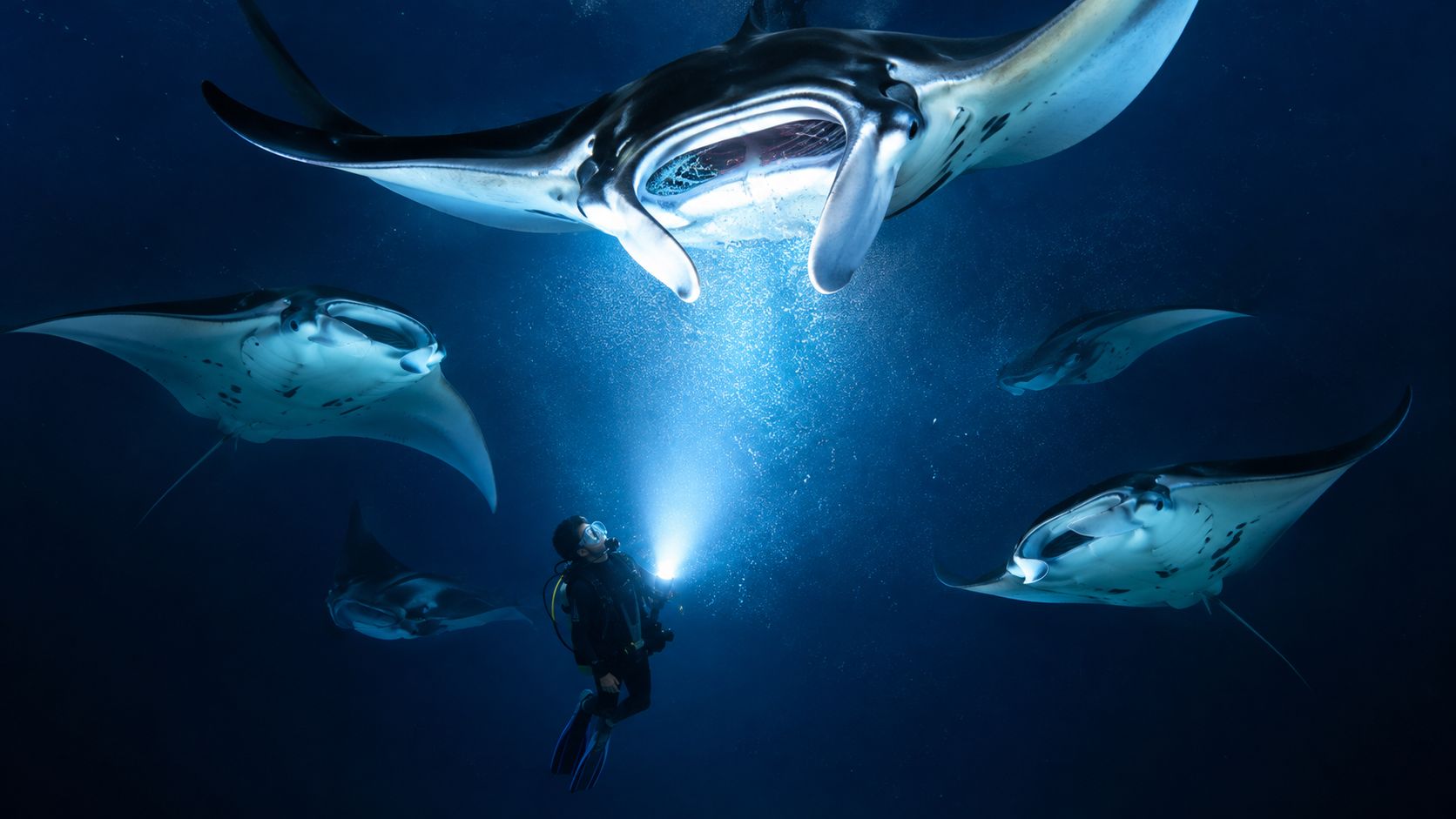
A manta doesn't burst through like a predator. It glides overhead in slow, wide arcs, sometimes close enough that the white belly and dark spot pattern fill your whole view. When divers remain steady, the passes can feel almost suspended, with the ray turning within a few feet of the light field before circling back.
That calm, repetitive rhythm is what removes the biggest barrier for first-timers, the fear of the unknown. If you want to start planning a trip, the natural next step is the Kona Honu Divers manta ray dive tours page, where you can match the night dive format to your comfort level.
Why Kona Became the World's Manta Dive Capital
Kona didn't become famous for manta dives by accident. The tradition grew from local experimentation, careful observation, and a site history that showed manta rays returning to the same light and plankton conditions again and again.
The early milestones
In 1991, local operator Jim Robinson recognized that manta visits near resort lighting could support a recurring tourism experience, and his company became the first boat operator to schedule weekly scuba night dives. Early setups placed underwater lights on the seafloor to attract plankton, which in turn brought manta rays into view.
By 1993, reports described as many as five boats and about 50 people in the water, compared with an earlier pattern of one boat carrying roughly six to eight divers only a few nights per week. Then came the August 1999 experiment at Manta Heaven, where underwater lights were placed in a natural sand channel at about 30 feet (10 meters) deep and six manta rays appeared immediately to feed.
A year later, the closing of the Kona Surf Hotel showed how dependent the site was on artificial light. When the lights went off in May 2000, plankton accumulation and regular manta visits declined.
The biology behind the show
Reef manta rays, Mobula alfredi, are filter feeders. At Kona's light-assisted sites, submerged lighting concentrates zooplankton in the illuminated water column, which creates the feeding opportunity divers see at night. Observational dives generally start soon after sunset and last about one hour, matching the period when many zooplankton migrate upward and become available to feeding mantas.
A 2025 University of Hawaiʻi study adds a stronger long-term picture. Researchers analyzed community-sourced identification records from 2010 through 2022 at Garden Eel Cove and Keauhou, with more than 23,000 sightings representing 167 individually identified reef manta rays. The population showed a near 1:1 sex ratio, strong site fidelity among females at Keauhou, and evidence of connectivity between the two sites, while garden-side attendance remained especially reliable. The University of Hawaiʻi study is the clearest reminder that this is a real, resident animal population, not a staged spectacle.
Kona's night dive works because the habitat keeps attracting the same animals under the same ecological logic. That's why the best operators focus on lights, spacing, and patience, not tricks.
Garden Eel Cove Versus Other Kona Manta Sites
Kona's two main nighttime manta-viewing sites are Garden Eel Cove in Makako Bay, also called Manta Heaven, and Manta Village in Keauhou Bay. Both can produce good encounters, but they do not feel the same underwater. Garden Eel Cove usually gives first-timers a cleaner setup to read, with a more organized viewing zone and a calmer overall feel.
Why Garden Eel Cove stands out
Garden Eel Cove sits in a more protected pocket of the coast, so the viewing area is often easier to hold steady. The lava-rock boundary helps define where divers and snorkelers belong, which makes it less likely that people drift into one another's space or kick up silt with their fins.
That layout matters. When the bottom clouds over, the lights work less well. When the group spreads out, manta viewing becomes harder to follow. Garden Eel Cove's reef and rock structure give the site more shape than a broad open sand patch, so the encounter feels more organized from the start.
The University of Hawaiʻi study found Garden Eel Cove consistently supported larger manta aggregations than Keauhou. That lines up with what many local divers see in practice, and it helps explain why Garden Eel Cove is often the stronger choice for a first Kona manta night dive.
How to ask the right question before booking
Do not ask only whether a trip “includes manta rays.” Ask which site the operator uses, and why. If they rotate between sites, ask how they decide when to shift, how many guests they put in the water, and whether snorkelers and scuba divers are kept in separate spaces.
Crowding and lighting are part of the same equation. A smaller, well-run group with lights placed where they belong usually gives you a clearer view than a larger boat load with people spread unevenly across the site. If you want a direct site comparison before booking, this Garden Eel Cove and Manta Village guide breaks down the differences in plain terms.
If your goal is the calmer, more controlled Kona manta experience, Garden Eel Cove is the site to ask about first.
Best Seasons, Times, and Certification to Book
Mantas can be present year-round in Kona, but the water and surface conditions still shape how easy the night feels. If you're new to night diving, you want the trip that matches your skill, not just the one with the most dramatic marketing.
Season and moon phase
Calmer months often give newer divers a softer first experience, while rougher periods can make the boat ride and surface time less comfortable. Moonless or new-moon nights usually help keep the plankton concentrated under the dive lights, while brighter nights can spread that plankton out.
The same logic appears in operator planning. If you're booking around your vacation dates, look for the best-time guidance for Kona manta diving and choose the night that gives your group the best chance at calm water and good visibility.
| Manta Dive Conditions at a Glance | |||
|---|---|---|---|
| Period | Sea State | Human Influence | Best For |
| Calmer months | Easier on boat and entry comfort | Less fatigue from surface chop | Newer divers and first-timers |
| Rougher periods | More variable conditions | Comfort depends on the day | Experienced guests who are flexible |
| New moon or moonless nights | Better plankton concentration near the lights | Less ambient light competing with the rig | Stronger viewing conditions |
| Brighter moon phases | Plankton can disperse more | More background light in the water | Guests who care more about timing than intensity |
Certification and comfort
A certified Open Water diver with recent logged experience can usually handle the scuba version if they're comfortable descending at night and staying still on the bottom. Confident snorkelers can join the surface version without scuba training, which makes the manta dive accessible to more families and mixed groups.
The question isn't just certification, it's comfort in dark open water. If someone gets anxious easily, the snorkel format may be the better fit, and if a diver wants a steadier bottom view, the scuba option makes more sense.
Safety, Crowding, and How to Choose an Operator
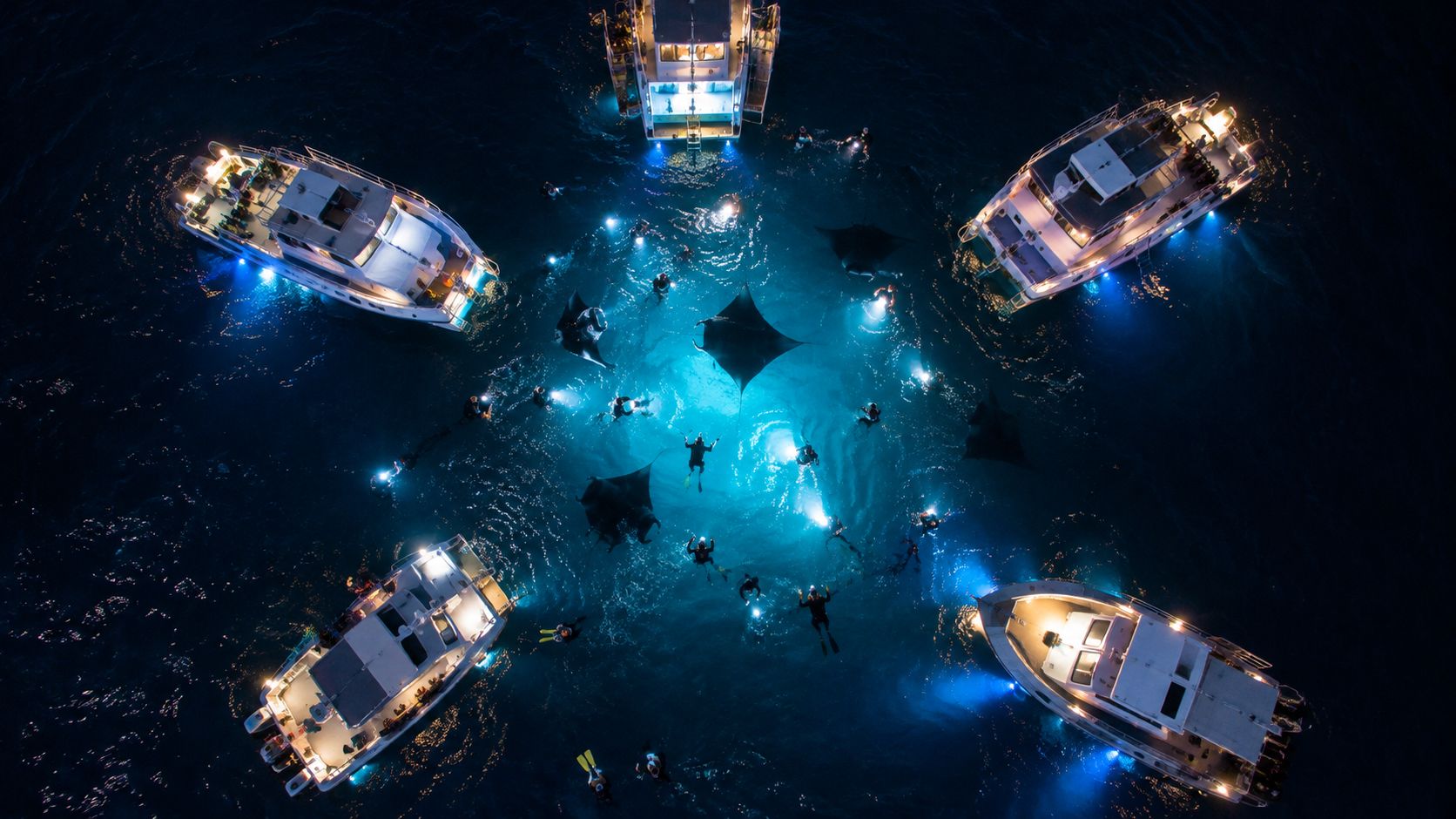
A manta night dive can feel calm and orderly, or cramped and noisy. The animals may still show, but the experience changes fast when fins cross, lights sweep faces, or people drift off station.
What the crowding data shows
A survey of 444 manta-tour participants found that many snorkelers and scuba divers reported conflict with other guests. The problems were familiar, bumps, poor spacing, and lights pointed where they should not be.
That is why the operator matters more than a promise of sightings. Hawaii's DLNR has also proposed management measures including 24 commercial permits per zone and an 8:1 guide-to-customer ratio, along with vessel lighting rules and propeller protection. Those ideas show that crowding is a real operational issue, not a minor inconvenience.
Questions to ask before you book
- Site rotation: Ask whether the boat always uses the same site or chooses based on conditions and traffic.
- Group size: Find out how many guests are in the water with each guide.
- Guide ratio: Ask how the operator handles the 8:1 type of ratio standard discussed in state planning.
- Separation plan: Ask how scuba divers and snorkelers are kept apart.
- Vessel lighting: Confirm how the boat manages deck lights and water-facing lights.
- Propeller safety: Ask whether the boat uses mooring, shutdown procedures, or other controls near the viewing area.
Garden Eel Cove usually handles this better than a crowded, less protected setup because the viewing area, reef structure, and approach pattern give crews more room to organize guests. Protected conditions still matter, but so do the details on deck. A good operator keeps people in place, avoids chasing animals, and lets the mantas decide how close to come.
For a practical checklist on comparing dive companies, this Kona operator guide is a useful way to screen trips before you pay.
Gear, Photography, and In-Water Etiquette
The right gear makes the night easier, but the wrong habits can ruin visibility for everyone around you. Light discipline matters as much as fit, and in Kona's manta field, both affect the quality of the encounter.
What to wear and carry
A 5 to 7 mm wetsuit is the normal comfort range for this kind of night dive, because staying still in open water can feel colder than people expect. Low-profile fins help keep turbulence down, and a mask with a low-volume skirt usually seals better for a long, quiet bottom stay.
Bring a reliable primary torch and a small backup light. The beam is useful for checking gear and signaling the crew, but stray light is also one of the biggest complaints from other guests, so keep it controlled and intentional.
Light discipline is dive discipline. If you point your beam everywhere, you wash out the plankton field and distract other people at the same time.
How photographers should think about the shot
A wide-angle lens is the easiest way to capture a manta's full shape against the dark water. A wide dome port helps with that framing, and a red focus light can make aiming easier without blasting the whole scene with harsh white light.
Strobes should be aimed at the mantas, not into other divers' masks. The goal is to record the encounter without breaking it, which means fewer flashes, fewer unnecessary movements, and more patience when the rays circle back through the light bars.
The etiquette that keeps the dive working
- Stay on the line: Hold position where the crew places you, and don't drift into the open center.
- Keep hands close: Tucked hands reduce accidental contact and keep your body profile small.
- Never chase: A manta that feels pressured changes its path, and that hurts everyone's view.
- Let them choose distance: The best passes happen when the ray feels free to come and go.
If you want a broader look at respectful behavior across Kona diving, this diver etiquette guide is useful before any night charter.
Booking a Kona Honu Divers Manta Night Dive
A typical evening starts at Honokohau Harbor, where the crew fits gear, checks comfort levels, and reviews the plan before departure. The boat heads to Garden Eel Cove, the lights go down, and snorkelers line up at the surface while scuba divers settle into position below.
Choosing snorkel or scuba
The snorkel version works well for non-divers and newer swimmers who want the surface view without certification stress. The scuba version is better for guests who want to sit at the bottom and watch the mantas arc overhead from a stable viewing point.
Kona Honu Divers also runs related options for divers who want something different after dark, including a blackwater night dive and premium advanced two-tank trips for more experienced guests. If you're still narrowing down the trip, this Kona Honu Divers company guide helps you compare the main formats.
That evening format gives you a clean next step if you want a guided trip without sorting every logistics detail yourself. The value is simple, the crew handles the boat, the lights, and the spacing, so you can focus on the mantas.
Manta Ray Dive Hawaii Questions First-Timers Actually Ask
Yes, the snorkel version can work for non-swimmers who're comfortable floating with a belt and following the crew's instructions. For older divers, the key issue is comfort in dark water, not age alone.
Mantas often pass within a few feet when people stay still, because the rays control the distance once the plankton field is steady. They're harmless filter feeders, with no sting and no teeth built for biting people, so the main rule is to leave them alone and let them feed.
The trip runs year-round, although conditions vary with season and moon phase. If you remember only one thing, make it this, the Kona manta dive depends on a stable, light-fed population and a well-run operator.
If you want a calm, well-run way to experience manta ray dive Hawaii, Kona Honu Divers offers manta snorkel and scuba trips built around the Garden Eel Cove night encounter. Visit Kona Honu Divers to compare options, check the timing that fits your stay, and book the trip that matches how you want to see Kona after dark.