
You're probably doing what every diver does before a Big Island trip. You search for a Kona diving company, open ten tabs, and end up staring at a pile of similar promises about great crews, safe boats, and amazing reefs.
Most of those blur together fast.
What matters in Kona is simple. You need an operator that runs clean logistics, knows the coast cold, handles advanced diving without drama, and puts you in the right water at the right time. That matters even more if your trip includes the manta night dive, blackwater, or a packed multi-day schedule where one sloppy operation can burn an entire vacation day.
Planning Your Ultimate Kona Dive Adventure
The Big Island usually attracts two kinds of divers. The first is the vacation diver who wants easy boat diving, warm water, and one unforgettable marquee experience. The second is the experienced diver who wants the weird stuff, pelagics, night dives, and remote lava topography.
Kona works for both, but only if you book the right operation.
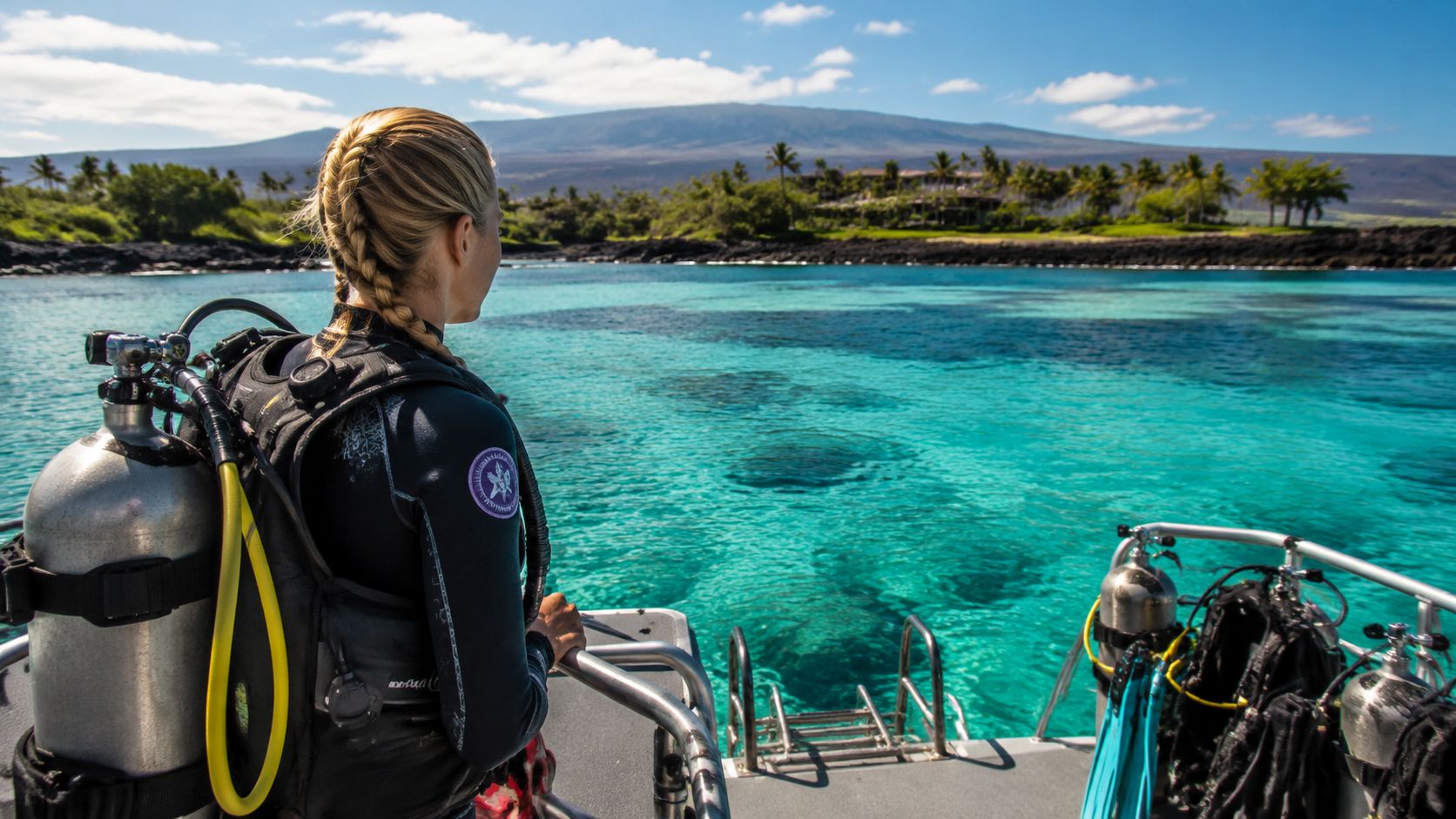
What most visitors get wrong
They shop by price first and dive type second. That's backwards.
Start with your actual goal. If you want classic Kona reef diving, lava structure, turtles, and a smooth first day to settle in, build around daytime boat dives. If you want a bucket-list trip, lock in a manta night dive early. If you're an experienced diver and you came to Kona for something you can't do in most destinations, prioritize blackwater and advanced charters.
A good starting point is this overview of diving Kona and the Big Island. It gives you a practical sense of how the local diving scene fits together.
My recommendation
If you're coming for more than a couple of days, don't book a single splash-and-dash dive and call it done. Kona rewards divers who stack experiences.
Use this rough approach:
- First day: Get settled with a standard boat dive and check your weighting, exposure, and buoyancy in local conditions.
- Middle of trip: Add the marquee experience you came for, usually the manta night dive.
- If you're advanced: Reserve one specialty dive slot for blackwater or a longer-range advanced trip.
- Final day planning: Leave enough surface interval before flying and don't cram your hardest dive at the very end.
Practical rule: In Kona, your operator matters more than your itinerary. A sharp crew can improve an average day. A sloppy crew can ruin a great site.
For the broadest look at what's available on the coast, browse the full lineup of Kona diving tours. That's the fastest way to sort reef dives, manta trips, specialty charters, and training without guessing.
Why Kona Honu Divers Leads the Pack
You show up for an advanced Kona trip with a fresh computer, a short weather window, and one dive you really do not want handled by a casual crew. That is where the operator choice stops being a branding question and becomes a risk question.
I keep choosing Kona Honu Divers because they reduce avoidable problems before you ever hit the water. Their boats run cleanly, their briefings are tight, and the crew manages deck flow in a way that lowers task loading for divers headed into more demanding profiles. On advanced dives, that matters more than any sales pitch. Good operations mean fewer rushed entries, fewer missed checks, better diver matching, and less confusion once conditions stop being forgiving.
Why their safety reputation means something underwater
Plenty of shops throw around "award-winning" language. I care about whether that translates into calmer, safer dives for experienced divers doing night, deeper, or specialty charters.
With Kona Honu Divers, it does.
Their reputation for safety shows up in tangible ways. The crew catches weighting and trim issues early. They spot rust before it turns into stress. They organize entries and exits so divers are not stacked on top of each other with cameras, lights, and too much going on at once. That lowers the chance of small mistakes snowballing into skipped buddy checks, blown descents, or sloppy gas management.
That is the part many general reviews miss. Advanced diving risk is rarely one dramatic failure. It is usually a chain of little errors. A disciplined operator breaks that chain.
If you want to book with your eyes open, look through the Kona Honu Divers crew and instructor team. I always tell visiting divers to do that before handing over a credit card.
Why I recommend them over other Kona operators
Kona has plenty of companies that can get certified divers into the water. Fewer can run a polished day for mixed-experience groups without the whole boat feeling disorganized.
Kona Honu Divers does that well. The crew reads diver ability fast and adjusts accordingly. If someone is overloaded, they catch it. If a diver is capable and wants a sharper profile, the operation can support that without turning the day into chaos. That balance is hard to find.
It also matters in Kona because plenty of visitors arrive with cards in their wallet and a long break since their last dive. On a weaker boat, that slows everyone down and raises stress for the advanced divers onboard. On a well-run boat, the crew contains the problem, keeps standards in place, and protects the experience for the whole group.
Below are the review widgets for both Kona Honu Divers and Kona Diving Company.
The Signature Manta Ray Night Dive Experience
You drop in after sunset, settle onto the sand, and kill the urge to swim around looking for action. Then the first manta comes out of the dark, banks over the lights, and passes close enough that every diver on the bottom forgets about gauges for a second. That is the Kona manta dive at its best. Calm, controlled, and completely absorbing.
The operator matters more here than visitors realize.
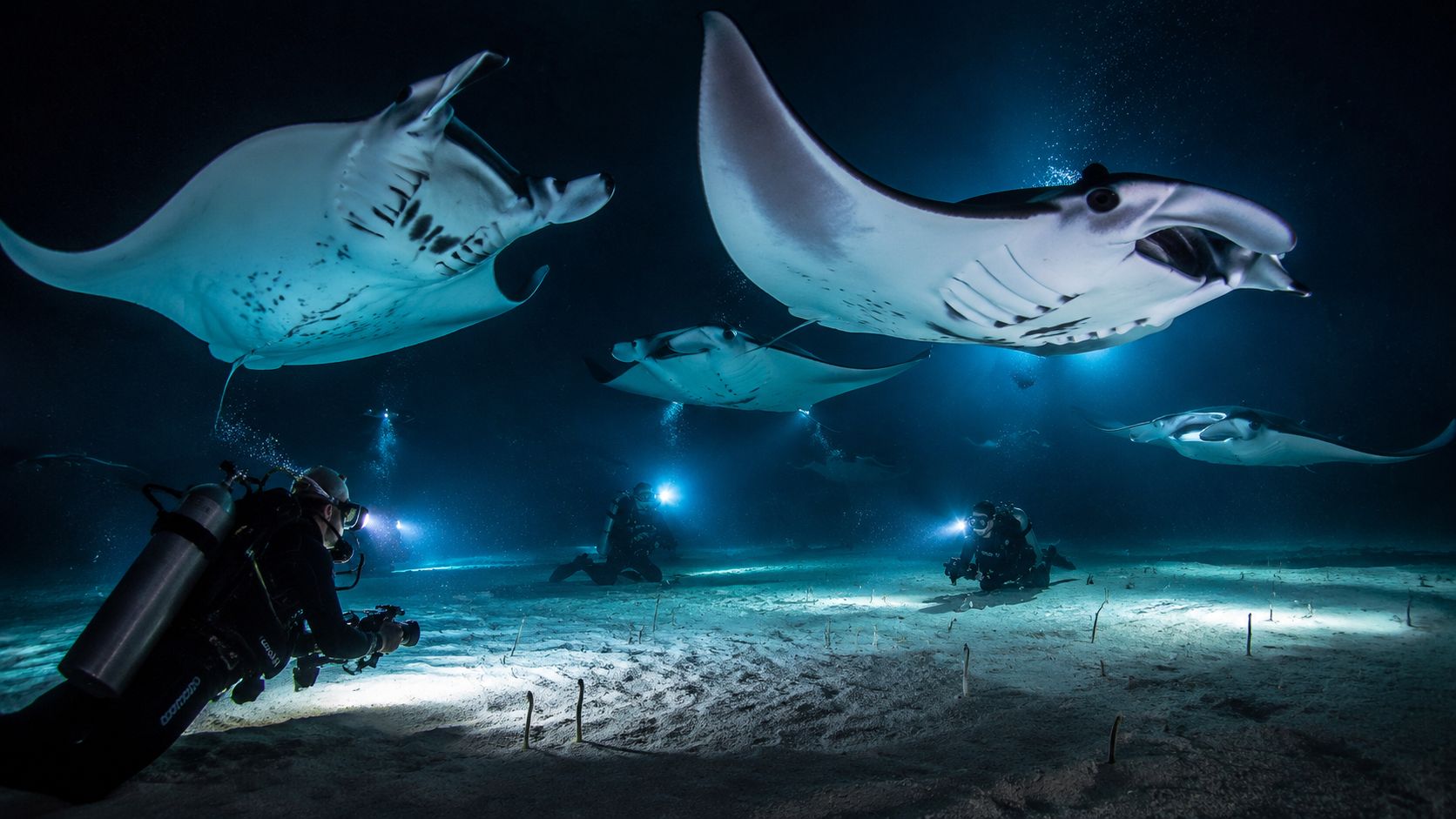
Why Garden Eel Cove is the right call
Garden Eel Cove, also called Manta Village, is the site I recommend. The depth is manageable, the viewing layout is cleaner, and the protection from Keahole Point usually keeps the dive more stable than less sheltered options. For divers who care about control, that matters.
A calmer, shallower site reduces task loading. You spend less attention fighting surge or managing an awkward descent and more attention watching your buoyancy, your spacing, and the animals. That is not a small detail on a night dive. It is direct risk reduction.
If you want a quick overview of how the encounter works before you book, read this manta ray night swim guide.
What actually happens underwater
The setup is simple. Divers gather in a designated area near the bottom while lights attract plankton into a concentrated column. The mantas come to feed in that light.
Good crews keep this orderly. That is one reason I keep pointing advanced divers toward Kona Honu Divers. On a night dive, especially one that attracts excited vacation divers, strong pre-dive briefings and tight in-water supervision reduce the usual problems fast. Poor light discipline, sloppy finning, crowding, and divers popping up off the bottom all create avoidable risk. A crew with award-winning safety standards turns that into a cleaner, lower-stress dive.
You feel the difference right away.
Instead of a loose cluster of divers drifting out of position, you get a controlled viewing line, clear hand signals, and a crew that corrects bad positioning before it turns into contact, silt, or confusion. For advanced divers, that translates into a better encounter and fewer variables to babysit.
A few details are worth knowing:
- Depth profile: The dive usually stays shallow enough to keep gas management easy and bottom stress low while the action remains in front of you, according to this California Diver write-up.
- Animal size: The mantas can be enormous, which is exactly why disciplined spacing matters during close passes, from the same source.
- Individual identification: Local mantas are tracked by their underside markings, which gives the experience more continuity than a random wildlife encounter.
Stay still, stay low, and let the mantas run the show. Divers who chase them ruin the dive for everyone, including themselves.
Why the rules matter
Kona's manta dives work because the interaction is structured around animal behavior, not diver impulse. Researchers and local operators have spent years refining the approach. Divers stay put on the bottom, lights stay aimed up, and the mantas choose how close to come. That is why the encounter remains consistent and why the animals keep returning.
The conservation side matters, but the safety side matters just as much. A stationary bottom position lowers the chance of collisions, uncontrolled ascents, silting the site out, and light chaos during a night dive. Advanced divers should care about that. The best operator is not the one that only gets you in front of mantas. It is the one that reduces avoidable mistakes while the excitement level climbs.
That is the piece many generic reviews miss. Kona Honu Divers' safety reputation is not just a nice badge on a website. On advanced and night diving, it means tighter diver management, cleaner profiles, and fewer bad decisions underwater. On the manta dive, that produces the kind of quiet, close, almost perfectly choreographed encounter people come to Kona for.
Exploring Advanced and Specialty Dives
Advanced diving is where Kona starts sorting out who is merely certified from who is at home in the water. If you want the dives that people talk about for years, book the trips that demand control, not just enthusiasm.
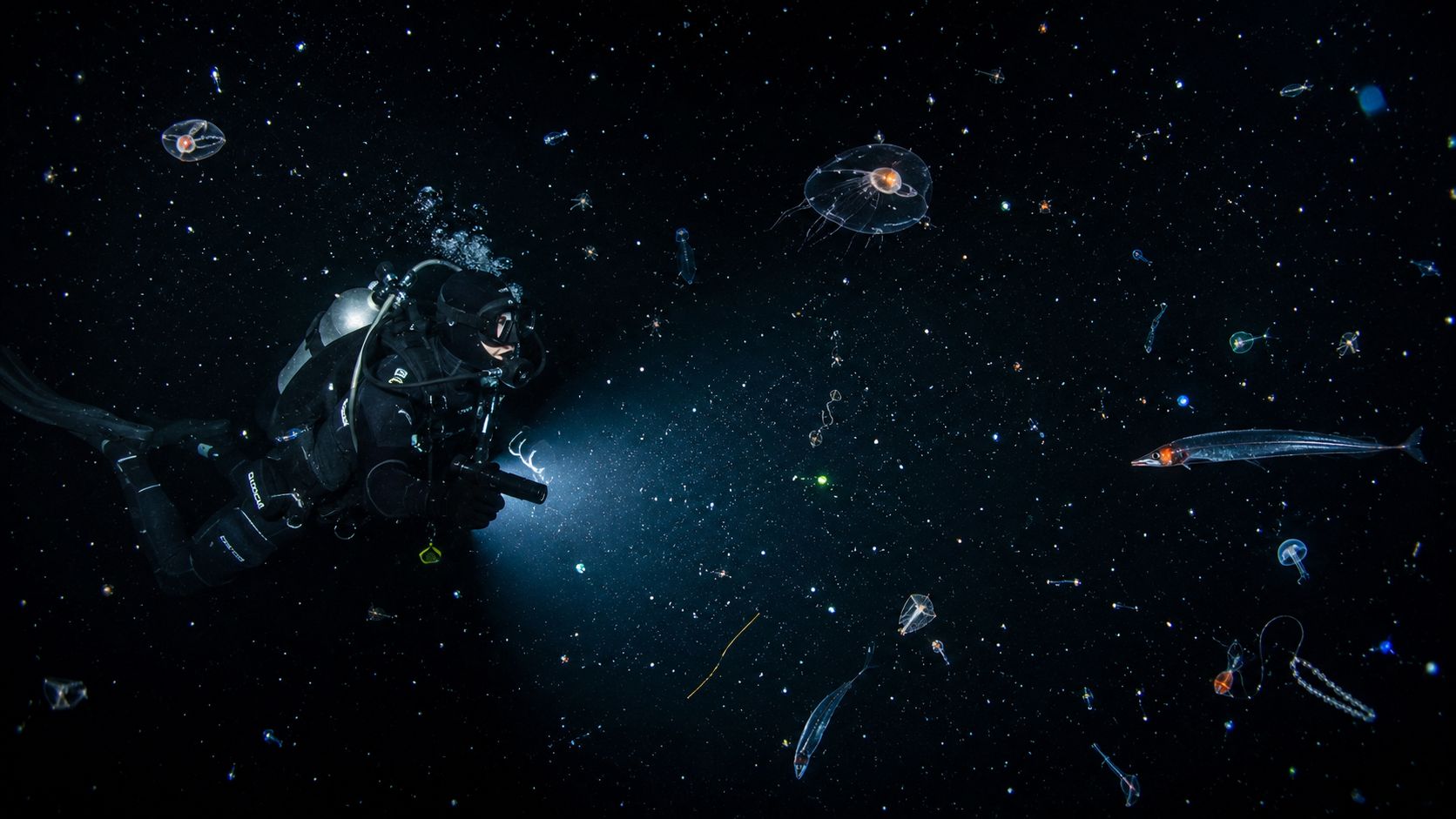
Blackwater is the clearest example. You leave the reef behind, hang in open ocean at night, and watch deep pelagic life rise into your light. Larval fish, jellies, siphonophores, and tiny cephalopods drift past at eye level. It is strange, beautiful, and unforgiving of sloppy habits.
What matters on this dive is not raw depth. It is task control in a place with no bottom reference, no coral wall, and no easy visual reset if your breathing rate spikes. That is why Kona Honu Divers stands out here. Their award-winning safety reputation shows up in practical ways advanced divers should care about. Clear pre-dive expectations. Tight positioning in the water. Better diver screening. Cleaner supervision once everyone is clipped in and the distractions start. On a blackwater dive, that lowers the chance of separation, rushed ascents, and small mistakes turning into real problems.
Book blackwater if these points describe you:
- You stay calm in darkness without needing a reef under you.
- You can hold depth and position without constant finning.
- You care more about rare pelagic life than traditional scenery.
- You want a demanding dive profile with disciplined oversight.
Skip it if open water at night sounds exciting on land but tense in your head. Kona offers easier ways to have a great dive.
If you want an advanced charter without the suspended offshore format, the Premium Advanced Long-Range Dive Trip is the smarter choice. You still get stronger site selection and a more serious profile, but with the orientation of a classic boat dive. If you plan to stack multiple advanced days, get your Enriched Air certification before the trip. You will appreciate the extra no-decompression breathing room.
For divers set on blackwater, use this Blackwater Dive tour link.
One more point that experienced divers should not ignore. Operators reveal themselves fastest on specialty dives. Reef charters can hide weak procedures. Blackwater and long-range trips cannot. Good safety on advanced dives means fewer preventable errors under stress, and that is exactly where Kona Honu Divers earns its reputation.
Packages Pricing and Booking Your Dives
Most visitors overcomplicate the booking process. You don't need a spreadsheet. You need a plan that matches your number of dive days, your certification level, and whether your trip includes night diving.
If you're staying several days, package pricing usually makes more sense than piecing together isolated bookings. It also helps keep your trip organized so you're not scrambling for open spots after you arrive.
How I'd build a Kona itinerary
For a short trip, keep it simple. Book daytime reef diving and one signature night dive.
For a longer stay, mix formats. Use standard day charters as your base, then add one marquee night dive and one advanced experience if you're qualified. That gives you variety without wrecking your recovery, surface intervals, or non-diving plans.
One operator that supports this style is Kona Honu Divers, which promotes package options through its Hawaii scuba diving packages. That's useful if you want a bundled schedule instead of booking every outing separately.
Kona Honu Divers signature tour highlights
| Dive Tour | Best For | Key Feature | Approx. Duration |
|---|---|---|---|
| 2-Tank Day Dive | Most certified divers | Classic Kona reef and lava diving | 5 hours |
| 2-Tank Night Manta Dive Charter | Divers chasing Kona's signature experience | About 45 minutes with manta viewing during the underwater encounter | 5 hours |
| Black Water Night Dive | Advanced certified divers age 18+ | Suspended pelagic night diving from a 60ft tether | 3 hours |
| Premium Advanced Long-Range Dive Trip | Experienced divers wanting more remote options | Smaller-group advanced-focused site selection | Half day to extended charter format |
What to prioritize when booking
Use these filters in order:
- Your must-do dive: Reserve manta or blackwater first. Those are the dives people regret missing.
- Your skill ceiling: Don't book specialty dives because they sound cool. Book the one that matches your comfort in current, darkness, and task-loading.
- Trip length: More days means more room for package value and better sequencing.
- Nitrox certification: If you're already certified, free nitrox can matter on a multi-dive schedule. If you're not, get certified before the trip or early in it.
The biggest booking mistake I see is treating every Kona dive like a standalone activity. It's better to think in blocks. Easy day. Signature night. Recovery. Advanced day.
Unmatched Safety Standards and Trip Logistics
You feel the difference on a demanding Kona dive before the boat leaves the harbor. The crew is not scrambling. Divers are not guessing where to put gear or when to suit up. That matters more on blackwater, deep profiles, and repetitive dive days than many visitors realize.
Advanced diving safety is built on boring details done right, every time.
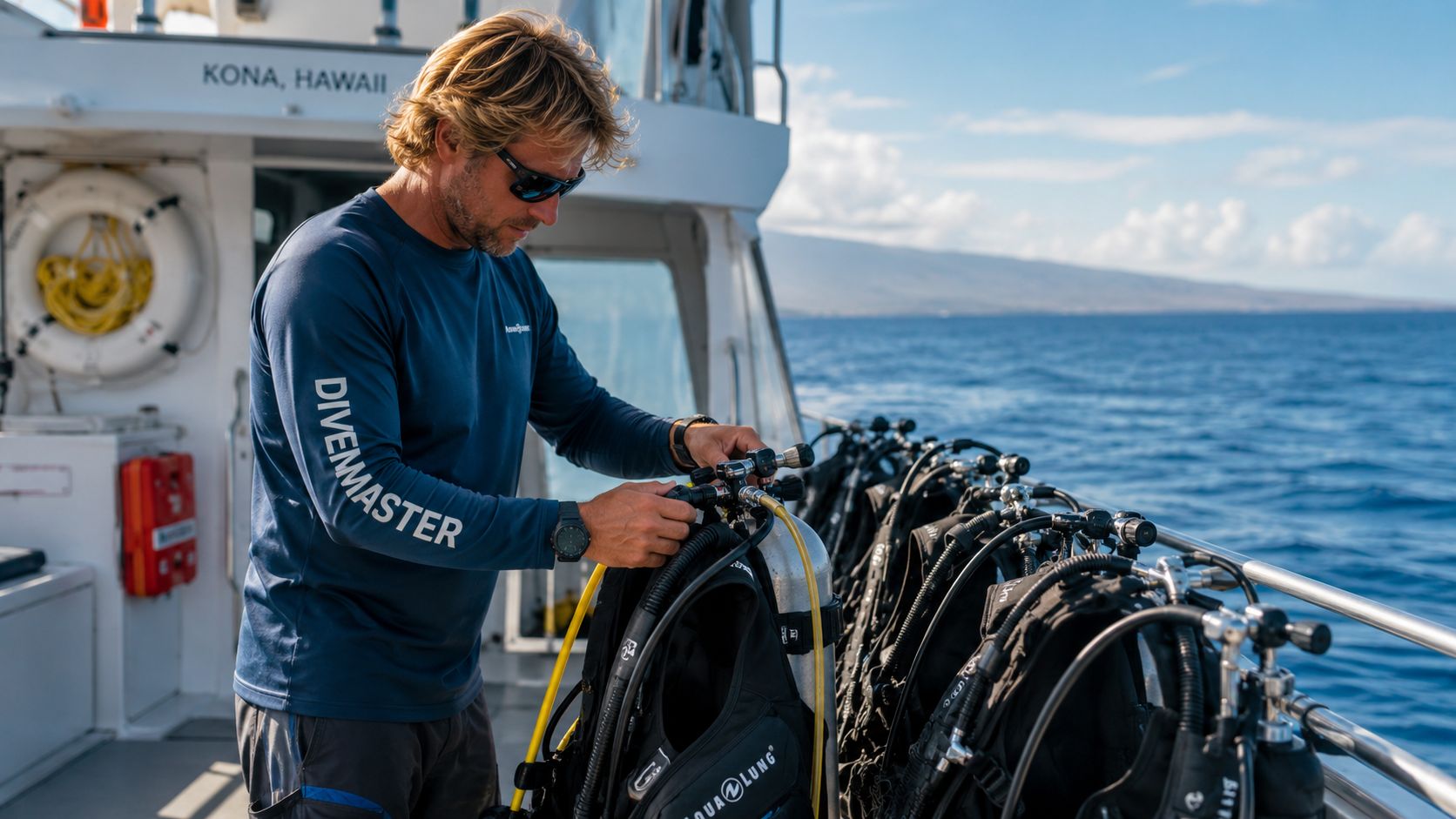
What award-winning safety should mean in practice
A safety reputation only matters if it reduces actual risk in the water. On advanced charters, that means fewer preventable mistakes on the boat, tighter supervision during setup and entry, and a crew that spots small problems before they become dive-ending problems.
Kona Honu Divers operates from a dedicated facility at 74-5583 Luhia St A12 in Kailua-Kona and departs from Honokohau Marina. That consistency helps. Divers are not dealing with chaotic check-in, unclear staging, or rushed departures. Better flow on land usually means better checks in the water.
The practical risk reduction is straightforward.
- Gear is handled professionally: That cuts down on missed tank checks, twisted straps, unsecured accessories, and sloppy setups that advanced divers still make when they are rushed.
- Crew experience shows up early: Good staff catch weighting issues, exposure mistakes, fit problems, and diver stress before descent.
- Boat procedures stay calm and repeatable: Clear entries, roll calls, and exit routines reduce confusion, especially after dark or between repetitive dives.
That is the part casual reviews usually miss. “Award-winning safety” sounds like marketing until you tie it to blackwater drift procedures, night-dive supervision, and the plain fact that experienced divers also make mistakes when task loading climbs.
A Big Island Now report on Kona Honu Divers' Pacific recognition matters for one reason only. It points to a safety culture strong enough to earn outside attention. For advanced divers, the value is simple. Lower chaos. Better oversight. Fewer avoidable errors.
Smart logistics for your trip
Arrive early. Fifteen extra minutes on the front end is worth far more than rushing onto the boat half-organized and mentally behind.
Handle seasickness before boarding. Do not wait for the ride out to test your stomach. If you know you are prone to motion sickness, use what already works for you. Common options include Ship-EEZ Seasickness Patch, Dramamine pills, Bonine pills, Sea Band wristbands, and ginger chews.
Seasick divers burn gas faster, miss briefings, and make dumb mistakes.
One more local rule. If you booked blackwater or a night dive, do not spend the whole afternoon baking in the sun, skipping water, and grabbing greasy food at the last minute. Keep the day quiet. Hydrate early. Eat light. Show up sharp. That does more for your safety than any heroic attitude once the lights go down.
Frequently Asked Questions About Diving in Kona
Do I need to be certified
For boat scuba tours, yes. Certified diving means you already know the basics, and that allows the crew to focus on site conditions, animal interaction rules, and your comfort instead of teaching core skills from scratch.
If you're not certified yet, the smarter move is to get training lined up before your trip or book instruction once you arrive.
When should I dive in Kona
Kona is a year-round destination in practical terms. Conditions are often friendly, and the coast gives operators plenty of flexibility. Your best timing depends less on season and more on what you want to do.
If manta is the priority, book around your evening schedule and keep that night open. If advanced diving is your goal, leave enough room in your trip for weather shifts and don't put your one specialty dive on your final possible day.
Are package prices worth it
Usually, yes, especially for visitors staying several days. This is one area where a lot of tourists get burned by unclear pricing from various operators.
Kona Honu Divers' “more dive = more savings” model is particularly beneficial for its 70% non-local guest demographic, and 2025 data cited by Big Island Now says 35% of Pacific dive tourists abandon multi-dive packages from other operators because pricing structures are unclear, as noted earlier in the article and sourced in the safety section. The practical takeaway is simple. Clear package structure matters more for destination travelers than it does for someone booking a single local outing.
What should advanced divers prioritize
Choose one signature specialty dive and do it well. Don't cram every demanding option into a short trip.
For most advanced divers, the best sequence is:
- Settle in with a day dive.
- Do manta next.
- Save blackwater or long-range advanced diving for after you've adjusted to local conditions.
That order keeps your buoyancy, weighting, and comfort dialed before you step into the more unusual stuff.
If you want a Kona operator that covers reef diving, manta charters, training, and advanced specialty trips in one place, book directly with Kona Honu Divers. It's the cleanest way to build a trip that fits your experience level instead of gambling on a random Kona diving company.