
Table of Contents
- Manta Night Dive Formats Compared
- Choose Comfort Before Perspective
- A Learned Feeding Opportunity
- Why the Same Lights Don't Produce the Same Night
- Kona Manta Viewing Sites Compared
- Why the Viewing Area Matters
- From Harbor Check-In to the Return Ladder
- Rules That Apply Throughout the Dive
- Pack for the Water and the Ride Home
- Make a Seasickness Plan Before Boarding
- Kona Season and Night Dive Conditions
- Animal Activity Follows Food Availability
- Build Flexibility Into the Trip
- Questions Worth Asking Before You Commit
- Use Reviews to Check the Process
You've found a free evening on the Big Island, and now you're comparing manta tours that sound almost identical. The photos promise huge rays overhead, but they don't tell you where you'll wait, how crowded the water might be, or what happens when the ocean doesn't cooperate.
A manta night dive in Hawaii is best understood as a visit to a working feeding station, not a guaranteed wildlife show. The right choice comes down to the site, your viewing position, and how carefully the crew manages people around feeding animals.
What a Manta Night Dive Is and Who It Suits
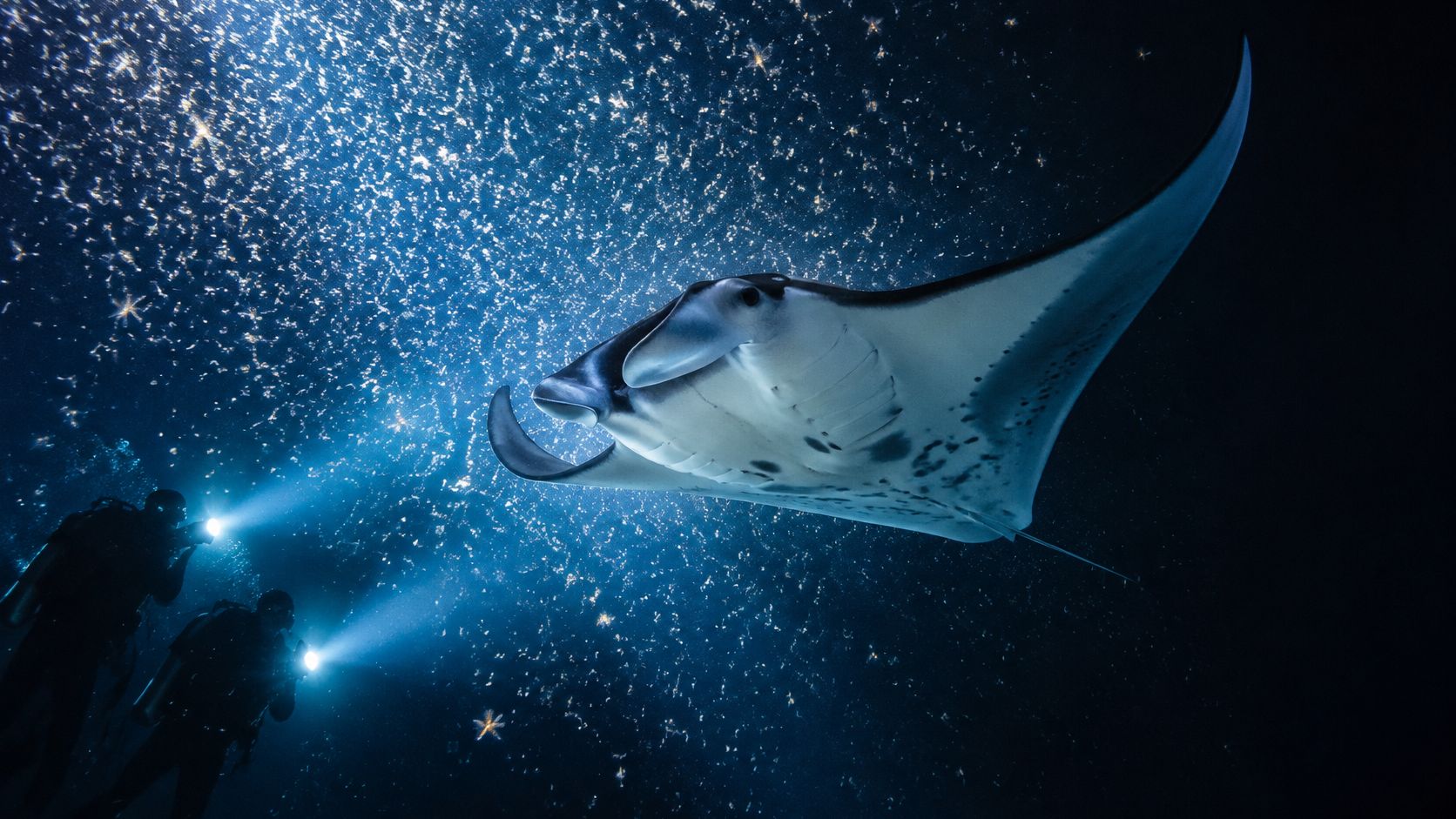
Off Kona, the bay is dark, but a powerful light glows on the sand below. Divers settle into an assigned viewing area, and the illuminated water becomes their reference point. When a manta approaches, its pale underside comes into view before the full width of its wings becomes clear.
This is a stationary, closely supervised scuba dive, rather than a nighttime swim in search of animals. Our crew places powerful lights on the seafloor, creating a broad, bright circle so divers aren't sitting in complete darkness. Divers kneel on designated sand while the water above stays open for feeding passes.
The animals' size explains much of the appeal. Hawaiian reef mantas commonly reach approximately 10–18 feet across, according to Hawaii's Division of Aquatic Resources species information. They can pass just inches away, although distance is always the animal's choice.
Manta Night Dive Formats Compared
| Format | Who it suits | Certification needed | Where you watch from |
|---|---|---|---|
| Manta Night Dive (scuba) | Certified divers of all experience levels | Scuba certification required | Kneeling on the sandy bottom inside the lit area |
| Manta Night Snorkel | Snorkelers and swimmers comfortable at the surface | No scuba certification | Floating on the surface above the lit area |
Our manta night dive is open to all certified divers. That includes newly certified divers, but certification alone doesn't tell the crew how comfortable you'll feel at night. Mention a long break from diving, difficulty equalizing, or anxiety about darkness before the trip.
The surface option isn't a lesser encounter. It's a different perspective on the same feeding activity, without managing scuba equipment underwater. Our comparison of snorkeling and diving with manta rays can help you decide which position feels right.
Choose Comfort Before Perspective
Use the manta dive and snorkel tour details to understand the available formats before booking. Don't choose scuba just because the photographs look more dramatic.
For the manta snorkel option, check available dates below.
Choose scuba if you're certified, comfortable with your equipment, and want to settle below the feeding corridor. Choose snorkeling if you're a comfortable swimmer who would rather watch from the surface.
Why Mantas Gather Under Kona’s Lights
A porch light gathering moths is a useful starting point for understanding this dive. Underwater, the small organisms are zooplankton, microscopic drifting animals that become concentrated or visible in the illuminated water. The mantas arrive for the food, not to investigate the divers.
The distinction matters. Nobody needs to hand-feed a manta or lure it toward a camera. The ray swims through prey-rich water with its mouth open, filtering food through its feeding apparatus and returning when another pass is worthwhile.
This is the feeding movement you're hoping to observe.
A Learned Feeding Opportunity
NOAA's manta documentation explains that mantas have learned to associate artificial nighttime lighting with higher plankton concentrations and incorporated illuminated sites into their foraging strategies. In plain language, they've learned where a useful meal may be available.
That doesn't make the animals trained performers. A manta may enter the light, circle repeatedly, move elsewhere, or never appear. The lights create an opportunity, but the animal decides whether that opportunity is worth using.
The essential relationship: The lights bring the plankton, and the plankton bring the mantas.
A Love Big Island guide to the encounter identifies three known Kona-area feeding stations, Manta Village, Manta Heaven at Garden Eel Cove, and an unnamed site off the Kohala coast, and describes mantas reaching approximately 12 feet across during encounters. Those established locations make a dedicated viewing trip possible without searching the entire coastline.
Why the Same Lights Don't Produce the Same Night
Currents move plankton. Weather affects water conditions, and the amount of available prey changes. A lighting arrangement that supported repeated feeding passes on one evening may attract less activity on another.
Watch the route rather than trying to predict a close-up. A ray may sweep through the same patch of water, turn outside the brightest area, and approach again from a different angle. An apparently empty space can be part of its turning path.
For photographers, this means patience usually works better than repositioning. Compose around an open approach and let the animal enter the frame. Swimming after a departing ray trades a stable viewing position for a poor angle and unnecessary disturbance.
The resident animals' willingness to return is what makes these stations valuable. Protecting that repeated use matters more than securing an extra-close pass on a particular night.
Garden Eel Cove Versus Other Kona Viewing Sites
I recommend Garden Eel Cove as the superior choice for a dedicated manta scuba dive. Its protected location, better viewing area, and healthier surrounding reef make it a strong place to organize stationary observation. Our go-to site is here because it's generally calmer and more protected from open-ocean swell.
Garden Eel Cove, also called Manta Heaven, sits in northern Kona near the airport. The Underwater Atlas site guide describes a gently sloping sandy plain, scattered coral heads, and lava-rock formations. That combination gives the crew usable viewing space without treating living reef as somewhere to park divers.
Kona Manta Viewing Sites Compared
| Site | Shelter from swell | Viewing terrain | Aggregation pattern |
|---|---|---|---|
| Garden Eel Cove (Manta Heaven) | Protected setting, generally calmer than open-ocean exposure | Gently sloping sandy plain with coral heads and lava rock | Larger and more consistent aggregations than Keauhou |
| Keauhou Bay | Assess the evening's swell direction | Confirm the assigned viewing area | Smaller aggregations in the site comparison; disproportionately visited by females |
| Makako Bay | Assess conditions at the actual viewing position | Confirm the designated sandy viewing area | Principal viewing location, not a separate animal-count forecast |
| Manta Village (former Kona Surf Hotel area) | Confirm conditions for the departure | Confirm the bottom position before descending | Historic nearshore feeding site |
Site names need careful interpretation. Makako Bay and Garden Eel Cove shouldn't be counted as independent alternatives, and Manta Village is associated with the Keauhou area. A booking page may use a bay name, a dive-site name, or a nickname for the same general destination.
The table also deliberately avoids assigning unsupported shelter ratings or bottom descriptions to every name. Ask where the divers will sit, not just which label appears on the itinerary.
Why the Viewing Area Matters
A sandy staging area makes group organization easier. Guides can establish a clear boundary, divers can keep their equipment contained, and mantas retain open water above. Sand still contains marine life, so a designated position isn't permission to crawl around or drag fins across the bottom.
The surrounding reef matters too. A better reef environment gives the location value beyond the illuminated feeding area and reduces the temptation to judge the entire trip by the closest manta pass. Protecting coral heads and keeping hoses clear should remain part of the plan.
At the former Kona Surf Hotel area, manta viewing has deep roots. Hawaii's protected-species spotlight places regular nearshore observations in the early 1970s, showing how long the animals have used this coastal setting.
Our guide to where to see manta rays in Hawaii helps put those locations in context. For most divers, I would prioritize a protected site with good fixed viewing positions over a larger bay or a more familiar name.
Shelter doesn't eliminate weather limits. A responsible crew can still change the plan when swell reaches the viewing area or safe entry and exit become uncertain.
Dive Sequence and Safety Rules
The preparation begins before anyone descends. Our experienced divemasters and instructors manage the group in the water, but the dive works best when everyone understands the plan before entering.
Equipment checks are easier to complete in good light, before the boat ride and the excitement of arrival.
From Harbor Check-In to the Return Ladder
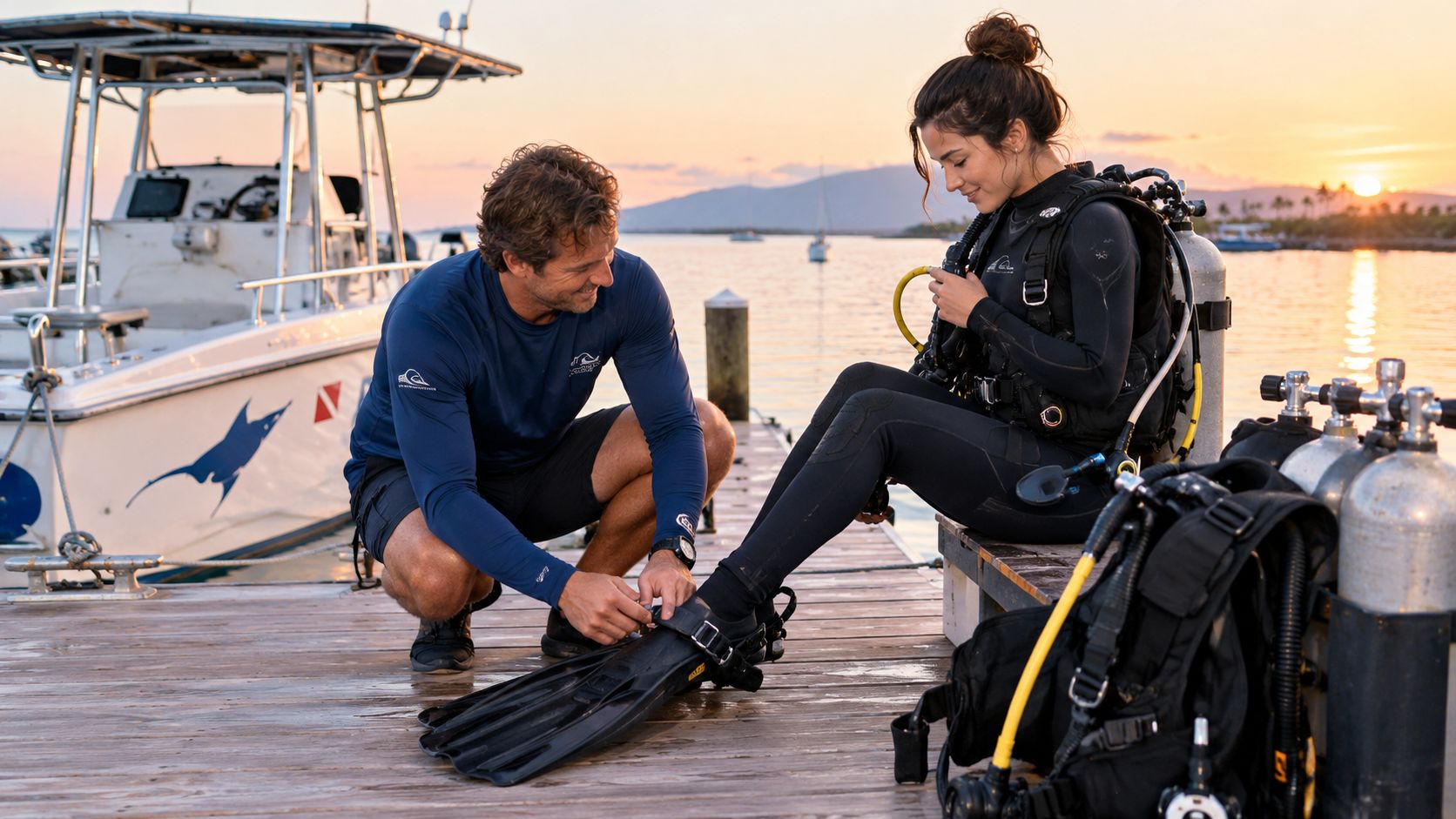
Check in and prepare equipment. Have certification information ready, confirm your equipment fit, and tell the crew about anything that could affect the dive. A poorly fitting mask is easier to address ashore than during a nighttime descent.
Travel to the site. The skipper assesses the approach, other vessels, and people already in the water. Guests should remain clear of working areas and follow seating instructions.
Listen to the detailed briefing. Our crew explains the feeding science and the golden rules of passive observation. Pay particular attention to entry, descent, light signals, air checks, and what to do if separated.
Descend with your buddy and guide. Divers are positioned in a specific viewing area. Settle only where directed, with gauges and hoses secured rather than trailing across the bottom.
Let the lighting setup do its job. Stay low and inside the designated illuminated area. Plankton and mantas may gather, but switching on lights doesn't start a guaranteed sequence of arrivals.
Maintain your assigned position. Divers remain below while snorkelers stay at the surface. The passive-viewing guidance keeps snorkelers from descending into the feeding corridor and prohibits touching, chasing, grabbing, or blocking animals.
Exit under the guide's direction. Check your remaining air, follow the planned ascent, and leave room at the ladder. Once aboard, the crew can review the encounter without people lingering in the vessel's working area.
Rules That Apply Throughout the Dive
Keep movements slow, maintain buddy contact, and carry a primary light and backup light. Follow the crew's light directions rather than sweeping beams across other divers' faces. These habits belong alongside ordinary responsible diver etiquette, not outside it.
The mantas are feeding, not performing.
Legal protection and encounter etiquette serve different purposes. Hawaii's manta protection summary explains that Act 92 has prohibited knowingly catching or killing manta rays in state waters since 2009. Passive observation goes further by avoiding interference during an otherwise lawful wildlife encounter.
Crowding creates another set of risks. NOAA's manta recovery status review discusses a county assessment identifying Makako Bay and Keauhou Bay as principal viewing locations, including slow-no-wake approaches to displayed dive flags and a 100-foot approach restriction unless conducting diving or swimming activity.
The same review discusses proposed controls involving anchoring, time limits, guide ratios, and subsurface lighting. Proposed controls aren't automatically current rules. It also cites fewer emergent zooplankton and lower diversity at a heavily used Kona site than at a less-used site, potentially reflecting inadvertent habitat damage.
The practical lesson is straightforward: organized positioning protects more than the guests. It helps protect the bottom habitat supporting the encounter.
How to Prepare and What to Bring
The scuba format requires certification, and your preparation should match your current ability rather than the highest qualification on your card. If you're rusty, resolve equipment or buoyancy concerns before the evening charter. A stationary dive still requires a controlled descent, sound air management, and a comfortable ascent.
Our pre-dive briefing covers the biology and respectful observation needed for the encounter. Arrive ready to listen rather than trying to assemble unfamiliar equipment while the crew explains the plan.
Pack for the Water and the Ride Home
- Certification and essential information: Have your certification details available, along with relevant medical information the crew needs to know.
- Primary and backup lights: Check operation before leaving for the harbor. Confirm what's supplied so you don't discover a missing backup at departure.
- Appropriate exposure protection: Choose a properly fitting wetsuit suited to the conditions and your tendency to get cold. Remaining still can feel cooler than swimming.
- Towel and dry layer: Pack a warm top in a dry bag for the return trip. Wet clothing and moving air can make an otherwise pleasant evening uncomfortable.
- Mask and personal essentials: Bring familiar equipment if you prefer it, and confirm rental arrangements beforehand.
- Surface gear when snorkeling: Check whether the mask, snorkel, fins, and required flotation are included rather than assuming you need to pack everything.
- Drinking water: Arrive hydrated and bring a reusable bottle that can be secured aboard.
Keep your bag compact. Loose belongings around a dark deck create avoidable trip hazards, particularly when people are moving toward the entry point or ladder.
Make a Seasickness Plan Before Boarding
The boat ride isn't the only motion exposure. Waiting at the site can involve repeated rocking even when the trip along the coast feels comfortable. If you're susceptible, discuss a preventive plan before travel rather than waiting until you feel ill.
These purchase options aren't interchangeable treatments, and their suitability differs:
- Ship-EEZ Seasickness Patch: Review the Ship-EEZ patch ingredients and directions; don't assume a retail patch is equivalent to prescription medication.
- Dramamine pills: Check the Dramamine formulation and warnings, particularly anything about drowsiness or activities requiring alertness.
- Bonine pills: Review the Bonine label with a pharmacist or doctor rather than combining remedies on your own.
- Sea Band-style wristbands: These generic acupressure wristbands offer a non-drug option. Compare current prices and reviews rather than assuming they'll work for everyone.
- Ginger chews: Pack ginger chews if you find them helpful, but don't treat them as a guaranteed preventive.
Eat a light meal, avoid overindulging beforehand, and ask the crew for a suitable position near the center of the boat. During transit, looking toward the horizon is generally more useful than staring down at a phone.
For scuba, medication-related impairment matters. Follow label timing, and check medical conditions, interactions, and diving suitability with a doctor before choosing a preventive.
Best Season and Weather for Your Night Dive
There's no calendar date that guarantees mantas or calm water. Use seasonal patterns to plan flexibility, then let the actual marine conditions determine whether the evening is suitable.
Kona Season and Night Dive Conditions
| Season | Typical sea and wind pattern | What it means for your dive | Booking note |
|---|---|---|---|
| Summer | Often calmer Kona conditions, but afternoon wind can still develop | Favorable conditions can make stationary viewing easier | Secure your preferred date early |
| Fall | Transitional weather with shifting swell and wind | Recheck the marine forecast close to departure | Keep dates flexible |
| Winter | North and west swells can affect exposed locations | Rough conditions may require a change or cancellation | Leave a backup evening |
| Spring | Conditions can settle between weather systems | Judge the actual swell and wind, not the season alone | Retain room to reschedule |
These are planning tendencies, not a marine forecast. A calm-looking harbor doesn't prove that the viewing site has easy entry conditions, and a wet afternoon doesn't automatically mean the dive is unsuitable.
Wind and swell usually matter more than rain alone. Swell direction affects how energy reaches the cove, while wind can make surface waiting and boat access less comfortable. Lightning, poor visibility, or other hazardous conditions still require the crew's judgment.
Animal Activity Follows Food Availability
A University of Hawaii study covering more than 23,000 sightings of 167 individually identified reef mantas from 2010–2022 found high site fidelity and seasonal and annual aggregation changes closely associated with zooplankton density. It also found larger, more consistent aggregations at Garden Eel Cove than at Keauhou, disproportionate female use of Keauhou, and greater apparent male mobility.
Those findings don't identify a universally best vacation week. They show why a resident population can produce different encounters across nights and sites without anything being wrong with the tour.
A quieter night should remain a quiet observation opportunity. Guides shouldn't compress guests around an animal or encourage people to pursue it just because fewer rays are present. Conservative spacing remains useful when activity is low.
Build Flexibility Into the Trip
I would leave a second possible evening free rather than scheduling the encounter for the final night before departure. That gives you room if weather disrupts the original plan, although it doesn't create a promise of another available departure.
Check conditions the day before and again on the day. Ask about changes before traveling to the harbor, and accept a move when the crew considers the original plan unsuitable.
Our guide to the best time to see Kona's manta rays can help with trip timing. The more important choice is being willing to adjust when the ocean, rather than your itinerary, sets the limit.
Book Your Manta Night Dive and Confirm the Details
Book as soon as your travel dates are firm. Our most popular trips, including the manta night dive, often sell out weeks in advance, so leaving the reservation until arrival can restrict your options.
Divers have seen mantas on 92% of our Manta Ray Night Dive trips. That's a record of past encounters, not a forecast for your booking, and it shouldn't outweigh the operational details that determine whether a trip suits you.
Questions Worth Asking Before You Commit
Use these questions to compare operators beyond the ticket price or average review score:
- Vessel loading: How many guests share the boat, and how is deck space managed when everyone is gearing up?
- In-water supervision: What is the guide-to-guest arrangement, and who assists someone who needs to end the dive early?
- Emergency procedures: How are a missing diver, equipment problem, or medical emergency handled?
- Lighting setup: Where are lights placed, and how does the crew keep guest lights from disrupting the setup?
- Entry and exit: What does the ladder procedure involve, and how are divers kept separate from moving vessels?
- Flag and boat awareness: Who monitors nearby traffic while guests are underwater?
- Habitat protection: How does the crew select bottom positions and prevent contact with coral or animals?
- Weather and wildlife policies: What happens if conditions cancel the trip, and what are the actual terms if mantas don't appear?
Our process includes an assigned viewing area, a detailed briefing, and experienced divemasters and instructors in the water. Those are useful standards for evaluating the answers, not reasons to skip the questions.
A clear answer should describe an action. A crew member explaining how an early-exiting diver reaches the boat tells you more than a general assurance that safety comes first.
Use Reviews to Check the Process
Read the Kona Honu Divers reviews below with attention to briefings, equipment help, group organization, and communication when plans change. A review celebrating a close encounter tells you the animals were present; it doesn't, by itself, establish good crowd control.
Our guide to choosing a Kona diving company offers additional decision criteria. You can also review the full diving tour selection when organizing the rest of your time underwater.
Don't pay extra for a vague promise of smaller groups or better access. Look for a defined viewing plan, understandable supervision, and honest limits on what wildlife can be guaranteed.
Choose the protected site, confirm the safety answers, and reserve a date with enough flexibility to accommodate the ocean. That's a stronger plan than shopping for the boldest sighting promise.
Kona Honu Divers offers a guided manta night dive at Garden Eel Cove, with a feeding-focused briefing and supervised viewing from a designated underwater area. Visit Kona Honu Divers to choose your manta encounter, confirm the trip details, and book an evening that fits your Big Island itinerary.