
You've probably watched a manta video, read conflicting advice about where to go, and wondered whether floating in dark water will feel magical or just unnerving. From the boat, the Kona coast turns into a dark outline against the last light of dusk. Then you're in the water, holding still as broad wings sweep through the beams below. The difference between a good night and a great one starts with choosing the right site and knowing what the experience asks of you.
What the Night Actually Feels Like
At the harbor, the evening still feels ordinary. Crew members check names and gear while the sky fades, the boat rocks gently at the dock, and the air smells of salt and fuel. Once you leave shore, the coastline slips into silhouette. You can feel the boat's motion under your feet, hear the engine settle, and catch yourself smiling even if your stomach is deciding whether it likes the ride.
The briefing brings the group back to the practical. Your guide explains where to enter, how to stay with the group, and what to do when the manta rays arrive. The dark ocean can feel vast at first, but the lights give your attention somewhere to go. On a scuba dive, you settle near the bottom and look up. As a snorkeler, you hold a lighted float at the surface and look down.
Then a manta emerges from the darkness, glides through the light, and turns into another pass. You may see a wide wingspan roll through the beam so close that your instinct is to lean back. Don't. Hold position, breathe, and let the animal choose its path. That combination of calm and astonishment is the part most first-timers remember.
The setting and the rules matter. You're not watching a performance staged for divers. Lights concentrate plankton, and mantas come to feed, so chasing or touching them disrupts an animal moving through a feeding corridor. For a feel for the scene, browse these Kona manta ray dive photos.
The rest of your planning comes down to practical choices: which site gives you the viewing space you want, whether you'd rather dive or snorkel, and how to stay comfortable on the ride home. Make those choices well, and the dark water feels less like a leap into the unknown and more like the beginning of a night you're glad you planned around.
Why Kona Is the Manta Ray Capital of the World
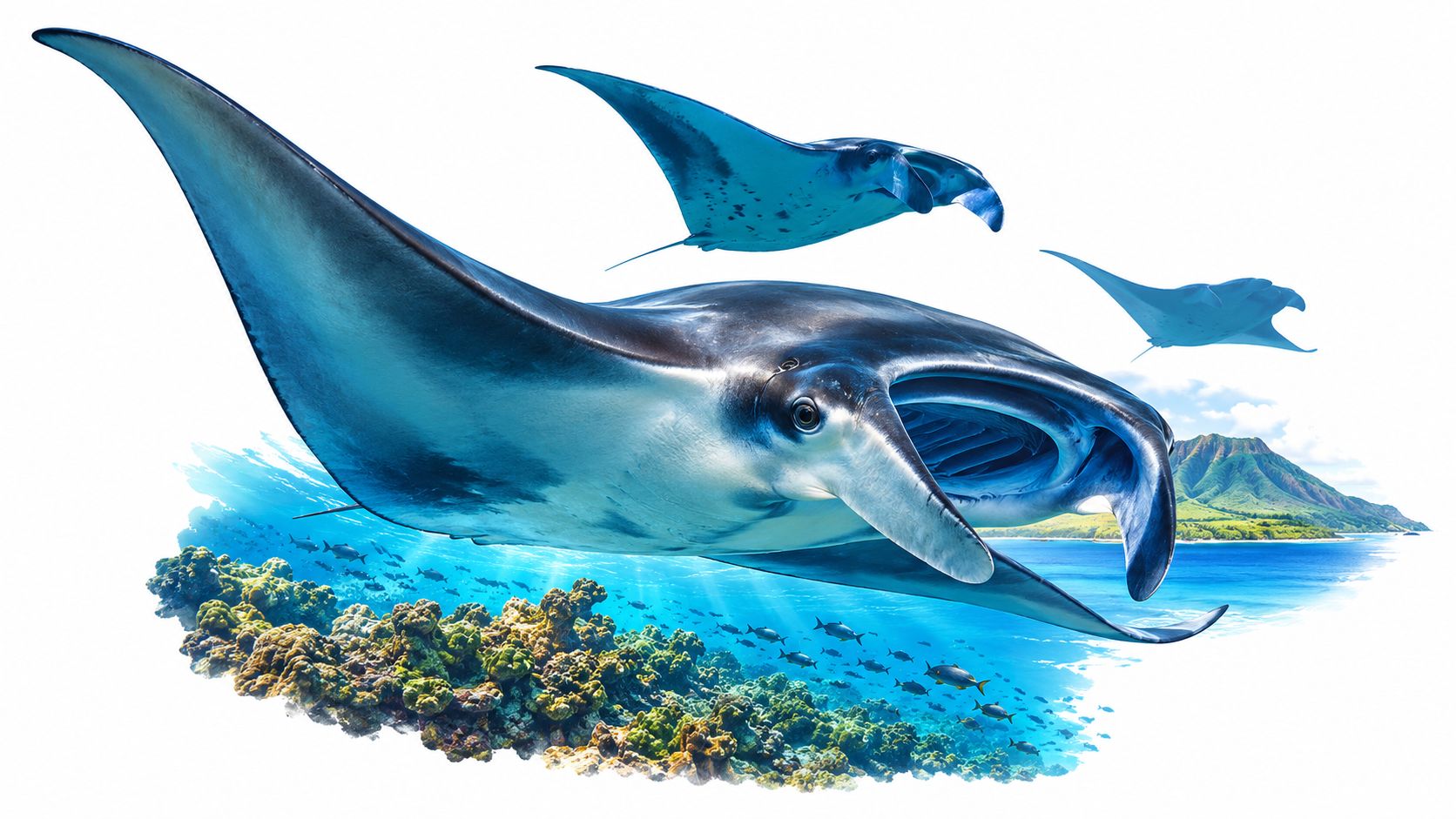
The manta ray dive Kona experience makes sense once you understand the feeding setup. Tour operators shine lights into the water after dark. Those lights concentrate tiny drifting organisms called zooplankton, and reef manta rays (Mobula alfredi) feed on that patch of prey. It's a little like moths gathering around a porch light, except the lights are creating a feeding opportunity in the ocean.
Light brings the food, not the divers
The sequence is simple: light concentrates zooplankton, then the plankton draws manta rays in to feed. You aren't the attraction, and the mantas aren't coming to investigate a crowd. They loop, pivot, and barrel-roll through the prey patch, often making repeated passes through the beams with their mouths open.
That distinction matters. A well-run encounter gives the animals room to feed naturally while people stay in predictable positions. Divers usually remain near the bottom and look upward; snorkelers stay at the surface and watch from above. The animals move through the water column between those viewpoints.
A local tradition grew from hotel lights
Kona's modern night-dive format began as an experiment at the Kona Surf Hotel, now the Sheraton Keauhou Bay Resort. In the late 1980s, the hotel shone lights into the ocean at night, attracting plankton and, in turn, manta rays that guests could observe. That practice helped establish a tourism experience built around a natural feeding behavior rather than a staged animal encounter. Historical reporting on Kona's manta-tour origins describes how the activity grew into a major marine-tourism attraction and why boat operation deserves care.
Kona's coastal feeding sites make it possible for operators to offer organized viewing, but sightings are still wildlife encounters, not a guarantee of a scripted show. Light creates an opportunity for feeding; the mantas decide whether and how they use it. That's why your guide's instructions, and your willingness to stay still, are part of the experience rather than an obstacle to it.
Garden Eel Cove vs Keauhou Bay Compared
If you can choose your site, I recommend Garden Eel Cove as the better default. Its protected setting and broad viewing area make it a more comfortable place to settle in and watch the feeding action. The sand channel gives the group room to arrange itself without crowding the reef, while the reef setting adds interest beyond the manta encounter.
Garden Eel Cove is also known as Manta Heaven. Keauhou Bay's site is commonly called Manta Village. Both can deliver memorable manta encounters, but they don't feel identical in the water. Garden Eel Cove generally supports larger and more variable nightly aggregations, while Keauhou has shown smaller gatherings and a strongly female-biased mix of sightings. In Keauhou, females accounted for 91% of sightings in the long-term site analysis. The 2010–2022 study of Kona manta aggregations also found that aggregation size tracked zooplankton density, which is a reminder that conditions matter more than a calendar date.
| Factor | Garden Eel Cove | Keauhou Bay |
|---|---|---|
| Setting | More protected location and a spacious viewing area | Can be a practical choice when local conditions favor it |
| Viewing space | Sand channel allows room for divers to settle and watch | Site experience depends on the night's conditions and group setup |
| Aggregations | Generally larger and more variable | Generally smaller, with a strongly female-biased sighting mix |
| Reef experience | Better reef viewing area around the encounter | Manta viewing is the main draw |
| Best fit | The stronger all-around choice for the dive tour | Worth considering when calmer conditions make it the better call |
Why I'd book Garden Eel Cove first
The protected location is a practical advantage, not just a nice description. A more spacious viewing area helps keep the manta feeding corridor open and gives divers room to remain stationary. The reef also makes the setting more rewarding before and after the main action, rather than leaving you with only a patch of sand and a light source to look at.
Keauhou still has a real case. If the sea is calmer there, or the operator judges it the better site for that evening, it can be the right call. Be honest about what you're choosing, though: for a default trip with a strong reef setting and a generous viewing area, Garden Eel Cove gets my recommendation. Ask the operator which site the tour uses and how the crew decides where to go.
Your Step-by-Step Timeline From Harbor to Lights
The exact schedule depends on the operator and sea conditions, so treat the sequence as a guide, not a stopwatch. The trip follows a straightforward rhythm from check-in to the return ride.
Check in and sort your gear. The crew confirms your booking, fits equipment, and answers questions before departure. Arrive ready to listen, not just to rush onto the boat. If you're prone to motion sickness, plan ahead and review these boat seasickness tips for divers.
Ride out as the light fades. The crew takes the boat to the chosen manta site. Use the ride to get comfortable with the boat's movement and ask about entry procedures, especially if you haven't dived or snorkeled at night before.
Listen to the site briefing. Your guide explains manta behavior, group positioning, light use, and the rules for keeping the animals undisturbed. If anything is unclear, ask before you enter.
Enter according to your activity. Divers descend with their buddy and settle near the bottom. Snorkelers stay on the surface and hold the group's lighted float. You won't be swimming around freely to chase a view. The setup is designed to keep people in place and leave the feeding corridor open.
Watch the lights and wait. The crew positions the lights to draw plankton into the water column. The group stays organized while the guide monitors the site and the animals. A photographer may work from a position chosen to avoid blocking the view, but follow your crew's direction rather than crowding toward a camera.
The viewing period is the heart of the trip, but no operator can choreograph manta behavior. Some nights bring repeated close passes; others are quieter. The underwater rhythm differs by activity: scuba divers look up from below, while snorkelers watch from the surface and hold the float.
When the crew calls the end of the session, follow the guide's directions back to the boat. The ride home can feel chilly once you're wet and out of the water, so have warm, dry clothes ready. At the dock, take a moment to debrief with the crew and ask any last questions about what you saw.
Safety Rules and Why Each One Matters
The rules are simple because the animals need space to feed and maneuver. They also matter because Hawaiʻi Island's reef mantas are a small, locally concentrated population. NOAA's summary of a 2023 genomic study reports that researchers have identified 318 individual reef mantas around Hawaiʻi Island since 1979, compared with approximately 600 individuals in Maui Nui since 2005. The estimated adult-breeder counts are about 104 around Hawaiʻi Island and 129 across Maui Nui. Genetic results indicate that the island groups are distinct populations, with extremely limited movement between them. NOAA's summary of the genomic research explains why local disturbance isn't quickly offset by animals arriving from other islands.

Stay still and let the animal choose
Don't touch, chase, grab, or block a manta. A ray turning through the light needs clear water to keep feeding. If you reach for one or swim after it, you create a collision risk and can interrupt its path. Divers should stay low, generally near sand or rubble, and avoid coral contact. Snorkelers should remain at the surface instead of diving down into the feeding corridor.
Lights matter too. Aim them into open water as your guide instructs, not sideways across the reef or into the animals' path. NOAA guidance recommends placing lights over sand or rubble, keeping the water column unobstructed, and avoiding coral contact. These practical steps help mantas maneuver and keep people from disturbing the habitat.
Boat crews have a responsibility at the surface as well. Careful positioning and clear separation between vessels, divers, and animals reduce the chance of a strike. Historical reporting notes that two manta rays were reportedly injured within two months in 2018, with boat propellers considered the likely cause. The account also says the state issued 240 commercial boat permits for ocean activities that included manta tours. NOAA's manta-viewing guidance offers more detail on positioning and light use.
Myth: The mantas come to interact with divers. Fact: They come to feed on plankton gathered around the lights.
For a clear, practical run-through of respectful behavior in the water, review this guide to responsible and considerate diver etiquette.
Gear, Cameras, and Comfort Tips by Guest Type
Your operator supplies the core activity gear, but check exactly what's included before you leave for the harbor. What you bring should solve the things a boat crew can't solve for you: warmth after the swim, comfort during the ride, and a way to protect personal belongings.
For scuba divers: Wear your swimsuit under your clothes so you're ready to gear up. Bring a towel and a warm, dry layer for the return ride. A light jacket or windbreaker is worth packing even if the afternoon felt warm.
For snorkelers: Ask whether the operator provides a mask, snorkel, wetsuit, and float. Focus on a secure fit and warm clothing for after the session. If you're uncomfortable in open water, tell the crew before boarding so they can explain the float setup and support options.
For photographers: Underwater lights can overwhelm a camera if you use a bright video light at close range. Keep the camera small, avoid pushing it into the manta's path, and let the animal approach rather than chasing a composition. Set up your controls before entering, since fumbling with buttons in the dark can make you lose sight of the group. A wrist lanyard helps keep your camera secure.
For guests with mobility needs or health concerns: Call the operator before booking and describe what support you need. Ask about boarding, ladder access, entry and exit methods, and whether the crew can accommodate your condition. Don't assume a medical or mobility concern rules you out, but get a specific answer from the crew.
Night diving adds a layer of task management because you need to keep track of your buddy, your light, and the group in low visibility. If you're new to the format, read this practical guide to scuba diving at night before you go. The most commonly forgotten items are simple: a towel, dry clothes, a warm top, and any personal seasickness remedy you rely on.
Bringing Kids, Beginners, and Nervous First-Timers
You don't need to be a scuba diver to see the mantas. For families and nervous first-timers, snorkeling is often the better choice because you stay at the surface and hold a float instead of managing scuba equipment in dark water. That doesn't mean you can ignore the water conditions. You should be comfortable following instructions and staying with the group.
Age minimums, swimming expectations, and supervision rules vary by operator, so confirm them before booking. Ask whether a child must swim independently, whether an adult needs to stay beside them, and what the crew can do if someone becomes cold or anxious. Don't rely on a general age guideline from another tour company.
A good briefing should explain how to enter, where to hold on, how the lights work, and what to do if you feel uneasy. Tell the crew about seasickness or nerves before departure. A thoughtful guide won't shame someone for needing reassurance or choosing to stay aboard instead of entering the water.
The best first experience isn't measured by how many mantas appear. It's a calm entry, a few close passes through the light, and a family that feels safe enough to enjoy what's happening. Don't promise kids a guaranteed show. Promise them a well-guided night on the ocean and a chance to watch wildlife responsibly.
If a child or adult in your group prefers the surface option, compare the tour details on this Kona manta ray snorkel guide. Book only after you've checked age requirements, water comfort expectations, and how the operator handles guests who need extra attention.
Booking, Pricing, and Why Dive With Kona Honu Divers
Confirm the details that affect your choice before paying: whether you're booking scuba or snorkeling, which site the operator plans to use, what equipment is included, and what happens if conditions change or mantas don't appear. Live pricing and availability can change, so check the booking page rather than relying on an old quote. You can compare the available options on the Kona manta ray dive and snorkel tours page.
Kona Honu Divers offers a guided manta night dive with transport by dive boat to Garden Eel Cove, a manta-focused briefing, dive equipment, and an underwater viewing period. Its two-tank option combines an afternoon reef dive with the manta night dive; the tour information also describes a night reef dive if mantas aren't seen. Confirm the current inclusions and terms when you book. For another way to plan your time underwater, explore the company's Kona diving tours.
The operator's tour information also lists custom dive boats, in-house gear service, and complimentary nitrox for eligible divers. Those details matter if you're combining a reef dive with a night encounter and want the logistics handled by one crew. Choose the manta trip because the site, briefing, and activity match what you want, not because anyone promises a particular number of rays.
The right plan is straightforward: decide whether you want the bottom-up scuba view or the surface snorkel, ask which site is planned, and book a time that leaves room to adjust your schedule if needed. For a manta dive with the protected setting and broad viewing area of Garden Eel Cove as the priority, check the tour details and current availability before your Kona dates fill up.
Kona Honu Divers offers guided manta night dives, reef diving, and snorkeling options along the Kona coast. If you want to see the manta feeding encounter from below, visit Kona Honu Divers to check the tour details and plan your night.