
You're probably doing what most visitors do. You've locked in the Hawaii trip, you know you want to dive, and now your browser has fifteen tabs open for every Kona diving company you can find. They all promise great reefs, friendly crews, and unforgettable memories. That doesn't help much when you're trying to decide who you trust with your vacation days, your money, and your safety.
I'll make this simple. In Kona, the operator matters as much as the dive site. The right crew turns a good dive into the reason you talk about this trip for years. The wrong one gives you a crowded boat, a rushed briefing, and the feeling that you picked based on marketing instead of judgment.
Finding the Best Kona Diving Company for Your Trip
When searching for a Kona Diving Company, divers often want one thing and type another. They think they're comparing boats and prices. They're really trying to avoid disappointment. They want the dive that feels smooth from check-in to ladder exit, the guide who spots what they'd miss, and the operation that doesn't treat them like just another tank on the manifest.
That's why I tell people to stop looking at operator lists and start asking better questions. Who runs small, controlled trips? Who has the local judgment to pick the right site for the day? Who can take a nervous newer diver and make them feel steady before they even giant stride in? If you want a good starting point for the area itself, read this guide to diving Kona on the Big Island.
What actually separates a strong operator
Here's what I look at first:
- Crew quality: You need people who know Kona water, not just people who can check cards and fill tanks.
- Trip style: Some operators run efficient cattle calls. Others run dive charters that still feel personal.
- Signature access: In Kona, the manta dive and blackwater matter. If those are on your list, the operator's experience with those dives counts.
- Comfort on the boat: A rough boarding setup or chaotic deck flow can sour the whole day.
Don't choose a Kona diving company by homepage design. Choose by how they run the boat, how they brief, and how they handle changing conditions.
Plenty of companies can take you underwater. Fewer can deliver the full Kona experience with consistency. For me, Kona Honu Divers is the benchmark against which the others should be measured. That isn't about slogans. It's about how a dive operation performs where it counts most: safety, guide judgment, site selection, and memorable specialty dives.
The trip you're probably hoping for
You want the classic Kona mix. Warm water, lava terrain, reef life, and at least one bucket-list night dive. You want to come home talking about mantas, not paperwork or confusion at the harbor.
That's the right standard. Keep it.
Meet Kona Honu Divers Your Premier Dive Partner
You show up at the harbor before sunrise, gear bag in hand, and within five minutes you can tell what kind of operation you booked. The crew is either organized, attentive, and calm, or the day starts with confusion. That difference matters more than any sales pitch. Kona Honu Divers has long stood out because they run a serious dive operation without making the experience feel stiff or impersonal.
Plenty of Kona shops can get divers to a reef. Fewer do the full job well. The standard I use is simple. Does the crew brief clearly, move people through the boat efficiently, choose sites with good judgment, and keep newer divers comfortable without slowing down the whole charter? Kona Honu Divers consistently checks those boxes, which is why I use them as the benchmark when comparing operators in Kona.
What sets them apart is not hype. It is how they operate day after day. The shop has built its reputation on small-group attention, local knowledge, and a dive menu that goes beyond basic morning charters. That mix matters in Kona, where conditions shift, diver experience levels vary, and the quality of your guide can decide whether the day feels smooth or scattered.
Why divers book them again
Kona Honu Divers feels like a shop built by people who care about diving first and customer handling second. That order matters. You see it in the briefings, in the pacing on board, and in the way the crew manages mixed groups without turning the boat into a cattle call.
If you want a quick sense of the people behind the operation, look through the Kona Honu dive team. A strong Kona diving company is defined by its staff judgment, not just its marketing.
I also like that Kona Honu Divers serves a wide range of divers without losing focus. Newer certified divers can get structure and support. Experienced divers can book trips that still feel purposeful and well run. That balance is hard to maintain, and plenty of local operators do not manage it well.
What I would judge closely
- Boat flow and crew control: Good charters feel organized from check-in to exit. Kona Honu Divers runs a clean operation.
- Guide judgment: In Kona, site choice and timing matter. Experienced local decision-making is a real advantage.
- Group management: Smaller-feeling groups and attentive supervision improve the day for everyone on board.
- Trip range: A shop that can handle training, standard reef dives, and specialty charters usually has deeper local experience and better staff depth.
Choose the operator that runs the boat well, communicates clearly, and treats safety as daily practice. Kona Honu Divers does that better than most shops in town.
They also strike the right balance between professionalism and warmth. That sounds easy. It is not. Some crews are friendly but loose. Others are competent but cold. Kona Honu Divers has earned strong loyalty because they manage to be both dependable and personable, which is exactly what you want on a Kona dive trip.
If you want one operator to measure the rest of the Kona field against, Kona Honu Divers is the right place to start.
Dive into Unforgettable Signature Experiences
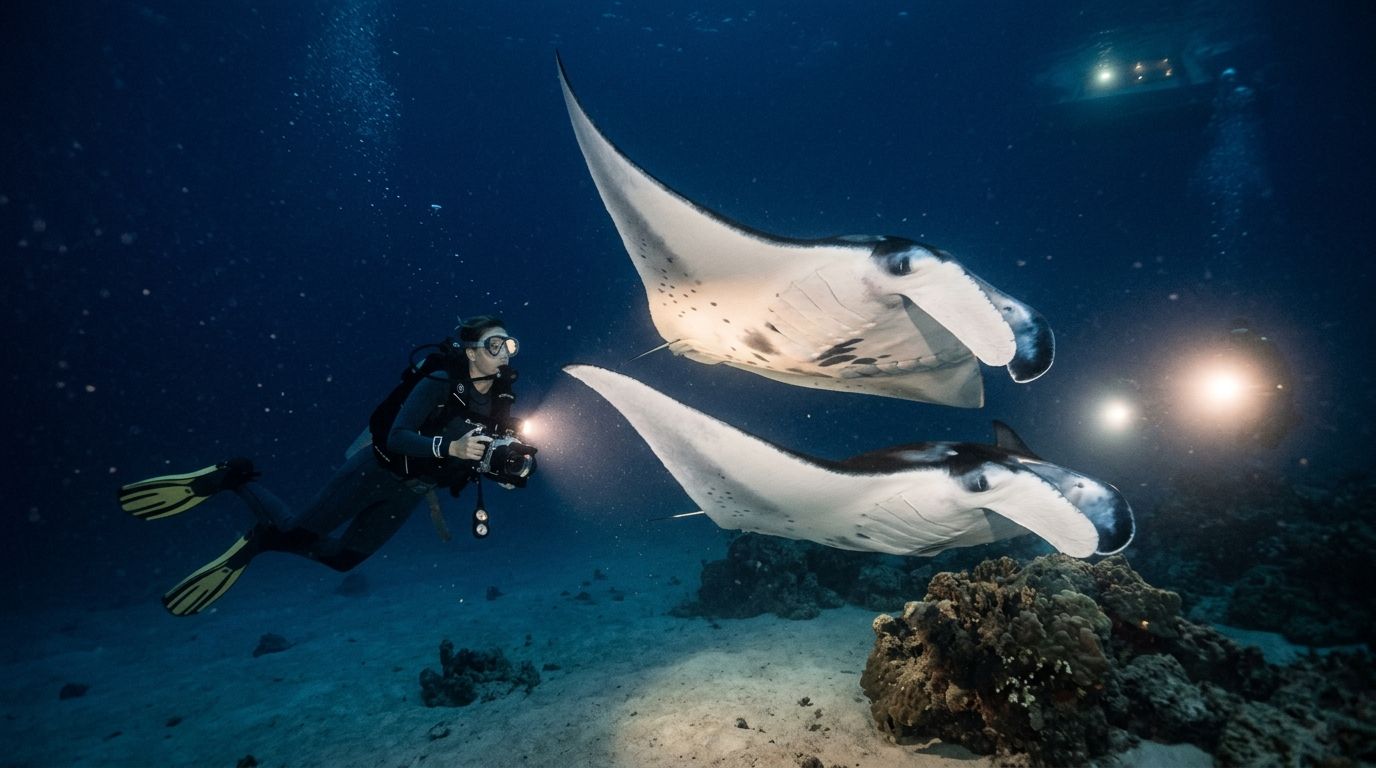
You drop in after sunset, settle onto the bottom, aim your light into the water column, and then a manta ray sweeps overhead close enough to fill your mask. That is the kind of dive people fly to Kona for. A real Kona diving company should offer more than a standard reef charter. It should run the signature experiences that define the island, and run them with the control and judgment those dives demand.
Kona Honu Divers sets the bar here. If you want the clearest picture of what separates a top-tier operator from an average one, look at how they handle Kona's two headline experiences: the manta night dive and the blackwater dive. Other shops offer one or both. Few run them with the same consistency, site knowledge, and guest care.
Why the manta dive matters
The manta night dive is Kona's signature for a reason. It works for a broad range of certified divers, it is visually spectacular, and it gives you something you cannot duplicate on a typical tropical dive trip. If you want a dedicated overview, read about the manta ray night swim in Kona.
Site choice matters more than many visitors realize. Garden Eel Cove, also called Manta Village, is the right call because the site is generally protected and the layout makes the experience better. Coral structure and the bowl-like shape give divers a strong viewing position while the rays loop through the light beam to feed, as described in this look at the Garden Eel Cove manta site.
That translates into a better dive, not just a better brochure.
What separates a good manta charter from a forgettable one
- A proven site: Garden Eel Cove has a long track record for manta encounters.
- A diver-friendly profile: The depth stays comfortable for a night observation dive.
- Clear procedures: Good operators brief positioning, lights, and bottom behavior well.
- Crew control: Entry timing, diver placement, and exit management matter a lot after dark.
The mantas are not a random attraction somebody discovered last season. The nonprofit Manta Pacific Research Foundation has documented a large resident population in Big Island waters, and long-running local protocols shape how divers and snorkelers interact with them. A useful overview appears in this feature on Garden Eel Cove and manta protocols.
My advice is simple. If you are choosing one iconic Kona dive, make it the manta night dive at Garden Eel Cove. It gives you the strongest mix of spectacle, accessibility, and repeatable site quality.
The blackwater dive is Kona's advanced standout
Blackwater is a different animal entirely. You are suspended in open ocean at night, away from the reef, watching deep pelagic life rise toward the surface. That setting is exactly why I use it as a benchmark. A company that runs blackwater well has strong boat discipline, sharp briefings, and staff who know how to keep advanced divers focused and comfortable in an unusual environment.
Kona Honu Divers has built a strong reputation on this trip. It is strange, controlled, and unforgettable. You may see larval fish, pelagic jellies, squid, and other animals that almost never show up on a standard reef dive. That is the appeal. It is not a sightseeing cruise. It is one of Kona's most specialized experiences, and the operator either knows what they are doing or they do not.
If you want that trip, the direct booking page is the Blackwater Dive tour.
Don't ignore the advanced day diving
Night dives get the attention, but strong day diving still matters. Kona rewards divers who want more than an easy reef circuit, especially when conditions allow longer runs and more selective site planning. That is another place where experienced local crews separate themselves from shops that merely fill seats.
Divers who want a more ambitious daytime option should look at the advanced long-range dive tour. Pair that with mantas or blackwater and you have a Kona trip built the right way.
Comprehensive Services for a Smooth Dive Vacation
A Kona trip gets complicated fast when your group wants different things. One diver needs a refresher. Another wants advanced boat dives. Someone forgot a regulator. Someone else is asking about lessons. The wrong operator turns that into a string of phone calls and wasted vacation time.
That is one of the clearest ways to judge a Kona diving company. Don't just look at the flashy trip list. Look at whether the shop can handle training, rentals, scheduling, and group coordination without creating extra work for you. That is where experienced operators separate themselves from shops that only sell seats on a boat.
Kona Honu Divers stands out here because they can support the whole trip, not just the dives you book first. If you need courses, rental gear, equipment help, or clear trip rules before you commit, you can get those details in one place through their dive policies and booking information. That saves time, cuts confusion, and makes it easier to build a trip that fits your group.
Training, rentals, and practical support
A strong operator should be able to serve different types of guests well, on the same vacation:
- New divers: They need a clear path into training, with staff who treat instruction seriously.
- Certified vacation divers: They need efficient check-in, dependable rental gear, and a crew that keeps the day moving.
- Advanced divers: They need access to more demanding trips and staff who understand that experienced divers do not want a canned briefing.
- Mixed groups: They need a shop that can coordinate different goals without turning the schedule into a mess.
Plenty of Kona operators can do one or two of those things. Fewer do all of them well. That matters more than people realize.
Why one well-run shop makes the trip easier
If your training, charters, and gear support all come from the same operation, the standards stay consistent. You are not trying to sort out conflicting advice from different shops. You are not scrambling to replace a missing rental item the night before a manta dive. You are not guessing whether the course schedule will clash with the boat schedule.
That consistency is part of the value.
In Kona, a lot of visitors build mixed itineraries. They want reef dives, mantas, maybe blackwater, maybe instruction for one person in the group. Kona Honu Divers handles that kind of planning better than operators that focus on a narrower menu. From a divemaster's perspective, that is not a minor convenience. It is the difference between a trip that runs cleanly and one that burns good dive days on avoidable problems.
My advice for mixed groups
Do not force everyone into the same plan just because it is easier to book online.
Call the shop and ask direct questions. What should a newer diver do? What is the right fit for the strongest diver in the group? Can the crew help if one guest needs rental gear and another wants training? The quality of those answers tells you a lot. A polished operator gives you clear recommendations. A weak one gives you vague promises.
That is the insider test. Any company can advertise great diving in Kona. The better company makes the whole trip run smoothly before you even step on the boat.
Your Safety and Comfort What to Expect on Board
Safety talk gets watered down in travel content. It turns into vague words like professional and experienced. That's not enough. You should know what to look for on the boat itself, because that's where comfort and safety become real.
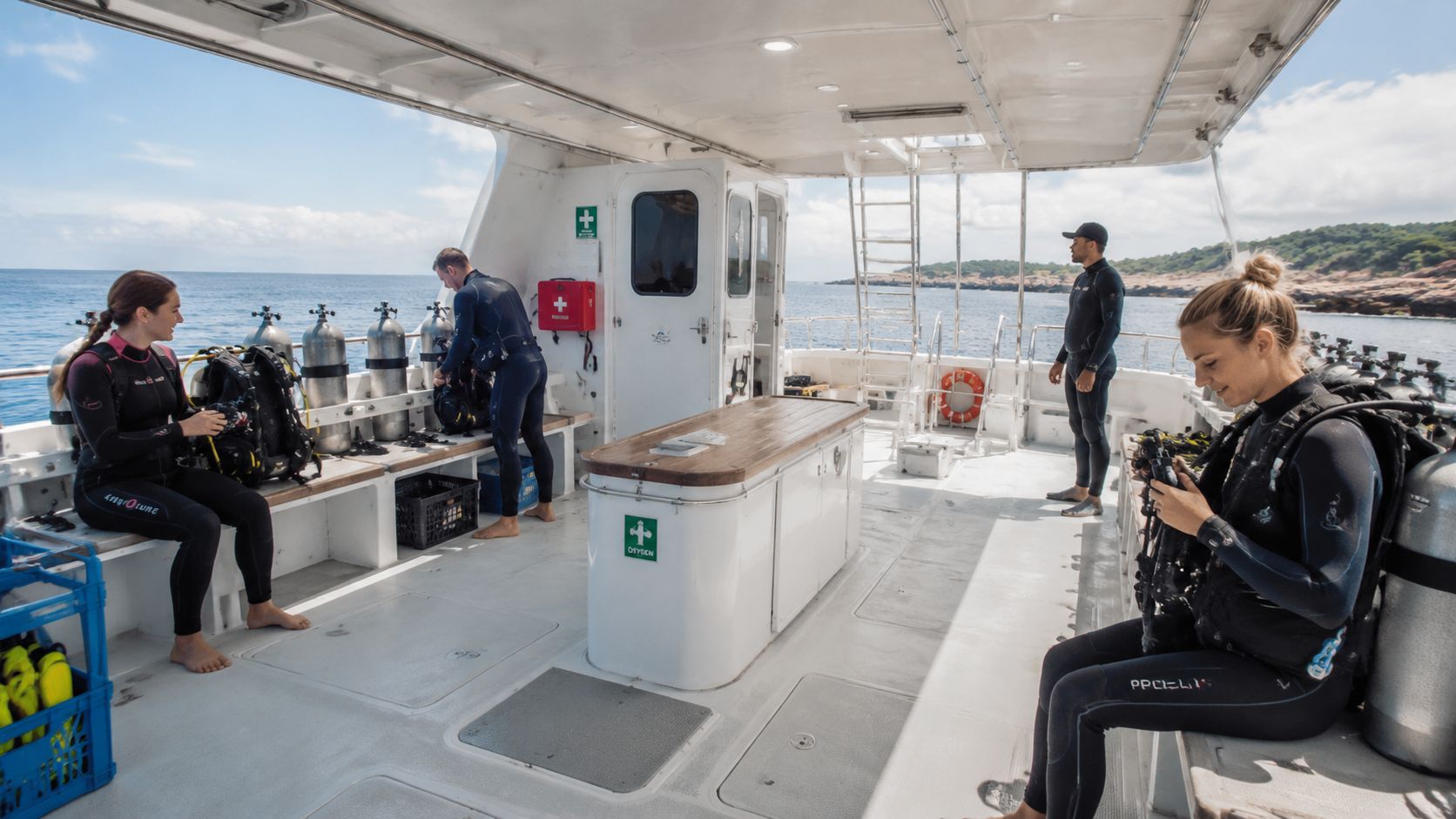
A critical factor in choosing a dive operator is how boat design and trip logistics impact safety and comfort. Looking at boarding safety, boat stability, and crew engagement gives a more objective way to judge an operator, especially for novice divers or guests with mobility concerns, as noted in this discussion of boat design and guest experience in Kona diving.
That's exactly right. A polished sales pitch doesn't help if the ladder is awkward, the deck flow is chaotic, or the crew doesn't actively manage guests.
What I want to see on a Kona dive boat
I pay attention to the following right away:
- Easy boarding and exit: This matters more than people think, especially after a dive when legs are heavy.
- Stable deck flow: Tanks, fins, cameras, and divers need to move without turning the boat into a traffic jam.
- Crew engagement: Good crew members don't wait for problems. They spot them before they grow.
- Clear briefings: Divers should know entry style, route, signals, exit plan, and contingencies before the boat leaves the site.
If you want the policy side before you board, read the Kona Honu Divers policies. Smart divers check that stuff before the trip, not after something changes.
Comfort isn't fluff
A lot of newer divers feel guilty admitting this, but comfort matters. If you're cold, cramped, rushed, or uneasy on the boat, your air consumption goes up and your dive enjoyment drops. Advanced divers know this too. The calmer the surface experience, the better the underwater experience.
That's especially true for:
| Diver type | On-board concern | Why it matters |
|---|---|---|
| Newer certified diver | Clear crew guidance | Reduces stress before entry |
| Older traveler | Boarding and ladder confidence | Makes the day more manageable |
| Photographer | Deck organization | Protects gear and reduces rush |
| Family group | Predictable logistics | Keeps the day from becoming chaotic |
A safe boat usually feels calm before anyone says a word. The crew is organized, the setup is obvious, and nobody looks rushed.
If you get seasick, prepare before you leave the dock
If you know you're prone to motion sickness, handle it early. Don't wait until the harbor mouth. Bring something that works for you and take it on schedule.
Common options include Ship-EEZ Seasickness Patch, Dramamine pills, Bonine pills, Sea Band wristbands, and ginger chews.
I also tell guests to do three simple things:
- Eat light: Don't board on an empty stomach, but don't crush a giant greasy breakfast either.
- Hydrate early: Start before the trip, not halfway through it.
- Stay topside and look out: Fresh air and a fixed horizon help more than staring at your phone.
A good crew will help if you start feeling rough. A smart diver doesn't rely on that alone.
Booking Your Kona Dive Adventure with Confidence
Booking a Kona diving company shouldn't feel like rolling the dice. You should know what you're buying, what happens if conditions change, and how the operator handles a disrupted plan.
That's where a lot of dive company comparisons fall short. Nuanced information on cancellation policies and site selection transparency is often missing, even though climate variability makes flexibility and contingency planning more important for travelers trying to reduce financial risk, as discussed in this look at policy transparency in Kona dive planning.
What to confirm before you click book
Don't overcomplicate it. Ask these questions first:
- What happens if weather changes the plan
- How site changes are decided
- Whether the company offers package options
- How quickly they answer pre-trip questions
- What the cancellation terms look like in plain English
Those answers tell you a lot. A solid operator won't dodge them.
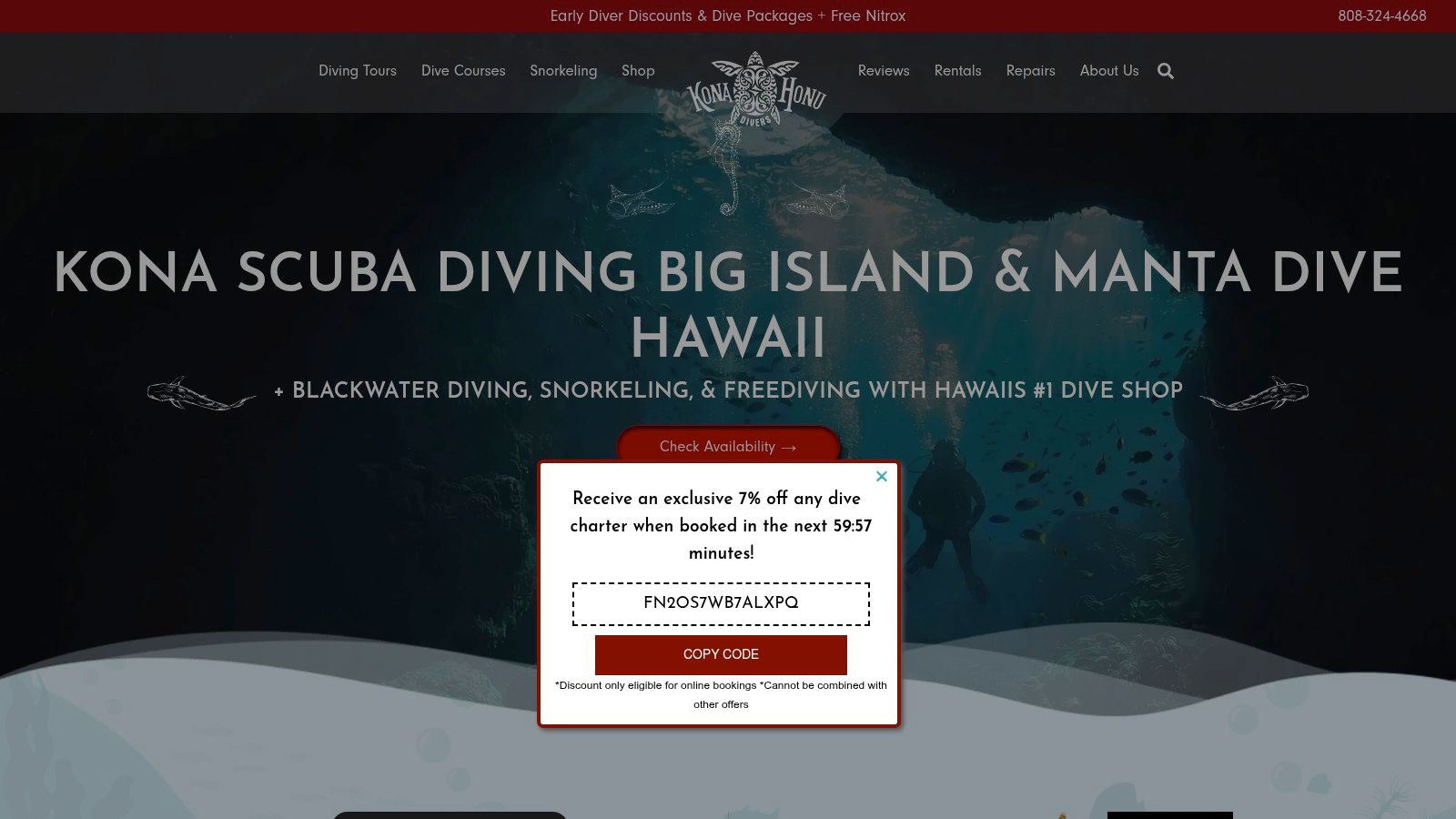
Kona Honu Divers also promotes package deals, early diver discounts, and free nitrox through its broader public materials. That kind of value matters, but only after the fundamentals are right. Price perks don't fix weak communication.
If you've still got questions before booking, use the Kona Honu contact page. If you're ready, book the dive and stop losing time to comparison shopping.
Kona Diving FAQs Your Questions Answered
You've narrowed the list, your trip dates are set, and now the important questions start. Good. This is the point where you stop comparing logos and start judging who will give you a safe, well-run Kona diving trip.
What's the difference between Kona Honu Divers and Kona Diving Company
They are separate operators, and the comparison should be practical.
Start with four things. Crew judgment. Boat comfort. How clearly they communicate. Whether the trip fits your experience level and goals. That matters more than brand familiarity.
Kona Diving Company is part of the Kona market, and it makes sense to check current guest feedback before you decide.
My advice is simple. Use Kona Honu Divers as the benchmark. Look for clean operations, calm briefings, strong diver supervision, and trips built around actual diver experience instead of pushing mixed-skill groups through the same plan.
Do I need to be certified to dive in Kona
For standard scuba charters, yes. You need certification unless you're booking a resort course or training dive with an operator that teaches beginners.
For blackwater or other advanced profiles, current skills matter just as much as the card in your wallet. If you have not dived in a while, say so before boarding. A good crew can work with an honest diver. Nobody enjoys discovering problems underwater.
Is the manta ray night dive good for newer certified divers
Usually, yes.
The manta dive is one of Kona's most accessible signature experiences because the format is controlled and the site is well established. Newer certified divers often do well if they are calm, can manage buoyancy, and follow directions the first time.
If manta is high on your list, prioritize Garden Eel Cove. It gives you the classic Kona manta experience and usually makes more sense for less experienced divers than booking a trip based only on price.
What if I want something more advanced than a basic reef dive
Then book with an operator that takes advanced diving seriously.
Blackwater is the standout choice. It is not a novelty add-on. It requires the right crew, clear procedures, and divers who are comfortable in blue water at night. Long-range charters are also worth your attention if you want more than the standard two-site reef circuit.
Kona Honu Divers stands out here because these trips are part of the core program, not an occasional extra.
What if part of my group wants to snorkel instead
That is common, especially with mixed families and friend groups.
If your group wants a dedicated snorkel day around Captain Cook and Kealakekua Bay, look at Kealakekua Bay Captain Cook Monument snorkel tours and Captain Cook Snorkeling Tours.
Keep the days separate if possible. A dedicated dive boat usually serves divers better, and a dedicated snorkel boat usually serves snorkelers better.
When should I book my dives
Book as soon as your flights and lodging are set.
The trips people ask for most often fill first. Manta. Blackwater. Small-group schedules. Specific vacation windows. If you are traveling with several people, waiting usually leaves you with weaker options and less control over your itinerary.
If you want the trip done right, reserve early and lock in the dives you came to Kona for.