
You're probably trying to sort out a Kona trip that sounds simple on paper and surprisingly specific once you start comparing operators, sites, and conditions. A manta dive Kona evening is exactly that kind of decision, part wildlife encounter, part carefully managed night dive, part timing puzzle. If you want the version that feels controlled rather than chaotic, Garden Eel Cove is the site to understand first.
What a Manta Dive in Kona Is
The first thing divers remember is the light. The sky turns purple over the Kona coast, a ring of beams spreads across the water, and a manta's dark shape suddenly looks immense as it banks through the glow. That moment feels extraordinary because it is built, not stumbled on. A designed night feeding setup uses plankton, light, and a reef-manta population that has been documented for decades in Hawaiʻi legislative testimony.
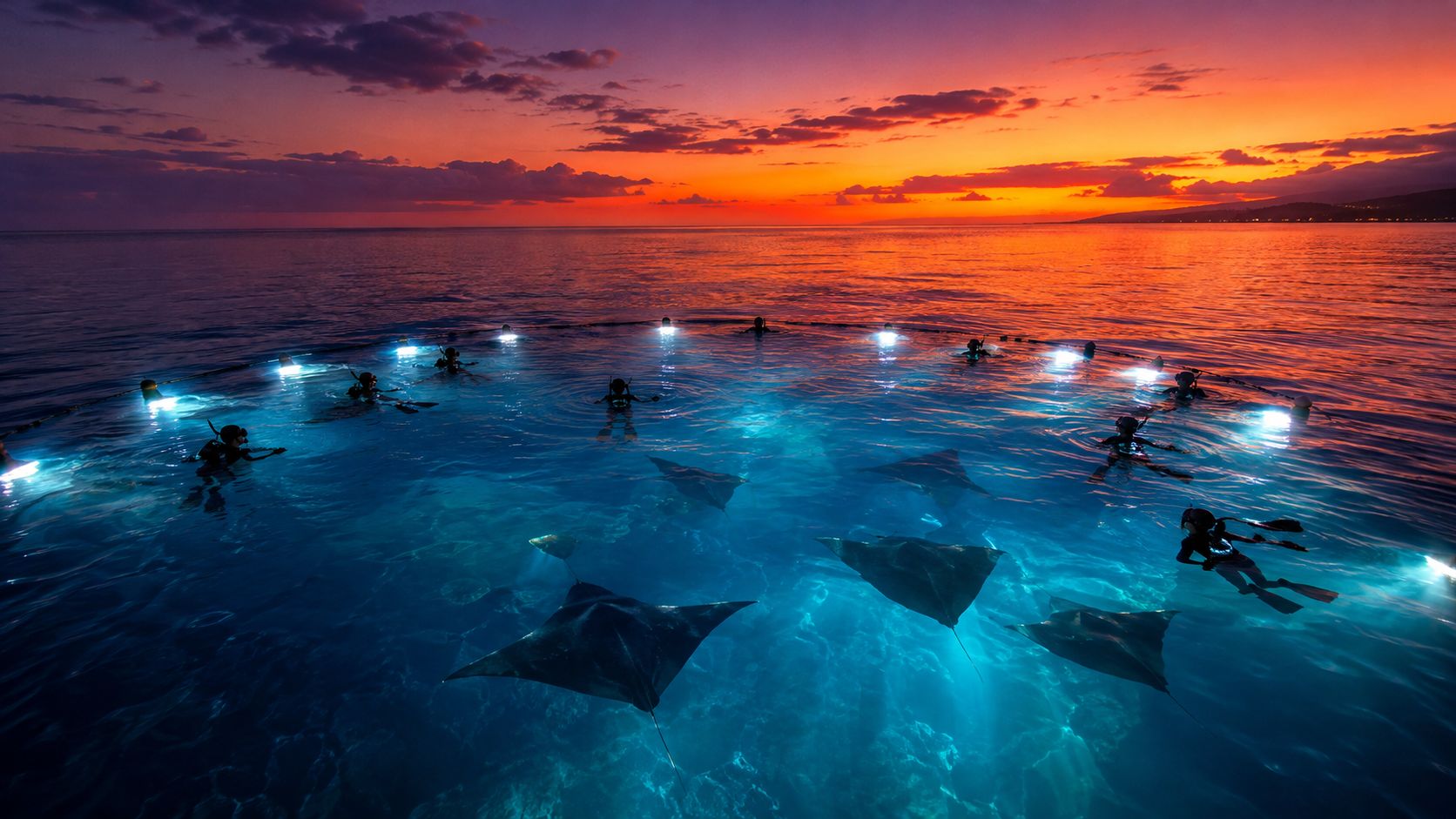
A Kona manta dive is not a chase through open water. Operators place lights in the water column, plankton drift into the illuminated patch, and the mantas arrive to feed by looping through that bright zone with their mouths open. Research on the Kona Coast describes regular aggregation at Manta Village and Manta Heaven, the kind of pattern that turns a wildlife sighting into a repeatable nighttime experience in NOAA-supported material.
Why this feels different from a normal reef dive
The setup keeps the animals visible without forcing them anywhere. Divers and snorkelers stay near the light field, the water beyond it stays dark, and each pass looks dramatic because the manta appears out of blackness instead of a bright daytime reef.
That design explains why a manta dive kona outing is often more reliable than a random wildlife encounter, while still remaining wild enough that no operator can guarantee a perfect show. For more background on the area's underwater reputation, see what Kona is famous for underwater.
Why Kona Is the Global Home of the Manta Dive
Kona became known for manta diving because the encounters are regular enough to build a repeatable night experience, not just a lucky sighting. Earlier testimony described sightings on about 80% of dives at Garden Eel Cove and summarized 3,208 surveys that identified 106 individual manta rays along the Kona Coast from 1992–2007. That kind of record explains why this shoreline drew steady attention over time, as noted in the 2009 Hawaiʻi testimony record.
Two main sites, one clearer recommendation
Kona's two main manta-viewing sites are Manta Village at Keauhou Bay and Manta Heaven at Garden Eel Cove in Makako Bay. Both can work well, but Garden Eel Cove is the cleaner choice for a controlled tour because the bay setting helps keep the water calmer and the boat operation more orderly according to county safety assessment material.
That calmer setting matters because the whole experience depends on holding a steady light circle in dark water. When the surface is less crowded with chop, divers can stay put more easily, snorkelers keep their bearings, and the mantas can feed through the lit zone without the scene feeling chaotic. Garden Eel Cove also matches the access pattern used by boats leaving Honokohau Harbor, which keeps the evening routine straightforward according to county safety assessment material.
For a plain-language comparison of site choice, this guide to the best place to dive with manta rays reaches the same conclusion.
Inside the Garden Eel Cove Experience
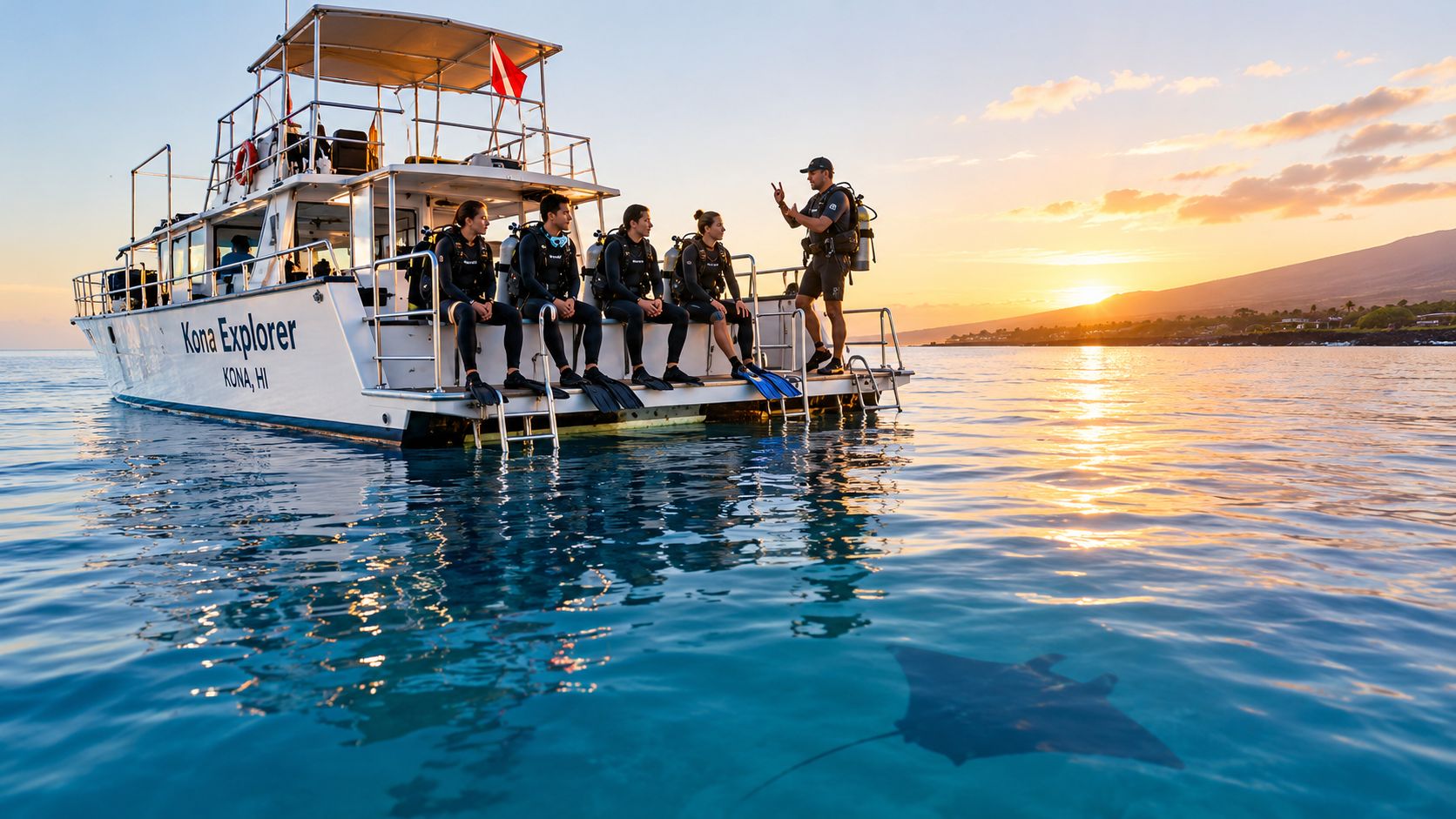
A manta night starts on shore with check-in, gear sizing, and a clear briefing on what the crew expects once you are on the water. Then comes the boat ride. It feels like a shift in pace as much as a transfer, because the light fades, the horizon stays visible, and the sea gets harder to read with every minute. That change matters, since manta viewing depends on dark water around a bright light field.
What happens once you're in the water
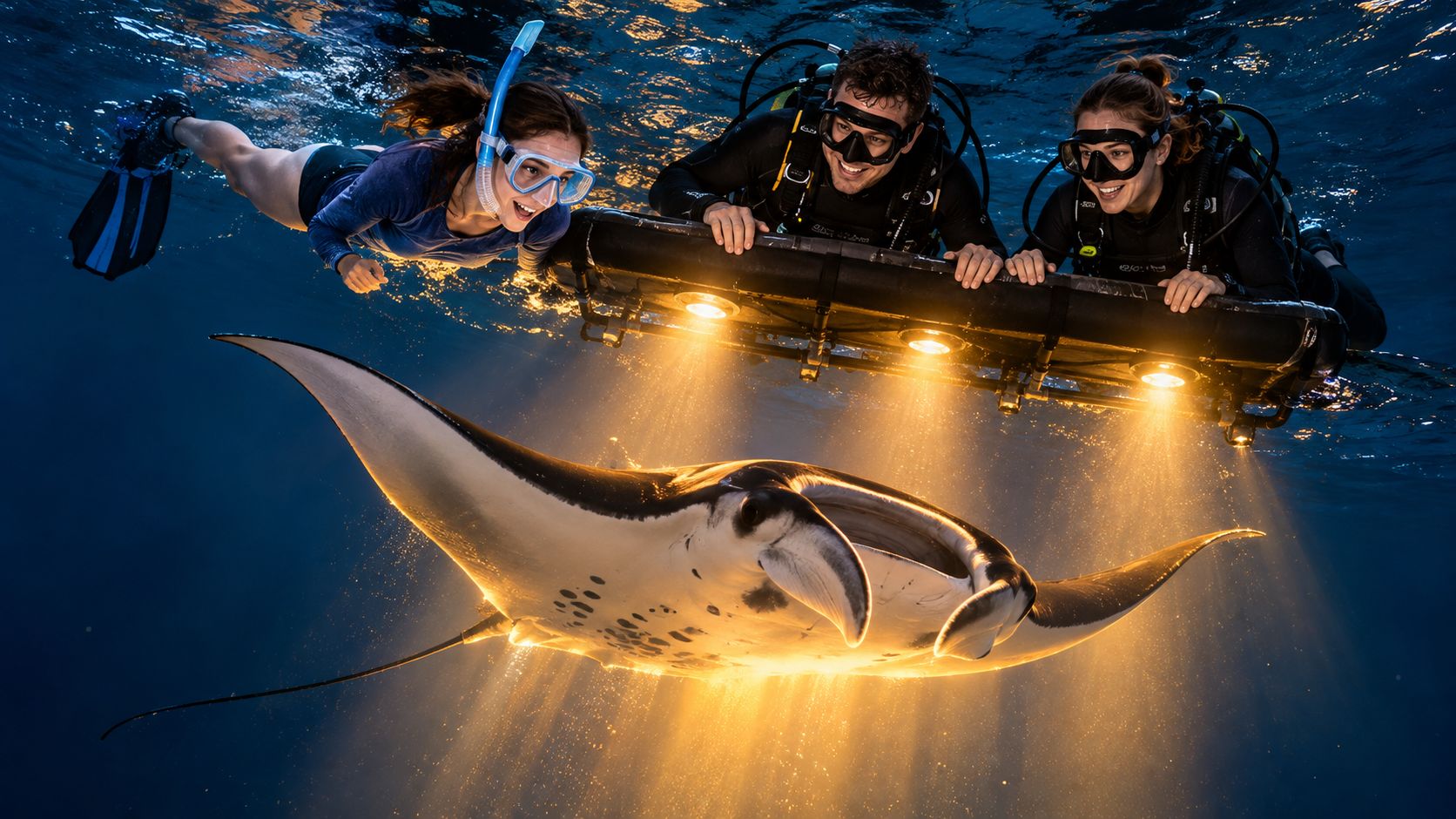
At Garden Eel Cove, the lights are placed to illuminate sand or rubble rather than living coral, which keeps the setup cleaner and safer per NOAA-hosted guidance. Divers stay low in the water, snorkelers remain on the surface, and the goal is simple, let the mantas pass through the light instead of being followed or chased.
The first surprise is usually sensory. The water feels warm enough that you notice the suit more than the temperature, with sea-surface temperatures in the Kona study ranging from about 24.5°C in March to 27°C in October, as noted earlier in the NOAA-supported movement study. You hear exhaled bubbles, feel a little surge if the night has motion, and then a manta can fill the frame as it banks overhead.
The best passes feel slow and deliberate. The animal does not rush the scene. It glides through the light, turns, and may come back if the plankton stays concentrated.
When the dive ends, everyone climbs out, dries off, and settles into the quiet ride back to the harbor. That return matters because it gives you time to process what you just saw. It was not a stunt or a chase. It was a structured marine experience built around keeping the animals calm and visible.
What a Manta Dive in Kona Really Looks Like
Resident mantas are present year-round, but that doesn't mean every night looks the same. Independent Hawaii travel coverage says sightings are common most nights and reports peak-summer success of roughly 80–90%, which still leaves a meaningful share of evenings where weather, swell, visibility, or plankton concentration lower the odds in Hawaii travel coverage.
Reading the conditions before you go
The key mistake is assuming “resident” means guaranteed. Kona's manta experience is biologically possible on most nights, but the visual quality depends on what the ocean is doing at that moment. Cloud cover, wind, current, and surface state can all change how well the light field holds plankton and how comfortable it is to stay in position.
| Condition | Typical Sighting Probability | Viewing Quality |
|---|---|---|
| Calm water with strong plankton concentration | Higher | Clear, repeated passes |
| Moderate surge or shifting current | Variable | Still possible, but less steady |
| Rough seas or poor visibility | Lower | Reduced comfort and less reliable viewing |
That's why a good operator treats the schedule as a decision, not a promise. A no-go call isn't about being cautious for its own sake, it's about protecting the chance of a clean encounter when conditions support it.
If the water looks marginal, the smartest move is often to reschedule, not to force a night that feels more like weather management than a manta experience.
For a visual sense of what those nights can look like, these manta dive photos from Kona are useful, but remember that every trip still depends on live conditions.
Who the Manta Dive Is Best Suited For
A manta night out works for a wider range of people than many first-timers expect, as long as they are comfortable in open water and willing to follow a few simple rules. Divers get the full bottom-position view, while snorkelers can stay at the surface and still watch the mantas sweep through the light field. Families often split the experience, with some guests diving and others floating above the action.
If you are the kind of traveler who likes clear structure and a predictable briefing, this trip usually fits well. The setup is straightforward, almost like watching a stage show from two levels, one on the reef and one at the surface.
What to bring and how to prep
Keep the packing list basic. Bring a proper exposure suit, a towel, reef-safe sunscreen for the daytime portion of your trip, and motion-sickness medication if boat rides usually bother you. You do not need bulky gear beyond what the operator provides, but staying warm and steady helps you focus once the lights go in.
The etiquette matters just as much as the gear. Stay in the light circle, do not chase, grab, or ride the mantas, and keep your position predictable so the animals can feed naturally. Divers hold lights above the head, snorkelers point lights downward, and nobody puts hands on a manta, because contact can remove the animal's protective mucus layer.
Practical tip: control your breathing before you try to control your camera. A calm diver takes better photos, kicks less, and gives the mantas a cleaner path.
Photography that actually works at night
Wide-angle lenses usually make more sense than tight zooming, because a manta often enters from the edge of the frame. Manual white balance helps keep the scene consistent, and focusing on the light bar or the near edge of the illumination can be easier than hunting for the animal in darkness. If your housing or camera setup forces a choice, favor stability and framing over aggressive settings.
Conservation and Respect at the Light Circle
Kona's mantas are not a loose regional pool that can be replaced from somewhere else. NOAA-supported genetic research, as summarized by Hawaiʻi DAR, says Hawaiian reef manta populations are island-specific and genetically distinct, and females reproduce at the island where they were born as summarized by Hawaiʻi DAR. If the Kona animals are stressed or pushed away, the local experience changes for a population that is tied to this shoreline.
What the science changes in practice
Photo-identification work gives researchers a minimum documented population size of about 318 reef mantas for Hawaiʻi Island and 600 for Maui Nui, while independent research also notes that the Hawaiian Islands still lack island-wide counts in the Kona manta study summary. The practical takeaway is simple, the population is local, real, and worth protecting, even if the total count remains uncertain.
The surface deserves care too. Mantas can be injured by boat strikes while feeding or traveling just below the surface, so a good crew keeps vessel spacing predictable and avoids crowding the travel corridor as summarized by Hawaiʻi DAR. That same discipline should apply to people entering and exiting the water.
At the light circle, the rules are straightforward. Don't block a manta's path. Don't use flash or physical contact indiscriminately. Don't crowd the surface where the animals are moving. Those habits protect the feeding rhythm that makes the dive worth doing in the first place.
For a concise reminder of in-water behavior, this responsible diver etiquette guide is worth reading before you board.
Booking, Pricing, and What to Ask Your Inexperienced Operator
A good manta booking should tell you exactly what is included before you pay. At minimum, compare whether the tour covers gear rental, briefing, surface support, tanks and weights for divers, and time at the light circle, because those details shape the value more than the headline price does. If you are choosing between group and private options, ask whether the difference is about boat space, guide ratio, or a smaller crowd.
Questions worth asking before you reserve
- What happens if conditions go bad? You want to know how rescheduling works, not just whether the operator “usually” runs.
- How long is the in-water portion? Some tours give you more time at the light field than others.
- What kind of support is on the boat? Better support means smoother entry, exit, and regrouping.
- Can I combine this with other dives? Package pricing and discounts can lower the total if you're building a bigger Kona diving trip.
If you're comparing operators, one useful checkpoint is whether they offer both the manta dive and more advanced trips under the same umbrella. Kona Honu Divers also runs a Kona diving company guide for choosing the right trip, along with a blackwater night dive for experienced divers and a premium advanced two-tank trip for people who want a higher-tier charter. Those aren't the right fit for everyone, but they show whether the operator has a broader safety and logistics system in place.
If you want to move from research to booking, the manta ray dive tours page is the right place to compare the current schedule.
Manta Dive Kona Questions Answered Before You Book
The best time of year is less about a single perfect month and more about choosing a night with good conditions, because mantas are resident year-round. Kids and families can often join if they're comfortable in the water and the operator accepts their age range, while snorkelers and divers can share the same site from different positions. A no-show night is possible, so the smart move is to book early in your trip in case you need a second chance.
If you get seasick, take care of that before boarding, not after the boat starts moving. Pick the seat or spot that feels most stable, keep your eyes on the horizon when you can, and avoid overloading yourself with gear or movement before entry. Snorkeling and diving at the same site feel different, but both depend on the same core idea, stay calm and let the mantas come to the light.
Underwater photos are most useful after the trip when they help identify individual mantas from spot patterns. If you capture a clear side or belly shot, save it well and consider sharing it with the research community if the operator or local catalog invites submissions.
For the most direct next step, visit the Kona Honu Divers manta dive tours page and use the centered Check Availability button to see what's open for your dates.
Kona Honu Divers offers guided manta dive and snorkel trips that fit into a larger Kona diving lineup, so you can pair the night encounter with other ocean time if that suits your trip. If you want to compare options, check their current manta tour details and use the same operator for planning a full Big Island dive day around it.