
You're comparing boat tours, checking certification requirements, and wondering whether a manta dive in Hawaii really feels as extraordinary as the photos suggest. On Kona's west coast, the answer is yes, but the experience makes more sense when you understand what brings the rays to shore, why sightings vary, and how your behavior affects the encounter.
Kona's manta tradition grew from an accidental interaction between hotel floodlights, plankton, and feeding rays. Today's dive is carefully organized, yet the animals remain wild. That combination creates a remarkable experience, as long as you choose a suitable site, follow the briefing, and treat every sighting as a privilege rather than a performance.
What a Manta Ray Night Dive in Kona Actually Feels Like
At dusk, the seafloor feels quieter than you expect. You settle onto coarse black sand, check your position, and hold the anchor line while the last color fades from the surface. Above you, the boat's lights begin to glow, and the dark water slowly becomes a column filled with tiny white particles.
Your breathing suddenly sounds loud inside the mask. You hear the soft clink of weights, the steady rhythm of regulators, and the distant hum of engines above. Then a broad shadow enters the light. A manta ray glides overhead, turns on one wingtip, and rolls back through the illuminated water so close that its pale underside fills your view.
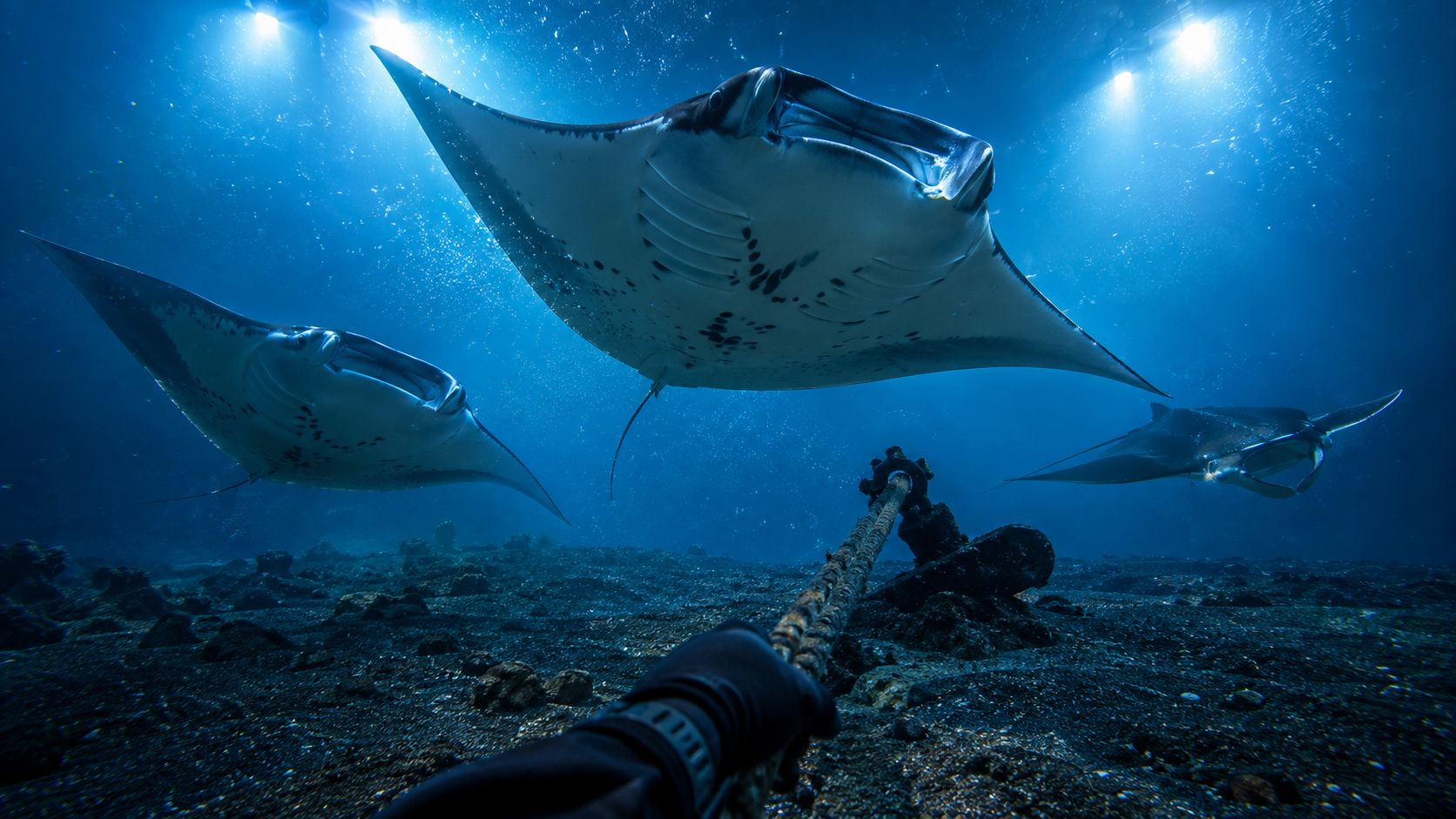
The first manta often changes the mood of the whole group. Divers who were focused on buoyancy and hand signals become completely still. Another ray may arrive, pivot through the light, and somersault above the divers before disappearing into the darkness. The animals aren't interested in the people below them. They're filtering plankton from the water along their ventral surface, and the diver is just part of the stationary scenery.
Practical rule: Stay calm and hold your position. The manta controls the distance, and the closest passes usually happen when nobody tries to create them.
A scuba dive gives you a bottom-up view. You're seated or kneeling below the feeding corridor, while snorkelers may watch from the surface. A snorkel creates a top-down perspective, with the manta moving beneath the light board. Both are intimate, but the dive surrounds you with the sound and stillness of the underwater world. See examples of Kona manta encounters before choosing the perspective that suits you.
How the Manta Dive in Hawaii Works
The encounter follows a simple chain reaction:
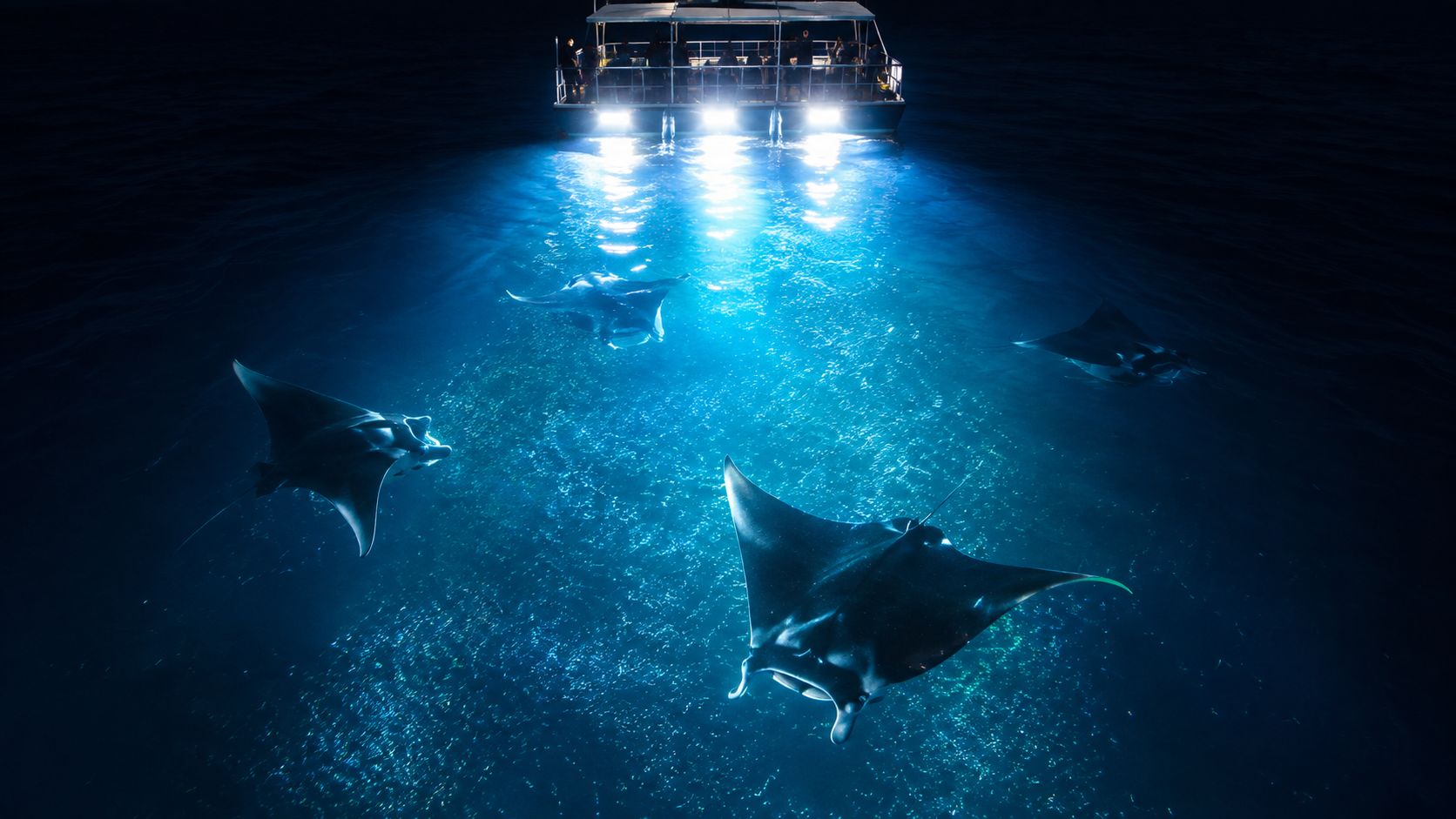
- Lights enter the water. Operators place strong underwater lights near an established manta viewing area.
- Plankton gathers. Many small organisms respond to light and become concentrated in the illuminated water.
- Mantas follow the food. Reef manta rays, Mobula alfredi, make repeated passes through that plankton-rich column.
- Divers hold position. A stationary group preserves the feeding area and leaves the animals room to turn and pass.
The lights don't feed the mantas directly. They attract plankton, which creates a temporary feeding opportunity. That distinction matters because visitors aren't watching a captive or hand-fed animal. The rays choose whether to approach, how long to remain, and how close to come.
Why the system is predictable
Kona's modern experience began with an accident. In the late 1970s, floodlights at the Kona Surf Hotel illuminated the water after dark, concentrating plankton near shore. Local historical accounts identify 1979 as the first recorded encounter at that site. Construction lighting produced a similar effect at Keauhou Bay in the early 1980s, and scuba operators began bringing visitors to the Kona Surf Hotel area in 1992. By the early 2000s, night snorkeling had become a regular Kona activity. Read the documented history of Kona's manta tourism.
Research also shows that this isn't just a procession of random visitors. A six-year dataset recorded 25,444 sightings involving 118 individual reef mantas at Manta Heaven and Manta Village, with some animals returning over long periods. The NOAA archive explains the feeding setup and site fidelity.
Holding still protects more than the viewing experience. It keeps lights pointed consistently into the water, reduces contact and fin kicks, and allows mantas to predict where people will remain. Your job is not to attract or direct a ray. It's to become a quiet observer in a feeding area the animals already know.
Garden Eel Cove vs Keauhou Bay Manta Sites
Kona's principal nighttime viewing areas offer different conditions. Garden Eel Cove, commonly associated with Manta Heaven, is the stronger choice for a first manta dive and for photographers because its defined viewing area and protected layout can keep the feeding action concentrated above the group. Learn more about Kona's manta sites.
Garden Eel Cove is a distinct manta-feeding location off the Kona coast. Site information places the dive area at approximately 30 to 70 feet, and University of Hawaiʻi research found that it generally supports larger manta aggregations than Keauhou. The cove's layout gives divers a clear place to settle, with reef structure and a viewing area that can help keep the encounter organized rather than sending animals and people into open water. Review the Garden Eel Cove site description.
| Factor | Garden Eel Cove | Keauhou Bay |
|---|---|---|
| Common association | Manta Heaven | Manta Village |
| Documented aggregation pattern | Generally larger groups | Generally smaller groups |
| Viewing character | Defined, protected viewing area | More variable conditions |
| Best fit | First-time divers and photographers | Divers who prefer a potentially quieter group |
| Wildlife approach | Passive observation at the feeding area | Passive observation at the feeding area |
Keauhou remains a legal and ethical viewing site, and a smaller group isn't automatically a poor encounter. A 2025 University of Hawaiʻi study found that aggregation size tracked zooplankton density and that the two principal sites may serve different ecological functions. It also found stronger female site fidelity at Keauhou, which shows why site choice involves more than counting rays. Explore the University of Hawaiʻi research on site differences.
The better site is the one that gives the animals space and gives divers a stable place to watch. For most first-timers, Garden Eel Cove offers the more forgiving viewing geometry.
Choose Garden Eel Cove when your priority is a concentrated feeding scene, a protected setting, or a clean photography angle. Keauhou can suit divers looking for a different atmosphere or fewer bubbles, but conditions and group dynamics may have a larger effect on the night.
Who Can Join a Kona Manta Ray Night Dive
A manta night trip usually has two routes into the water: scuba diving from the seafloor or snorkeling from the surface. Certified divers should be comfortable managing buoyancy, monitoring their air, and remaining stationary in low light. Snorkelers don't need scuba certification, but they should be able to stay calm in open water and follow the guide's positioning instructions.
Use this checklist before booking
- Certification: Confirm that your certification and recent diving experience meet the operator's requirements for the selected boat site.
- Comfort in darkness: You don't need to be an advanced night diver, but you should feel able to breathe, hover, and respond to a guide after sunset.
- Equalization: Ongoing ear pain or difficulty equalizing deserves medical advice before you reserve a dive.
- Health changes: Pregnancy, recent surgery, severe asthma, or other significant medical conditions should be discussed with a medical professional and the operator.
- Motion sensitivity: The boat ride can feel harder than the dive for some guests. Plan ahead if you know you get seasick.
- Mixed groups: Families and friends can often combine certified divers and snorkelers, provided the operator offers both experiences on the same outing.
A divemaster can help a nervous diver settle into a hover, but a guide can't remove the need for honest self-assessment. Tell the crew about anxiety, limited recent diving, or concerns about the boat before departure. A suitable setup may make the difference between watching the mantas and spending the whole encounter managing discomfort.
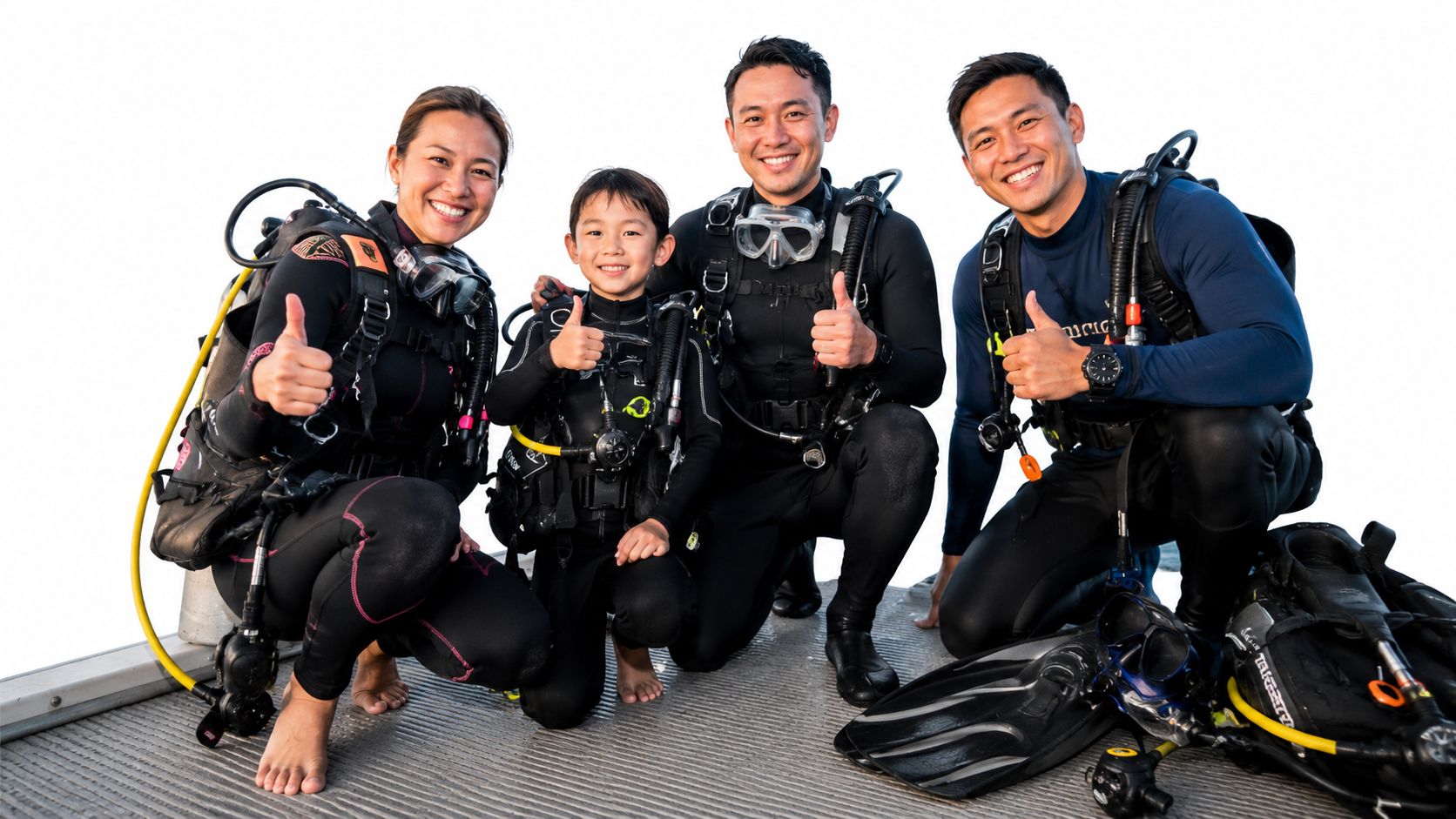
For non-divers, the manta snorkel option provides the surface viewpoint without scuba equipment. For certified divers, a calm descent and controlled position matter more than advanced tricks. You don't need to swim toward the mantas. You need to let the light, plankton, and the animals' own behavior create the encounter.
A Typical Manta Dive Hawaii Itinerary From Boat to Reef
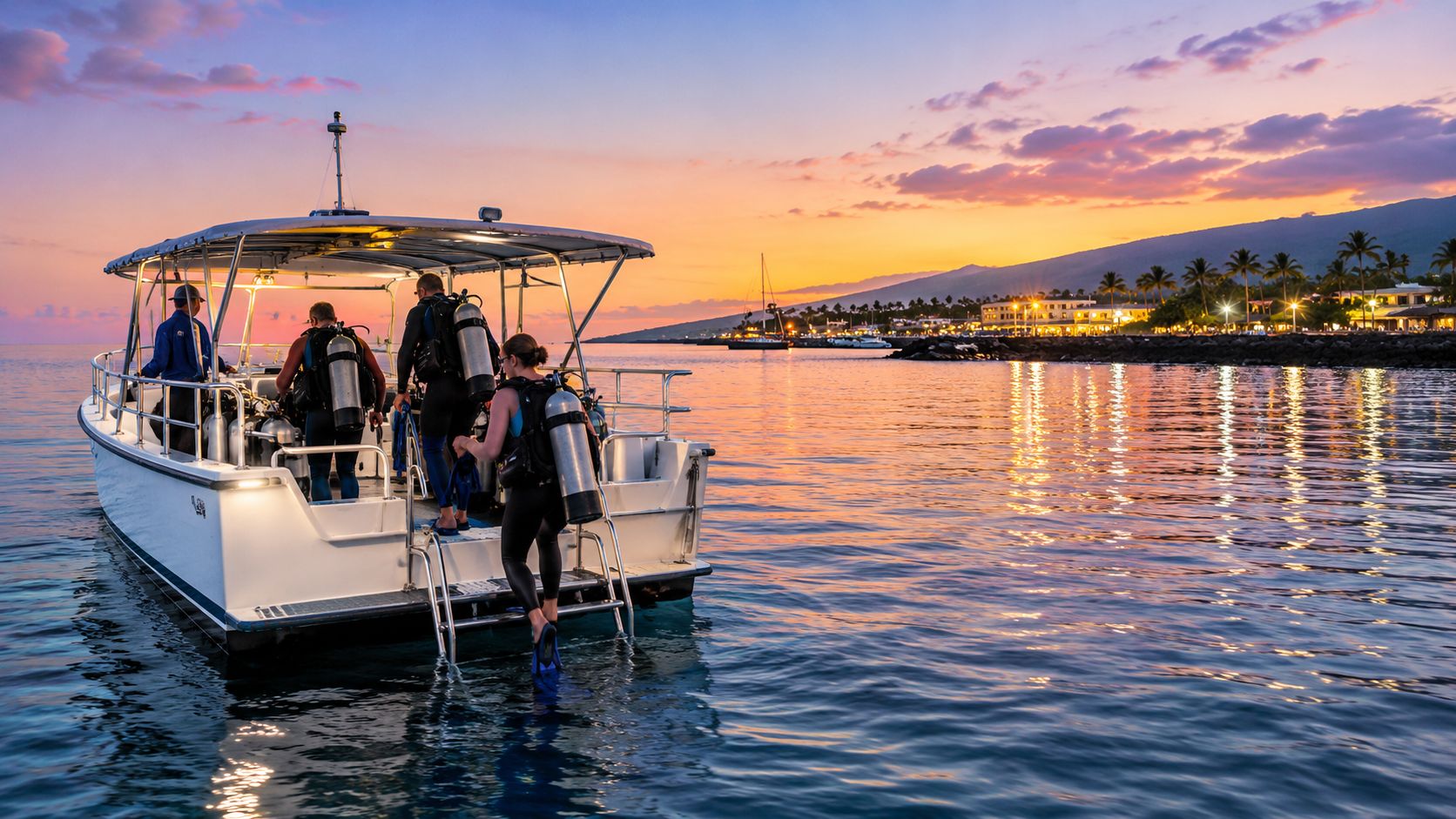
A standard evening begins with check-in, gear fitting, and a briefing at the harbor. The crew explains hand signals, entry procedures, emergency steps, and where divers should sit in relation to the lights. The boat then travels toward the selected viewing site while the sky darkens and the crew prepares the equipment.
At the reef, divers descend to a sandy viewing area and settle into assigned positions. Snorkelers remain above, while the lights create the illuminated water column between the two groups. Guides watch buoyancy, spacing, and equipment, and they remind guests to keep torches from sweeping across other people or into a manta's face.
The observation period begins. You may see plankton first, then a distant silhouette, then a sequence of passes as one or more mantas find the feeding area. The dive ends with a controlled ascent and safety procedures before everyone returns to the boat. A snorkel follows the same basic logic, but guests remain at the surface and hold position around the light board.
What each phase requires from you
- Before entering: Check your mask, regulator, lights, and exposure protection. Ask questions while you're still on the boat.
- During descent: Follow the guide and avoid spreading out from the assigned area.
- During feeding: Keep your hands, fins, and camera close to your body. Let the manta pass around you.
- After the sighting: Complete the ascent and surface procedures without rushing, even if the animals remain nearby.
The trip feels less like a conventional reef tour and more like a carefully managed wildlife observation. Learn what to expect from scuba diving at night so the darkness feels familiar before you arrive.
Choosing a Safe and Ethical Manta Dive Operator
A good operator doesn't promise control over wild animals. The operator controls the human factors, including boat procedures, lighting, briefings, group movement, and the way guides respond when guests become excited.
Crowding is a documented concern at Kona's manta sites. In a survey of 444 participants, 82% felt crowded by snorkelers, 78% by boats, and 69% by scuba divers. Reported problems included bumping, poor spatial awareness, and lights shining into other participants' eyes. Read the participant survey and testimony.
| Criterion | Good practice | Red flag |
|---|---|---|
| Boat procedure | Clear mooring and entry instructions | Disorganized entries or drifting through the viewing area |
| Lighting | Stable beams directed into the water | Torches sweeping across faces or manta paths |
| Wildlife rules | No touching, chasing, blocking, or riding | Guests encouraged to get closer |
| Group control | Guides actively maintain spacing | Guests left to manage crowding alone |
| Briefing quality | Safety and etiquette explained before entry | A rushed explanation focused only on gear |
Look for a guide-led experience with a manageable group, fixed positioning, and a briefing that explains why the rules exist. A responsible crew protects the reef, keeps divers out of the feeding corridor, and treats the manta as the decision-maker.
Hawaiʻi's marine-wildlife rules reinforce that approach. Rays have no open season in Hawaiian waters, so they can't legally be targeted for harvest. The Hawaiʻi Division of Aquatic Resources also warns that hooks and fishing line can be life-threatening and recommends cutting line close to a hook if a ray is accidentally entangled. Review the state's guidance for protected marine species.
For practical behavior in the water, save this responsible diver etiquette guide. If you want a more experienced diving opportunity beyond the manta trip, compare it with an advanced two-tank dive.
Kona Honu Divers offers certified-diver manta trips and manta snorkeling, including a two-tank format that combines an afternoon reef dive with a nighttime manta dive. Its tour information also describes included dive or snorkel gear, snacks, and drinks. Check the available manta and diving tours.
What to Pack and How to Photograph the Dive
Pack for two environments: the warm water and the cooler boat ride home. A 3mm wetsuit, whether rented or brought, helps with comfort and buoyancy. Add a rash guard, towel, warm layer, reusable water bottle, and a dry bag for valuables. Apply reef-safe sunscreen before suit-up and allow it to absorb before entering the water.
If motion affects you, speak with a medical professional or pharmacist about an appropriate remedy and timing. Keep personal medication in a dry, accessible place rather than buried beneath spare clothes. Operators generally supply core in-water equipment, but you should confirm what's included before leaving the dock.
Make the camera part of the etiquette
A GoPro on a short tray is a practical choice for video. A strobe-equipped DSLR or mirrorless camera can produce strong still images, but only if you already know how to manage it without losing buoyancy or awareness. Set the camera for the operator's light conditions, and don't use a flash directly into a manta's eyes.
- Hold it close: Keep the camera flat against your chest when a manta approaches.
- Protect the viewing area: Don't extend selfie sticks, arms, or accessories into another diver's space.
- Respect the animal: Never chase a ray to improve composition.
- Secure the setup: Check batteries, memory cards, housing seals, and attachment points before entry.
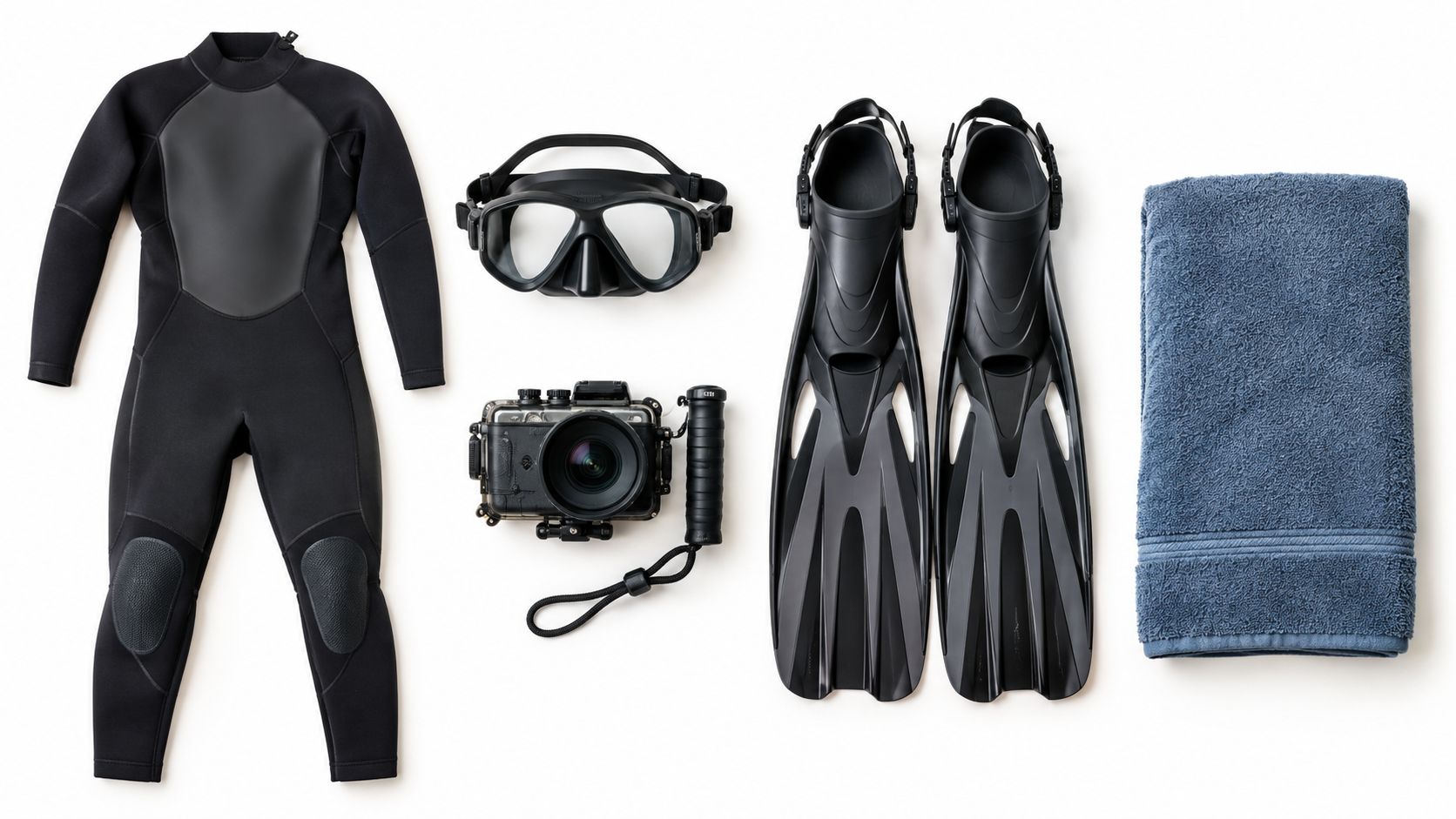
The best photograph often comes from patience. Set your position, aim into the illuminated water, and wait for the manta to enter the frame. Turning off unnecessary flashes and keeping your light steady also helps preserve the plankton concentration that brings the animals through the viewing area.
Pricing, Booking, and FAQs for Your Manta Dive
Tour prices change with the operator, boat, equipment, group size, and trip format. Rather than relying on an old advertised figure, ask for a current quote and request a written list of inclusions. A shared scuba trip, a combined reef-and-manta outing, a private charter, and a snorkel-only experience can all have different pricing structures.
| Tour type | Price range per diver | Typical inclusions | Booking lead time | Best for |
|---|---|---|---|---|
| Shared manta scuba trip | Confirm current rate | Tank, weights, guide, and site briefing may be included | Book early for popular dates | Certified divers |
| Combined reef and manta trip | Confirm current rate | Reef dive, manta dive, and onboard refreshments may be included | Reserve before your travel itinerary fills | Divers wanting two experiences |
| Snorkel-only manta trip | Confirm current rate | Snorkel equipment, flotation support, and guide may be included | Flexible, subject to availability | Non-divers and mixed groups |
| Private charter | Quote required | Vessel, crew, and schedule arranged for your group | Earlier planning is usually sensible | Families, photographers, and small groups |
Before paying a deposit, ask whether wetsuit rental, lights, full equipment rental, nitrox, camera equipment, snacks, and drinks are included. Confirm the cancellation policy, weather procedures, gratuity expectations, and reef-safe sunscreen requirements. If your schedule allows, place the manta trip early in your Kona itinerary so you retain options if sea conditions or availability change.
Common questions
Are manta sightings guaranteed?
No. Mantas are wild animals, and their presence and group size change with prey availability, currents, and site conditions. A 2025 study of more than 23,000 sightings involving 167 individual reef manta rays found that aggregation size tracked zooplankton density, so a smaller group can reflect biology rather than poor tour management. Read the University of Hawaiʻi study on variation between sites.
Does a smaller group mean a bad encounter?
Not necessarily. One manta moving slowly through the light can create a more focused experience than a crowded feeding scene. Look for an operator that describes wildlife accurately rather than promising a fixed show.
Can I touch a manta?
No. Keep your hands to yourself and let the animal control the distance. State and federal protections support observation-only encounters, and responsible operators prohibit touching, chasing, blocking, and riding.
Is Garden Eel Cove the better site?
For many first-time divers and photographers, yes. Its documented tendency toward larger aggregations and its defined viewing layout make it the stronger choice when your priority is a concentrated, organized encounter. Keauhou remains a legitimate alternative, especially when conditions or scheduling make it the better operational choice.
Is a manta dive suitable for a beginner?
Snorkeling doesn't require scuba certification. A scuba participant needs to meet the operator's certification and comfort requirements, and should be able to manage buoyancy in a dark-water setting. Ask about a suitable introductory pathway before booking if you're new to scuba.
Choose a Garden Eel Cove manta trip with Kona Honu Divers if you want a guided scuba or snorkel experience built around stable positioning, clear wildlife etiquette, and an organized viewing area. Check the current itinerary, group format, and inclusions before reserving your night with Kona's resident reef mantas.