
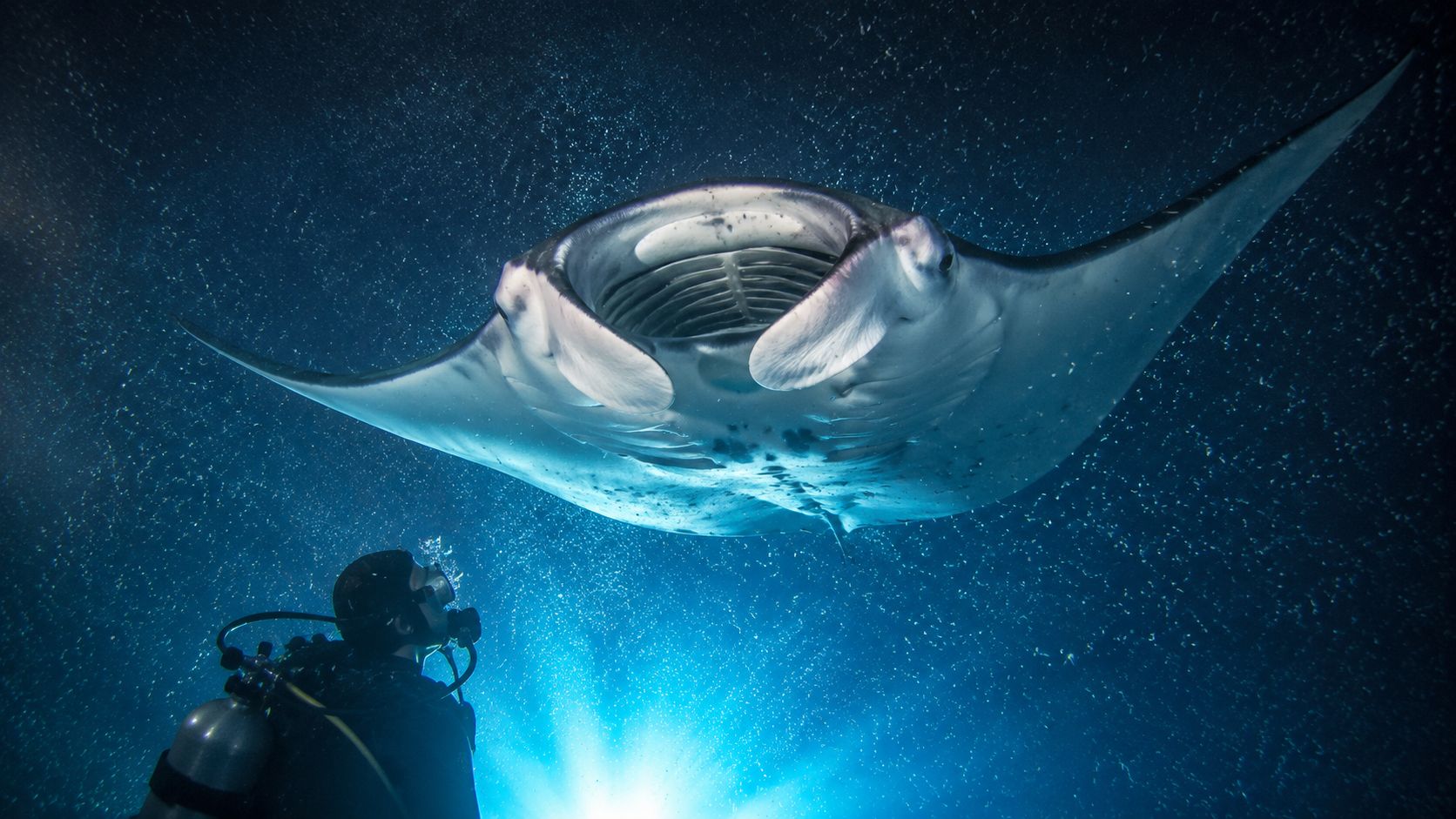
The first time you watch a manta ray swing through the lights off Kona, the dive goes quiet in a way that surprises even experienced divers. Everyone stops fidgeting, settles onto the bottom, and just watches the animal take over the water column.
Welcome to the Ultimate Kona Diving Experience
On a good Kona briefing, the first question is not "Do you want to see mantas?" It is "How do you feel in the water at night, in blue water, or on a longer boat ride?" That answer usually tells me more about the right dive than a certification card does.
If you're planning diving Kona Big Island, you're looking at a destination with unusual range. One visitor wants an easy reef dive with excellent visibility and a calm entry profile. Another wants the manta night dive, but is unsure about darkness and motion sickness. A third is chasing blackwater or a long-range advanced day and needs to know whether their buoyancy, gas use, and comfort in open water are up to the task.
That range is what makes Kona special in practical terms. You can stay well inside your comfort zone and still have a memorable trip. You can also push into dives that feel distinctly different from standard tropical boat diving, as long as you choose them for the right reasons and not because they look good on social media.
A lot of travel guides flatten Kona into one headline experience. That overlooks the true strength of this coast. The better approach is to match the dive to your skill, your nerves, and the kind of underwater experience you enjoy. For a broad starting point on local options, the Kailua-Kona diving resources are useful.
Kona rewards honest self-assessment. If you love marine life but dislike overhead darkness, the manta dive may still work because the structure is simple and the briefing is straightforward. If you are calm in the water, have solid buoyancy, and want something surreal, blackwater might be the standout. If you already dive regularly and want more ambitious topography, current exposure, and longer days, the advanced boat trips are where Kona really opens up.
Choose well, and this coastline gives you exactly the kind of diving holiday you came for, not the one someone else told you to book.
What Makes Kona Diving a World-Class Destination
On a good Kona morning, you can see the decision before you even giant stride in. One site lies calm in the lee of the coast, with an easy descent line and lava structure that keeps new divers oriented. Another asks more of you. More open water, more exposure, more need for clean buoyancy and calm gas management. That range, packed onto one coast, is a big reason Kona stands out.
The coastline builds better dives
Kona's volcanic shoreline gives dives shape. You are not drifting over long, anonymous reef flats. You are working through lava fingers, shelves, arches, bowls, and swim-throughs that create a site with a clear layout. New divers usually settle faster when the bottom has obvious contours and reference points. Advanced divers appreciate the same structure for a different reason. It rewards good positioning, slow observation, and repeat visits.
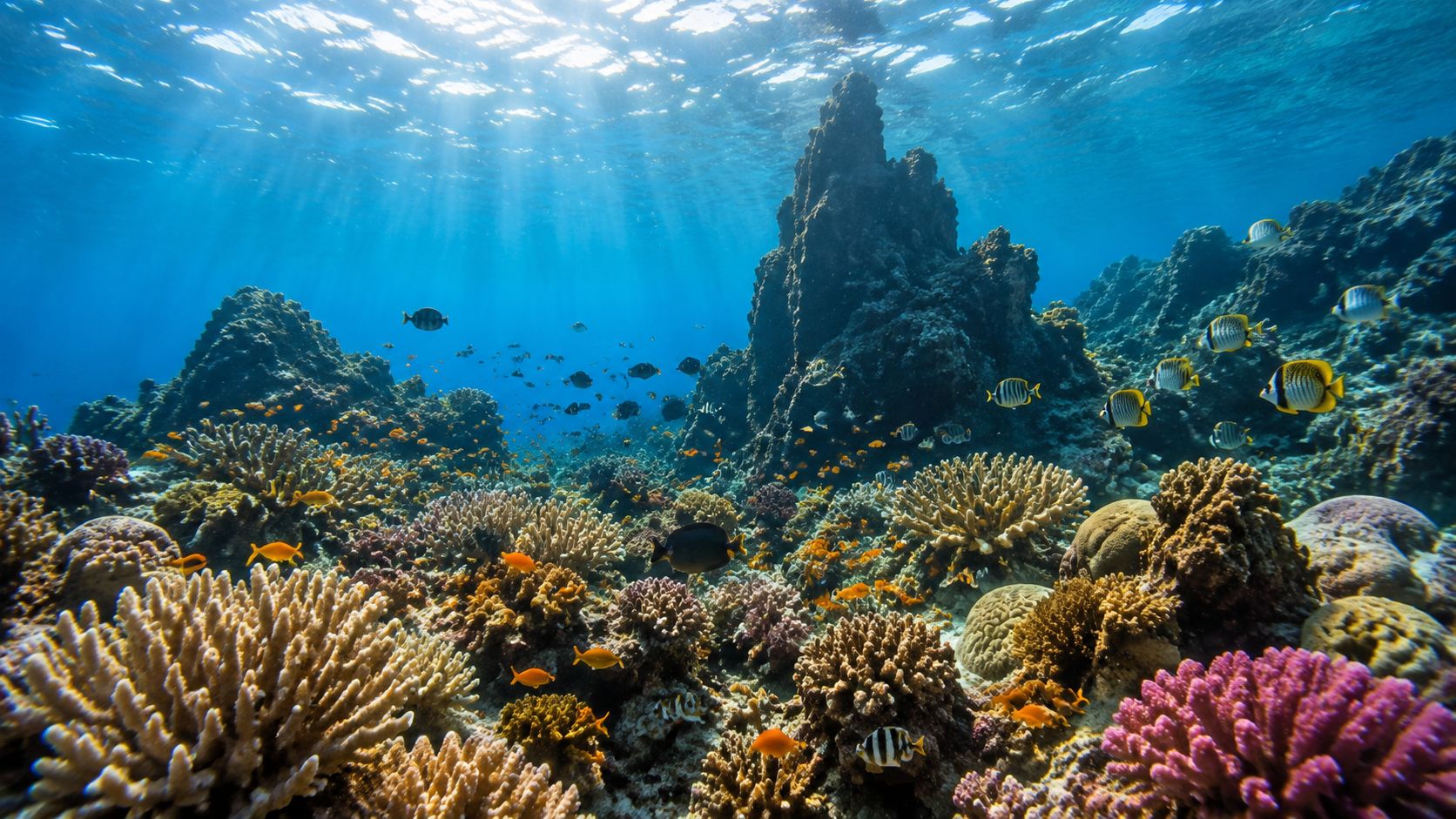
The west side of the Big Island also gets protection from the prevailing trade winds, which is why Kona so often delivers clear, diveable water while other parts of Hawaii are rougher. That matters in practical terms. Good visibility lowers task loading, makes buddy contact easier, and gives nervous divers more confidence on descent. For a useful overview of the coastline's local advantages, see what makes diving in Kona unique.
Variety is the real advantage
A lot of destinations are known for one signature experience. Kona earns repeat divers because the menu is wider than the marketing headline.
You can put a newly certified diver on a protected reef with a simple profile and let them enjoy turtles, reef fish, and lava formations without feeling rushed. You can send a comfortable night diver to the manta site and know the task loading is manageable if they follow the briefing and stay disciplined with lights and positioning. You can also build toward blackwater or a long-range day for divers who already have steady buoyancy, comfort in blue water, and enough experience to stay relaxed when the reef is gone.
That is the part many travel guides skip. Kona is not world-class only because the diving is beautiful. It is world-class because there is a good fit for very different divers, and the differences between those dives matter.
Why skill matching matters here
I tell guests the same thing every season. Do not choose the dive that sounds most impressive. Choose the dive you will enjoy while staying calm, aware, and in control.
For beginners, Kona works best when conditions are forgiving and the site gives clear visual references. For intermediate divers, the coast starts to open up with deeper reef profiles, more complex lava topography, and selected night dives. For advanced divers, Kona keeps delivering once you move into open-ocean night diving, longer boat runs, and sites where surface conditions, current, and gas planning deserve more respect.
A diver who dislikes darkness may love a daytime reef and still hate blackwater. A diver who is comfortable at night may do great on the manta dive but feel overworked on a long-range trip with more exposure and a longer day. The right call is not about ego. It is about matching the dive to your actual comfort level, then stepping up when your skills support it.
Kona's Signature Underwater Experiences
I have watched divers climb back onto the boat after a manta dive with tears in their eyes, then watched other divers do the same after blackwater for a completely different reason. The manta dive leaves people awestruck. Blackwater leaves them humbled. Both are exceptional. They do not ask the same things of you.
The manta ray night dive
The manta night dive is Kona's most accessible signature experience because the job underwater is simple. Descend, settle into your assigned spot, keep your light where the guide wants it, and hold position without drifting into the group. If you can stay calm, manage your buoyancy, and follow a structured briefing at night, you can have a fantastic dive here.
Site choice matters. Garden Eel Cove usually gives divers a more comfortable entry point into night diving because the setup is often calmer and the viewing pattern is easier to manage. That matters more than the marketing language around any given tour. A diver who reaches the bottom settled and breathing normally will notice more, consume less gas, and make better decisions.
The trade-off is crowd energy. On a busy night, the manta dive can feel compressed. Lights, cameras, and divers all share a small working area, and poor fin control from one person can disrupt the whole group. Divers who dislike close quarters or get overloaded by activity around them should account for that before booking. Divers who want a fixed plan with a very high chance of memorable animal action usually love it.
For a closer look at trip format and expectations, the Big Island manta ray tour guide is a useful starting point.
Best fit: certified divers with decent buoyancy who want a structured wildlife encounter at night.
Less ideal: divers who panic when visibility narrows to a light beam, struggle to stay still, or dislike sharing space with a group.
The blackwater dive
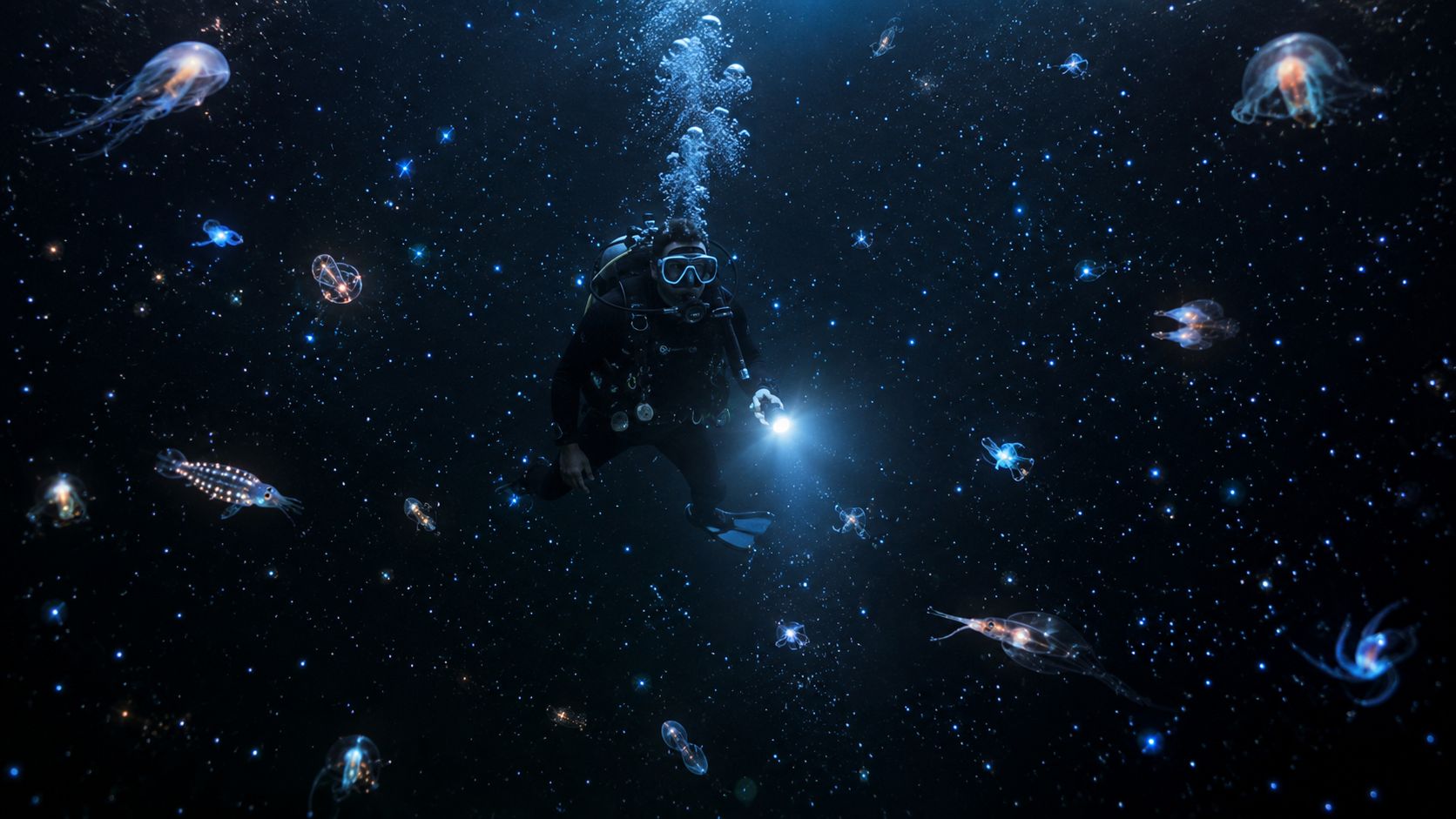
Blackwater is a stronger filter. You leave the reef behind, descend on lit reference lines in open ocean, and spend the dive watching pelagic larvae and gelatinous animals rise out of the dark. There is no lava wall, no coral head, and no bottom to settle your brain. Some divers find that thrilling within minutes. Others realize right away that they were more night-tolerant than fully blue-water comfortable.
Kona is one of the few places where operators can run this type of dive consistently because deep ocean lies close to shore. That geography brings the animals up into recreational range after dark. The draw is not a single marquee species. It is the strangeness of what appears in the lights. Transparent juvenile fish, larval eels, pulsating jellies, and tiny predators drift past in forms that look unfinished, alien, or both.
The workload is different from the manta dive. Good blackwater divers hold depth without a bottom reference, keep their trim under control, and avoid chasing every interesting creature out of the light field. If your buoyancy is solid on daytime reef dives but starts to slip at night, fix that first. Blackwater punishes over-finning and rewards calm control.
If you want the operator details for that specific trip, the blackwater night dive tour page covers the format.
Best fit: experienced divers who are calm in darkness, comfortable in open water, and honest about task loading.
Less ideal: divers who rely on a reef for orientation, feel uneasy in blue water, or have only done one or two easy night dives.
Which one should you choose
Use this simple test. If your main goal is to see a world-famous animal encounter in a controlled setup, start with mantas. If your main goal is to experience the open ocean at its strangest, and your buoyancy stays clean even when visual references disappear, blackwater may be the better call.
| Dive type | Best for | What can go wrong |
|---|---|---|
| Manta night dive | Divers who want a predictable wildlife encounter with a fixed viewing plan | Stress at the surface, poor light discipline, and buoyancy mistakes in a shared viewing area |
| Blackwater dive | Divers with stable buoyancy and real comfort in open water after dark | Anxiety from the lack of bottom reference, depth creep, over-finning, and sensory overload |
| Both in one trip | Divers who handle night diving well and recover quickly between demanding dives | Booking too much too soon and spending both dives managing stress instead of enjoying them |
My advice is simple. If night diving still feels new, do the manta dive first. If you finish that dive calm, controlled, and wanting more water time instead of less, then blackwater starts to make sense.
A Tour of Kona's Top Dive Sites
Kona's day diving is deep enough as a category that it deserves its own planning. If you only chase the headline dives, you'll miss the sites that make people want to come back.
For a broader comparison of popular local picks, this guide to the best dive in Kona helps frame how different sites appeal to different divers.
Au Au Crater
Many divers know this site as Turtle Heaven, and the nickname fits. The crater structure gives the site shape without making it intimidating, so it's often a good match for divers who want interesting topography without a high workload.
Who it suits: beginner to intermediate divers.
Why it works: the site often feels contained in a reassuring way. You can focus on turtles, reef fish, and volcanic contours rather than managing a complicated profile.
Golden Arches
Golden Arches is where Kona's lava architecture really starts to show off. The appeal isn't just fish life. It's the way the reef forms dramatic passageways and framed openings that reward precise buoyancy and careful finning.
Who it suits: intermediate to advanced divers.
This is the kind of site where skilled divers have more fun because they can stop, hover, and look without bouncing off structure or silting up the view for everyone behind them.
Eel Cove during the day
A lot of people only think about this area in connection with the manta dive, but daytime diving here is worth doing on its own. The reef has enough life and texture to stand alone without the nighttime spectacle.
Who it suits: beginner to intermediate divers, especially people easing into Kona conditions.
What works well here is familiarity. If you're booked on a manta night dive later in the trip, seeing related terrain in daylight can calm your nerves.
Advanced long-range options
Some of Kona's most rewarding diving requires more than average comfort in the water. These trips are for divers who don't need hand-holding on descent, can hold trim in structure, and can handle changing conditions without becoming task-loaded.
The advanced long-range dive tour is the kind of option to consider if standard reef rotations feel too tame.
A simple way to choose sites is this:
- Want turtles and easy orientation: pick Au Au Crater.
- Want dramatic lava formations: go for Golden Arches.
- Want a lower-stress day before a night dive: choose Eel Cove.
- Want challenge and variety: book a true advanced profile, not a standard boat dive dressed up with marketing language.
Planning Your Kona Diving Adventure
The easiest way to get Kona right is to book the dive that matches how you dive, not the one that sounds best over dinner after day one.
I see the same pattern every season. A diver flies in set on the manta night dive, hears about blackwater on the boat, then starts eyeing a long-range trip too. The problem is not ambition. The problem is stacking three very different experiences without asking a simpler question first. Which one will feel exciting to you, and which one will feel like work?
Kona gives you unusual range. You can do a relaxed daytime reef dive, a stationary night dive with big animal action, a blackwater drift that feels like suspension in open space, or a more demanding offshore run where comfort and air consumption matter. Water is often warm enough that exposure protection becomes a comfort choice rather than a survival issue, but conditions still change by season, swell, and time of day. Winter can add whale activity and rougher surface conditions. Other periods often give easier entries, calmer rides, and simpler planning.
Choose the experience first, then choose the date
If your main goal is the manta dive, build the trip around a flexible evening and keep the day before it light. Divers do better on that dive when they arrive rested, warm, and calm, not after pushing a big two-tank morning and racing the clock.
If blackwater is your priority, give yourself a buffer day first. Even confident reef divers can be surprised by the feeling of descending into blue water at night with no bottom or reef in view. The marine life is extraordinary, but the mental side is real.
If you want advanced long-range diving, protect that day from bad planning. Do not book it as your first ocean dive in months. Put it after an easier checkout-style day so you can sort weighting, trim, and breathing before adding distance, current, or more complex topography.
Match the dive to your comfort level
The manta dive suits a wider range of divers than people expect, but it still rewards control. You do not need to be a technical diver. You do need to stay in position, follow light discipline, and avoid kicking up the bottom or drifting into other guests when the action starts.
Blackwater is different. The challenge is less about depth or current and more about orientation and task loading. If open water at night tends to spike your heart rate, take that seriously. Some divers love the freedom of it within minutes. Others spend half the dive trying to settle their breathing.
Long-range advanced trips are the least forgiving choice for rusty divers. They are best for people who descend cleanly, hold depth without constant correction, and can solve small problems without spiraling into bigger ones.
A practical rule works well here:
- Choose manta if you want a famous Kona experience with a clear plan, close supervision, and a strong chance of memorable animal encounters.
- Choose blackwater if you are comfortable in the dark, calm without visual reference, and curious enough to enjoy a dive that feels strange from the first minute.
- Choose long-range advanced diving if your skills are current and you want the site itself, the profile, and the conditions to be part of the reward.
Be honest about rust, nerves, and seasickness
A refresher often improves a Kona trip more than adding another specialty dive. Divers who struggle here are usually not under-certified. They are under-practiced, overbooked, or too embarrassed to say they are uneasy about night diving or boat motion.
Say it early instead. Good crews can work with honest information.
Seasickness deserves the same honesty. If you are prone to it, start your remedy before the boat leaves the harbor, eat a light breakfast, and stay hydrated. Looking at the horizon and staying in fresh air helps a lot. So does telling the crew before you turn green. They can usually place you where the ride feels easier and watch your timing on entries.
Useful options include Ship-EEZ Seasickness Patch, Dramamine pills, Bonine pills, Sea Band wristbands, and Ginger chews.
Pack for function
Bring the items that affect comfort and decision-making underwater.
- Core documents: certification card, photo ID, and any medical information the crew should know
- Personal gear: mask, computer, exposure layer, and anything fit-sensitive you do not want to troubleshoot on vacation
- Boat basics: water, towel, dry clothes, sun protection, and a small bag that keeps your kit organized
- Night dive comfort: an extra layer, hood if you chill easily, and any simple routine that helps you stay relaxed before splash time
The best Kona itinerary usually looks a little conservative on paper. Then it feels excellent in the water.
Choosing the Best Kona Dive Operator
The operator you choose has a bigger effect on your Kona trip than the site list. I have seen divers light up on a simple reef charter because the crew matched the plan to their comfort level. I have also seen skilled divers come back frustrated after booking the wrong format for the kind of diving they desired.
Kona makes this choice more important than in a lot of destinations. You are not just picking between companies. You are picking between very different experiences: an easy daytime reef dive, a manta night dive that is calm for some divers and stressful for others, a blackwater trip that demands comfort in open water after dark, or a long-range day built for divers who want more exposure, more boat time, and less margin for poor buoyancy or weak air consumption.
What to look for first
Start with fit, not price.
A good operator asks a few direct questions before they ever talk about booking. How recently have you dived? Are you comfortable at night? How is your buoyancy in midwater? Do you get seasick? Are you trying to see mantas, try blackwater, or have a relaxed two-tank morning? If a shop does not care about those answers, they are treating Kona like a generic vacation dive destination, and it is not one.
Use this checklist when comparing boats:
- Screening: do they ask enough questions to steer you toward the right trip?
- Briefing style: do they explain task load, entry style, current, and what the dive usually feels like?
- Comfort with honest limits: do they welcome divers who say, "I want mantas, but I do not want a demanding night dive"?
- Group management: do they keep advanced profiles separate from beginner-friendly expectations?
- Boat setup: is the ride short and simple for the trip you want, or are you signing up for a longer day than you realize?
For a useful starting point, this guide to comparing Kona diving companies helps show the range of trip styles available.
Match the operator to the dive you actually want
If the manta dive is your priority, look for a crew that explains the full sequence clearly. Night entries, descents in low light, staying settled on the bottom or at the surface, and managing excitement all matter. The best manta operators are calm, organized, and good at lowering anxiety before it starts.
If blackwater interests you, raise your standards. This is not a "maybe I will try a night dive" experience. It suits divers who can hold position without visual reference to a reef, stay composed in dark open water, and follow light and line procedures carefully. A quality operator will say that plainly. They should not pitch blackwater as just another item on the menu.
Long-range and advanced charters need the same honesty. Ask what makes the trip advanced. Sometimes that means depth, current, surf entries, ladder conditions, or a more remote site with fewer easy exit options. Sometimes it just means a longer boat ride. Those are very different things.
A few operators worth comparing
Kona Honu Divers is one local option for divers who want boat diving, manta trips, blackwater trips, training, and standard reef charters through a single shop.
Jack's Diving Locker is another established name that many traveling divers recognize, particularly for its range of day and night offerings.
Big Island Divers also has a strong profile among visiting divers and is commonly considered by people comparing multiple specialty-dive schedules.
What works and what doesn't
What works is choosing a crew whose operating style fits your real-world diving. A newer or rusty diver often does better with a patient daytime charter first, then a manta trip after one checkout-style day in local conditions. A confident night diver with strong buoyancy may be ready for blackwater. An experienced diver who wants ambitious sites should ask for the charter with the right profile, not just the one with the most dramatic marketing photos.
What fails is booking by headline alone. Mantas are famous. Blackwater is unforgettable. Remote sites can be spectacular. None of that makes them the right dive for every diver on every day.
The right operator helps you choose well before you hit the water. That is what turns Kona from a good dive trip into one you remember for the right reasons.
Check AvailabilitySample Itineraries and Dive Trip Budgeting
I build Kona trips the same way I build a good training progression. Start with the dive that gives you the most information about your comfort level, then add complexity once you know how you are handling the conditions. That approach saves a lot of people from burning their best night on anxiety, fatigue, or simple task overload.
Kona rewards good sequencing. A diver who is calm on a daylight reef dive often has a much better manta experience that same trip. A diver who feels scattered at night, struggles to hold depth, or gets tense in blue water should treat blackwater and long-range advanced charters as later options, not automatic add-ons.
Three sample ways to plan it
Weekend signature plan
Day 1: easy daytime reef dive
Day 2: manta night dive
Day 3: rest morning, then a simple reef dive if energy and nitrogen exposure still look good
This schedule fits newer certified divers, rusty vacation divers, and anyone who wants the famous Kona experience without cramming every specialty dive into one weekend.
Four to five day balanced plan
Day 1: daytime reef charter
Day 2: second reef or lava-structure dive
Day 3: manta night dive
Day 4: rest or light shore day
Day 5: blackwater, only if the first few dives confirmed strong buoyancy and good night comfort
This is the schedule I suggest most often. It gives you a margin for weather changes, lets you sort out weighting and gear early, and keeps your decision about blackwater based on how you are diving that week.
Advanced-focused plan
Day 1: check-in reef dives with conservative profiles
Day 2: long-range or more exposed advanced charter
Day 3: recovery day or one easy dive
Day 4: choose manta if you want a controlled night dive, or blackwater if you are fully comfortable in open water at night
The trade-off is simple. Manta is usually the easier specialty night for divers who like structure and visual reference. Blackwater asks for more composure. You are suspended over deep water, often with no bottom or reef in view, and your buoyancy control has to stay clean while your attention is pulled toward tiny drifting animals in the lights.
Budgeting for the dives you actually want
Build the budget around priority, not around filling every day.
Start with the one or two experiences that made you book Kona in the first place. Then price out the support costs that catch divers off guard, gear rental, nitrox if you use it, gratuity, parking or rideshare, and a rest day if you are stacking multiple boat trips. Those extras are rarely dramatic on their own, but together they change the actual cost of the trip.
A practical planning guide:
| Activity | Budget approach |
|---|---|
| Manta ray night dive | Mid-priced specialty charter. Reserve early. |
| Standard 2-tank boat dive | Usually the baseline cost for most dive days |
| Blackwater dive | Specialty pricing. Often higher than a standard charter |
| Gear rentals | Budget per day, especially if you need computer, light, or full kit |
| Advanced long-range dive trip | Premium pricing because of fuel, run time, and smaller market |
If budget is tight, spend on the dive that best matches your current skill and comfort level. A well-timed manta trip is usually a better use of money than forcing yourself onto blackwater before you are ready for it. The same goes for long-range advanced charters. They are worth it for the right diver, but only if you have the experience to enjoy the profile instead of just surviving it.
The smartest Kona budget leaves room for one great specialty dive, one or two easier confidence-building dives, and enough flexibility to skip a dive if conditions, fatigue, or comfort say no.
Kona Diving Frequently Asked Questions
Is Kona good for newer divers
Yes, if you choose the right sites. Calm reef dives with simple descents are a much better first step than jumping straight into a specialty night dive.
Is the manta dive scary
Usually not for divers who are comfortable at night and can hold position without chasing wildlife. It feels more organized than many people expect.
Is blackwater suitable for everyone
No. It suits divers who are already calm in open water, stable in buoyancy, and not dependent on a reef or bottom for orientation.
Can non-divers still enjoy the trip
Often, yes. Kona trips can work well for mixed groups because some people dive while others snorkel or enjoy topside wildlife experiences.
How far ahead should you book
Book early for specialty dives. Manta and blackwater schedules are the first parts of a Kona dive trip I'd lock in.
If you want a trip built around safe site selection, realistic advice, and dives that match your actual experience level, Kona Honu Divers is a practical place to start.