
A lot of visitors arrive at the same point. They’ve seen the photos, they’ve heard that Kealakekua Bay snorkeling is the Big Island trip they shouldn’t skip, and now they’re trying to answer the part that matters most. How do you do it without turning a dream snorkel day into a hard paddle, a punishing hike, or a rushed, crowded experience?
That question matters more here than it does at easier shoreline spots. Kealakekua Bay rewards good planning, and it punishes casual assumptions. The water can be magnificent, the reef can feel like a living aquarium, and the history of the place adds weight to the whole experience. But you can’t just drive up to the prime snorkeling area, step out, and stroll in.
Your Unforgettable Kealakekua Bay Snorkeling Adventure
Kealakekua Bay earns its reputation the first time you look over the side of the boat and realize you can see straight down into blue water that seems almost unreal. This isn’t just a pretty cove. It’s a 315-acre Marine Life Conservation District and State Historical Park that draws about 190,000 visitors annually, and it’s ranked among the top 5 snorkeling spots worldwide, with visibility that often exceeds 100 feet in calm summer conditions, according to this Kealakekua Bay overview from Kona Snorkel Trips.
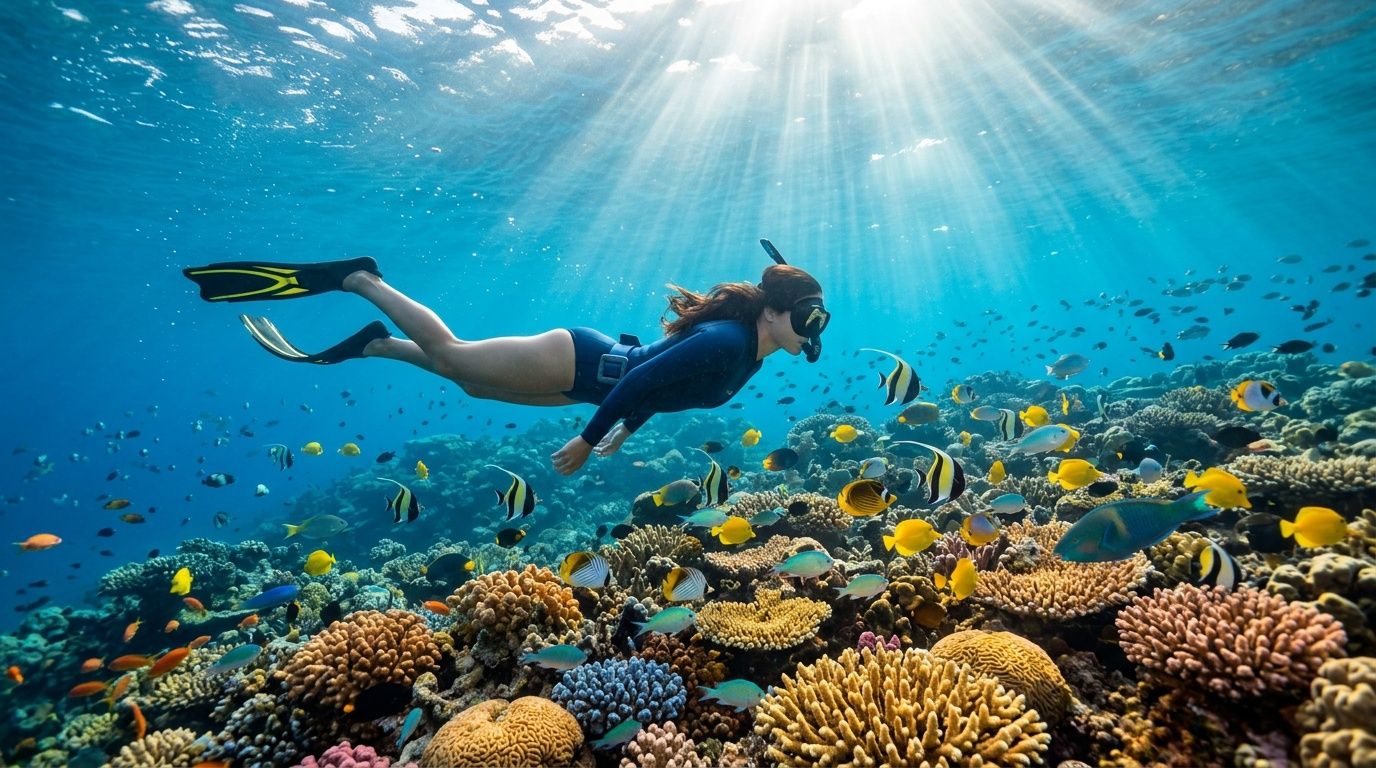
The ideal snorkel day often begins with a shared hope. This hope centers on that classic Hawaii snorkel day: calm water, bright fish, clear sun, and enough support to relax instead of worrying about logistics. Kealakekua Bay can absolutely deliver that, but only if you choose the right access method from the start.
Why this bay feels different
The bay has two kinds of gravity. One is underwater. The reef near the Captain Cook Monument is where many visitors spend their best snorkel minutes, floating over coral and watching schools of fish move below them in open, clear water. The other is historical. A large share of visitors come because the place itself matters, not just the snorkeling.
Practical rule: Treat Kealakekua Bay like a destination that needs a plan, not a beach stop you figure out in the parking lot.
That’s the part many first-time visitors miss. The best snorkeling isn’t next to an easy roadside entry. You’re dealing with a protected bay, limited access, changing ocean conditions, and a site that deserves more respect than a quick splash-and-go visit.
What a well-planned day looks like
A good Kealakekua Bay snorkeling day feels easy. You get on the water early. You arrive before the bay gets busy. You enter with the right gear and enough flotation if you need it. You spend your energy looking at reef life instead of using it up getting to the reef.
If you're still comparing locations, this broader guide to snorkeling in Kona, Hawaii helps put Kealakekua Bay in context with other Big Island options.
That’s why access is the primary decision. The bay is spectacular. The route you choose determines whether you experience it at its best.
Choosing Your Path to Paradise
The biggest mistake people make with Kealakekua Bay snorkeling is assuming every access option leads to roughly the same day. It doesn’t. Boat tours, kayaks, and the hike all put you in the same general bay, but the experience is completely different in effort, safety, and how much energy you have left once you finally get in the water.
Independent access sounds appealing on paper. In practice, it’s where visitors most often underestimate the bay.
Kealakekua Bay Access Options Compared
| Method | Ease & Accessibility | Safety | Approx. Time | Best For |
|---|---|---|---|---|
| Guided boat tour | Easiest option for most visitors. Direct access to the prime snorkel area without carrying gear long distances. | Safest overall. Crew support, flotation, and professional oversight matter. | Half-day feel | Families, beginners, mixed-skill groups |
| Independent kayak | Moderate to difficult. Requires paddling effort before and after snorkeling. | Riskier. Strong currents can create problems, and fatigue is common. | Longer and more variable | Fit, confident paddlers with ocean experience |
| Hike-in access | Hardest by far. Steep trail and rough return climb with wet gear. | Self-managed, with less margin for error once tired. | Long, physically demanding outing | Strong hikers who know exactly what they’re choosing |
According to this breakdown of Captain Cook and Kealakekua Bay access, independent access carries real risks. Hawaii DLNR reports occasional strandings from strong currents, and the 1.5 to 2 mile paddle can exhaust non-athletic snorkelers. That same source notes guided tours are a much safer option because they provide crew support, stable platforms, and professional oversight, which is why they’re the right fit for families and novices.
Why boat tours work better for most people
The biggest advantage isn’t luxury. It’s conservation of energy and attention.
When people arrive by boat, they step into the day fresh. They haven’t already burned their shoulders paddling across the bay. They haven’t baked on the trail before putting on a mask. They haven’t started their snorkel thinking about the hard return still waiting for them.
A solid tour also removes common friction points:
- Entry support: Getting in and out of the water is easier from a stable platform.
- Gear handling: You’re not managing a kayak while trying to snorkel.
- Crew awareness: Someone is watching conditions, the group, and beginner comfort.
- Family logistics: Kids and less confident swimmers do better when the day has structure.
The best Kealakekua Bay snorkeling trips feel simple because the hard parts were handled before you ever put your face in the water.
The truth about kayaking
Kayaking is the access method people romanticize most. It can be rewarding for the right person, but it’s not the casual adventure many visitors imagine.
If you’re a strong paddler, comfortable in open water, and realistic about the return trip, kayaking can make sense. If you’re traveling with children, weak swimmers, or anyone who gets tired quickly, it usually creates more strain than payoff. By the time some visitors reach the snorkel area, they’re already rationing energy.
The other issue is mental load. You’re not just snorkeling. You’re also monitoring conditions, your route, your boat position, and your reserves for getting back.
The hike is a commitment, not a workaround
Some visitors see the hike as the “free” option. It’s better understood as the most physically expensive option. Going down is one thing. Climbing back up after time in the water is where the trail changes the whole mood of the day.
For a small group of capable hikers, that trade-off is acceptable. For most visitors, it turns a marine outing into an endurance problem.
If you want a deeper look at tour styles, group types, and what separates a smooth trip from a mediocre one, this guide to the top 3 best Kealakekua Bay snorkeling tours is worth reviewing before you book.
The practical choice
For most travelers, the answer is straightforward. Book a guided boat tour. It gives you better odds of a calm entry, more time in the best water, and less chance that the access itself becomes the hardest part of the day.
That’s not hype. It’s just what works.
How to Plan Your Perfect Snorkel Day
You can feel the difference before you even leave the harbor. On a good Kealakekua morning, the ride out is calm, the bay is still waking up, and first-time snorkelers step into the water relaxed instead of tense. Show up late, choose the wrong access plan, or book a trip that treats snorkeling like a side stop, and the same bay can feel harder than it should.
For this bay, planning is mostly about one decision. Reduce the work it takes to reach the reef, and you save your energy for the part that matters.
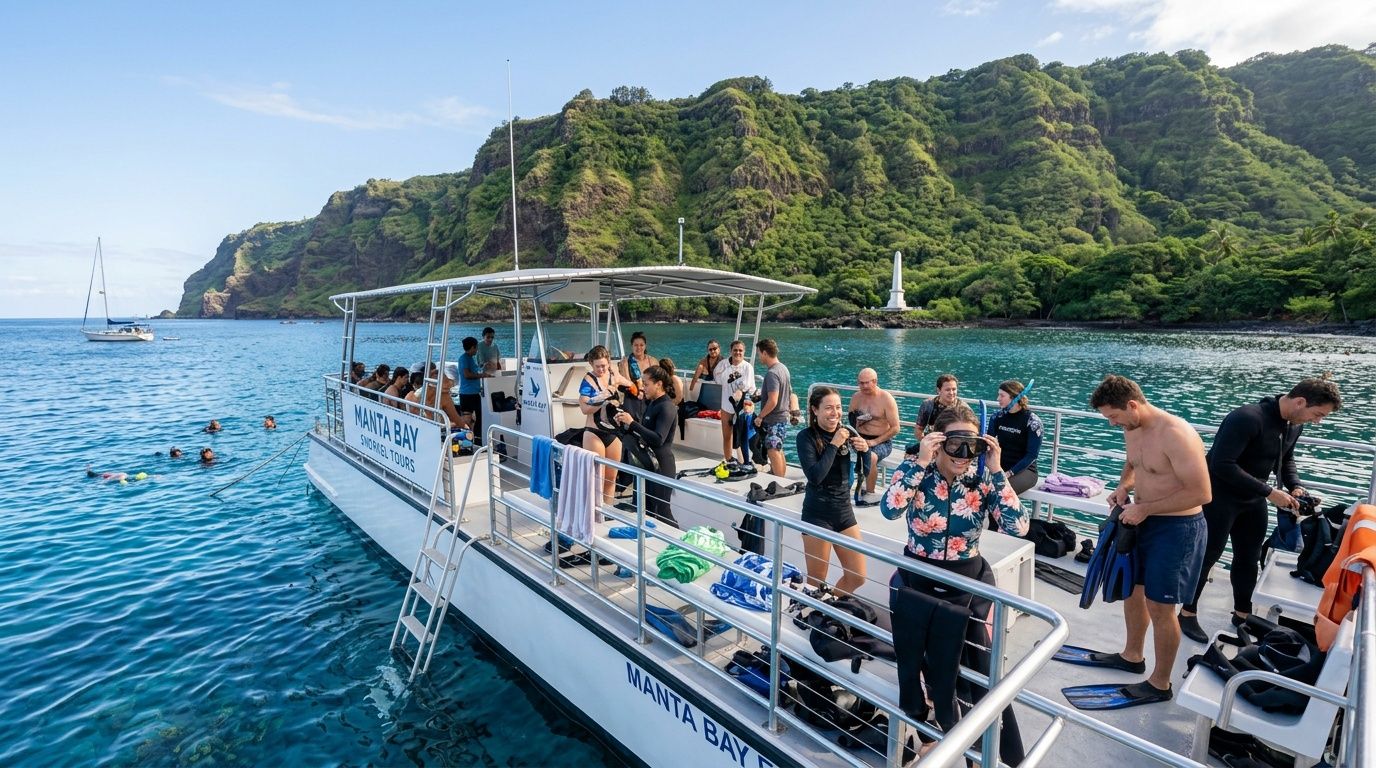
Book the morning trip
If I were helping a visiting family make one choice only, I’d tell them to protect the morning. Early departures usually mean flatter water, better visibility, easier entries, and less fatigue before you even start swimming.
That matters most for beginners, kids, and anyone who enjoys snorkeling more when the surface is calm.
Use these filters when comparing trips:
- Departure before 10 AM
- A real safety briefing, not a quick announcement
- Easy entry and easy reboarding
- Flotation gear available without having to ask twice
- Crew support for nervous or inexperienced snorkelers
Choose the operator by fit, not by marketing
A lot of visitors compare boats by price first. That’s backwards at Kealakekua Bay. Start with the group you’re traveling with, your comfort in open water, and how much hands-on help you may want once you’re in the bay.
Two local options visitors often compare are Kona Snorkel Trips Kealakekua Bay Captain Cook Monument tour and Captain Cook Snorkeling Tours.
Kona Snorkel Trips is connected to Kona diving operations that many island visitors already know, and Kona Honu Divers is another company people may already recognize while researching Big Island water activities. The useful comparison points are simple. How early do they leave, how easy is boarding, how much beginner support does the crew provide, and does the trip stay focused on snorkeling instead of squeezing it between other stops?
Price still matters. It just matters after those questions.
Local habit: Check conditions first, then choose the boat that matches your group’s ability and comfort level. Cheap access to great water is still a poor deal if half your group is stressed before they snorkel.
If you want to understand why one morning is clear and forgiving while the next is sloppy, this guide on how to check ocean conditions for the Big Island gives useful context before you book.
Prepare for an easy morning
Good snorkel days usually look ordinary on land. The problems start when visitors rush, skip basics, or arrive already dehydrated and hungry.
Keep your prep simple:
- Confirm the check-in time the day before. Build in extra drive time and parking time.
- Apply reef-safe sunscreen before boarding. Give it time to absorb.
- Eat lightly if you get seasick. An empty stomach can feel bad, but a heavy breakfast can feel worse.
- Bring a towel and dry clothes. The ride back is more comfortable when you can warm up.
- Use fins that fit. Bad fin fit causes blisters and wasted energy fast.
Reviews can help, but look for the right details
Five-star ratings are less useful than pattern recognition. Look for reviews that mention calm check-in, patient crew, beginner support, clear instructions, and whether guests felt rushed in the water. Those details usually predict your day better than broad praise.
If you want to scan reviews before choosing, these embedded review widgets can help.
A simple booking standard
Use this checklist before you reserve:
- Morning departure: Required if you want the best chance at calm, clear water.
- Beginner support: Ask whether flotation and in-water help are standard.
- Comfortable platform: Stable boarding and a good ladder matter a lot after your swim.
- Snorkel-focused schedule: Some boats are built around the bay. Others treat the snorkel stop as one item on a crowded itinerary.
That’s the practical way to plan Kealakekua Bay. Pick the access that removes strain, book the time of day that gives you the best water, and make sure the crew matches your group instead of expecting your group to adapt to the boat.
Marine Life Highlights of Kealakekua Bay
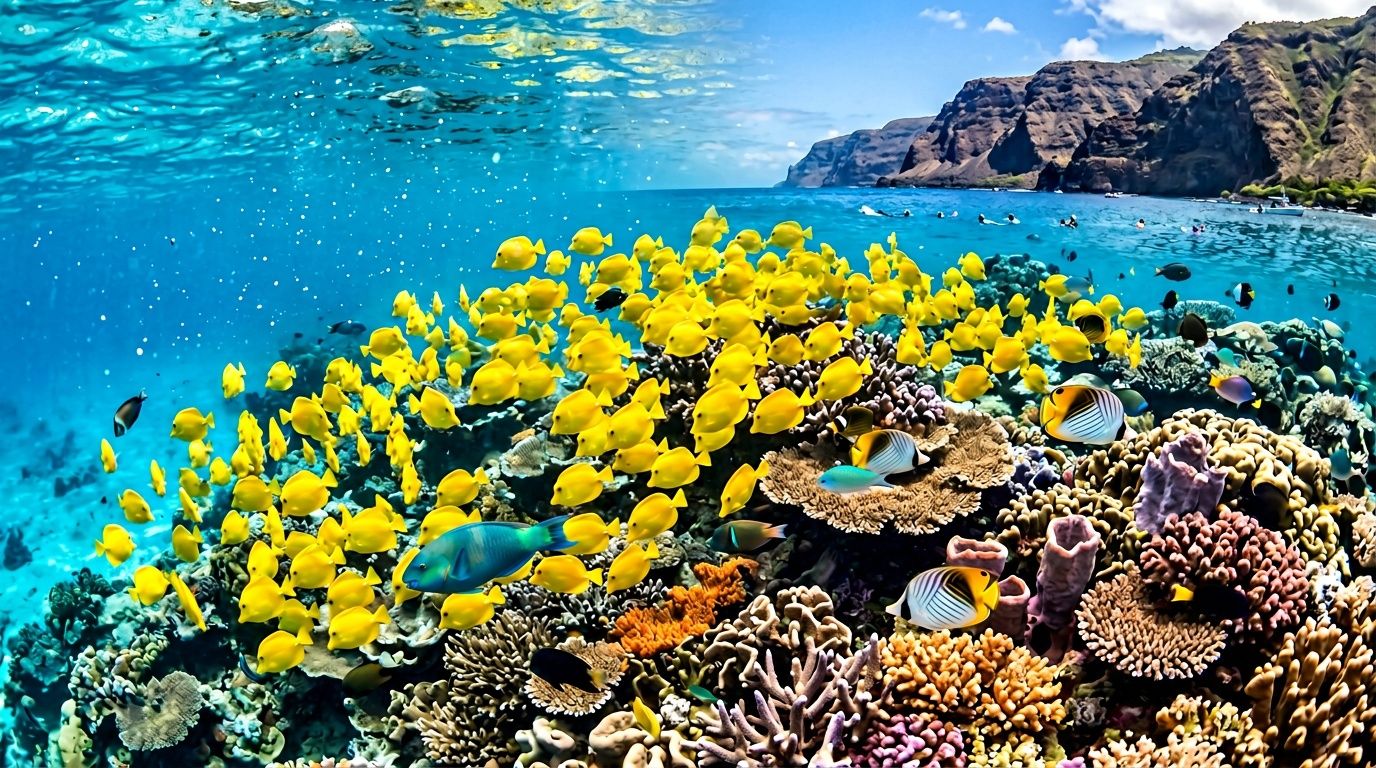
The reward for all that planning is what happens after your mask hits the water. Kealakekua Bay snorkeling is known for density. Not just an occasional fish sighting, but a reef scene that feels busy in the right way. Fish moving in every direction, coral structure below you, and sudden moments when a turtle passes through and the whole group goes quiet.
What you’re likely to see
The classic reef fish here are part of what makes the bay so memorable. Visitors regularly look for schools of yellow tangs, along with parrotfish, Moorish idols, and green sea turtles in the monument-side reef zone described in the earlier bay overview. The shallower reef there gives newer snorkelers a lot to look at without forcing them far offshore.
You may also spot activity farther out over the drop-off. That edge can hold a different feel from the shallows. The fish spacing changes, the blue deepens, and the reef structure starts showing why experienced snorkelers often spend part of their swim looking out as much as down.
Coral reality in 2025 conditions
On this matter, a responsible guide needs to be honest. The bay is still beautiful, but it isn’t frozen in time.
According to this recent discussion of Kealakekua Bay underwater conditions, the bay is known for 250+ species, but 2025 global bleaching events caused 40 to 60% coral stress. That has affected fish activity in some shallow areas, and it makes morning tours and exploring drop-offs around 30 feet more important if you want the strongest overall experience.
Some visitors expect every shallow patch to look like an old postcard. Current conditions are more nuanced than that. The bay still delivers, but better route choices matter.
How to snorkel for better sightings
If your goal is marine life, don’t spend the whole swim thrashing around the same shallow patch near everyone else. Settle down. Float. Let the reef come back to normal around you.
A few practical habits help:
- Pause often: Fish approach more naturally when you stop kicking.
- Look at edges: Transitions between shallow reef and deeper water often hold the most interest.
- Scan before diving your face straight down again: Turtles and larger fish are often spotted by movement at the edge of your vision.
- Trust morning light: Better light angle helps you see texture, color, and fish shape more clearly.
If you enjoy learning the names and habits of Hawaiian species before the trip, this guide to endemic marine animals around the Big Island gives useful context.
A better way to measure the day
Don’t judge the bay by whether you saw one specific animal. Judge it by the overall quality of the water, the reef activity, and how much time you spent calm enough to notice details.
That’s how good Kealakekua Bay snorkeling usually reveals itself. Not as one dramatic moment, but as a long sequence of small ones.
Snorkeling Safely and Respectfully in a Sacred Place
Kealakekua Bay isn’t just a marine destination. It’s a protected and historically significant place, which means good behavior here isn’t optional. Safety and respect go together. The same habits that protect the reef usually protect you too.
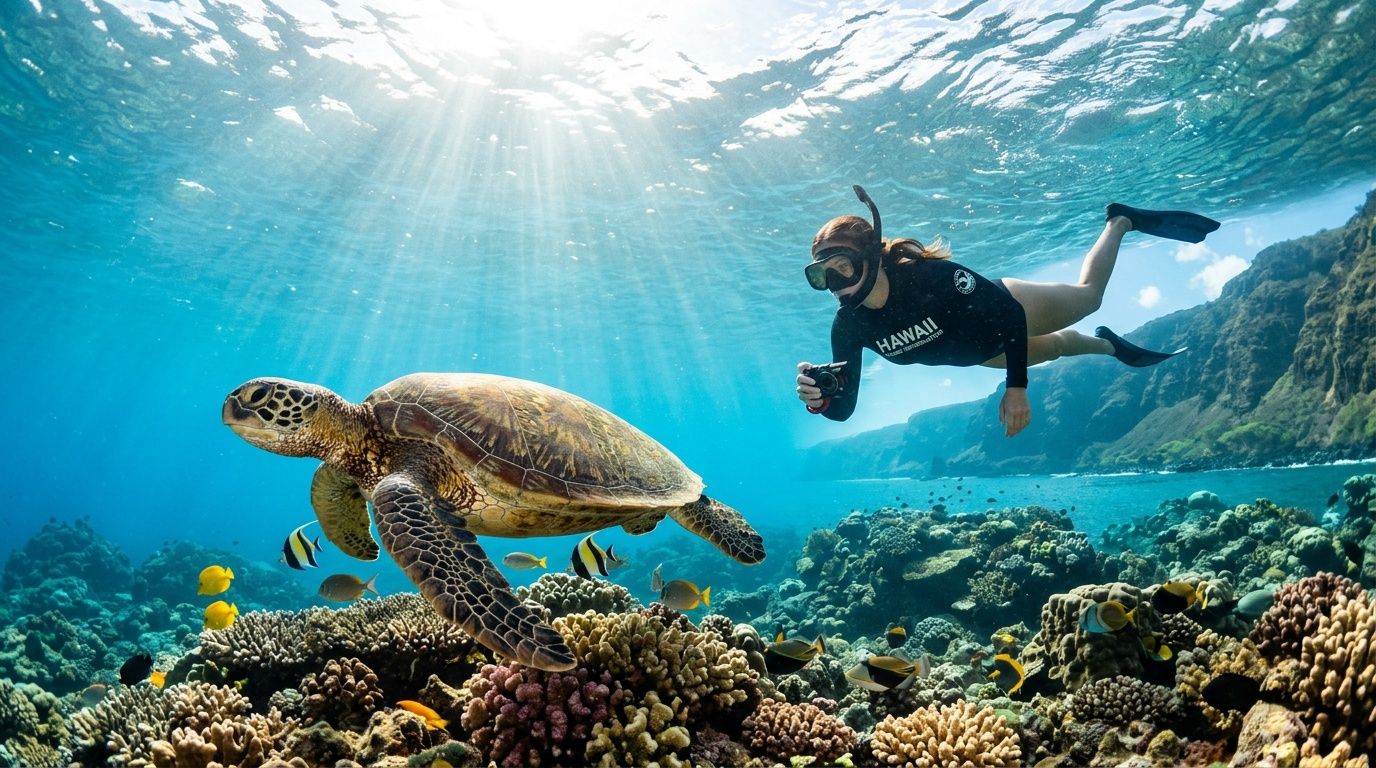
In-water habits that prevent problems
Most snorkel trouble starts small. A person gets excited, kicks too hard, breathes too fast, drifts farther than planned, or ignores fatigue until it becomes stress.
Keep your standards simple:
- Stay with a buddy: Don’t wander off because the water looks calm.
- Use flotation if you need it: There’s no prize for working harder than necessary.
- Keep your head up regularly: Reorient yourself before distance sneaks up on you.
- Know when to stop: A shorter, relaxed snorkel beats a long, sloppy one.
The bay often looks so inviting that visitors forget it’s still open ocean. Calm water doesn’t erase current, fatigue, or the effect of sun and dehydration over the course of a morning.
Respect for reef and wildlife
Good snorkel etiquette is mostly restraint. Don’t touch coral. Don’t stand on reef. Don’t chase turtles. Don’t crowd marine life because you want a closer photo.
That restraint matters even more in a place like this. The bay’s appeal depends on visitors acting like guests instead of consumers. If you want a clear summary of rules and expectations before your trip, Kona Snorkel Trips has a useful page with important Kealakekua Bay visitor information.
You can also apply the same ocean manners that good local divers and snorkelers use everywhere. This article on responsible and considerate diver etiquette translates well to snorkeling too.
Respect shows up in distance. Give animals room, give coral room, and give yourself room to make calm decisions.
Seasickness prep that actually helps
If you know you get seasick, deal with it before the boat leaves. Don’t wait to “see how you feel.” By then, you’re behind it.
Common options visitors use include:
- Ship-EEZ Seasickness Patch for people who want a wearable option
- Dramamine pills if you prefer a standard motion-sickness medicine
- Bonine pills as another common non-patch choice
- Sea Band wristbands for a simple non-medication approach
- Ginger chews if you want a mild, easy backup
A few practical habits help too:
- Eat light before departure
- Hydrate early
- Look at the horizon if you start feeling off
- Tell the crew early, not late
Cultural awareness matters here
Even if your whole focus is snorkeling, don’t treat the bay as just scenery. Slow down enough to notice where you are. People are drawn here for both history and marine life, and that combination is part of what makes the place feel so distinct.
A respectful visitor leaves the bay with photos and memories, not damage.
Packing List and Sample Itineraries
A well-packed Kealakekua Bay snorkeling day feels lighter from the start. You’re not improvising on the dock, and you’re not discovering halfway through the morning that you forgot the one item that would’ve made the boat ride or the snorkel easier.
Packing list
Bring these basics:
- Swimwear you can move in: Don’t choose the suit you only wear for photos.
- Towel and dry clothes: The ride back is much better when you can warm up and dry off.
- Reef-safe sunscreen: Apply before boarding.
- Hat and sunglasses: The boat ride adds sun exposure fast.
- Reusable water bottle: Start hydrated and stay that way.
- Waterproof phone pouch or camera: Keep it simple and secure.
- Any seasickness item you rely on: Don’t assume the boat will feel fine once you’re underway.
- Light snack for before check-in: Enough to steady your stomach, not weigh you down.
- Prescription mask or comfort gear if needed: If you snorkel better with your own setup, bring it.
Family fun day
This version works well for mixed comfort levels.
- Early morning: Eat lightly, apply sunscreen, pack towels and dry clothes.
- Check-in: Arrive with extra time so no one starts stressed.
- Boat ride: Get kids settled, listen closely to the briefing, claim shade if needed.
- Snorkel window: Start with flotation, stay close together, keep the first entry easy.
- After snorkeling: Dry off, snack, and head to lunch without trying to cram in another major activity.
Confident snorkelers plan
This one fits visitors who already know they’re comfortable in the water.
- Before departure: Pack light, organized gear and avoid overloading yourself with extras.
- Transit to the bay: Watch conditions and note the light on the water.
- In the water: Move calmly, spend time near reef edges, and avoid burning energy in the first few minutes.
- After the swim: Rinse off, change, and keep the rest of the day open enough to enjoy the post-snorkel slowdown.
A realistic half-day plan beats an overbooked vacation schedule. Kealakekua Bay is better when you’re not rushing away from it.
Making Memories at Kealakekua Bay
The day usually splits in two.
One version starts with a calm boat ride, an easy entry, and enough energy left to enjoy the reef. The other starts with a long, hot approach or a complicated self-planned attempt, and by the time the water is in front of you, part of the fun is already gone. At Kealakekua Bay, access shapes the memory as much as the snorkeling itself.
Kealakekua Bay snorkeling is worth doing with a clear plan. The reward is specific: clear water, healthy reef structure, and the kind of fish-filled shoreline that defines a classic Hawaiian ocean experience. Visitors who choose the right access method usually remember the bay for the spinner dolphins offshore, the bright reef below them, and how easy the whole morning felt.
For many visitors, a morning boat tour is the smarter call. It cuts out the hardest logistics, gives you a better shot at calm water, and lets you spend your energy in the bay instead of on the way to it. Independent access can still make sense for strong swimmers, confident hikers, and people who know exactly what kind of day they are signing up for. It is just less forgiving, especially if you underestimate heat, distance, or changing ocean conditions.
Book early if this is one of the anchor experiences on your Big Island trip. The best morning departures are usually the first ones to fill.
If you want to pair snorkeling with local water knowledge, trip planning help, or future underwater adventures on the Big Island, take a look at Kona Honu Divers. They are a useful resource for visitors building a broader Hawaii ocean itinerary.