
Scuba diving the Big Island is an experience unlike any other. It’s defined by its ridiculously clear waters, vibrant coral reefs that seem to go on forever, and a completely unique volcanic underwater landscape. From the world-famous manta ray night dive to just hanging out with Hawaiian green sea turtles, the island delivers calm, predictable conditions and a chance to explore a thriving marine ecosystem you just can't find anywhere else. For anyone looking for the best scuba diving Kona, Hawaii has to offer, this is the place to be.
Why the Big Island Offers World-Class Diving
The Big Island isn't just another pretty spot to go diving; it’s a premier destination for a few very specific reasons. The Kona coast, tucked away on the leeward side of the island, is shielded from the powerful trade winds by the massive volcanoes of Mauna Loa and Hualalai. This natural shield creates incredibly calm and clear water, with visibility that often pushes past 100 feet, making the conditions near-perfect almost every single day.
That reliability is exactly why the island has become such a global hub for underwater exploration. With around 100,000 certified scuba dives happening here every year, the Big Island is a serious player in the diving world. It now supports more than 50 dive shops and charters catering to over 150,000 dive tourists annually. To learn more about how it all started, check out the history of Big Island scuba diving.
What Sets Kona Diving Apart
The island's volcanic past has carved out a dramatic underwater world. As a diver here, you get to explore ancient lava tubes, swim through massive archways, and navigate craters that are just packed with life. This geology alone is a stunning backdrop for all the marine biodiversity.
- Diverse Marine Life: The waters here are home to over 20% endemic species, which means you’ll see critters that are found nowhere else on Earth.
- Signature Experiences: Beyond your standard reef tours, the Big Island is famous for truly iconic dives like the Manta Ray Night Dive and the surreal Blackwater Dive.
- Accessibility for All: With a huge variety of sites—from shallow reefs perfect for a first-timer to deep lava structures for the tech diver crowd—there’s something for everyone.
It’s this mix of perfect conditions and one-of-a-kind underwater sights that cements the Big Island's reputation as a must-visit spot for any serious diver.
Here's a quick look at what makes diving here so special.
Big Island Diving At a Glance
| Feature | Description | Best For |
|---|---|---|
| Water Conditions | Calm seas, minimal current, and visibility often over 100 ft (30m) year-round. | All skill levels, photography |
| Marine Encounters | Manta rays, sea turtles (honu), dolphins, eels, and endemic reef fish. | Wildlife enthusiasts, photographers |
| Signature Dives | World-famous Manta Ray Night Dive and unique Blackwater pelagic dives. | Adventure seekers, experienced divers |
| Underwater Topography | Volcanic landscapes including lava tubes, arches, and pristine coral reefs. | Explorers, technical divers |
Bottom line: whether you're here for the epic wildlife encounters or to explore the underwater architecture, the Big Island delivers.
Picking Your Perfect Kona Dive Site
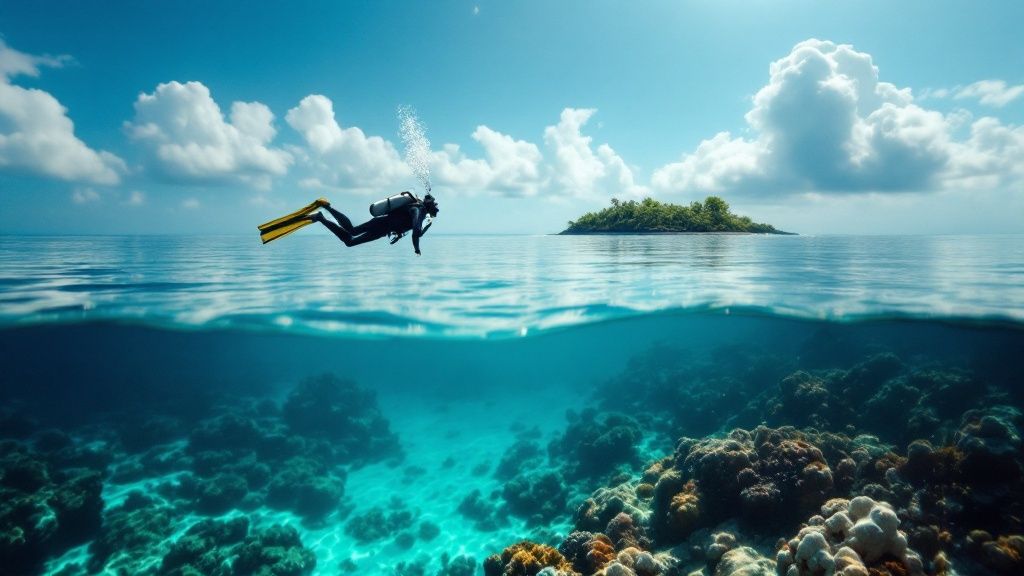
The Kona coast has a staggering collection of over 50 dive sites, and trust me, no two are the same. This isn't an exaggeration; it's what makes diving Big Island so special. One day you could be gliding over a shallow, sun-drenched reef, and the next, you're weaving through massive underwater arches carved by ancient lava flows. Knowing the personality of each site is the key to planning a truly epic dive trip.
This incredible range is a direct gift from the island's volcanic soul. Forget cookie-cutter reefs; we're talking about massive lava tubes, sprawling coral gardens, and a biodiversity that thrives in these unique structures. Of course, everyone knows about the manta ray night dive, but sites like Turtle Pinnacle are the bread and butter of Kona diving—vibrant ecosystems that are absolutely teeming with life. To get a feel for what other divers are saying, you can find some great trip reports and discussions for more insights about the Kona Coast experience.
Turtle Pinnacle: A Guaranteed Turtle Encounter
If there's one classic, can't-miss Kona dive, it's Turtle Pinnacle. Think of it as a bustling day spa for Hawaii's green sea turtles. It's a vital 'cleaning station' where honu (turtles) line up to let cleaner fish nibble away algae and parasites. It’s an amazing spectacle.
- What to Expect: Conditions are almost always calm, with mellow depths between 30 to 60 feet, making it a perfect dive for any skill level.
- Marine Life: The honu are the headliners, and you’re pretty much guaranteed to see them. But keep an eye out for schools of brilliant yellow tang, moray eels peeking from crevices, and the occasional octopus.
- Best For: Underwater photographers who want clear, easy shots and any diver looking for a beautiful, relaxing reef dive with tons of turtle action.
Golden Arches: Exploring Volcanic Grandeur
For a complete change of pace, Golden Arches puts the raw, volcanic power of the Big Island on full display. This isn't about tiny critters; it's about jaw-dropping topography. The site is famous for its massive lava arches and swim-throughs that create an underwater playground for adventurous divers.
The main structure is simply breathtaking. You'll descend down a wall and then come across this series of magnificent arches that give the site its name. It’s a humbling experience.
This is what sets diving Big Island apart. It’s not just about the fish. Exploring these underwater lava formations is like swimming through a submerged cathedral—a sense of discovery you just don't get anywhere else.
- What to Expect: Depths can hit 70 feet, and navigating the swim-throughs demands solid buoyancy control. It's a better fit for intermediate divers.
- Marine Life: Check under the ledges for sleeping whitetip reef sharks. You'll also find big schools of soldierfish hiding in the caverns and maybe even a passing eagle ray out in the blue.
- Best For: Divers who get a thrill from exploration, adventure, and dramatic underwater landscapes.
Two Step (Honaunau Bay): The Shore Diver’s Paradise
If you love the freedom of shore diving or just want an easy, accessible spot, Two Step at Honaunau Bay is your go-to. It gets its name from the two natural lava rock "steps" that make for a ridiculously easy entry into the water. The bay itself is a protected haven of healthy coral and fish.
The site slopes gently from shallow coral gardens near the entry down to a sandy bottom around 100 feet, so there’s plenty for every kind of diver to explore. It’s an ideal place to spend a long, leisurely afternoon.
- What to Expect: The bay is exceptionally calm with fantastic visibility. It can get busy with snorkelers near the entry point, but the crowds thin out quickly as you swim out and drop down.
- Marine Life: Spinner dolphins are known to pop into the bay for a rest! Besides that, expect tons of reef fish, eels, and some of the most pristine coral you'll see on the coast.
- Best For: Shore divers, snorkelers, and anyone looking for a long, relaxed dive in a protected area bursting with life.
At the end of the day, the "best" dive site really comes down to what you're hoping to see and experience. Whether you want to chill with turtles, explore epic lava tubes, or just giant-stride off the shore, the Kona coast has a spot with your name on it.
Experiencing the Manta Ray Night Dive
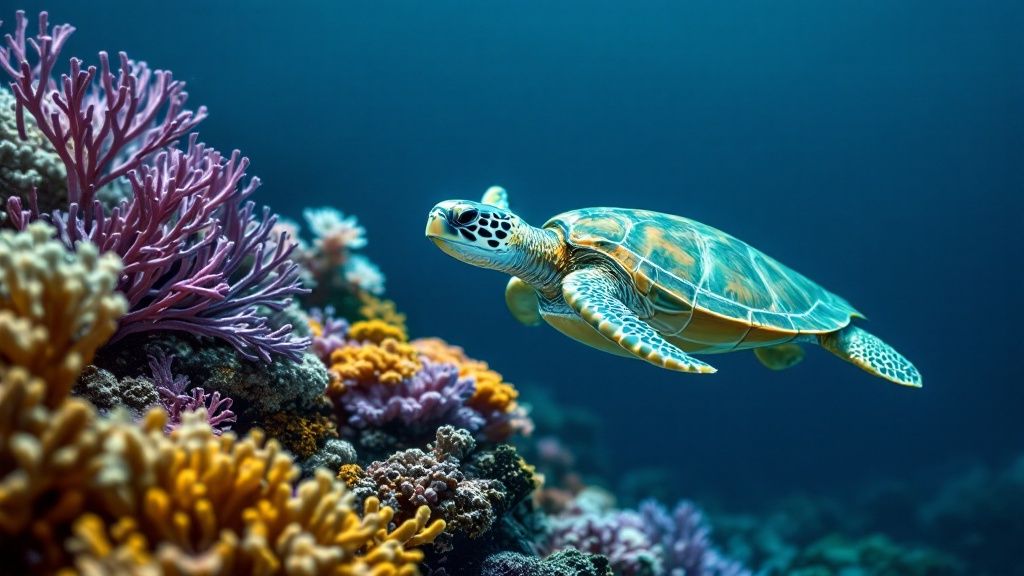
Of all the incredible dives you can do on the Big Island, the Manta Ray Night Dive is in a league of its own. It's easily one of the most unforgettable underwater encounters on the planet. I'd even say it's less of a dive and more of an underwater ballet. It’s your chance to see these majestic ocean giants performing a mesmerizing feeding ritual just inches from your face.
The night dive with manta rays has become the iconic, must-do experience for anyone visiting the island. It’s a unique wildlife encounter that started with local pioneers and has since grown into a cornerstone of Kona's dive scene, carefully managed to protect both the mantas and the tourists who come to see them.
The Science Behind the Spectacle
The magic behind the manta dive is actually pretty simple. Once the sun goes down, powerful lights are submerged in the water. These lights attract massive clouds of phytoplankton and zooplankton—the manta rays' favorite meal. Before long, the stars of the show make their grand entrance.
Manta rays, with wingspans that can stretch over 16 feet, glide into the beams of light to feast. They perform these graceful, looping barrel rolls to scoop up plankton in their massive mouths. For us divers settled on the sandy bottom below, the view is absolutely breathtaking as these gentle giants soar just overhead.
Diver vs. Snorkeler: What's the Difference?
You don't have to be a certified diver to see this spectacle, but the experience is totally different depending on how you do it. Knowing what to expect will help you pick the right adventure.
- Scuba Divers: As a diver, you'll head down to the ocean floor, usually around 30-40 feet, and find a spot to settle in. Your group’s lights all point upward, creating a "campfire" that attracts the plankton, and in turn, the mantas. The whole show happens right above you, with mantas swooping and gliding just inches over your head.
- Snorkelers: Snorkelers stay on the surface, typically holding onto a specially designed floatation board with bright lights pointing down. You're watching the action from above as the mantas feed just below you. It's a fantastic option for non-divers, families, and kids.
While both experiences are incredible, scuba diving offers a perspective that's hard to beat. Being on the ocean floor and having a 1,000-pound animal gracefully soar inches from your face is a feeling you just can't replicate.
Choosing a responsible, Manta Ray Green Listed operator like Kona Honu Divers is crucial. We follow strict guidelines to ensure the safety of both the mantas and our guests. This commitment keeps the experience sustainable for years to come. To get fully prepped, check out our complete guide to the Kona Manta Ray Dive.
Our 2-Tank Manta Dive & Snorkel trip is a premier experience designed to give you the best possible encounter while putting safety and manta conservation first. But don't just take my word for it—see what other divers have to say.
Exploring Advanced and Specialty Dives
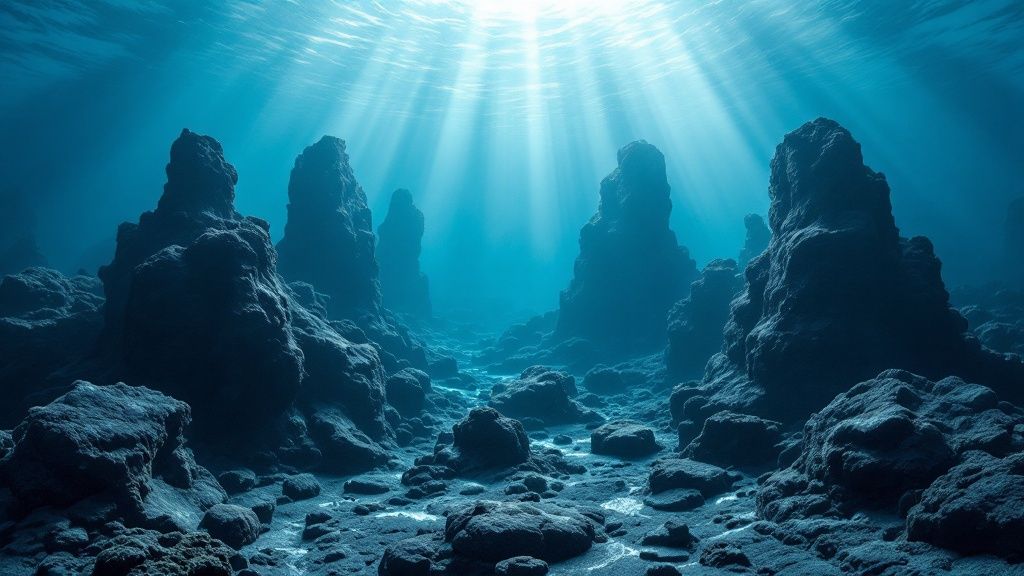
Sure, the Big Island has incredible dives for pretty much every skill level, but there’s another side to this underwater world. It’s a side that really pushes the boundaries of exploration. For certified divers who are craving a real adventure, our specialty dives offer a challenge that goes way beyond a typical reef tour. These are for divers ready to see the wilder, more mysterious side of Kona.
Two experiences really stand out for seasoned divers: the otherworldly Kona Blackwater Dive and our advanced trips to deeper, more demanding sites. Both require a higher level of skill and a solid dose of confidence in the water. But the reward? You get to see things few people ever will. These dives aren't about casually cruising a reef; they're about stepping into a completely different realm.
The Kona Blackwater Dive: An Otherworldly Experience
Imagine this: you’re drifting in the deep, inky black of the open ocean at night, tethered to a boat miles from shore. Below you is literally thousands of feet of water. All around you, strange, bioluminescent creatures are rising up from the abyss. That's the Kona Blackwater Dive. It's a surreal and humbling experience that feels more like floating through outer space than diving.
This dive puts you right in the middle of the largest vertical migration of life on Earth. Countless tiny, bizarre, and often transparent organisms travel from the crushing depths to feed near the surface under the cover of darkness. You'll see creatures that look like they belong on another planet entirely—from larval fish to glowing jellyfish, all lit up with their own internal light.
The Blackwater Dive is a masterclass in buoyancy control and being comfortable in the dark. It demands a calm mindset and sharp skills, since you're suspended in the water column with no visual references besides your guide, your tether, and the alien-like creatures your dive light picks out.
This one isn't for the faint of heart, but it’s an absolutely unforgettable adventure for certified advanced divers. Kona Honu Divers offers a specialized Blackwater Dive tour led by expert guides who make sure your journey into the deep is both safe and mind-blowing.
Pushing the Limits with Advanced Diving
Beyond the unique specialty of a blackwater dive, the Big Island’s volcanic topography creates some incredible opportunities for advanced divers looking for a real challenge. These dives often mean deeper reefs, intricate lava tube systems, and sites exposed to stronger currents—which, as you know, tend to attract larger pelagic species.
These advanced dive sites are where you're more likely to run into eagle rays, sharks, and other big animals cruising by in the blue. Exploring these deeper structures requires excellent air management, precise navigation, and the confidence to handle conditions that can change on a dime.
- Deeper Reefs: You get to explore pristine coral formations well below the typical recreational depths, where different species of fish and invertebrates make their home.
- Lava Tube Systems: Navigating complex underwater tunnels and caverns shaped by ancient lava flows is a true test of your buoyancy and awareness.
- Pelagic Encounters: Hitting those sites with more exposure to the open ocean often leads to encounters with larger marine life just passing by the island.
For divers who have their Advanced Open Water certification and feel ready for the next level, our Premium Advanced 2-Tank Trip is specifically designed to explore these more demanding—and seriously rewarding—sites.
How to Choose the Right Kona Dive Operator
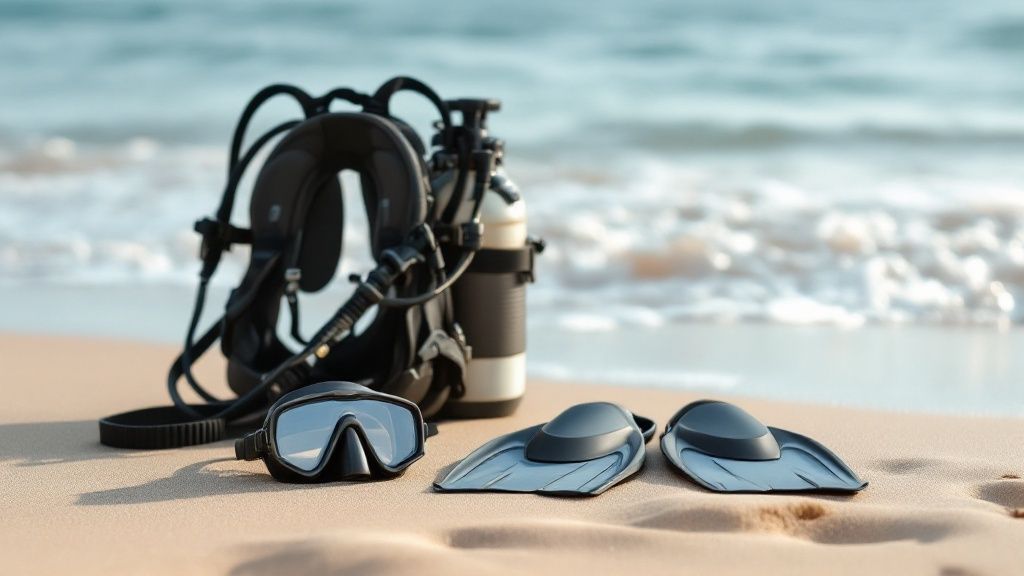
The quality of your adventure when diving Big Island depends almost entirely on the dive operator you go with. A great company doesn't just keep you safe—they elevate the whole experience with expert guidance, comfortable boats, and a genuine respect for the ocean. Picking an operator isn't just about booking a boat ride; it's about finding a true partner for your underwater exploration.
Here at Kona Honu Divers, we’ve built our reputation by zeroing in on what really matters: small group sizes for personal attention, a deeply experienced crew, and an unshakable commitment to ocean conservation. Our custom-built dive boats are designed from the keel up for comfort and safety, making your time above the water just as enjoyable as your time below it.
But don't just take our word for it. See what fellow divers have to say about their experiences with us.
Key Factors in Selecting a Dive Shop
To make a smart choice, you need to compare operators using the same criteria. The Kona coast has several fantastic shops, including long-running operations like Jack's Diving Locker and Big Island Divers. Each has its own vibe and focus, so asking the right questions is the key to finding your perfect match.
When you're weighing your options, think about these critical elements that really define a top-notch dive operation.
Your choice of dive operator directly impacts not only your safety and enjoyment but also the health of the very reefs you've come to see. A responsible operator prioritizes conservation as much as customer service.
With so many choices, it can be tough to know what to look for. Use this table as a simple checklist to cut through the noise and figure out what really counts when booking your dive trip. These details can be the difference between a good dive and an unforgettable one.
To get a deeper look at our philosophy, check out our guide on what makes Kona Honu Divers the best dive company in Hawaii.
How to Choose a Big Island Dive Operator
| Evaluation Criteria | What to Look For | Why It Matters |
|---|---|---|
| Safety Record & Protocols | A perfect safety record, clear emergency plans, and well-maintained gear. Ask if they have first aid and oxygen readily available. | This is non-negotiable. A strong safety culture means you're in good hands, letting you relax and fully enjoy the dive with total peace of mind. |
| Instructor-to-Diver Ratio | Ask about their maximum number of divers per guide. Small groups of 4-6 divers per guide are ideal for a better experience. | A low ratio means more personal attention and better supervision. Your guide will have time to point out cool marine life you'd probably miss on your own. |
| Boat Comfort & Amenities | Look at the boat's size, how much shade it has, and if there's a marine head (restroom) on board. Check if they provide snacks and drinks. | A comfortable boat makes your surface intervals way more relaxing, especially on multi-tank trips. This is a huge part of the overall experience. |
| Environmental Practices | Look for operators who are Manta Ray Green Listed (or follow its guidelines) and practice responsible diving, like providing reef-safe sunscreen. | Supporting eco-conscious shops helps protect Hawaii’s fragile reefs for the future. It also ensures wildlife encounters are handled ethically. |
Thinking through these factors will help you confidently pick an operator that fits your diving style and values. The goal is to find a team that will make your underwater journey safe, memorable, and inspiring. Whether you're a new diver or a seasoned pro, the right crew makes all the difference.
Practical Tips for Planning Your Dive Trip
A great dive trip to the Big Island is all about smart planning. Getting the logistics sorted out ahead of time means less stress and more time focused on what you came here for: the incredible underwater world. A little bit of prep, from picking the right season to packing the right gear, really does go a long way.
While Kona’s leeward coast is a fantastic year-round dive destination, timing your trip can definitely shape your experience. The summer months, from May to October, usually have the calmest seas and warmest water, hovering around a comfortable 78-80°F (25-27°C). Winter, from November to April, brings slightly cooler water at 75-77°F (24-25°C), but it’s also humpback whale season. There’s nothing quite like hearing their songs echo through the water during your dive—it's a truly magical bonus.
What to Pack and Where to Stay
Your packing list is about more than just your dive gear. You'll want to be comfortable on the boat and mindful of Hawaii's fragile ecosystem.
- Reef-Safe Sunscreen: Hawaii has banned sunscreens with oxybenzone and octinoxate to protect our coral. Make sure you only pack a mineral-based, reef-safe option.
- Boat Attire: It can get breezy on the boat, especially coming back from a night dive, so a light windbreaker or rain jacket is a good idea. A hat and polarized sunglasses are also must-haves.
- Reusable Water Bottle: Staying hydrated is key out here. Help us cut down on plastic waste by bringing your own bottle to refill.
For accommodations, staying in or near Kailua-Kona is your best bet. It puts you right in the heart of the action, close to most dive operators and the boat harbors. You’ll find everything from luxury resorts to budget-friendly condos, and you'll only be minutes from your boat's departure point. To really explore the rest of the island on your off-days, renting a car is the way to go.
Booking Ahead and Safety First
Some of our most popular trips, especially the Manta Ray Night Dive, fill up weeks, sometimes months, in advance. To make sure you don't miss out, it’s super important to book your dive tours well before you get here. Locking in your spot doesn't just guarantee you a place; it also helps the dive shop plan everything properly.
Planning ahead is especially critical for those big-ticket dives. High-demand tours like the manta or blackwater dives have limited spots to ensure a quality experience and minimize our impact on the environment. Don't wait until you're on the island to book.
Finally, always put safety first. Make sure you have dive insurance—something like the coverage from Divers Alert Network (DAN) is a small investment for huge peace of mind. Listen closely to every dive briefing, respect the local conditions, and always dive responsibly. That means maintaining good buoyancy to avoid touching the coral and never, ever harassing the marine life. When you plan thoughtfully, you’re setting yourself up for an adventure that’s both unforgettable and sustainable.
Frequently Asked Questions About Big Island Diving
Even the most seasoned divers have questions before hopping on a plane to a new destination. Getting good, straight answers ahead of time means you can land in Kona feeling relaxed and ready for your first dive.
We get a lot of questions from divers planning their trips, so we’ve put together the most common ones we hear.
What Is the Best Time of Year for Diving on the Big Island?
Honestly, the diving here is fantastic all year long. The Kona coast sits on the leeward side of the island, which keeps it protected from most of the heavy winds and swells.
Summer, from May to October, usually brings the flattest, calmest seas and balmy water temperatures around 78-80°F (25-27°C).
Winter, from November through April, is a bit cooler, with water temps dipping to 75-77°F (24-25°C). But here’s the trade-off: it’s humpback whale season. You haven’t lived until you’ve heard whale song echoing through the reef on a dive. It's an unforgettable experience, and you'll often see them breaching from the boat between dives.
Do I Need to Be an Advanced Diver to Enjoy the Big Island?
Not at all! Kona is a playground for divers of every skill level. While we have some incredible deep dives and specialty sites for the advanced crowd, the coastline is also packed with calm, shallow reefs perfect for newly certified Open Water divers.
Many of our most famous sites are well within recreational limits and accessible to everyone. We're pros at running trips that cater to mixed experience levels on the same boat, so everyone gets a fantastic and safe dive.
What Kind of Marine Life Can I Expect to See?
The better question is, what won’t you see? The biodiversity around Kona is just incredible. On pretty much any dive, you can count on seeing Hawaiian green sea turtles (honu), different kinds of moray eels peeking out of rocks, octopus (tako), and huge schools of colorful reef fish like yellow tangs and butterflyfish.
It's also super common to run into spinner dolphins, whitetip reef sharks resting on the sand, and graceful eagle rays. And of course, our signature dives deliver guaranteed encounters: the Manta Ray Night Dive gets you face-to-face with gentle giants, and the Blackwater Dive reveals the bizarre, bioluminescent creatures of the deep.
For a more detailed look at the local residents, check out our guide on everything you should know about Big Island diving.
What Should I Pack Besides My Gear?
Aside from your C-cards and your regs, a few extra items will make your trip that much better. Trust us on this.
- Reef-Safe Sunscreen: This is a non-negotiable. Help us protect our beautiful coral reefs by using only mineral-based sunscreens.
- Boat Jacket: Even on a warm day, it can get chilly on the boat ride back, especially after a night dive. A light windbreaker or rain jacket is perfect.
- Reusable Water Bottle: Stay hydrated out on the water and help us cut down on single-use plastic.
- Underwater Camera: You’re going to see things you’ll want to remember forever. Don't forget your camera