
You’re probably looking at photos of Kealakekua Bay right now and wondering two things. Is captain cook snorkeling really that good, and what’s the smartest way to do it without turning a dream day into a slog?
Both questions matter. Kealakekua Bay is one of those places that can be easy, moving, and unforgettable, or unnecessarily hard if you pick the wrong access method for your group. The water can look gentle from shore and still demand better judgment than many visitors bring with them. That’s why the best trip starts with choosing the right approach, not just the right mask.
Your Gateway to Hawaii's Most Historic Underwater Paradise
Float face-down in Kealakekua Bay for a minute and the place starts to explain itself. The water has that blue clarity that makes depth hard to judge. Coral heads seem close enough to touch, schools of fish move through the reef in waves, and the shoreline feels quieter than most of Kona.
That quiet isn’t empty. It carries history.
Captain James Cook arrived at Kealakekua Bay on January 17, 1779, marking the first documented European contact with Hawaii. The bay was already a thriving Hawaiian settlement for over a thousand years and was sacred to Lono. The white Captain Cook Monument, erected by the British in 1874, stands near the place where Cook was killed, which gives the snorkeling here a weight most reef stops don’t have (history of Kealakekua Bay).
That’s the part many visitors miss when they treat captain cook snorkeling as just another bucket-list swim. It’s not only pretty water and tropical fish. It’s a place where Hawaiian history, sacred geography, and modern ocean recreation all meet in the same cove.
Why this bay feels different
Some snorkeling spots impress you fast and fade fast. Kealakekua Bay tends to stay with people. The reef is part of it, but so is the shoreline, the monument, and the knowledge that long before tour boats arrived, this bay mattered significantly to the people who lived here.
If you want a practical overview of the in-water experience itself, this Kealakekua Bay snorkeling tour guide is useful for understanding what the trip feels like once you’re on the water.
The strongest trips here balance two things well. Respect for the place, and enough planning that you can relax once you arrive.
Who enjoys it most
Captain cook snorkeling works especially well for:
- Families who want structure and don’t want to gamble on a difficult shore or trail day
- First-time Hawaii visitors who want one outing that combines scenery, marine life, and history
- Confident snorkelers who care about reef quality, not just easy access
- Travelers who value context and don’t want to swim past a major historic site without understanding where they are
If that’s what you’re after, Kealakekua Bay delivers.
Why Kealakekua Bay is a World-Class Snorkeling Destination
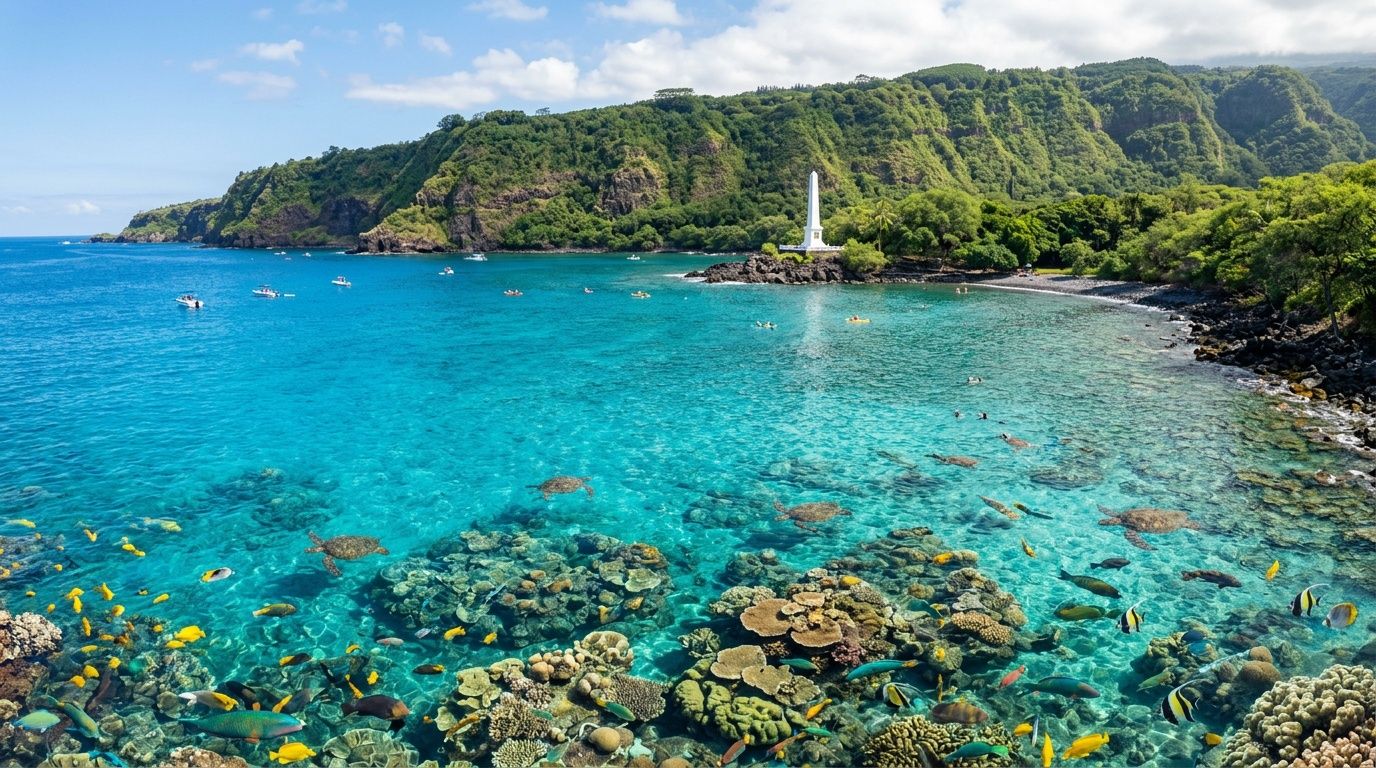
Kealakekua Bay earns its reputation for a simple reason. The place is built for water clarity.
Its geography does most of the work. The bay is protected by steep volcanic cliffs and shaped in a way that reduces the chop, surge, and suspended sediment that make other snorkel spots look hazy. That protected setting is why visibility often exceeds 100 feet (30 meters), why shallow reef zones support over 80% coral cover, and why snorkelers can encounter more than 200 fish species, along with frequent sightings of green sea turtles and humuhumunukunukuapuaʻa (Kealakekua Bay visibility and reef conditions).
What the geography does for snorkelers
A lot of bays look calm from above. Kealakekua usually stays clearer below the surface because the surrounding landform shields it from the kind of open-water energy that stirs everything up.
That matters in practical terms:
- You see more with less effort. Beginners don’t need to dive down to appreciate the reef.
- Fish spotting improves. Clear water rewards slow, patient snorkeling.
- The reef reads better. You can track depth changes, coral structure, and sandy breaks much more easily.
If you’re comparing options for this part of the island, this roundup of the top Kealakekua Bay snorkeling tour options helps frame the differences in how operators approach the bay.
Why the reef stays busy
Healthy structure creates habitat. Habitat brings fish.
That’s the second reason captain cook snorkeling stands out. The reef isn’t just visible. It’s populated. You’ll often spend a session moving from one dense cluster of activity to the next instead of searching for isolated life between barren patches.
A short comparison makes the point:
| Feature | What it means in the water |
|---|---|
| Protected bay shape | Less turbulence and better visual range |
| Strong coral presence | More shelter and feeding zones for reef fish |
| High visibility | Easier wildlife spotting from the surface |
| Historic shoreline and monument | A sense of place that changes the whole outing |
What works and what doesn’t
The bay rewards a calm approach.
What works: slow finning, floating high and quiet, and spending time over one section of reef instead of trying to race the whole bay.
What doesn’t: splashing, chasing turtles, standing vertically and kicking down toward coral, or entering the water tired and rushed.
Practical rule: If you want to see more at Captain Cook, move less. The reef usually reveals itself to the snorkeler who settles down.
That’s why this spot appeals to both beginners and experienced ocean people. New snorkelers get forgiving visibility. Experienced snorkelers get a reef system worth lingering over.
Top Snorkeling Spots Around Captain Cook
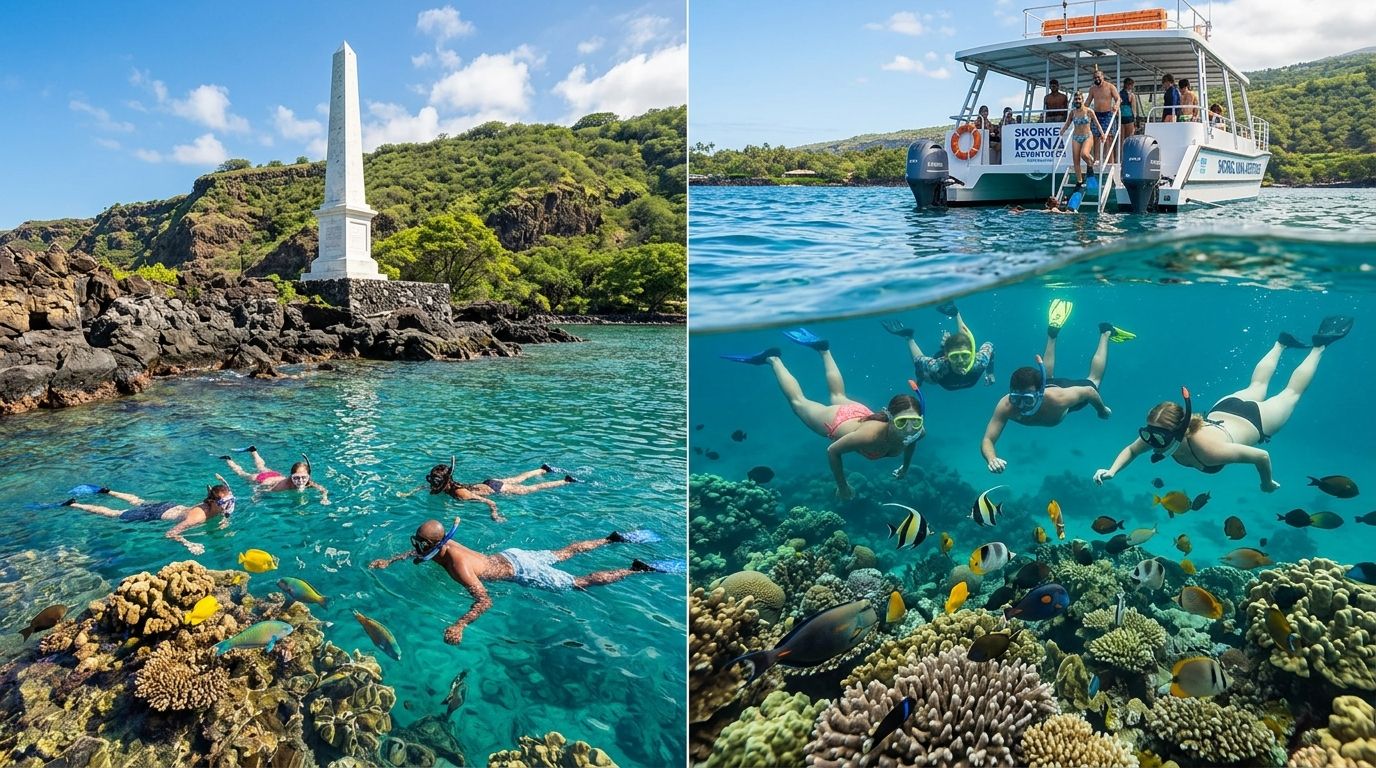
When people say captain cook snorkeling, they usually mean one place. The water in front of the monument in Kealakekua Bay. But in practice, visitors usually choose between a few nearby experiences depending on access, crowd tolerance, and confidence level in the water.
The smart move is to match the spot to your day, not to the most famous name on the map.
The monument side of Kealakekua Bay
This is the headline location. It’s the area most visitors want, and for good reason. Reef quality is strong, fish life is dense, and the shoreline setting gives the whole experience a sense of arrival.
This zone is best reached by boat. You save energy for snorkeling, arrive close to the prime water, and avoid turning the outing into a long approach before the fun even starts.
This is also the place where mistakes in trip planning show up fastest. People underestimate the work involved in getting there on their own, then reach the water tired, overheated, or already behind on hydration.
Honaunau Bay at Two Step
If you want a strong shore-entry alternative, Two Step is the regional workhorse. It sits next to Puʻuhonua o Hōnaunau and is popular because the lava-rock entry is manageable for many snorkelers when conditions are calm.
It’s not the same as monument-side captain cook snorkeling, and it shouldn’t be sold that way. It’s a different experience with easier logistics from shore, a more independent feel, and less of the historic monument backdrop.
What works well at Two Step:
- Confident shore snorkelers who know how to time an entry and exit
- Travelers with their own gear who want flexibility
- Visitors who can accurately evaluate conditions before getting in
What doesn’t work well:
- People who panic at uneven rock entries
- Families assuming it’s a no-skill beach swim
- Anyone forcing the entry because they drove far and feel committed
Manini Beach and quieter alternatives
Manini Beach gets attention from travelers who want a calmer-looking shoreline and fewer moving parts. On the right day, it can be a more relaxed option for people who don’t care whether they’re at the most famous reef stop.
That said, “quieter” doesn’t automatically mean “better.” Quiet spots often ask more of your judgment because there may be less structure, less oversight, and fewer people to clue you in if conditions shift.
For travelers building a broader Kona itinerary, this Hawaii guide for luxury travelers is a solid planning resource because it places these kinds of outings in the context of a full Big Island trip rather than treating every snorkel stop as interchangeable.
A practical decision framework
Use this if you’re deciding where to go.
| Your situation | Better fit |
|---|---|
| You want the classic captain cook snorkeling experience | Boat access to Kealakekua Bay monument side |
| You prefer shore access and know how to handle rock entry | Two Step |
| You want a lower-key stop and flexible pacing | Manini Beach on a calm day |
If you want a broader comparison beyond this small zone, this guide to the top Kona snorkeling spots helps separate destination names from actual fit.
What experienced guides look at first
A seasoned guide usually asks three questions before recommending a spot:
- How much energy do you want to spend before you snorkel?
- Can everyone in your group enter and exit safely?
- Will the day still be fun if conditions are only decent, not perfect?
Those questions matter more than hype.
A famous snorkel spot isn’t automatically the right snorkel spot. The right one is the place your group can enter safely, enjoy fully, and leave without feeling cooked.
That’s why guided boat access wins so often for captain cook snorkeling. Not because independent options are impossible, but because most visitors want reef time, not an approach mission.
Planning Your Trip Access Safety and Regulations
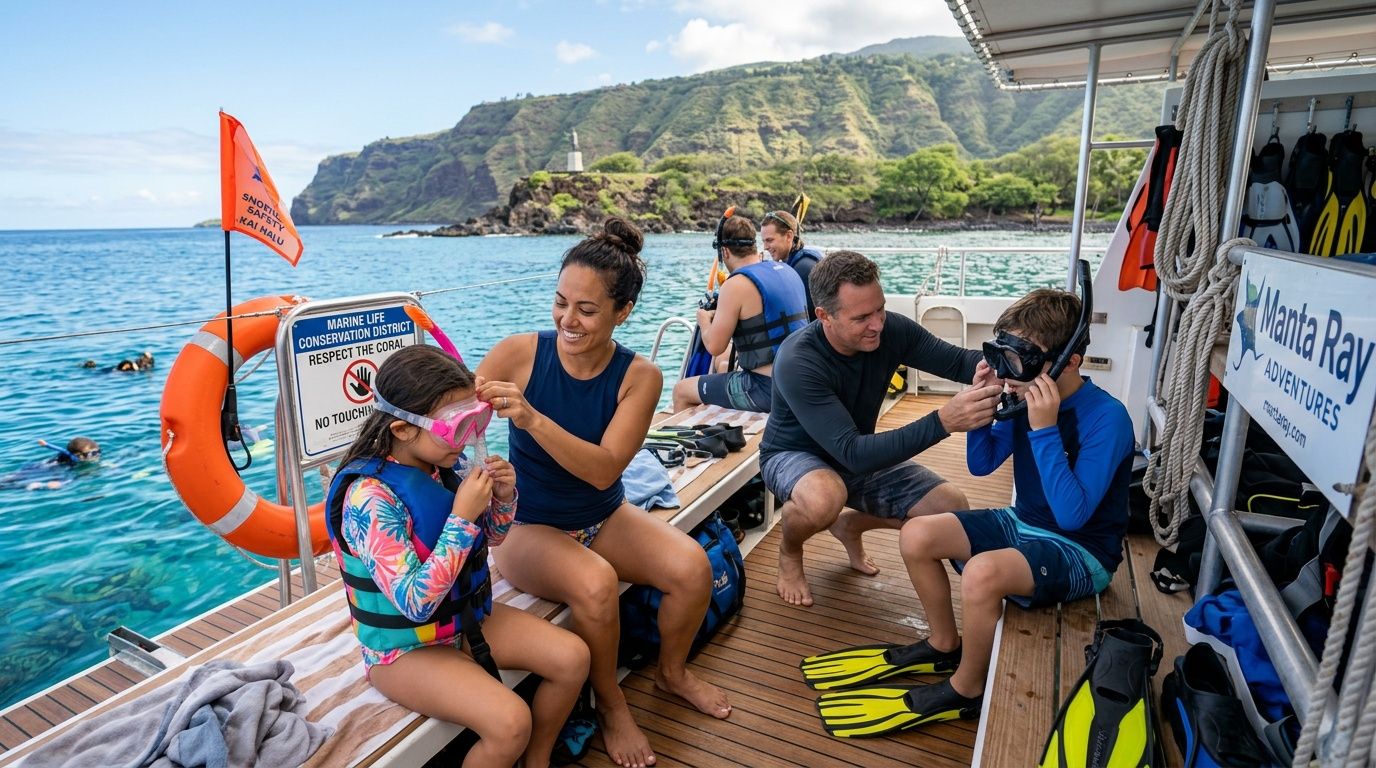
Most planning mistakes happen when people focus on the photo they want from captain cook snorkeling and ignore the access method that determines whether the day feels smooth or punishing.
There are three basic ways in. Guided boat tour, kayak, or hike. All three can reach the area. They are not equal in effort, comfort, or margin for error.
Guided tour versus kayak versus hike
Here’s the cleanest way to think about it.
| Access method | Main advantage | Main trade-off |
|---|---|---|
| Guided boat tour | Easiest arrival and built-in support | Less independence |
| Kayak | More self-directed experience | More physical effort and more planning |
| Hike | No boat required | Strenuous access and a hard return climb |
A guided boat tour works best for most visitors because it removes the hardest part of the day. You arrive ready to snorkel, not already spent.
Kayaking appeals to independent travelers, but it asks for real ocean judgment. Paddling out is only half the story. You still need energy for snorkeling and the paddle back.
Hiking sounds simple on paper. It rarely feels simple on the climb out.
The safety trade-off most people underestimate
Kealakekua Bay is often described as calm, and much of the time that’s fair. But calm doesn’t mean consequence-free. Strong offshore currents can appear suddenly, and the bay’s remote setting can slow emergency response. The same source notes that a meaningful share of Big Island snorkeling rescues happen in protected bays when visitors misread conditions, which is why tours with lifeguard-certified guides and real-time current briefings have a clear safety advantage (safety considerations for Kealakekua Bay visitors).
That’s the practical truth families need. The hazard usually isn’t dramatic surf. It’s small problems stacking up. Heat, fatigue, poor fit with gear, overconfidence, or a current that feels manageable until someone is suddenly farther from the exit than planned.
If you have kids, mixed swimming ability, or one nervous adult in the group, don’t optimize for bragging rights. Optimize for supervision and easy exits.
Seasickness and pre-trip setup
If you’re taking a boat and you know you’re sensitive to motion, deal with that before boarding. Waiting until you feel bad is what doesn’t work.
Common options people use include Ship-EEZ Seasickness Patch, Dramamine pills, Bonine pills, Sea Band wristbands, and Ginger chews. Pick one approach ahead of time and test what agrees with you before a major boat day if you haven’t used it before.
Rules that matter in the bay
Kealakekua Bay deserves better than “take only pictures” as a throwaway slogan. The reef and marine life need physical space.
Keep these habits:
- Use reef-safe sunscreen. Chemical runoff is not harmless background noise in a sensitive reef area.
- Don’t touch coral or wildlife. If you can touch it, you’re too close.
- Control your fins. A lot of reef damage comes from poor body position, not bad intent.
- Listen to current briefings. Conditions can change within the same bay.
If you want to sharpen your own judgment before any ocean day on the island, this guide on how to check Big Island ocean conditions is worth reading.
The Guided Tour Experience with Kona Snorkel Trips
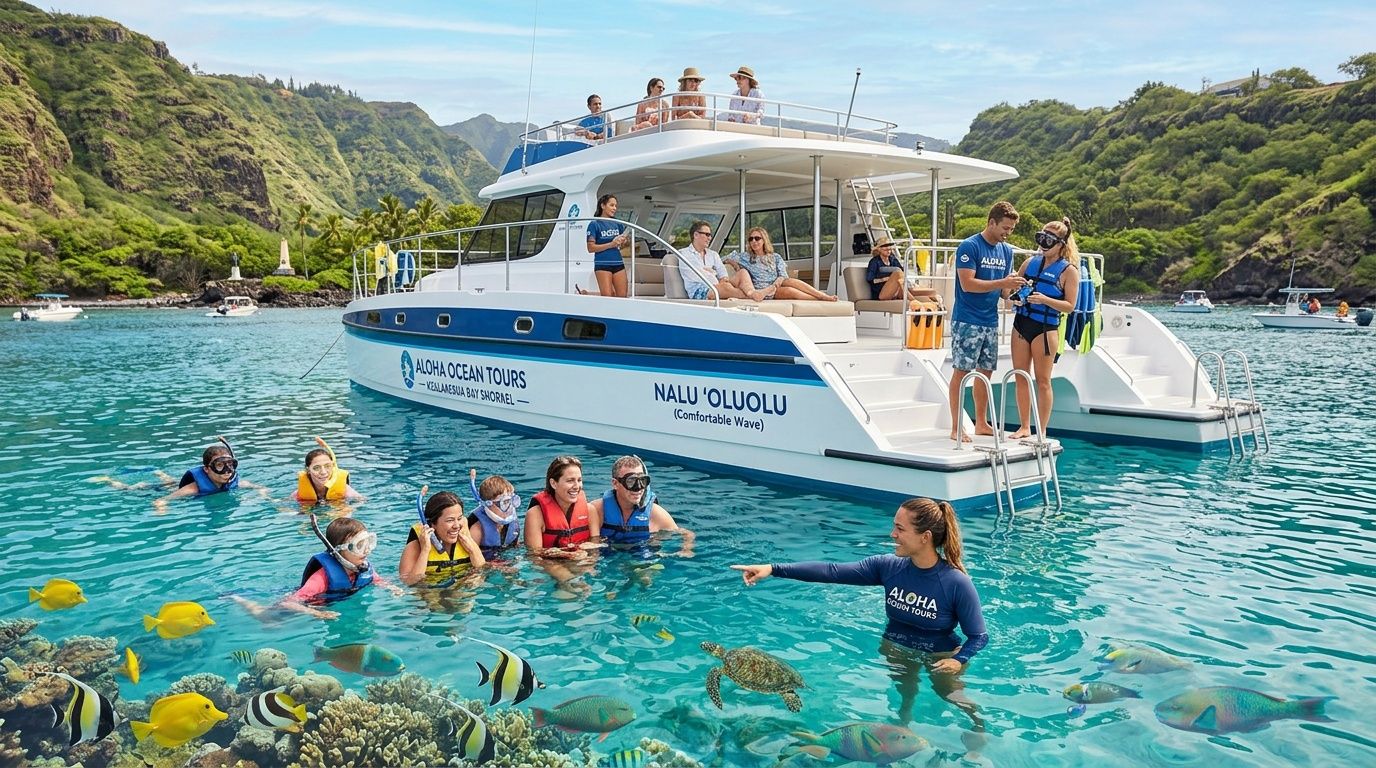
A guided trip changes the day in one important way. It turns captain cook snorkeling from a logistics problem into an actual outing.
That difference matters more than people expect. Instead of figuring out launch points, trail heat, gear transport, and how much energy to save for the return, you check in, board, get your briefing, and arrive with your attention still available for the bay itself.
For visitors who want a tour-specific overview, this Captain Cook snorkel tour page shows the kind of trip structure many travelers are looking for.
What the day usually feels like
The good guided experiences tend to share a few traits. The pace is clear. Gear is ready. Crew members explain what matters before anyone hits the water.
That sounds basic, but it solves most beginner problems before they start.
A solid boat-based trip typically helps with:
- Gear setup so masks fit before you’re bobbing in the bay
- Entry confidence for people who don’t love jumping into open water
- Current awareness because someone is actively watching the conditions
- History and marine life context so the site means more than “nice reef”
Why guides matter more here than at easy beach snorkels
Kealakekua Bay is not the place where people usually get into trouble because they know too little about fish. They get into trouble because they misjudge the full experience. A good guide narrows that gap.
That’s especially useful for families, first-time snorkelers, and mixed-ability groups. One person may be excited, one nervous, one overconfident, and one prone to seasickness. Guided trips absorb that complexity better than self-managed access.
Two practical tour options
If you want boat access without doing all the planning yourself, two direct booking options are:
Kona Snorkel Trips focuses on guided access to Kealakekua Bay, and Kona Honu Divers also operates Captain Cook snorkel trips as part of its broader Big Island water-tour lineup. For this kind of outing, the practical value is straightforward: boat transport, snorkel gear, and crew oversight in a location where access method shapes the whole day.
What works best for families and beginners
The best guided trips keep the experience simple without making it feel dumbed down.
That usually means:
Briefings that are short and clear
People remember usable safety instructions, not long speeches.
Crews that watch the water, not just the schedule
In a bay like this, conditions and swimmer comfort matter more than rigid timing.
Enough support gear for nervous snorkelers
A relaxed beginner sees more reef than a tense beginner.
The right tour doesn’t just get you to the reef. It helps everyone in your group use the reef time well.
See what others are saying:
Beyond the Basics Advanced Tips and Marine Life Insights
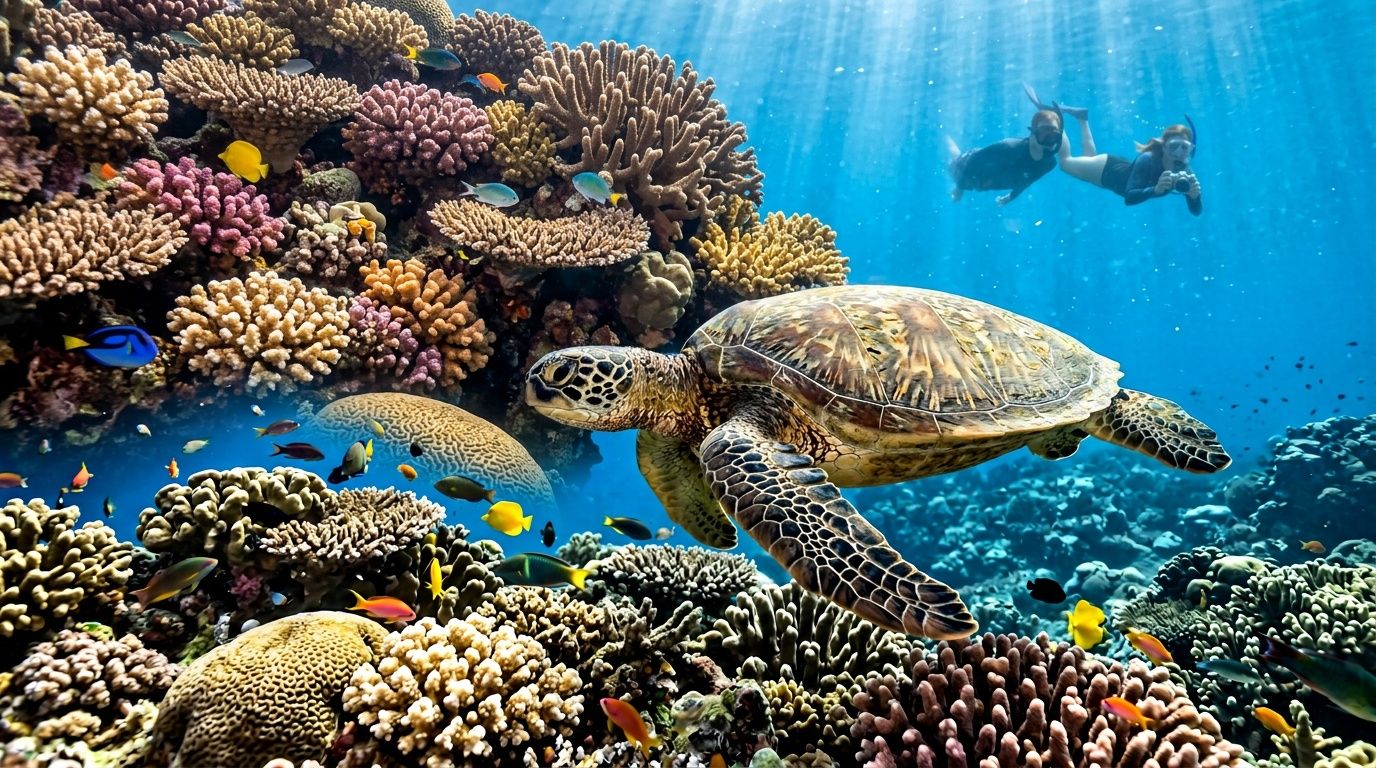
Once you’ve done captain cook snorkeling once, the next jump is learning how to read the bay better. Not harder. Better.
That means timing your swim well, tuning your gear so it disappears from your attention, and noticing more than the obvious turtle or bright school of fish in front of you.
Timing that improves the experience
Morning usually gives snorkelers the cleanest rhythm. Wildlife activity can feel more settled, surface conditions are often easier to read, and your body has more energy than it does after a hot afternoon.
For longer in-water comfort, a rash guard helps with sun protection and keeps you from cutting the day short because your back and shoulders are baking. Good anti-fog prep also holds more importance than often realized. A mediocre mask with clear lenses beats a premium mask that fogs every few minutes.
If you like trying newer gear concepts, some travelers explore propulsion aids such as this innovative water accessory for easier surface movement, though in a protected reef area you still need excellent control and enough awareness to avoid crowding coral or other snorkelers.
Marine life worth slowing down for
A lot of visitors fixate on the big obvious sightings and miss the richer part of the reef.
Look for:
- Parrotfish behavior around coral heads and feeding areas
- Butterflyfish pairs working the same patch of reef
- Turtle movement patterns instead of just the first sighting
- The humuhumunukunukuapuaʻa, which is often more satisfying to spot once you know its shape and habits
The bay rewards repeat scanning. Drift, pause, breathe, and look again.
The reef is changing, not frozen in time
The underwater world here is alive, and that means it shifts. Early 2026 post-El Niño nutrient conditions reportedly boosted fish biomass by around 20% in Kona’s bays in preliminary NOAA surveys, which may improve what snorkelers see, but it also reinforces that this is a dynamic ecosystem rather than a fixed postcard scene (recent Captain Cook snorkeling marine-life notes).
That’s useful in two ways. First, it gives frequent visitors a reason to pay attention to change rather than assuming every year looks the same. Second, it reminds everyone that preservation isn’t abstract. The quality of tomorrow’s captain cook snorkeling depends on how people behave in the water today.
The most rewarding snorkelers aren’t always the fastest or boldest. They’re usually the ones who learn to notice patterns.
Frequently Asked Questions About Captain Cook Snorkeling
Is captain cook snorkeling good for beginners and non-swimmers
Yes, with the right setup. Guided boat tours are the easiest entry point because crews provide flotation, help with gear, and keep an eye on the group. A beginner doesn’t need to be a strong athlete, but they do need to be honest about comfort in the water.
For non-swimmers or hesitant swimmers, guided access is the better call than trying to improvise from shore.
Can you snorkel at the Captain Cook monument without a tour
You can, but “can” and “should” are different questions. Kayak and hike access appeal to independent travelers, yet both add effort before the actual snorkeling starts. Most visitors enjoy the day more when they arrive by boat with energy left for the reef.
If your trip goal is a smooth ocean experience, not a physical challenge attached to one, guided access usually wins.
What should you wear and bring
Keep it simple. Swimsuit, towel, sun protection, water, and a rash guard if you have one. Bring reef-safe sunscreen and avoid anything that encourages careless finning or standing on the reef.
If you tend to get motion sick, sort that out before the boat leaves. Don’t wait until the ride has already turned your stomach.
Do you need a wetsuit
Generally, a full wetsuit isn't required for this outing. Some prefer a light top for sun coverage and extra comfort in the water. The bigger issue in Kona is often sun exposure, not cold.
What if weather or ocean conditions change
Responsible operators cancel or adjust plans when conditions don’t line up with a safe trip. That’s not a disappointment. That’s good seamanship.
Visitors who go on their own have to make those calls themselves, which is another reason guided trips make sense for many groups.
What’s the biggest planning mistake people make
Picking an access method that flatters their self-image instead of matching their actual group. The strongest planner in the family often assumes everyone else will adapt. Sometimes they do. Sometimes the whole mood of the day collapses because one person is overheated, one is seasick, and one is scared to get in.
The better question is not “What’s the most adventurous way to do captain cook snorkeling?” It’s “What gives our group the best chance of loving the water once we get there?”
If captain cook snorkeling is on your Big Island list, keep the plan simple and safety-first. For travelers who also want to build out the rest of their ocean time on Hawaii Island, Kona Honu Divers is a useful place to start for snorkeling and diving options.