
You’re probably in the same spot most Big Island visitors hit at some point. You’ve heard that the Captain Cook snorkel tour is one of the must-do ocean trips in Kona, but once you start searching, everything begins to sound the same. Every tour claims clear water, lots of fish, and a great crew.
That’s where people get stuck.
The primary question isn’t whether Kealakekua Bay is worth visiting. It is. The better question is which kind of tour gives you the day you desire. If you’re traveling with kids, worried about rough water, choosing between a raft and a big boat, or wondering whether morning really matters, a little local context helps a lot.
I’ve guided enough first-time visitors to know what usually causes confusion. Common inquiries from first-time visitors revolve around three key aspects: understanding what distinguishes this bay, what marine life to expect, and how to choose the right tour. Once those pieces are clear, planning gets much easier.
Why Kealakekua Bay is a World-Class Snorkel Destination
Kealakekua Bay doesn’t need hype. The place does the work on its own the moment you see it from the boat. The cliffs drop into bright blue water, the shoreline feels less developed than much of Kona, and the white monument on shore tells you this isn’t just another reef stop.
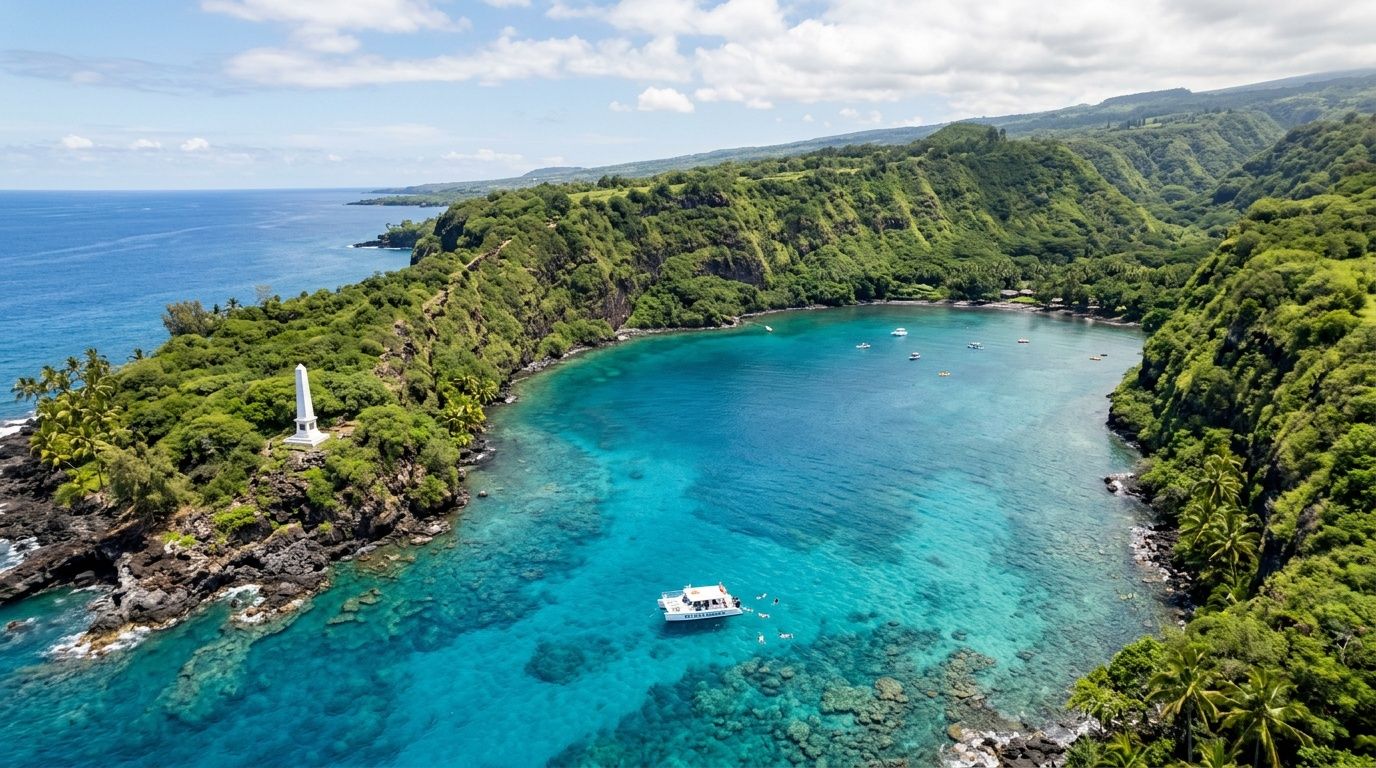
This bay draws serious attention for good reason. Captain Cook snorkel tours in Kealakekua Bay attract over 190,000 visitors annually, and the water often has visibility exceeding 100 feet according to this Kealakekua Bay overview. That combination of easy-to-love scenery and unusually clear water puts it in a different category from an average beach snorkel.
The place matters above and below the surface
The first thing many visitors notice is the Captain Cook Monument on shore. For some people, that historical side is a big part of the appeal. For others, it’s a landmark that adds meaning to the ride out. Either way, the tour feels richer when you realize you’re entering a bay that holds both cultural history and protected marine habitat.
Kealakekua Bay is also a Marine Life Conservation District. That protected status shapes the whole experience. You’re not just arriving at a nice cove. You’re entering an area managed to preserve reef life over the long term.
If you want a quick look at one common route into the bay, this Kealakekua Bay snorkeling trip page gives a sense of how operators approach the site by boat rather than by difficult shoreline access.
Why people keep coming back
Some snorkel spots are fun once and that’s enough. Kealakekua Bay tends to be different. Visitors often leave talking about how complete the experience felt. You get coastline, history, boat ride, reef, fish life, and a setting that still feels protected.
A few reasons it stands out:
- Clear-water viewing: Water clarity often lets beginners relax because they can see what’s below them without straining.
- Protected reef setting: The conservation district helps preserve the kind of healthy underwater scene people hope for when they book a Hawaii snorkel trip.
- Strong mix of audiences: Families, casual vacationers, and dedicated ocean lovers can all enjoy the same bay for slightly different reasons.
Kealakekua Bay works so well for first-timers because the experience starts before you even get in the water. The boat ride, the scenery, and the monument all help people feel they’re somewhere special.
The Underwater Paradise What You Will See
Once your mask is in the water, the bay starts making sense fast. People often ask me, “Is it really that good underwater?” The short answer is yes, and not because of one flashy animal. It’s the overall density of life that surprises people.
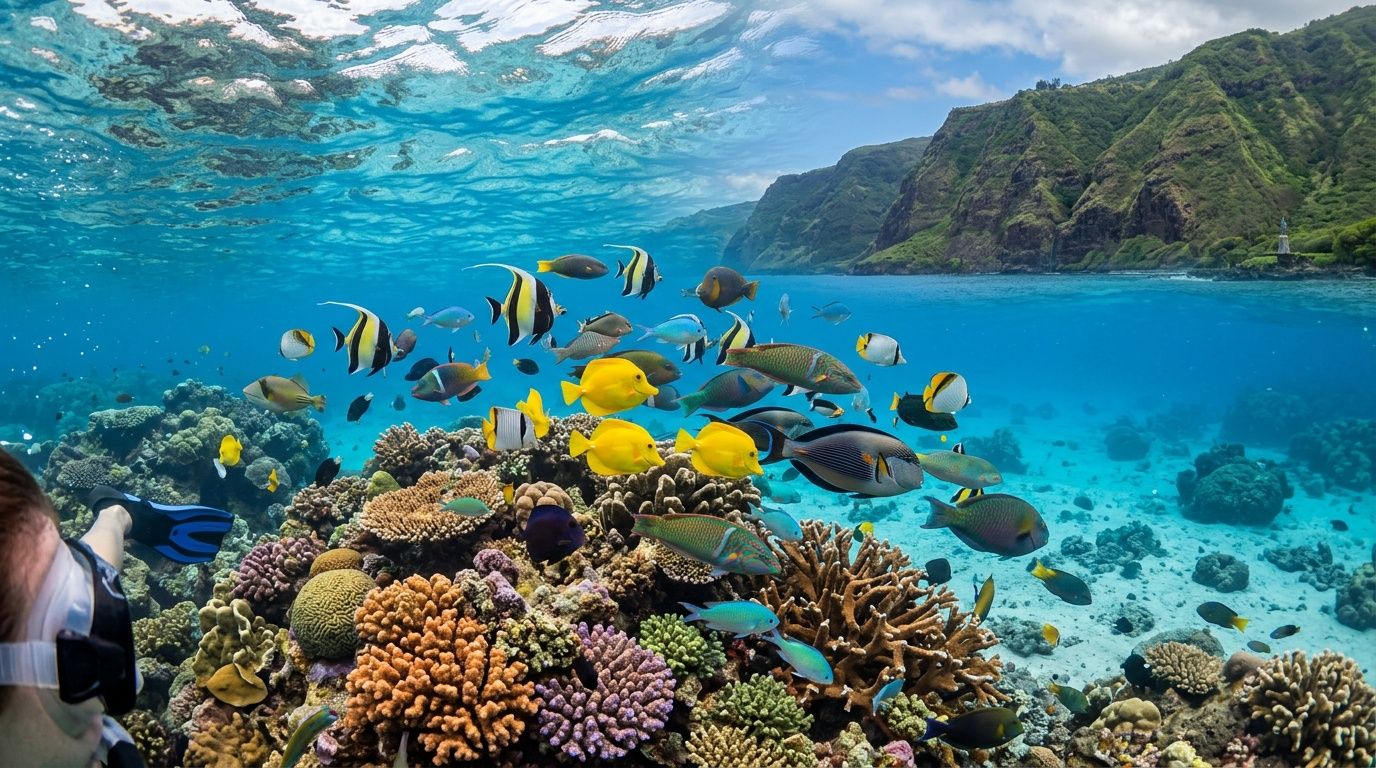
Kealakekua Bay has visibility exceeding 100 feet and is home to over 200 fish species. Morning tours also report a 70 to 80 percent encounter rate with Hawaiian green sea turtles according to this Captain Cook snorkel tour marine life page. That’s why people who are nervous at first often relax quickly. They can see the reef, see the fish, and understand where they are in the water.
What beginners usually notice first
Most first-time snorkelers don’t begin by naming species. They notice motion and color. Fish move in groups. Light bounces off the reef. The water column feels open, but the reef structure gives your eyes something to follow.
Then the details start popping out.
You may see schools of tropical fish moving across coral heads, then look a little closer and notice individual shapes and behaviors. Some visitors get excited about the bright reef fish right away. Others lock onto the larger animals, especially turtles.
If you’re browsing other Big Island snorkel options too, this broader guide to snorkeling in Kona, Hawaii helps place Kealakekua Bay in the larger local picture.
The marine life that gets people talking
Here’s what tends to leave a lasting impression:
- Hawaiian green sea turtles: These are the stars for many guests. Seeing a honu glide past calmly changes the whole mood of the trip.
- Reef fish variety: With so many species in the bay, even experienced snorkelers stay engaged instead of feeling like they’ve seen the whole show in five minutes.
- Healthy coral backdrop: Coral isn’t just scenery. It’s the structure that makes the rest of the life in the bay possible.
Good snorkeling isn’t only about seeing one big animal. It’s about spending steady time over a reef where something new keeps appearing every few feet.
What the water feels like
Many readers feel uncertain at this point. They assume “clear water” means deep, intimidating water. That’s not necessarily how it feels. In a bay like this, clear water often helps people feel safer because they aren’t floating over a murky unknown.
You put your face in, see the bottom features, notice the fish immediately, and your breathing settles down. That’s a big reason the Captain Cook snorkel tour works for both hesitant beginners and people who already snorkel often.
Choosing Your Perfect Captain Cook Snorkel Tour
You can visit the same bay on two different boats and come home with two very different memories. One trip feels like a small guided outing where the crew knows your name and helps you settle into the water. Another feels more like a comfortable boat day with snorkeling built in. Neither is automatically wrong. The better choice depends on what you value most.
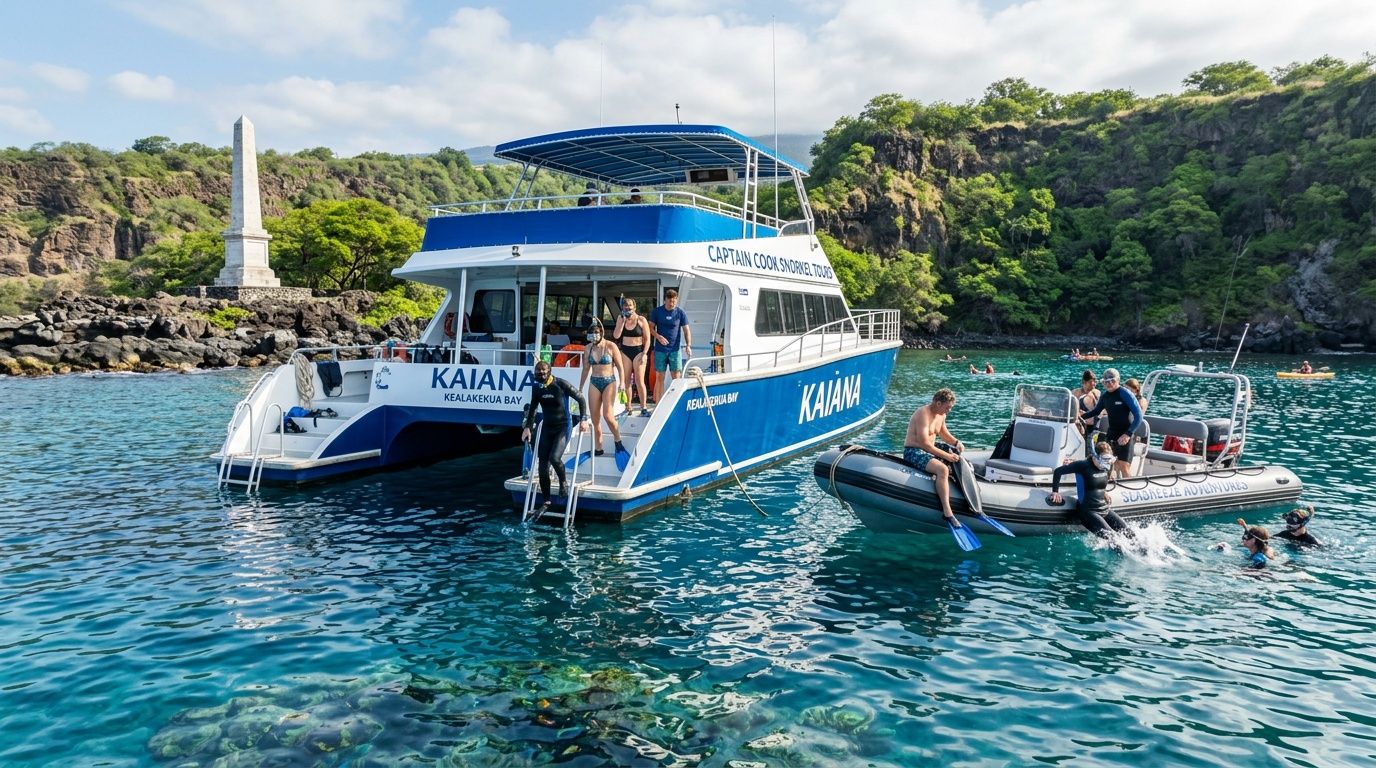
The main decision is usually small raft-style tours versus large catamaran-style tours. A TripAdvisor listing for a small-group Kealakekua Bay snorkel tour shows the appeal clearly. Smaller groups mean less waiting, easier communication with the crew, and a trip that feels more personal from check-in to reboarding.
Small raft tours versus large boats
A small zodiac works a bit like a guided hike with a local naturalist. You have less physical space, but more direct access to the experience itself. A large catamaran works more like a scenic group outing. You get room to spread out and a gentler social pace, but the day can feel less personal.
| Tour type | Best for | Tradeoff |
|---|---|---|
| Small zodiac or raft-style tour | Visitors who want faster water entry, closer guide attention, and a more focused snorkel experience | Less shade, fewer onboard comforts, and a bumpier ride for some guests |
| Large catamaran or big boat tour | Visitors who want more space, more stability, and a relaxed boat atmosphere | More guests, slower transitions, and less one-on-one help |
That tradeoff matters more than many first-time visitors expect.
A better way to judge value
Price alone does not tell you much. A tour that costs less can still give you less usable time and less support once you are in the bay. A tour that costs more can be the better buy if it helps you spend more of your morning snorkeling calmly instead of waiting, gearing up, or trying to flag down a crew member.
Here is a practical example. A small-group tour around $150 may sound expensive at first glance, but that extra money often buys things that directly change your day: quicker entry into the water, more guide interaction, and more actual attention if you are nervous or snorkeling with kids. A larger boat around $110 may feel like the bargain pick, but if your priority is reef time, some of that savings can disappear in longer boarding, larger-group logistics, and less individualized help.
That is the fundamental cost-benefit question. Are you paying for transportation to the bay, or are you paying for a better snorkeling experience once you get there?
Who should choose which
If you are a confident swimmer, like a livelier boat atmosphere, or want extra room to sit back between swims, a larger boat can make good sense. Many families also like the added space.
If you are a first-timer, a hesitant snorkeler, or the kind of traveler who wants to ask questions and get quick reassurance, a small raft usually gives better value. The crew can often spot confusion faster and help before small worries turn into a stressful start.
This matters even more if conditions are mixed. Before you book, check a local guide on how to read Big Island ocean conditions so you can match the boat style to the kind of day you are likely to have.
My practical advice after many tours
Choose the small boat if your top priority is the snorkeling itself.
Choose the larger boat if your top priority is comfort around the snorkeling.
That sounds simple because it is. Visitors often overfocus on the headline ticket price and underfocus on the kind of morning they want. For many people, especially first-time visitors to Kealakekua Bay, the best tour is not the cheapest seat. It is the one that gives them the easiest, calmest, most rewarding time in the water.
The Best Seasons and Times for Your Adventure
The easiest piece of local advice I can give is this. Book a morning trip if you can. That one choice solves a lot of problems before they start.
Morning tours almost always offer the calmest water and best visibility, while afternoon winds can make the surface choppier, according to this guide to Captain Cook snorkeling tour timing. If you’re bringing kids, if you’re new to snorkeling, or if you want the easiest conditions, that matters.
Why morning usually wins
Early in the day, the bay is often smoother. You spend less energy dealing with surface movement and more energy enjoying the reef below you. Clearer surface conditions also help with comfort. People who are hesitant tend to settle in faster when the water looks inviting from the start.
Morning trips are also a smart choice if you’re hoping for the cleanest overall experience, not just the best photos.
If your vacation schedule gives you one shot at a Captain Cook snorkel tour, use it on a morning departure.
What about time of year
Tours run year-round, but ocean conditions always have the final say. Hawaii doesn’t have one single “bad season” for Kealakekua Bay snorkeling, but conditions can vary with swell and wind. Summer often feels more consistently calm. Winter can still be beautiful, but visitors should stay flexible because open-ocean conditions can change a plan.
That’s the part many generic guides skip. They talk as if every day is identical. It isn’t. Good operators watch weather and sea state closely, and guests should do the same.
If you want to understand what to monitor before your trip, this article on checking Big Island ocean conditions is useful.
Simple booking advice
- Book early in your trip: That gives you room to reschedule if weather shifts.
- Choose morning by default: It’s the safest all-around pick for most visitors.
- Stay flexible: Ocean days are better when you work with conditions instead of fighting them.
How to Prepare for Your Day on the Water
Most Captain Cook snorkel tour mistakes happen before the boat leaves the harbor. Someone forgets a towel, shows up in the wrong clothes, gets carsick or seasick, or realizes too late that their phone has nowhere safe to go.
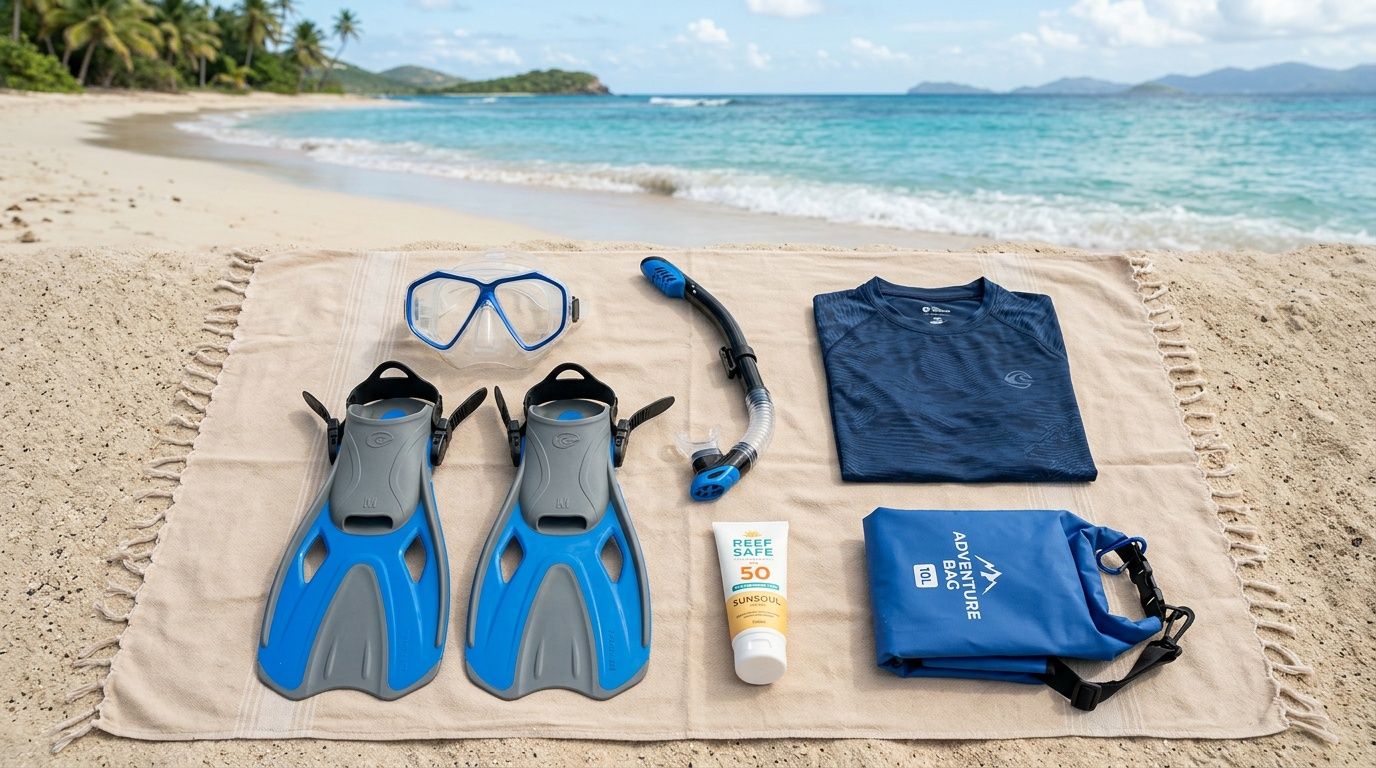
You don’t need to overpack. You just want to arrive organized.
What to wear and bring
A simple setup works best:
- Swimsuit under your clothes: This saves time and makes boarding easier.
- Towel and dry clothes: You’ll be happier on the ride back.
- Reef-safe sun protection: Protect your skin without being careless around coral habitat.
- Dry bag or waterproof pouch: Good for your phone, keys, and wallet.
- Water and small essentials: Bring what the operator recommends and keep it compact.
Seasickness is worth planning for
Even people who are fine on land can feel queasy on a boat. That doesn’t mean you should worry. It means you should prepare. If you already know you’re sensitive to motion, take that seriously before departure instead of waiting until you feel bad.
You can also read this practical guide on how to avoid sea sickness before your trip.
Some common options people use include:
- Ship-EEZ patch: Ship-EEZ Seasickness Patch
- Classic medication: Dramamine pills
- Another popular tablet option: Bonine pills
- Non-medication approach: Sea Band wristbands
- Simple natural backup: Ginger chews
Bring your seasickness plan with you. Don’t assume you can “tough it out” once the boat is moving.
A few small things that help a lot
People often ask what they’ll regret forgetting. Usually it’s not expensive gear. It’s the small comfort items.
- A rash guard or cover-up if you burn easily.
- A secure sunglasses strap if you want eyewear on the ride out.
- A calm breakfast instead of skipping food entirely. An empty stomach doesn’t help everyone.
Preparation doesn’t need to be fancy. It just needs to remove friction from the day.
Our Top Recommended Tour Operators
By the time people reach this part of planning, the big question usually changes. It is no longer, “Is Kealakekua Bay worth it?” It is, “Which boat will give us the kind of day we want?” That is the right question, because the operator matters less as a brand name and more as a match for your group.
A useful place to compare styles is this roundup of the top Kealakekua Bay snorkeling tours. It helps if you are still sorting out the difference between a small, nimble raft-style trip and a larger boat with more onboard comforts.
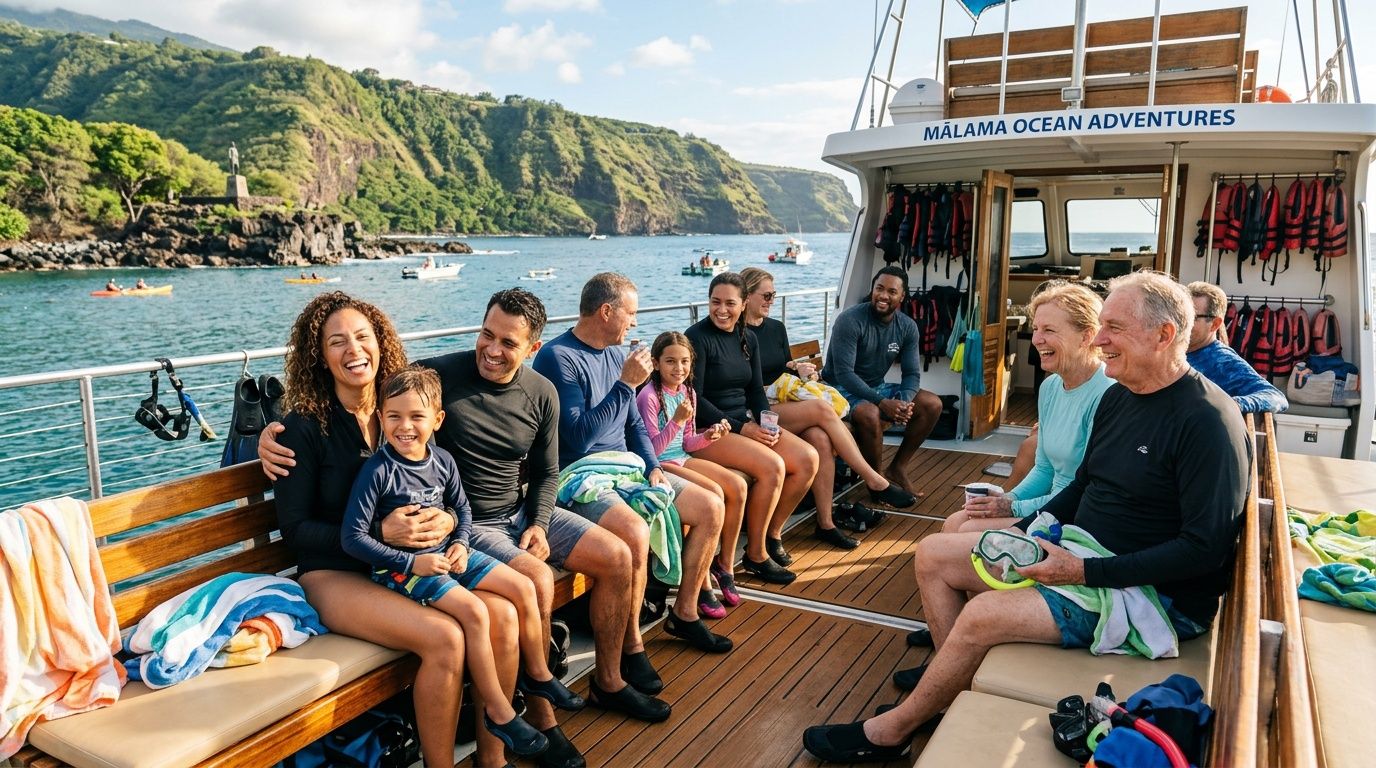
Here is the simple way I explain it after years of watching guests choose. A small rigid-hull inflatable or zodiac-style tour usually gives you a more personal day. You tend to get more guide interaction, a faster ride, and a group size that feels manageable once masks go on and people start asking questions. A larger catamaran usually gives you more physical comfort on board, easier boarding for some travelers, and amenities like shade or a restroom. The tradeoff is that the day can feel less personal, and the in-water experience may feel more like a group outing than a guided snorkel.
That cost-benefit tradeoff matters more than the logo on the website.
If you are comparing operators, I would shortlist companies based on four practical questions:
- What type of boat are you boarding? Small rafts and larger catamarans serve different travelers well.
- How much attention do beginners get? First-time snorkelers usually have a better day with crews who explain things clearly and stay present in the water.
- How does the company talk about conditions? Good operators describe wind, swell, ride quality, and entry style in plain language.
- Do they treat the bay respectfully? Strong crews manage people well around coral and wildlife instead of turning the stop into a free-for-all.
Kona Honu Divers is relevant here because it offers a Captain Cook snorkel tour in a small rigid-hull inflatable format and includes snorkel gear, instruction, and flotation devices. For travelers who already know they want a smaller-group style, that is a meaningful detail, not just marketing language.
I would also keep your group makeup in mind. A couple in their 30s who want a quick, active morning often ends up happiest on a smaller raft. Grandparents, very young kids, or anyone who values extra space and onboard amenities may decide the larger-boat tradeoff is worth it, even if the trip feels less intimate. Neither choice is wrong. They are just built for different priorities.
My bottom-line recommendation is straightforward. Choose the operator whose boat style, crew style, and comfort level fit your group. For many visitors, that points toward a small-group, guide-forward trip. For others, the better choice is the boat that makes the whole outing feel easier from start to finish.
Frequently Asked Questions
Is a Captain Cook snorkel tour good for kids and non-swimmers
Usually, yes. Many tours provide flotation gear and give guidance that helps nervous guests feel more secure. The key is choosing a crew that works well with beginners and booking a morning trip for calmer surface conditions.
Can I visit the Captain Cook Monument without a tour
You can, but that’s where many visitors underestimate the logistics. Shore access is limited and less simple than people expect. A boat tour is usually the most practical way to reach the prime snorkeling area without turning the day into a transportation problem.
Are there bathrooms and full amenities on every boat
No. That depends heavily on boat type. Smaller raft-style tours often trade extra amenities for agility and smaller groups. Large boats usually offer more onboard comfort. Always check the specific vessel description before booking.
What if I’ve never snorkeled before
That’s common. Kealakekua Bay is one of the more approachable places to try because the water is often clear and the reef is engaging right away. Let the crew know you’re new, listen carefully to the briefing, and don’t rush your first few minutes in the water.
Should I book this early in my trip
Yes, if possible. That gives you more flexibility if weather or ocean conditions force a change. It also removes the stress of trying to squeeze a popular tour into your final day.
If you’re planning ocean time on the Big Island and want a team that handles diving, snorkeling, and local underwater knowledge with care, take a look at Kona Honu Divers. They’re a solid resource for visitors who want to spend more of their Hawaii trip in the water and less time guessing which experience to book.