
You’re probably in one of two places right now. You’ve heard Kealakekua Bay is one of the most famous snorkel spots on the Big Island, or you’ve already seen the white monument from a photo and want to know if a captain cook snorkel tour is worth your vacation time.
It is, but not for the same reason most brochures make it sound worth it.
This bay matters because two stories meet in the same water. One is cultural and historical. The other is ecological. You’re not just going out to float over coral and fish. You’re visiting a place that carries the memory of a turning point in Hawaiian history, while also holding one of the most protected and rewarding snorkel environments on the Kona coast.
That combination changes how you experience the day. Once you understand what happened here, the monument stops being just a landmark. Once you understand why the reef is so healthy, the fish and coral stop feeling random and start making sense.
The Living Museum of Kealakekua Bay
Kealakekua Bay feels different before you even get in the water. The cliffs hold sound in a particular way. The shoreline looks remote. And the white obelisk at the edge of the bay pulls your attention immediately.
That monument marks the place tied to one of the most consequential encounters in Hawaiian history. Captain James Cook first landed at Kealakekua Bay on January 17, 1779, during the sacred Makahiki festival, where he was initially welcomed as a divine figure. Following a dispute over a stolen boat cutter after his return for repairs, Cook attempted to take Chief Kalaniopuu hostage on February 14, 1779, leading to a skirmish where he and four marines were killed. The 27-foot white obelisk monument, erected in 1874, now marks this site (historical overview of Captain Cook at Kealakekua Bay).
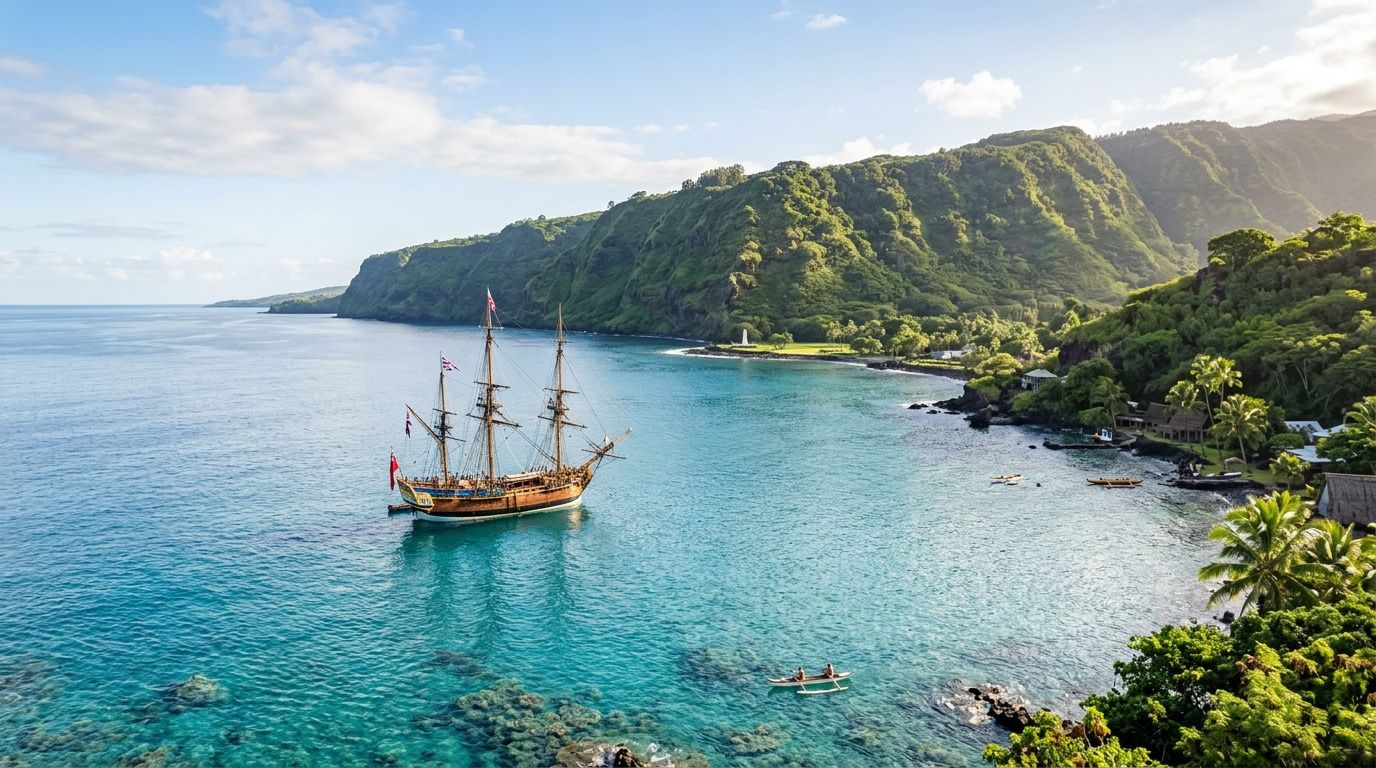
Why the first welcome happened
People sometimes get confused about how Cook could be welcomed first and killed later. The timeline matters.
Cook arrived during Makahiki, a sacred Hawaiian season associated with peace and the god Lono. That timing shaped the first encounter. Hawaiians initially received him with ceremony and generosity, and that early contact carried a sense of awe and exchange rather than immediate hostility.
When he returned later for repairs, the context had changed. The earlier sacred season had passed, tension rose, and a dispute over stolen property escalated into violence on shore.
The same shoreline that now frames a calm snorkel stop was once the setting for a cultural misunderstanding with enormous consequences.
Why this matters when you snorkel here
A lot of visitors look at the monument and think of it as a sightseeing bonus. I’d flip that around. The monument gives meaning to the whole tour.
You’re entering a bay that was already important to Native Hawaiians before Cook arrived. It wasn’t an empty scenic cove waiting to be discovered. It was a place with spiritual and cultural significance. That’s why many local guides describe Kealakekua as a living museum rather than just a marine attraction.
If you want a broader look at route options and access styles, this guide to the top Kealakekua Bay snorkeling tours is a useful companion.
What the monument really represents
The 27-foot obelisk isn’t just a memorial to one man. It marks a collision of worlds. For many visitors, that’s the moment the bay becomes more than beautiful.
A captain cook snorkel tour works best when you treat it with that kind of attention. Look at the shoreline before you put your mask on. Ask your crew about the history. Let the place register first. The snorkeling will still be there in a minute.
What to Expect on a Captain Cook Snorkel Tour
Most tours start with a harbor check-in, a gear setup, and a quick safety talk before the boat even leaves. That may sound routine, but it sets the tone for the whole trip. Good crews explain how the day will flow, how to enter the water, where the easiest swim lines are, and what to do if you’re nervous or rusty with a snorkel.
The ride down the Kona coast is part of the experience. You’re usually watching lava shoreline, sea cliffs, and changing water color the whole way. On some days the ocean feels polished and flat. On others, you’ll feel more bounce on the ride south, especially if you’re on a smaller boat.
The day usually unfolds like this
Check in and get fitted
Crew members match you with mask, fins, and flotation if you want it. If you’ve never used snorkel gear before, say so early. It helps everyone.Listen to the briefing
At the briefing, you learn how to clear a snorkel, how to avoid kicking coral, and where the strongest swimmers should enter versus where beginners should ease in.Cruise to the bay
This is often when people spot spinner dolphins during transit. Wildlife is never guaranteed, but the ride itself is scenic enough that it never feels like dead time.Snorkel near the monument area
Once anchored or positioned, the crew helps people into the water in an organized way. First-timers usually do best when they pause, float, and look down before trying to swim fast.
Practical rule: Your first five minutes in the water should be slow. Float, breathe, adjust your mask, then start exploring.
If you’re worried about seasickness
This is one of the most common concerns, and it’s easier to manage if you plan ahead. People often assume the snorkeling is the issue, but the boat ride is usually what triggers motion sickness.
A few reliable options people commonly use are Ship-EEZ Seasickness Patch, Dramamine pills, Bonine pills, Sea Band wristbands, and ginger chews. If you know you’re sensitive, deal with it before departure rather than after the boat starts moving.
For more detailed prep, this article on how to avoid sea sickness covers the basics well.
What first-timers usually misunderstand
The biggest surprise for many guests is that snorkeling itself is often easier than they expected. You’re not trying to win a swim race. You’re floating and observing.
The second surprise is how much the crew matters. A calm captain, a clear briefing, and in-water support can completely change the experience for a beginner. If you’ve been hesitating because you’re “not really a snorkeler,” Kealakekua Bay is one of the better places to start.
The Underwater World of Kealakekua Bay
The reef here is healthy for a reason. It has had protection, and protection changes everything underwater.
Kealakekua Bay's status as a protected marine sanctuary contributes to water clarity often exceeding 100 feet. The healthy reefs, with up to 60-70% coral coverage in some areas, support massive fish populations, including convict tang densities of 200-300 individuals per 100 m² (reef conditions and fish density in Kealakekua Bay).
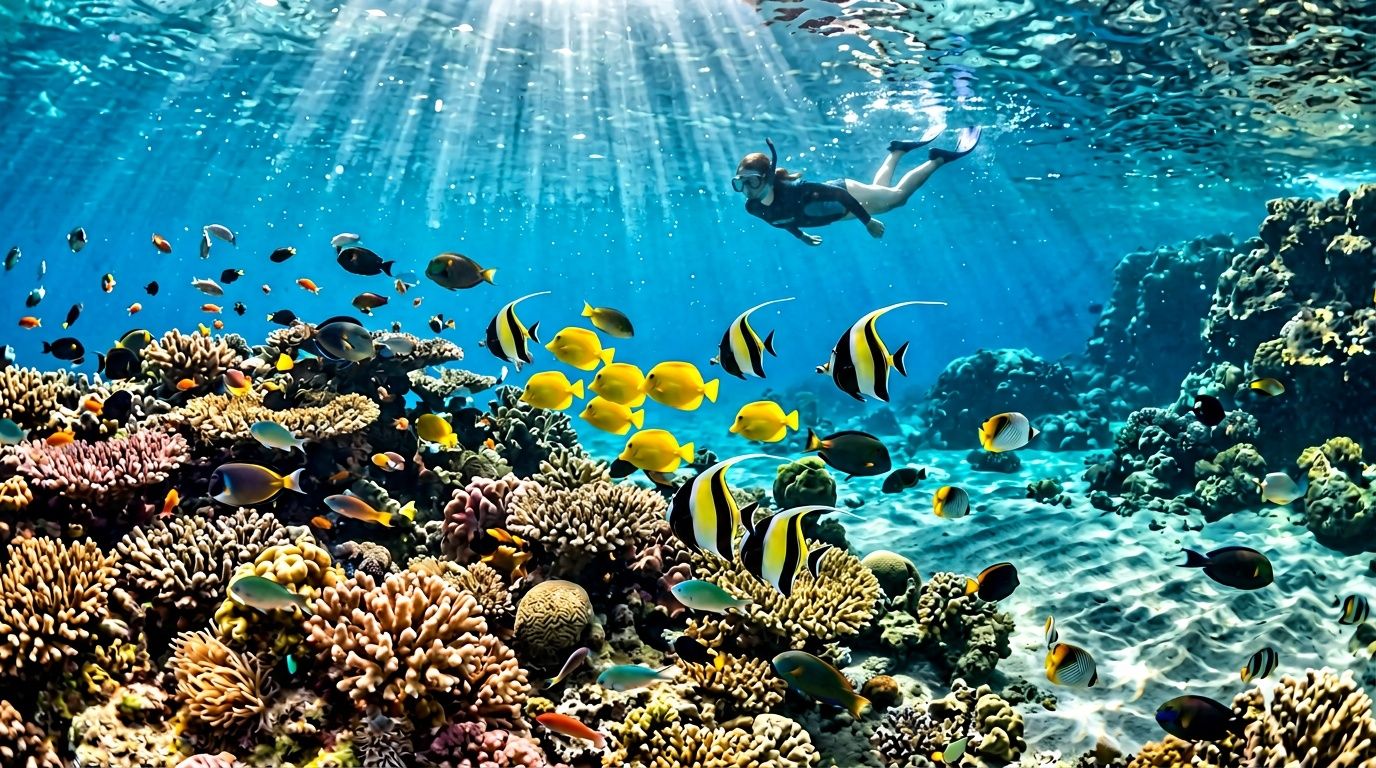
Why the visibility is so striking
Visitors often say the water looks unreal. There’s a practical reason for that. Protected water with less extractive pressure and a well-developed reef system stays clearer and more stable than heavily used, less protected coastlines.
That clarity changes the feel of snorkeling. Instead of peering into blue haze, you can often see reef structure, fish movement, and bottom contours in a way that makes the whole bay feel open and legible.
What you’re actually looking at underwater
The coral here isn’t background decoration. It’s the architecture of the bay. Dense coral coverage creates shelter, feeding space, and territory. That’s why fish numbers feel so high even to people who’ve snorkeled elsewhere in Hawaii.
You may notice a few recurring scenes:
- Schools of convict tang moving together over shallow reef sections
- Triggerfish, including the humuhumunukunukuāpuaʻa, weaving in and out of coral heads
- Sea turtles gliding through without much drama, often more calmly than the humans watching them
- Octopus and eels if you slow down enough to study cracks and ledges
A lot of people miss the smaller reef life because they swim too fast. The bay rewards patience more than distance.
How to see more without doing more
You don’t need advanced skill to have a better snorkel here. You need better observation habits.
Try this:
- Pause at the edge first and let your breathing settle
- Look for movement patterns, not single fish
- Scan coral shadows where shy animals hold position
- Stay horizontal so you don’t stir up sand or tire yourself out
If you enjoy knowing what you’re seeing, this Hawaii fish identification class for intermediate reef life can help you connect names to what’s in front of your mask.
The main thing to understand is simple. Kealakekua Bay doesn’t just have pretty water. It has the structure of a protected ecosystem, and that’s why the snorkeling feels so rich.
Choosing the Best Captain Cook Snorkel Tour
Not every captain cook snorkel tour feels the same, even if the destination is the same. The biggest difference usually comes down to boat style, group size, and how you want the day to feel.
If you want a nimble, more adventure-focused ride, small boats change the experience. Small-group rigid-hull inflatable boats (RHIBs) offer a distinct advantage, achieving speeds of 25-30 knots and accessing sea caves that larger catamarans cannot. This maneuverability can lead to 20-30% more wildlife sightings and allows for more precise positioning at the prime snorkel site in front of the monument (RHIB performance for Captain Cook snorkeling).
Tour type comparison
| Feature | Small-Group RHIB (e.g., Zodiac) | Large Catamaran |
|---|---|---|
| Ride style | Faster, lower to the water, more adventurous | Smoother feel for many guests, more spacious |
| Access | Can reach tighter coastal features such as sea caves | More limited in tight areas |
| Positioning at snorkel site | Precise placement near the prime area | Less nimble |
| Group feel | More intimate and guide-focused | More social, more room to spread out |
| Best for | Couples, confident travelers, people who want action | Families, mixed ages, guests prioritizing comfort |
How to choose based on your group
Families often focus on the wrong question. They ask, “What’s the most famous tour?” The better question is, “What boat will make our day easier?”
A larger catamaran may suit groups who want more elbow room, easier movement, and a more relaxed ride. A smaller RHIB may suit guests who care more about quick travel, close coastal access, and a less crowded in-water experience.
A few decision points help:
- Young children or mixed mobility needs usually point toward a roomier boat.
- Strong swimmers or repeat snorkelers often appreciate the agility of a RHIB.
- History-focused visitors should look for operators who narrate the bay rather than treating the monument as a photo stop.
- Wildlife enthusiasts often prefer smaller groups because the overall experience tends to feel less rushed.
Local operator options
Two straightforward places to compare tours are Kona Snorkel Trips and their Kealakekua Bay Captain Cook Monument tour and Captain Cook Snorkeling Tours. Both give you a sense of trip style, logistics, and what kind of traveler each experience may fit.
If you want another planning reference focused on route and trip style, this page on Kealakekua Bay snorkeling tours is also useful. Kona Honu Divers offers a Captain Cook snorkel trip using a rigid hull inflatable format, which is one example of the smaller-boat approach.
What matters more than marketing language
Don’t get too distracted by polished tour descriptions. Focus on practical things.
Look for clear safety briefings, in-water support, gear quality, and whether the company explains the history and conservation rules well. The right tour isn’t just the one with a nice website. It’s the one that matches how you want to move through the bay.
Planning Your Day What to Bring and When to Go
Morning is usually the smart choice for Kealakekua Bay. The light is often better, the water is commonly calmer, and the whole outing tends to feel more organized before afternoon wind and fatigue set in.
That doesn’t mean every afternoon trip is bad. It means if you want the easiest version of the experience, especially for first-time snorkelers, morning stacks the odds in your favor.
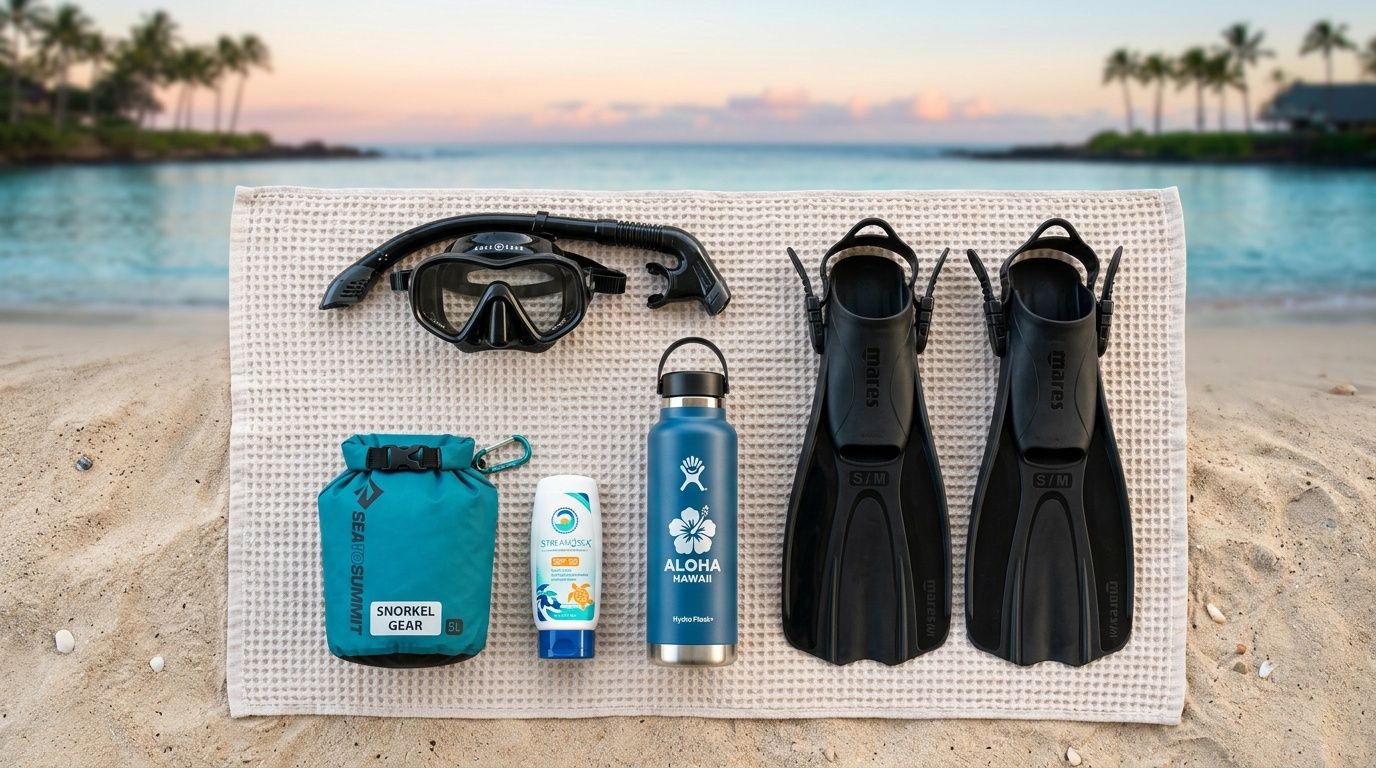
What to bring
You don’t need to overpack, but a few items make a big difference.
- Swimsuit worn under your clothes so you’re not changing awkwardly at the harbor
- Towel and dry shirt for the ride back
- Reusable water bottle because sun and salt sneak up on you
- Dry bag for your phone, keys, and wallet
- Polarized sunglasses for the boat ride
- Reef-safe sunscreen applied before boarding, not after you’re already baking in the sun
What people forget most often
The two items people leave behind most are water and a dry change of clothes. They regret both.
The third is sun planning. A captain cook snorkel tour has a lot of reflected light. Even people who “don’t burn easily” can get cooked fast between the boat ride and the swim.
Bring less stuff, but bring the right stuff. Water, sun protection, and one dry layer matter more than extra gadgets.
A simple timing strategy
If your group includes beginners, younger kids, or anyone who gets anxious in open water, book earlier in the day and arrive unrushed. Don’t turn the tour into the third activity of a packed itinerary.
A better day usually looks like this:
- Wake up early enough to eat lightly
- Check in without rushing
- Snorkel while your energy is high
- Keep the afternoon flexible
That rhythm works because snorkeling is more enjoyable when nobody feels hurried, overheated, or overbooked.
Respect the Aina Conservation and Responsible Tourism
Kealakekua Bay isn’t just a scenic stop. It’s a place people need to visit carefully.
The reef is alive, the wildlife depends on space, and the shoreline carries cultural weight. If you treat the bay like a theme park, you miss the whole point. If you treat it like a place you’re lucky to enter, your choices get better fast.
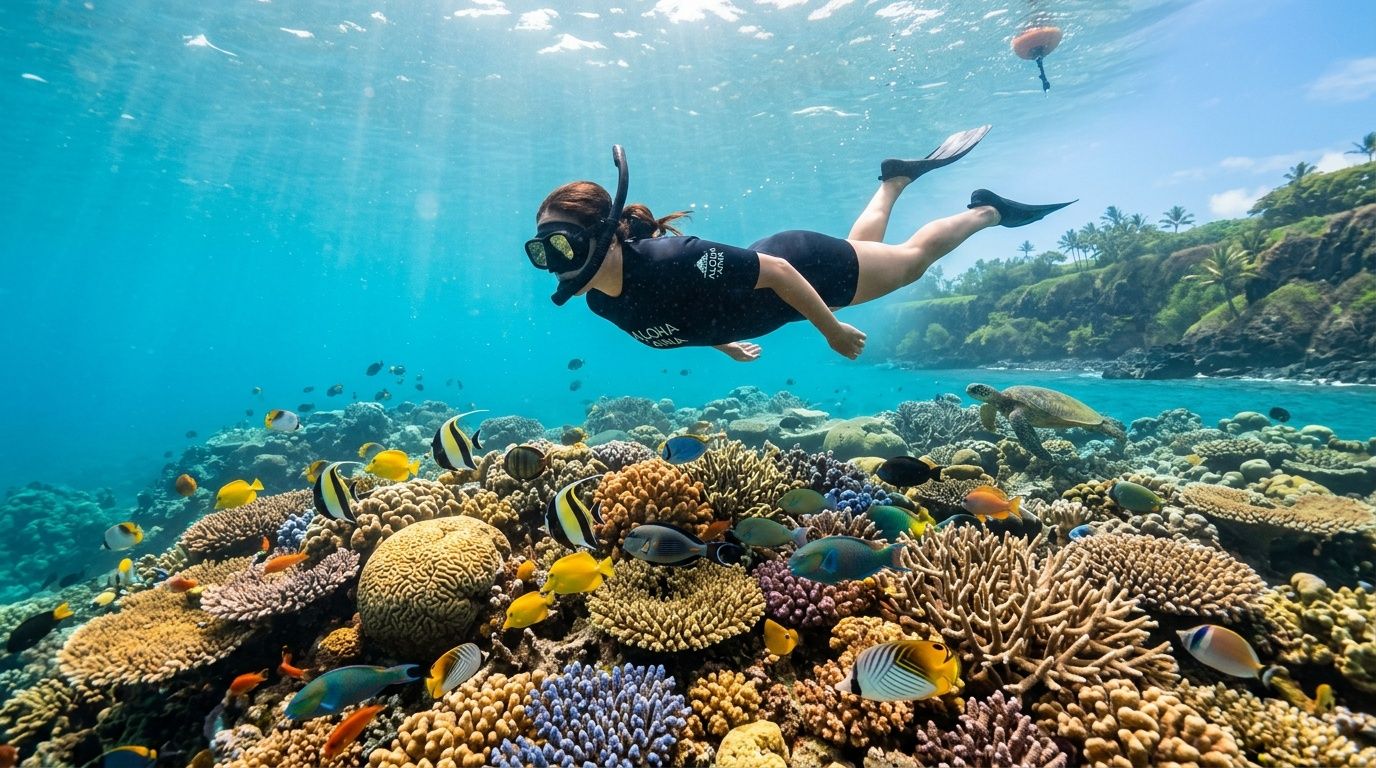
What responsible behavior looks like
Emerging regulations and conservation efforts in Hawaii are having a direct impact on tourism. Recent data suggests that stricter fishing rules implemented around 2025 have already contributed to a 15% increase in local turtle populations, and tour operators are now required to provide enhanced onboard education about no-touch coral policies (conservation changes affecting Captain Cook snorkeling).
That matters because rules only work if visitors follow them in the water.
Here’s the basic standard:
- Don’t touch coral even lightly with your hand or fins
- Don’t chase turtles or dolphins
- Don’t stand on reef structure
- Don’t leave anything behind, including food wrappers or accidental trash
Why these rules aren’t optional
Coral damage often happens through small mistakes, not bad intentions. A person adjusts a mask, drops their feet, and crushes fragile growth. Someone sees a turtle and kicks hard to get close. Another snorkeler stands up because they’re tired.
Multiply that by a busy destination and the damage adds up quickly.
Respect in the bay is physical. It shows up in where you put your hands, your feet, your fins, and your attention.
If you want a good baseline for water etiquette, this guide to responsible and considerate diver etiquette translates well to snorkeling too.
A better mindset for visiting
Think less like a customer and more like a guest. The bay doesn’t owe anybody a perfect wildlife encounter. Your job is to enter gently, observe carefully, and leave with the place as intact as you found it.
That mindset makes the day better. You notice more. You move better. And you become part of preserving the reason people come here in the first place.
Frequently Asked Questions About Captain Cook Snorkeling
Can non-swimmers do a captain cook snorkel tour
Often, yes. Many tours provide flotation and hands-on guidance, and beginners usually do fine when they stay calm and follow the crew’s lead.
The key is honesty. Tell the crew your comfort level before you get in. If you’re anxious, use the flotation they offer and start by floating face-down near the boat.
Is the monument easy to reach by land
For most visitors, no. While over 190,000 people visit Kealakekua Bay annually, with many drawn by its history, access to the Captain Cook Monument itself is extremely limited by land. The hike is strenuous and requires a permit, making a boat tour the only practical and legal way for most visitors to experience the famous snorkeling site directly in front of the obelisk (access limits for the Captain Cook Monument snorkel site).
That clears up one of the biggest misconceptions. People see the monument on a map and assume they can casually drive over and walk in. In practice, a boat tour is what makes the visit realistic.
How deep is the water
It varies by where you are in the bay. Near the monument area, the water can look deep and still be excellent for snorkeling because visibility is strong. Depth doesn’t automatically make the experience harder. Comfort, flotation, and calm breathing matter more.
What kind of sunscreen should I use
Use reef-safe sunscreen. That protects both the reef and your skin. If you want help comparing products before your trip, this roundup of reef-safe sunscreen options is a practical place to start.
Will I definitely see dolphins or turtles
No wildlife encounter is guaranteed. That’s part of being in a real marine environment.
You may see spinner dolphins during the ride, and turtles are a meaningful possibility in the bay, but it’s better to approach the day with curiosity instead of a checklist. The reef itself is the main event.
Is this worth it if I’ve snorkeled elsewhere in Hawaii
Usually, yes, especially if you care about the combination of history and reef quality. Some places give you good fish. Some places give you a famous view. Kealakekua Bay gives you both, with a sense of place that’s hard to duplicate.
If you want a trip that treats Kealakekua Bay as more than a quick swim stop, take a look at Kona Honu Divers. They offer access to the bay and a chance to experience the monument area with the historical and marine context that makes this coastline memorable.