
You’re probably in the same spot a lot of Big Island visitors hit. You want one water day that feels worth building the trip around, but the options blur together fast. Boat tour, beach day, manta trip, kayak, snorkel charter. They all sound good until you start asking the practical questions.
If you’re leaning toward a captain cook snorkel tour, you’re usually looking for more than just “some fish and a boat ride.” You want clear water, a place that feels special the minute you arrive, and enough guidance that everyone in your group can relax. You also want to know what the day is like. Not just the glossy version.
That’s why Kealakekua Bay stays at the top of so many Kona itineraries. It combines history, protected water, and one of the most rewarding snorkel environments on the island. If you know what to expect and choose the right tour style, it can be the kind of day people keep talking about long after the vacation ends.
Discovering Hawaii's Premier Snorkeling Destination
A lot of travelers find Kealakekua Bay the same way. They start with a simple question: “If we only do one snorkel trip in Kona, which one should it be?” Then this bay keeps coming up over and over.
That isn’t hype. The Captain Cook Snorkel Tour in Kealakekua Bay attracts over 190,000 visitors annually, with approximately 70% of these visitors drawn to the experience for its unique combination of natural beauty and historical significance, according to this Captain Cook snorkel tour overview. That tells you something important right away. People aren’t showing up only for a swim. They’re coming because the place feels meaningful before they even put a mask on.
History and reef in one place
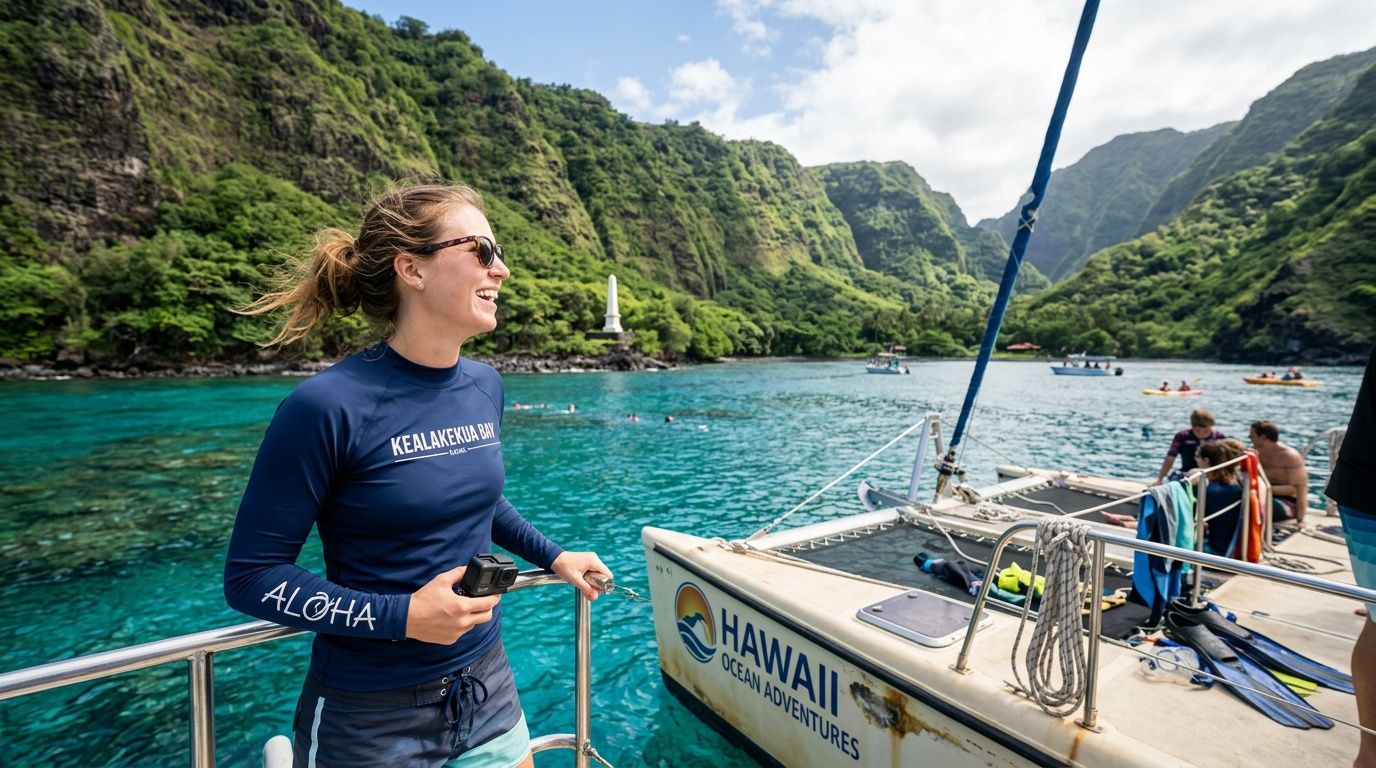
Kealakekua Bay sits in that rare category of Hawaiian places that are visually striking and historically heavy at the same time. This is the bay tied to Captain James Cook’s arrival and death in 1779. It’s also a marine sanctuary with the kind of water clarity that makes first-time snorkelers gasp the second they look down.
For a visitor, that blend matters. A regular snorkel stop can be fun. A captain cook snorkel tour feels more memorable because the shoreline, the monument, the cliffs, and the reef all work together. You’re not just floating over coral. You’re spending time in a place with a real story.
Why so many visitors choose it
The bay appeals to different people for different reasons, and that’s part of its staying power.
- Families want a boat-access snorkel site that feels manageable.
- Couples want scenery that feels iconic, not interchangeable.
- Ocean lovers want protected reef, clear water, and a strong chance of seeing a lot in a short session.
- History-minded travelers want an outing that connects them to a specific Hawaiian location, not just open ocean.
Good rule of thumb: If your group wants one activity that satisfies both the “I want adventure” person and the “I want something beautiful and meaningful” person, Kealakekua Bay usually checks both boxes.
If you want a broader orientation before booking, this ultimate 2026 Kealakekua Bay guide gives useful background on the bay itself and helps place the snorkel tour in context.
Why Kealakekua Bay is a World-Class Snorkel Spot
Not every pretty bay turns into a standout snorkel destination. Kealakekua Bay does because several things line up at once. Protection, geography, and wildlife behavior all work in your favor.
Marine protection changes what you see
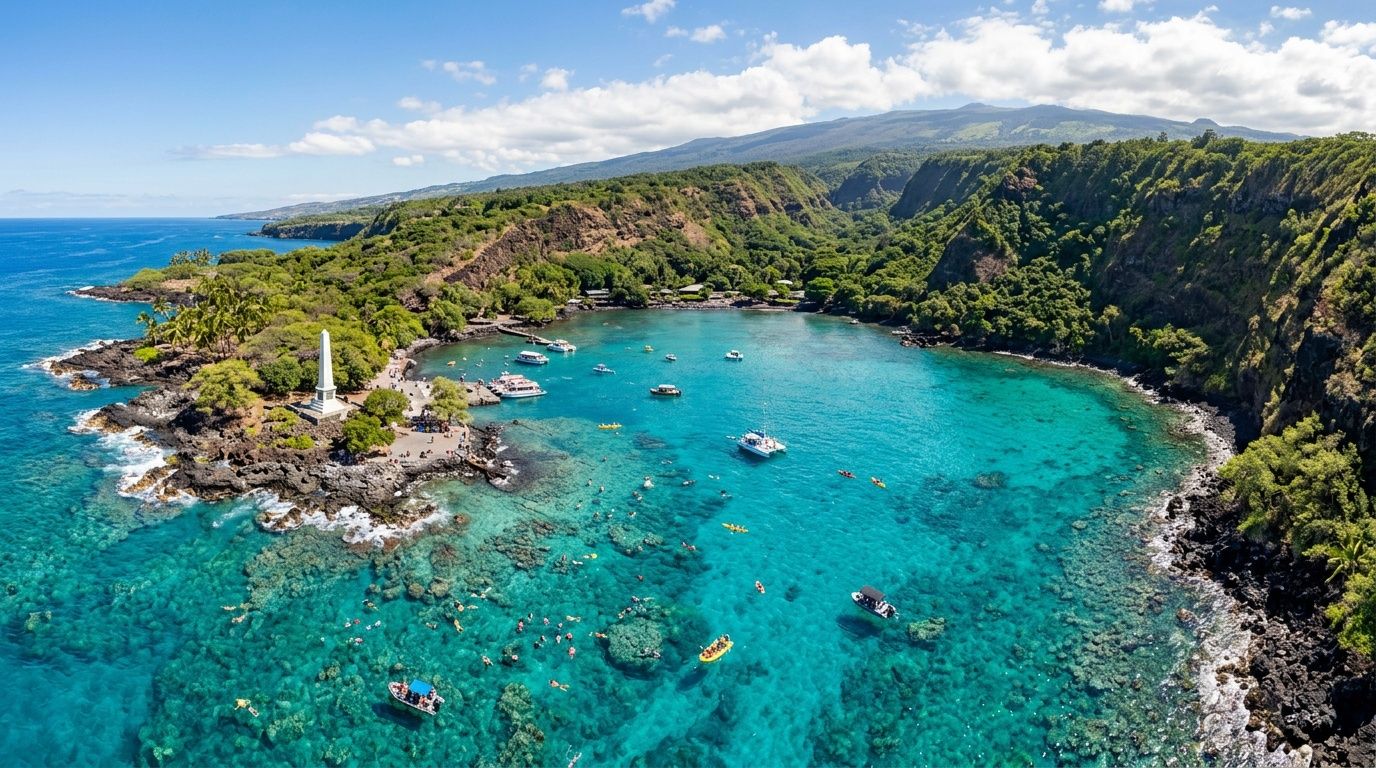
The biggest difference-maker is the bay’s protected status. Kealakekua Bay's designation as a Marine Preserve creates a no-take fishery zone that transforms marine species behavior. Spinner dolphins exhibit predictable morning activity patterns (7:00-9:00 AM show higher encounter rates), and sea turtle populations demonstrate habitual feeding and resting patterns, making them reliably observable, as explained in this Kealakekua Bay marine preserve breakdown.
That’s not just a policy detail. It changes the feel of the snorkel.
In protected water, fish often act less scattered. Turtles use the reef in more consistent ways. Wildlife viewing feels less like hoping for random luck and more like entering an active neighborhood. That’s why many visitors leave saying the bay felt fuller, calmer, and more alive than other places they’ve snorkeled.
Morning conditions usually work best
Morning trips are popular for a reason. Wildlife activity often lines up better early, and surface conditions are usually friendlier before the day’s wind builds. That matters most for beginners, kids, and anyone who enjoys snorkeling more when the ocean feels settled.
Here’s how that plays out on the water:
- Earlier departures often mean smoother boat rides.
- Calmer surface texture makes it easier to float, look down, and relax.
- Better wildlife rhythm can improve what you notice before and during the snorkel.
- Less visual clutter on the surface helps nervous first-time snorkelers feel more in control.
Geography helps too
The bay’s shape and shoreline do a lot of work. It’s more sheltered than many open-coast snorkel sites, so the water often feels more protected and easier to read. That doesn’t mean conditions never change. It means the bay has natural advantages that support a better snorkel experience.
If you want to compare this bay-focused trip with another operator overview, the Kealakekua Bay snorkeling tour page is a useful reference for seeing how these trips are generally structured.
Protected water doesn’t guarantee a perfect day. What it does is stack the odds in your favor. That’s a big reason this bay earns its reputation.
What to Expect on a Captain Cook Snorkel Tour
One reason people feel nervous before a captain cook snorkel tour is simple. They can’t quite picture the day. Once you know the sequence, most of that uncertainty disappears.
The day usually starts early
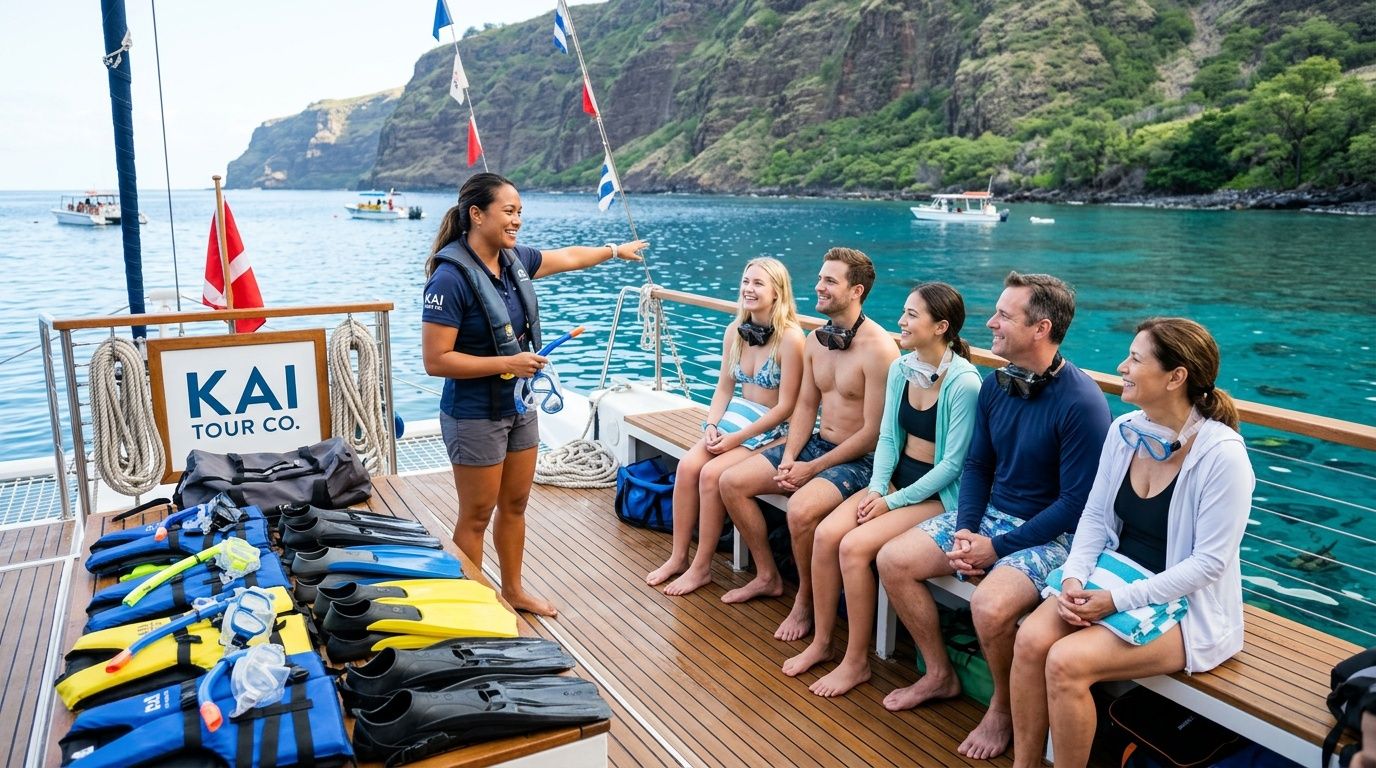
A typical trip begins with check-in, gear setup, and a safety talk before departure. Then you cruise down the Kona coast toward Kealakekua Bay. The ride itself is part of the fun. You get lava coastline views, a sense of the bay’s scale, and a little transition time before entering the water.
Some tours are on larger boats with more room to spread out. Others use smaller boats that feel more nimble and intimate. Either way, the crew usually gets you fitted for mask, snorkel, and fins before you hit the snorkel site.
Water time is focused, not endless
This surprises some people. You won’t spend the entire outing in the water, and that’s usually a good thing.
A typical Captain Cook Snorkel Tour provides approximately 1.5 to 2 hours of actual water time, with average water visibility of 80 feet, often exceeding 100 feet, according to this Captain Cook snorkel tour planning guide. For most guests, that’s the sweet spot. It’s long enough to explore, settle in, and see a lot, but not so long that beginners get tired and start struggling with gear or energy.
What the onboard flow usually feels like
Most tours follow a rhythm like this:
Arrival and briefing
You check in, hear the safety rules, and learn where to sit, store gear, and enter the water.Coastal boat ride
This is when people start taking photos, asking local questions, and getting comfortable with the crew.Snorkel session
Once anchored or moored, guests enter the water in a controlled way. Some go in right away. Others take a minute.Recovery and return
After snorkeling, you climb back aboard, rinse off, snack, warm up, and cruise back with that tired-happy feeling.
Seasickness is worth planning for
Even if the bay is calm, the boat ride can affect people differently. If you know you’re prone to motion sickness, prepare before you leave the dock. Helpful options include Ship-EEZ Seasickness Patch, Dramamine pills, Bonine pills, Sea Band wristbands, and ginger chews.
A few practical habits help too:
- Eat lightly before departure instead of boarding on an empty stomach.
- Look at the horizon if you start feeling off.
- Stay hydrated without chugging a huge amount at once.
- Tell the crew early if you’re starting to feel queasy.
If you think you might get seasick, treat that as a planning item, not a character flaw. Plenty of strong swimmers get motion sick on boats.
Marine Wildlife You Will Likely Encounter
The first thing many people notice in Kealakekua Bay isn’t one giant animal. It’s how busy the reef feels. You put your face in the water and there’s movement in every direction. Fish over coral, fish over rock, flashes of color in the blue, and then something larger gliding through the background.
The three sightings guests talk about most
Spinner dolphins are a favorite from the boat and sometimes near the bay. Their presence adds excitement before you even get in. They’re fast, social, and easy to recognize once the crew points them out.
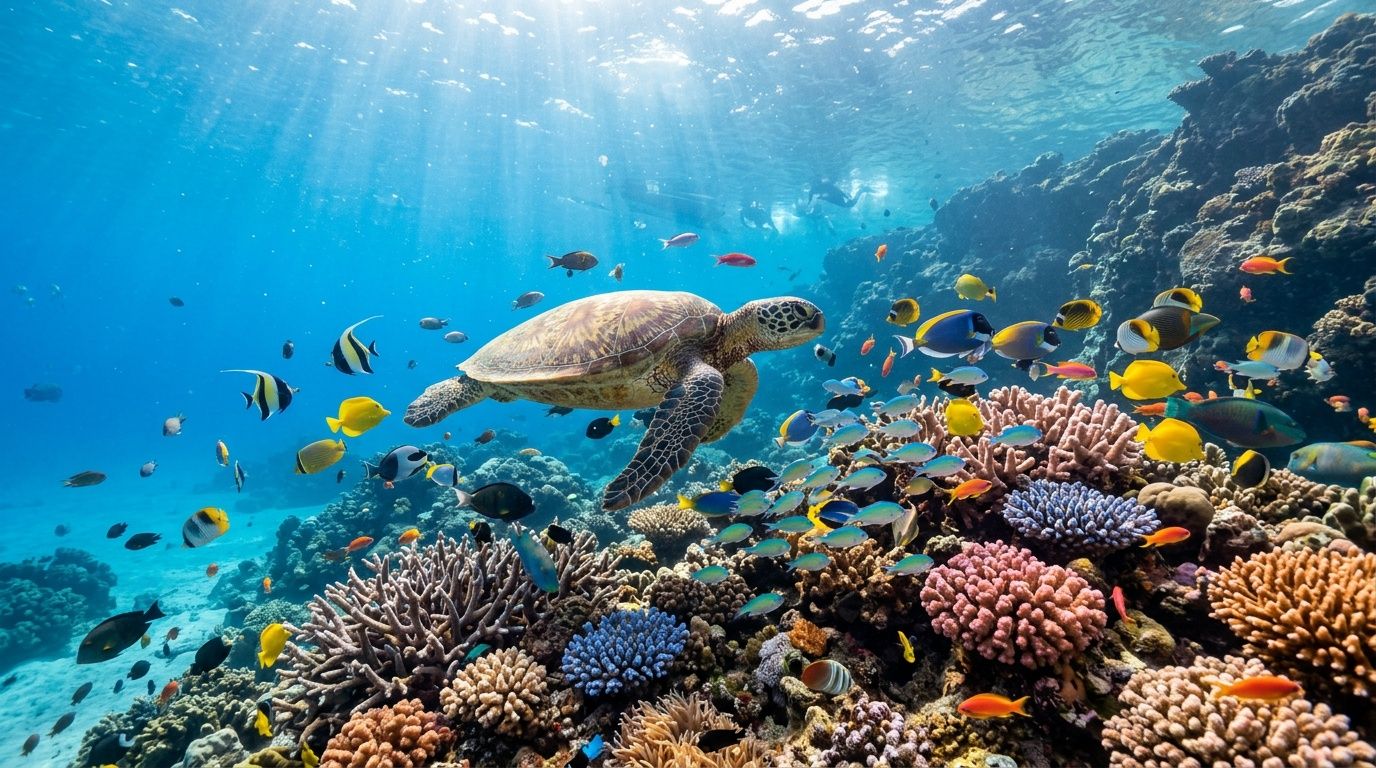
Hawaiian green sea turtles feel totally different. They move with that calm, unhurried rhythm that makes everybody stop kicking for a moment and just watch. In Kealakekua Bay, turtle encounters often happen near reef structure and feeding areas.
Reef fish provide the constant action. You may see parrotfish, bright schools of tropical fish, and the occasional moray eel tucked into rock or coral habitat. The bay’s clear water makes even ordinary fish behavior more interesting because you can follow it without losing the scene in haze.
What makes the viewing so satisfying
In lower visibility, snorkelers tend to focus only on what’s directly below them. In Kealakekua Bay, the clarity changes your whole field of view. You can watch the reef slope away, track fish farther out, and notice how different species use different parts of the habitat.
That’s one reason the snorkel feels less like a quick peek and more like an underwater world.
If you’d like to build some fish-spotting context before your trip, this guide on which marine life hides in waters during scuba diving Kona helps explain the kinds of creatures people look for in local waters.
A smart note on marine safety
Most of what you’ll encounter here is what people come hoping to see. Still, it’s wise to know the difference between “interesting” and “hands-off.” You don’t need to get anxious about sea life, but you should respect it.
For a general safety refresher, Better Boat's guide to dangerous sea life is a useful pre-trip read because it helps beginners understand why observation beats contact every time.
Keep your hands to yourself, keep your fins off the reef, and let wildlife choose the distance. That approach protects both you and the bay.
Safety and Skill Level Considerations
Many articles get too vague here. They say a captain cook snorkel tour is 'great for all skill levels,' and then stop there. This leaves beginners guessing.
The more honest answer is better. Many guests can enjoy this trip, including first-timers, but comfort depends on a few real-world factors. Many guides claim tours are 'suitable for all skill levels' but fail to detail physical requirements. Key considerations include the ability to handle potential ear pressure changes, mobility for climbing boat ladders, and understanding that while the bay is often calm, conditions can change, according to this tour safety and physical requirements discussion.
What “beginner-friendly” really means
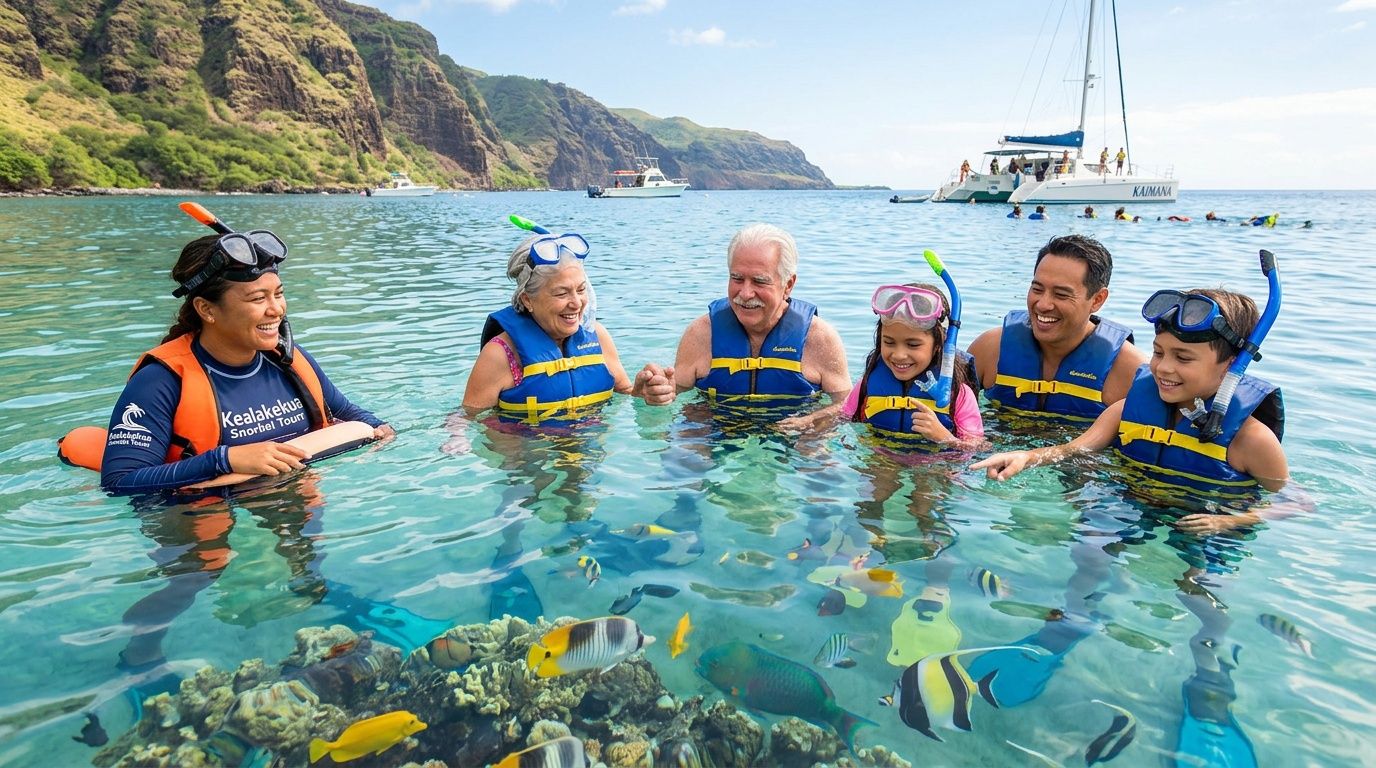
For most tours, beginner-friendly means you do not need to be an athlete or a perfect swimmer. It does mean you should be comfortable wearing a mask in the water, listening to directions, and using flotation if you need it.
A few examples help:
- Nervous but willing adults often do well if they start slowly and use a flotation device.
- Kids usually do best when a parent stays close and the child is already comfortable putting their face in water.
- Older adults often enjoy the trip very much if ladder climbing and boat movement aren’t major issues.
- Strong pool swimmers sometimes still need a minute to adjust because ocean snorkeling feels different than lap swimming.
The physical parts people underestimate
Most concerns aren’t about danger. They’re about comfort and mechanics.
- Boat entry and exit can be the biggest hurdle. Climbing a ladder after snorkeling takes more effort than people expect.
- Mask confidence matters a lot. If someone hates water near their face, practice before the trip helps.
- Ear pressure can bother some guests even while surface diving or ducking under briefly.
- Changing conditions matter. A sheltered bay can still have movement, chop, or current changes that affect confidence.
Practical rule: If someone in your group can enjoy floating with a mask on, follow directions, and climb a boat ladder with assistance if needed, they may be a good candidate. If any of those sound doubtful, ask the operator specific questions before booking.
Questions worth asking before you reserve
Call or email and ask direct things like:
Flotation options
Do you provide life vests, noodles, or other support?Crew support
Will staff help first-time snorkelers in the water?Ladder design
How steep is the ladder, and how do guests reboard?Participation flexibility
Can someone stay on the boat if they decide not to snorkel?
If seasickness is one of your main concerns, this guide on how to avoid sea sickness is worth reading before you choose your departure.
Choosing Your Tour and Booking Tips
Once you know the bay is right for your group, the next decision is tour style. This matters more than people think. The boat affects comfort, pace, and the overall mood of the day.
Large boat or small boat
A larger catamaran usually suits guests who want a steadier ride, more room, and a more social atmosphere. These trips often feel easier for mixed-age groups and travelers who care about onboard comfort as much as the snorkel itself.
A smaller rigid-hull inflatable boat suits people who want a more agile ride and a closer-to-the-water experience. In the protected zone around the bay, smaller tour operators can use boats that access coastline features differently than larger vessels. The result is often a more intimate outing with fewer people onboard.
Match the trip to your group
Here’s a simple way to decide:
| Tour style | Often a good fit for | Main tradeoff |
|---|---|---|
| Larger vessel | Families, cautious travelers, guests who want more space | Less intimate feel |
| Smaller vessel | Adventurous couples, small groups, guests who like a nimble ride | Bouncier experience |
Operators to compare
If you’re narrowing options, two useful booking references are Kona Snorkel Trips and Captain Cook Snorkeling Tours. If you want a broader comparison before choosing, this rundown of the top 3 best Kealakekua Bay snorkeling tours can help frame the differences.
Kona Honu Divers also offers Kealakekua Bay snorkeling trips as one option for visitors comparing operators and boat styles.
Ready to see it for yourself?
Preparing for Your Adventure A Complete Checklist
Good prep makes the day smoother than any fancy gear ever will. The most useful choice is often your departure time. Kealakekua Bay's clarity, frequently exceeding 100 feet of visibility, is best experienced during morning tours which capitalize on optimal light refraction angles and calmer surface conditions before afternoon wind patterns develop, as described in this morning visibility explanation.
That means the best plan is usually simple. Book a morning departure, arrive hydrated, and don’t leave packing to the last minute.
What to do the day before
Set yourself up so the morning feels easy.
- Lay out swimwear early so you’re not searching for basics at departure time.
- Charge your phone or camera if you want photos on the boat.
- Pack sun items in one place so sunscreen, hat, and sunglasses are ready together.
- Read your confirmation carefully because meeting instructions vary by operator.
If you want a gear refresher that overlaps with ocean activities in Kona, this article on the gear you will need for your Kona diving adventure is a helpful practical reference.
Captain Cook Snorkel Tour Packing Checklist
| Item Category | Essential Items | Recommended Items |
|---|---|---|
| Clothing | Swimsuit, towel, change of clothes | Light jacket or cover-up |
| Sun protection | Reef-safe sunscreen, hat, sunglasses | Sun shirt |
| Personal items | Water, ID, any needed medication | Dry bag |
| Comfort items | Easy footwear | Ginger chews or motion-sickness aids |
| Electronics | Phone in a protective case | Underwater camera |
A few packing mistakes to avoid
People usually forget comfort items, not core items. They bring a swimsuit and towel, then realize too late they wanted a dry shirt for the ride back or a secure place for keys and a phone.
Morning tours reward early preparation. When guests arrive organized, they spend more time enjoying the coast and less time hunting through bags.
Apply reef-safe sunscreen before boarding if possible. Bring only what you’ll use. On a snorkel boat, a small, organized bag beats a giant overstuffed tote every time.
Frequently Asked Questions and Logistics
A few practical details can make the difference between a relaxed morning and a scrambled one. Here are the questions guests ask most often.
Where do captain cook snorkel tours usually depart from
Departure points vary by operator, so always check your confirmation email. Many Kona-side snorkel trips use harbor or bay meeting locations rather than asking guests to go directly to Kealakekua Bay itself.
The key point is simple. Don’t assume the snorkel site is the meeting site.
How early should I arrive
Give yourself enough time to park, find the crew, use the restroom, and settle in before the safety briefing starts. Arriving rushed tends to raise stress before you’ve even stepped on the boat.
If you’re traveling with kids or anyone who needs extra setup time, build in more cushion than you think you need.
What if I’m not a strong swimmer
That’s one of the most common concerns, and it’s a fair one. Many guests who aren’t strong swimmers still enjoy the trip when they use flotation and follow crew instructions closely.
The right question isn’t “Am I an amazing swimmer?” It’s “Can I stay calm in the water, wear the gear, and ask for support when I need it?” If the answer is yes, many tours can work well.
What if someone in my group doesn’t want to snorkel after boarding
Ask the operator before booking. Some trips can accommodate guests who prefer to stay onboard for part or all of the stop. Others are set up around active participation.
This is worth clarifying in advance, especially for grandparents, hesitant teens, or anyone trying snorkeling for the first time.
What should I ask about cancellation policies
Policies vary by company, weather conditions, and booking window. Read the operator’s terms before you reserve, and ask direct questions if anything is unclear.
Good things to confirm include:
Weather cancellations
Ask what happens if the operator cancels due to ocean conditions.Guest changes
Ask how rescheduling works if your plans shift.Health issues
Ask what options exist if someone wakes up ill.
Is a morning trip worth the early alarm
Generally, yes. Earlier departures tend to offer the calmest overall experience and make the rest of your day easier. You’ll finish the trip feeling like you already did something memorable before lunch.
What should I bring if I tend to overpack
Keep it simple. Wear your swimsuit to the boat, bring a towel, sun protection, water, and one dry layer for after the snorkel. That covers most needs.
If reading this has you thinking beyond snorkeling, Kona Honu Divers is a good next stop for exploring more Big Island ocean experiences, including scuba options for visitors who want to spend even more time underwater.