
You’re probably deciding between two versions of this trip.
One version is the glossy brochure version. Flat water, perfect visibility, turtles on cue, and every traveler suddenly turns into an effortless snorkeler.
The other version is the authentic one. You need to know how to get there, whether the water is manageable for your group, what a boat tour solves, and how to avoid loving the bay to death with careless snorkeling habits.
A good captain cook snorkel trip absolutely can be one of the standout water days on the Big Island. Kealakekua Bay has the mix that’s hard to beat in one place: history, shelter, clear water, and reef life. But the best experience comes from matching the trip to your ability level and showing up ready to snorkel responsibly.
Why Kealakekua Bay is Hawaii's Premier Snorkel Spot
The first thing most visitors notice is the color. Outside the bay, Kona can look deep blue and energetic. Inside Kealakekua, the water often shifts to a cleaner, lighter blue-green, and the cliffs make the whole place feel tucked away from the wider coast.
That sheltered feeling is part of why this snorkel gets such a strong reputation. It doesn’t feel like a random swim stop. It feels like arriving somewhere that matters.
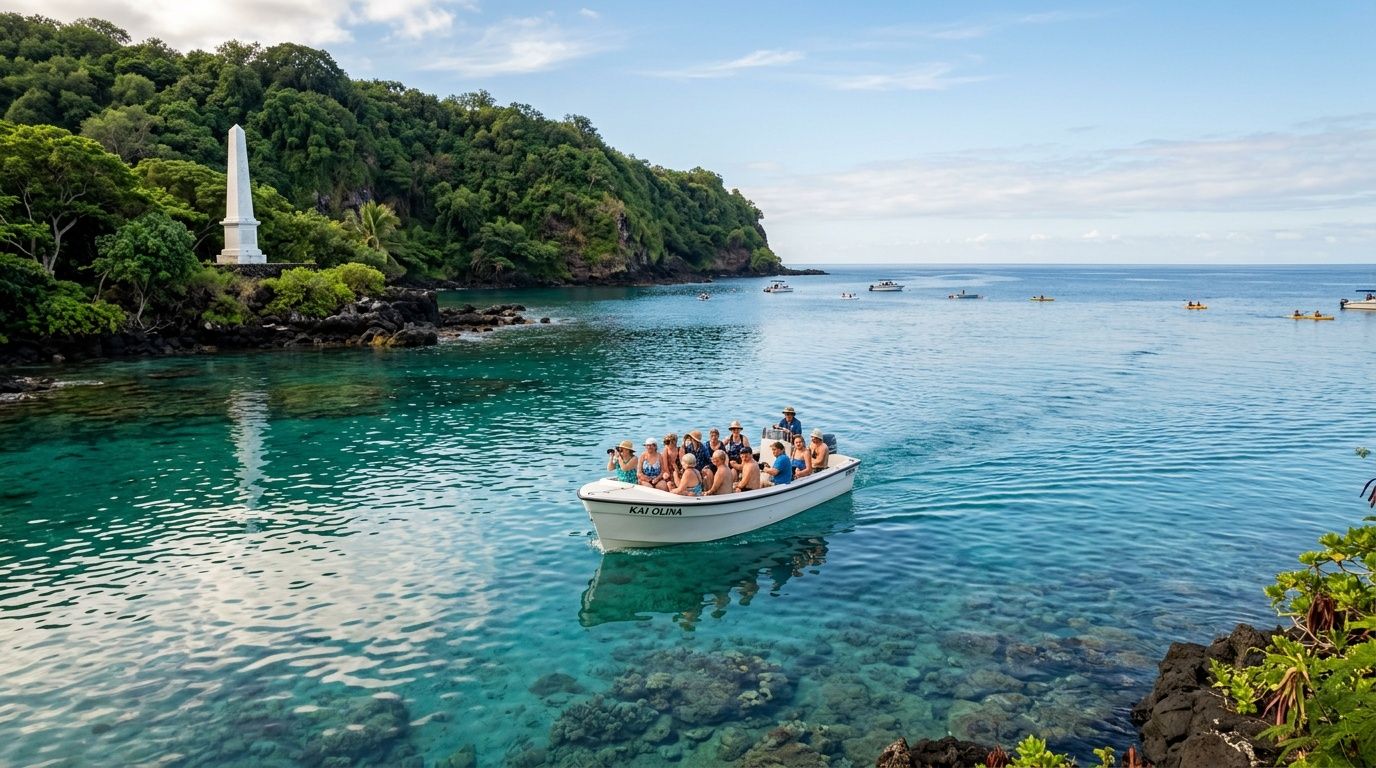
History changes the feel of the snorkel
Captain James Cook first landed at Kealakekua Bay on January 17, 1779, and the site is marked by the white obelisk monument erected in 1874. The bay is also a Marine Life Conservation District spanning over 1,000 acres and draws over 100,000 visitors annually for boat-based tours because there’s no car access to the monument side of the bay, according to Sea Quest Hawaii’s Kealakekua Bay overview.
That combination matters. You’re not just floating over reef. You’re snorkeling in a place that sits inside Hawaiian history and modern marine protection at the same time.
Visitors who want a broader pre-trip orientation can also read this insider's guide to Captain Cook snorkeling, which helps frame what makes this bay different from a standard beach snorkel.
Why it stands out from other Kona snorkel sites
Plenty of Big Island snorkel spots are beautiful. Kealakekua Bay separates itself because the whole experience is concentrated. The ride in is scenic. The monument gives you a fixed landmark. The cliffs create a dramatic backdrop. Once you’re in the water, the protected setting is obvious.
For visitors comparing options, a Kealakekua Bay snorkeling tour usually makes the most sense when you want the iconic Kona snorkel day rather than a quick shore entry.
Practical rule: If your group wants one signature snorkel outing on the Big Island, this is the one I’d put high on the list because it combines access, scenery, and reef quality in a way few spots do.
What works and what doesn’t
What works is treating the bay as a destination, not a box to check. Slow down on the ride over. Listen to the site history. Once you’re in the water, spend a minute just floating and looking down before you start chasing fish.
What doesn’t work is arriving with unrealistic expectations. Even in a protected bay, ocean conditions still matter. Wildlife doesn’t perform on schedule. And not every traveler in a family group will experience the site the same way. Strong swimmers usually roam more confidently. Nervous first-timers often enjoy it most when they stay calm, use flotation, and keep the boat close by.
That’s the primary appeal of Kealakekua Bay. It gives a wide range of visitors a shot at a memorable snorkel, but it rewards the people who come in with respect for the place.
The Underwater World of Captain Cook What You Will See
Drop into the water here and the first surprise is range. One glance gives you pale sand patches, coral heads, lava rock, and open blue all in the same field of view. That mix is why Captain Cook keeps both first-time snorkelers and experienced ocean people interested for a full session.
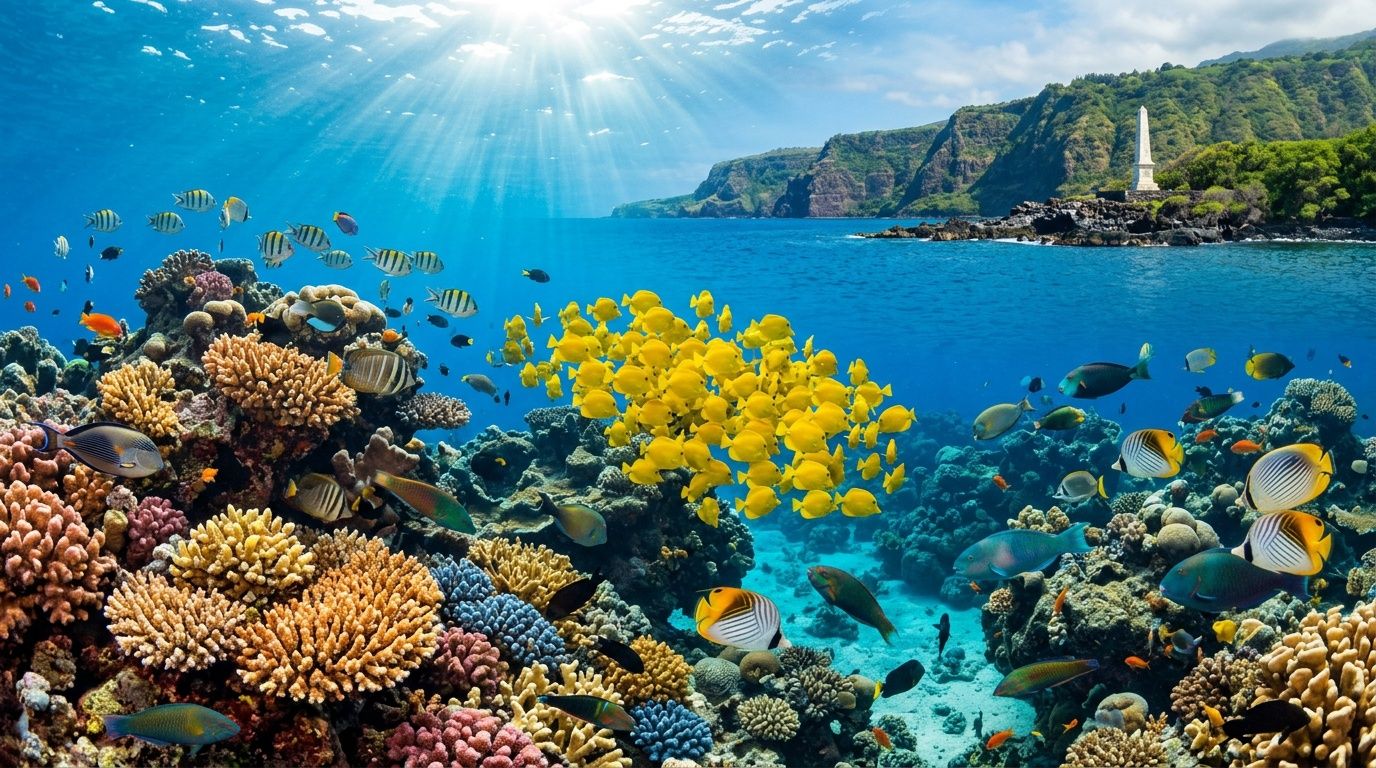
Start by reading the reef
The monument side of Kealakekua Bay usually gives snorkelers a clear view into the reef, with a shallow shelf near the shoreline and deeper pockets farther out. New snorkelers tend to focus on the bright fish right away. Stronger swimmers start noticing where different species hold position, which fish stay over coral, and which ones patrol the edges.
That difference matters.
If you treat the bay like a fast swim, you miss half of it. If you pause and watch one section of bottom for a minute, the reef starts to make sense as a living system instead of a blur of color. That slower approach also reduces accidental fin kicks on coral and keeps the experience better for the next group in the water.
What you’re likely to notice first
Yellow tang usually get the first reaction. They stand out even on bright mornings. Butterflyfish are easy to pick up next because their movement is steadier and more deliberate than the constant darting you see from smaller reef fish. Schools of surgeonfish often slide across the reef face all at once, and that is the point where many visitors realize how much life is packed into this bay.
The clear water can also fool people on distance. Fish often look closer than they are. Reaching, chasing, or swimming hard after them rarely works. Calm floating works better, and it makes the whole site more accessible for nervous snorkelers who do not want to cover a lot of water.
A simple pattern helps:
- Shallow areas: Good for quick fish sightings and getting comfortable at the surface
- Coral heads and ledges: Better for spotting movement tucked into structure
- Sandy gaps: Good places to slow down and scan for larger animals passing through
- Outer edge of the main snorkel zone: Often the most interesting mix of depth, schooling fish, and reef relief for confident swimmers
The animals people miss
Turtles get the headlines, but they are not the whole show. Moray eels can be hiding with only the head visible. Day octopus blend so well into rock and coral that many people swim right over them. Goatfish, triggerfish, parrotfish, and wrasses all use different parts of the reef, and once you know those patterns, the bay becomes much more rewarding.
That is one reason I tell guests to learn a few fish before they arrive. Even 15 minutes of prep helps. This Hawaii reef fish identification class for intermediate snorkelers is a useful place to start if you want to recognize more than just “yellow fish” and “striped fish.”
What the bay is really like for different skill levels
Captain Cook is memorable because it works for a wide range of visitors, but not everyone experiences it the same way.
| Snorkeler type | Best approach in the water | What they usually enjoy most |
|---|---|---|
| First-timer | Stay close to guide or boat, use flotation, focus on floating calmly | Easy fish spotting in clear water |
| Family snorkeler | Do shorter swims with rest breaks | Bright reef fish and the feeling of being in a protected bay |
| Confident swimmer | Cover more ground, but stay aware of current and boat position | Reef variety, ledges, and deeper blue-water views |
| Photographer | Hover over one productive patch and wait | Natural fish behavior and cleaner composition |
The trade-off is straightforward. Strong swimmers can see more terrain, but beginners often have just as much fun when they stay relaxed and let the reef come to them. I have seen plenty of anxious first-timers have a better snorkel than athletic swimmers who spent the whole time kicking too hard.
The best way to see more and leave less impact
Good snorkeling here is quiet, controlled, and observant. Keep your body horizontal, use small fin kicks, and avoid standing or grabbing rock for balance. Coral breaks easily, and the damage lasts far longer than a vacation photo.
Respecting the bay does more than protect it. It improves the snorkel. Fish stay calmer around people who drift instead of chase, and a calm snorkeler sees more behavior that others miss.
The underwater side of Captain Cook rewards patience, not speed. If you give the reef time, it usually gives you a lot back.
Planning Your Trip How to Get to the Monument
The biggest planning mistake people make is assuming the monument is a casual pull-up stop. It isn’t. There’s no public road access to the monument side, which is why most visitors reach it by boat.
That access issue is exactly why this trip needs a little strategy. You can go by guided boat, and that’s the practical choice for most travelers. Or you can try to do it yourself by kayak or by combining your day with a demanding hike. Those self-managed options appeal to a narrow slice of visitors, not the average vacation group.
The real access options
A guided tour works because it removes most of the friction. You get transport into the bay, snorkel setup, a crew that watches conditions, and help getting in and out of the water.
Self-guided access can be done, but it comes with more moving parts. You need to think through gear, weather, stamina, entry and exit, and whether everyone in your group can realistically handle the plan.
| Method | Ease of Access | Time Commitment | Best For |
|---|---|---|---|
| Guided boat tour | High. Direct access to the monument area from harbor departure | Moderate and structured | Families, visitors, mixed-skill groups |
| Kayak | Moderate to difficult, depending on launch logistics and ocean comfort | Higher and self-managed | Experienced paddlers comfortable planning their own day |
| Hike plus snorkel approach | Difficult | High and physically demanding | Fit visitors who want a strenuous outing |
Why boat tours are the default choice
For many, a boat tour is the right answer because Captain Cook isn’t just about arrival. It’s about arriving with enough energy left to enjoy the water.
The best operators also solve the small issues that become big issues on self-guided trips. Properly fitted masks. Fins that work. Floatation for guests who need it. A ladder and crew support for reboarding. Shade between snorkel sessions.
That matters even more if your group includes:
- Young kids: They usually do better with short, flexible water sessions and fast access back to the boat.
- Non-swimmers: Some can still enjoy the trip from the boat or with flotation and close supervision, but this should be discussed with the operator in advance.
- Guests with mobility limits: Boat layout, boarding style, ladder design, and crew assistance all matter. Ask specific questions before booking.
- Nervous first-timers: They often enjoy the bay more when they know they’re being guided, not improvised.
A lot of “all skill levels” marketing skips the important part. Some guests can visit the bay comfortably without doing a full independent snorkel. That’s still a successful trip.
Two tour operators worth considering
If you want straightforward boat access, two common options are Kona Snorkel Trips and Captain Cook Snorkeling Tours. If you’re comparing trip formats and departure style, this Captain Cook snorkel tour page is also useful as a planning reference.
Questions to ask before you book
Don’t just ask price and departure time. Ask the questions that determine whether the trip fits your group.
- Water entry: Is it a giant stride, ladder entry, or assisted step-in?
- Support for weak swimmers: Are flotation devices standard? Can a guest stay onboard comfortably?
- Trip pace: Is the ride fast and adventurous, or steadier and more relaxed?
- Age and mobility fit: Can the crew realistically assist someone who moves slowly or gets anxious in open water?
What works is honest matching. If someone in your group needs extra support, book around that fact. What doesn’t work is choosing solely on hype, then finding out on the dock that the trip style doesn’t suit half your party.
Timing is Everything Best Seasons and Times of Day
You feel the difference before you even mask up. On a good Kona morning, the ride into Kealakekua Bay is smoother, the surface has less texture, and first-time snorkelers usually settle in faster. By early afternoon, even on decent days, more wind can creep in and make the same bay feel less forgiving.
That is why I tell visitors to treat timing as part of trip planning, not an afterthought.
Why mornings usually work better
Kealakekua Bay has natural protection, but it still changes through the day. The cliffs block a lot of wind, yet morning usually brings the cleanest surface and the easiest conditions for relaxed snorkeling.
That helps in practical ways:
- Easier breathing through the snorkel: Less chop means fewer surprise splashes at the top of each breath.
- Clearer top-down viewing: A flatter surface lets you see coral structure, fish movement, and depth changes more easily.
- Better comfort for mixed-skill groups: Guests who are nervous, young, or out of practice usually do better when the boat ride and water entry are calmer.
Advanced swimmers can often handle a little afternoon texture. Families, older guests, and cautious swimmers usually enjoy the bay more in the morning.
Seasonal trade-offs that actually matter
There is no single perfect month. Captain Cook snorkel trips run well through much of the year, but conditions shift enough that season still matters.
Winter can bring more swell around the island, even when the bay itself remains usable. Summer and early fall often have a more settled feel day to day. Recent rain matters too. If runoff reaches the bay, visibility can drop, especially near shore and along the edges.
Flexible travelers should book this trip early in their vacation. That gives you room to reschedule if the ocean is off or if someone in your group decides they need a calmer day.
Match the time to your group, not just the calendar
This matters more than people expect. A strong swimmer in their 30s may have a great time on a later departure that would feel stressful to a beginner or a grandparent who has not snorkeled in years.
For mixed-ability groups, the best window is usually the one that reduces effort. Earlier departures do that. Less wind, less surface chop, and less anxiety add up to a better day in the water.
If anyone in your group is uneasy, choose the calmest conditions you can get and use flotation from the start. There is no downside to making the bay easier.
Check conditions with a conservation mindset
Local captains look at wind, swell direction, recent rain, and who is coming aboard. Visitors should do the same before locking in a date. This guide on how to check ocean conditions for the Big Island gives a solid read on what to watch.
Good timing also helps protect the place. Snorkelers who are comfortable in the water are less likely to kick hard, stand up, grab coral, or drift where they should not. Choosing a calm morning is not only about visibility. It is one of the easiest ways to make the trip safer and lighter on the reef.
Safety First and Snorkeling with Aloha
A safe captain cook snorkel doesn’t start when you hit the water. It starts with honest self-assessment on the boat. Can you swim calmly without rushing? Are you willing to use flotation if the guide recommends it? Will you turn back toward the boat before you’re tired instead of after?
Those habits matter more than bravado. The bay is friendly by ocean standards, but it is still ocean.
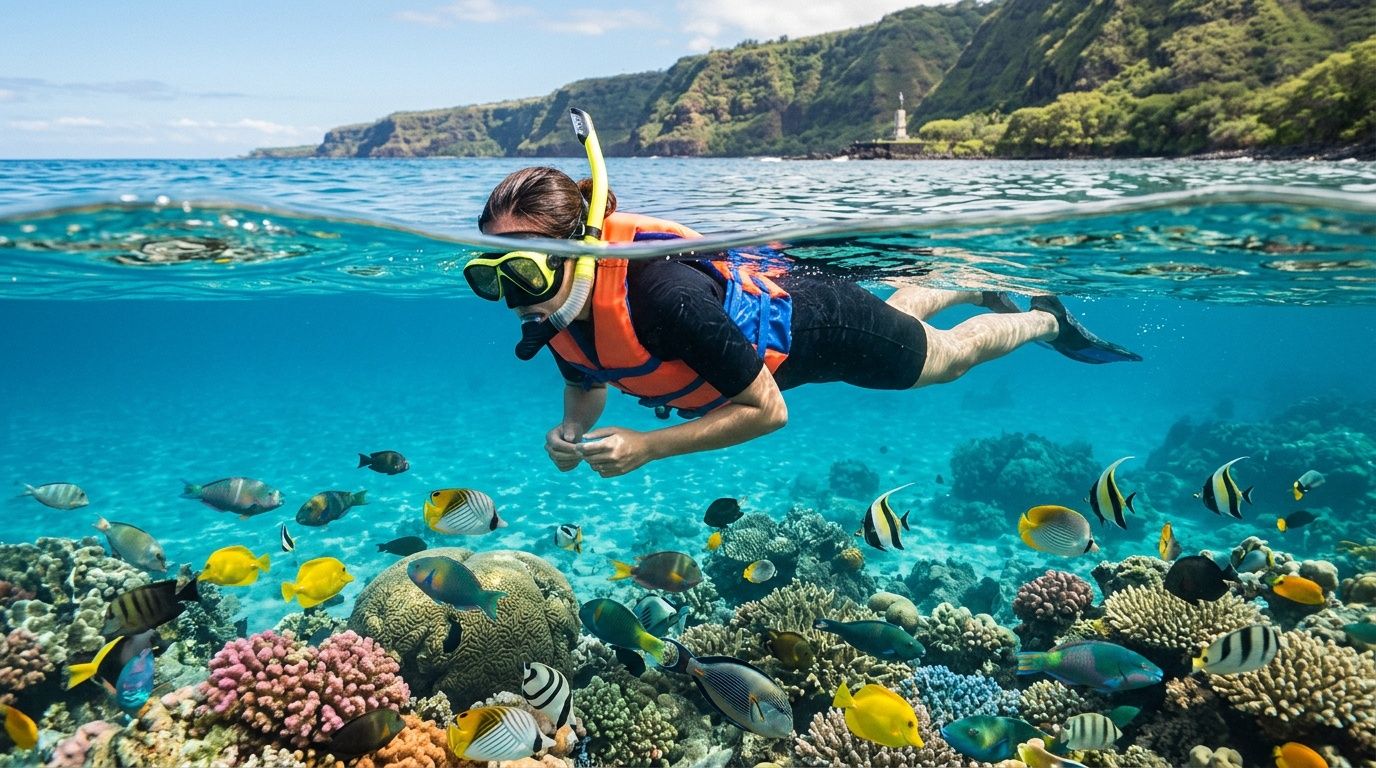
Know the water you are entering
Directly off the monument, water depth ranges from 12 to 20 feet, and sunlight often penetrates over 100 feet. Guides enforce group proximity and flotation vest use because currents near the bay’s points can reach up to 1 knot, which raises fatigue risk, according to this Captain Cook Monument depth and safety guide.
That’s why good guides pay attention to the edges of the snorkel zone. The middle can feel easy. The points and drop-offs can feel different fast, especially for guests who drift wider than they planned.
What keeps snorkelers safe
Most avoidable problems come from a short list of mistakes. People skip flotation because they don’t want to “look beginner.” They swim hard at the start. They forget that the return to the boat can feel longer when they’re tired.
Better habits look like this:
- Use the vest: Flotation is an energy-saving tool, not a badge of weakness.
- Stay inside the group pattern: If the guide sets boundaries, there’s a reason.
- Turn early: Head back while you still feel strong.
- Keep your head up now and then: Confirm your boat position before you drift farther than intended.
A useful mindset for ocean etiquette applies here too. This responsible diver etiquette guide is written for divers, but the same discipline helps snorkelers.
Snorkeling with aloha means protecting the bay
The other half of safety is environmental. Guests often think damage only happens when someone stands on coral. In reality, careless fin kicks, crowding wildlife, and poor sunscreen choices all add up.
The practical standard is simple:
- Use reef-safe sunscreen: Better yet, reduce sunscreen load with a rash guard and shade.
- Keep your fins high: Flutter kicks close to coral break things.
- Don’t touch turtles or coral: Look all you want. Hands off.
- Give resting wildlife room: If dolphins are present, watch respectfully from a distance and follow crew instructions.
The bay stays special because it’s protected. Your job is to leave without changing it.
Seasickness can ruin a good snorkel day
Even people who are fine in the water can feel lousy on the ride out or while sitting at anchor. If you know you’re prone to motion sickness, deal with it before boarding. Options people commonly use include Ship-EEZ Seasickness Patch, Dramamine pills, Bonine pills, Sea Band wristbands, and Ginger chews.
What works is early prevention, light food, hydration, and keeping your eyes on the horizon during transit. What doesn’t work is waiting until you already feel sick, then trying to power through it.
Gear Up for Success What to Bring and What Tours Provide
You step off the boat, the water is calm, the reef is visible from the swim step, and the difference between a relaxed snorkel and a frustrating one usually comes down to gear fit and a few smart personal items.
Tours to Captain Cook generally supply the basics: mask, snorkel, fins, and flotation. That gets you in the water. Comfort, sun protection, and visibility are what separate a short, tiring swim from a good session in the bay.
What to bring yourself
Bring less than you think, but bring the right things.
- Rash guard or sun shirt: Better protection than relying on sunscreen alone, especially on your back and shoulders.
- Reef-safe sunscreen: Use it before boarding and keep it to exposed areas. Clothing and shade reduce how much you need.
- Towel and dry clothes: The boat ride home can feel cool once the wind picks up.
- Dry bag: Useful for keys, wallet, and anything you do not want getting splashed.
- Waterproof phone case or camera: Worth bringing here because visibility is often good enough for simple underwater photos.
- Personal medication: Bring your own and keep it easy to access.
One practical tip from the boat side: avoid overpacking. Extra bags, bulky fins, and loose items end up under benches, get wet, or slow you down when everyone is trying to gear up safely.
Gear choices that actually matter
A well-fitted mask matters more than any other piece of snorkel gear. If the mask leaks or pinches, guests spend the whole swim clearing water, adjusting straps, and missing what is below them. Ask the crew for a different size before you get in. Good operators expect that.
A dry-top snorkel can help newer snorkelers who do better with a little forgiveness when surface chop splashes over the tube. Strong swimmers may not care. Beginners often do.
If you wear glasses, ask ahead about prescription mask availability. That one detail can turn the reef from a blur into a real experience. Not every boat has them, and not every prescription is available, so it is worth checking before you book.
What tours often provide, and what you should confirm
Tour descriptions can be broad, so ask direct questions. Confirm whether the crew provides:
- Flotation belts, noodles, or vests
- Child-size gear, if needed
- Defog for masks
- Fresh water rinse
- Snacks, drinks, and shade on board
- Help for hesitant or first-time snorkelers
That last point matters. Some boats are set up for confident swimmers who want maximum water time. Others are better for mixed groups, older guests, or anyone who wants more hands-on support getting in and out of the water. Captain Cook snorkel trips are not one-size-fits-all, and good trip planning starts with being honest about your comfort level.
What works and what to skip
| Bring it | Why it helps |
|---|---|
| Rash guard | Covers skin and cuts down on sunscreen use |
| Reef-safe sunscreen | Protects exposed skin with less impact on the bay |
| Dry bag | Keeps phone, keys, and wallet from getting soaked |
| Waterproof camera | Useful when the water is clear |
| Heavy extra gear | Usually gets in the way on a guided trip |
The best setup is simple: gear that fits, sun protection you will use, and only the extras that make the day easier. That approach works well for beginners, experienced snorkelers, and anyone trying to enjoy the bay without adding wear on a place that already gets plenty of pressure.
Frequently Asked Questions About Captain Cook Snorkeling
A few questions come up on almost every dock. Here are the straight answers.
Is Captain Cook snorkeling good for beginners
Yes, for many beginners. The key is choosing the right tour format, using flotation if offered, and being honest about comfort in open water. Not every beginner wants the same thing. Some want a full snorkel. Some are happier with a shorter swim and more boat time.
Can non-swimmers still go
Sometimes, yes. But this depends on the operator, the boat setup, and how much support the guest needs. Some non-swimmers enjoy the boat ride, scenery, and onboard viewing without doing a full in-water snorkel. Ask the operator directly instead of relying on broad “all skill levels” language.
Are turtles common
Protected status is a big reason marine life is so strong here. Kealakekua Bay’s Marine Life Conservation District protection, in place since 1969, has produced fish density of over 3,000 per acre, and turtle encounter rates can reach as high as 80 percent on tours, according to Captain Cook Snorkeling Tours’ guide to the bay.
That doesn’t mean every guest gets a perfect turtle pass at arm’s length. It means your odds of seeing a healthy reef system with active marine life are very good.
Can you swim with dolphins in the bay
If dolphins are present, enjoy the sighting and follow the crew’s instructions. The right approach is respectful viewing, not pursuit. The bay is not a place for harassing resting wildlife.
What if weather changes on tour day
Good operators make the call based on conditions and safety. Sometimes a trip runs as planned. Sometimes the route changes. Sometimes the operator cancels. Flexibility is part of any ocean activity, and it’s one more reason to book this outing earlier in your trip if you can.
Are there sharks
This is the ocean, so marine life moves through it. Most snorkelers focus on reef fish, turtles, and coral habitat, and that’s what the trip is built around. The right mindset is awareness, not fear.
If you want the best day at Captain Cook, book the right boat for your group, choose a morning trip, use flotation when it helps, and treat the reef like a living place instead of a backdrop.
If you’re planning more time on the water after your captain cook snorkel, Kona Honu Divers is a solid next stop for guided Big Island ocean experiences, especially if your trip also includes snorkeling, scuba, or other underwater activities.